Elixia flexella (Ach.) Lumbsch
J. Hattori Bot. Lab., 83: 62, 1997. Basionym: Limboria flexella Ach. - K. Vetensk.-Akad. Nya Handl.: 258, 1815.
Synonyms: Hazslinszkya inarensis Vain.; Lecidea flexella (Ach.) Hedl.; Leptographa flexella (Ach.) M. Choisy; Lithographa flexella (Ach.) Zahlbr.; Ptychographa flexella (Ach.) Coppins; Xylographa flexella (Ach.) Nyl.; Xylographa flexella f. plicata Anzi ex Arnold
Description: Thallus crustose, mostly endosubstratic and poorly evident, consisting of more or less scattered goniocysts provided with a cortex of isodiametrical, brown-capped cells. Apothecia black, epruinose, sessile, constricted at base, 0.3-0.8 x 0.2-0.4 mm, from narrowly elongate to angular or more or less circular in outline, with a initially slit-like, later expanded and sometimes gyrose-umbonate disc and a prominent, more or less inrolled proper margin. Proper exciple cupulate, dark brown to brown-black, up to 65 μm wide; epithecium brown; hymenium colourless to pale yellow, 30-55 μm high, I+ weakly blue; paraphyses coherent, simple or sparingly branched and anastomosing in upper part, 1-1.5 μm thick at mid-level, the apical cells only slightly wider (<3 μm); hypothecium dark brown, in continuation with the exciple. Asci 8-spored, cylindrical to clavate, K/I+ blue, with a light amyloid tissue throughout, but with darker staining regions around the apex and in a narrow zone below the inner upper wall of tholus. Ascospores 1-celled, hyaline, broadly ellipsoid, 4-6(-8) x 2-4.5 μm, not halonate. Photobiont chlorococcoid. Spot tests: K-, C-, KC-, P-, UV-. Chemistry: thallus without lichen substances.
Growth form: Crustose
Substrata: lignum
Photobiont: green algae other than Trentepohlia
Reproductive strategy: mainly sexual
Commonnes-rarity: (info)
Alpine belt: absent
Subalpine belt: very rare
Montane belt: rare
Dry submediterranean belt: absent
Humid submediterranean belt: absent
Padanian area: absent
pH of the substrata:
1 2 3 4 5

Solar irradiation:
1 2 3 4 5
Aridity:
1 2 3 4 5
Eutrophication:
1 2 3 4 5
Poleotolerance:
0 1 2 3
Altitudinal distribution:
1 2 3 4 5 6
Rarity
absent
extremely rare
very rare
rare
rather rare
rather common
common
very common
extremely common
Loading data...
Occurrence data
Predictive map

P.L. Nimis CC BY-SA 4.0
TSB 38546

P.L. Nimis; Owner: Department of Life Sciences, University of Trieste
Herbarium: TSB (8204)
2001/11/29

Curtis Randall Björk
USA, Idaho, Shoshone County, St. Maries River Valley - - On bark of Thuja in swamp forest
2008-04-01

Pier Luigi Nimis - CC BY-SA 4.0
TSB 38546

Pier Luigi Nimis - CC BY-SA 4.0
TSB 38546

Curtis Randall Björk
USA, Idaho, Shoshone County, St. Maries River Valley - - On bark of Thuja in swamp forest
2008-04-01

P.L. Nimis CC BY-SA 4.0
TSB 41770

P.L. Nimis CC BY-SA 4.0
TSB 41770

P.L. Nimis CC BY-SA 4.0
TSB 41770

P.L. Nimis CC BY-SA 4.0
TSB 38545

P.L. Nimis CC BY-SA 4.0
TSB 38545

Walter Obermayer CC BY-SA 4.0 - Source: Lichens of Noricum - http://lichens-of-noricum.uni-graz.at/
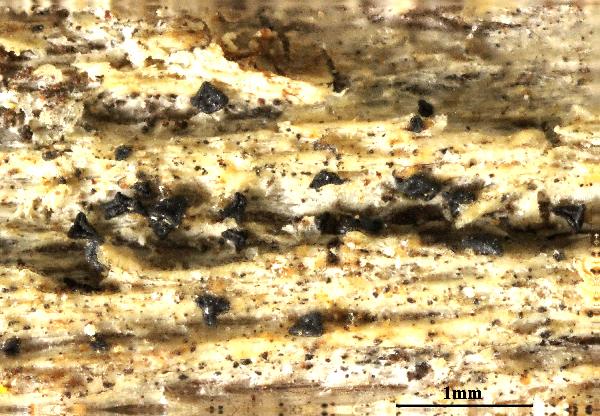
Felix Schumm - CC BY 4.0
[2191], Austria. Salisburgia. Hohe Tauern, in valle Habachtal, 960 m.
Ad truncum putridum (Picea abies). Leg. R. Türk, 14.11.1986. EX A.
VEZDA LICHENES SELECTI EXSICCATI NR. 2101. - As Ptycographa flexella
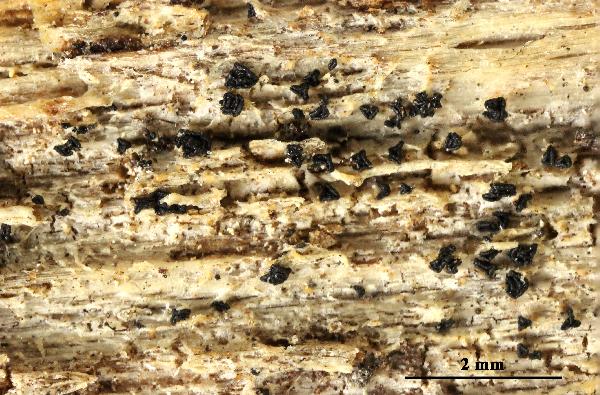
Felix Schumm - CC BY 4.0
[2191], Austria. Salisburgia. Hohe Tauern, in valle Habachtal, 960 m.
Ad truncum putridum (Picea abies). Leg. R. Türk, 14.11.1986. EX A.
VEZDA LICHENES SELECTI EXSICCATI NR. 2101. - As Ptycographa flexella

Felix Schumm - CC BY 4.0
[Ka357], Cambodia. Prov. Siem Reap: Around Ta Nei temple, Angkor
Wats complex, Siem Reap (13°279 N, 103°539 E). On bark of Dipterocarpus
elatus, 30 m. Leg. H. Kashiwadani (no. 4774), 20.12.2005, et.
H. Kashiwadani. EX H. KASHIWADANI LICHENES MINUS COGNITI
EXSICCATI NR. 357.

Felix Schumm - CC BY 4.0
[Ka357], Cambodia. Prov. Siem Reap: Around Ta Nei temple, Angkor
Wats complex, Siem Reap (13°279 N, 103°539 E). On bark of Dipterocarpus
elatus, 30 m. Leg. H. Kashiwadani (no. 4774), 20.12.2005, et.
H. Kashiwadani. EX H. KASHIWADANI LICHENES MINUS COGNITI
EXSICCATI NR. 357.

Photo by André Aptroot - CC BY 4.0
Taiwan
Growth form: Crustose
Substrata: lignum
Photobiont: green algae other than Trentepohlia
Reproductive strategy: mainly sexual
Commonnes-rarity: (info)
Alpine belt: absent
Subalpine belt: very rare
Montane belt: rare
Dry submediterranean belt: absent
Humid submediterranean belt: absent
Padanian area: absent
pH of the substrata:
| 1 | 2 | 3 | 4 | 5 |
Solar irradiation:
| 1 | 2 | 3 | 4 | 5 |
Aridity:
| 1 | 2 | 3 | 4 | 5 |
Eutrophication:
| 1 | 2 | 3 | 4 | 5 |
Poleotolerance:
| 0 | 1 | 2 | 3 |
Altitudinal distribution:
| 1 | 2 | 3 | 4 | 5 | 6 |
Rarity
absent
extremely rare
very rare
rare
rather rare
rather common
common
very common
extremely common
Loading data...
Occurrence data
Predictive map

P.L. Nimis CC BY-SA 4.0
TSB 38546

P.L. Nimis; Owner: Department of Life Sciences, University of Trieste
Herbarium: TSB (8204)
2001/11/29

Curtis Randall Björk
USA, Idaho, Shoshone County, St. Maries River Valley - - On bark of Thuja in swamp forest
2008-04-01

Pier Luigi Nimis - CC BY-SA 4.0
TSB 38546

Pier Luigi Nimis - CC BY-SA 4.0
TSB 38546

Curtis Randall Björk
USA, Idaho, Shoshone County, St. Maries River Valley - - On bark of Thuja in swamp forest
2008-04-01

P.L. Nimis CC BY-SA 4.0
TSB 41770

P.L. Nimis CC BY-SA 4.0
TSB 41770

P.L. Nimis CC BY-SA 4.0
TSB 41770

P.L. Nimis CC BY-SA 4.0
TSB 38545

P.L. Nimis CC BY-SA 4.0
TSB 38545

Walter Obermayer CC BY-SA 4.0 - Source: Lichens of Noricum - http://lichens-of-noricum.uni-graz.at/

Felix Schumm - CC BY 4.0
[2191], Austria. Salisburgia. Hohe Tauern, in valle Habachtal, 960 m. Ad truncum putridum (Picea abies). Leg. R. Türk, 14.11.1986. EX A. VEZDA LICHENES SELECTI EXSICCATI NR. 2101. - As Ptycographa flexella

Felix Schumm - CC BY 4.0
[2191], Austria. Salisburgia. Hohe Tauern, in valle Habachtal, 960 m. Ad truncum putridum (Picea abies). Leg. R. Türk, 14.11.1986. EX A. VEZDA LICHENES SELECTI EXSICCATI NR. 2101. - As Ptycographa flexella

Felix Schumm - CC BY 4.0
[Ka357], Cambodia. Prov. Siem Reap: Around Ta Nei temple, Angkor Wats complex, Siem Reap (13°279 N, 103°539 E). On bark of Dipterocarpus elatus, 30 m. Leg. H. Kashiwadani (no. 4774), 20.12.2005, et. H. Kashiwadani. EX H. KASHIWADANI LICHENES MINUS COGNITI EXSICCATI NR. 357.

Felix Schumm - CC BY 4.0
[Ka357], Cambodia. Prov. Siem Reap: Around Ta Nei temple, Angkor Wats complex, Siem Reap (13°279 N, 103°539 E). On bark of Dipterocarpus elatus, 30 m. Leg. H. Kashiwadani (no. 4774), 20.12.2005, et. H. Kashiwadani. EX H. KASHIWADANI LICHENES MINUS COGNITI EXSICCATI NR. 357.