Peccania coralloides (A. Massal.) Arnold
Flora, 41: 93, 1858. Basionym: Corinophoros coralloides A. Massal. - Flora, 14: 213, 1856.
Synonyms: Omphalaria coralloides (A. Massal.) Hepp
Distribution: N - VG, Frl, Ven (Lazzarin 2000b, Nascimbene 2005c, 2008c, Nascimbene & Marini 2007), TAA (Spitale & Nascimbene 2012, Watson 2014, Nascimbene & al. 2022), Lomb, Piem (Isocrono & al. 2004), Lig. C - Tosc (Benesperi 2000a), Laz, Abr (Nimis & Tretiach 1999, Gheza & al. 2021), Sar. S - Camp (Aprile & al. 2003, Nimis & Tretiach 2004, Garofalo & al. 2010), Cal (Puntillo 1996), Si (Nimis & al. 1994).
Description: Thallus minutely fruticose, subgelatinous when wet, forming up to 2(-2.5) cm wide and to 1.5 cm tall coralloid pillows, dull black but sometimes blue-grey pruinose when dry, dark olivaceous brown when wet, attached by bundles of rhizohyphae. Branches subcylindrical to rarely weakly flattened, erect, irregularly dichotomously branched, ecorticate, the peripheral part 75-150 μm thick, with a loose network of anticlinally oriented hyphae enclosing the photobiont, the inner part with an irregular, up to 500 μm thick axial strand made of 3-5 μm thick, longitudinally oriented hyphae, most evident near the base. Apothecia terminal, 0.5-1.5(-2) mm across, at first urceolate, then clearly lecanorine, with a concave to flat, black to dark brown, often pruinose disc and a thick thalline margin. Proper exciple absent or very poorly developed; epithecium scarcely differentiated from the hymenium, patchily reddish brown to dark brown due to ascus walls decaying after spore discharge, K+ brown-purple, rarely K-; hymenium colourless to patchily brown in upper part, K/I+ deep blue, 100-120 μm high; paraphyses branched and anastomosing, hardly constricted at septa, weakly or non-capitate; hypothecium yellowish brown, 30-60 μm high. Asci 8-spored, broadly clavate, thin-walled, with a distinct gelatinose, amyloid outer cap, but no apical dome, Peccania-type. Ascospores 1-celled, hyaline, globose to broadly ellipsoid, 8-15 x 6-10 μm. Pycnidia terminal or marginal, immersed, globose to pyriform, 300-500 μm across, with colourless, not convoluted walls, the conidiophores terminally branched, with elongated cells. Conidia 1-celled, hyaline, falcate or sigmoid, irregularly curved, (15-)20-40 x c. 1 μm. Photobiont cyanobacterial, chroococcoid, with single or paired 8-15 x 7-11 μm large cells often penetrated by haustoria, surrounded by a yellowish brown gelatinous sheath which tends to become thinner and paler in internal parts. Spot test: all negative. Chemistry: without lichen substances. Note: on steeply inclined, usually south-exposed seepage tracks of calciferous rocks, with a wide altitudinal range; certainly widespread throughout the country, but much overlooked.
Growth form: Fruticose
Substrata: rocks
Photobiont: cyanobacteria, coccaceous (e.g. Gloeocapsa)
Reproductive strategy: mainly sexual
On otherwise dry surfaces with short periods of water seepage after rain
Commonnes-rarity: (info)
Alpine belt: very rare
Subalpine belt: rather rare
Oromediterranean belt: absent
Montane belt: rather rare
Submediterranean belt: rather common
Padanian area: absent
Humid submediterranean belt: rather common
Humid mediterranean belt: rather rare
Dry mediterranean belt: rare
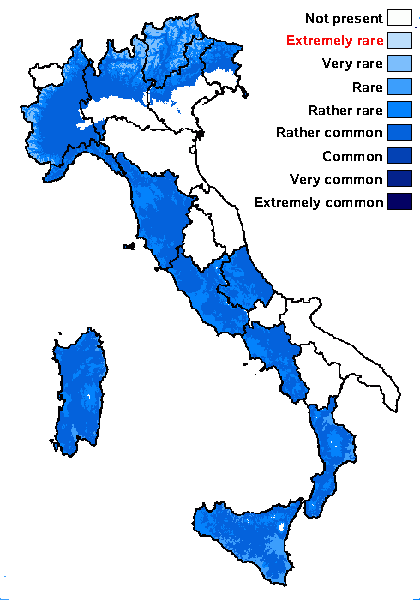
Predictive model
Herbarium samples
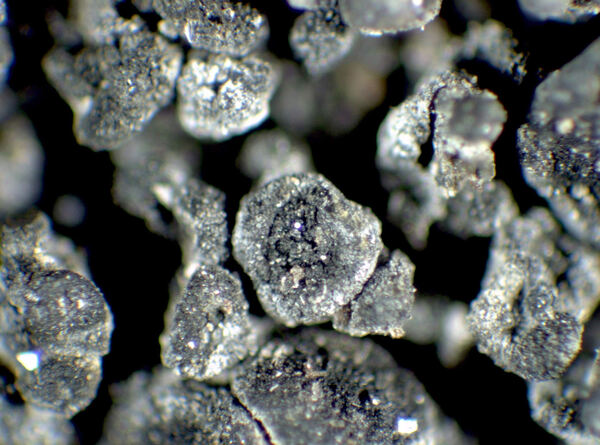

P.L. Nimis CC BY-SA 4.0
TSB 16891
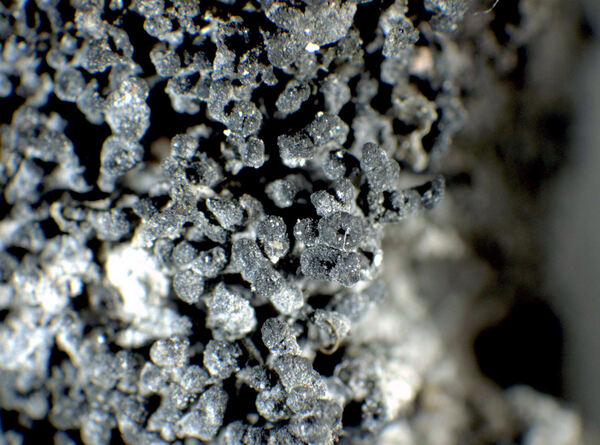
P.L. Nimis CC BY-SA 4.0
TSB 16891

Source: Prieto M., Wedin M., Schultz M. 2024. Phylogeny, evolution and a re-classification of the Lichinomycetes. Studies in Mycology, 109: 595-655. - CC BY-NC-ND
Peccania coralloides, foliose, lobes conspicuously grey pruinose and the marginal apothecia (TARI-3677). Scale bar: 1 mm
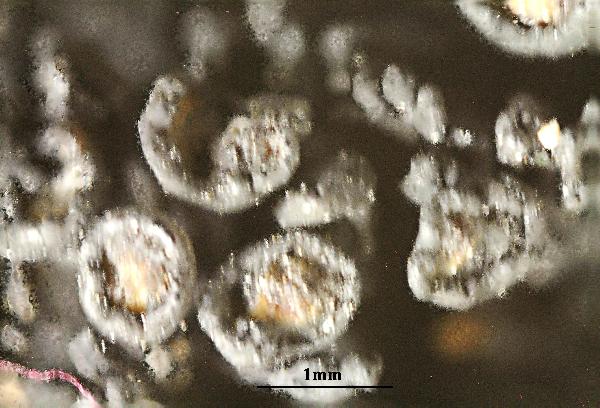
Felix Schumm - CC BY 4.0
[VZ1006], Bohemoslovacia. Slovacia, iugum Carpatorum Strážovská
hormatina dictum, supra pagum Súlov, 450 m. Ad saxa calcrea aprica.
Leg. A. Pišút et A. Vezda, 1.6.1971. EX A. VEZDA LICHENES SELECTI
EXSICCATI NNR. 1006.
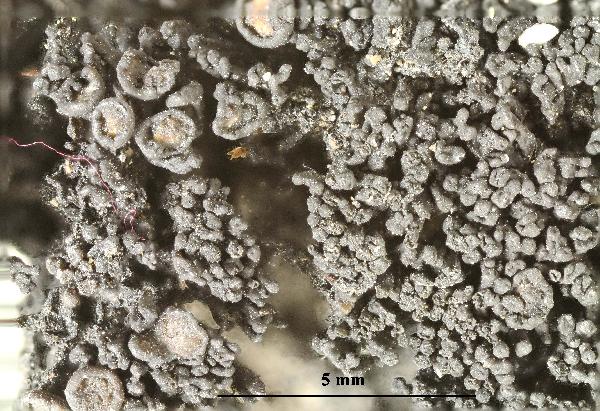
Felix Schumm - CC BY 4.0
[VZ1006], Bohemoslovacia. Slovacia, iugum Carpatorum Strážovská
hormatina dictum, supra pagum Súlov, 450 m. Ad saxa calcrea aprica.
Leg. A. Pišút et A. Vezda, 1.6.1971. EX A. VEZDA LICHENES SELECTI
EXSICCATI NNR. 1006.
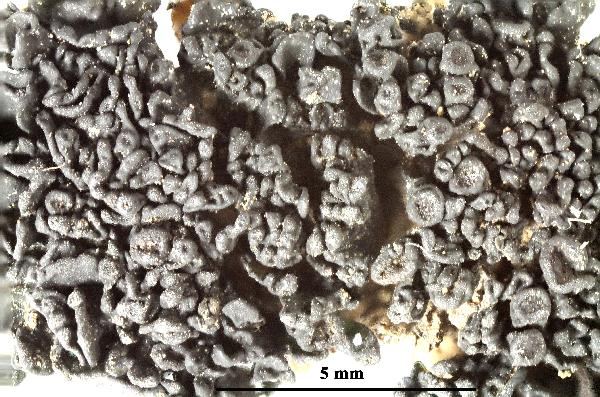
Felix Schumm - CC BY 4.0
[VZ1256], Romania. Dobrogea. Tirgu or, Valea Baba prope pagum
Cheia, 50 m. Ad saxa calcarea. Leg. A. Vezda, 2.5.1974. EX A. VEZDA
LICHENES SELECTI EXSICCATI NR. 1256.
Growth form: Fruticose
Substrata: rocks
Photobiont: cyanobacteria, coccaceous (e.g. Gloeocapsa)
Reproductive strategy: mainly sexual
On otherwise dry surfaces with short periods of water seepage after rain
Commonnes-rarity: (info)
Alpine belt: very rare
Subalpine belt: rather rare
Oromediterranean belt: absent
Montane belt: rather rare
Submediterranean belt: rather common
Padanian area: absent
Humid submediterranean belt: rather common
Humid mediterranean belt: rather rare
Dry mediterranean belt: rare
Predictive model
| Herbarium samples |
 INDEX FUNGORUM
 GBIF
GBIF
 DOLICHENS
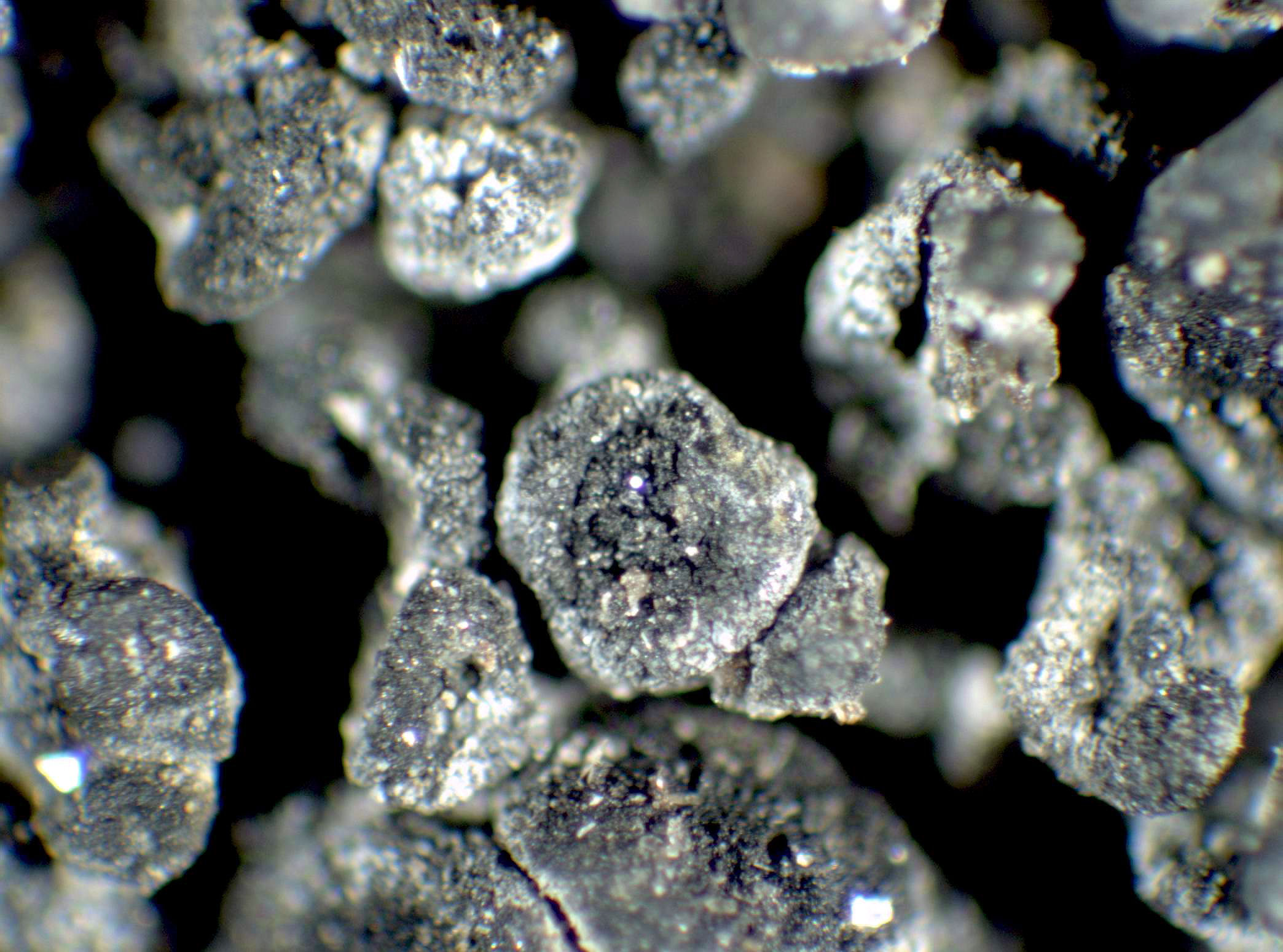
P.L. Nimis CC BY-SA 4.0
TSB 16891
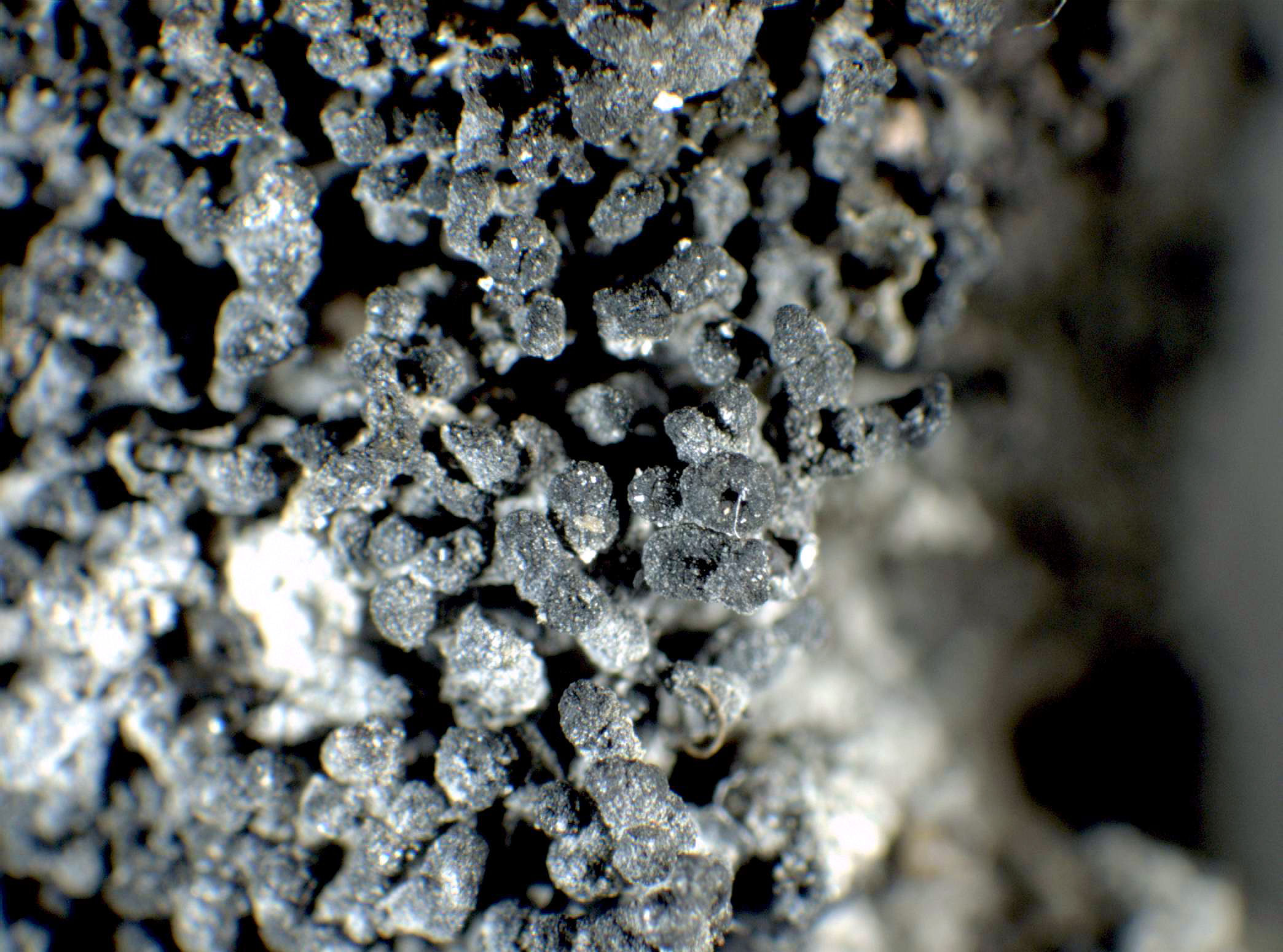
P.L. Nimis CC BY-SA 4.0
TSB 16891

Source: Prieto M., Wedin M., Schultz M. 2024. Phylogeny, evolution and a re-classification of the Lichinomycetes. Studies in Mycology, 109: 595-655. - CC BY-NC-ND
Peccania coralloides, foliose, lobes conspicuously grey pruinose and the marginal apothecia (TARI-3677). Scale bar: 1 mm

Felix Schumm - CC BY 4.0
[VZ1006], Bohemoslovacia. Slovacia, iugum Carpatorum Strážovská hormatina dictum, supra pagum Súlov, 450 m. Ad saxa calcrea aprica. Leg. A. Pišút et A. Vezda, 1.6.1971. EX A. VEZDA LICHENES SELECTI EXSICCATI NNR. 1006.
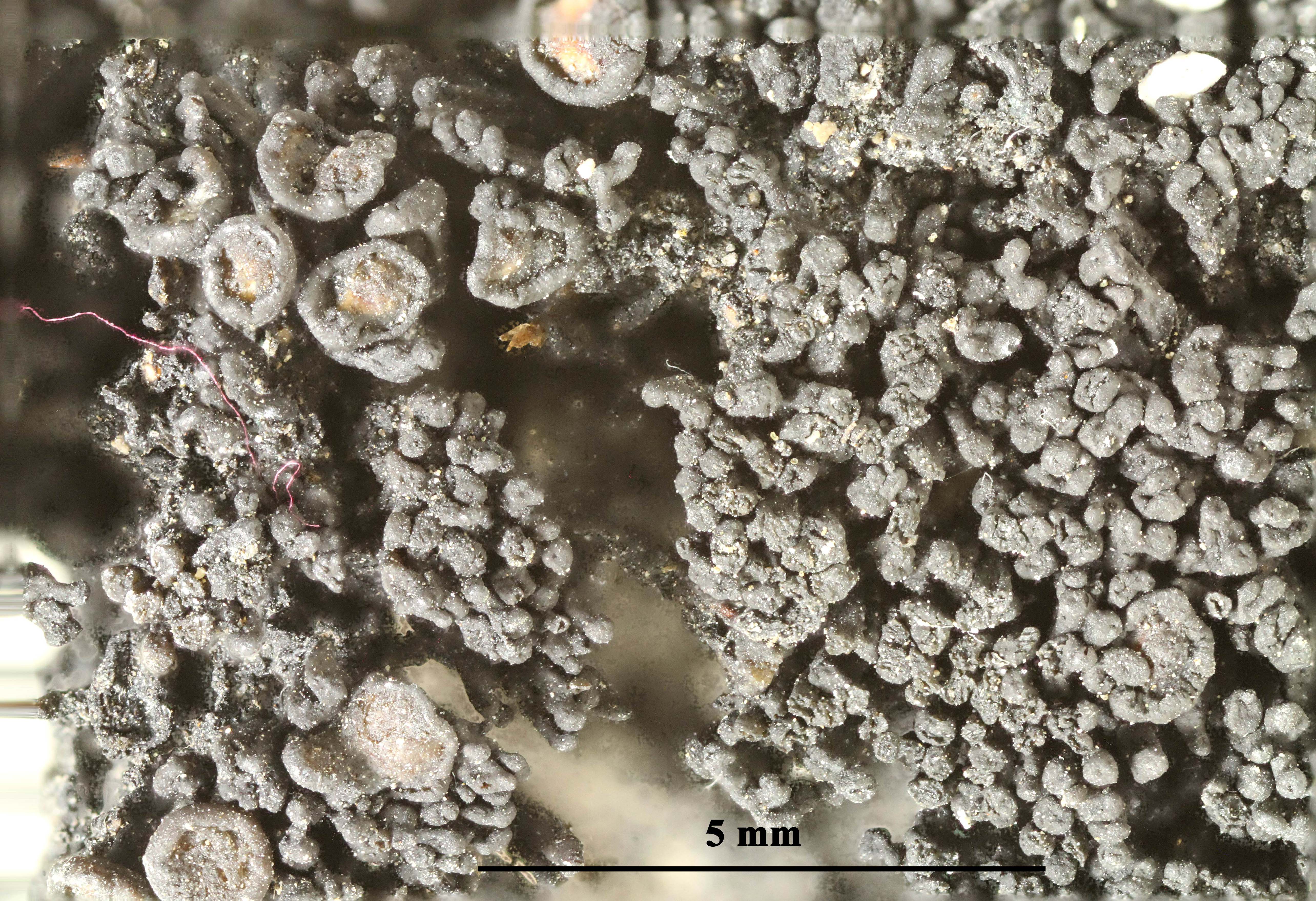
Felix Schumm - CC BY 4.0
[VZ1006], Bohemoslovacia. Slovacia, iugum Carpatorum Strážovská hormatina dictum, supra pagum Súlov, 450 m. Ad saxa calcrea aprica. Leg. A. Pišút et A. Vezda, 1.6.1971. EX A. VEZDA LICHENES SELECTI EXSICCATI NNR. 1006.