Porpidia speirea (Ach.) Kremp. var. speirea
Denkschr. bayer. bot. Ges. Regensburg, 2, 4: 210, 1861. Basionym: Lichen speireus Ach. - Lichenogr. Suec. Prodr.: 59, 1799.
Synonyms: Huilia speirea (Ach.) Kremp.; Lecidea margaritacea Ach. non auct.; Lecidea peltata Zahlbr.; Lecidea speirea (Ach.) Ach.
Distribution: N - Frl (Tretiach & Hafellner 2000), Ven (Caniglia & al. 1999, Lazzarin 2000b), TAA (Nascimbene & al. 2022), Lomb, Piem (Morisi & Sereno 1995, Isocrono & al. 2004, Isocrono & Piervittori 2008), VA (Piervittori & Isocrono 1999, Piervittori & al. 2001, 2004, Isocrono & al. 2008, Favero-Longo & Piervittori 2009, Blisa & al. 2011), Emil (Tretiach & al. 2008, Fariselli & al. 2020), Lig (Brunialti & al. 1999). C - Tosc, Sar.
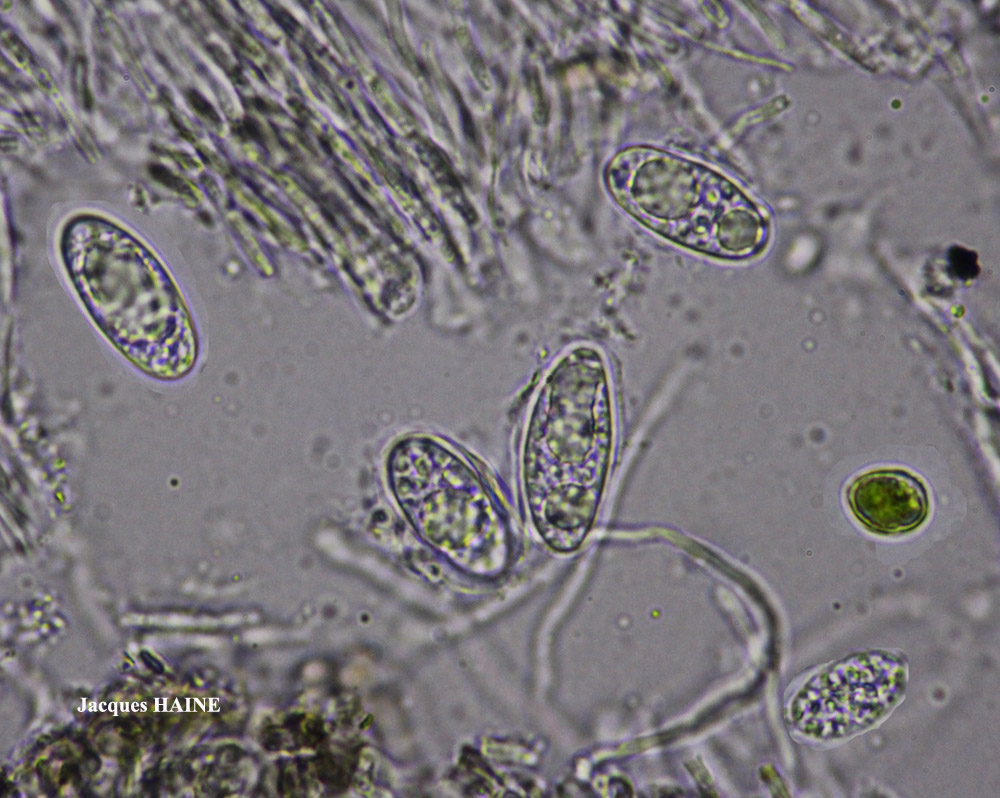
Description: Thallus crustose, episubstratic, 0.2-1.5 mm thick, continuous to rimose, chalky white, rarely delimited by a thin dark prothallus. Medulla white, I+ blue (rarely I-). Apothecia lecideine, black, (1-)1.6-1.9(-2.5) mm across, at first semi-immersed in the thallus, then broadly sessile, often separated from the thallus by a circular crack or surrounded by a thalline rim, with an initially flat, then strongly convex, not umbonate, usually epruinose disc and a thin, epruinose, finally often excluded proper margin. Proper exciple, when young, with a broad marginal black layer and a narrow inner colourless layer of radiating hyphae, the latter progressively disappearing, leaving a thin, black-brown exciple reacting K-; epithecium brownish green to green-black, 15-20 µm high; hymenium very pale yellowish green to colourless, 70-105 µm high; paraphyses coherent, branched and anastomosing in upper part, 1.6-2.2 µm thick at mid-level, the apical cell to 3.5 µm wide; hypothecium brown-black, 200-600 µm high. Asci 8-spored, elongate-clavate, with a thin, outer amyloid layer and a thickened tholus penetrated by a pore, the sides of which are strongly amyloid, Porpidia-type. Ascospores 1-celled, hyaline, ellipsoid, (12-)14-19(-21) x (5-)6-8(-11) μm, not halonate, often filled by conspicuous oil droplets. Pycnidia black, immersed. Conidia bacilliform, 6.5-12 µm long. Photobiont chlorococcoid. Spot tests: cortex and especially medulla K- or K+ pale yellow, C-, KC-, P- or P+ pale yellow, K/UV+ mauve. Chemistry: confluentic acid (major), 2’-O-methylmicrophillinic and 2’-O-methylperlatolic acids (minor), plus traces of other substances.Note: on inclined faces of schist and weakly calciferous rocks in cold-humid situations, mostly in upland areas, reaching beyond treeline in the Alps.
Growth form: Crustose
Substrata: rocks
Photobiont: green algae other than Trentepohlia
Reproductive strategy: mainly sexual
Commonnes-rarity: (info)
Alpine belt: rather common
Subalpine belt: common
Oromediterranean belt: very rare
Montane belt: extremely rare
Submediterranean belt: absent
Padanian area: absent
Humid submediterranean belt: absent
Humid mediterranean belt: absent
Dry mediterranean belt: absent
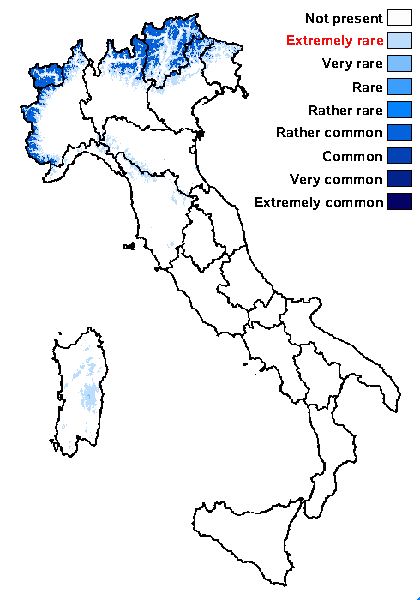
Predictive model
Herbarium samples
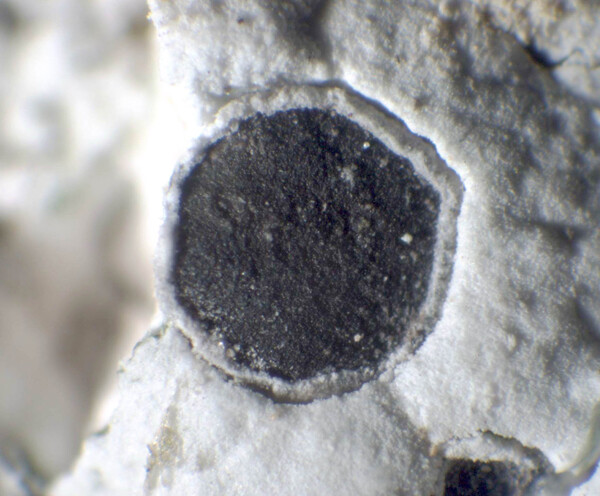

P.L. Nimis CC BY-SA 04
TSB 34820
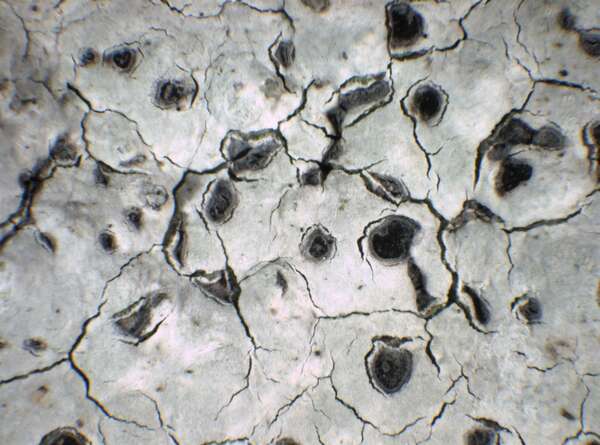
P.L. Nimis; Owner: Department of Life Sciences, University of Trieste
Herbarium: TSB (34820)
2002/02/12
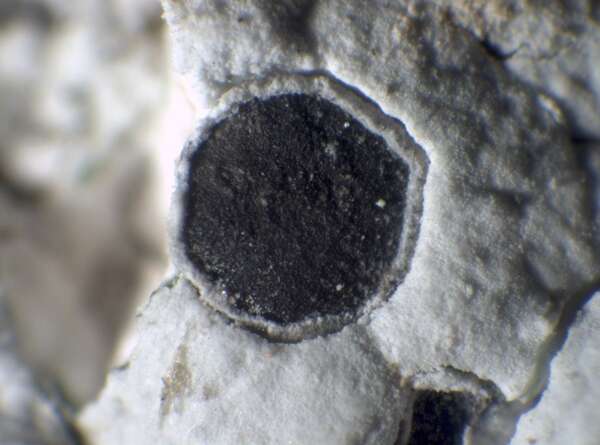
P.L. Nimis; Owner: Department of Life Sciences, University of Trieste
Herbarium: TSB (34820)
2002/02/12
apothecium
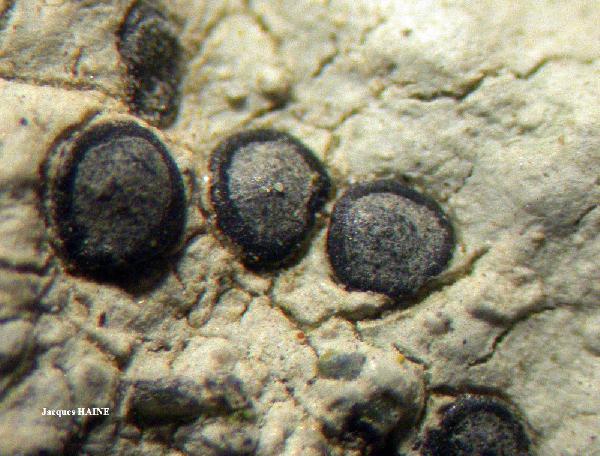
Jacques Haine - Source: http://www.lichensmaritimes.org/index.php?task=fiche&lichen=997&lang=en
France, Corse, Calvi
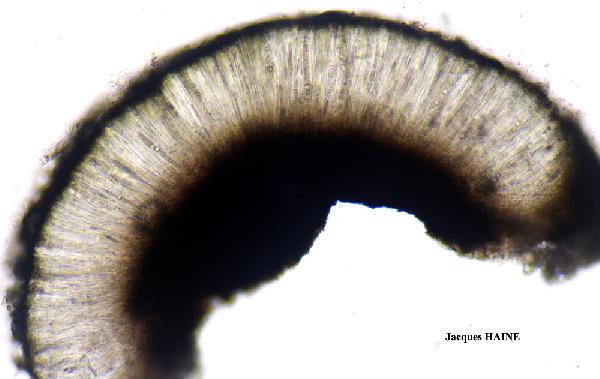
Jacques Haine - Source: http://www.lichensmaritimes.org/index.php?task=fiche&lichen=997&lang=en
France, Corse, Calvi
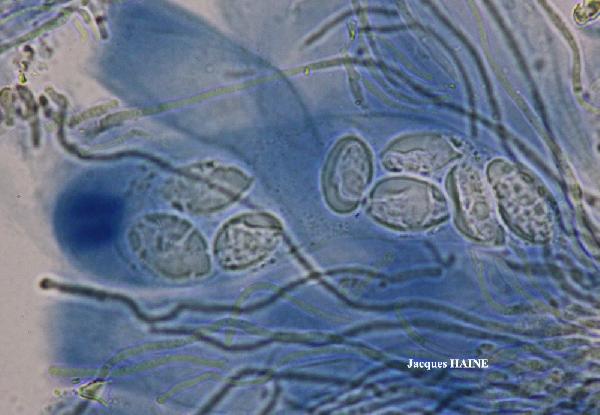
Jacques Haine - Source: http://www.lichensmaritimes.org/index.php?task=fiche&lichen=997&lang=en
France, Corse, Calvi
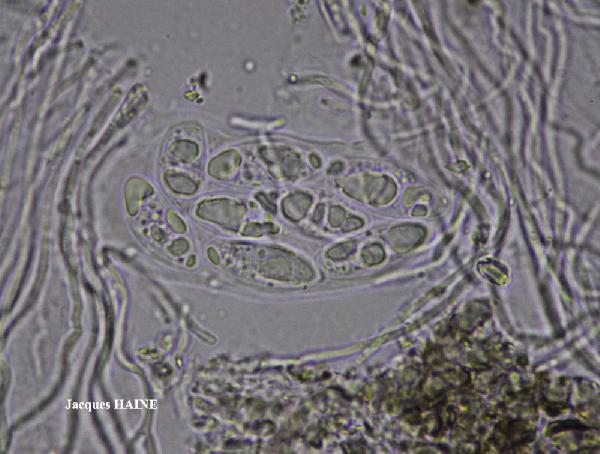
Jacques Haine - Source: http://www.lichensmaritimes.org/index.php?task=fiche&lichen=997&lang=en
France, Corse, Calvi
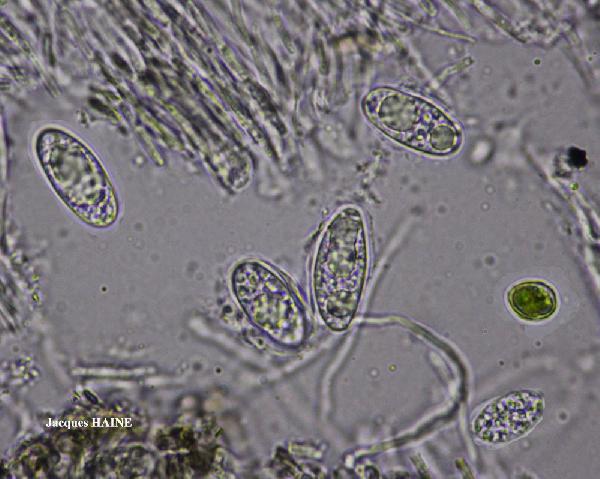
Jacques Haine - Source: http://www.lichensmaritimes.org/index.php?task=fiche&lichen=997&lang=en
France, Corse, Calvi
Growth form: Crustose
Substrata: rocks
Photobiont: green algae other than Trentepohlia
Reproductive strategy: mainly sexual
Commonnes-rarity: (info)
Alpine belt: rather common
Subalpine belt: common
Oromediterranean belt: very rare
Montane belt: extremely rare
Submediterranean belt: absent
Padanian area: absent
Humid submediterranean belt: absent
Humid mediterranean belt: absent
Dry mediterranean belt: absent
Predictive model
| Herbarium samples |
 DOLICHENS
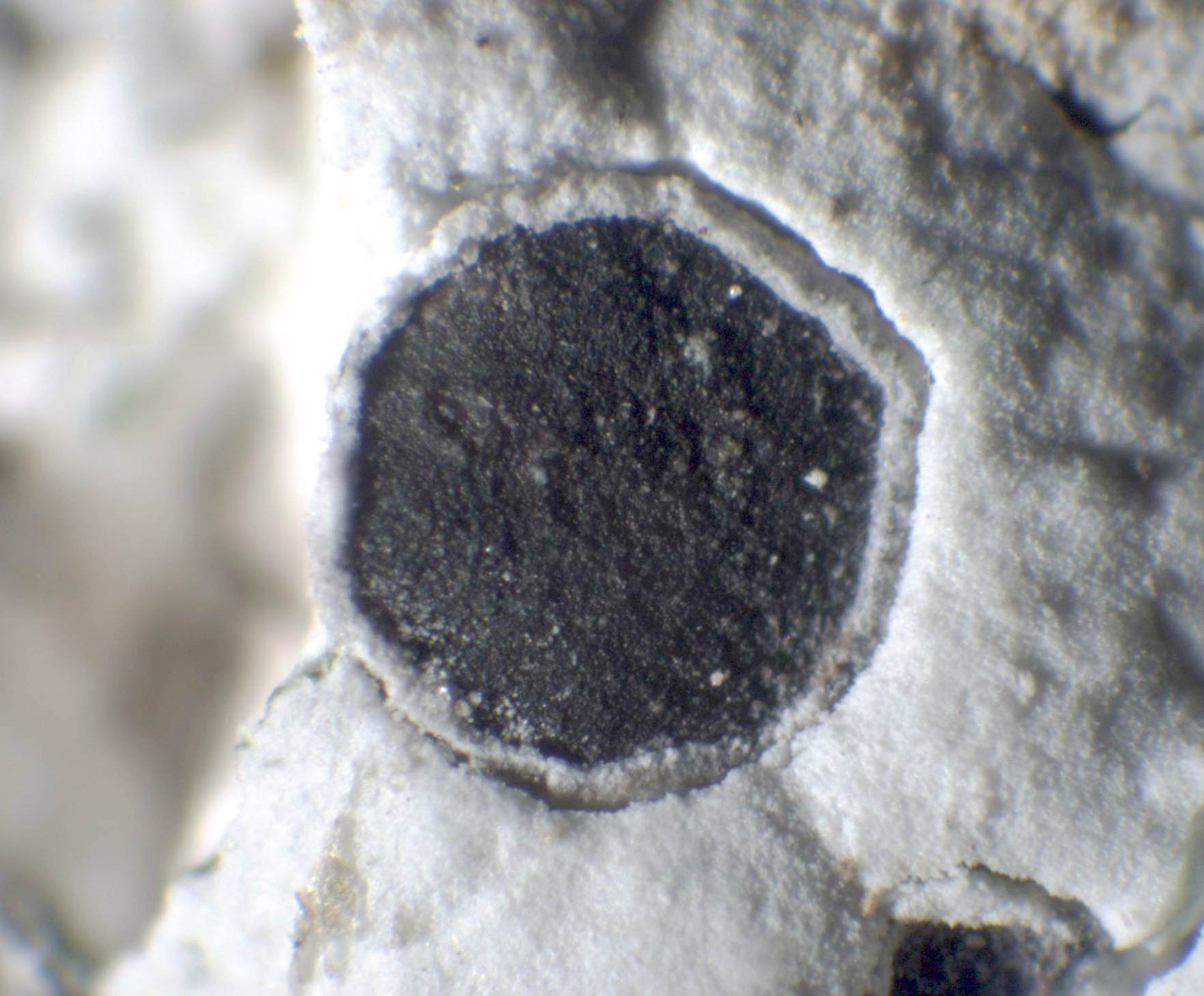
P.L. Nimis CC BY-SA 04
TSB 34820
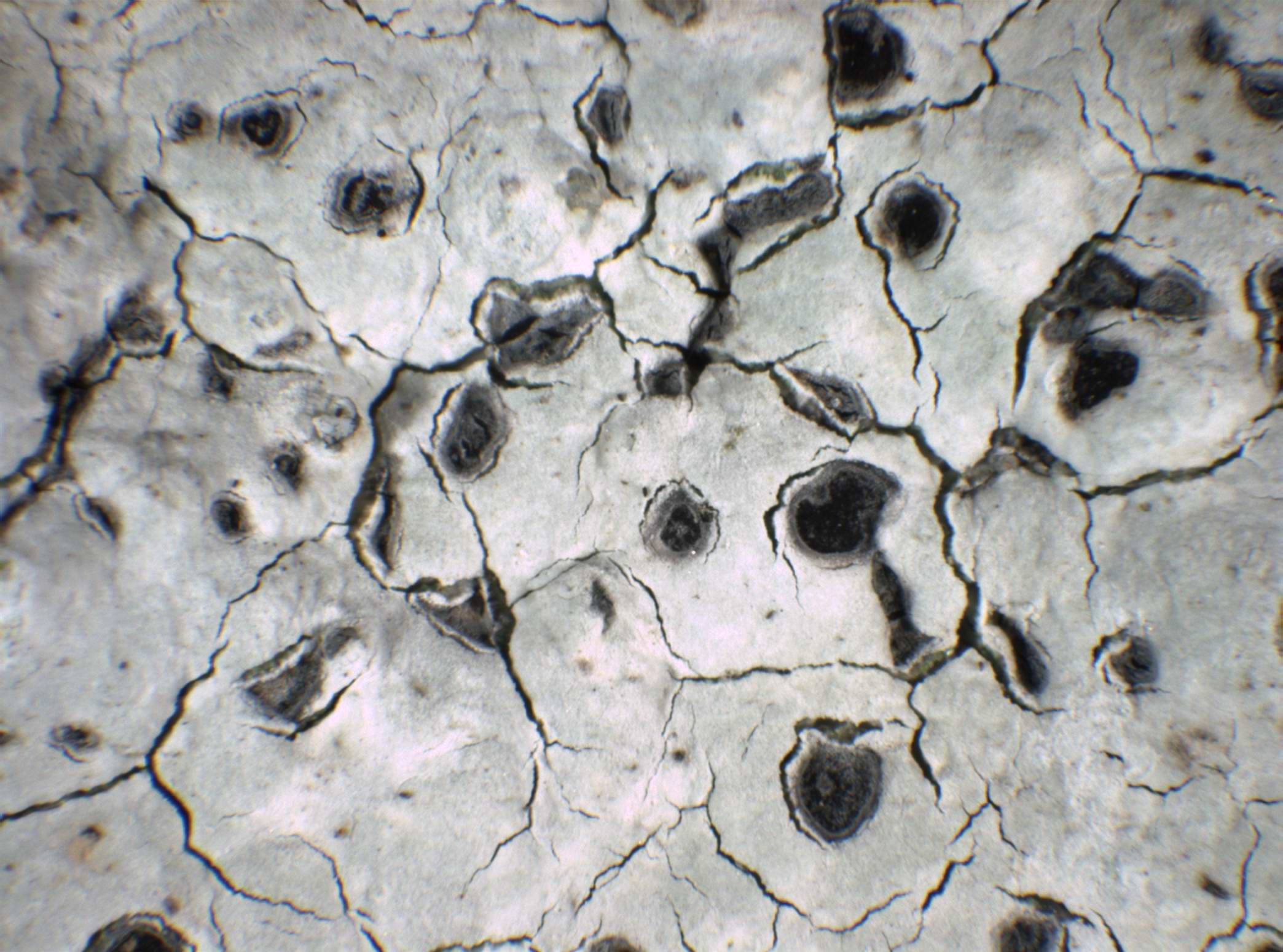
P.L. Nimis; Owner: Department of Life Sciences, University of Trieste
Herbarium: TSB (34820)
2002/02/12
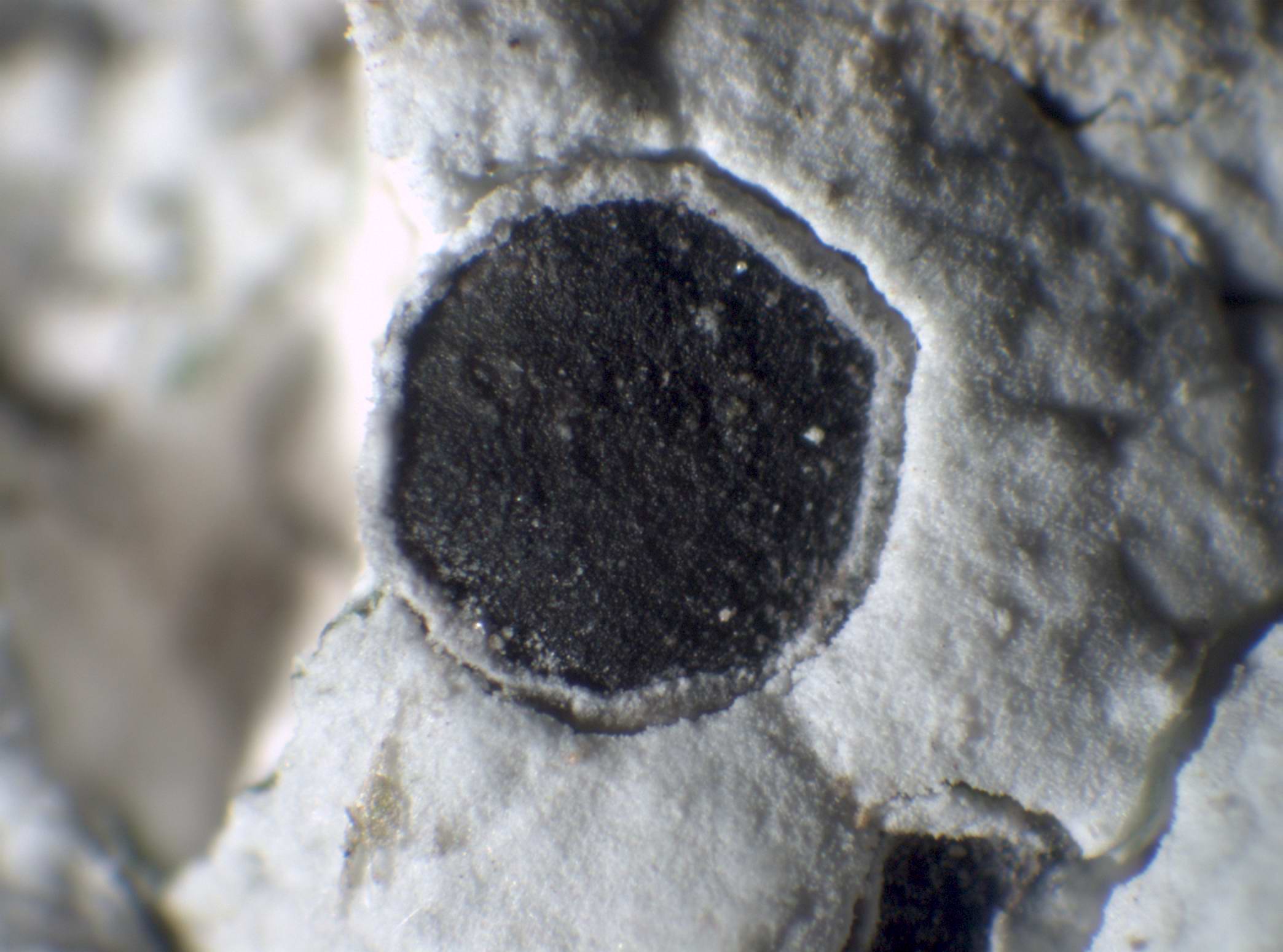
P.L. Nimis; Owner: Department of Life Sciences, University of Trieste
Herbarium: TSB (34820)
2002/02/12
apothecium
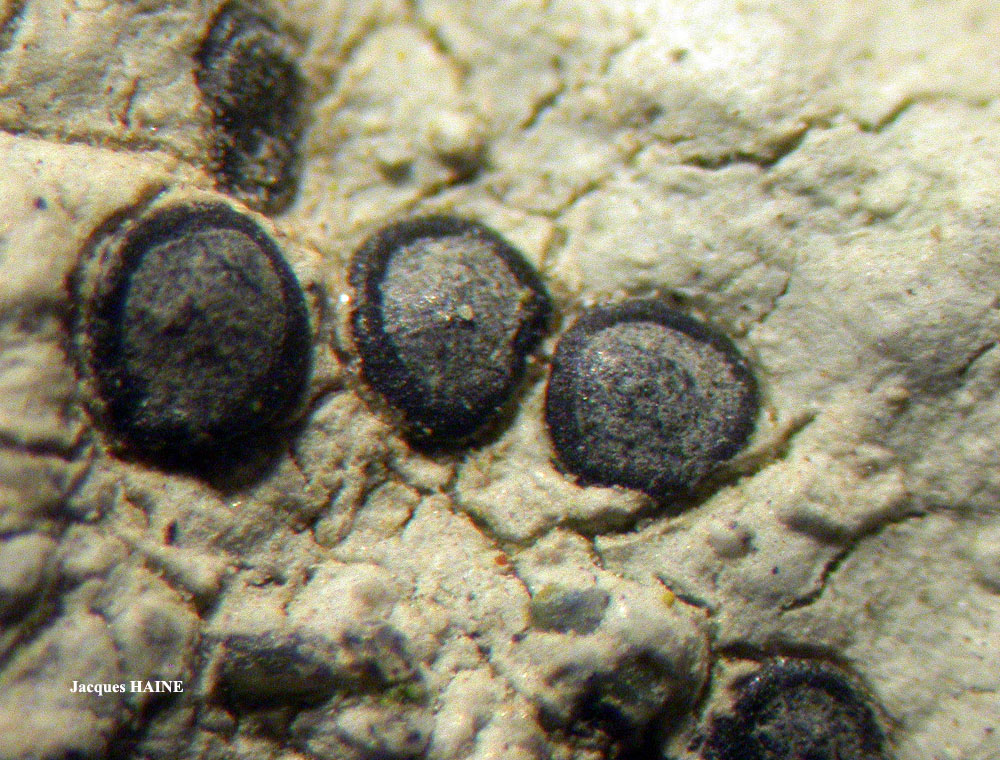
Jacques Haine - Source: http://www.lichensmaritimes.org/index.php?task=fiche&lichen=997&lang=en
France, Corse, Calvi
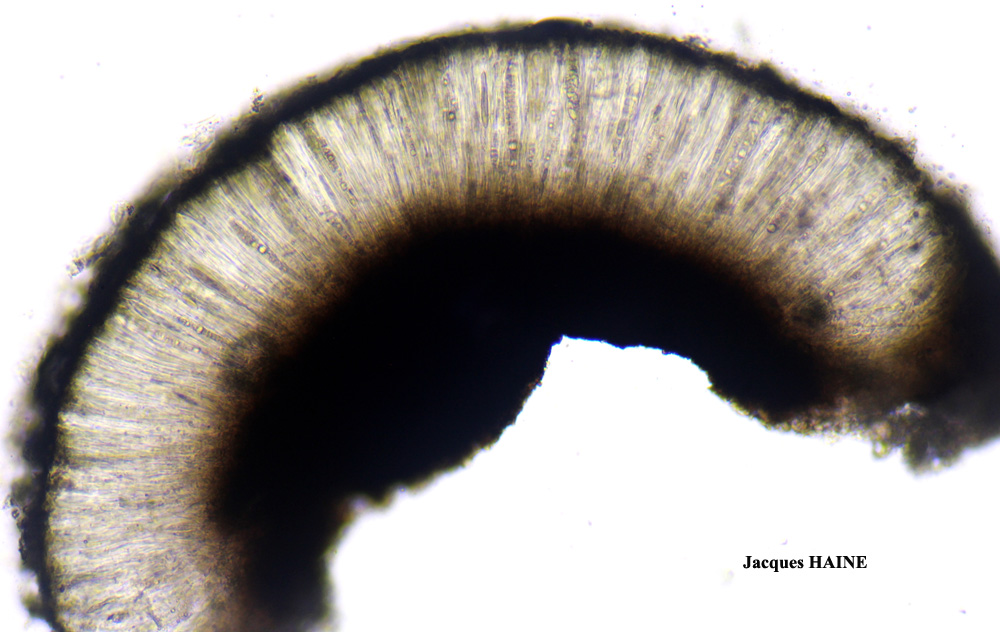
Jacques Haine - Source: http://www.lichensmaritimes.org/index.php?task=fiche&lichen=997&lang=en
France, Corse, Calvi
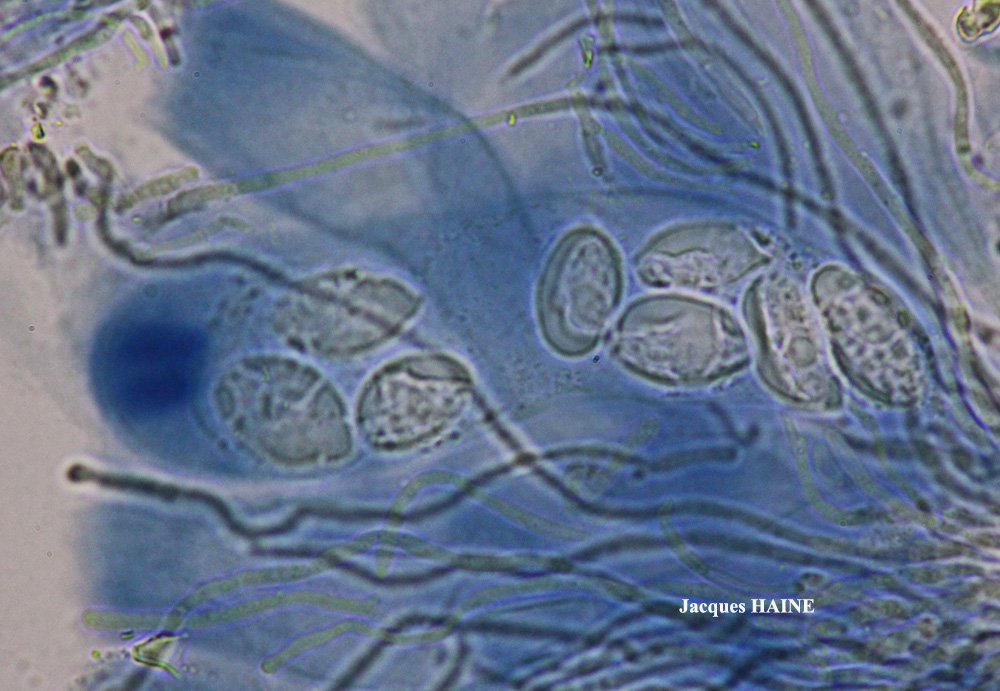
Jacques Haine - Source: http://www.lichensmaritimes.org/index.php?task=fiche&lichen=997&lang=en
France, Corse, Calvi
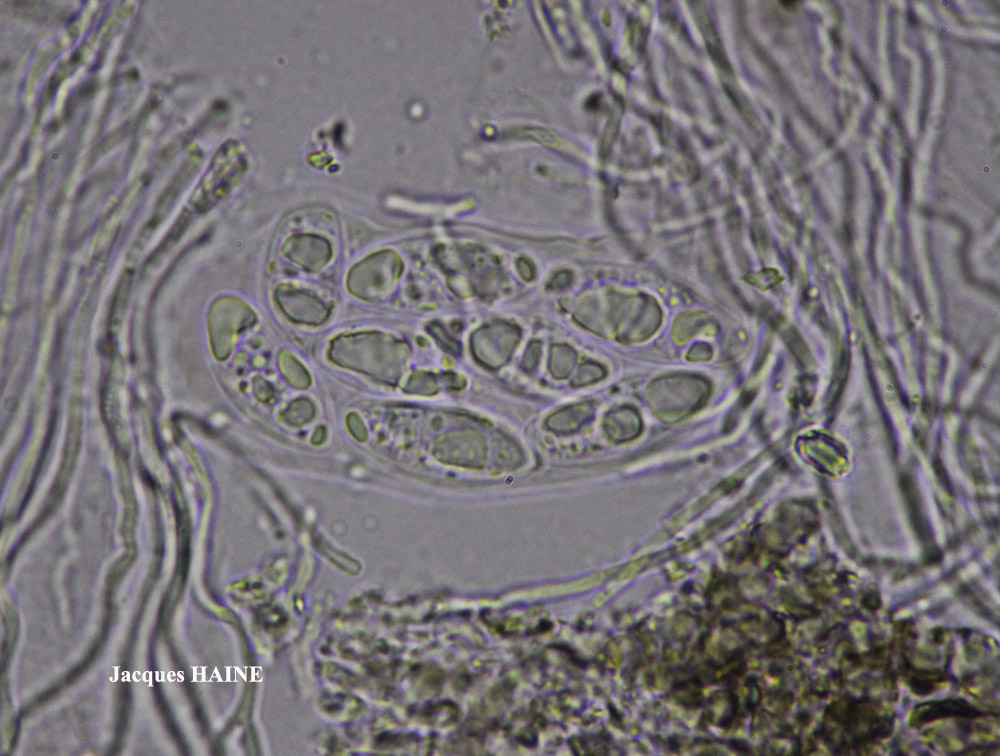
Jacques Haine - Source: http://www.lichensmaritimes.org/index.php?task=fiche&lichen=997&lang=en
France, Corse, Calvi