Ramboldia insidiosa (Th. Fr.) Hafellner
in Hafellner & Türk, Carinthia, 2, 185/105: 624, 1995. Basionym: Lecidea insidiosa Th. Fr. - Bot. Not.: 153, 1867.
Synonyms: Nesolechia erichsenii Räsänen
Distribution: N - Ven (Nascimbene & Caniglia 2000, 2003c, Thor & Nascimbene 2007), TAA (Nascimbene & al. 2006e, 2022), Lomb. C - Sar. S - Bas (CLU 17854).
Description: Thallus crustose, growing on Lecanora varia, at first apparently not lichenized and appearing as a blackening of the host, later forming a granulose to rimose, greenish brown, independent thallus with I+ violet hyphae. Apothecia lecideine/biatorine, black (often with a blue-greenish tinge when wet), at first punctiform, then expanded and more or less sessile, 0.2-0.6(-0.7) mm across, with a convex disc and a somewhat paler, thin, soon excluded proper margin. Proper exciple prosoplectenchymatous, of radiating, branched and anastomosing hyphae, greenish brown in outer part, paler within; epithecium dark green, with an epipsamma of brownish crystals dissolving in K, N+ purple-red; hymenium colourless, 40-60 µm high; paraphyses strongly coherent, mostly simple, 1-2 µm thick at mid-level, the apical cells clavate and to 3.5 µm wide, often with a dark cap; hypothecium colourless, pale green or pale brown. Asci 8-spored, clavate, the tholus with a strongly amyloid lateral part, a non-amyloid broadly diverging axial mass with a thick, non-amyloid cap above, and a weakly amyloid outer layer Lecanora-type. Ascospores 1-celled, hyaline, ellipsoid, 8-12 x 4.5-5.5(-8) µm. Photobiont chlorococcoid. Spot tests: all negative (but usually difficult to distinguish from those of the host). Chemistry: thallus without lichen substances.Note: obligately lichenicolous on Lecanora varia, on hard lignum, more rarely on smooth, hard bark, most frequent in the Alps (Poelt 1974); the material from Sardinia on Protoparmeliopsis muralis, is worthy of further study. It is included in the Italian red list of epiphytic lichens as “Vulnerable” (Nascimbene & al. 2013c).
Growth form: Crustose
Substrata: bark and lignum
Photobiont: green algae other than Trentepohlia
Reproductive strategy: mainly sexual
paras Lecanora varia
Commonnes-rarity: (info)
Alpine belt: absent
Subalpine belt: very rare
Oromediterranean belt: absent
Montane belt: very rare
Submediterranean belt: absent
Padanian area: absent
Humid submediterranean belt: absent
Humid mediterranean belt: absent
Dry mediterranean belt: absent
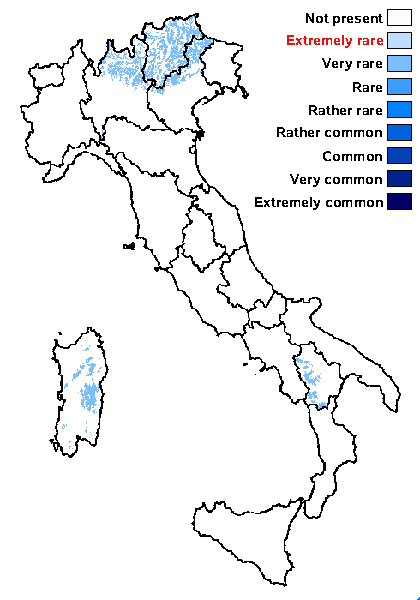
Predictive model
Herbarium samples
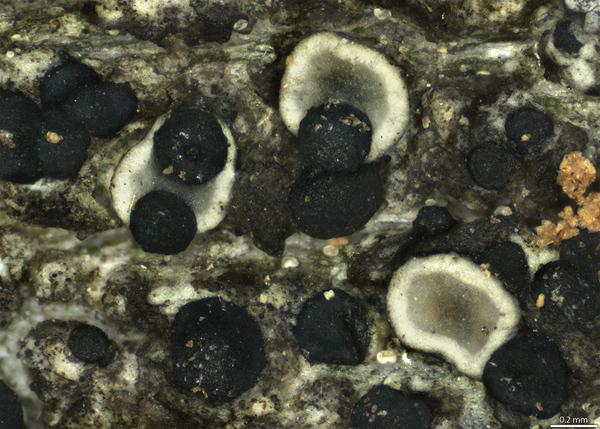
Walter Obermayer CC BY-SA 4.0 - Source: Lichens of Noricum - http://lichens-of-noricum.uni-graz.at/
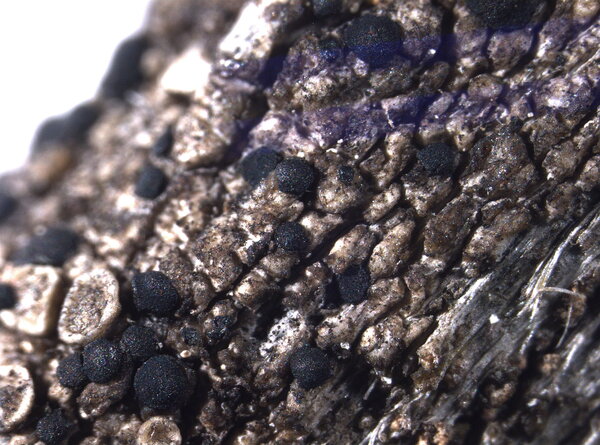

Pier Luigi Nimis CC BY-SA 4.0
TSB 41132
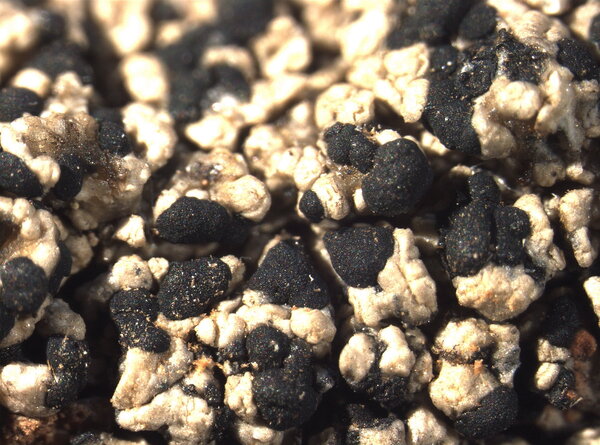
P.L. Nimis CC BY-SA 04
TSB 37140
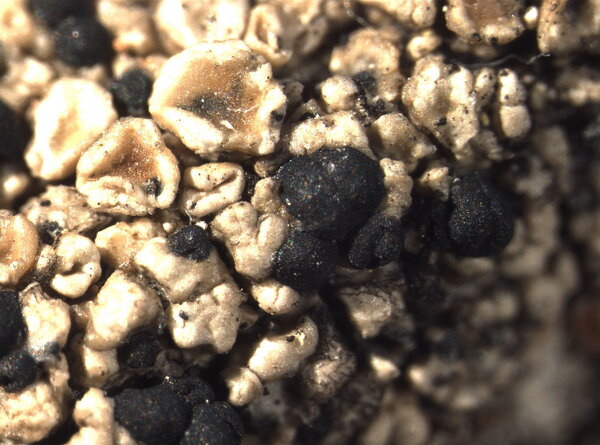
P.L. Nimis CC BY-SA 04
TSB 37140
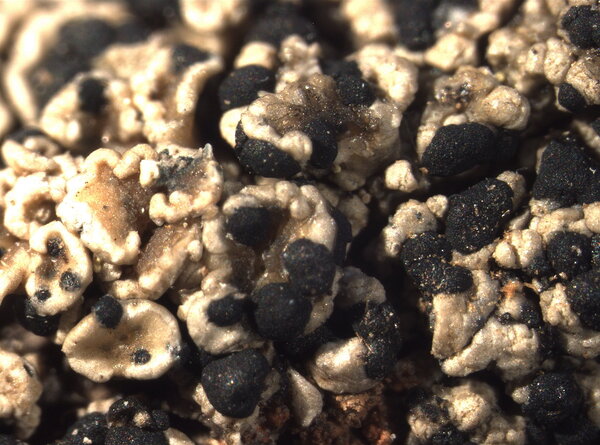
P.L. Nimis CC BY-SA 04
TSB 37140
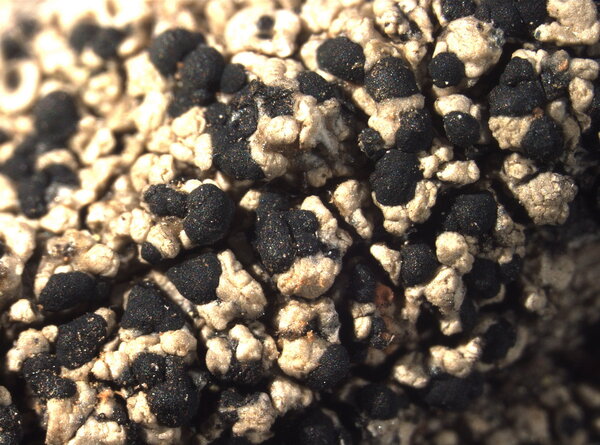
P.L. Nimis CC BY-SA 04
TSB 37140
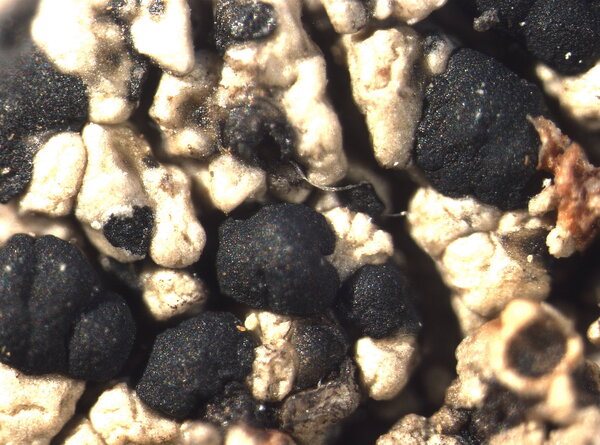
P.L. Nimis CC BY-SA 04
TSB 37140
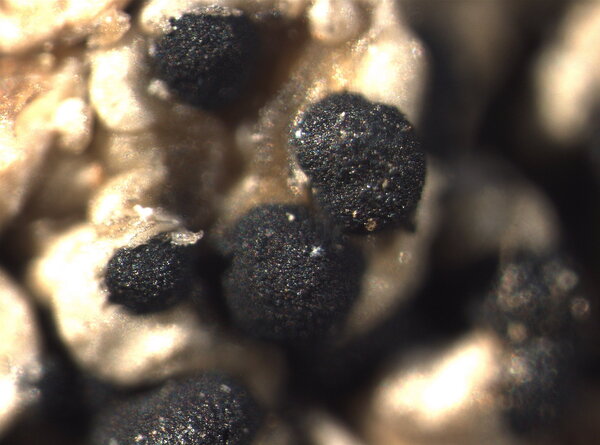
P.L. Nimis CC BY-SA 04
TSB 37140
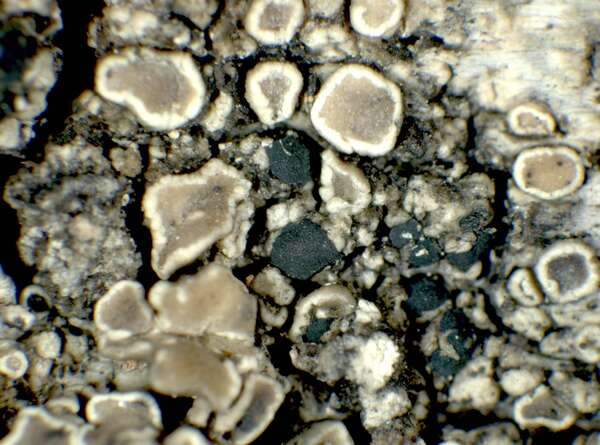
P.L. Nimis; Owner: Department of Life Sciences, University of Trieste
Herbarium: TSB (11869)
2001/11/26
black apothecia sitting on the host, Lecanora varia
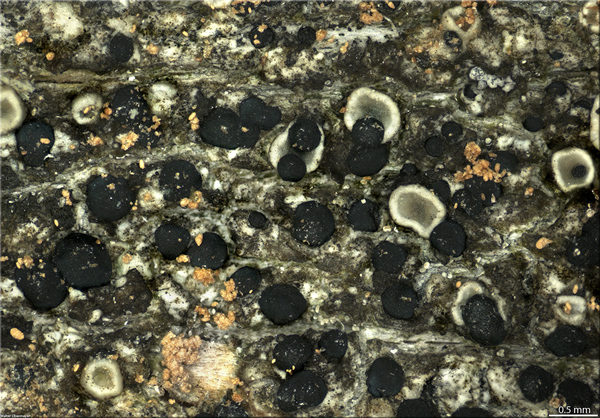
Walter Obermayer CC BY-SA 4.0 - Source: Lichens of Noricum - http://lichens-of-noricum.uni-graz.at/
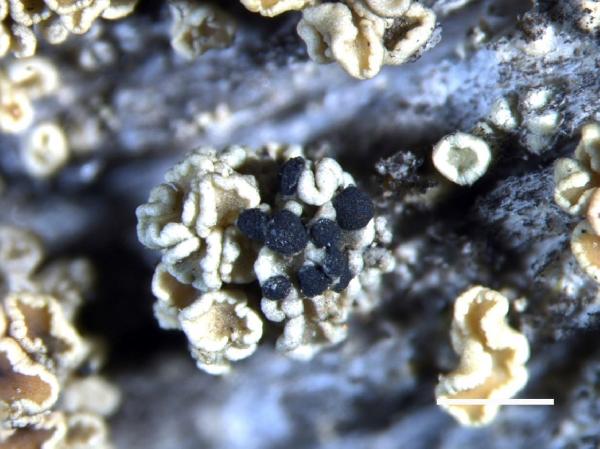
Source: Frisch, A., Klepsland, J., Palice, Z., Bendiksby, M., Tønsberg, T. & Holien, H. 2020. New and noteworthy lichens and lichenicolous fungi from Norway. Graphis Scripta 32 (1): 1–47. Oslo. ISSN 2002-4495. - CC BY-4.0
Ramboldia insidiosa (O-L-221295). Scale = 1 mm. Photo: A. Frisch.
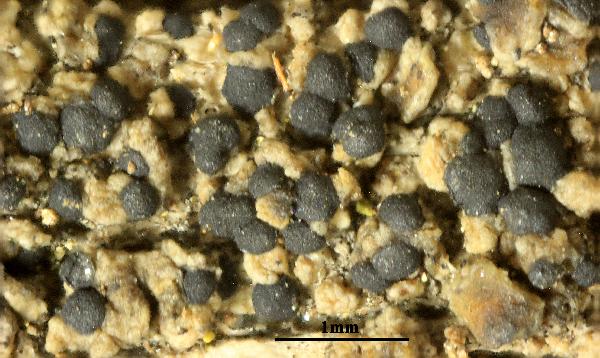
Felix Schumm - CC BY 4.0
[VZ1590}, Austria. Carinthia, distr. Greifenburg, regio montis Kreuzeck:
Emberger Alm, 1700 m. Ad lignum putridum faeniliorum. Leg.
H. Hertel, J. Poelt et A. Vezda, 16.7.1978. EX A. VEZDA LICHENES
SELECTI EXSICCATI NR. 1590 - As Lecidea insidiosa
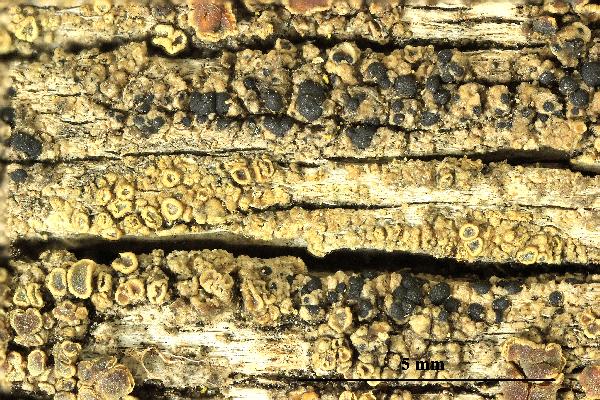
Felix Schumm - CC BY 4.0
[VZ1590}, Austria. Carinthia, distr. Greifenburg, regio montis Kreuzeck:
Emberger Alm, 1700 m. Ad lignum putridum faeniliorum. Leg.
H. Hertel, J. Poelt et A. Vezda, 16.7.1978. EX A. VEZDA LICHENES
SELECTI EXSICCATI NR. 1590 - As Lecidea insidiosa
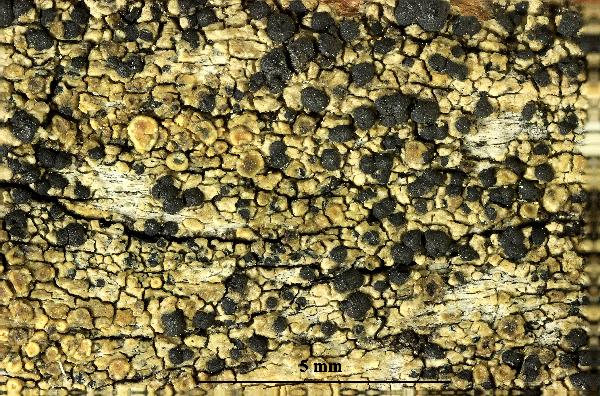
Felix Schumm - CC BY 4.0
[VZ2310], Austria. Carinthia, Nockberge, Nockalmstrasse, 1.5 km ad
australem et occidentem versus ab Eisentalhöhe, 1860 m. Ad lignum
Pini cembrae. Leg. R. Türk et N. Türk, 15.10.1988. EX A. VEZDA LICHENES SELECTI EXSICCATI NR. 2310. - As Lecidea insidiosa
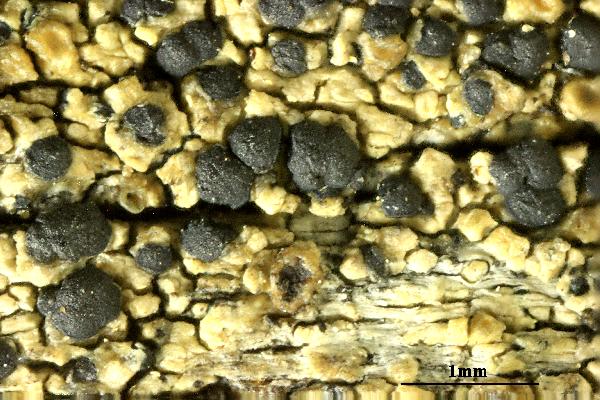
Felix Schumm - CC BY 4.0
[VZ2310], Austria. Carinthia, Nockberge, Nockalmstrasse, 1.5 km ad
australem et occidentem versus ab Eisentalhöhe, 1860 m. Ad lignum
Pini cembrae. Leg. R. Türk et N. Türk, 15.10.1988. EX A. VEZDA LICHENES SELECTI EXSICCATI NR. 2310. - As Lecidea insidiosa
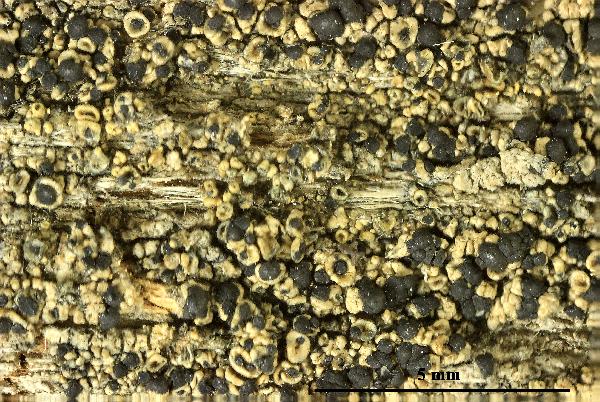
Felix Schumm - CC BY 4.0
[VZ1809], Austria. Tirolia, in alpibus Ötztaler Alpen dictis, Hochsölden,
2120 m. Ad lignum faeniliorum. Leg. K. Kalb et S. Moosburger,
17.6.1981. EX A. VEZDA LICHENES SELECTI EXSICCATI NR. 1809. - As Lecidea insidiosa
Growth form: Crustose
Substrata: bark and lignum
Photobiont: green algae other than Trentepohlia
Reproductive strategy: mainly sexual
paras Lecanora varia
Commonnes-rarity: (info)
Alpine belt: absent
Subalpine belt: very rare
Oromediterranean belt: absent
Montane belt: very rare
Submediterranean belt: absent
Padanian area: absent
Humid submediterranean belt: absent
Humid mediterranean belt: absent
Dry mediterranean belt: absent
Predictive model
| Herbarium samples |
 INDEX FUNGORUM
 GBIF
GBIF
 DOLICHENS
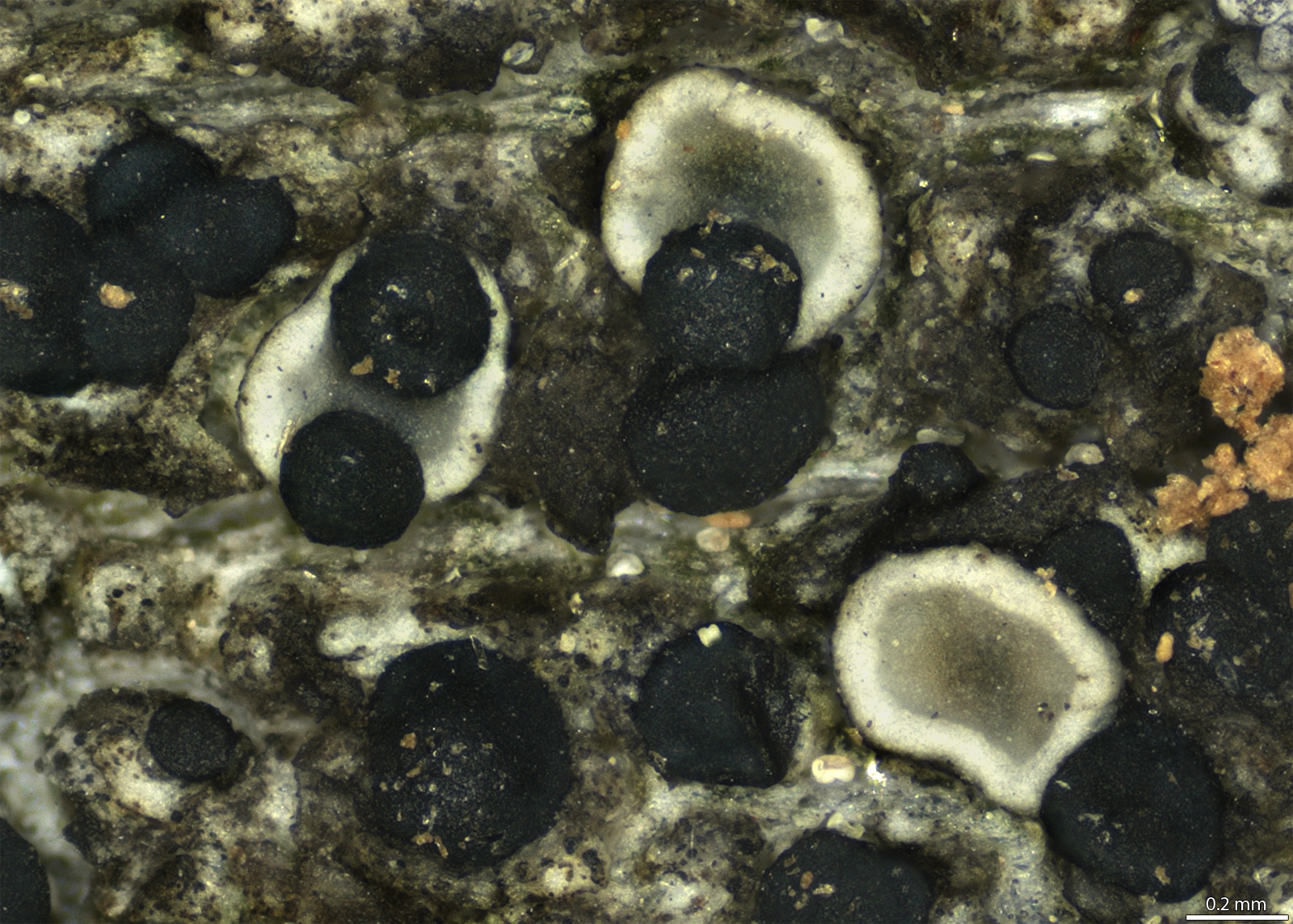
Walter Obermayer CC BY-SA 4.0 - Source: Lichens of Noricum - http://lichens-of-noricum.uni-graz.at/
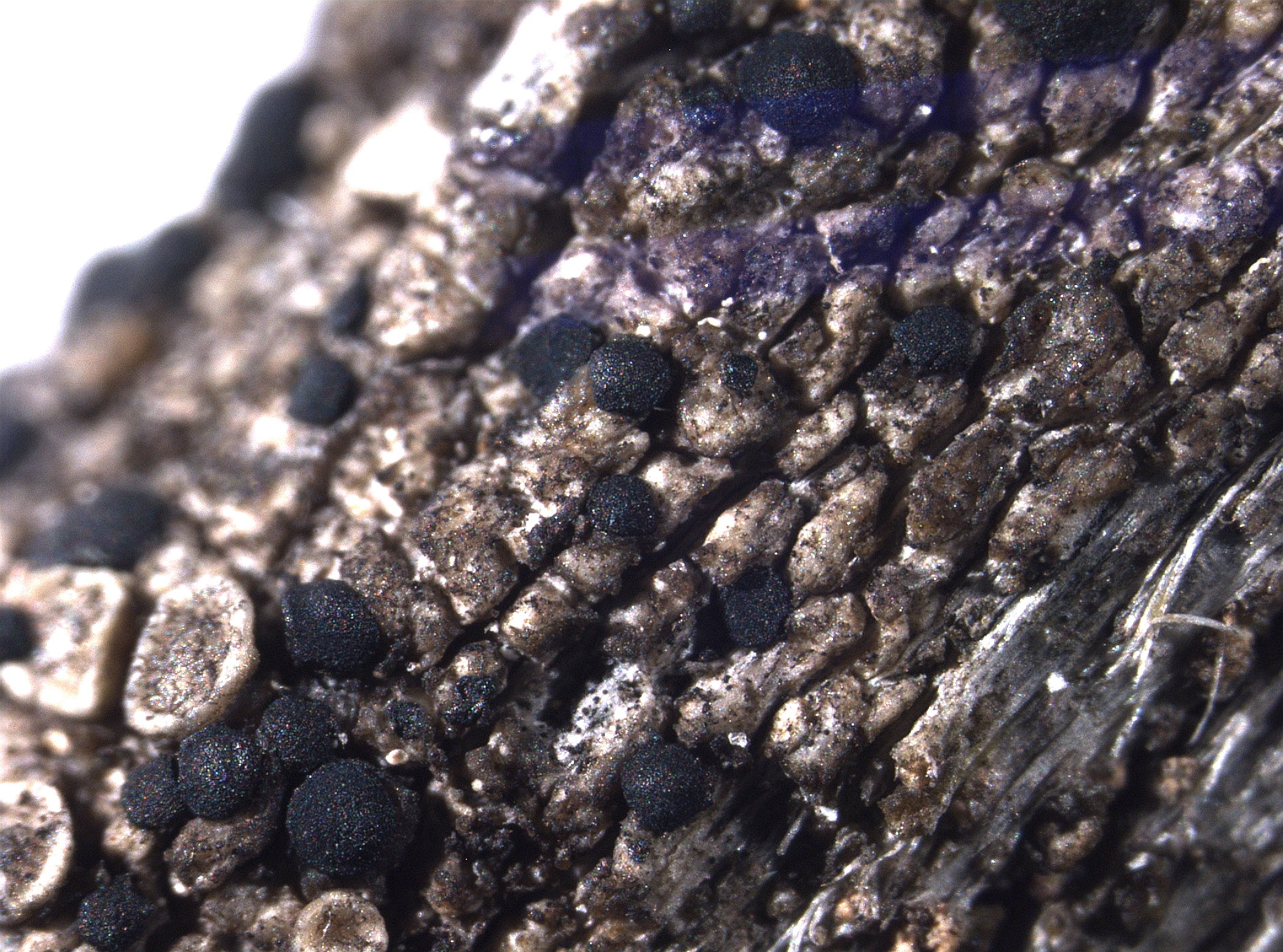
Pier Luigi Nimis CC BY-SA 4.0
TSB 41132
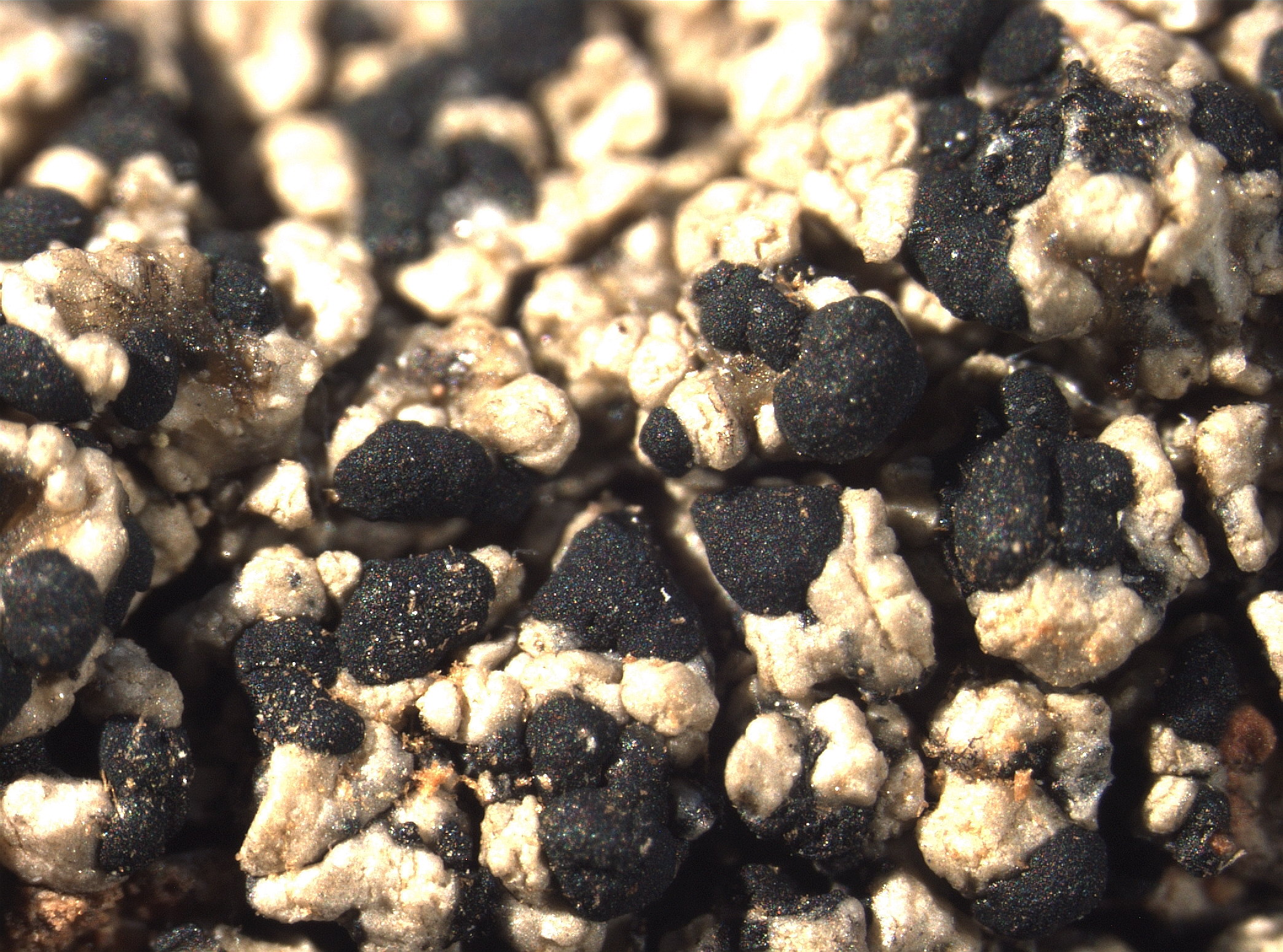
P.L. Nimis CC BY-SA 04
TSB 37140
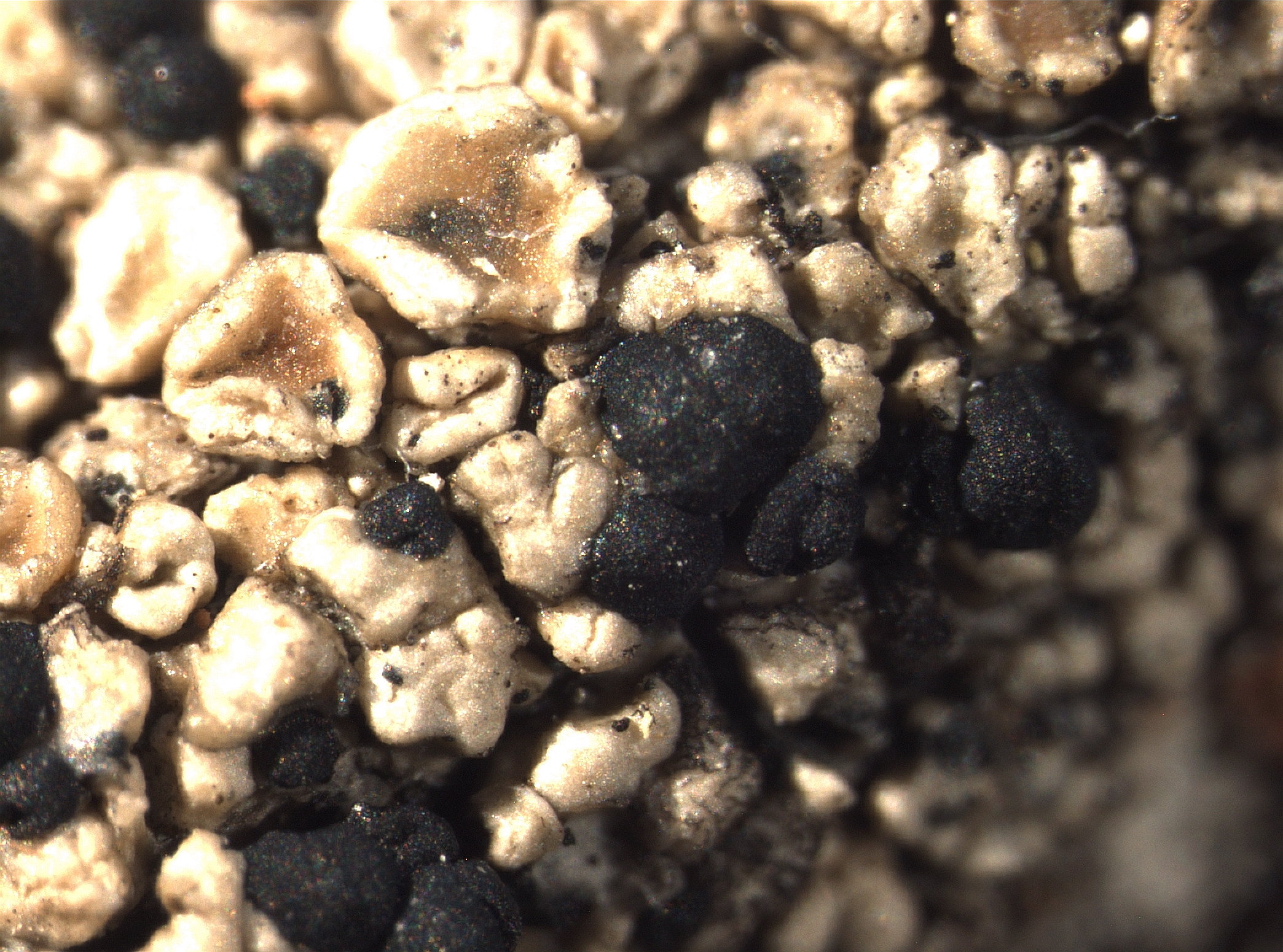
P.L. Nimis CC BY-SA 04
TSB 37140
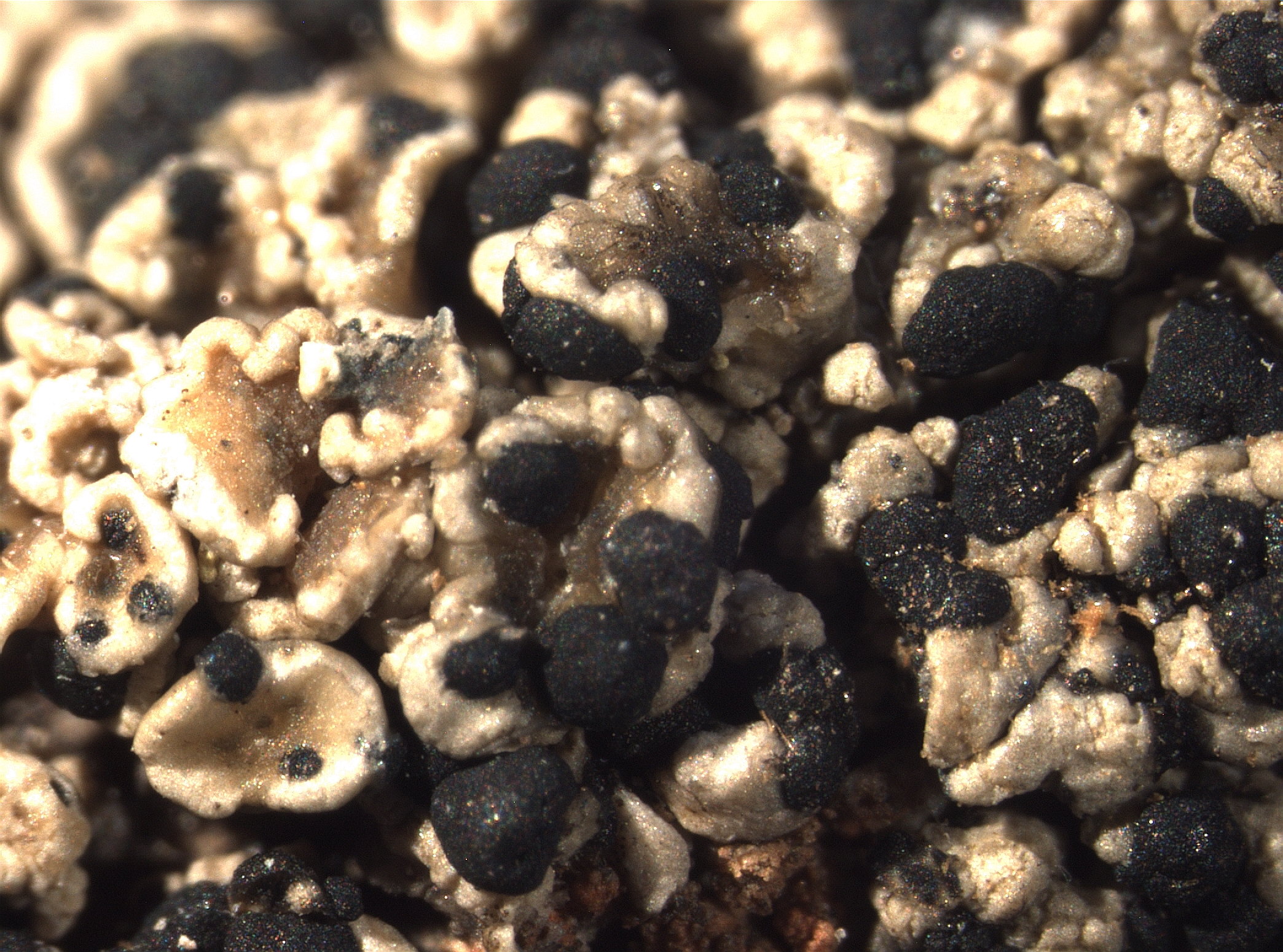
P.L. Nimis CC BY-SA 04
TSB 37140
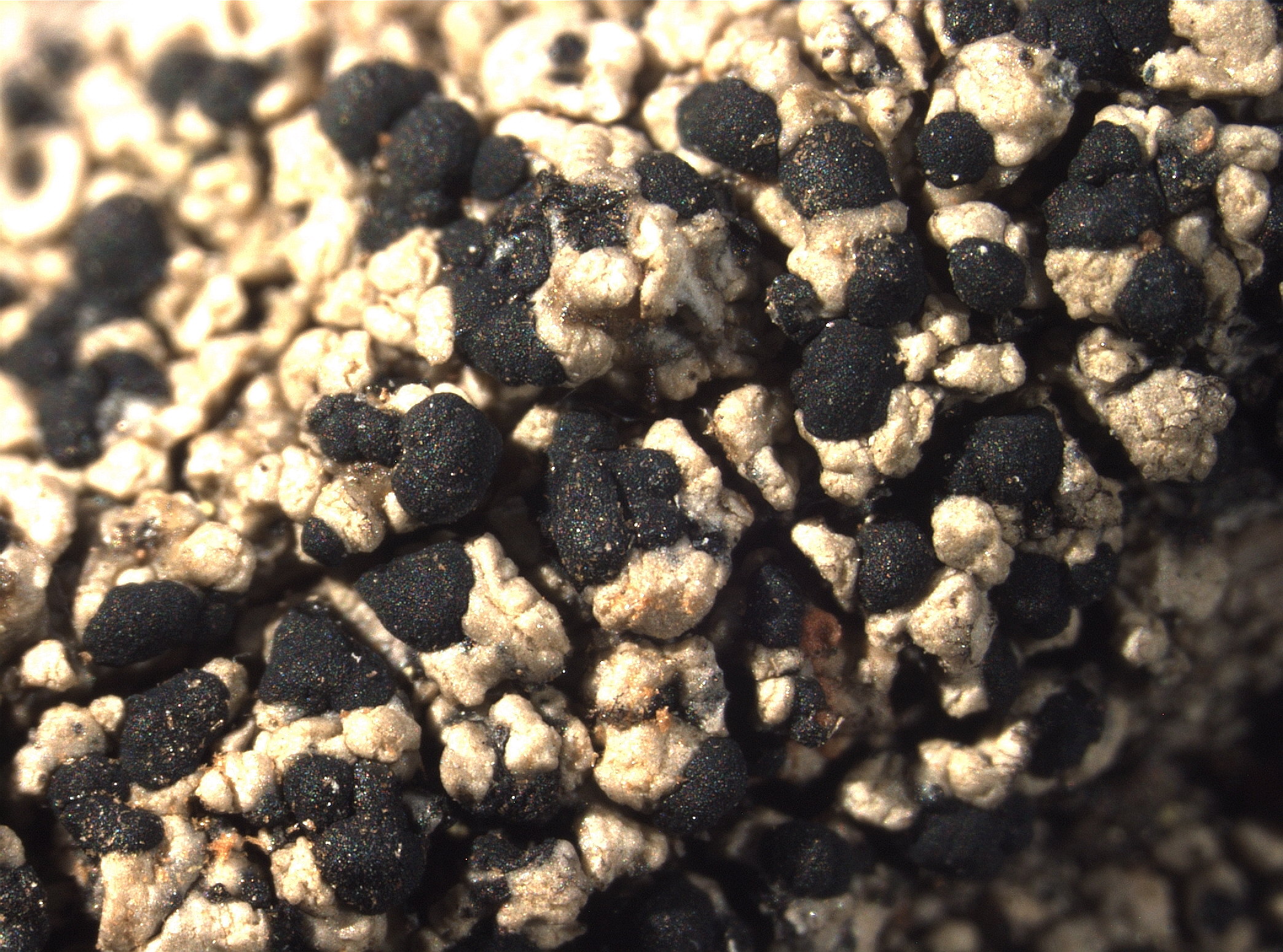
P.L. Nimis CC BY-SA 04
TSB 37140
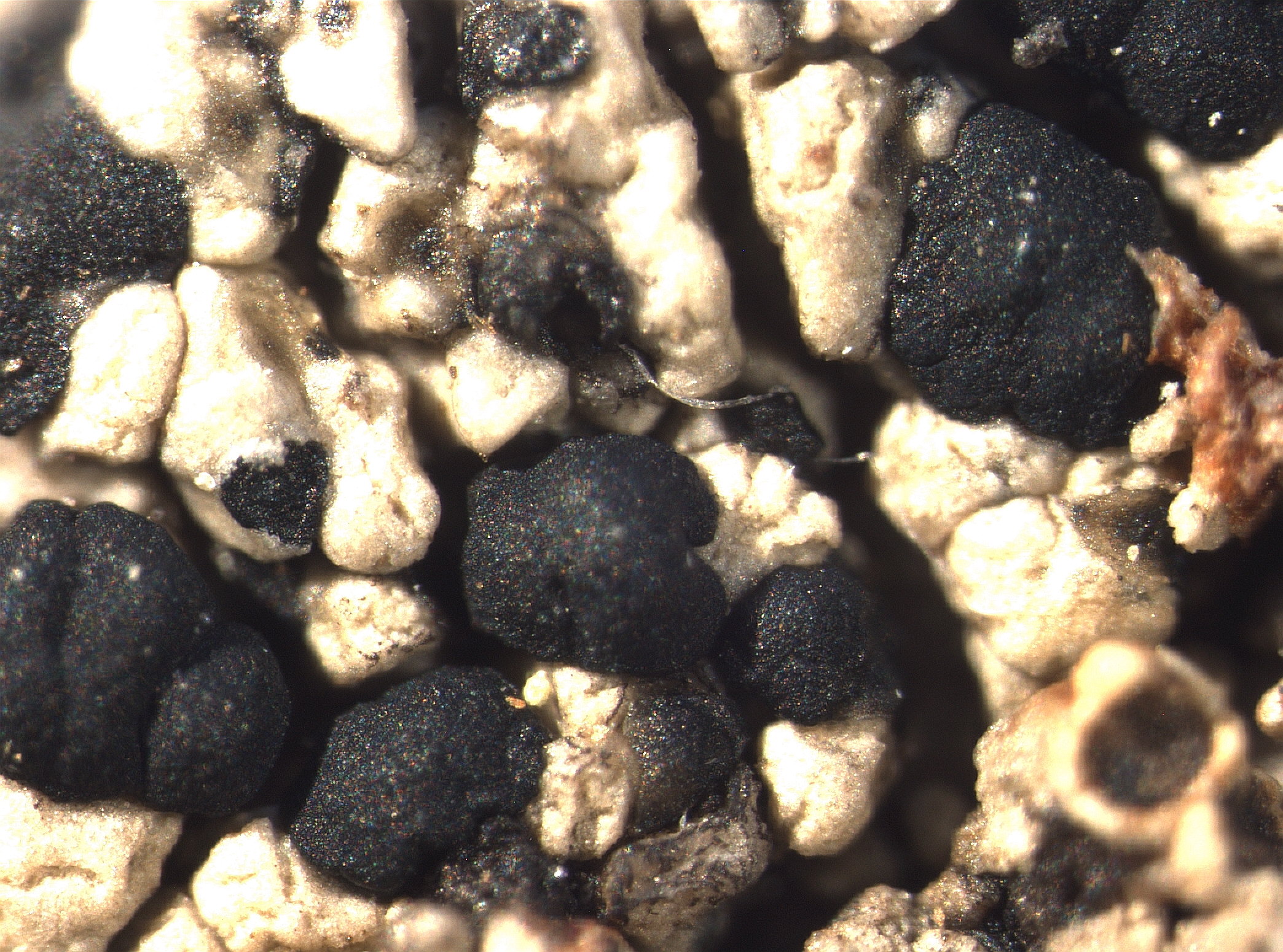
P.L. Nimis CC BY-SA 04
TSB 37140
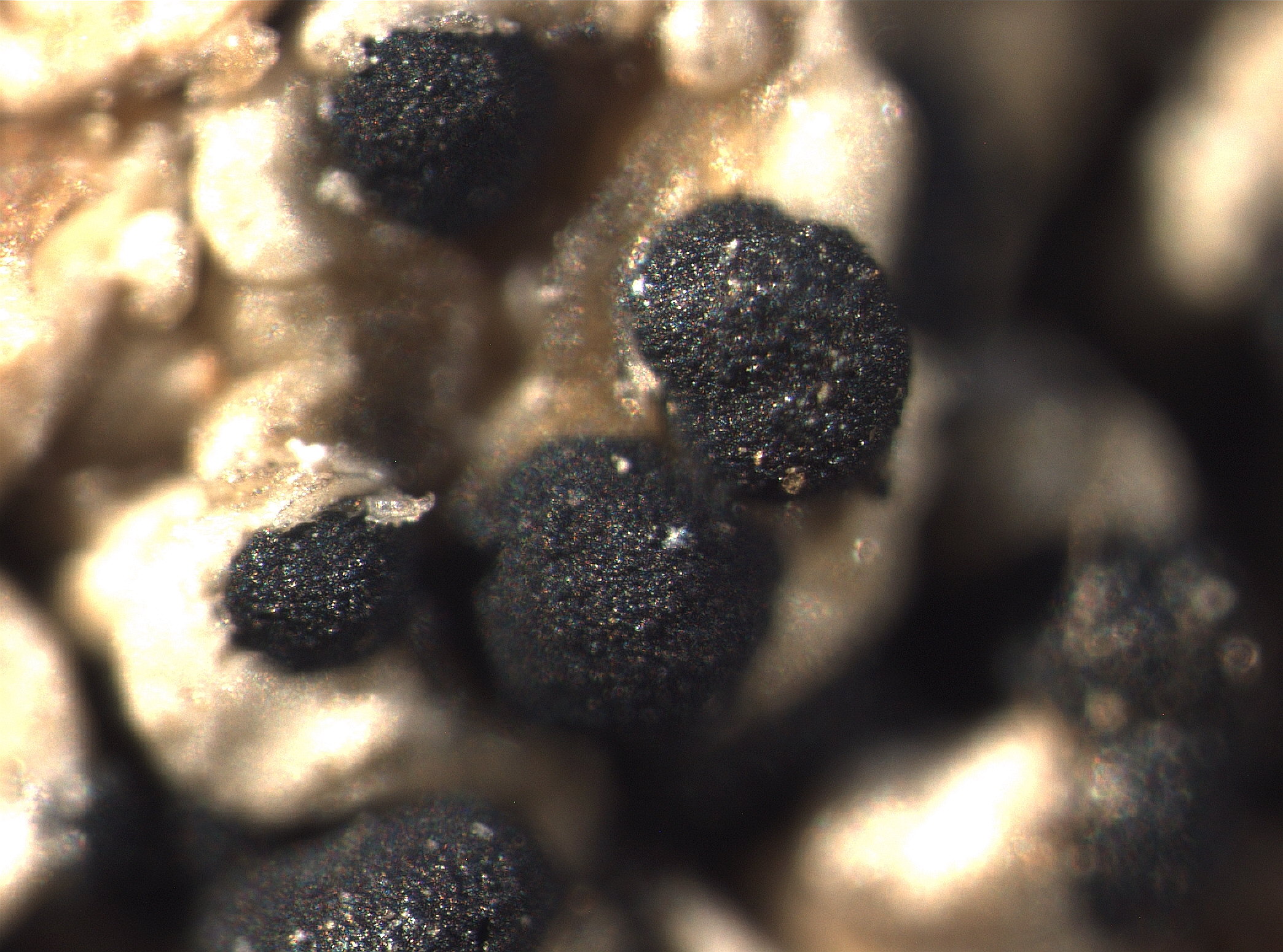
P.L. Nimis CC BY-SA 04
TSB 37140
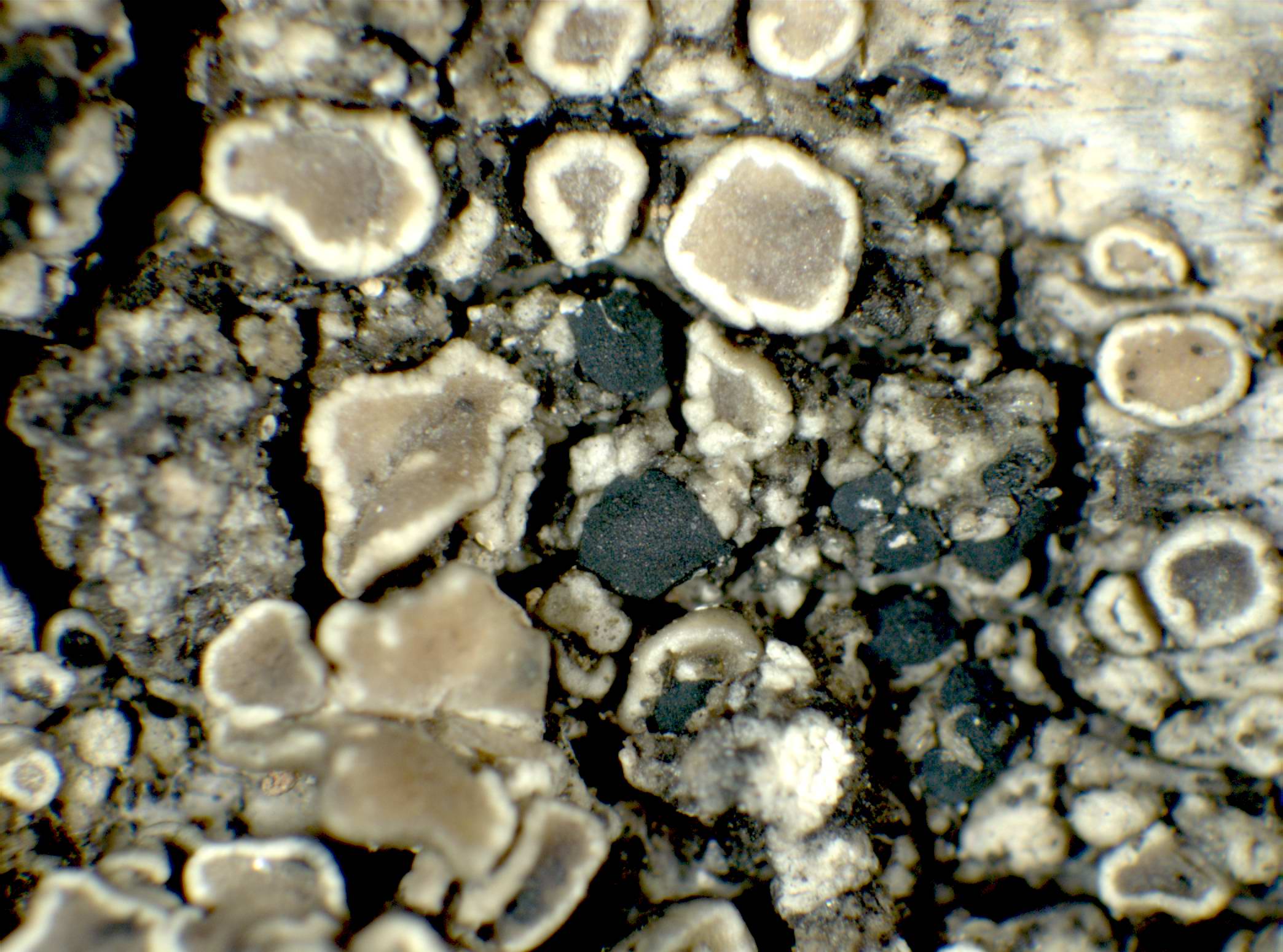
P.L. Nimis; Owner: Department of Life Sciences, University of Trieste
Herbarium: TSB (11869)
2001/11/26
black apothecia sitting on the host, Lecanora varia
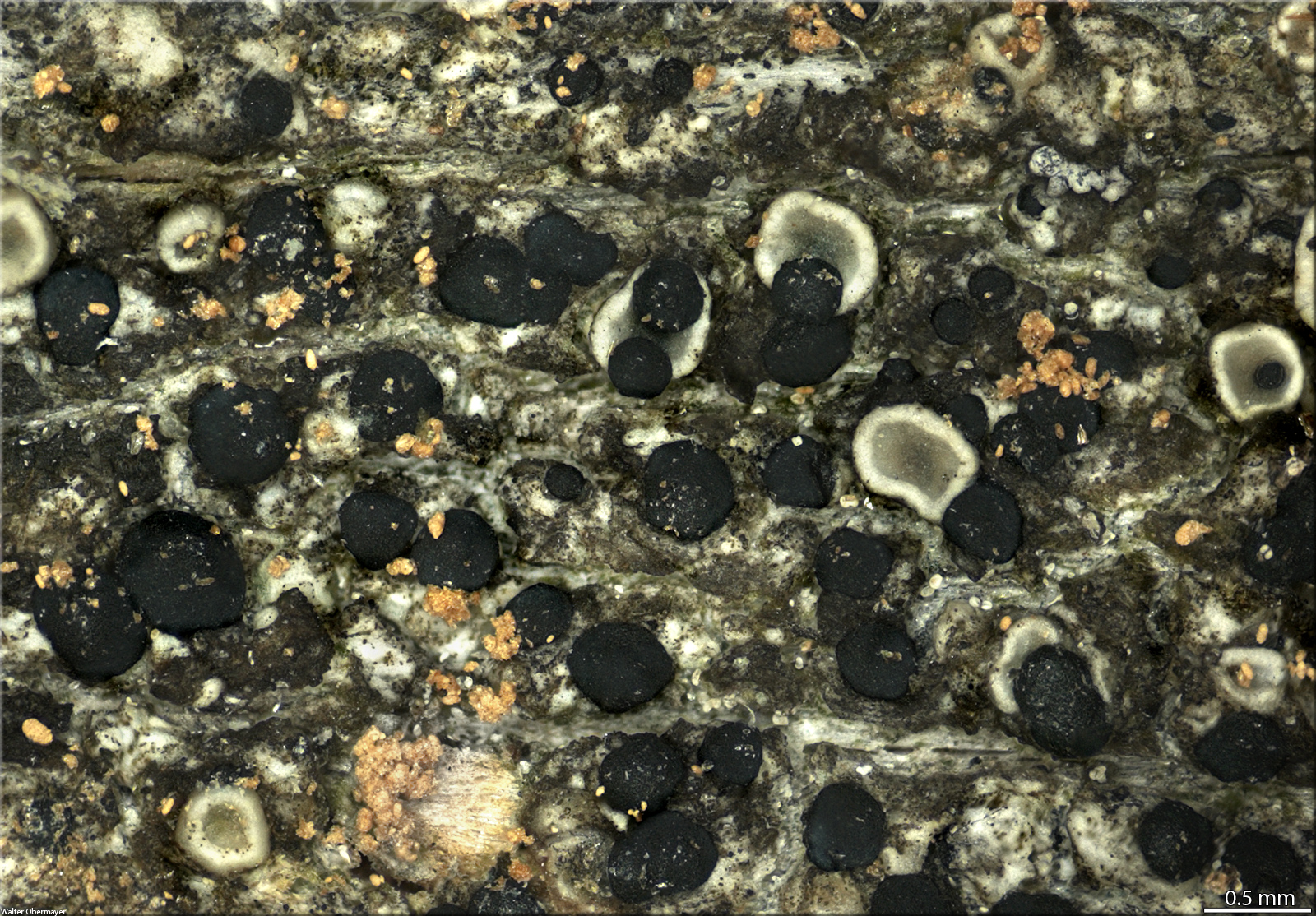
Walter Obermayer CC BY-SA 4.0 - Source: Lichens of Noricum - http://lichens-of-noricum.uni-graz.at/

Source: Frisch, A., Klepsland, J., Palice, Z., Bendiksby, M., Tønsberg, T. & Holien, H. 2020. New and noteworthy lichens and lichenicolous fungi from Norway. Graphis Scripta 32 (1): 1–47. Oslo. ISSN 2002-4495. - CC BY-4.0
Ramboldia insidiosa (O-L-221295). Scale = 1 mm. Photo: A. Frisch.

Felix Schumm - CC BY 4.0
[VZ1590}, Austria. Carinthia, distr. Greifenburg, regio montis Kreuzeck: Emberger Alm, 1700 m. Ad lignum putridum faeniliorum. Leg. H. Hertel, J. Poelt et A. Vezda, 16.7.1978. EX A. VEZDA LICHENES SELECTI EXSICCATI NR. 1590 - As Lecidea insidiosa

Felix Schumm - CC BY 4.0
[VZ1590}, Austria. Carinthia, distr. Greifenburg, regio montis Kreuzeck: Emberger Alm, 1700 m. Ad lignum putridum faeniliorum. Leg. H. Hertel, J. Poelt et A. Vezda, 16.7.1978. EX A. VEZDA LICHENES SELECTI EXSICCATI NR. 1590 - As Lecidea insidiosa

Felix Schumm - CC BY 4.0
[VZ2310], Austria. Carinthia, Nockberge, Nockalmstrasse, 1.5 km ad australem et occidentem versus ab Eisentalhöhe, 1860 m. Ad lignum Pini cembrae. Leg. R. Türk et N. Türk, 15.10.1988. EX A. VEZDA LICHENES SELECTI EXSICCATI NR. 2310. - As Lecidea insidiosa

Felix Schumm - CC BY 4.0
[VZ2310], Austria. Carinthia, Nockberge, Nockalmstrasse, 1.5 km ad australem et occidentem versus ab Eisentalhöhe, 1860 m. Ad lignum Pini cembrae. Leg. R. Türk et N. Türk, 15.10.1988. EX A. VEZDA LICHENES SELECTI EXSICCATI NR. 2310. - As Lecidea insidiosa