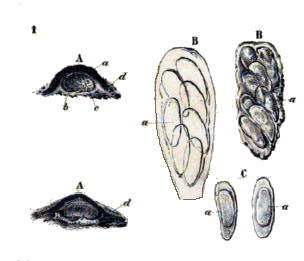
Verrucaria aberrans Garov.
Tent. Disp. Lich. Lang.: 11, 1864.
Synonyms:
Distribution: N - Lomb.
Description: Thallus crustose, episubstratic, c. 0.01 mm thick, continuous to finely rimose, dark olive-green to olive-brown, slightly shiny, subgelatinous when wet. Upper layer of cortex colourless; medulla without a black basal layer. Perithecia black, 0.2-0.3 mm across, hemispherically projecting, covered by a thalline layer in lower part. Involucrellum appressed to exciple, reaching down to maximum half of the perithecium; exciple c. 0.2 mm wide and 1.8 mm high, the wall dark throughout; hamathecium of periphysoids, interascal filaments absent; hymenial gel hemiamyloid, I+ red (I+ blue at very low concentrations of I), K/I+ blue. Asci 8-spored, clavate, I-, fissitunicate, the wall thickened above, with an ocular chamber, dehiscent by extrusion of an endotunica to form a delicate rostrum, Verrucaria-type. Ascospores 1-celled, hyaline, oblong-ellipsoid, 14-31 x (9-)11-14 µm. Photobiont chlorococcoid. Spot tests: K-, C-, KC-, P-, UV-. Chemistry: without lichen substances.
Note: a very poorly known silicicolous, sometimes periodically submerged species, also reported from Germany (Wirth & al. 2010); the type material is from granite in a humid, shaded Castanea-woodland. Roux & Coll. (2025) list it as a possible synonym of V. submersella. See also Nimis (1993: 731).
Growth form: Crustose
Substrata: rocks
Photobiont: green algae other than Trentepohlia
Reproductive strategy: mainly sexual
Poorly known taxon in need of further study
Commonnes-rarity: (info)
Alpine belt: absent
Subalpine belt: absent
Oromediterranean belt: absent
Montane belt: very rare
Submediterranean belt: absent
Padanian area: absent
Humid submediterranean belt: absent
Humid mediterranean belt: absent
Dry mediterranean belt: absent
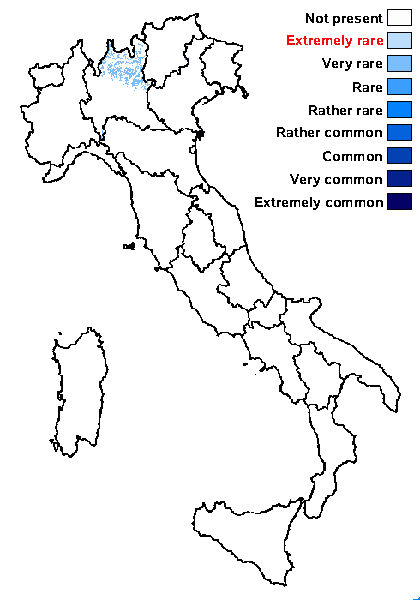
Predictive model
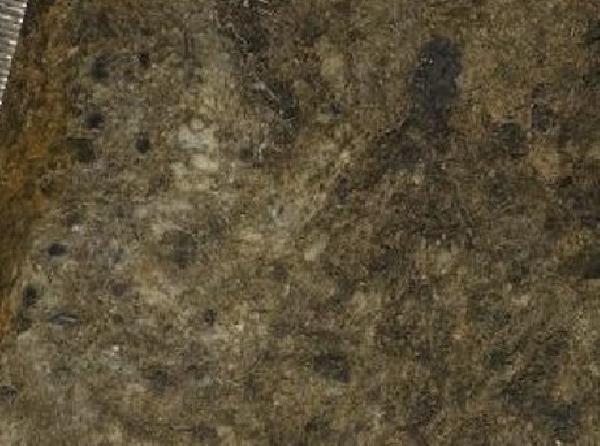
CC0-1.0 - Natural History Museum (2014). Specimens (from Collection specimens) [Data set resource]. Natural History Museum. https://data.nhm.ac.uk/dataset/collection-specimens/resource/05ff2255-c38a-40c9-b657-4ccb55ab2feb
syntype
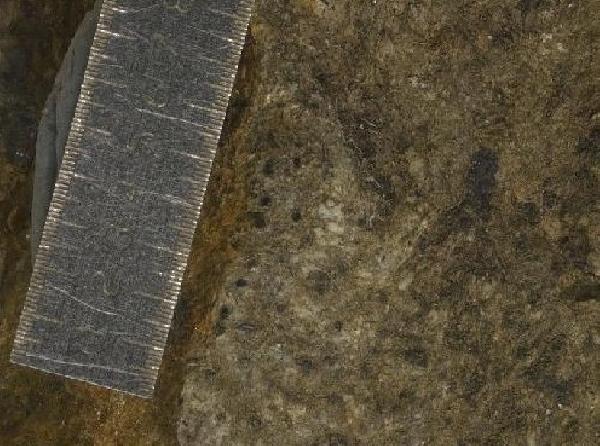
CC0-1.0 - Natural History Museum (2014). Specimens (from Collection specimens) [Data set resource]. Natural History Museum. https://data.nhm.ac.uk/dataset/collection-specimens/resource/05ff2255-c38a-40c9-b657-4ccb55ab2feb
syntype
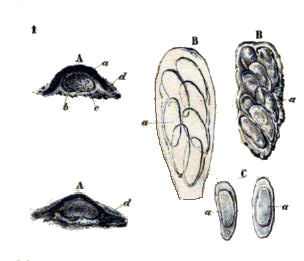
G. Gibelli, in S. Garovaglio, 1865 Tentamen Dispositionis Methodicae Lichenum In Longobardia Nascentium. Mediolanum
Growth form: Crustose
Substrata: rocks
Photobiont: green algae other than Trentepohlia
Reproductive strategy: mainly sexual
Poorly known taxon in need of further study
Commonnes-rarity: (info)
Alpine belt: absent
Subalpine belt: absent
Oromediterranean belt: absent
Montane belt: very rare
Submediterranean belt: absent
Padanian area: absent
Humid submediterranean belt: absent
Humid mediterranean belt: absent
Dry mediterranean belt: absent
Predictive model
 INDEX FUNGORUM
 GBIF
GBIF

CC0-1.0 - Natural History Museum (2014). Specimens (from Collection specimens) [Data set resource]. Natural History Museum. https://data.nhm.ac.uk/dataset/collection-specimens/resource/05ff2255-c38a-40c9-b657-4ccb55ab2feb
syntype

CC0-1.0 - Natural History Museum (2014). Specimens (from Collection specimens) [Data set resource]. Natural History Museum. https://data.nhm.ac.uk/dataset/collection-specimens/resource/05ff2255-c38a-40c9-b657-4ccb55ab2feb
syntype