Zeora compallens (Herk & Aptroot) L. M. Weber & Ivanovich-Hichins
in Ivanovich-Hichins & al., Lichenologist, 57: 297, 2025. Basionym: Lecanora compallens Herk & Aptroot - Lichenologist, 31: 544, 1999.
Synonyms:
Distribution:
Description: Thallus crustose, thinly episubstratic, continuous to warted in marginal parts, the warts 0.1-0.2 mm wide, greenish grey, sorediate, forming 1-3(-5) cm wide patches delimited by a whitish grey, shiny, endosubstratic, esorediate, c. 1 mm wide marginal zone. Soralia always present, yellowish green to green, contrasting in colour with the thallus, at first punctiform and 0.1-0.3 mm wide, but soon convex and confluent into irregular patches, usually covering most of the thallus except for the marginal zone; medulla below the soralia white. Soredia granular, c. 15-30 μm in diam., forming an up to 0.4 mm thick layer. Herbarium specimens become covered with tiny colourless needles due to recrystallization of zeorin. Apothecia and pycnidia unknown. Photobiont chlorococcoid. Spot tests: thallus K-, C-, KC-, UV-; soralia K+ yellowish to yellowish brown, KC+ yellowish, UV+ pale orange. Chemistry: thallus with zeorin; soralia with usnic acid. Note: a mainly western species, found on a wide variety of roadside trees, but avoiding those with very acid bark; rarely collected in the Alps (outside Italy) at low elevations, to be looked for, especially in Tyrrhenian Italy. For further details see van Herk & Aptroot (1999).
Growth form: Crustose
Substrata: bark
Photobiont: green algae other than Trentepohlia
Reproductive strategy: mainly asexual, by soredia, or soredia-like structures (e.g. blastidia)
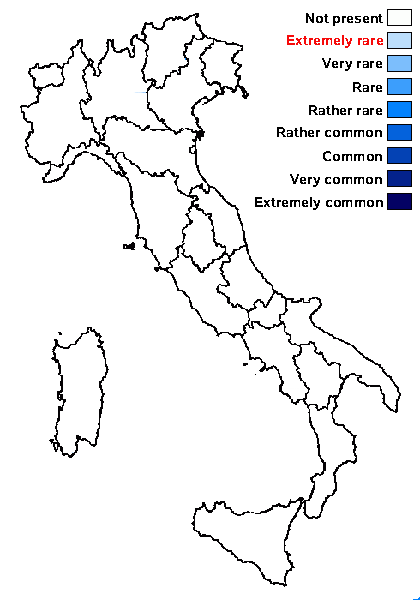
Predictive model
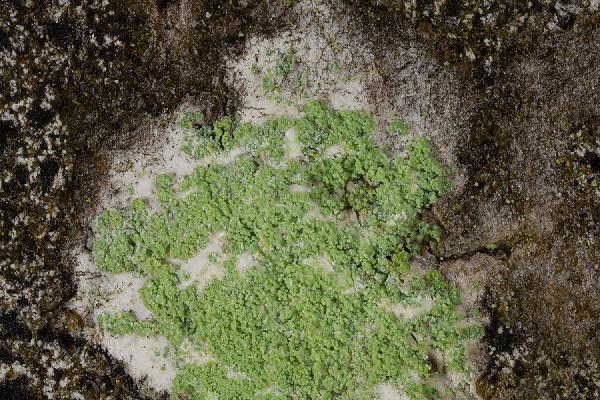
Ulrich Kirschbaum CC BY-SA 4.0 - Source: https://www.thm.de/lse/ulrich-kirschbaum/flechtenbilder
Central Europe; Germany: Hesse. (Ident. Eichler/Cezanne). On Acer
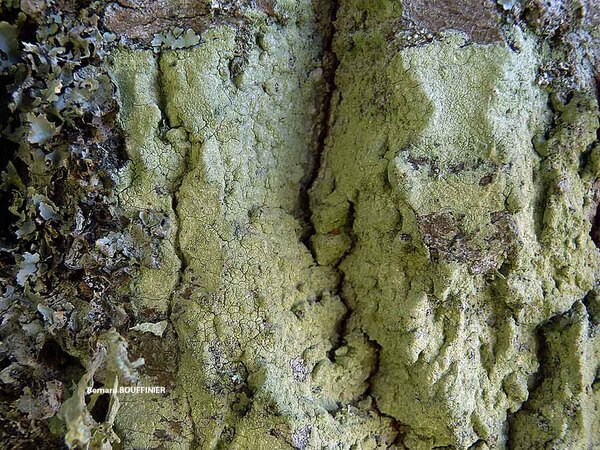
Bernard Bouffinier - Source: http://www.lichensmaritimes.org/index.php?task=fiche&lichen=641&lang=en
France, Beg-Meil
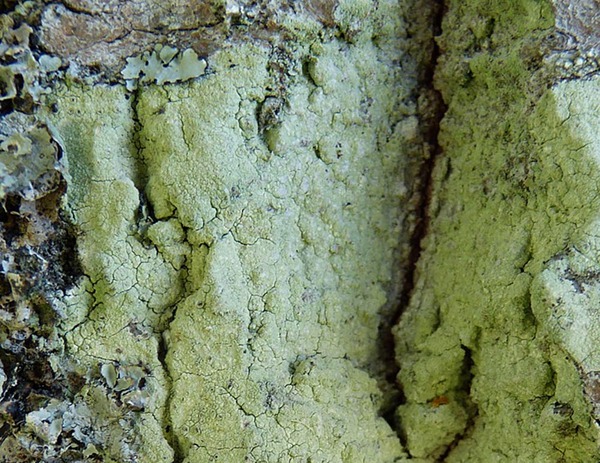
Bernard Bouffinier - Source: http://www.lichensmaritimes.org/index.php?task=fiche&lichen=641&lang=en
France, Beg-Meil
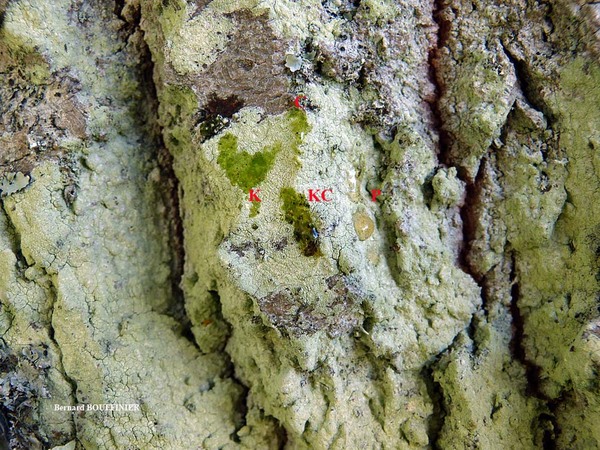
Bernard Bouffinier - Source: http://www.lichensmaritimes.org/index.php?task=fiche&lichen=641&lang=en
France, Beg-Meil
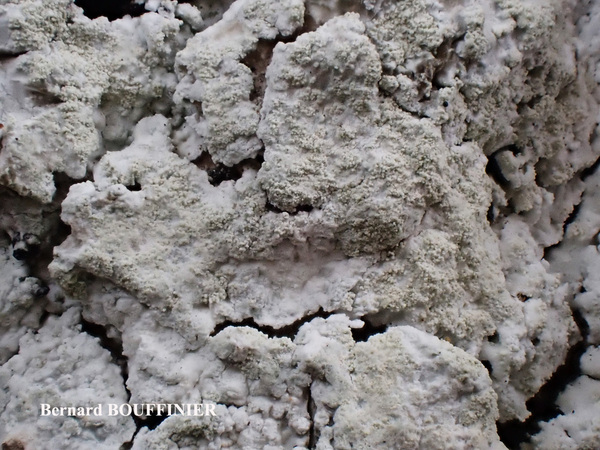
Bernard Bouffinier - Source: http://www.lichensmaritimes.org/index.php?task=fiche&lichen=641&lang=en
France, Crozon
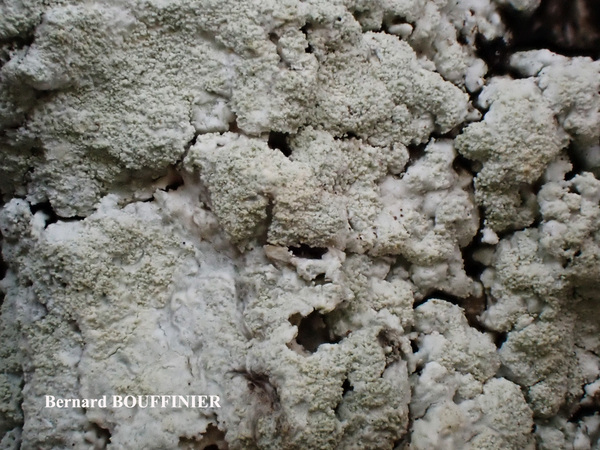
Bernard Bouffinier - Source: http://www.lichensmaritimes.org/index.php?task=fiche&lichen=641&lang=en
France, Crozon
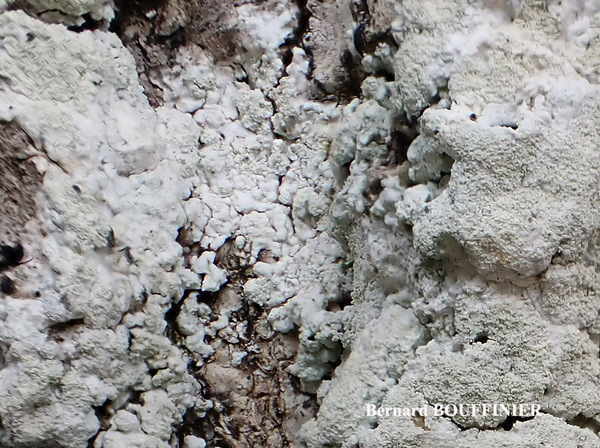
Bernard Bouffinier - Source: http://www.lichensmaritimes.org/index.php?task=fiche&lichen=641&lang=en
France, Crozon
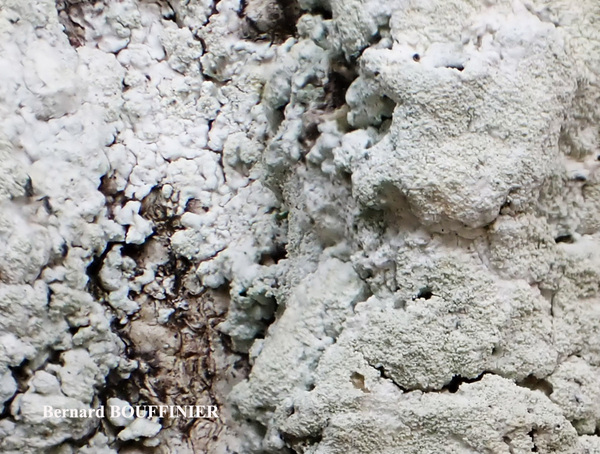
Bernard Bouffinier - Source: http://www.lichensmaritimes.org/index.php?task=fiche&lichen=641&lang=en
France, Crozon
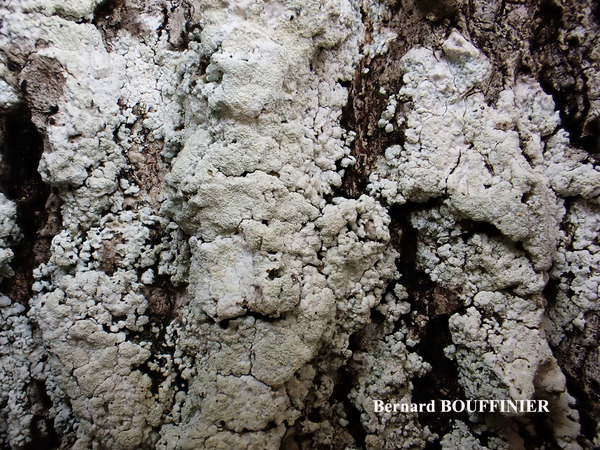
Bernard Bouffinier - Source: http://www.lichensmaritimes.org/index.php?task=fiche&lichen=641&lang=en
France, Crozon
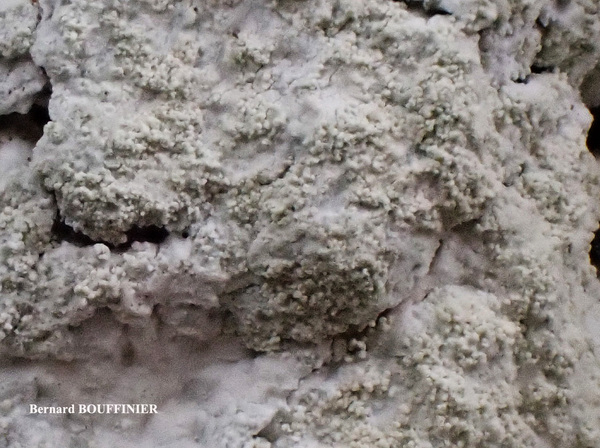
Bernard Bouffinier - Source: http://www.lichensmaritimes.org/index.php?task=fiche&lichen=641&lang=en
France, Crozon
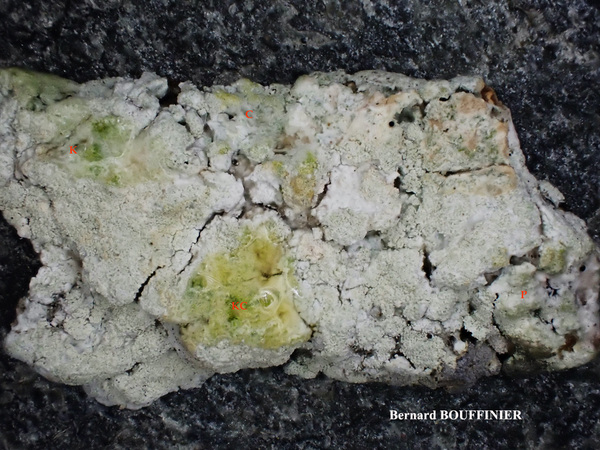
Bernard Bouffinier - Source: http://www.lichensmaritimes.org/index.php?task=fiche&lichen=641&lang=en
France, Crozon
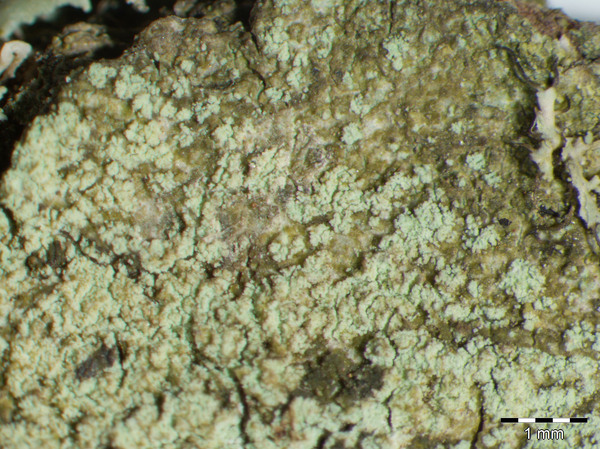
Harrie Sipman – Source http://www.bgbm.fu-berlin.de/sipman/Zschackia/AegeanLichens/CaloplacaAC.htm - As Caloplaca oasis
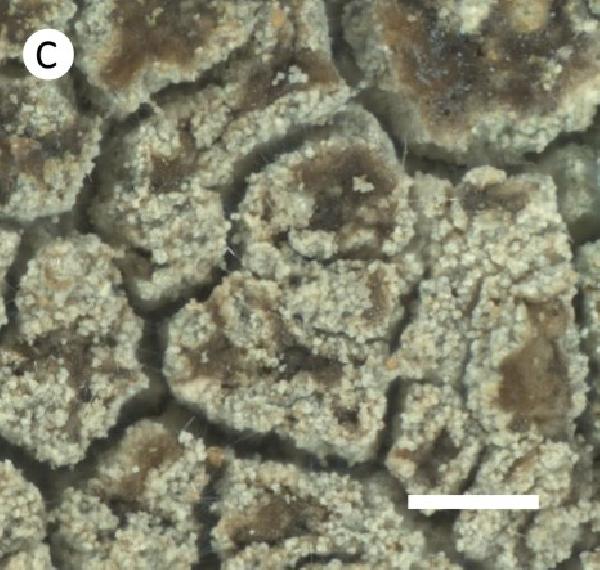
CC BY 4.0 - Source: Ivanovich-Hichins C, Weber L, Li L, et al. New phylogenetic insights into the lichen genus Lecanora s. lat. (Lecanoraceae, Ascomycota): resurrection of the genera Glaucomaria, Straminella and Zeora. The Lichenologist. 2025;57(6):278-303. doi:10.1017/S0024282925101321
Z. compallens; Germany, Niedersachsen, U. de Bruyn 1693 (FR-026141). - Scale bar: 0.5 mm
Growth form: Crustose
Substrata: bark
Photobiont: green algae other than Trentepohlia
Reproductive strategy: mainly asexual, by soredia, or soredia-like structures (e.g. blastidia)
Predictive model
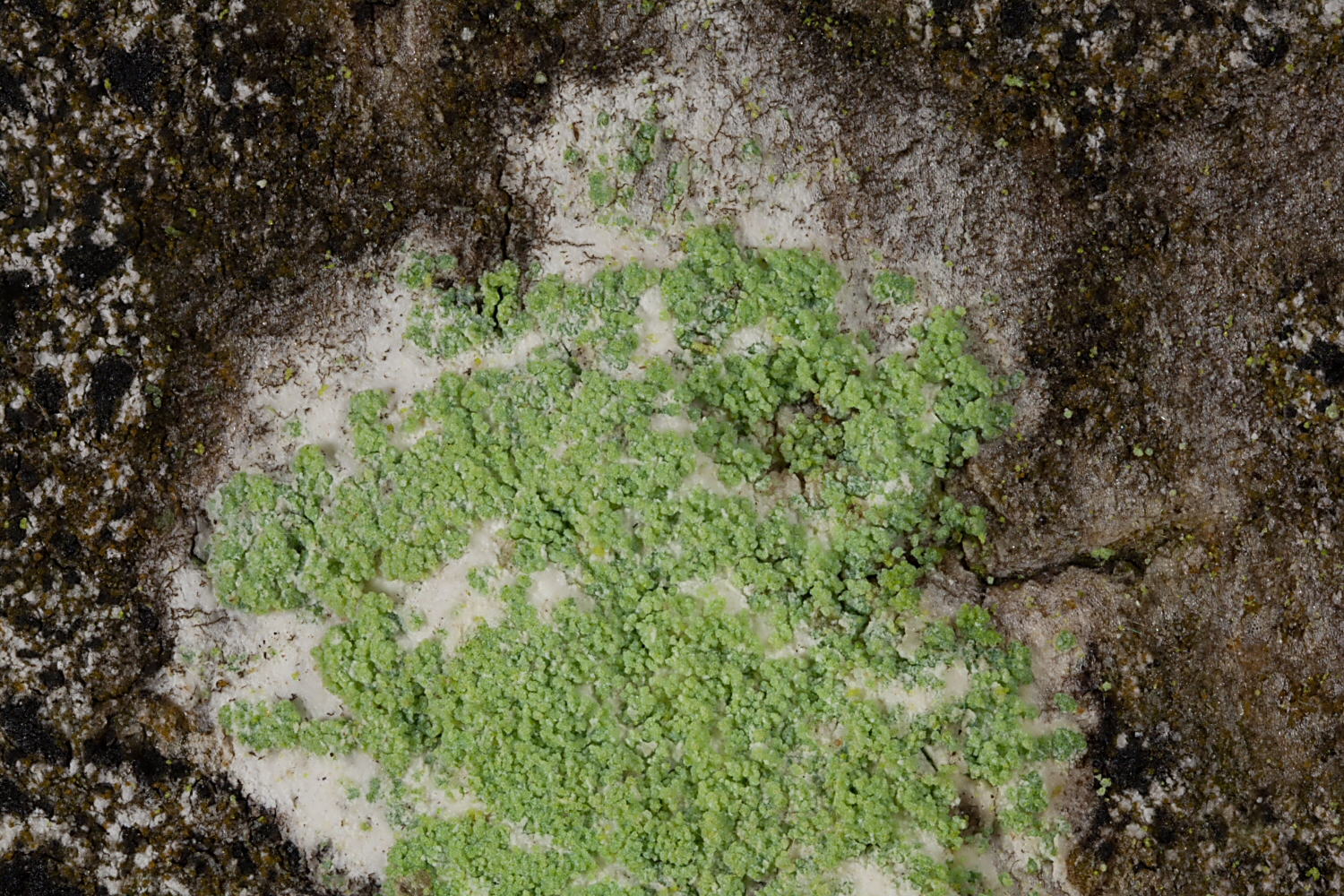
Ulrich Kirschbaum CC BY-SA 4.0 - Source: https://www.thm.de/lse/ulrich-kirschbaum/flechtenbilder
Central Europe; Germany: Hesse. (Ident. Eichler/Cezanne). On Acer
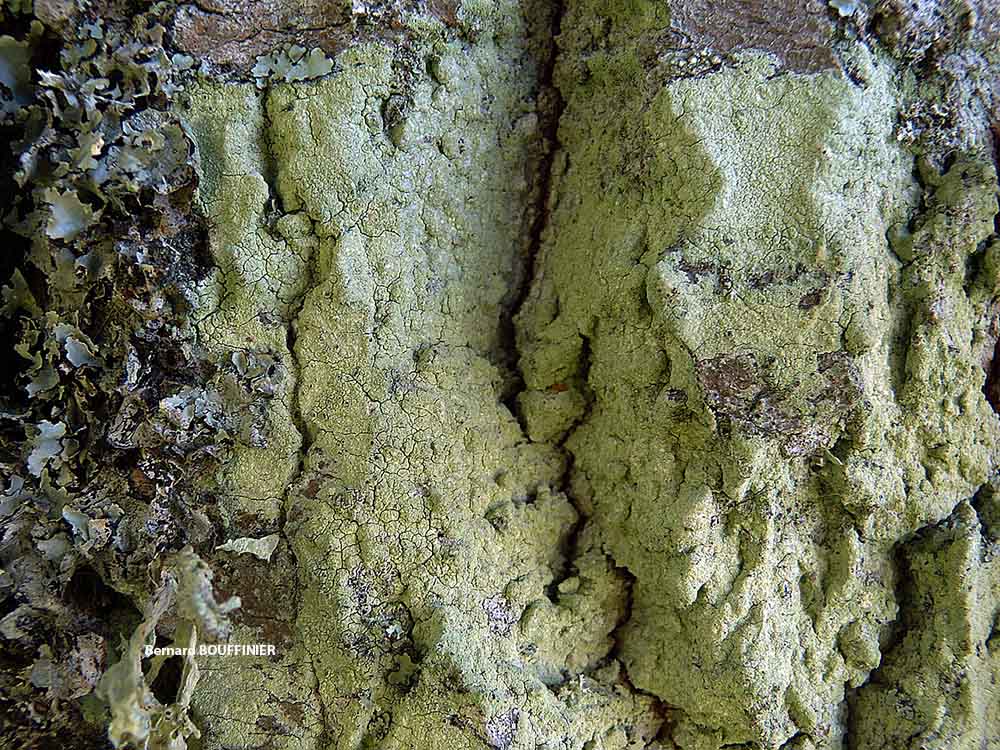
Bernard Bouffinier - Source: http://www.lichensmaritimes.org/index.php?task=fiche&lichen=641&lang=en
France, Beg-Meil
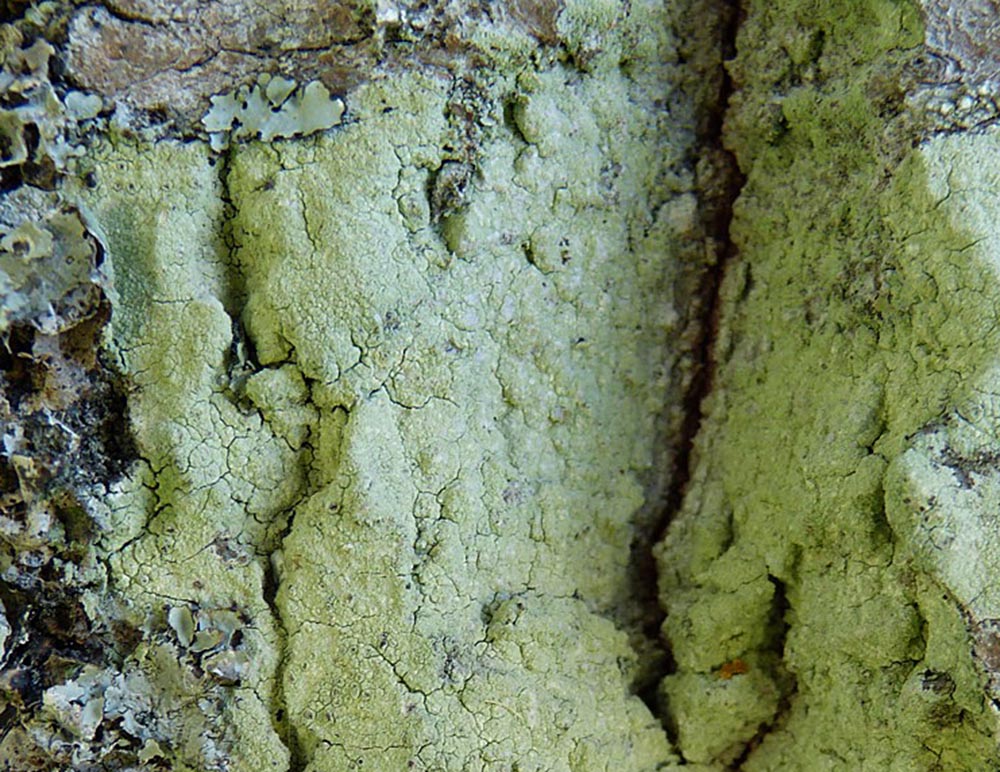
Bernard Bouffinier - Source: http://www.lichensmaritimes.org/index.php?task=fiche&lichen=641&lang=en
France, Beg-Meil
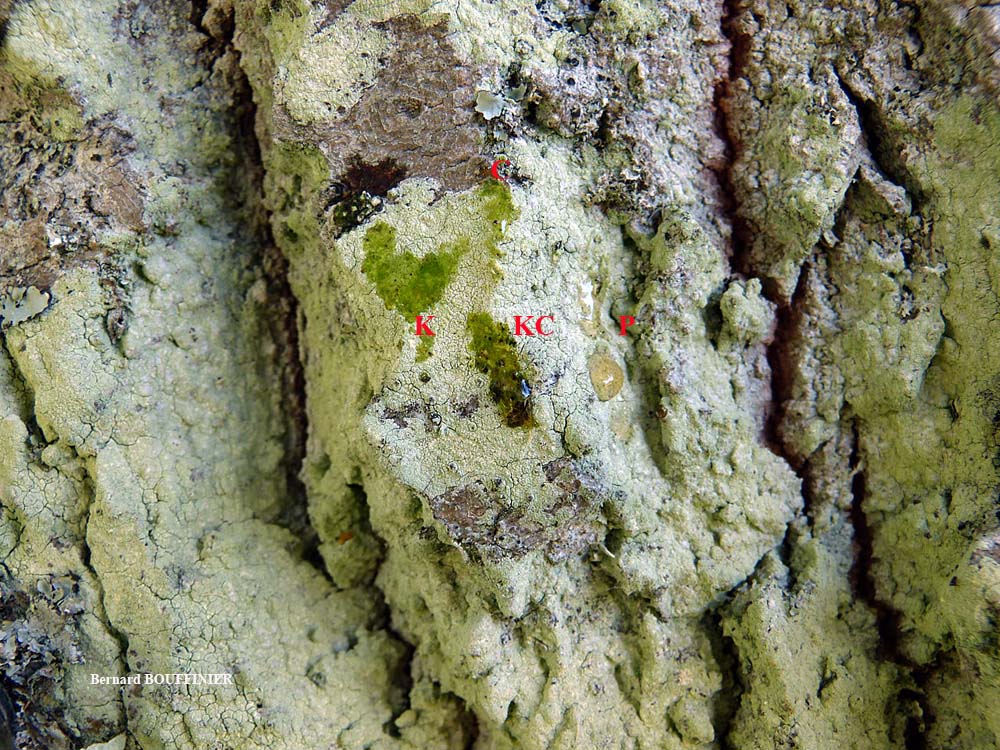
Bernard Bouffinier - Source: http://www.lichensmaritimes.org/index.php?task=fiche&lichen=641&lang=en
France, Beg-Meil
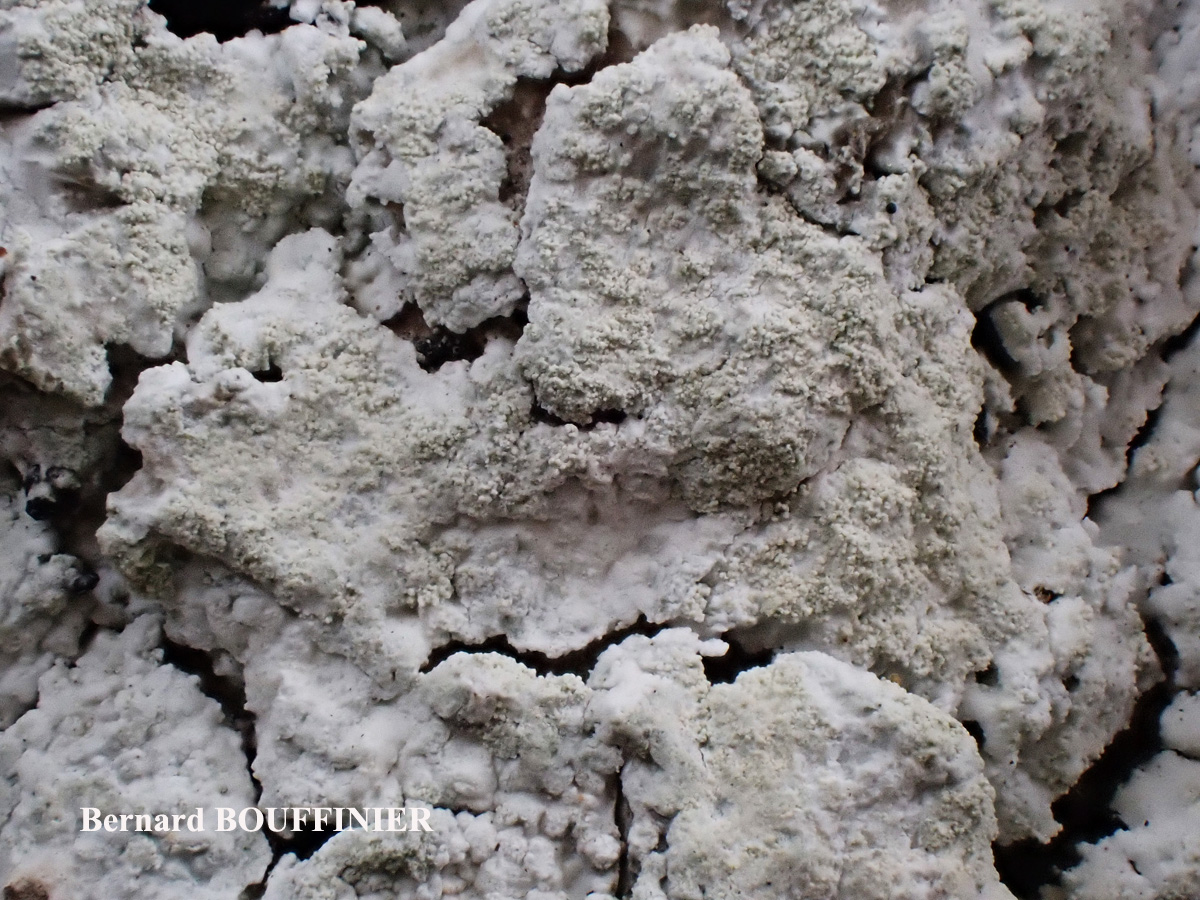
Bernard Bouffinier - Source: http://www.lichensmaritimes.org/index.php?task=fiche&lichen=641&lang=en
France, Crozon
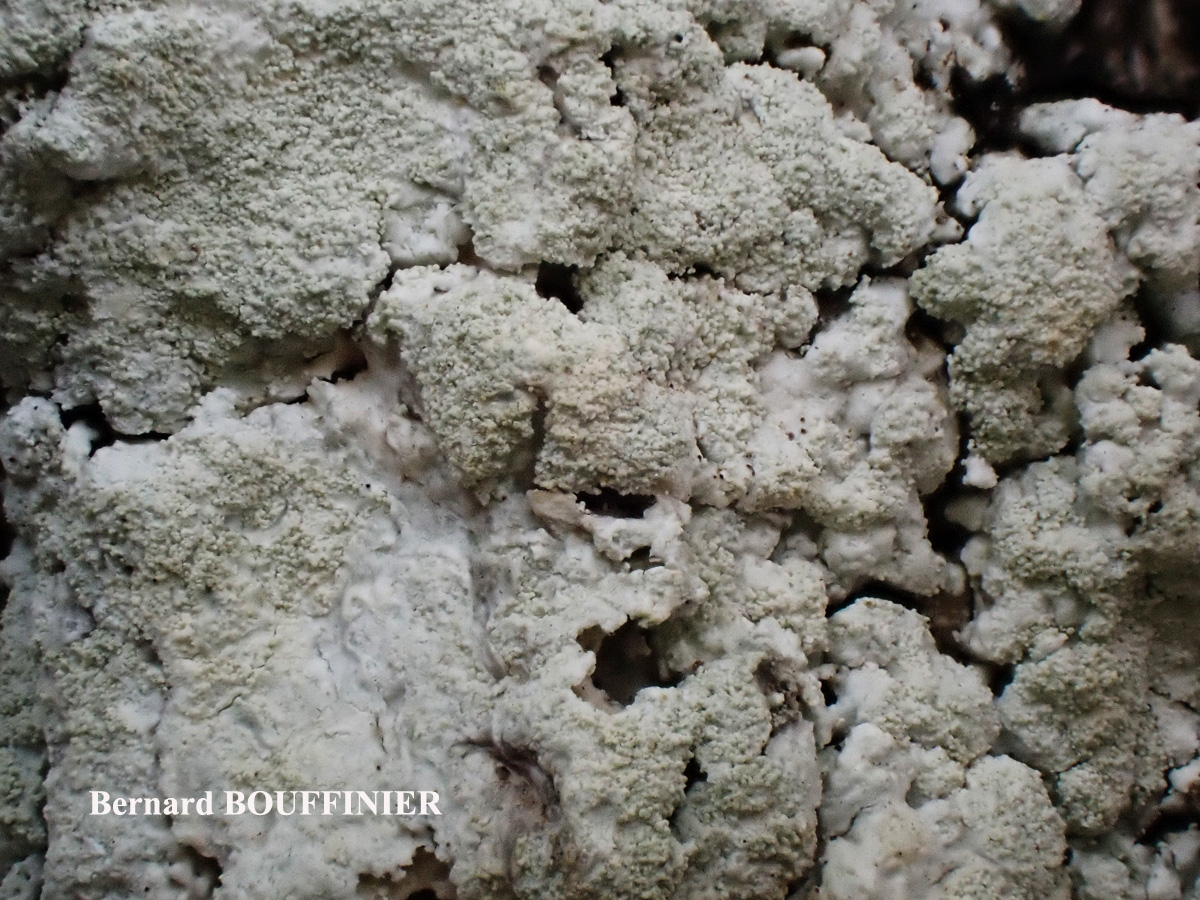
Bernard Bouffinier - Source: http://www.lichensmaritimes.org/index.php?task=fiche&lichen=641&lang=en
France, Crozon
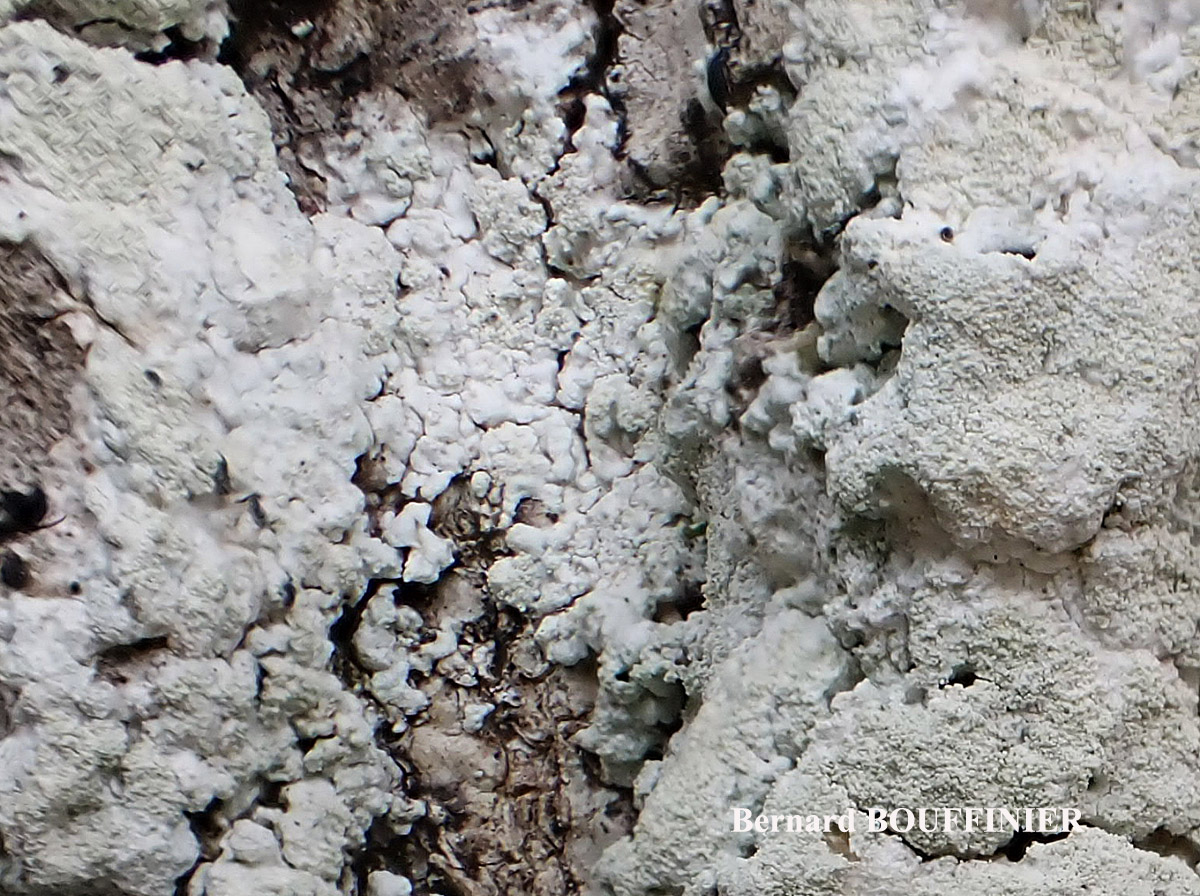
Bernard Bouffinier - Source: http://www.lichensmaritimes.org/index.php?task=fiche&lichen=641&lang=en
France, Crozon
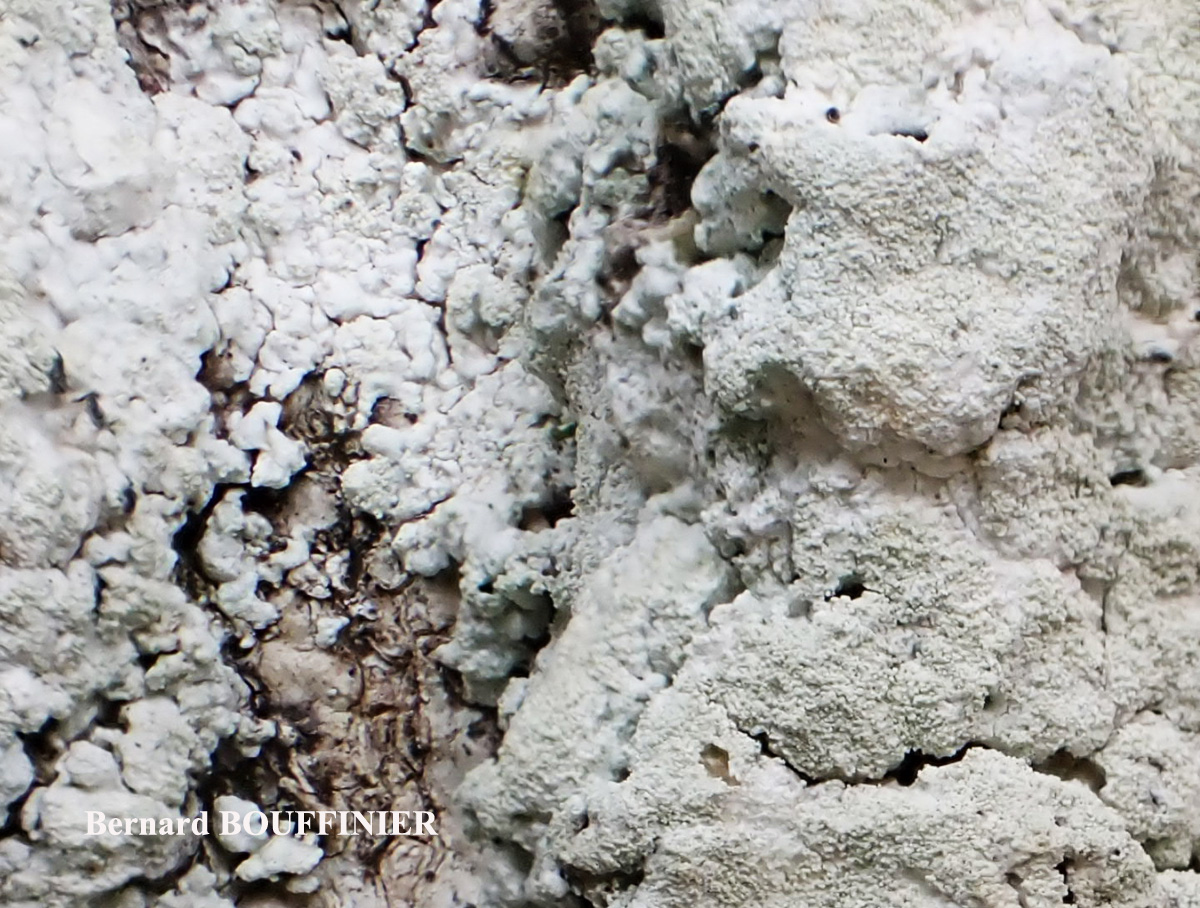
Bernard Bouffinier - Source: http://www.lichensmaritimes.org/index.php?task=fiche&lichen=641&lang=en
France, Crozon
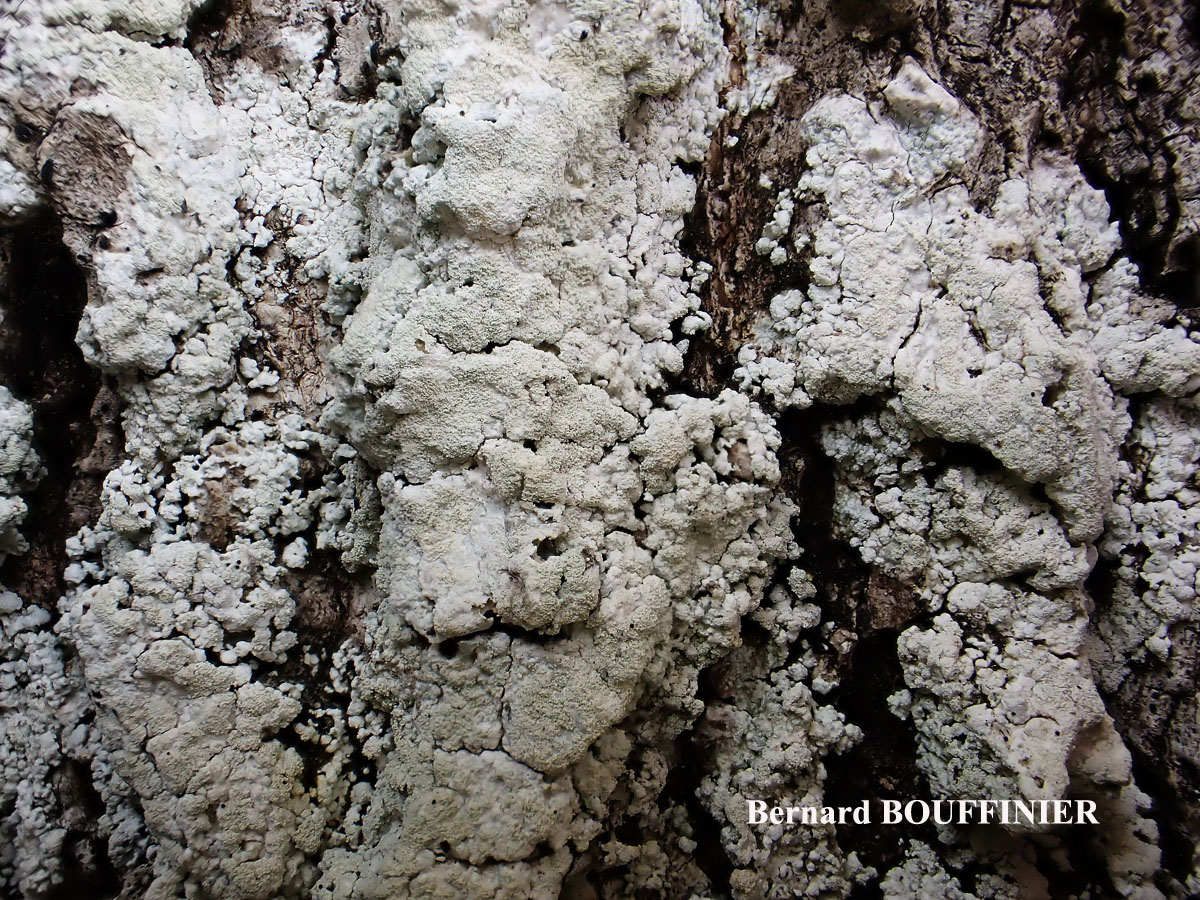
Bernard Bouffinier - Source: http://www.lichensmaritimes.org/index.php?task=fiche&lichen=641&lang=en
France, Crozon
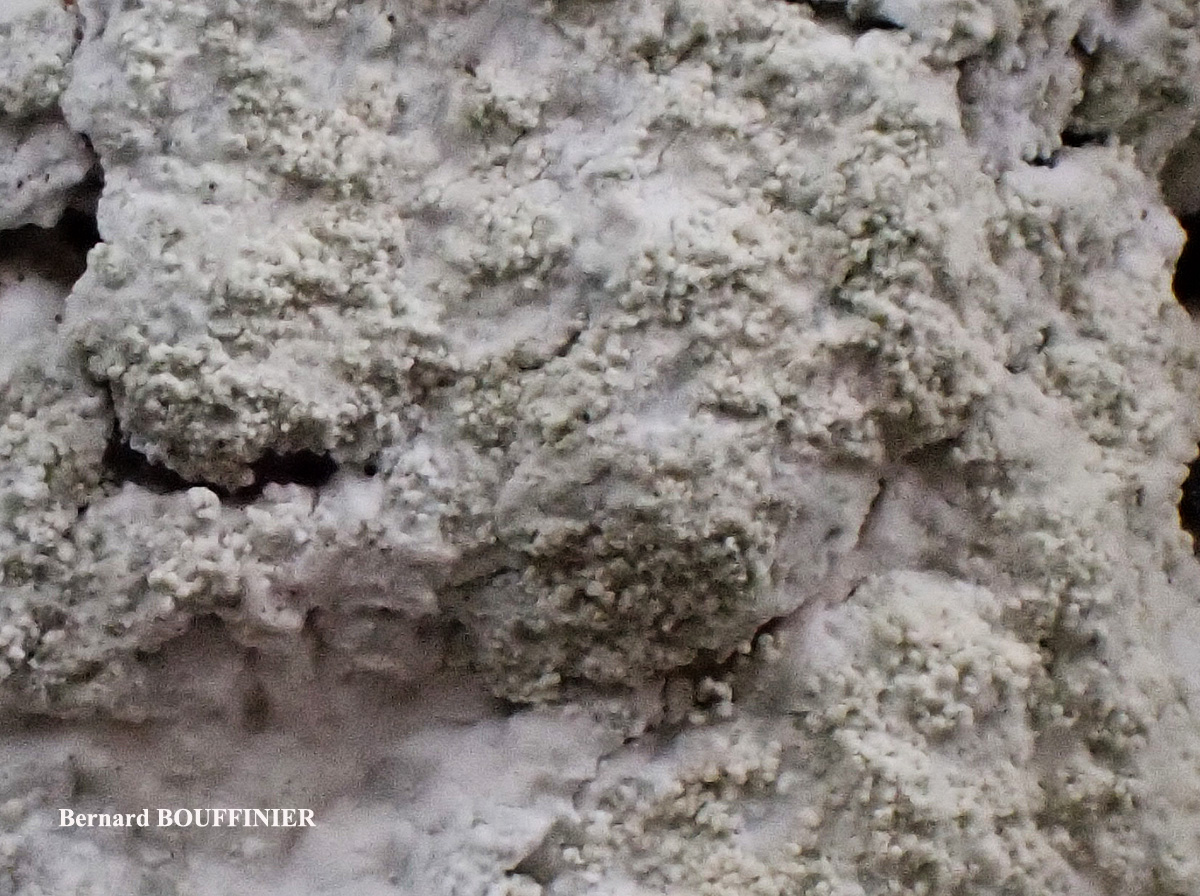
Bernard Bouffinier - Source: http://www.lichensmaritimes.org/index.php?task=fiche&lichen=641&lang=en
France, Crozon
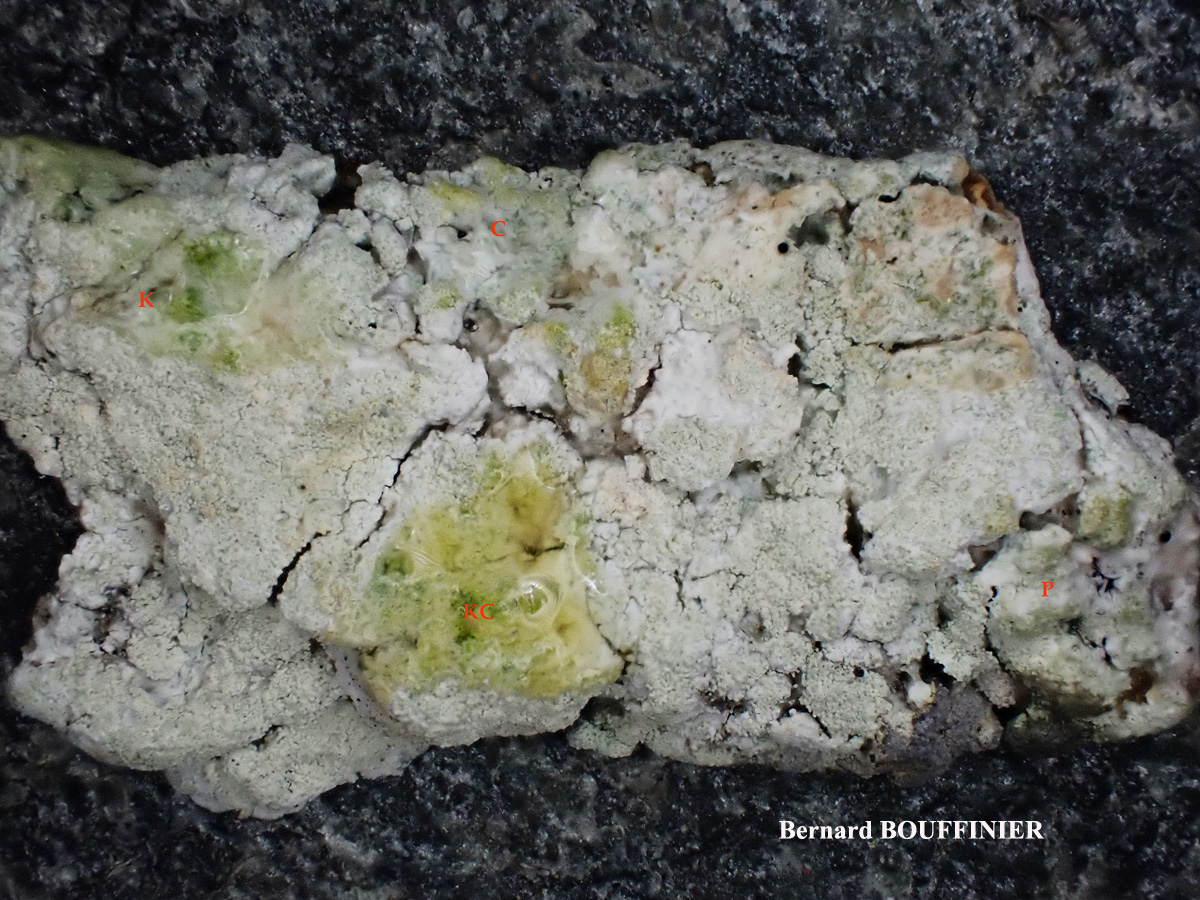
Bernard Bouffinier - Source: http://www.lichensmaritimes.org/index.php?task=fiche&lichen=641&lang=en
France, Crozon
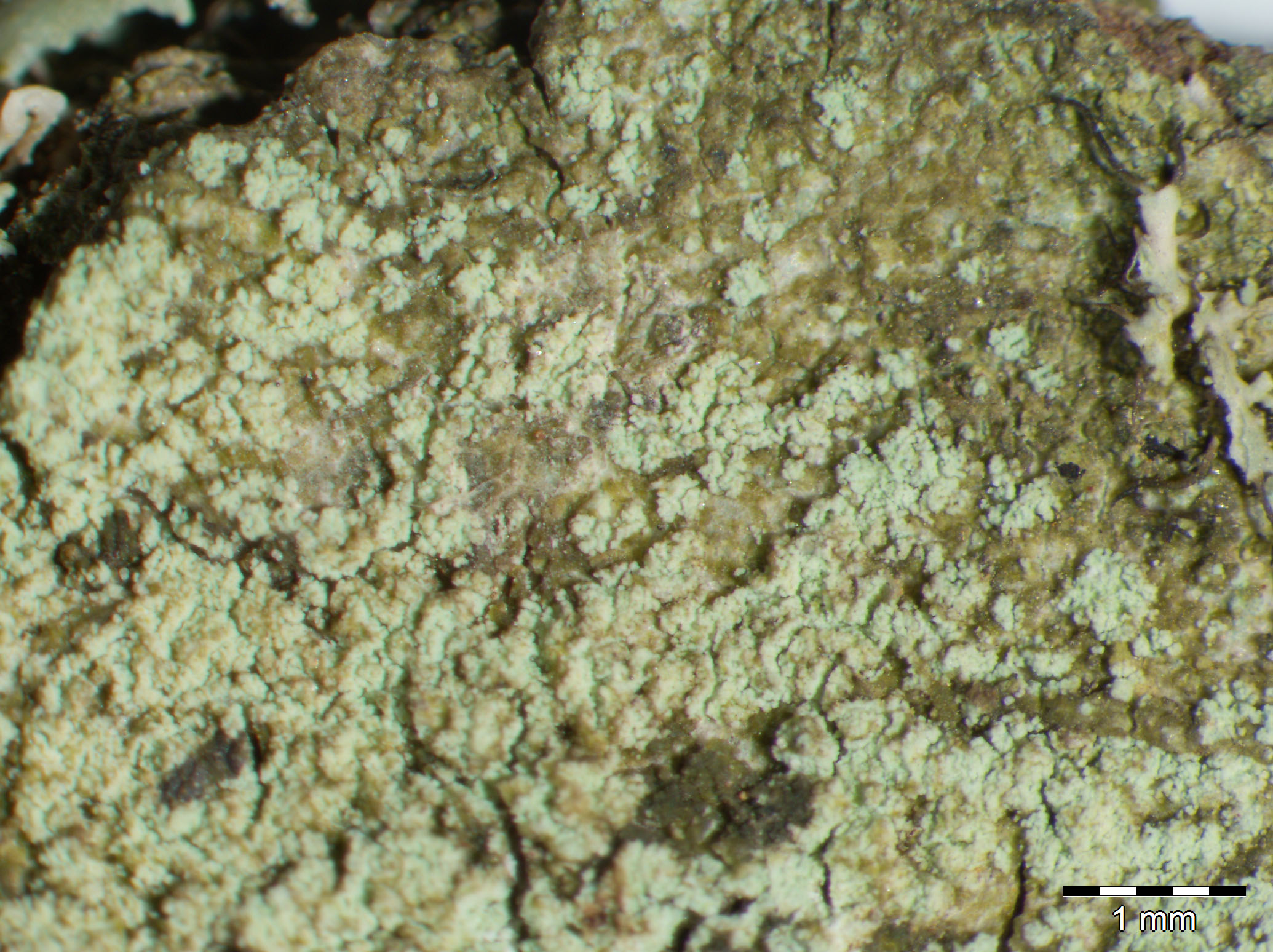
Harrie Sipman – Source http://www.bgbm.fu-berlin.de/sipman/Zschackia/AegeanLichens/CaloplacaAC.htm - As Caloplaca oasis