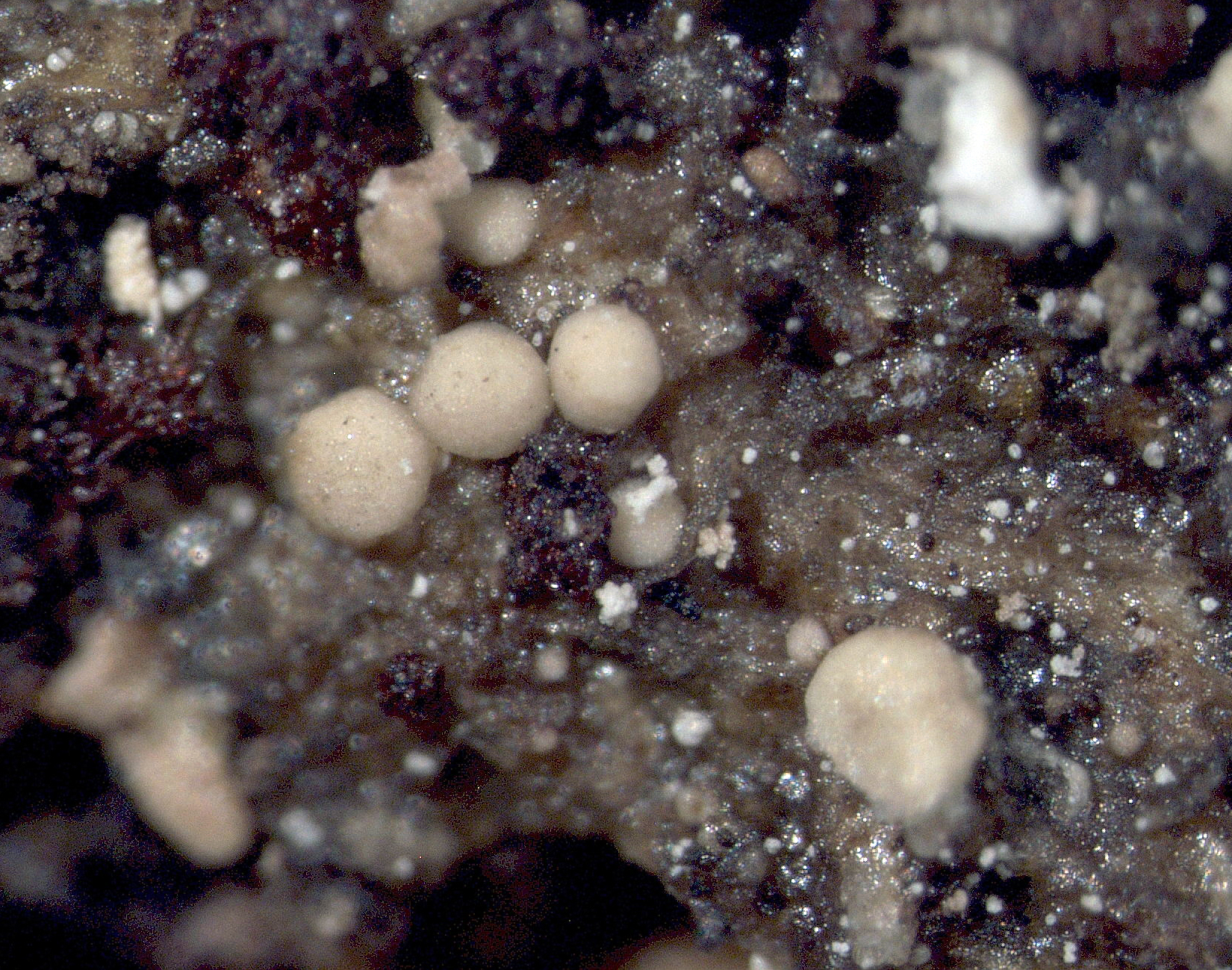
Puttea margaritella (Hulting) S. Stenroos & Huhtinen
in Stenroos & al., Bryologist, 112, 3: 550, 2009. Basionym: Lecidea margaritella Hulting - Bot. Notiser: 304, 1910
Synonyms: Fellhanera margaritella (Hulting) Hafellner
Distribution: N - TAA (Pistocchi & al. 2026).
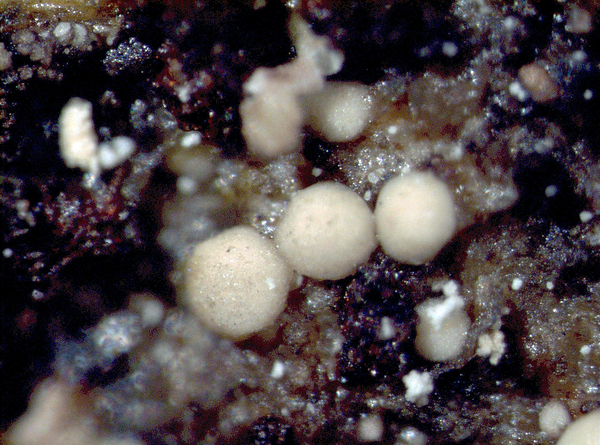
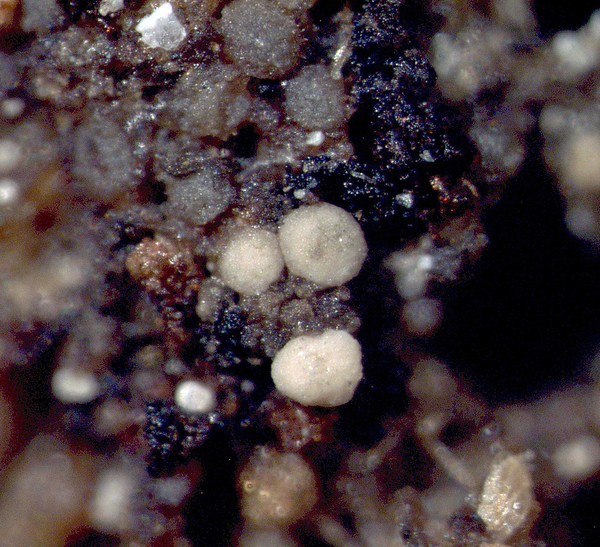
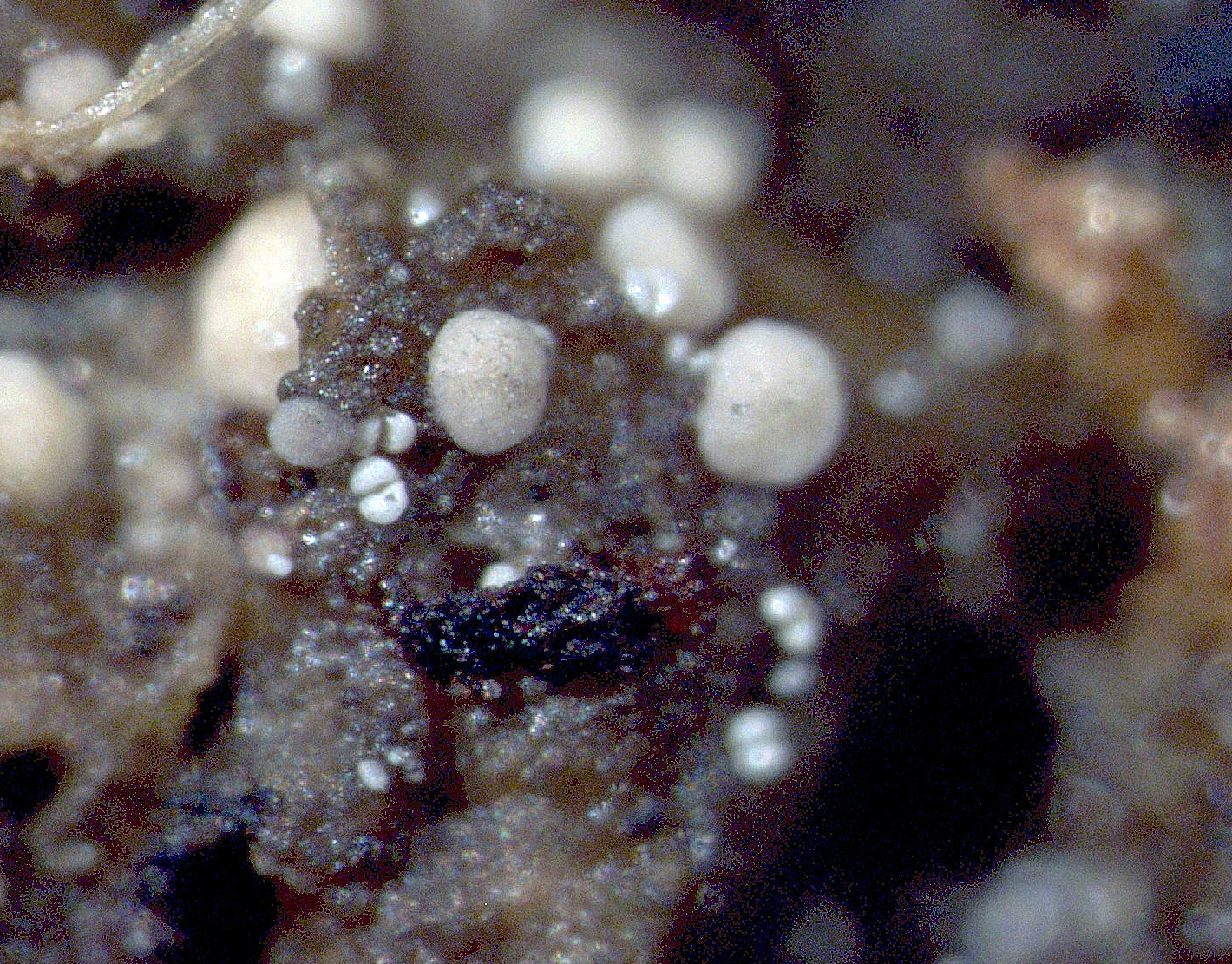
Description: Thallus crustose, mostly endosubstratic and poorly evident, consisting of a thin layer of delicate hyphae and small algal cells, developing on the leaflets of Ptilidium. Apothecia biatorine, whitish or cream-coloured, very rarely medium brown when old, up to 0.4 mm across, adnate to constricted at base, with a convex disc, the proper margin level with disc, barely visible in very young apothecia only. Proper exciple colourless in outer part, covered in a continuous layer of crystals soluble in K and N, the hyphae richly branched, closely septate with narrow lumina, 1-2 μm thick, running parallel and perpendicularly from the medullary part of gelatinized textura intricata; epithecium colourless or very pale brown, covered with a gelatinous layer topped with a layer of hyaline crystals soluble in K and N; hymenium colourless; paraphyses branched and anastomosing, c. 1 μm thick, equalling the asci in length; hypothecium colourless. Asci 8-spored, clavate, with a K/I+ blue tholus including a thin, darker K/I+ blue tubular ring-structure. Ascospores 1-celled, hyaline, ellipsoid-subfusiform, 5.3-7.3 x 2.3-3 μm. Photobiont chlorococcoid. Spot tests: thallus K-, C-, KC-, C-, P-, UV-. Chemistry: thallus with an unknown substance.Note: on the leafy liverwort Ptilidium pulcherrimum, rareky on other liverworts, clearly damaging the host, rarely spreading to adjacent wood or bark; widespread in Europe from the boreal to the temperate-montane zone; in the Alps it was recorded from Austria, Switzerland and Italy, but likely to occur elsewhere in coniferous forests.
Growth form: Crustose
Substrata: bark
Photobiont: green algae other than Trentepohlia
Reproductive strategy: mainly sexual
Commonnes-rarity: (info)
Alpine belt: absent
Subalpine belt: extremely rare
Oromediterranean belt: absent
Montane belt: extremely rare
Submediterranean belt: absent
Padanian area: absent
Humid submediterranean belt: absent
Humid mediterranean belt: absent
Dry mediterranean belt: absent
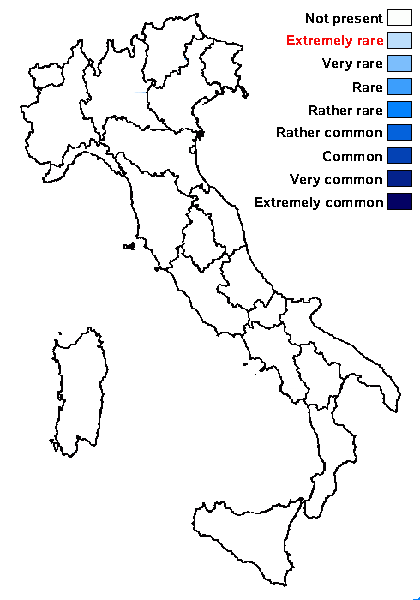
Predictive model

P.L. Nimis CC BY-SA 04
TSB 41227
P.L. Nimis CC BY-SA 04
TSB 41227
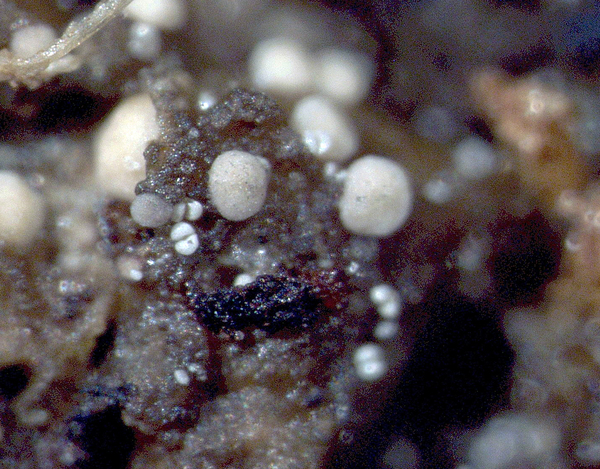
P.L. Nimis CC BY-SA 04
TSB 41227
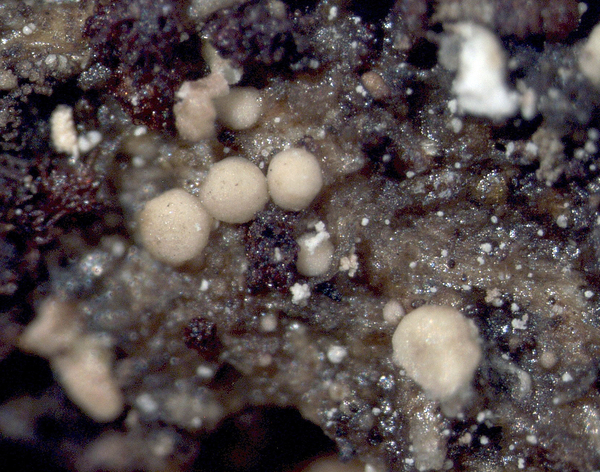
P.L. Nimis CC BY-SA 04
TSB 41227
Growth form: Crustose
Substrata: bark
Photobiont: green algae other than Trentepohlia
Reproductive strategy: mainly sexual
Commonnes-rarity: (info)
Alpine belt: absent
Subalpine belt: extremely rare
Oromediterranean belt: absent
Montane belt: extremely rare
Submediterranean belt: absent
Padanian area: absent
Humid submediterranean belt: absent
Humid mediterranean belt: absent
Dry mediterranean belt: absent
Predictive model
 INDEX FUNGORUM
 GBIF
GBIF
 DOLICHENS
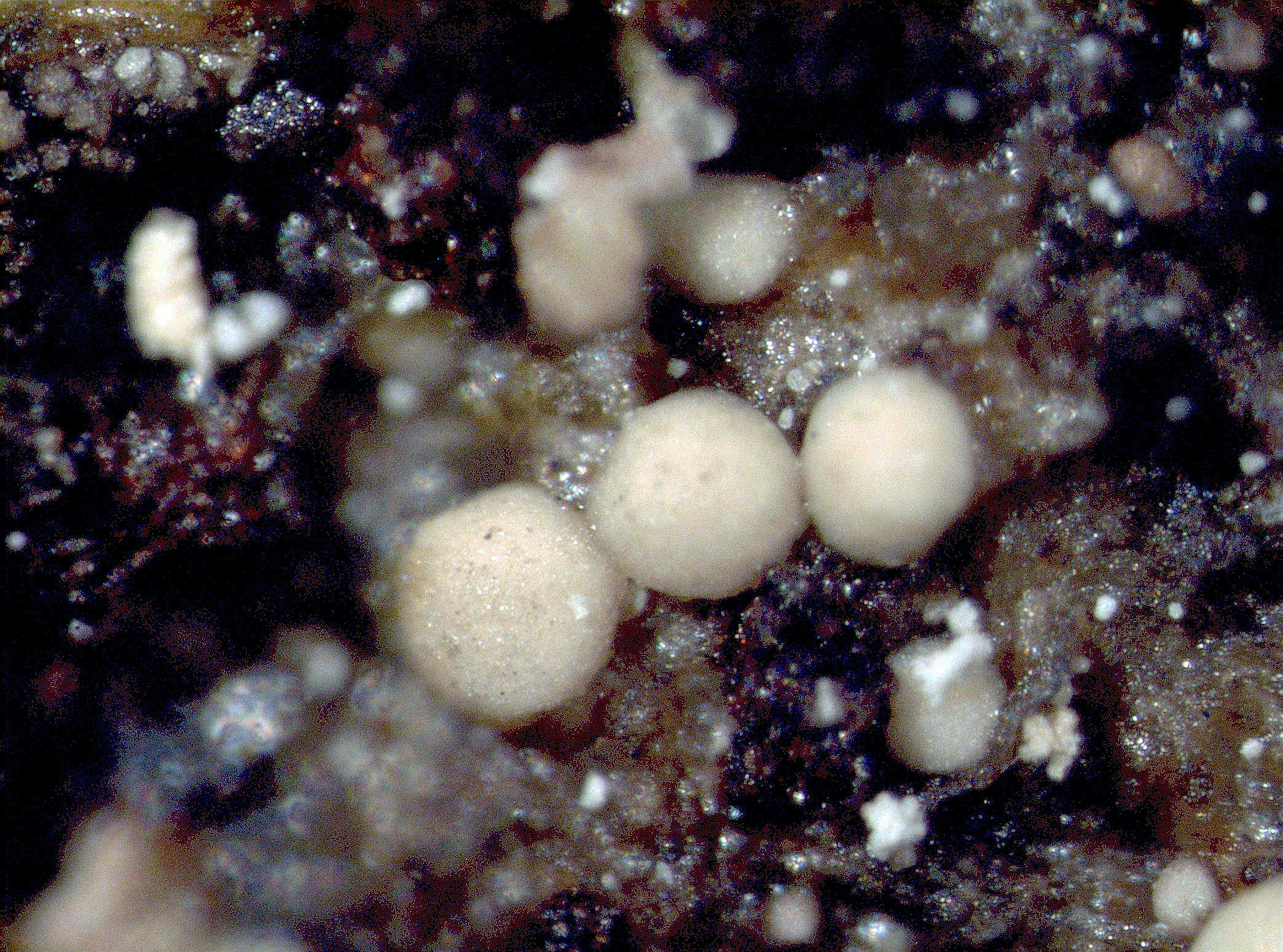
P.L. Nimis CC BY-SA 04
TSB 41227
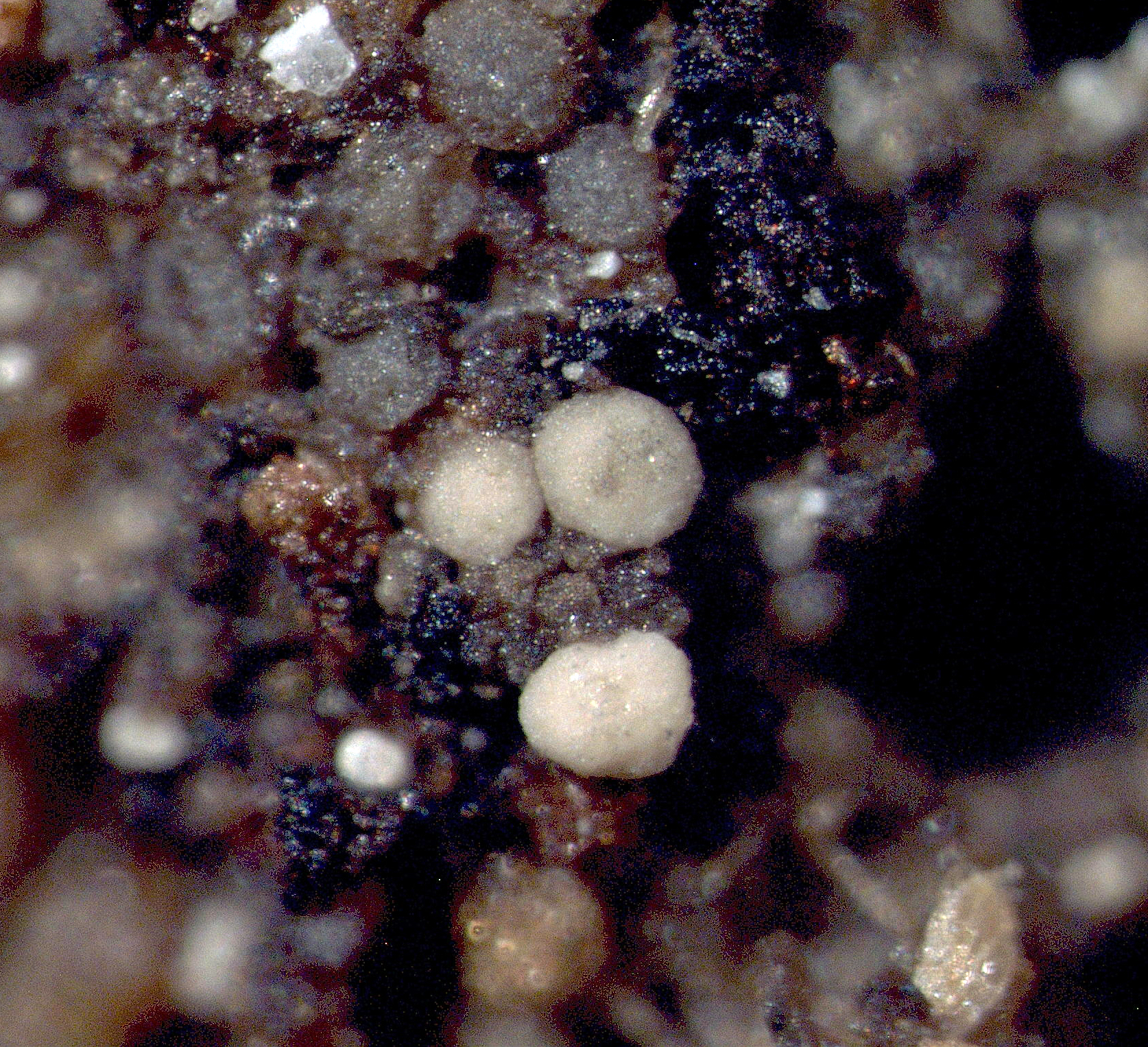
P.L. Nimis CC BY-SA 04
TSB 41227
P.L. Nimis CC BY-SA 04
TSB 41227