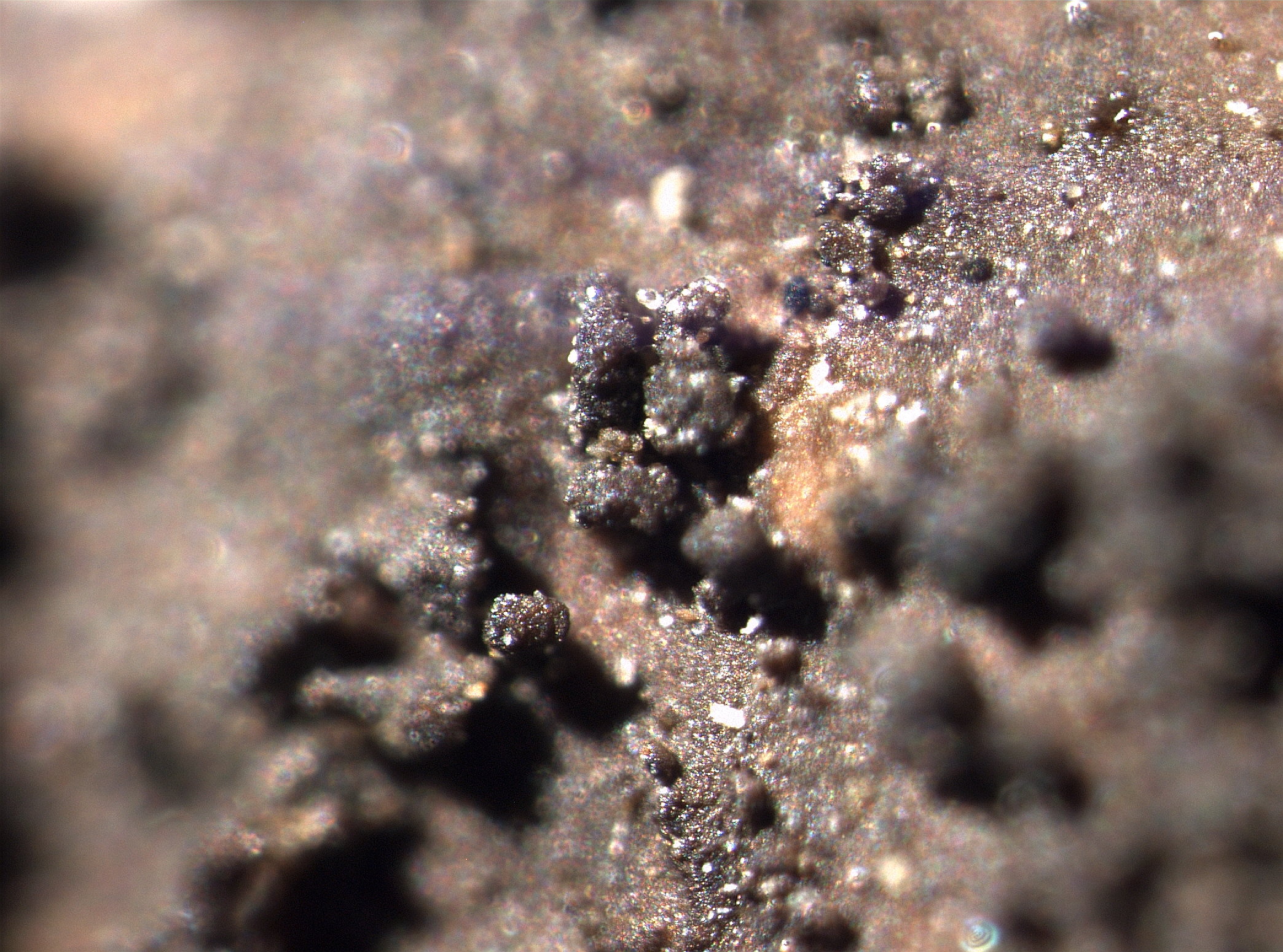
Dermatocarpon miniatum var. cirsodes (Ach.) Zahlbr.
Cat. Lich. Univ., 1: 225, 1921 (1922). Basionym: Endocarpon miniatum var. cirsodes Ach. - Lich. Univ.: 303, 1810
Synonyms: Dermatocarpon caesium Räsänen
Distribution: N - Lomb (Pistocchi & al. 2026).
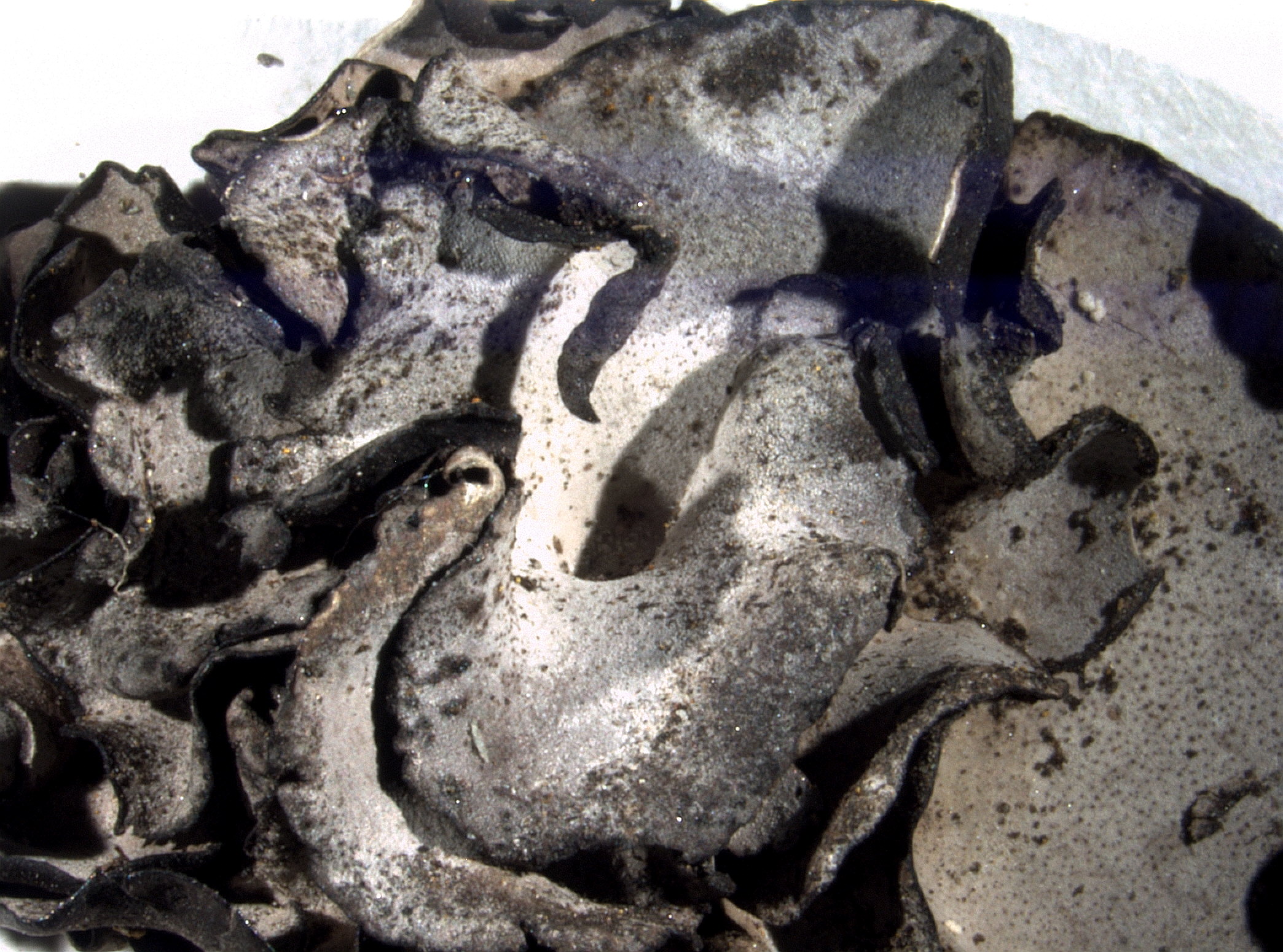
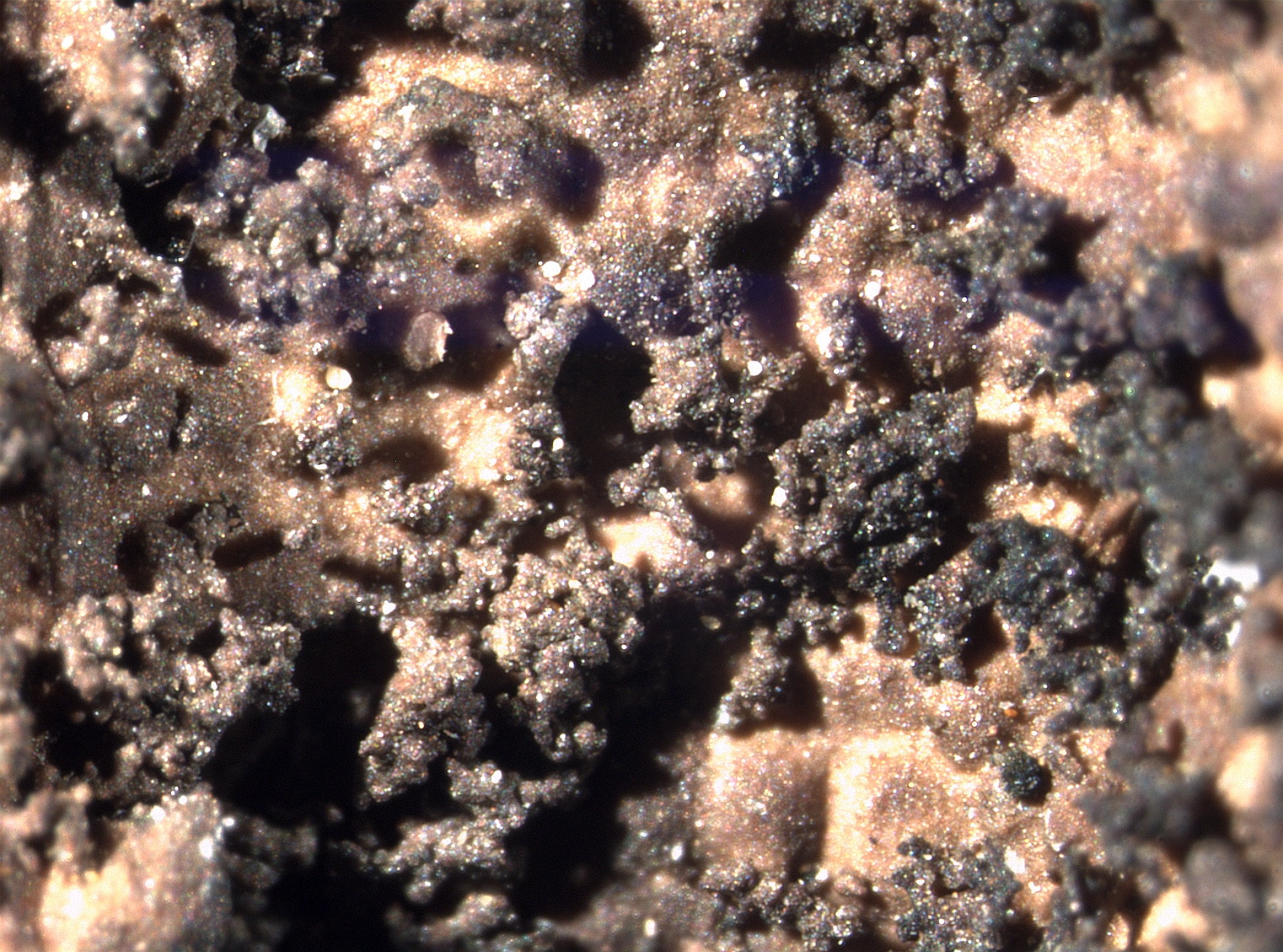
Description: Thallus foliose-umbilicate, heteromerous, dorsiventral, attached by a central holdfast, monophyllous, 0.42-1.78 mm thick when dry, 0.43-0.72 mm thick when wet, the lobes 13-42 mm wide, with usually down-rolled margins. Upper surface grey-pruinose, slightly to distinctly areolate. Lower surface pale brown, with distinct, stout, dark warts, erhizinate. Upper cortex 90-260 µm thick, of anticlinally arranged hyphae, brownish in the uppermost 10-30 µm, with an epinecral layer of air filled hyphae; lower cortex 40-90 µm thick, consisting of ca. 8, vertically oriented cell layers; medulla white to patchily pigmented, 90-500 µm thick, I-. Perithecia numerous, immersed in the thallus and scattered over almost the whole upper surface (appearing as black dots), without involucrellum. Exciple colourless except in the brown uppermost part; hamathecium of periphyses and periphysoids, interascal filaments absent; hymenial gel hemiamyloid. Asci 8-spored, clavate, I-, fissitunicate, the wall thickened above, with an ocular chamber, dehiscent by extrusion of an endotunica to form a delicate rostrum, Verrucaria-type. Ascospores 1-celled, hyaline, ellipsoid, 8.5-14 x 4.5-6 µm. Photobiont chlorococcoid. Spot tests: cortex and medulla K-, C-, KC-, P-, UV-. Chemistry: without lichen substances.Note: a lichen with thick thalli and a distinctly papillose lower surface, found on calcareous or basic siliceous rocks, usually in long-time dry localities, with several records in the Alps (Nimis & al. 2018). The taxon is accepted in the lichen checklists of Austria (Hafellner & Türk 2016) and France (Roux & Coll. 2025), but – like all infraspecific taxa within the D. miniatum aggregate – not by Heiðmarsson (2017), who nonetheless acknowledged that genetic and morphological variation within D. miniatum is much larger than in other accepted species of the genus, and that the taxonomy of this group is not yet settled.
Growth form: Foliose, umbilicate
Substrata: rocks
Photobiont: green algae other than Trentepohlia
Reproductive strategy: mainly sexual
Poorly known taxon in need of further study
Commonnes-rarity: (info)
Alpine belt: absent
Subalpine belt: absent
Oromediterranean belt: absent
Montane belt: extremely rare
Submediterranean belt: extremely rare
Padanian area: absent
Humid submediterranean belt: absent
Humid mediterranean belt: absent
Dry mediterranean belt: absent

Predictive model


Pier Luigi Nimis - CC BY-SA 4.0
TSB 14334

Pier Luigi Nimis - CC BY-SA 4.0
TSB 14334

Pier Luigi Nimis - CC BY-SA 4.0
TSB 14334

Pier Luigi Nimis - CC BY-SA 4.0
TSB 14334
Growth form: Foliose, umbilicate
Substrata: rocks
Photobiont: green algae other than Trentepohlia
Reproductive strategy: mainly sexual
Poorly known taxon in need of further study
Commonnes-rarity: (info)
Alpine belt: absent
Subalpine belt: absent
Oromediterranean belt: absent
Montane belt: extremely rare
Submediterranean belt: extremely rare
Padanian area: absent
Humid submediterranean belt: absent
Humid mediterranean belt: absent
Dry mediterranean belt: absent
Predictive model
 INDEX FUNGORUM
 GBIF
GBIF
Pier Luigi Nimis - CC BY-SA 4.0
TSB 14334

Pier Luigi Nimis - CC BY-SA 4.0
TSB 14334
Pier Luigi Nimis - CC BY-SA 4.0
TSB 14334