Lecanora sinuosa Herk & Aptroot
Lichenologist, 31: 548, 1999.
Synonyms: Lecanora hybocarpa auct. Eur. non (Tuck.) Brodo
Distribution: N - Lig (Burguera & al. 2024, Arup & al. 2025). C - Sar (Zedda 2002, 2002b).
Description: Thallus crustose, areolate to verrucose-areolate, 0.1-0.3(–1) mm thick, whitish to yellowish grey, without a distinct prothallus or with a dark prothallus, the areoles 0.1-0.4 mm wide, flat or verruculose, epruinose. Apothecia lecanorine, sessile, constricted at base, 0.3-1.8 mm across, with a pale red-brown or orange-brown, flat, epruinose disc and a 0.05-0.3 mm thick, usually persistent, entire or flexuose, smooth to verruculose thalline margin. Thalline exciple corticate, 50–300 μm thick, with large crystals insoluble in K, pulicaris-type, the cortex (15-)20-25(-30) µm wide laterally, 25-35(-50) µm wide at base; proper exciple colourless, lacking crystals; epithecium colourless to pale orange-brown, pulicaris-type, i.e. with small (0.5-1 μm) crystals visible under polarized light, distributed mainly along the upper part of the paraphyses, soluble rapidly in K, slowly in N, penetrating into the hymenium for c. 20 μm; hymenium colourless, 60-85 µm high, not inspersed with oil droplets; paraphyses slightly thickened apically; hypothecium colourless. Asci 8-spored, clavate, very thin-walled, with a K/I+ blue, tall tholus penetrated by a faintly amyloid apical cushion, the wall K/I-, surrounded by a blue outer layer, Lecanora-type. Ascospores 1-celled, hyaline, broadly ellipsoid, 13-17 x 7.5-9 µm. Photobiont chlorococcoid. Spot tests: thallus and apothecial margin K+ yellow, C-, KC+ pale yellow, P- or P+ pale yellow, UV-. Chemistry: atranorin and roccellic acid, sometimes with an additional unknown fatty acid, possibly nephrosteranic acid.Note: on the bark of more or less isolated trees in lowland areas. The species belongs to a complex of cryptic taxa which, in Europe, were frequently called L. hybocarpa, an American species. In Europe the following other taxa occur, which can be reliably identified only by DNA data: L. cryptosinuosa, L. macaronesica, and L. subsinuosa. As they mostly have a western distribution, earlier records of L. hybocarpa from Italy were assigned to L. sinuosa, the most widespread species of the group in Europe, although the only sequenced Italian record is that by Arup & al. (2025) from Liguria. Several further records from Italy may be hidden among those of L. chlarotera. For further details see Arup & al. (2025).
Growth form: Crustose
Substrata: bark
Photobiont: green algae other than Trentepohlia
Reproductive strategy: mainly sexual
Commonnes-rarity: (info)
Alpine belt: absent
Subalpine belt: absent
Oromediterranean belt: absent
Montane belt: absent
Submediterranean belt: rare
Padanian area: absent
Humid submediterranean belt: rare
Humid mediterranean belt: very rare
Dry mediterranean belt: very rare
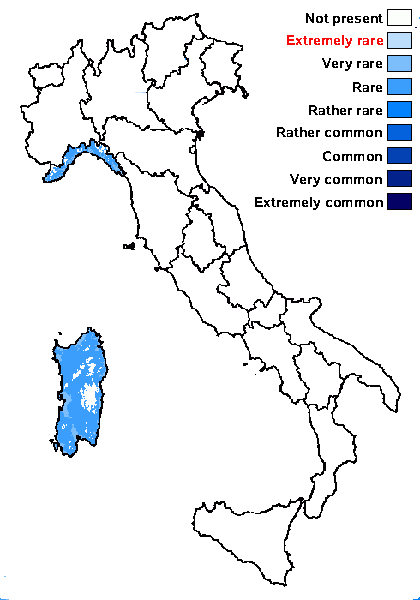
Predictive model
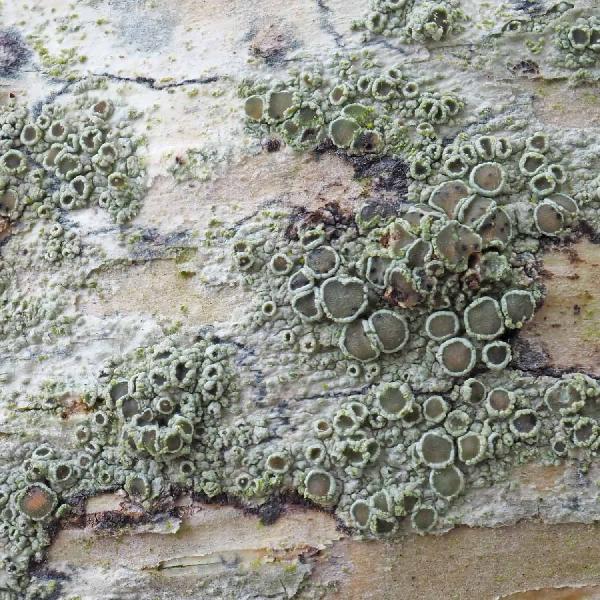
Source: https://fungi.myspecies.info/all-fungi/lecanora-sinuosa Photo uploaded by Paul Cannon - CC BY NC
Lecanora sinuosa, thallus on bark of Betula sp., VC40 Shropshire.
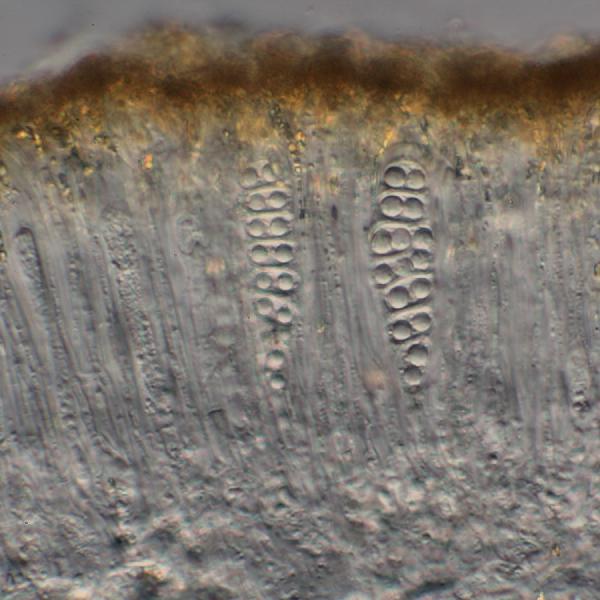
Source: https://fungi.myspecies.info/all-fungi/lecanora-sinuosa Photo uploaded by Paul Cannon - CC BY NC
Lecanora sinuosa, section through hymenium. Collection from bark of Betula sp., VC40 Shropshire.
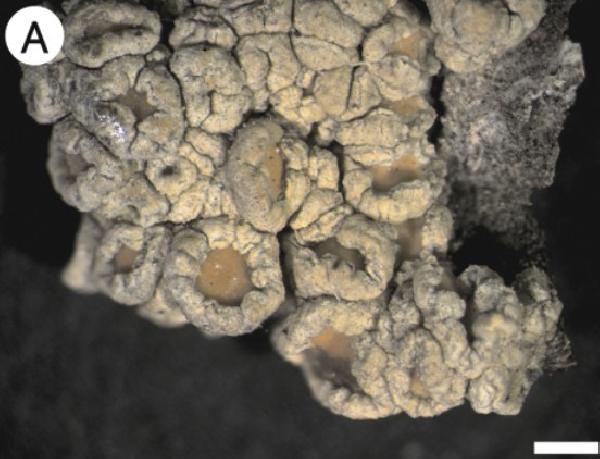
CC BY 4.0 - Source: Arup U, Malíček J, Schiefelbein U, Holien H. Lecanora hybocarpa and similar European species. The Lichenologist. 2025;57(6):239-255. doi:10.1017/S0024282925101291
L. sinuosa, holotype (L). - Scale bar: 0.5 mm

CC BY 4.0 - Source: Arup U, Malíček J, Schiefelbein U, Holien H. Lecanora hybocarpa and similar European species. The Lichenologist. 2025;57(6):239-255. doi:10.1017/S0024282925101291
L. sinuosa (TRH L-19686). - Scale bar: 0.5 mm
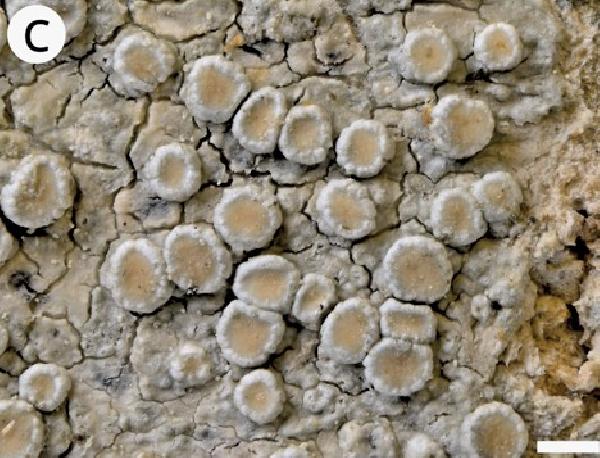
CC BY 4.0 - Source: Arup U, Malíček J, Schiefelbein U, Holien H. Lecanora hybocarpa and similar European species. The Lichenologist. 2025;57(6):239-255. doi:10.1017/S0024282925101291
L. sinuosa (TRH L-13542). - Scale bar: 0.5 mm
Growth form: Crustose
Substrata: bark
Photobiont: green algae other than Trentepohlia
Reproductive strategy: mainly sexual
Commonnes-rarity: (info)
Alpine belt: absent
Subalpine belt: absent
Oromediterranean belt: absent
Montane belt: absent
Submediterranean belt: rare
Padanian area: absent
Humid submediterranean belt: rare
Humid mediterranean belt: very rare
Dry mediterranean belt: very rare
Predictive model

Source: https://fungi.myspecies.info/all-fungi/lecanora-sinuosa Photo uploaded by Paul Cannon - CC BY NC
Lecanora sinuosa, thallus on bark of Betula sp., VC40 Shropshire.

Source: https://fungi.myspecies.info/all-fungi/lecanora-sinuosa Photo uploaded by Paul Cannon - CC BY NC
Lecanora sinuosa, section through hymenium. Collection from bark of Betula sp., VC40 Shropshire.

CC BY 4.0 - Source: Arup U, Malíček J, Schiefelbein U, Holien H. Lecanora hybocarpa and similar European species. The Lichenologist. 2025;57(6):239-255. doi:10.1017/S0024282925101291
L. sinuosa, holotype (L). - Scale bar: 0.5 mm

CC BY 4.0 - Source: Arup U, Malíček J, Schiefelbein U, Holien H. Lecanora hybocarpa and similar European species. The Lichenologist. 2025;57(6):239-255. doi:10.1017/S0024282925101291
L. sinuosa (TRH L-19686). - Scale bar: 0.5 mm