Verrucaria fusconigrescens Nyl.
Bull. Soc. linn. Normandie, sér. 2, 6, 2: 266, 314, 1873, (1872).
Synonyms:
Distribution:
Description: Thallus crustose, episubstratic, rimose-areolate, medium to dark brown, 0.05-0.15 mm thick, non-gelatinous when wet, delimited by a dark prothallus, the areoles flat to slightly convex, 0.1-0.4(-0.5) mm wide, developing on a black hypothallus. Cortex poorly differentiated, sometimes with an up to 15 µm thick epinecral layer which may give an almost pruinose appearance to the thallus; medulla very thin, brownish, not forming a black basal layer. Perithecia black, immersed into 0.13-0.4 mm wide, low thalline warts, projecting with the rounded or slightly flattened, rarely concave, naked uppermost part, the ostiole inconspicuous or appearing as a pale dot. Involucrellum well-developed, 40-80 µm thick, conical, but sometimes steep-sided, extending to base-level, diverging from exciple, the space inbetween brownish; exciple 0.2-0.4 mm across, the wall 15-20 µm thick, colourless or dark-pigmented but usually pale at base; hamathecium of periphysoids measuring 15-30 x c. 2 µm, interascal filaments absent; hymenial gel hemiamyloid, I+ red (I+ blue at very low concentrations of I), K/I+ blue. Asci 8-spored, clavate, I-, fissitunicate, the wall thickened above, with an ocular chamber, dehiscent by extrusion of an endotunica to form a delicate rostrum, Verrucaria-type, 70-80 × 18-25 µm. Ascospores 1-celled, hyaline, oblong-ellipsoid, (16-)19-24(-26) x (5-)7-10(-12) µm, (2.1-)2.3-2.6(-2.8) times as long as wide. Photobiont chlorococcoid. Spot tests: K-, C-, KC-, P-, UV-. Chemistry: without lichen substances.Note: a rather poorly known species reported from several localities in SW Europe, including the Western Alps (France), growing on siliceous rocks from the xeric supralittoral zone to inland localities at low altitudes. According to Orange (2013) it may comprise a species aggregate. For further details see also Orange & al. (2023).
Growth form: Crustose
Substrata: rocks
Photobiont: green algae other than Trentepohlia
Reproductive strategy: mainly sexual
Most common in areas with a humid-warm climate (e.g. most of Tyrrenian Italy)
Taxon bound to maritime-coastal situations
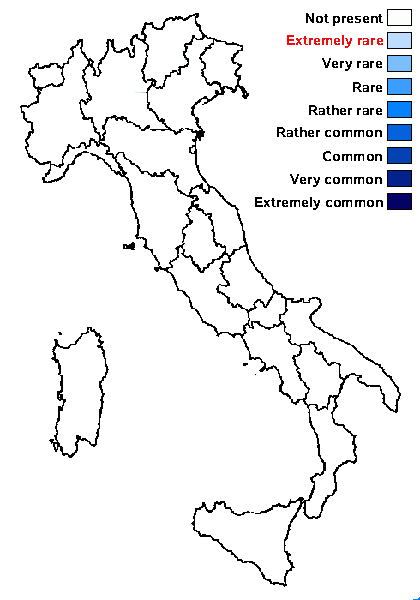
Predictive model

Harrie Sipman. http://www.bgbm.org/digitalimages/Aegean/Verrucaria/P71310130k.jpg
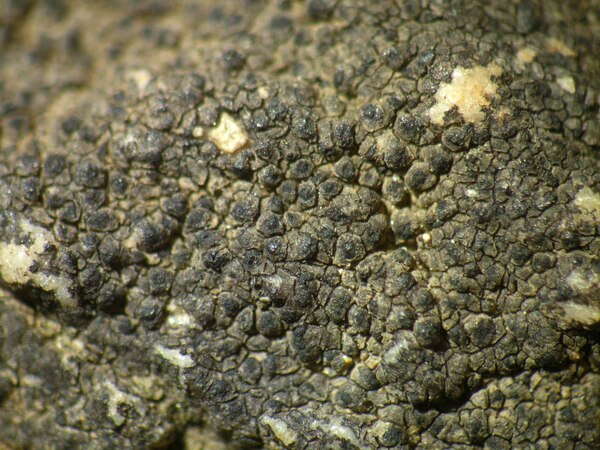
Harrrie Sipman. Source: http://www.bgbm.org/digitalimages/Aegean/Verrucaria/P71310130k.jpg
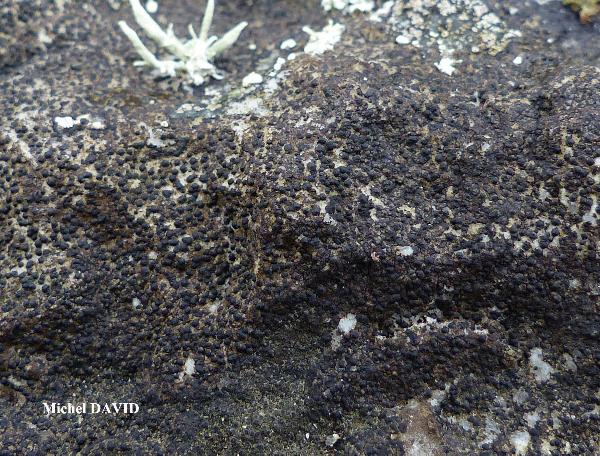
Michel David - Source: http://www.lichensmaritimes.org/index.php?task=fiche&lichen=172&lang=en
France, Pointe de Pen-Hir
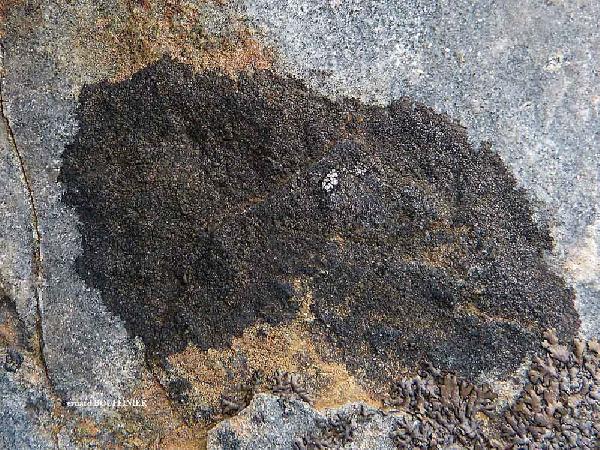
Bernard Bouffinier - Source: http://www.lichensmaritimes.org/index.php?task=fiche&lichen=172&lang=en
France, Pointe de Pen-Hir
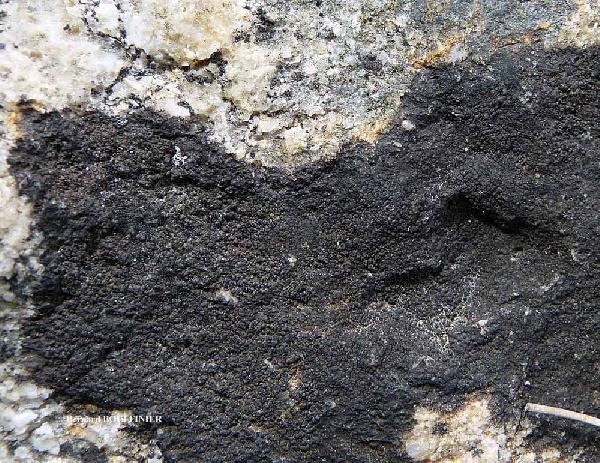
Bernard Bouffinier - Source: http://www.lichensmaritimes.org/index.php?task=fiche&lichen=172&lang=en
France, Pointe de Pen-Hir
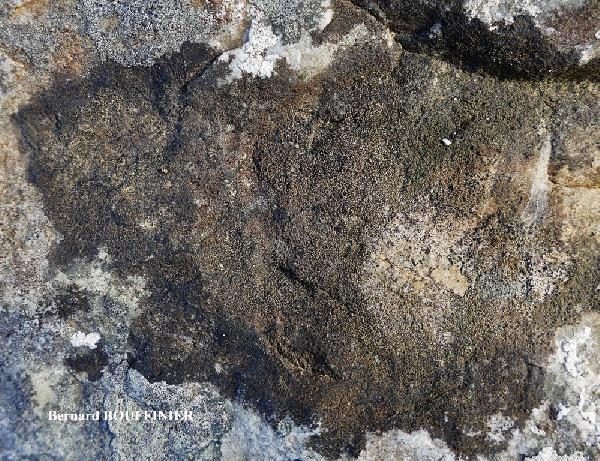
Bernard Bouffinier - Source: http://www.lichensmaritimes.org/index.php?task=fiche&lichen=172&lang=en
France, Camaret
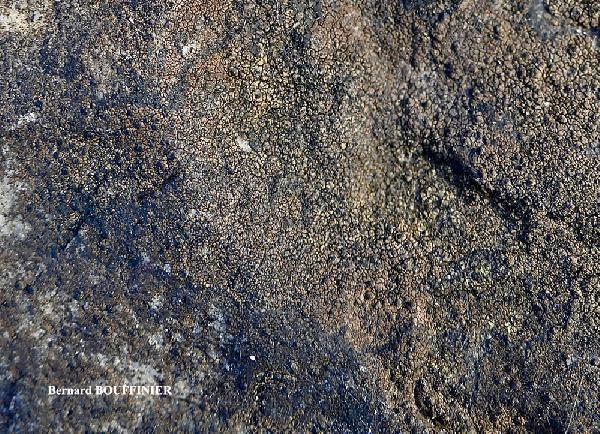
Bernard Bouffinier - Source: http://www.lichensmaritimes.org/index.php?task=fiche&lichen=172&lang=en
France, Camaret
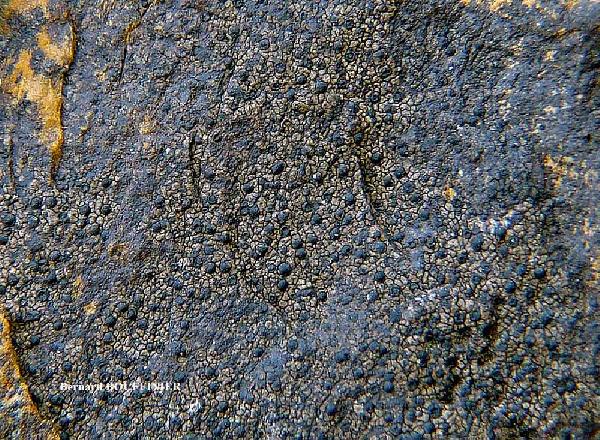
Bernard Bouffinier - Source: http://www.lichensmaritimes.org/index.php?task=fiche&lichen=172&lang=en
France, Cap de la Chèvre
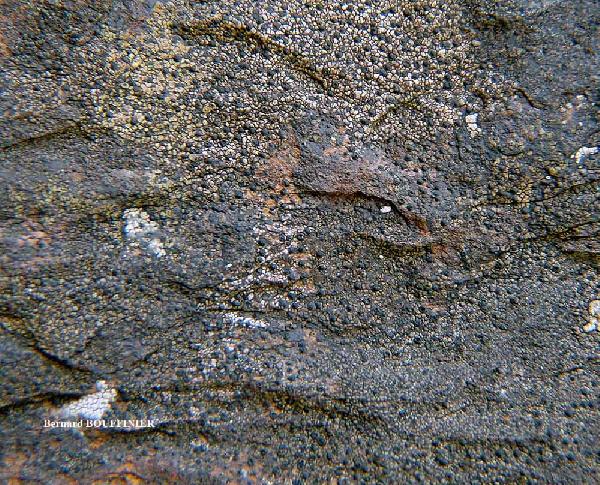
Bernard Bouffinier - Source: http://www.lichensmaritimes.org/index.php?task=fiche&lichen=172&lang=en
France, Cap de la Chèvre

Bernard Bouffinier - Source: http://www.lichensmaritimes.org/index.php?task=fiche&lichen=172&lang=en
France, Cap de la Chèvre
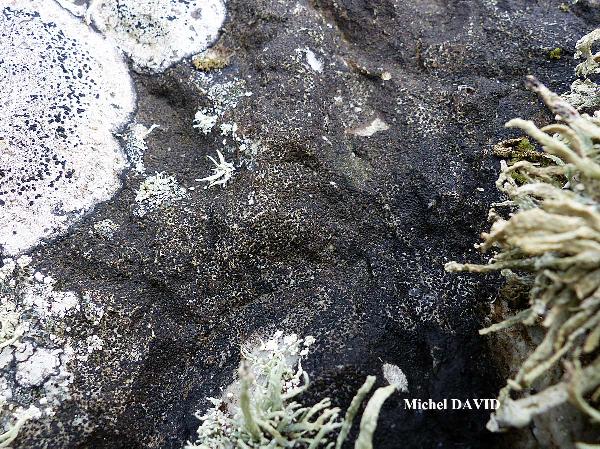
Michel David - Source: http://www.lichensmaritimes.org/index.php?task=fiche&lichen=172&lang=en
France, Pointe de Pen-Hir
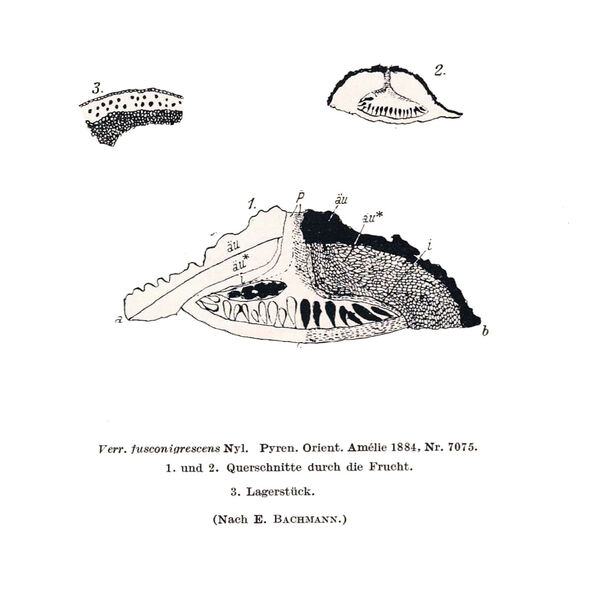
Zschacke, H. (1934) Epigloeaceae, Verrucariaceae und Dermatocarpaceae. In: Dr. L. Rabenhorst‘s Kryptogamen-Flora, Band 9, Abt. 1, Teil 1. Akademische Verlagsgesellschaft, Leipzig, 695 pp. - Public Domain
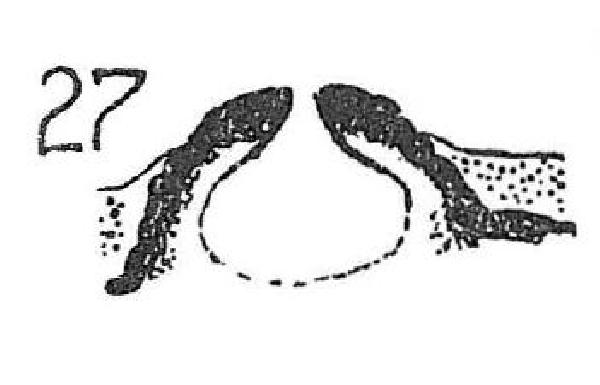
Source: Servit, M 1949: Nove nebo mene zname druhy lisejnikove celedi Verrucariaceae. Species Verrucariacearum (Lichenes) novae vel minus cognitae. - Sbornik Narodniho Musea v Praze 5(9): 1-51. Tab.1 - Public Domain
Growth form: Crustose
Substrata: rocks
Photobiont: green algae other than Trentepohlia
Reproductive strategy: mainly sexual
Most common in areas with a humid-warm climate (e.g. most of Tyrrenian Italy)
Taxon bound to maritime-coastal situations
Predictive model

Harrie Sipman. http://www.bgbm.org/digitalimages/Aegean/Verrucaria/P71310130k.jpg

Harrrie Sipman. Source: http://www.bgbm.org/digitalimages/Aegean/Verrucaria/P71310130k.jpg

Michel David - Source: http://www.lichensmaritimes.org/index.php?task=fiche&lichen=172&lang=en
France, Pointe de Pen-Hir

Bernard Bouffinier - Source: http://www.lichensmaritimes.org/index.php?task=fiche&lichen=172&lang=en
France, Pointe de Pen-Hir

Bernard Bouffinier - Source: http://www.lichensmaritimes.org/index.php?task=fiche&lichen=172&lang=en
France, Pointe de Pen-Hir

Bernard Bouffinier - Source: http://www.lichensmaritimes.org/index.php?task=fiche&lichen=172&lang=en
France, Camaret
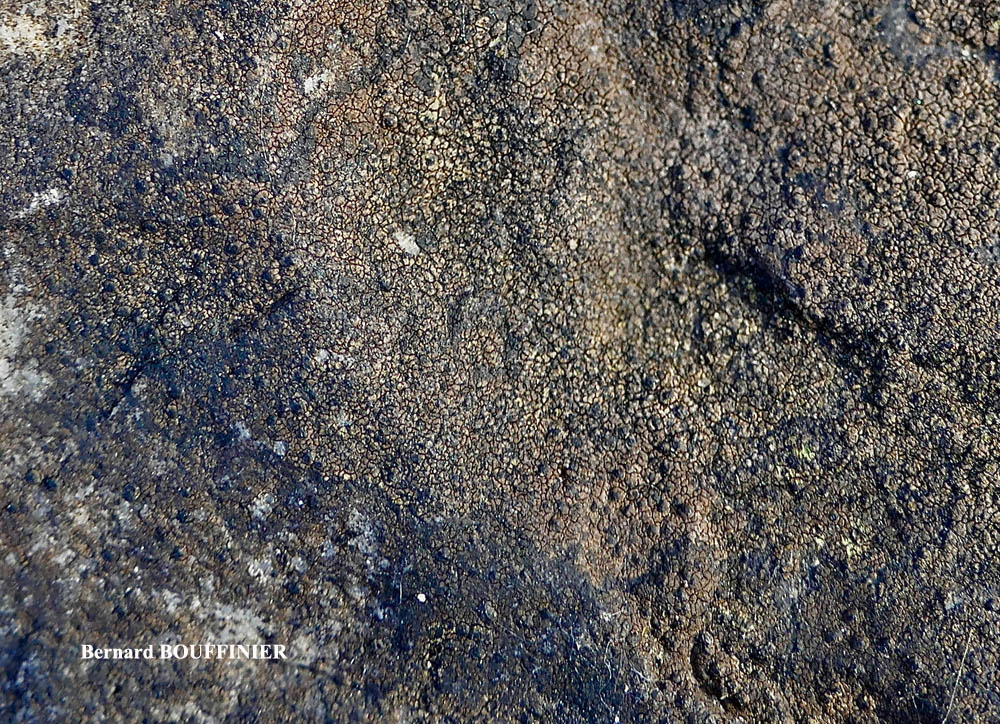
Bernard Bouffinier - Source: http://www.lichensmaritimes.org/index.php?task=fiche&lichen=172&lang=en
France, Camaret

Bernard Bouffinier - Source: http://www.lichensmaritimes.org/index.php?task=fiche&lichen=172&lang=en
France, Cap de la Chèvre

Bernard Bouffinier - Source: http://www.lichensmaritimes.org/index.php?task=fiche&lichen=172&lang=en
France, Cap de la Chèvre

Bernard Bouffinier - Source: http://www.lichensmaritimes.org/index.php?task=fiche&lichen=172&lang=en
France, Cap de la Chèvre

Michel David - Source: http://www.lichensmaritimes.org/index.php?task=fiche&lichen=172&lang=en
France, Pointe de Pen-Hir
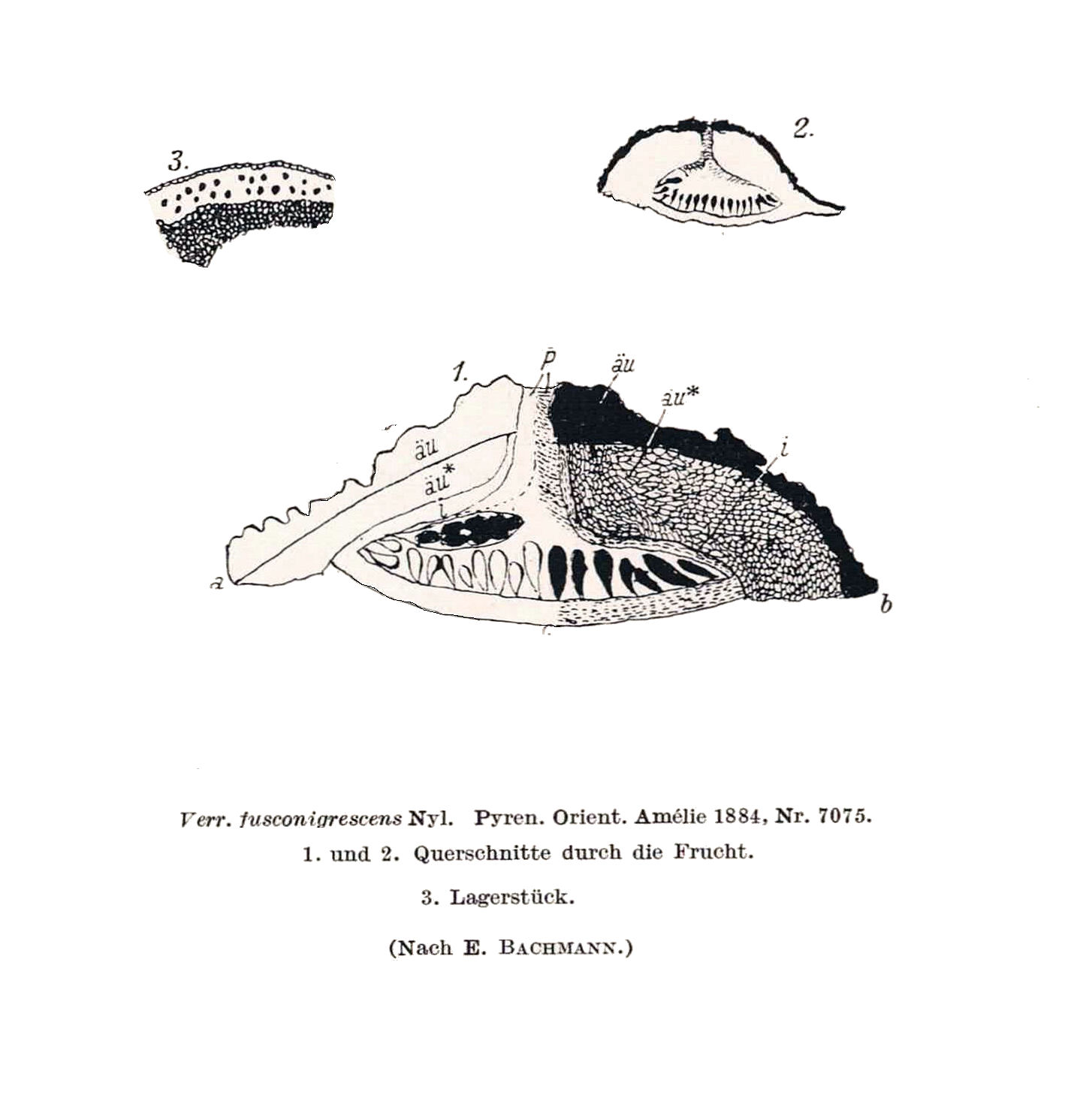
Zschacke, H. (1934) Epigloeaceae, Verrucariaceae und Dermatocarpaceae. In: Dr. L. Rabenhorst‘s Kryptogamen-Flora, Band 9, Abt. 1, Teil 1. Akademische Verlagsgesellschaft, Leipzig, 695 pp. - Public Domain