Verrucaria umbrinula Nyl.
Flora, 53: 37, 1870.
Synonyms:
Distribution:
Description: Thallus crustose, episubstratic, 70-200 µm thick, dark brown to black, minutely rimose to areolate, the areoles 0.05-0.25 mm wide, slightly convex, scabrous. Upper cortex paraplectenchymatous, 10-20 µm thick, the uppermost part brown; algal layer 30-120 µm thick, the algal cells more or less arranged in vertical columns; medulla white in upper part, but forming a continuous or often discontinuous black basal layer. Perithecia 1/2 to 3/4 immersed in distinctly convex fertile areoles, forming hemispherical, 0.2-0.25 mm wide projections, 1(-3) per areole. Involucrellum 35-50 µm thick, completely encircling the exciple; exciple dark brown throughout, globose, 0.18-0.2 mm across; hamathecium of c. 20 µm long periphysoids, interascal filaments absent; hymenial gel hemiamyloid, I+ red (I+ blue at very low concentrations of I), K/I+ blue. Asci 8-spored, clavate, I-, fissitunicate, the wall thickened above, with an ocular chamber, dehiscent by extrusion of an endotunica to form a delicate rostrum, Verrucaria-type, 40-45 x 12-15 µm. Ascospores 1-celled, hyaline, ellipsoid, 16-18(-20) x 6-8 µm. Photobiont chlorococcoid. Spot tests: K-, C-, KC-, P-, UV-. Chemistry: without lichen substances. Note: an apparently widespread silicicolous species described from northern Finland, with a few scattered records in the Alps. For further details see Krzewicka (2012). To be looked for in Italy.
Growth form: Crustose
Substrata: rocks
Photobiont: green algae other than Trentepohlia
Reproductive strategy: mainly sexual
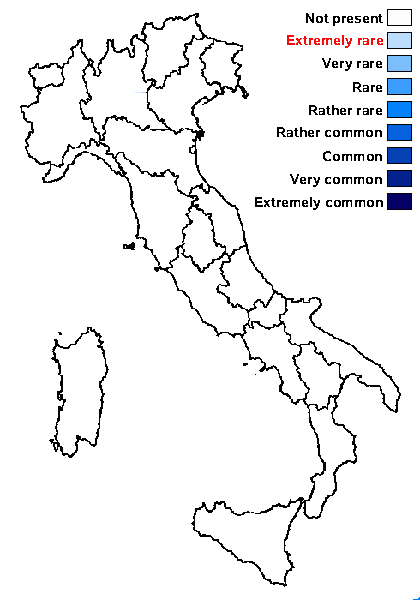
Predictive model
Herbarium samples
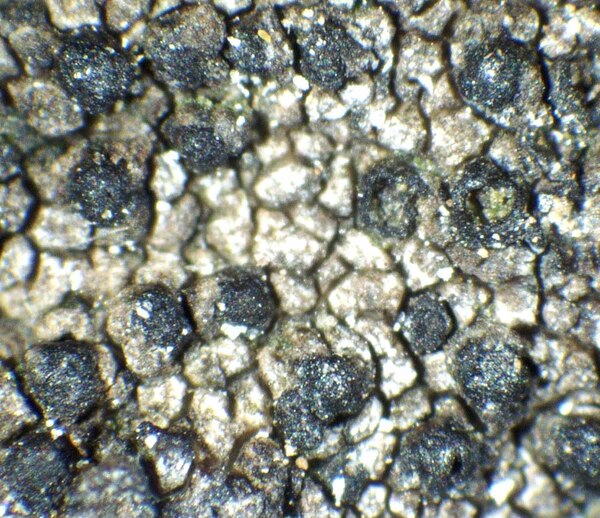

P.L. Nimis CC BY-SA 04
TSB 35224
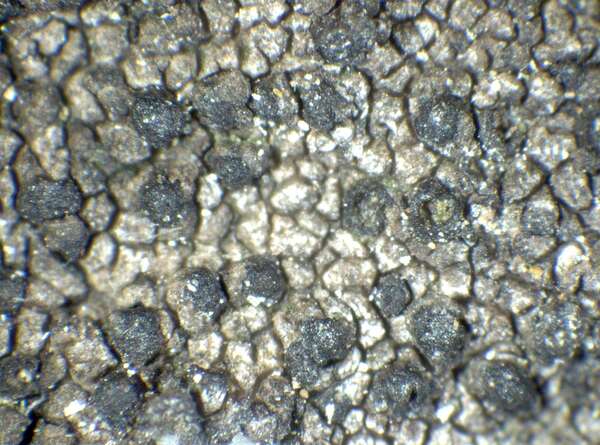
P.L. Nimis; Owner: Department of Life Sciences, University of Trieste
Herbarium: TSB (35224)
2002/07/12
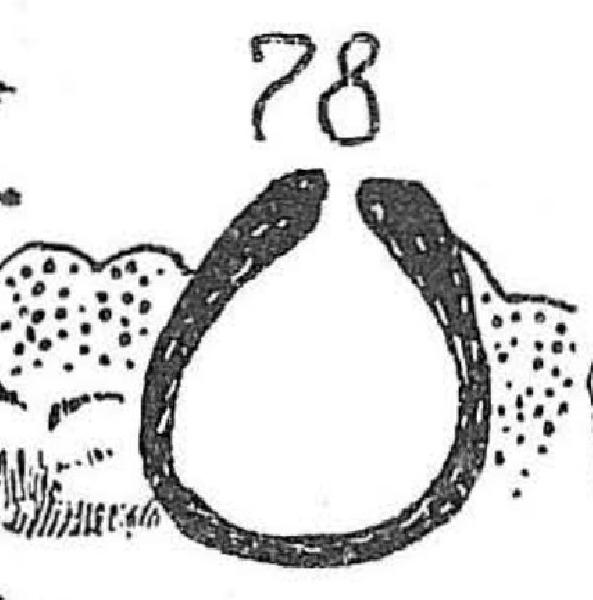
Source: Servit, M 1949: Nove nebo mene zname druhy lisejnikove celedi Verrucariaceae. Species Verrucariacearum (Lichenes) novae vel minus cognitae. - Sbornik Narodniho Musea v Praze 5(9): 1-51. Tab.3 - Public Domain
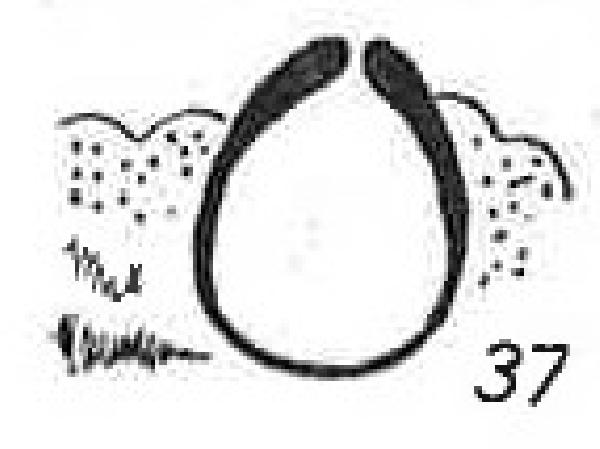
Source: Servít M. 1954a. Lichenes familiae Verrucariacearum. Prag, 249 pp.
Growth form: Crustose
Substrata: rocks
Photobiont: green algae other than Trentepohlia
Reproductive strategy: mainly sexual
Predictive model
| Herbarium samples |

P.L. Nimis CC BY-SA 04
TSB 35224

P.L. Nimis; Owner: Department of Life Sciences, University of Trieste
Herbarium: TSB (35224)
2002/07/12

Source: Servit, M 1949: Nove nebo mene zname druhy lisejnikove celedi Verrucariaceae. Species Verrucariacearum (Lichenes) novae vel minus cognitae. - Sbornik Narodniho Musea v Praze 5(9): 1-51. Tab.3 - Public Domain