Catinaria atropurpurea (Schaer.) Vězda & Poelt
in Poelt & Vezda, Bibl. Lichenol., 16: 363, 1981. Basionym: Lecidea sphaeroides var. atropurpurea Schaer. - Lich. Helv. Spicil., 4-5: 165, 1833.
Synonyms: Biatora adpressa Hepp; Biatora atropurpurea (Schaer.) Hepp; Biatorina adpressa (Hepp) Körb.; Biatorina arceutica A. Massal.; Biatorina atropurpurea (Schaer.) A. Massal.; Catillaria adpressa (Hepp) Schuler; Catillaria atropurpurea (Schaer.) Th. Fr.
Distribution: N - Ven, TAA (Nascimbene & al. 2007b, 2022), Lomb, Lig (Giordani & Incerti 2008). C - Tosc, Marc (Nimis & Tretiach 1999), Umb (Ravera 2000, Ravera & al. 2006), Laz (Ravera 2001, Massari & Ravera 2002), Abr (Nimis & Tretiach 1999), Sar (Zedda 2002, Rizzi & al. 2011, Cossu 2013, Di Nuzzo & al. 2022). S - Camp (Aprile & al. 2003b), Pugl (Nimis & Tretiach 1999), Bas (Ravera & al. 2015d), Cal (Puntillo 1996, Incerti & Nimis 2006), Si (Ottonello & al. 2011).
Description: Thallus crustose, continuous and smooth or often minutely granular (granules 15-70 µm in diam.), pale to dark grey-brown, greenish white, or grey-green, sometimes poorly evident. Apothecia lecideine to biatorine, broadly adnate or slightly constricted at base, 0.2-0.6(-0.8) mm across, with a concave to slightly convex, reddish brown (when dry) to black (when wet), epruinose disc, and a concolorous or darker, rather thick, finally sometimes excluded proper margin. Proper exciple dark brown to violet-red in outer part, colourless to pale brown within, of radiating, conglutinated hyphae with ellipsoid to oblong lumina; epithecium pale yellow to brown, K-, N-; hymenium colourless, 55-75 µm high; paraphyses simple or sparingly branched in lower part, rather lax, 0.8-1 µm thick at mid-level, the apical cells 2-4 µm wide, often with a brown cap; hypothecium colourless or pale brown, K-. Asci 8-spored, subcylindrical, with a K/I+ blue outer coat and a K/I+ uniformly blue apical dome, approaching the Catillaria-type, but with a non-amyloid axial mass and a small ocular chamber, with biseriately arranged spores. Ascospores 1-septate, often slightly constricted at septum, hyaline, ellipsoid or oblong-ellipsoid, 9-15 x 5-7 µm, with a smooth wall surrounded by an up to 1.5 µm thick, gelatinous perispore. Photobiont chlorococcoid ( Dictyochloropsis), the cells 5-9 µm in diam. Spot tests: thallus K-, C-, KC-, P-, UV-. Chemistry: without lichen substances. Note: a mild-temperate to subtropical lichen found on trunks of old broad-leaved trees, often in parts which are seldom wetted by rain, or on undersides of thick branches; locally common in some humid areas of Southern Italy.
Growth form: Crustose
Substrata: bark and lignum
Photobiont: Trentepohlia
Reproductive strategy: mainly sexual
Most common in areas with a humid-warm climate (e.g. most of Tyrrenian Italy)
In underhangs rarely wetted by rain
Commonnes-rarity: (info)
Alpine belt: absent
Subalpine belt: absent
Oromediterranean belt: absent
Montane belt: absent
Submediterranean belt: extremely rare
Padanian area: absent
Humid submediterranean belt: very rare
Humid mediterranean belt: rather rare
Dry mediterranean belt: absent
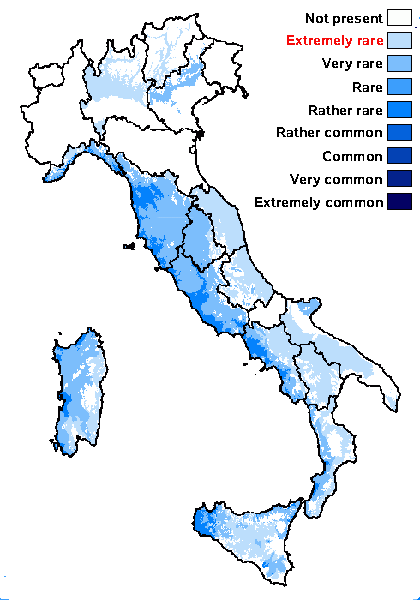
Predictive model
Herbarium samples
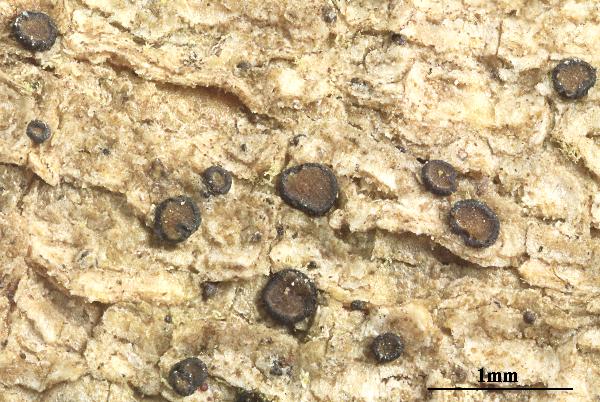

Felix Schumm - CC BY-SA 4.0
[ABL77486], Brazil, Mato Grosso do Sul, Bonito, Parque National da
Serra da Bodoquena, Rio Perdido, in Atlantic rain forest on treebark and
twigs. 21°07’' S, 56°43’ W, 510 m. Leg. A. Aptroot (no 77486),
3.11.2018, det. A. Aptroot, 2019. - Spores hyaline, 8/ascus, 1-septate,
14 x 6 μm.
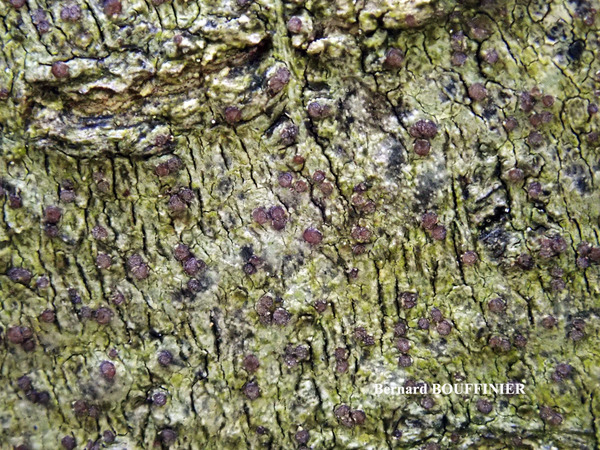
Bernard Bouffinier - Source: http://www.lichensmaritimes.org/index.php?task=fiche&lichen=1277&lang=en
France, Argol
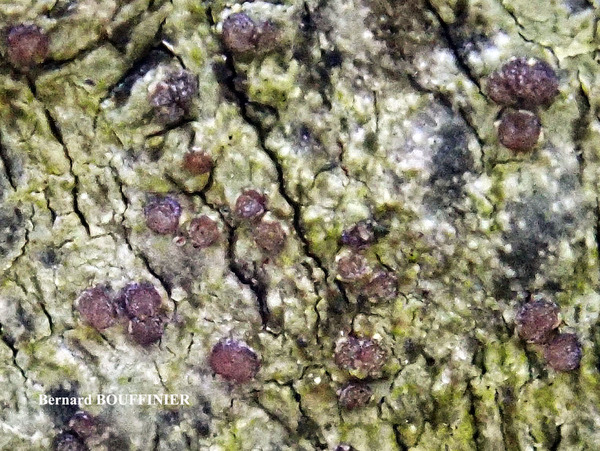
Bernard Bouffinier - Source: http://www.lichensmaritimes.org/index.php?task=fiche&lichen=1277&lang=en
France, Argol
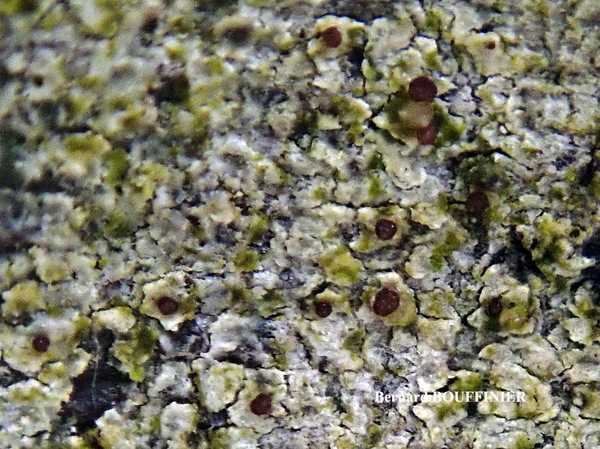
Bernard Bouffinier - Source: http://www.lichensmaritimes.org/index.php?task=fiche&lichen=1277&lang=en
France, Argol
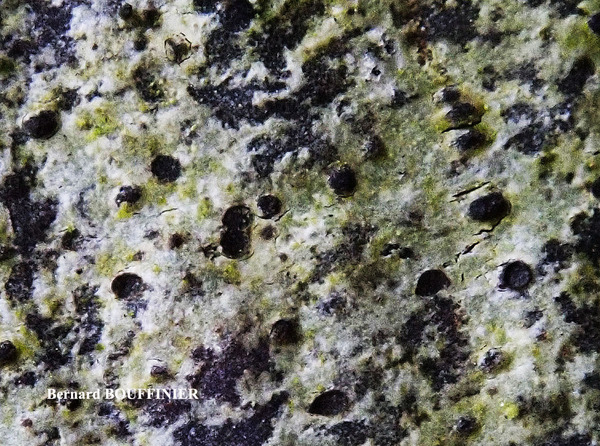
Bernard Bouffinier - Source: http://www.lichensmaritimes.org/index.php?task=fiche&lichen=1277&lang=en
France, Argol
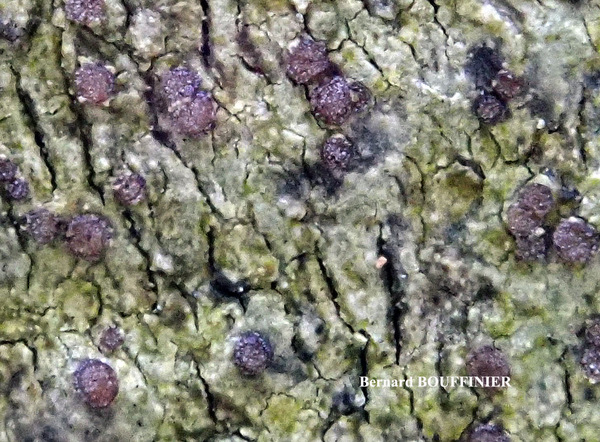
Bernard Bouffinier - Source: http://www.lichensmaritimes.org/index.php?task=fiche&lichen=1277&lang=en
France, Argol
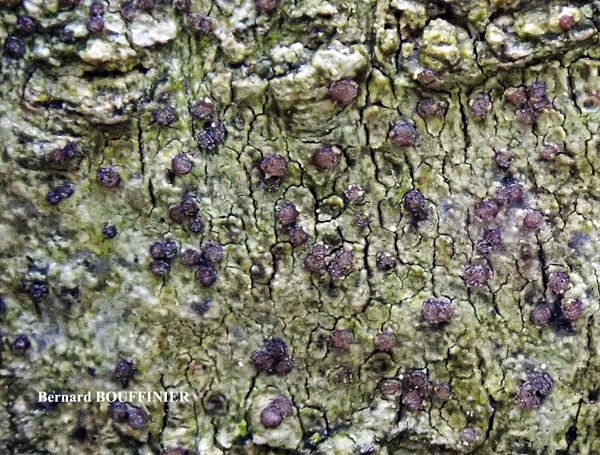
Bernard Bouffinier - Source: http://www.lichensmaritimes.org/index.php?task=fiche&lichen=1277&lang=en
France, Argol
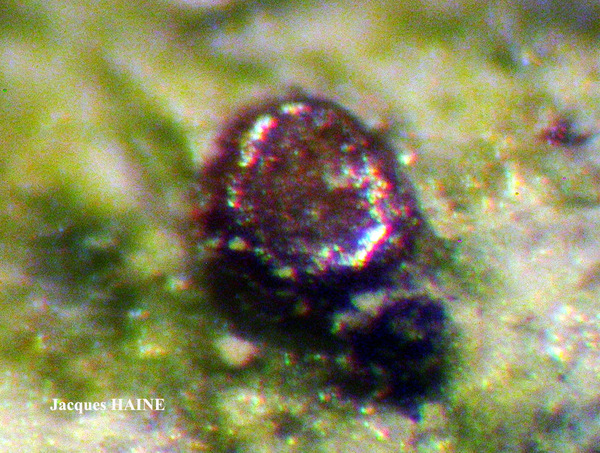
Jacques Haine - Source: http://www.lichensmaritimes.org/index.php?task=fiche&lichen=1277&lang=en
France, Argol
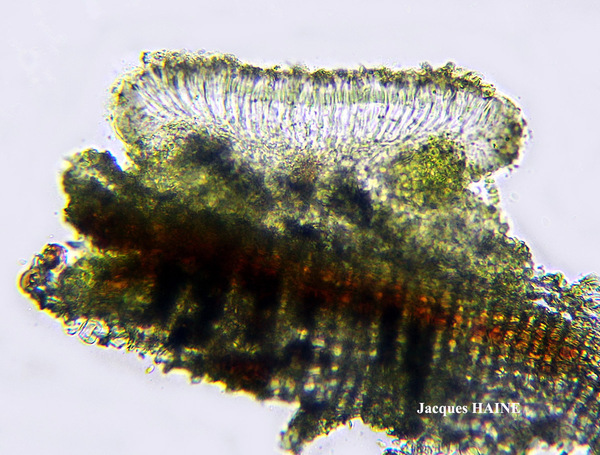
Jacques Haine - Source: http://www.lichensmaritimes.org/index.php?task=fiche&lichen=1277&lang=en
France, Argol
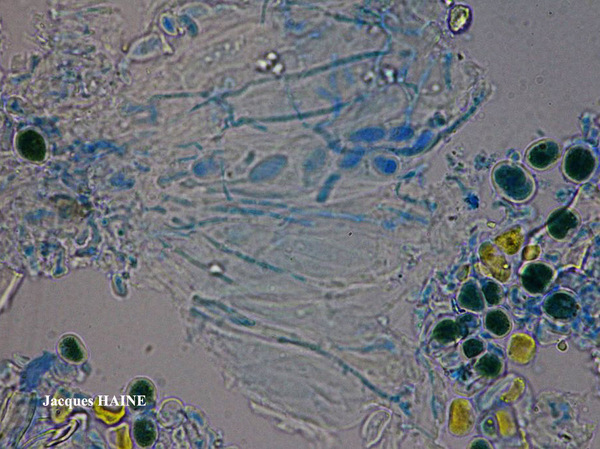
Jacques Haine - Source: http://www.lichensmaritimes.org/index.php?task=fiche&lichen=1277&lang=en
France, Argol
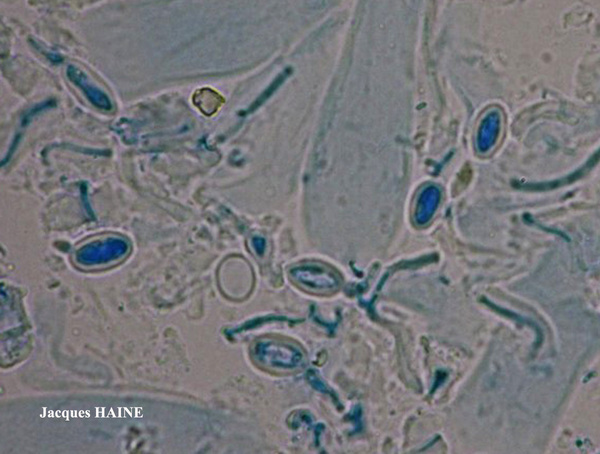
Jacques Haine - Source: http://www.lichensmaritimes.org/index.php?task=fiche&lichen=1277&lang=en
France, Argol
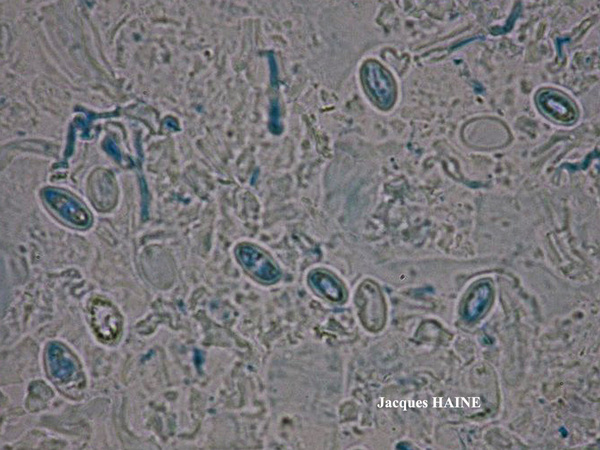
Jacques Haine - Source: http://www.lichensmaritimes.org/index.php?task=fiche&lichen=1277&lang=en
France, Argol
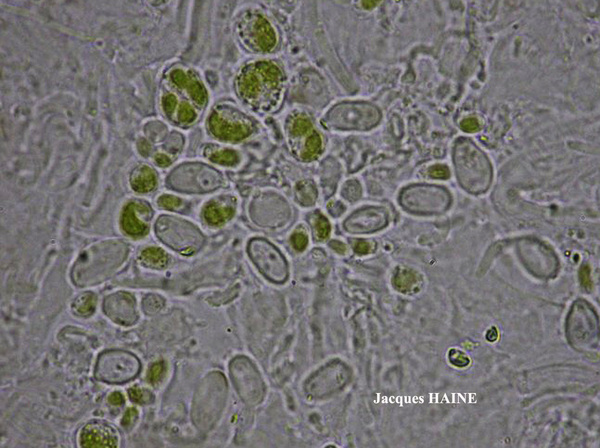
Jacques Haine - Source: http://www.lichensmaritimes.org/index.php?task=fiche&lichen=1277&lang=en
France, Argol
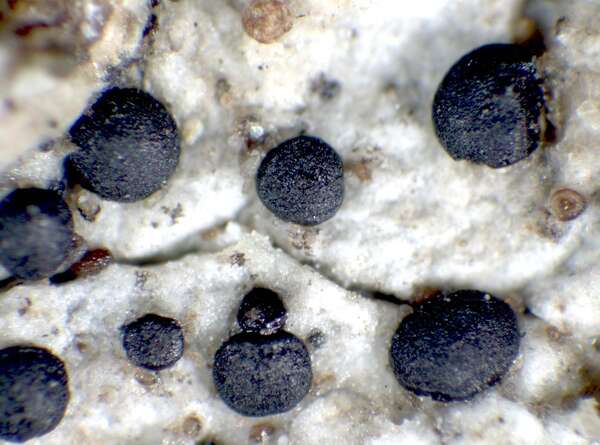
P.L. Nimis; Owner: Department of Life Sciences, University of Trieste
Herbarium: TSB (12886)
2001/11/23
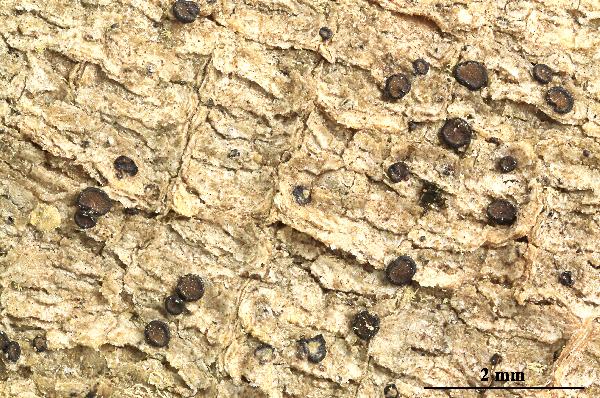
Felix Schumm - CC BY-SA 4.0
[ABL77486], Brazil, Mato Grosso do Sul, Bonito, Parque National da
Serra da Bodoquena, Rio Perdido, in Atlantic rain forest on treebark and
twigs. 21°07’' S, 56°43’ W, 510 m. Leg. A. Aptroot (no 77486),
3.11.2018, det. A. Aptroot, 2019. - Spores hyaline, 8/ascus, 1-septate,
14 x 6 μm.
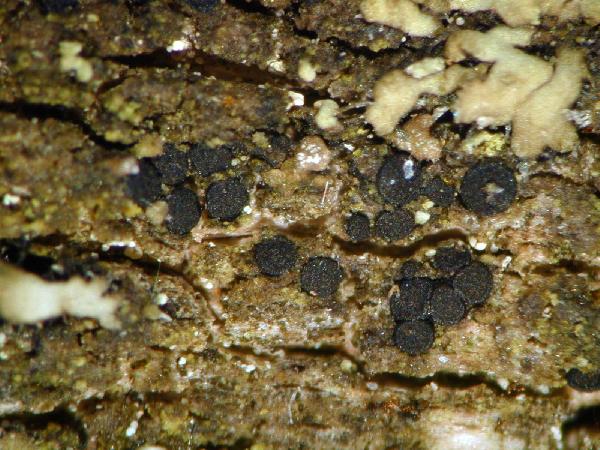
Wolfgang von Brackel - CC BY-4.0
Germany, Bavaria, Hohenfels

Felix Schumm - CC BY 4.0
[VZ1061], Suecia. Vermlandia: Visnums Kil Paroecia, prope praedium
Hovmanstorpet, 80 m. Ad corticem et lignam Salicis sp. Leg. S. W.
Sundell (no. 7831), 30.4.1971. EX A. VEZDA LIXHENES SELECTI EXSICCATI
NR. 1061.

Felix Schumm - CC BY 4.0
[VZ1061], Suecia. Vermlandia: Visnums Kil Paroecia, prope praedium
Hovmanstorpet, 80 m. Ad corticem et lignam Salicis sp. Leg. S. W.
Sundell (no. 7831), 30.4.1971. EX A. VEZDA LIXHENES SELECTI EXSICCATI
NR. 1061.
Growth form: Crustose
Substrata: bark and lignum
Photobiont: Trentepohlia
Reproductive strategy: mainly sexual
Most common in areas with a humid-warm climate (e.g. most of Tyrrenian Italy)
In underhangs rarely wetted by rain
Commonnes-rarity: (info)
Alpine belt: absent
Subalpine belt: absent
Oromediterranean belt: absent
Montane belt: absent
Submediterranean belt: extremely rare
Padanian area: absent
Humid submediterranean belt: very rare
Humid mediterranean belt: rather rare
Dry mediterranean belt: absent
Predictive model
| Herbarium samples |
 INDEX FUNGORUM
 GBIF
GBIF
 DOLICHENS

Felix Schumm - CC BY-SA 4.0
[ABL77486], Brazil, Mato Grosso do Sul, Bonito, Parque National da Serra da Bodoquena, Rio Perdido, in Atlantic rain forest on treebark and twigs. 21°07’' S, 56°43’ W, 510 m. Leg. A. Aptroot (no 77486), 3.11.2018, det. A. Aptroot, 2019. - Spores hyaline, 8/ascus, 1-septate, 14 x 6 μm.
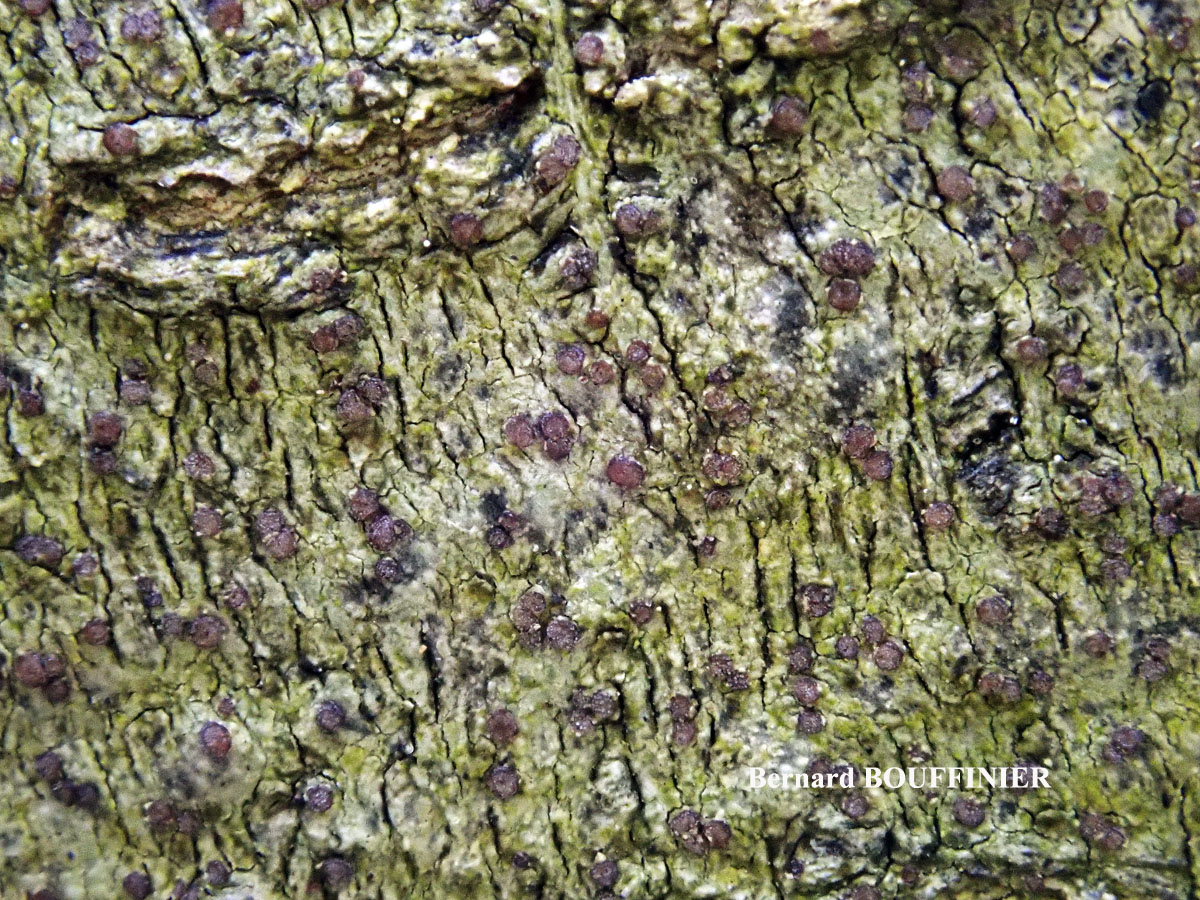
Bernard Bouffinier - Source: http://www.lichensmaritimes.org/index.php?task=fiche&lichen=1277&lang=en
France, Argol

Bernard Bouffinier - Source: http://www.lichensmaritimes.org/index.php?task=fiche&lichen=1277&lang=en
France, Argol

Bernard Bouffinier - Source: http://www.lichensmaritimes.org/index.php?task=fiche&lichen=1277&lang=en
France, Argol

Bernard Bouffinier - Source: http://www.lichensmaritimes.org/index.php?task=fiche&lichen=1277&lang=en
France, Argol
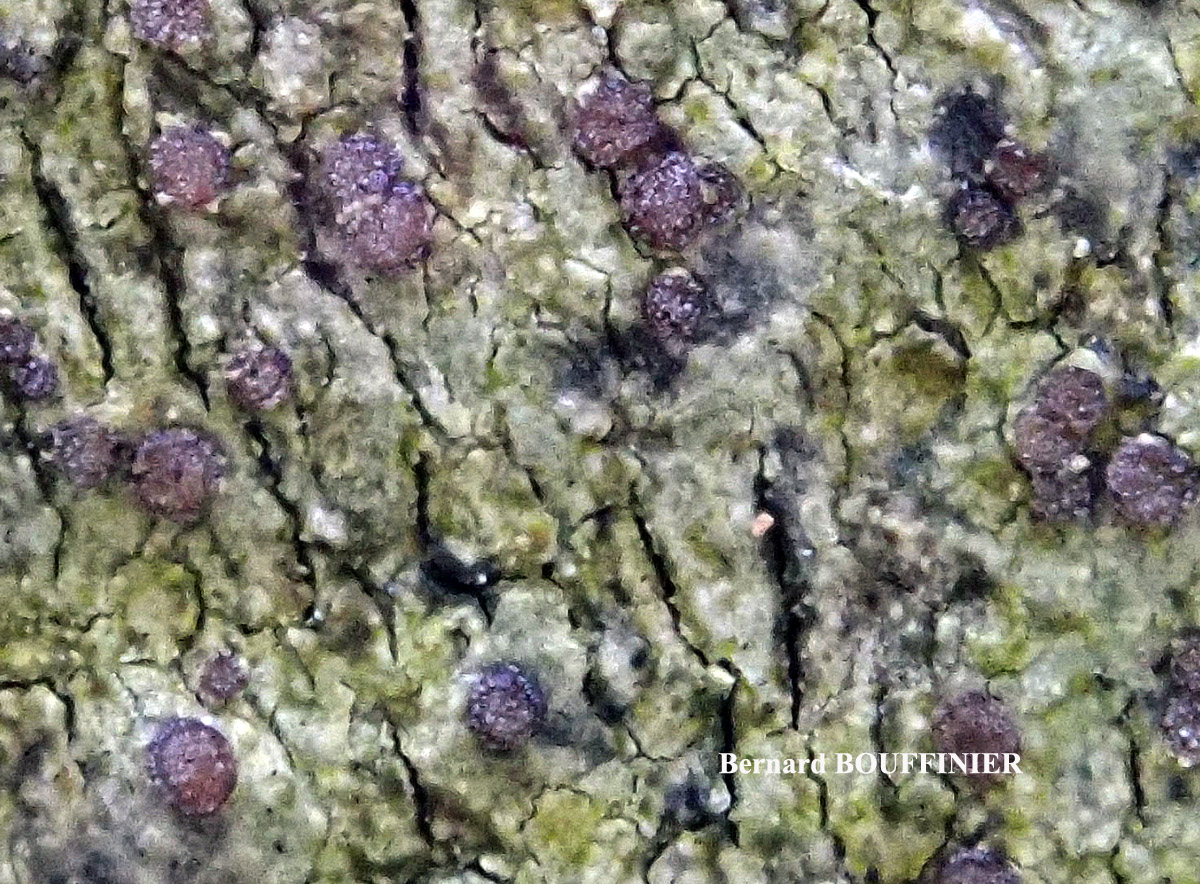
Bernard Bouffinier - Source: http://www.lichensmaritimes.org/index.php?task=fiche&lichen=1277&lang=en
France, Argol

Bernard Bouffinier - Source: http://www.lichensmaritimes.org/index.php?task=fiche&lichen=1277&lang=en
France, Argol

Jacques Haine - Source: http://www.lichensmaritimes.org/index.php?task=fiche&lichen=1277&lang=en
France, Argol
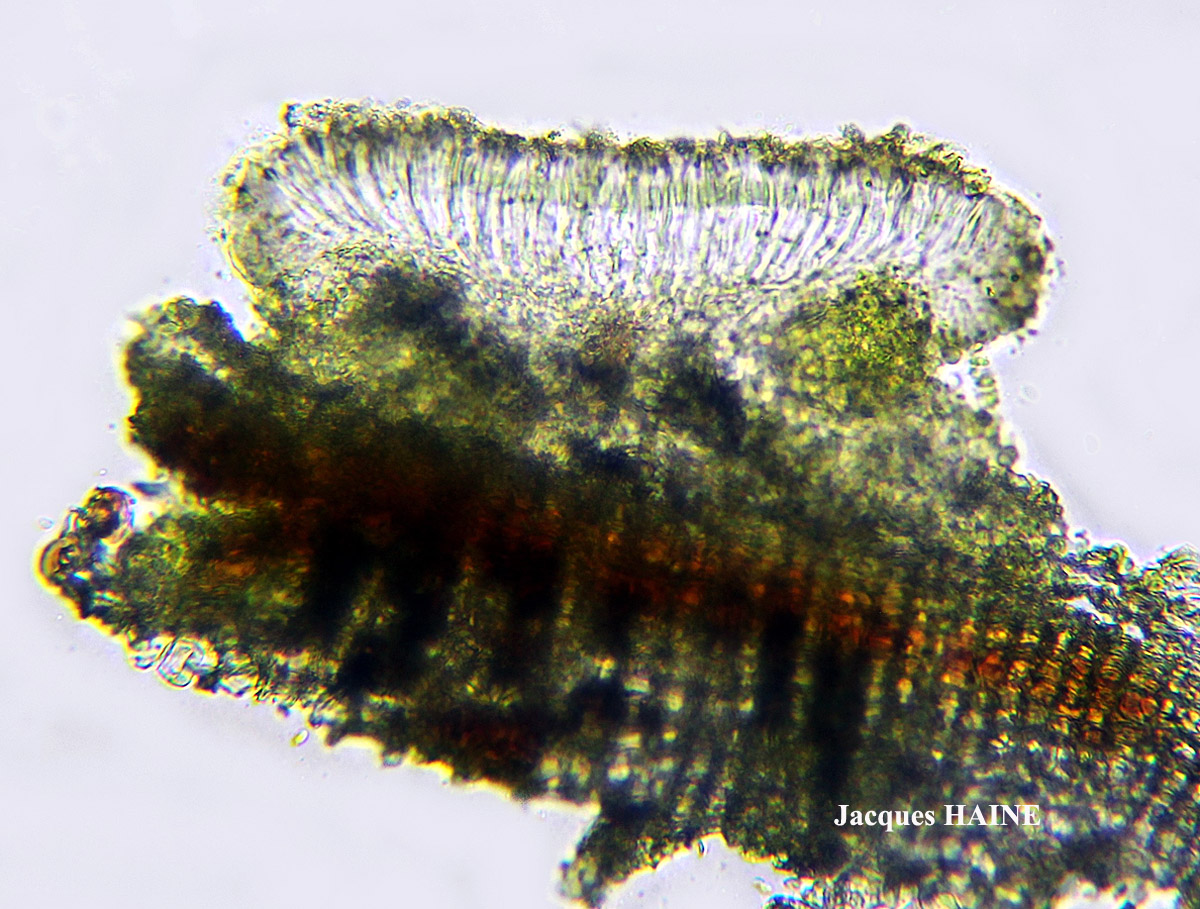
Jacques Haine - Source: http://www.lichensmaritimes.org/index.php?task=fiche&lichen=1277&lang=en
France, Argol
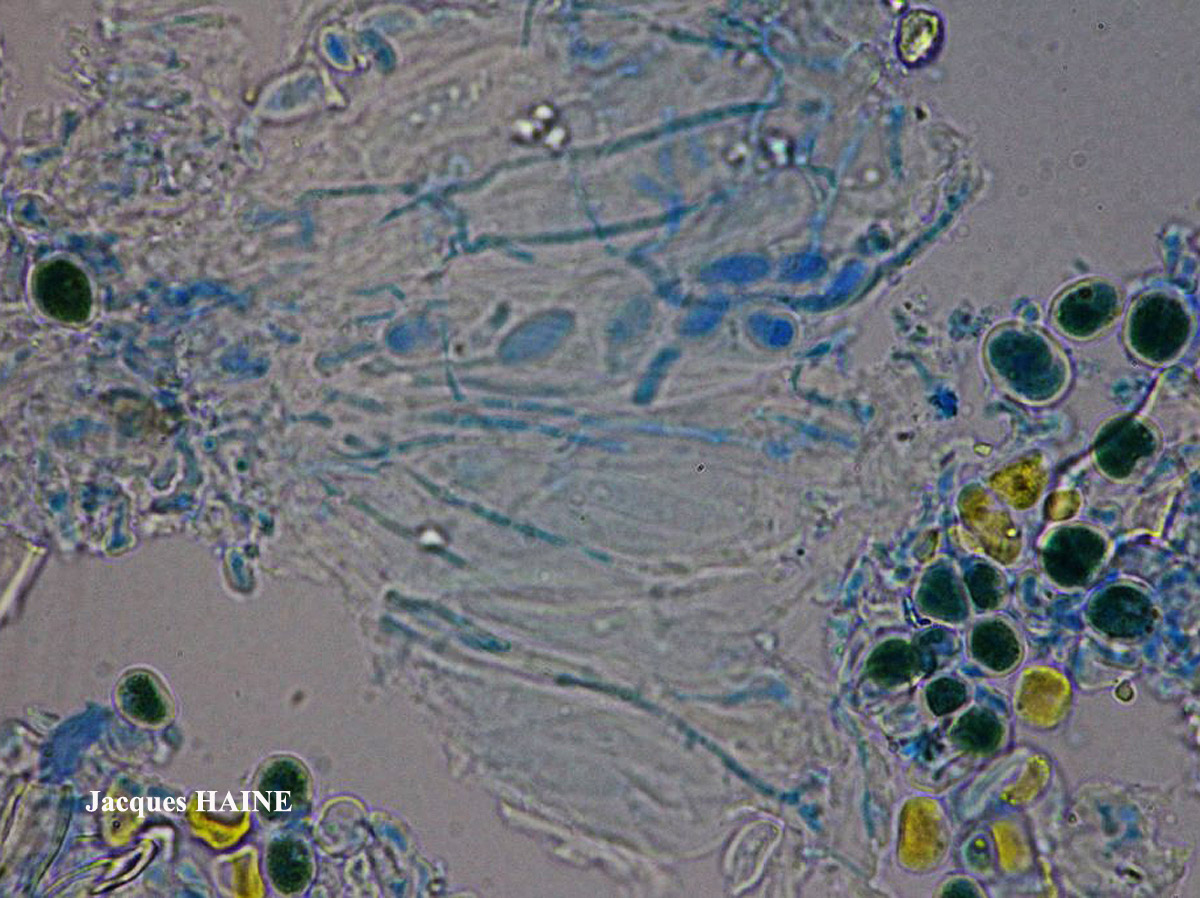
Jacques Haine - Source: http://www.lichensmaritimes.org/index.php?task=fiche&lichen=1277&lang=en
France, Argol
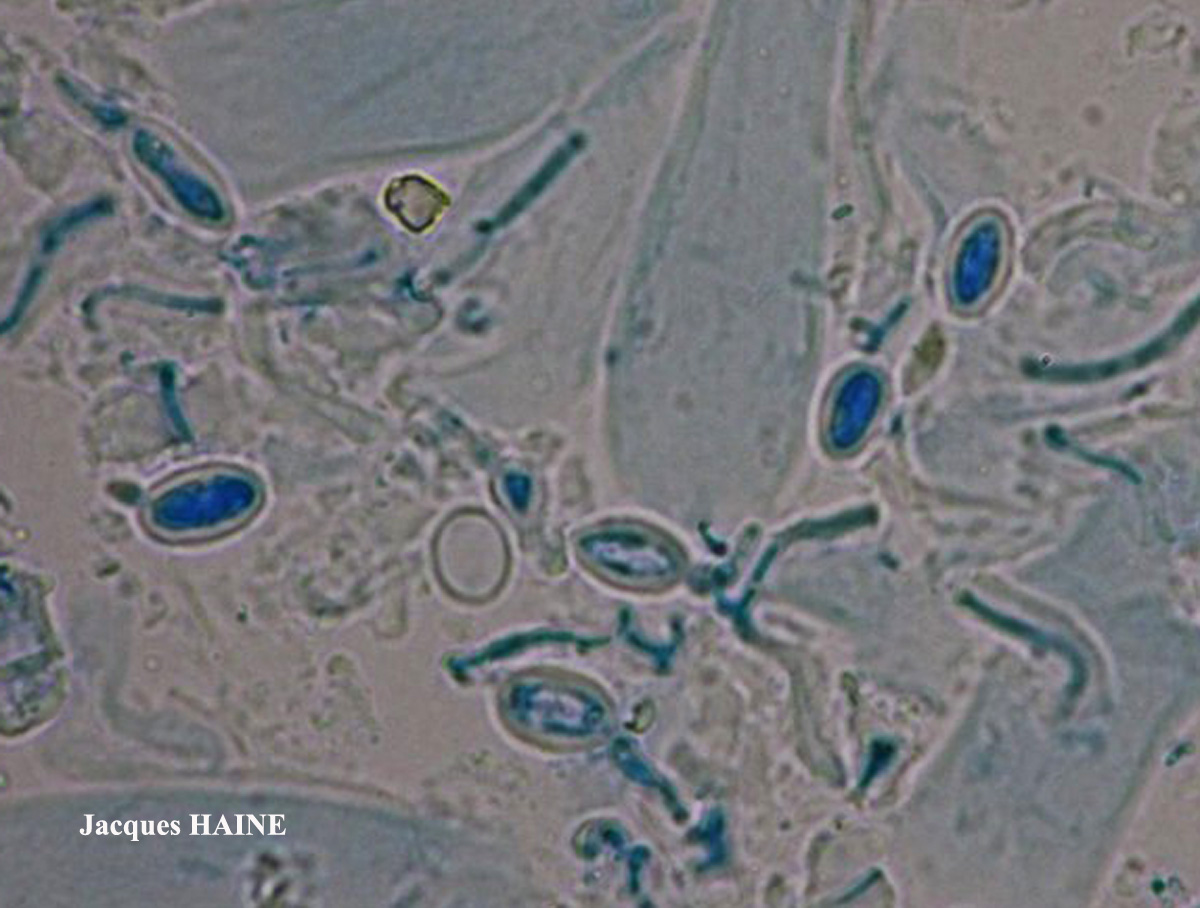
Jacques Haine - Source: http://www.lichensmaritimes.org/index.php?task=fiche&lichen=1277&lang=en
France, Argol
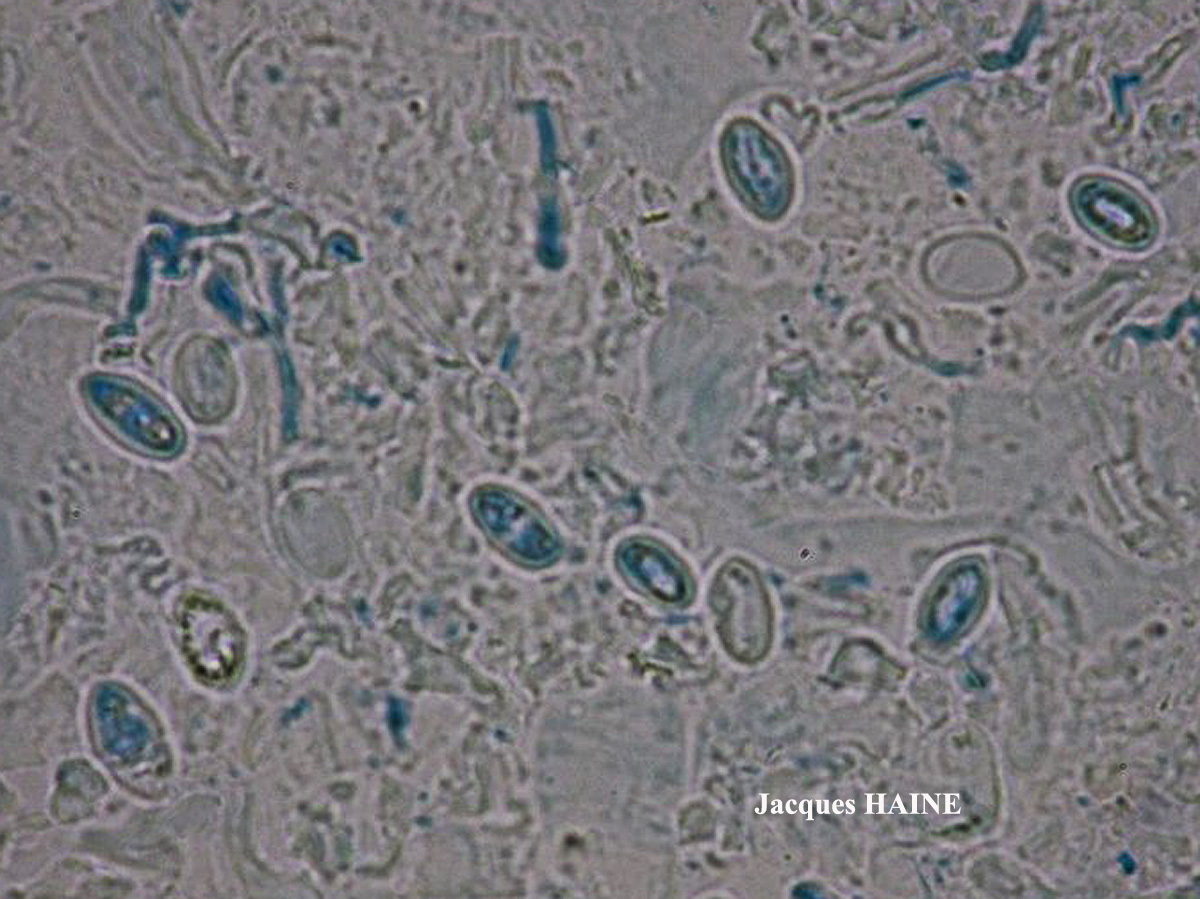
Jacques Haine - Source: http://www.lichensmaritimes.org/index.php?task=fiche&lichen=1277&lang=en
France, Argol
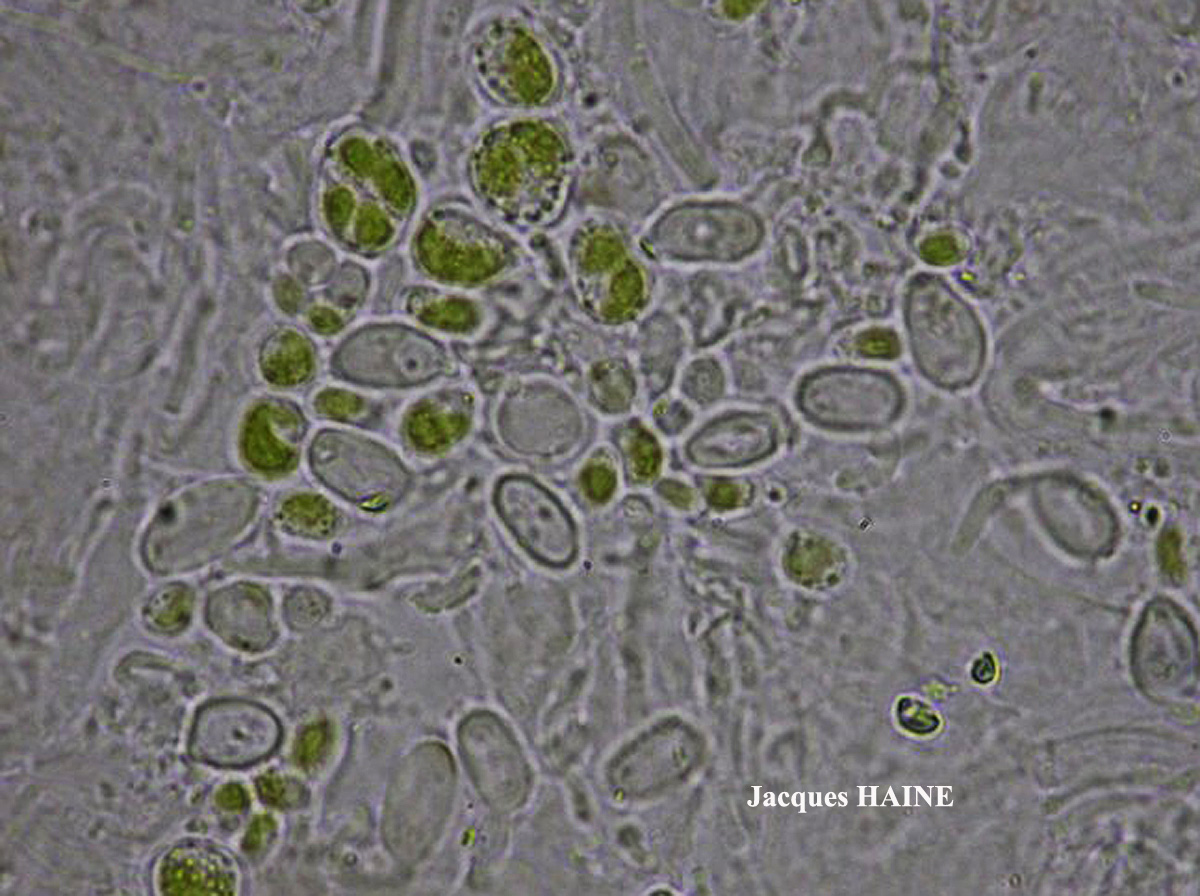
Jacques Haine - Source: http://www.lichensmaritimes.org/index.php?task=fiche&lichen=1277&lang=en
France, Argol

P.L. Nimis; Owner: Department of Life Sciences, University of Trieste
Herbarium: TSB (12886)
2001/11/23

Felix Schumm - CC BY-SA 4.0
[ABL77486], Brazil, Mato Grosso do Sul, Bonito, Parque National da Serra da Bodoquena, Rio Perdido, in Atlantic rain forest on treebark and twigs. 21°07’' S, 56°43’ W, 510 m. Leg. A. Aptroot (no 77486), 3.11.2018, det. A. Aptroot, 2019. - Spores hyaline, 8/ascus, 1-septate, 14 x 6 μm.

Wolfgang von Brackel - CC BY-4.0
Germany, Bavaria, Hohenfels

Felix Schumm - CC BY 4.0
[VZ1061], Suecia. Vermlandia: Visnums Kil Paroecia, prope praedium Hovmanstorpet, 80 m. Ad corticem et lignam Salicis sp. Leg. S. W. Sundell (no. 7831), 30.4.1971. EX A. VEZDA LIXHENES SELECTI EXSICCATI NR. 1061.