Pyrenula laevigata (Pers.) Arnold
Flora, 68: 158, 1885. Basionym: Verrucaria laevigata Pers. - Ann. Wetter. Gesellsch. Ges. Naturk., 2: 11, 1810.
Synonyms: Pyrenula alba var. laevigata (Pers.) Trevis.; Pyrenula alba var. microcarpa (Hepp) Trevis.; Pyrenula glabrata (Ach.) A. Massal.; Verrucaria glabrata Ach.
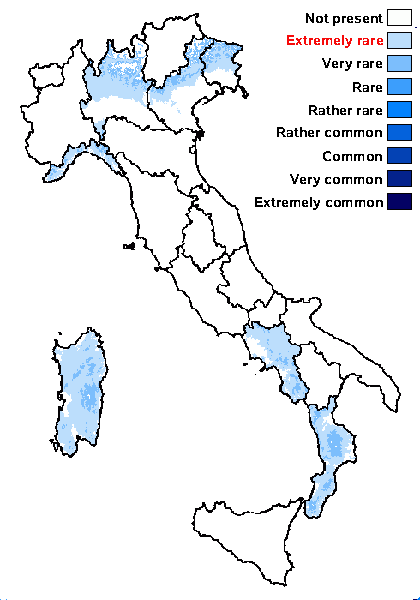
Distribution: N - Frl (TSB 2892), Ven, Lomb, Lig. C - Sar (Zedda 2002). S - Camp (Puntillo & al. 2000), Cal.
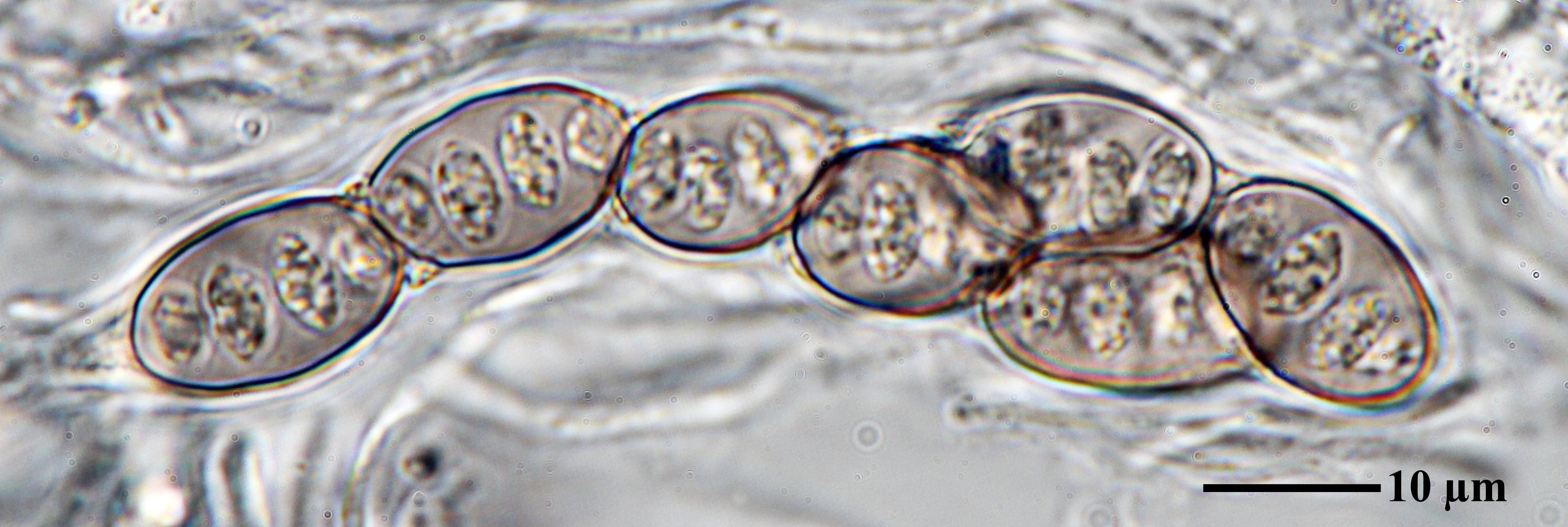
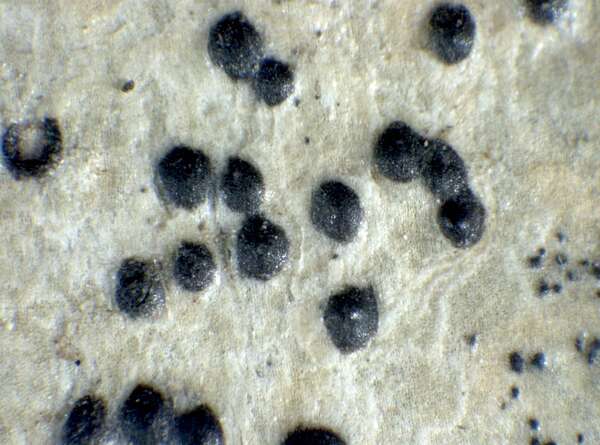
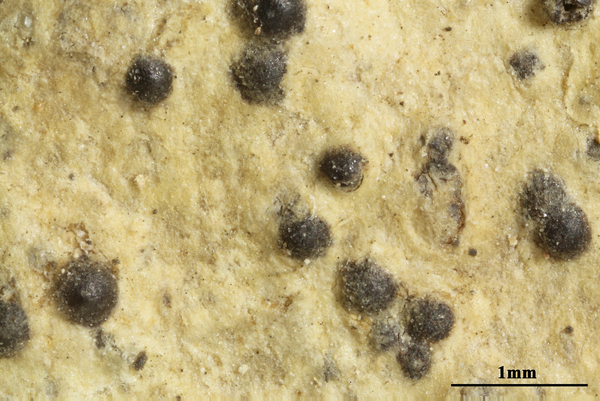
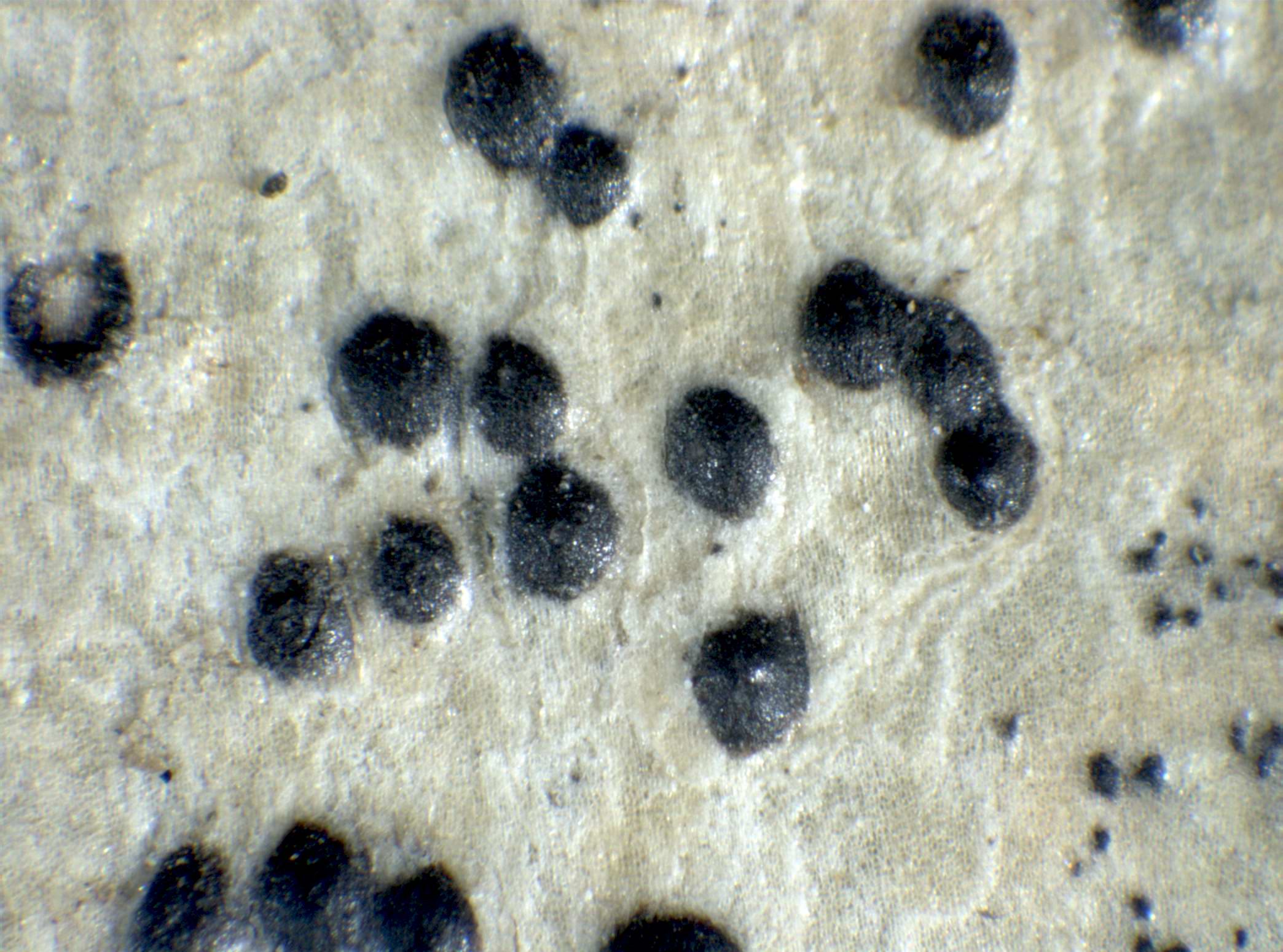
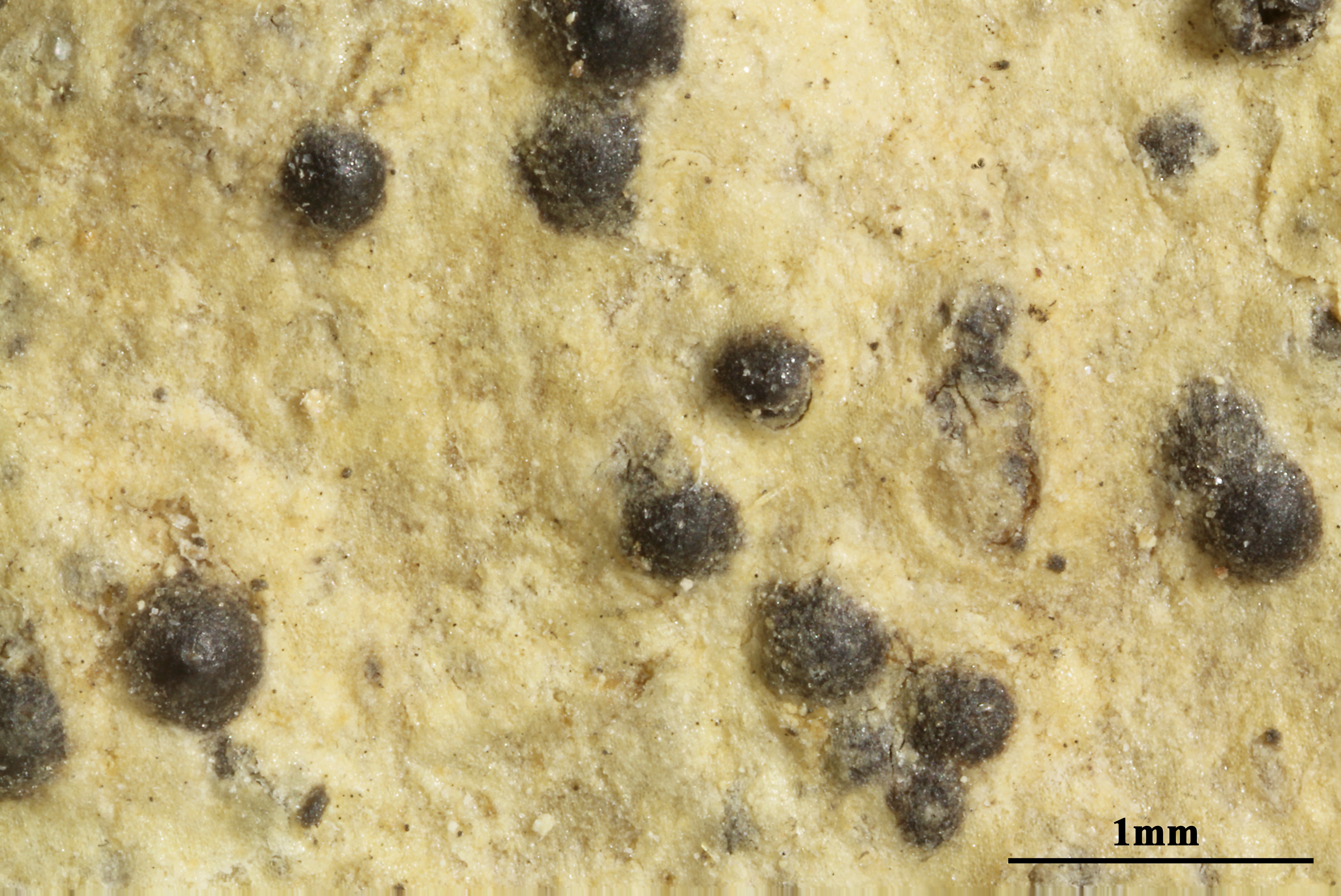
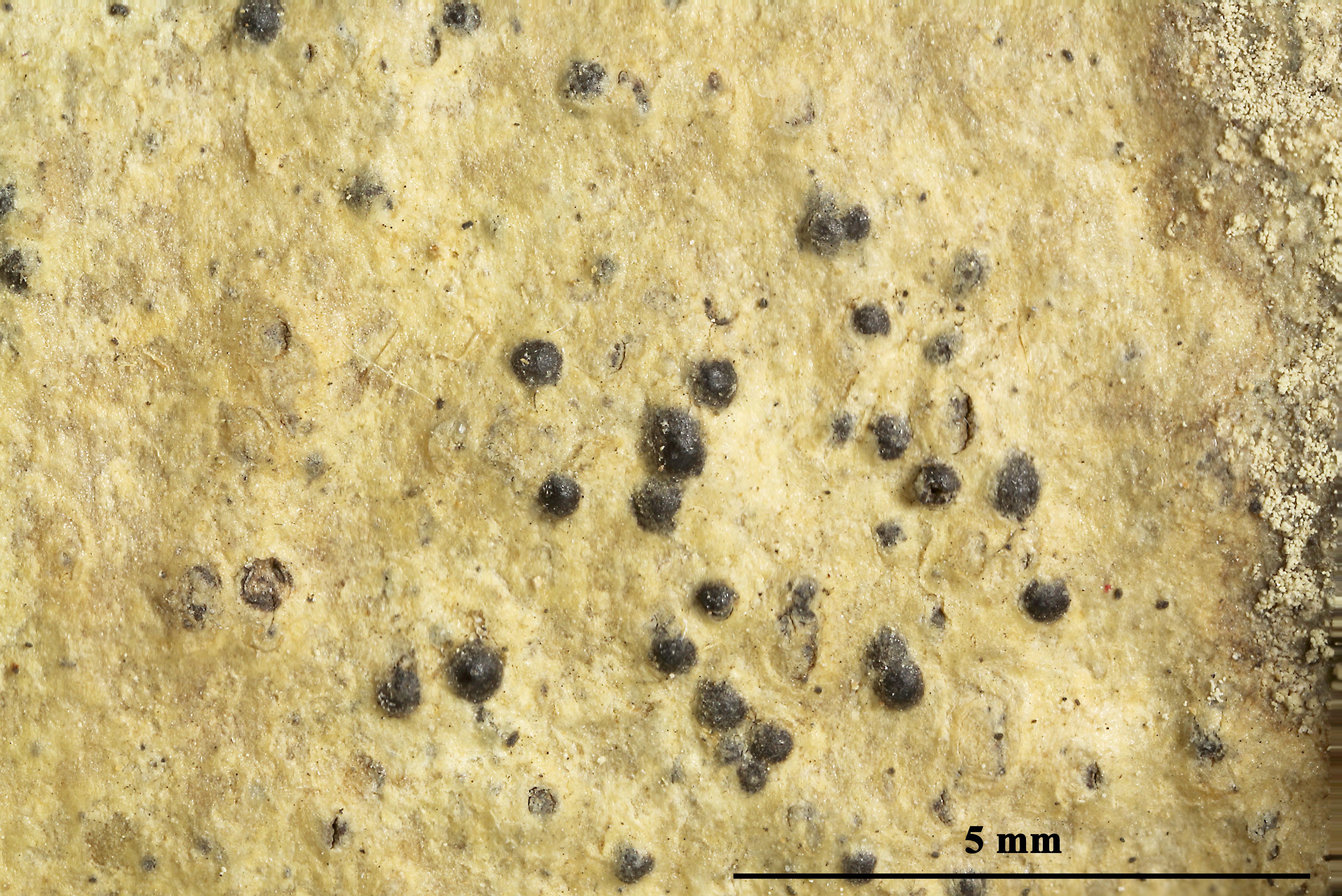
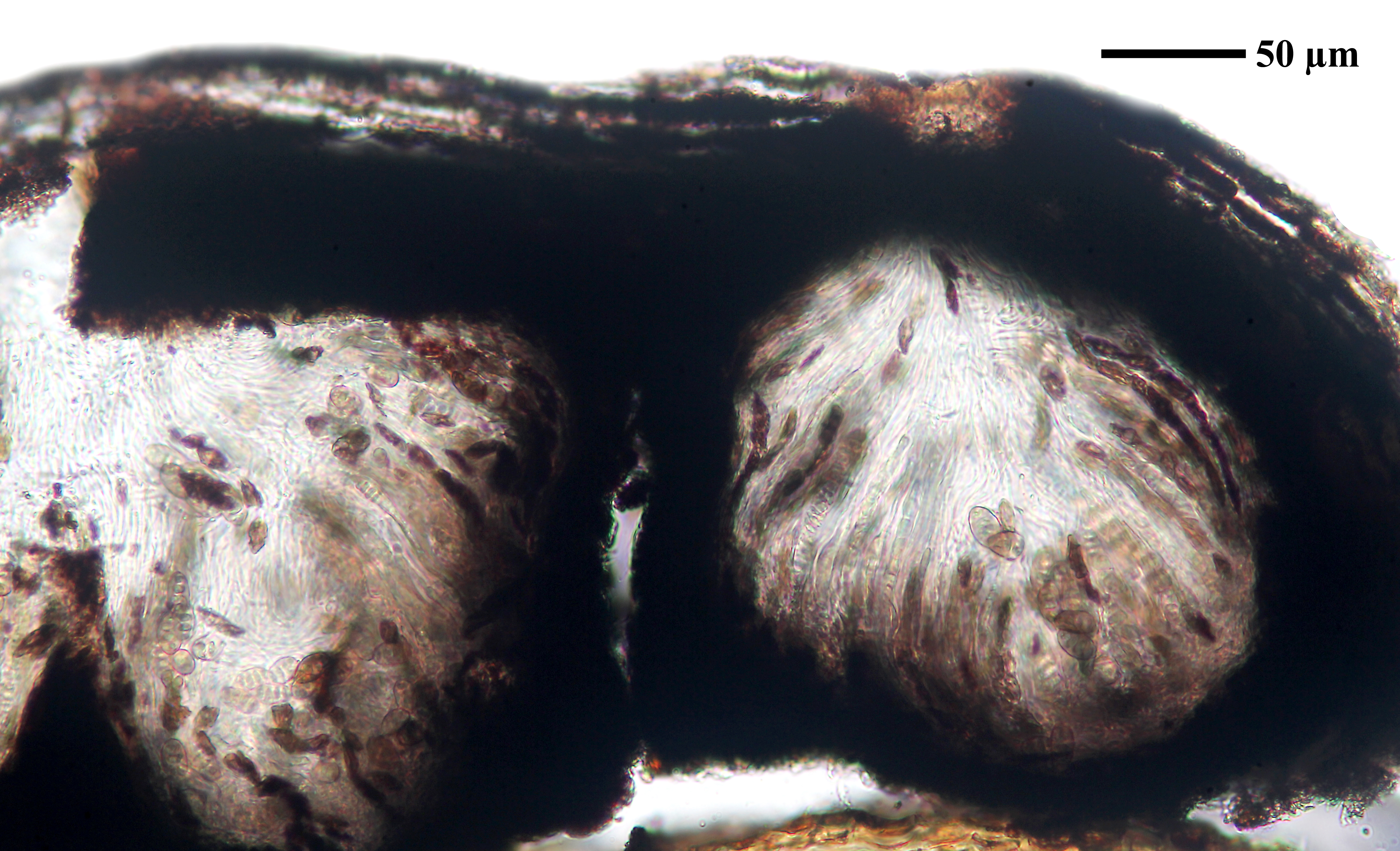
Description: Thallus crustose, more or less immersed in the bark, continuous, smooth, silvery white to very pale yellow-brown, without pseudocyphellae. Perithecia black, 0.4-0.7 mm across, somewhat flattened in section, forming projections on the thallus, with a black involucrellum separable from the exciple and slightly spreading. Exciple brown throughout; hamathecium of branched and anastomosed periphysoids, later substituted by more or less unbranched paraphyses; ostiole with periphyses; hymenium colourless, not containing anthraquinones, K-. Asci 8-spored, narrowly cylindrical, long-stalked, bitunicate, with tholus, thickened at apex with an internal apical beak, non-amyloid. Ascospores 3(-5)-septate, brown, thick-walled, narrowly ellipsoid to subfusiform, (10-)17-22(-28) x (5-)6-8(-11) μm. Pycnidia black. Conidia c. 10 x 1 μm. Photobiont trentepohlioid. Spot tests: thallus K+ yellow, C-, KC-, P-, UV-. Chemistry: unidentified substances in thallus.Note: a temperate species of smooth bark, most frequent on Carpinus and Fagus in open, humid woodlands.
Growth form: Crustose
Substrata: bark
Photobiont: Trentepohlia
Reproductive strategy: mainly sexual
Most common in areas with a humid-warm climate (e.g. most of Tyrrenian Italy)
Commonnes-rarity: (info)
Alpine belt: absent
Subalpine belt: absent
Oromediterranean belt: absent
Montane belt: very rare
Submediterranean belt: extremely rare
Padanian area: absent
Humid submediterranean belt: extremely rare
Humid mediterranean belt: absent
Dry mediterranean belt: absent
Predictive model
Herbarium samples

P.L. Nimis; Owner: Department of Life Sciences, University of Trieste
Herbarium: TSB (9242)
2001/11/29
Felix Schumm - CC BY-SA 4.0
[1412], Germany, Baden-Württemberg, Rems-Murr-Kreis, Baach bei Schnait, an Carpinus im Schlierbachtal. Leg. E. Putzler, 16.08.1950, det. O. Klement.
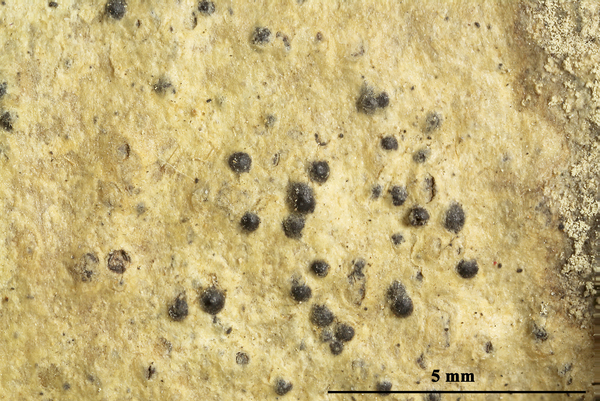
Felix Schumm - CC BY-SA 4.0
[1412], Germany, Baden-Württemberg, Rems-Murr-Kreis, Baach bei Schnait, an Carpinus im Schlierbachtal. Leg. E. Putzler, 16.08.1950, det. O. Klement.
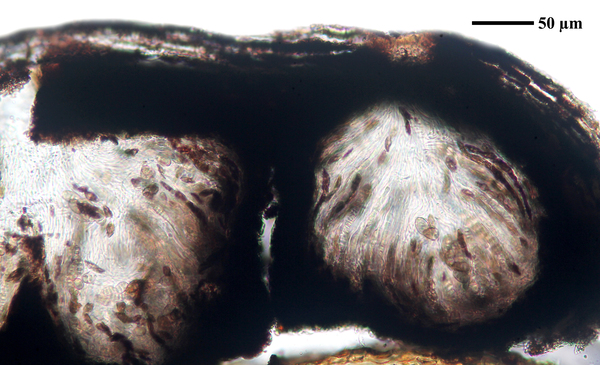
Felix Schumm - CC BY-SA 4.0
[1412], Germany, Baden-Württemberg, Rems-Murr-Kreis, Baach bei Schnait, an Carpinus im Schlierbachtal. Leg. E. Putzler, 16.08.1950, det. O. Klement.
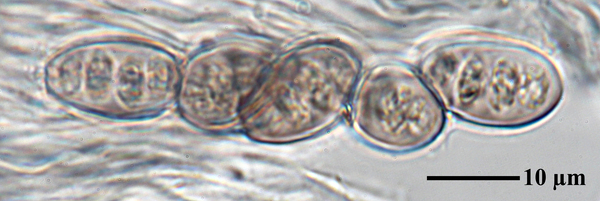
Felix Schumm - CC BY-SA 4.0
[1412], Germany, Baden-Württemberg, Rems-Murr-Kreis, Baach bei Schnait, an Carpinus im Schlierbachtal. Leg. E. Putzler, 16.08.1950, det. O. Klement.
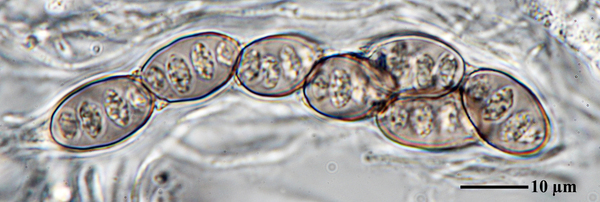
Felix Schumm - CC BY-SA 4.0
[1412], Germany, Baden-Württemberg, Rems-Murr-Kreis, Baach bei Schnait, an Carpinus im Schlierbachtal. Leg. E. Putzler, 16.08.1950, det. O. Klement.
Growth form: Crustose
Substrata: bark
Photobiont: Trentepohlia
Reproductive strategy: mainly sexual
Most common in areas with a humid-warm climate (e.g. most of Tyrrenian Italy)
Commonnes-rarity: (info)
Alpine belt: absent
Subalpine belt: absent
Oromediterranean belt: absent
Montane belt: very rare
Submediterranean belt: extremely rare
Padanian area: absent
Humid submediterranean belt: extremely rare
Humid mediterranean belt: absent
Dry mediterranean belt: absent
Predictive model
| Herbarium samples |
 Index Fungorum
 GBIF
GBIF
P.L. Nimis; Owner: Department of Life Sciences, University of Trieste
Herbarium: TSB (9242)
2001/11/29
Felix Schumm - CC BY-SA 4.0
[1412], Germany, Baden-Württemberg, Rems-Murr-Kreis, Baach bei Schnait, an Carpinus im Schlierbachtal. Leg. E. Putzler, 16.08.1950, det. O. Klement.
Felix Schumm - CC BY-SA 4.0
[1412], Germany, Baden-Württemberg, Rems-Murr-Kreis, Baach bei Schnait, an Carpinus im Schlierbachtal. Leg. E. Putzler, 16.08.1950, det. O. Klement.
Felix Schumm - CC BY-SA 4.0
[1412], Germany, Baden-Württemberg, Rems-Murr-Kreis, Baach bei Schnait, an Carpinus im Schlierbachtal. Leg. E. Putzler, 16.08.1950, det. O. Klement.
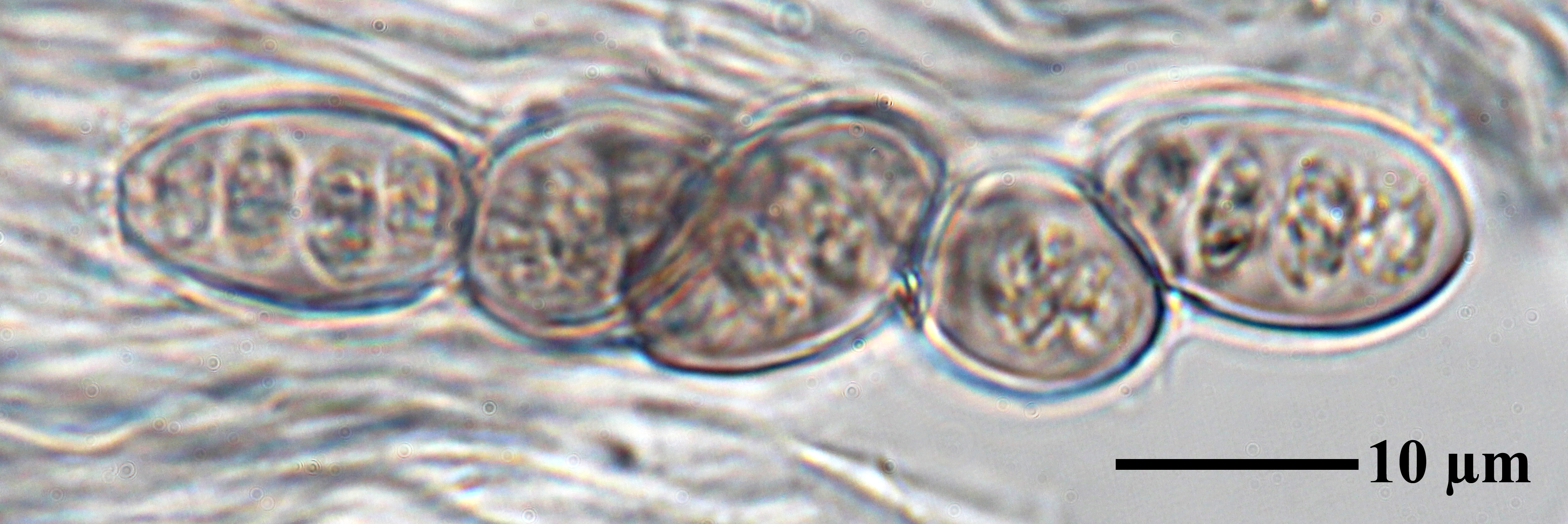
Felix Schumm - CC BY-SA 4.0
[1412], Germany, Baden-Württemberg, Rems-Murr-Kreis, Baach bei Schnait, an Carpinus im Schlierbachtal. Leg. E. Putzler, 16.08.1950, det. O. Klement.