Gyalideopsis piceicola (Nyl.) Vězda & Poelt
Nova Hedwigia, 53: 112, 1991. Basionym: Lecidea piceicola Nyl. - Flora, 69: 99, 1886.
Synonyms: Gyalideopsis alnicola W.J. Noble & Vězda
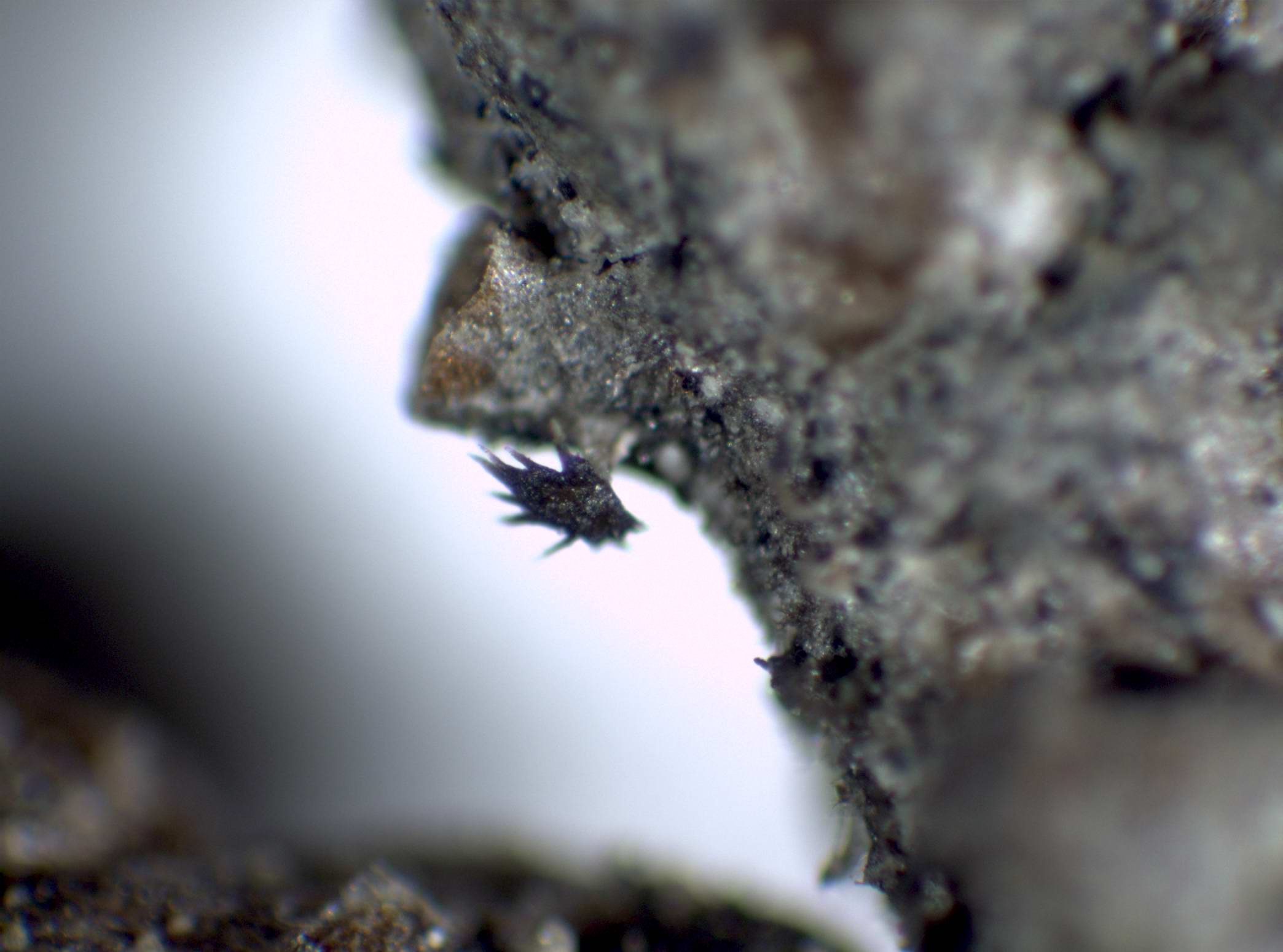
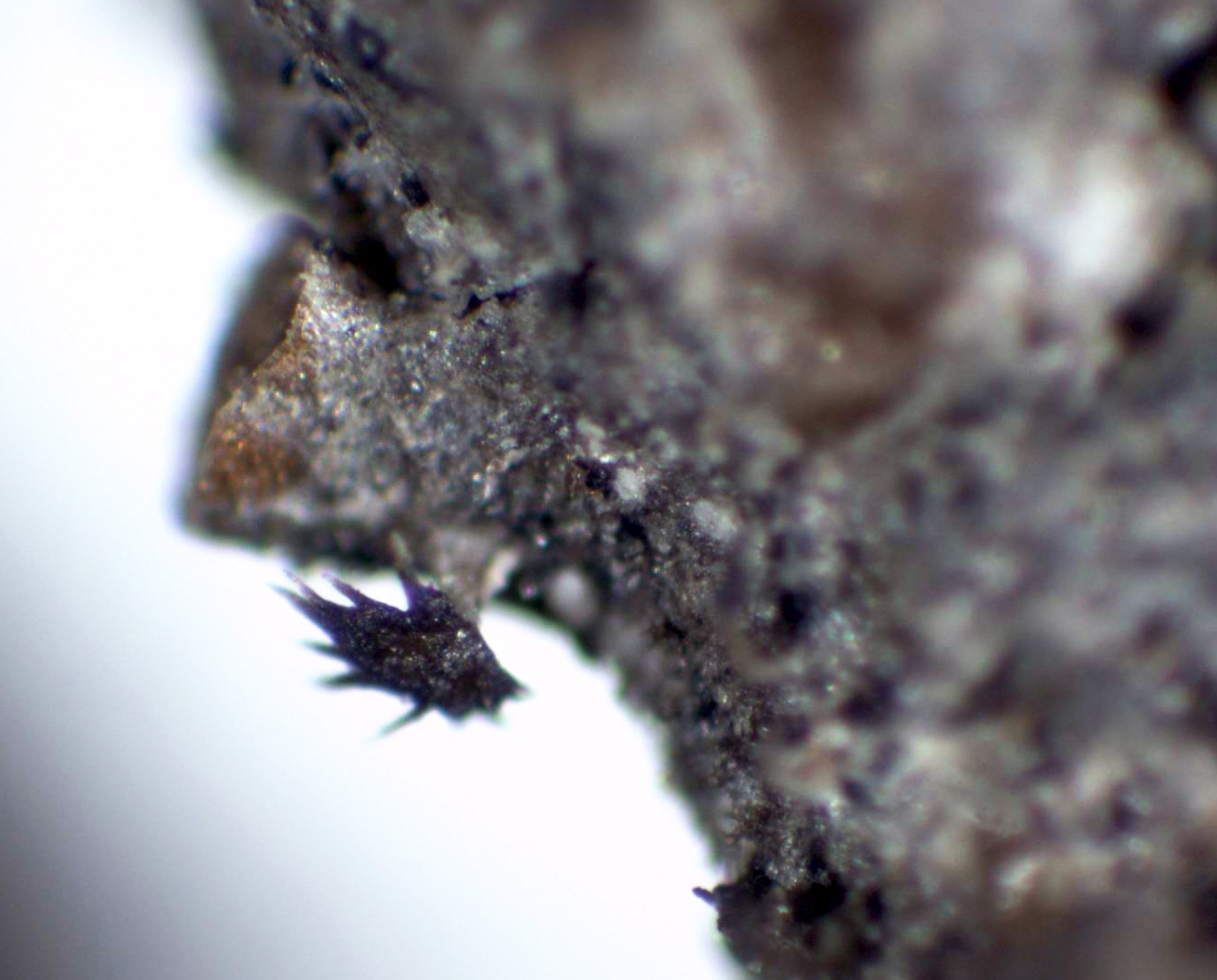
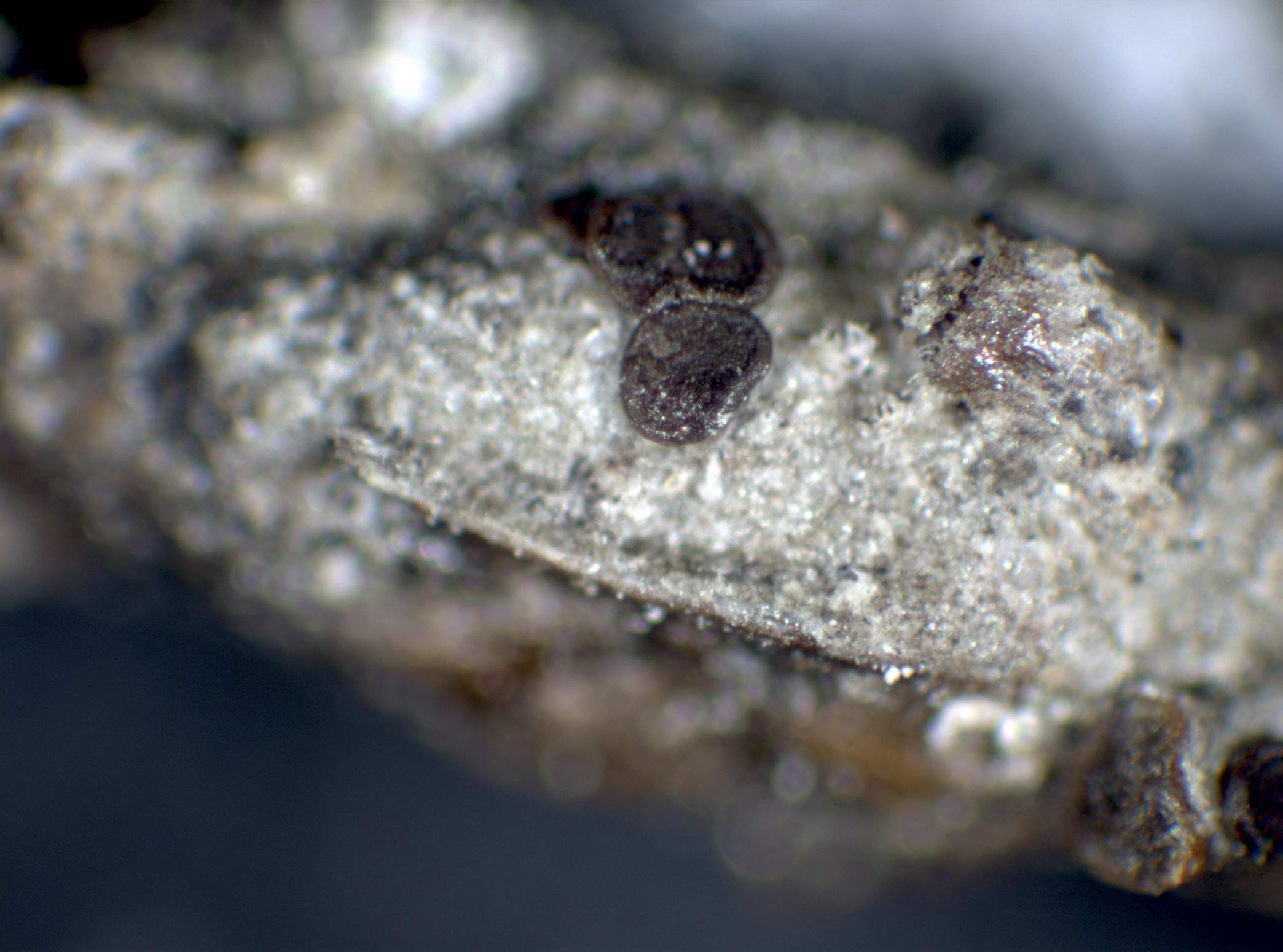
Description: Thallus crustose, thinly episubstratic, smooth, whitish grey to greenish grey, ecorticate, not sharply delimited, without a distinct prothallus. Hyphophores rare, scale-like or shortly stalked, erect, fan-shaped, whitish to dark brown, 0.3-0.35 mm high and up to 0.15-0.25 mm wide in upper part. Apothecia usually frequent, scattered, round or irregularly wavy in outline, 0.1-0.3(-0.5) mm across, 0.2-0.3 mm high, sessile and strongly constricted at base, with an initially urceolate, then slightly concave, dark red-brown disc and a raised, entire or radially split, black, finally often thin and almost excluded proper margin. Proper exciple 70-80 µm wide laterally, red-brown in outer part, colourless within, of loosely anastomosing hyphae embedded in a gelatinous matrix; epithecium olive-brown, c. 20 µm high; hymenium colourless, (50-)60-75(-80) µm high; paraphyses c. 1 µm thick, simple or richly branched and anastomosing in upper part; hypothecium colourless, c. 10 µm high. Asci (2-)4-6(-8)-spored, cylindrical-clavate, thin-walled, apically thickened, the wall I-, the contents K/I+ reddish. Ascospores with up to 5 transverse septa and (0-)1 longitudinal septum, hyaline, ellipsoid to fusiform, straight or slightly curved, (12-)15-20 x 4.5-6(-7) µm. Photobiont chlorococcoid. Spot tests: thallus K-, C-, KC-, P-, UV-. Chemistry: without lichen substances.
Growth form: Crustose
Substrata: bark
Photobiont: green algae other than Trentepohlia
Reproductive strategy: mainly sexual
Commonnes-rarity: (info)
Alpine belt: absent
Subalpine belt: absent
Montane belt: extremely rare
Dry submediterranean belt: absent
Humid submediterranean belt: extremely rare
Padanian area: absent
pH of the substrata:
1 2 3 4 5

Solar irradiation:
1 2 3 4 5
Aridity:
1 2 3 4 5
Eutrophication:
1 2 3 4 5
Poleotolerance:
0 1 2 3
Altitudinal distribution:
1 2 3 4 5 6
Rarity
absent
extremely rare
very rare
rare
rather rare
rather common
common
very common
extremely common
Loading data...
Occurrence data
Predictive map
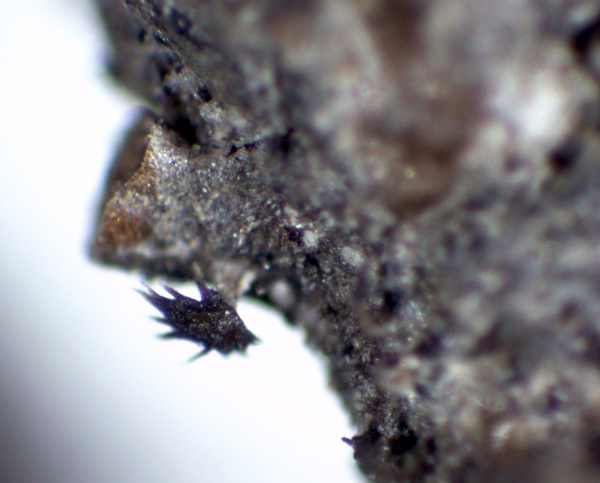
P.L. Nimis CC BY-SA 04
TSB 14795
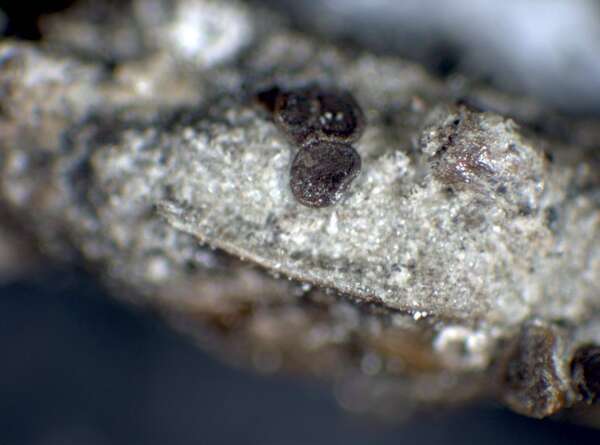
P.L. Nimis; Owner: Department of Life Sciences, University of Trieste
Herbarium: TSB (14795)
2001/11/24
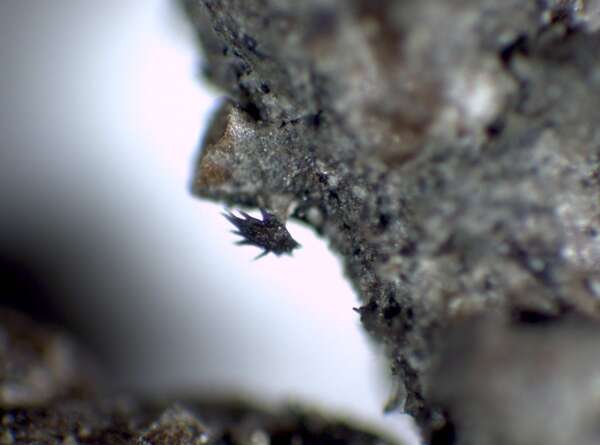
P.L. Nimis; Owner: Department of Life Sciences, University of Trieste
Herbarium: TSB (14795)
2001/11/24
thlasidium
Growth form: Crustose
Substrata: bark
Photobiont: green algae other than Trentepohlia
Reproductive strategy: mainly sexual
Commonnes-rarity: (info)
Alpine belt: absent
Subalpine belt: absent
Montane belt: extremely rare
Dry submediterranean belt: absent
Humid submediterranean belt: extremely rare
Padanian area: absent
pH of the substrata:
| 1 | 2 | 3 | 4 | 5 |
Solar irradiation:
| 1 | 2 | 3 | 4 | 5 |
Aridity:
| 1 | 2 | 3 | 4 | 5 |
Eutrophication:
| 1 | 2 | 3 | 4 | 5 |
Poleotolerance:
| 0 | 1 | 2 | 3 |
Altitudinal distribution:
| 1 | 2 | 3 | 4 | 5 | 6 |
Rarity
absent
extremely rare
very rare
rare
rather rare
rather common
common
very common
extremely common
Loading data...
Occurrence data
Predictive map
P.L. Nimis CC BY-SA 04
TSB 14795
P.L. Nimis; Owner: Department of Life Sciences, University of Trieste
Herbarium: TSB (14795)
2001/11/24