Heteroplacidium zamenhofianum (Clauzade & Cl. Roux) Cl. Roux
in Roux & al., Bull. Soc. linn. Provence, 60: 172, 2009. Basionym: Verrucaria zamenhofiana Clauzade & Cl. Roux - Bull. Soc. Bot. Centre-Ouest, n. sér., nr. spéc. 7: 823, 1985.
Synonyms: Dermatocarpon compactum sensu Clauzade & Rondon
Description: Thallus crustose, areolate-subsquamulose, dark brown to almost black, 0.2-0.7 mm thick, parasitic on Staurothele areolata. Areoles 0.6-1.5 mm wide, finely crenulate-lobulate, crowded and fitting together like a puzzle, or with slightly overlapping margins, smooth and slightly glossy. Upper cortex well delimited, 20-25 µm thick, the uppermost cell layer with brown pigment, sometimes overlain by a very thin epinecral layer; medulla subparaplectenchymatous; lower cortex limited to the marginal part of areoles, 20-40 µm thick, paraplectenchymatous, pale brown, with granular inspersions, below with colourless, 3-4.5 µm thick rhizohyphae. Perithecia totally immersed; exciple subglobose, 0.18-0.3 mm across, the exciple colourless; involucrellum lacking; paraphyses absent, substituted by simple periphyses; hymenial gel hemiamyloid. Asci 8-spored, clavate, I-, fissitunicate, the wall thickened above, Verrucaria-type. Ascospores 1-celled, hyaline, broadly ellipsoid to subglobose, 10-12 x 9-10 µm. Pycnidia immersed, inconspicuous, of the Dermatocarpon-type. Conidia bacilliform, 5-7 µm long. Photobiont chlorococcoid (Myrmecia). Spot tests: cortex and medulla K-, C-, KC-, P-, UV-. Chemistry: without lichen substances.
Growth form: Crustose
Substrata: rocks
Photobiont: green algae other than Trentepohlia
Reproductive strategy: mainly sexual
paras Staurothele areolata
Commonnes-rarity: (info)
Alpine belt: rather common
Subalpine belt: rather rare
Montane belt: absent
Dry submediterranean belt: absent
Humid submediterranean belt: absent
Padanian area: absent
pH of the substrata:
1 2 3 4 5

Solar irradiation:
1 2 3 4 5
Aridity:
1 2 3 4 5
Eutrophication:
1 2 3 4 5
Poleotolerance:
0 1 2 3
Altitudinal distribution:
1 2 3 4 5 6
Rarity
absent
extremely rare
very rare
rare
rather rare
rather common
common
very common
extremely common
Loading data...
Occurrence data
Predictive map
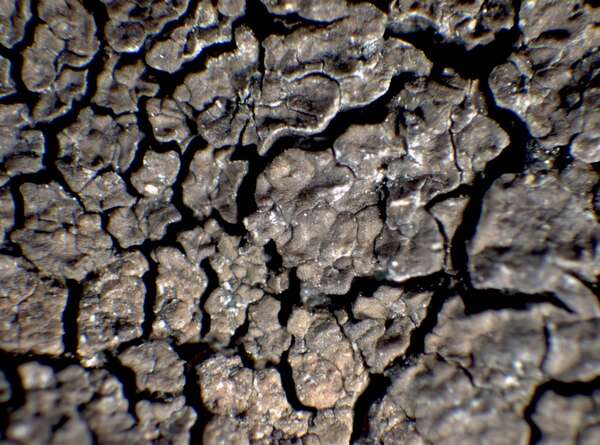
P.L. Nimis; Owner: Department of Life Sciences, University of Trieste
Herbarium: TSB (19702)
2001/12/03
on the host, Staurothele areolata
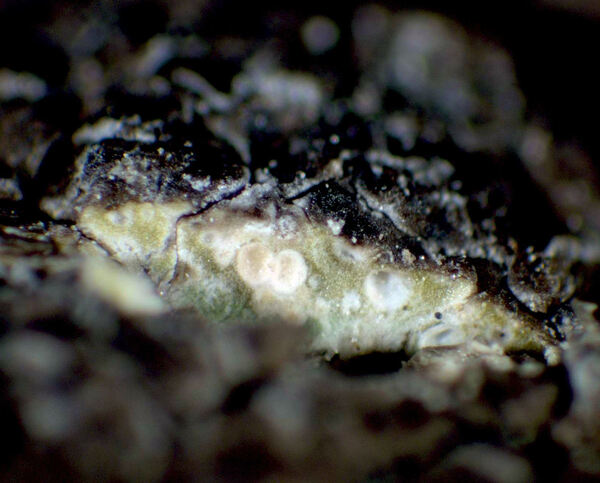
P.L. Nimis CC BY-SA 4.0
TSB 19702

Felix Schumm - CC BY 4.0
[VZ1101], Gallia. Savole. Reservatum naturae Vanoise, 2000-2500 m.
Ad saxa calcarea. Leg. J. Asta et. C. Roux. - Annot. O- Breuß: it is
Verrucaria zomenhofiana. - . EX A. VEZDA LICHENES SELECTI EXSICCATI
NR. 1101. - AS Dermatocarpon compactum

Felix Schumm - CC BY 4.0
[VZ1101], Gallia. Savole. Reservatum naturae Vanoise, 2000-2500 m.
Ad saxa calcarea. Leg. J. Asta et. C. Roux. - Annot. O- Breuß: it is
Verrucaria zomenhofiana. - . EX A. VEZDA LICHENES SELECTI EXSICCATI
NR. 1101. - AS Dermatocarpon compactum
Growth form: Crustose
Substrata: rocks
Photobiont: green algae other than Trentepohlia
Reproductive strategy: mainly sexual
paras Staurothele areolata
Commonnes-rarity: (info)
Alpine belt: rather common
Subalpine belt: rather rare
Montane belt: absent
Dry submediterranean belt: absent
Humid submediterranean belt: absent
Padanian area: absent
pH of the substrata:
| 1 | 2 | 3 | 4 | 5 |
Solar irradiation:
| 1 | 2 | 3 | 4 | 5 |
Aridity:
| 1 | 2 | 3 | 4 | 5 |
Eutrophication:
| 1 | 2 | 3 | 4 | 5 |
Poleotolerance:
| 0 | 1 | 2 | 3 |
Altitudinal distribution:
| 1 | 2 | 3 | 4 | 5 | 6 |
Rarity
absent
extremely rare
very rare
rare
rather rare
rather common
common
very common
extremely common
Loading data...
Occurrence data
Predictive map
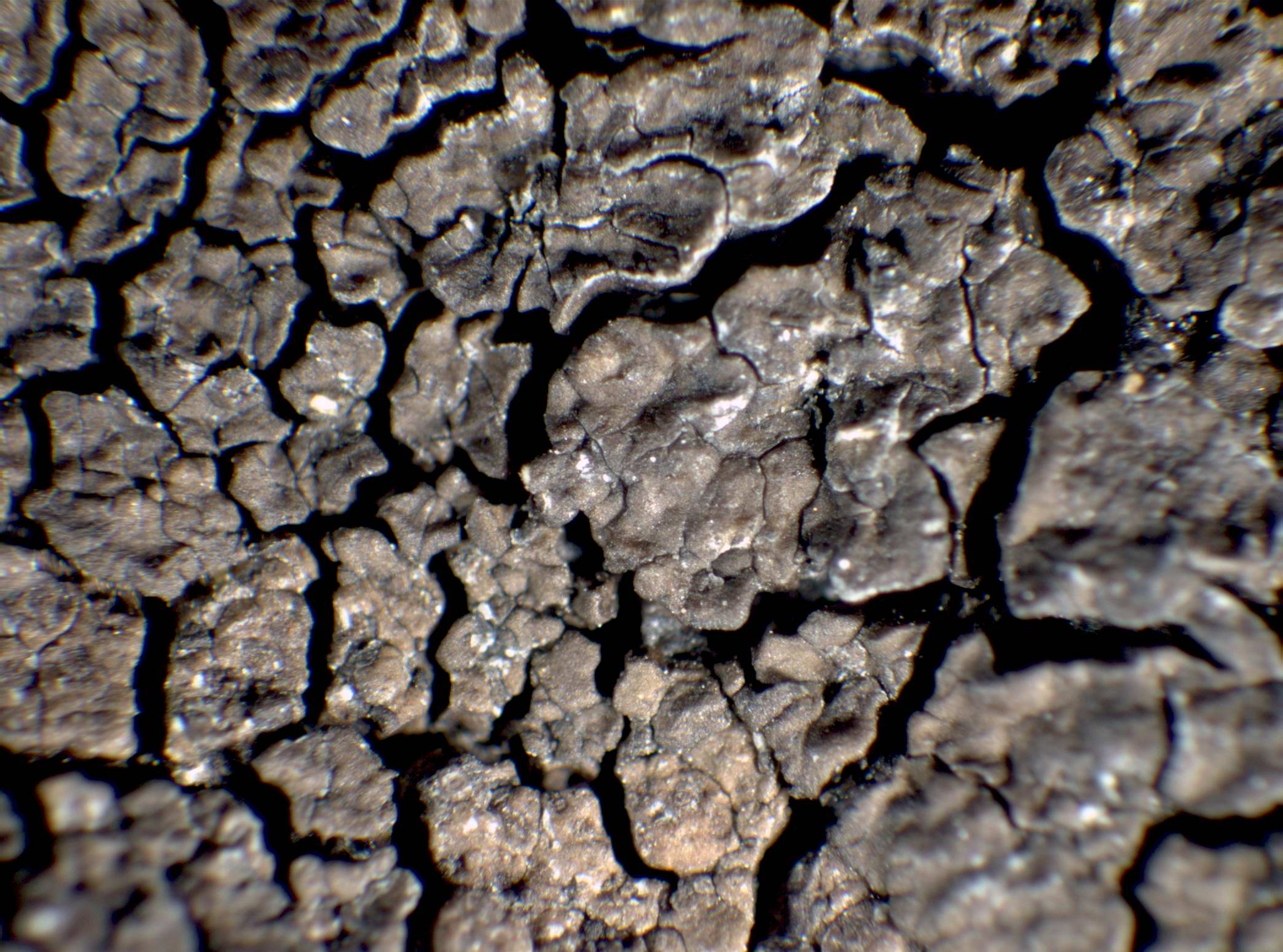
P.L. Nimis; Owner: Department of Life Sciences, University of Trieste
Herbarium: TSB (19702)
2001/12/03
on the host, Staurothele areolata
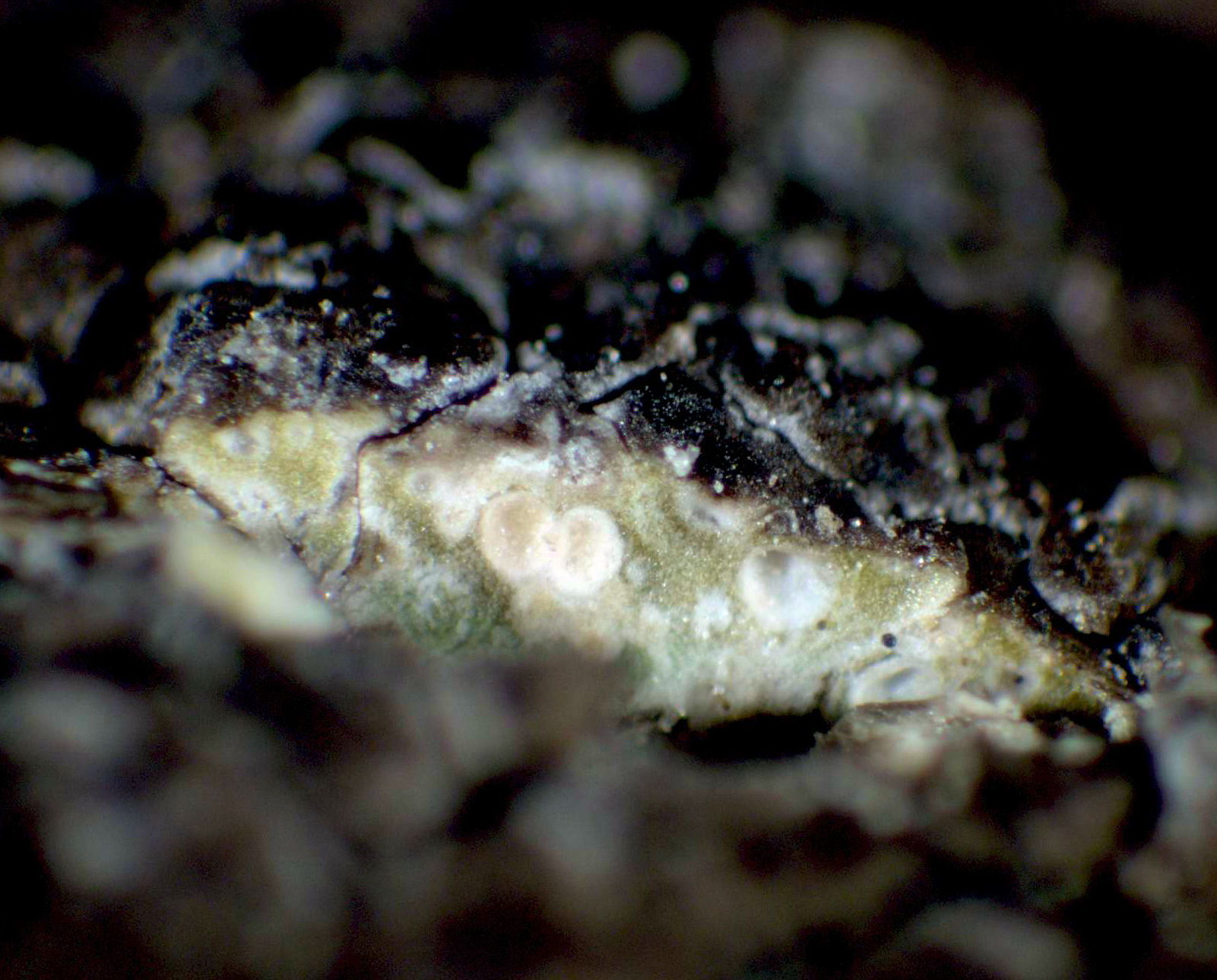
P.L. Nimis CC BY-SA 4.0
TSB 19702

Felix Schumm - CC BY 4.0
[VZ1101], Gallia. Savole. Reservatum naturae Vanoise, 2000-2500 m. Ad saxa calcarea. Leg. J. Asta et. C. Roux. - Annot. O- Breuß: it is Verrucaria zomenhofiana. - . EX A. VEZDA LICHENES SELECTI EXSICCATI NR. 1101. - AS Dermatocarpon compactum