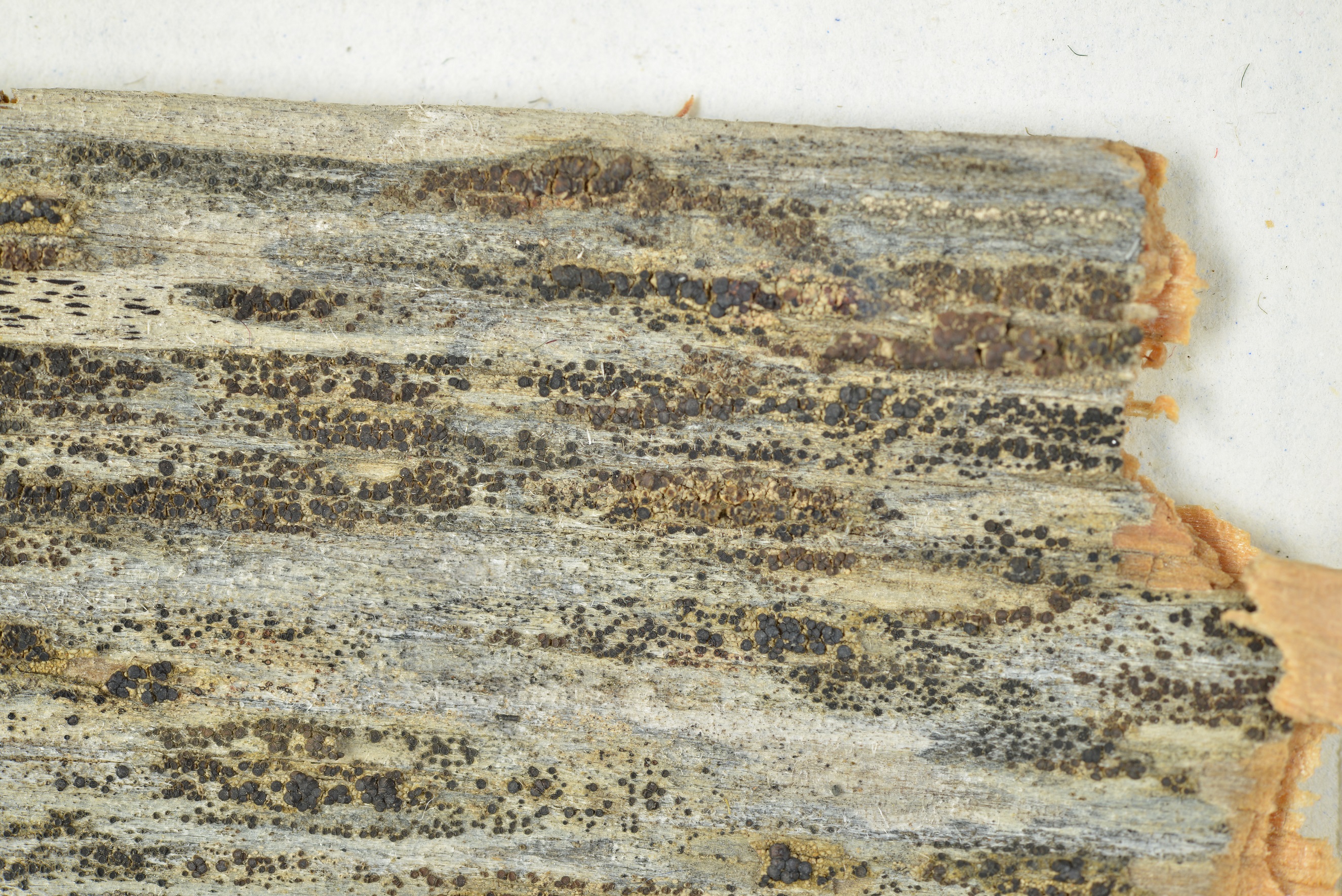
Lecanora boligera (Th. Fr.) Hedl.
Bih. K. Svenska Vetensk.-Akad. Handl., 18, 3, 3: 42, 1892. Basionym: Lecidea fuscescens f. boligera Norman ex Th. Fr. - Lichenogr. Scand., 2: 461, 1874.
Synonyms: Biatora nylanderi auct. non Anzi
Description: Thallus crustose, granular to verrucose-areolate, sometimes reduced to sparse granules near the apothecia, grey-white to greenish grey, often delimited by a grey-white prothallus. Medulla white, I-. Apothecia sessile to constricted at the base, 0.3-0.7 mm across, with an orange brown to dark reddish brown, rarely blackish brown, concave to flat, rarely convex, epruinose disc and a thin, smooth, entire, finally excluded thalline margin coloured as the thallus or as the disc. Thalline exciple ecorticate, lacking crystals, with a few algal cells which are mostly concentrated at the base; proper exciple colourless, lacking crystals; epithecium reddish to blackish brown or olive-brown, with pigment and fine crystals dissolving in K; hymenium colourless, not inspersed with oil droplets; paraphyses up to 3 µm thick apically, brown-pigmented; hypothecium colourless, not inspersed. Asci 8-spored, clavate, very thin-walled, with a K/I+ blue, tall tholus penetrated by a faintly amyloid apical cushion, the wall K/I-, surrounded by a blue outer layer, Lecanora-type. Ascospores 1-celled, hyaline, globose, 5-7 µm wide, the wall <1 µm thick. Photobiont chlorococcoid. Spot tests: thallus K+ pale yellow, C-, KC-, P+ orange-red. Chemistry: lobaric acid (major), fumarprotocetraric acid (major or absent), and unknown substances (minor).
Growth form: Crustose
Photobiont: green algae other than Trentepohlia
Reproductive strategy: mainly sexual
Commonnes-rarity: (info)
Alpine belt: very rare
Subalpine belt: rather common
Montane belt: absent
Dry submediterranean belt: absent
Humid submediterranean belt: absent
Padanian area: absent
pH of the substrata:
1 2 3 4 5

Solar irradiation:
1 2 3 4 5
Aridity:
1 2 3 4 5
Eutrophication:
1 2 3 4 5
Poleotolerance:
0 1 2 3
Altitudinal distribution:
1 2 3 4 5 6
Rarity
absent
extremely rare
very rare
rare
rather rare
rather common
common
very common
extremely common
Loading data...
Occurrence data
Predictive map
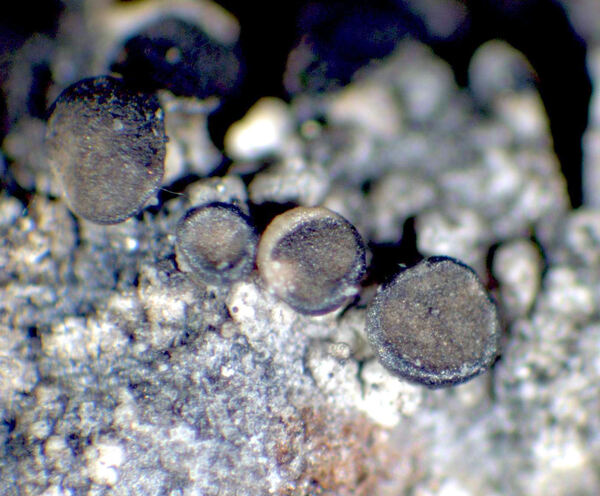
P.L. Nimis CC BY-SA 4.0
TSB 13359
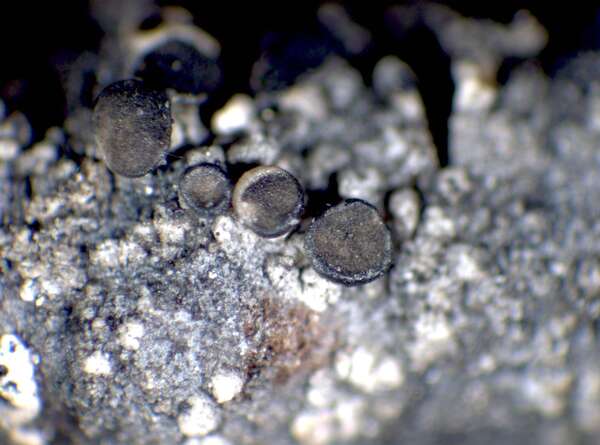
P.L. Nimis; Owner: Department of Life Sciences, University of Trieste
Herbarium: TSB (13359)
2001/11/25
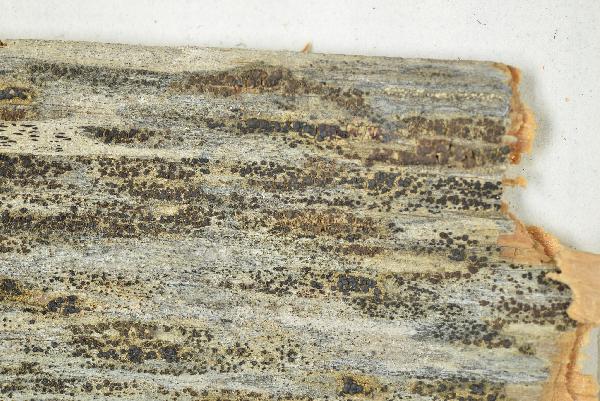
Source: https://nhm2.uio.no/typephotos/lichens/typephotoS.php?f=O-L-111844d_s.jpg
NORWAY, TROMS, TROMSØ: in insula Tromsø, ., Norman, J.M. ISOSYNTYPE
Growth form: Crustose
Photobiont: green algae other than Trentepohlia
Reproductive strategy: mainly sexual
Commonnes-rarity: (info)
Alpine belt: very rare
Subalpine belt: rather common
Montane belt: absent
Dry submediterranean belt: absent
Humid submediterranean belt: absent
Padanian area: absent
pH of the substrata:
| 1 | 2 | 3 | 4 | 5 |
Solar irradiation:
| 1 | 2 | 3 | 4 | 5 |
Aridity:
| 1 | 2 | 3 | 4 | 5 |
Eutrophication:
| 1 | 2 | 3 | 4 | 5 |
Poleotolerance:
| 0 | 1 | 2 | 3 |
Altitudinal distribution:
| 1 | 2 | 3 | 4 | 5 | 6 |
Rarity
absent
extremely rare
very rare
rare
rather rare
rather common
common
very common
extremely common
Loading data...
Occurrence data
Predictive map

P.L. Nimis CC BY-SA 4.0
TSB 13359

P.L. Nimis; Owner: Department of Life Sciences, University of Trieste
Herbarium: TSB (13359)
2001/11/25