Lecanora epanora (Ach.) Ach.
Lichenogr. Univ.: 377, 1810. Basionym: Lichen epanorus Ach. - Lich. Suec. Prodr.: 39, 1799.
Synonyms: Parmelia epanora (Ach.) Ach.; Patellaria epanora (Ach.) Trevis.
Description: Thallus crustose, episubstratic, of flattened to usually strongly convex-verrucose, aggregated or dispersed, yellow to greenish-yellow, sometimes darker bottle-green areoles, rarely delimited by a thin black prothallus, the areoles more or less covered with pale green to lemon-yellow soredia arranged in globose, convex, finally confluent soralia arising in the center. Apothecia rare, lecanorine, sessile, 0.5-2 mm across, with a concave to slightly convex, brownish yellow disc and a flexuose, sometimes sorediate, concolorous thalline margin. Epithecium yellowish to brownish, with yellowish granules insoluble in K; hymenium colourless, 65-85 µm high; paraphyses branched and anastomosing, 1-2 µm thick at mid-level, the apical cells not or only slightly swollen; hypothecium colourless. Asci 8-spored, clavate, Lecanora-type. Ascospores 1-celled, hyaline, broadly ellipsoid, 8-13 x 5-6.5 µm. Photobiont chlorococcoid. Spot tests: K-, C-, KC-, P-, UV+ bright orange. Chemistry: epanorin, rhizocarpic acid, zeorin.
Growth form: Crustose
Substrata: rocks
Photobiont: green algae other than Trentepohlia
Reproductive strategy: mainly asexual, by soredia, or soredia-like structures (e.g. blastidia)
In underhangs rarely wetted by rain
Species of metal-rich rocks
Pioneer species
Commonnes-rarity: (info)
Alpine belt: very rare
Subalpine belt: very rare
Montane belt: very rare
Dry submediterranean belt: absent
Humid submediterranean belt: absent
Padanian area: absent
pH of the substrata:
1 2 3 4 5

Solar irradiation:
1 2 3 4 5
Aridity:
1 2 3 4 5
Eutrophication:
1 2 3 4 5
Poleotolerance:
0 1 2 3
Altitudinal distribution:
1 2 3 4 5 6
Rarity
absent
extremely rare
very rare
rare
rather rare
rather common
common
very common
extremely common
Loading data...
Occurrence data
Predictive map
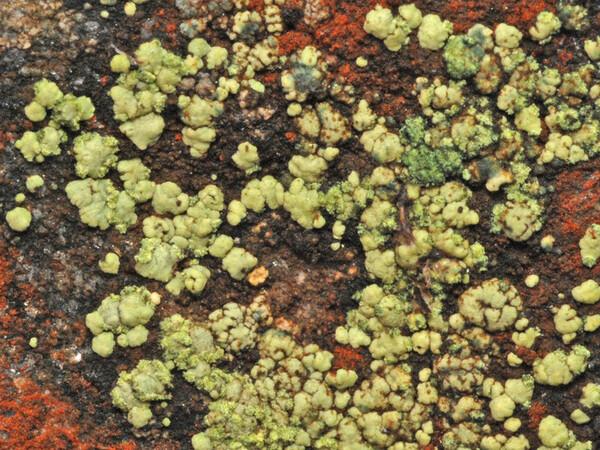
Leif Stridvall - Source: http://www.stridvall.se/la/galleries.php . Courtesy: A. Stridvall
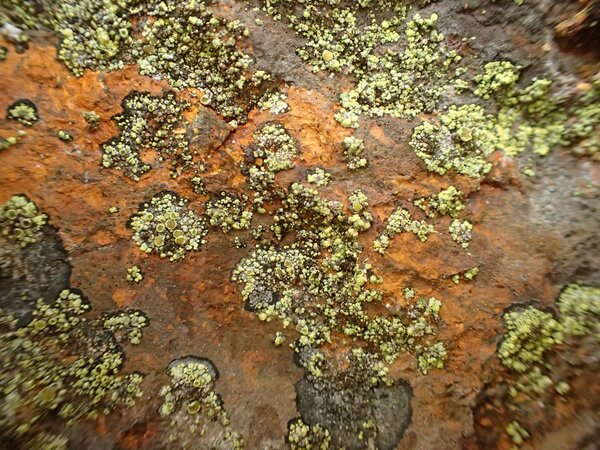
Curtis Randall Björk, - CC BY-SA 4.0
British Columbia, Canada
13.11.2018
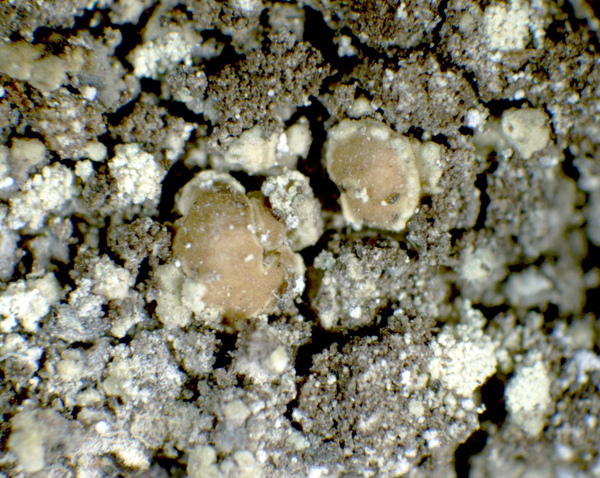
P.L. Nimis CC BY-SA 04
TSB 13767
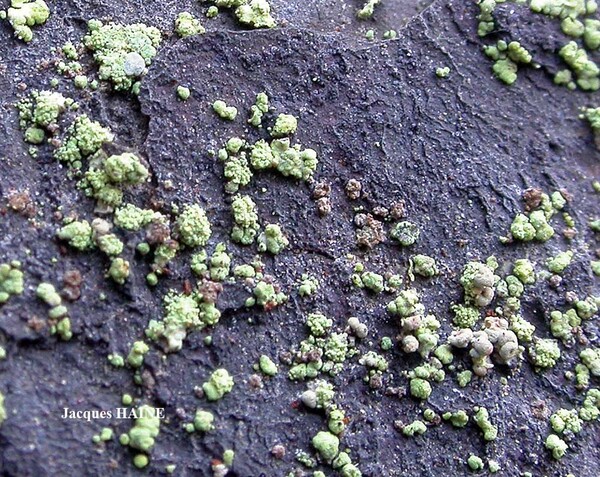
Jacques Haine - Source: http://www.lichensmaritimes.org/index.php?task=fiche&lichen=709&lang=en
France, Ardennes, Monthermé
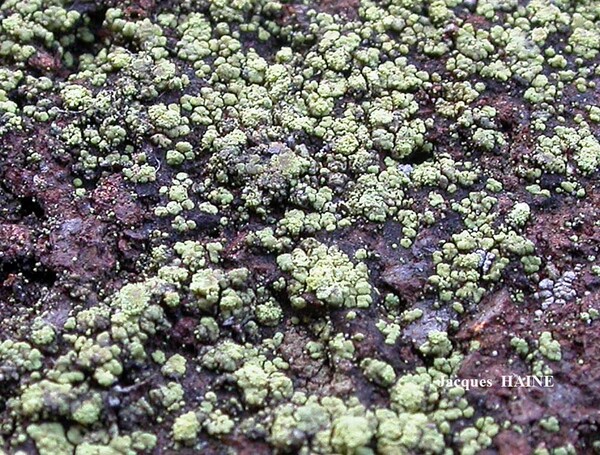
Jacques Haine - Source: http://www.lichensmaritimes.org/index.php?task=fiche&lichen=709&lang=en
France, Ardennes, Monthermé
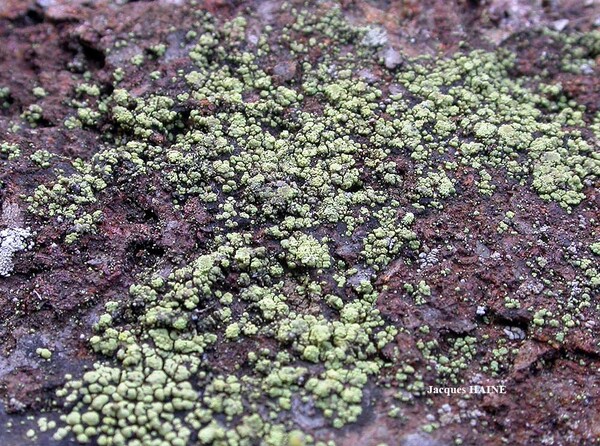
Jacques Haine - Source: http://www.lichensmaritimes.org/index.php?task=fiche&lichen=709&lang=en
France, Ardennes, Monthermé
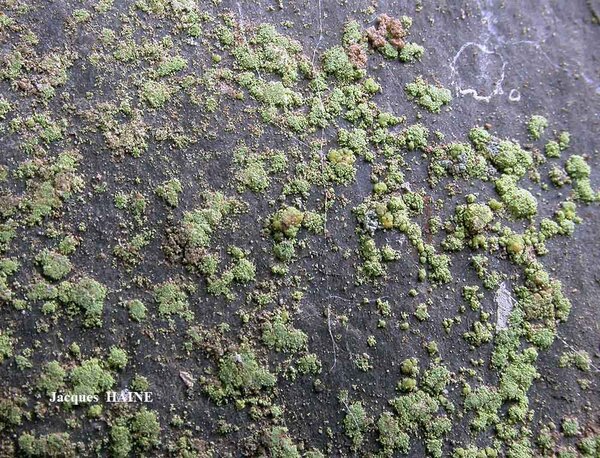
Jacques Haine - Source: http://www.lichensmaritimes.org/index.php?task=fiche&lichen=709&lang=en
France, Ardennes, Monthermé
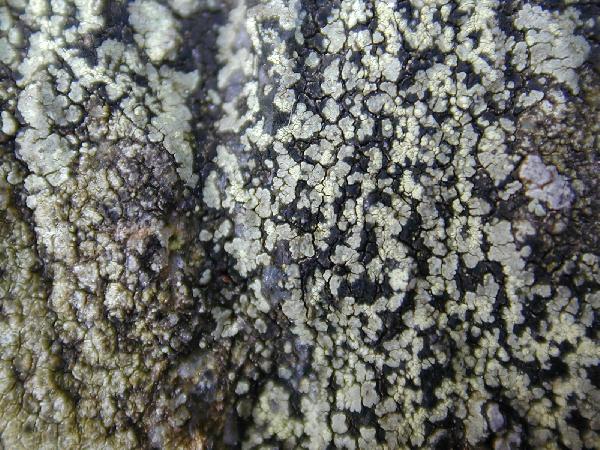
Wolfgang von Brackel - CC BY-4.0
Czech Republic, Sumava
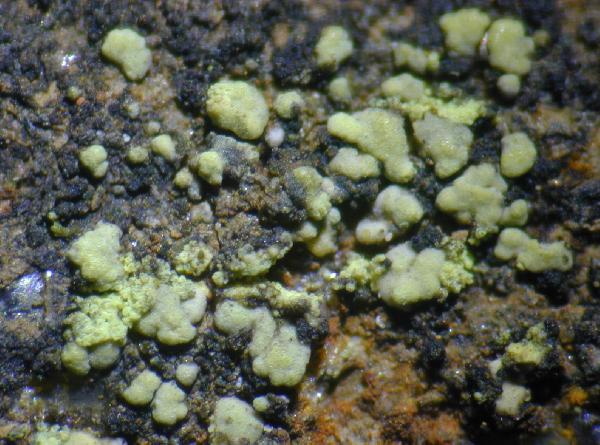
Wolfgang von Brackel - CC BY-4.0
Germany, Bavaria, Silberberg
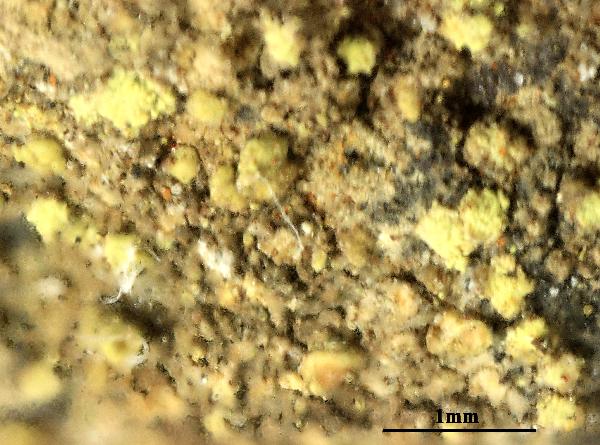
Felix Schumm - CC BY 4.0
[VZ2391], Austria. Styria. Regio Steirisches Randgebirge, Gleinalpe,
in valleculo Rockstallgraben, Markt-Übelbach, supra Neuhof, 740 m.
Ad praeruptis saxorum ferruginosum secus viam publicam. Leg. J.
Poelt et A. Vezda, 12.11.1981. EX A. VEZDA LICHENES SELECTI EXSICCATI
NR. 2391.
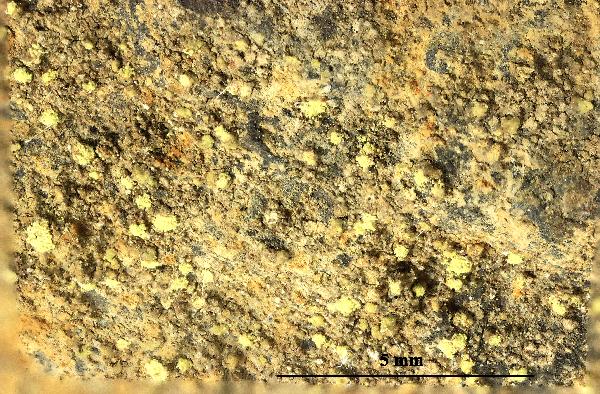
Felix Schumm - CC BY 4.0
[VZ2391], Austria. Styria. Regio Steirisches Randgebirge, Gleinalpe,
in valleculo Rockstallgraben, Markt-Übelbach, supra Neuhof, 740 m.
Ad praeruptis saxorum ferruginosum secus viam publicam. Leg. J.
Poelt et A. Vezda, 12.11.1981. EX A. VEZDA LICHENES SELECTI EXSICCATI
NR. 2391.
Growth form: Crustose
Substrata: rocks
Photobiont: green algae other than Trentepohlia
Reproductive strategy: mainly asexual, by soredia, or soredia-like structures (e.g. blastidia)
In underhangs rarely wetted by rain
Species of metal-rich rocks
Pioneer species
Commonnes-rarity: (info)
Alpine belt: very rare
Subalpine belt: very rare
Montane belt: very rare
Dry submediterranean belt: absent
Humid submediterranean belt: absent
Padanian area: absent
pH of the substrata:
| 1 | 2 | 3 | 4 | 5 |
Solar irradiation:
| 1 | 2 | 3 | 4 | 5 |
Aridity:
| 1 | 2 | 3 | 4 | 5 |
Eutrophication:
| 1 | 2 | 3 | 4 | 5 |
Poleotolerance:
| 0 | 1 | 2 | 3 |
Altitudinal distribution:
| 1 | 2 | 3 | 4 | 5 | 6 |
Rarity
absent
extremely rare
very rare
rare
rather rare
rather common
common
very common
extremely common
Loading data...
Occurrence data
Predictive map
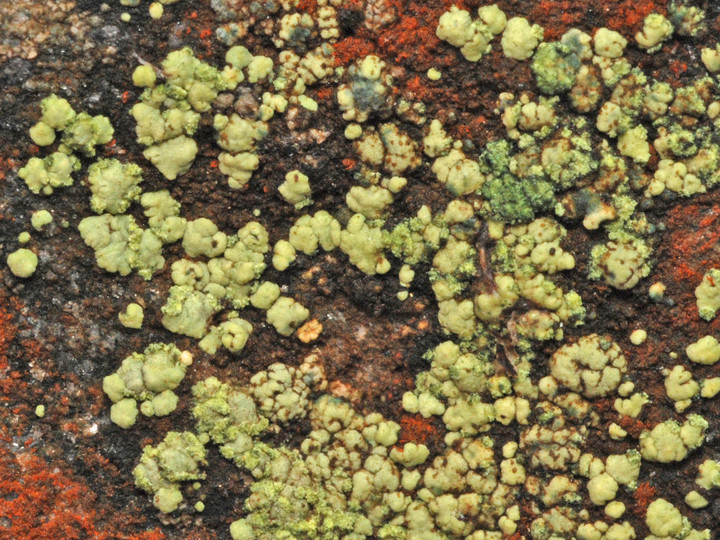
Leif Stridvall - Source: http://www.stridvall.se/la/galleries.php . Courtesy: A. Stridvall
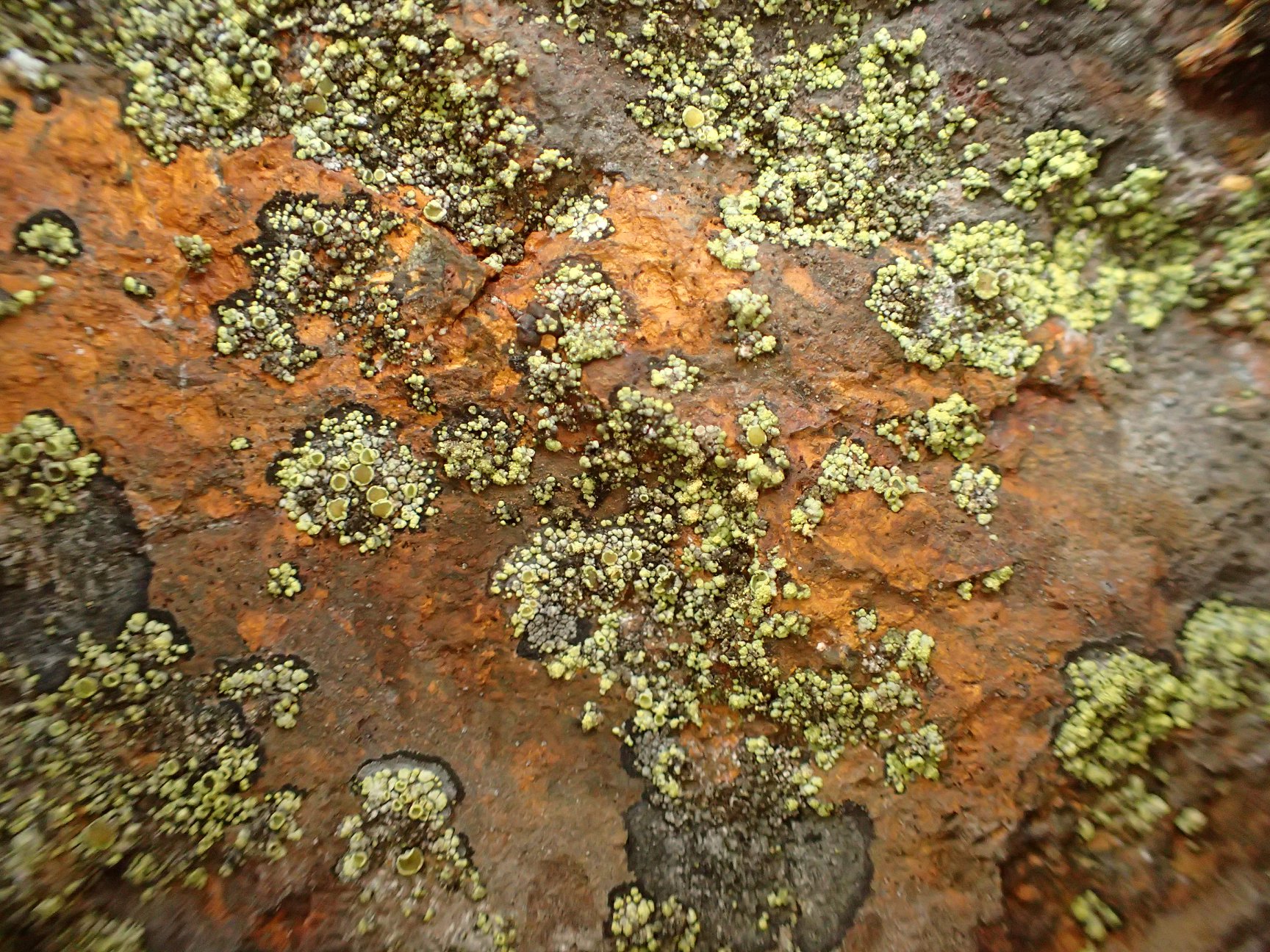
Curtis Randall Björk, - CC BY-SA 4.0
British Columbia, Canada
13.11.2018
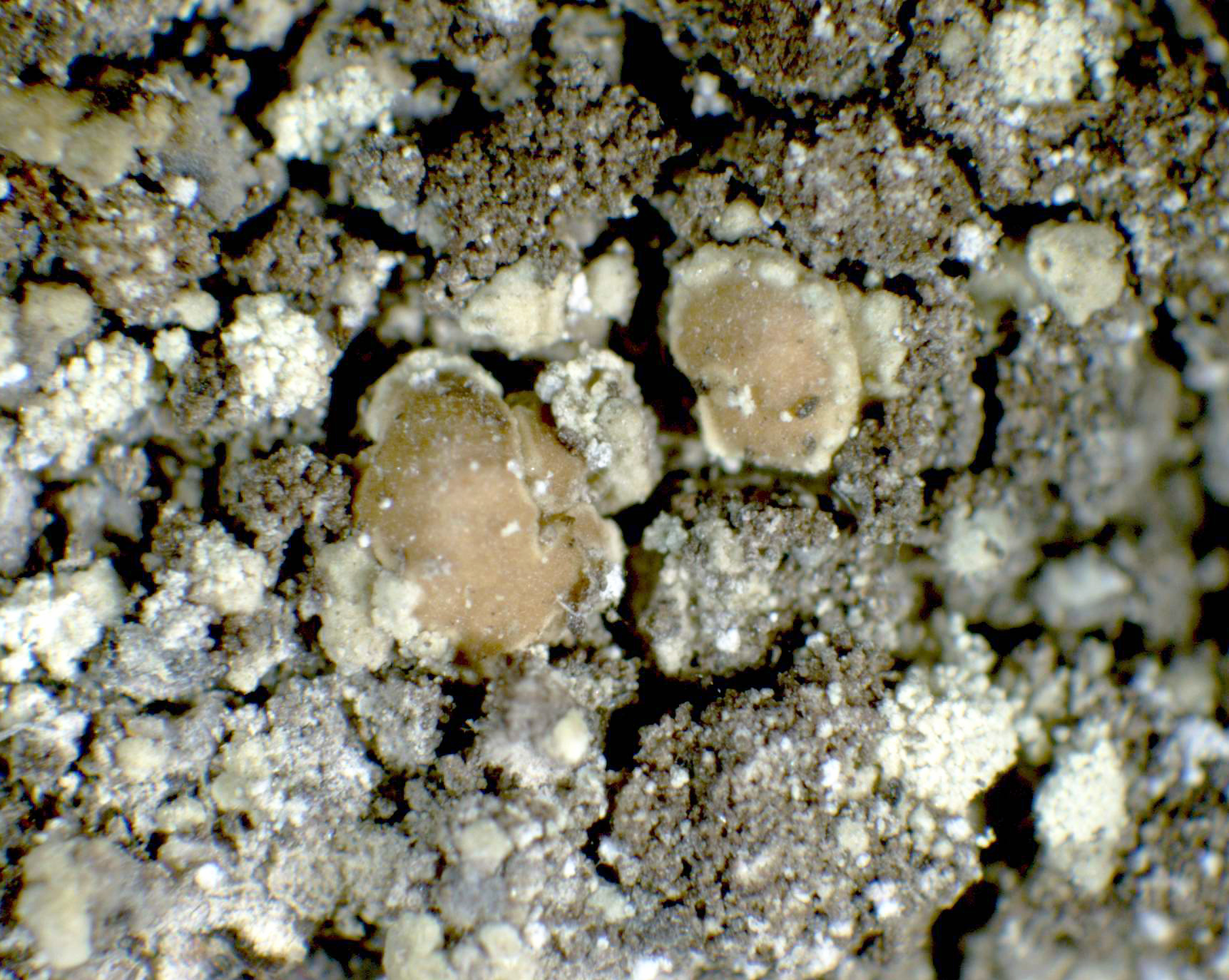
P.L. Nimis CC BY-SA 04
TSB 13767
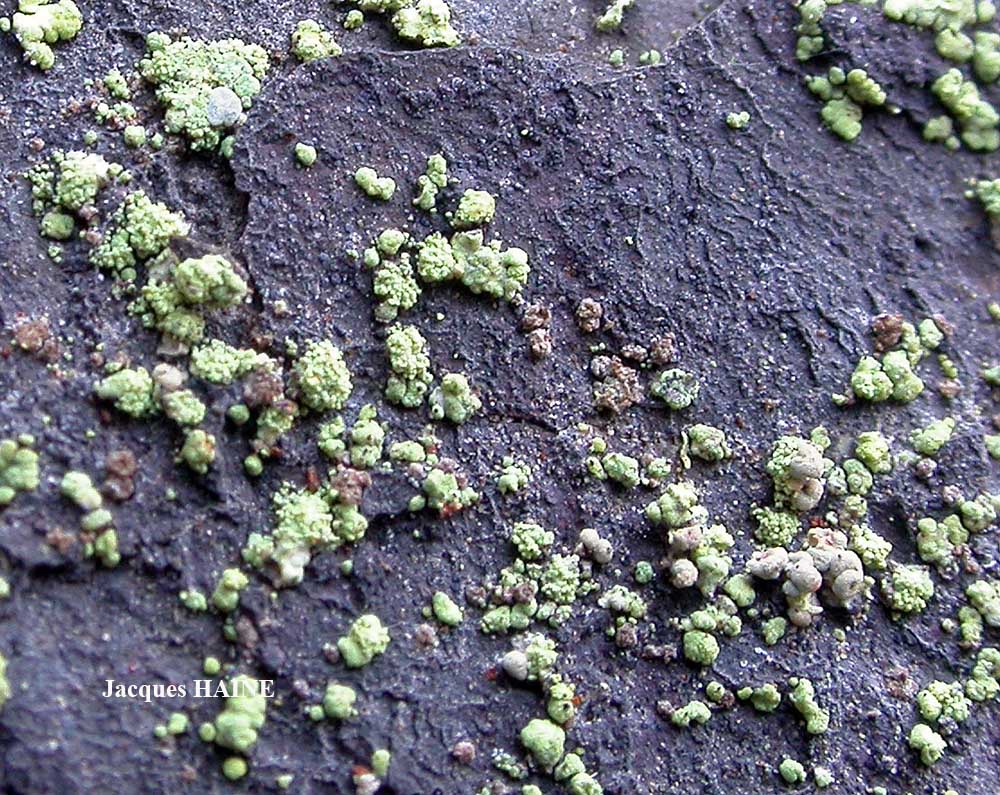
Jacques Haine - Source: http://www.lichensmaritimes.org/index.php?task=fiche&lichen=709&lang=en
France, Ardennes, Monthermé
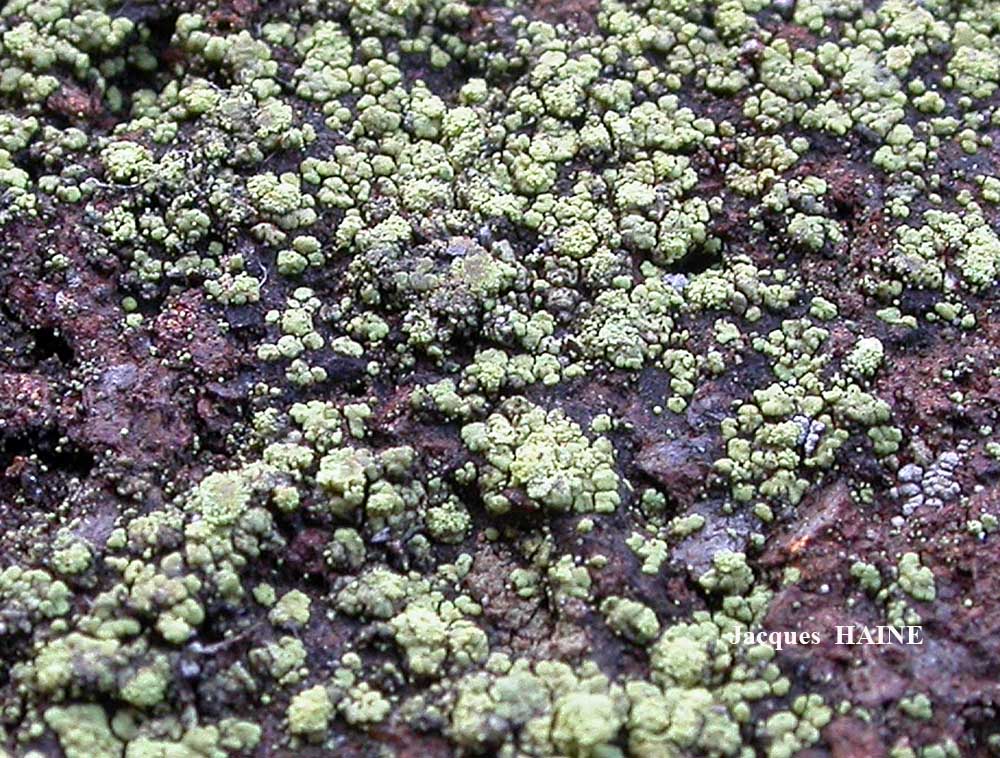
Jacques Haine - Source: http://www.lichensmaritimes.org/index.php?task=fiche&lichen=709&lang=en
France, Ardennes, Monthermé
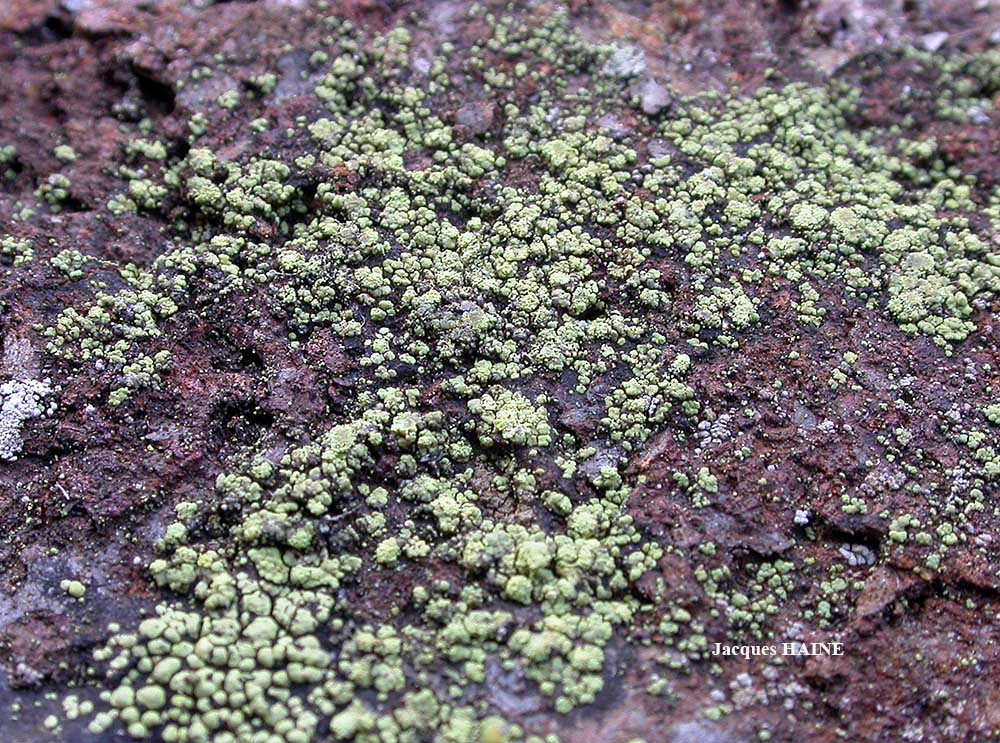
Jacques Haine - Source: http://www.lichensmaritimes.org/index.php?task=fiche&lichen=709&lang=en
France, Ardennes, Monthermé
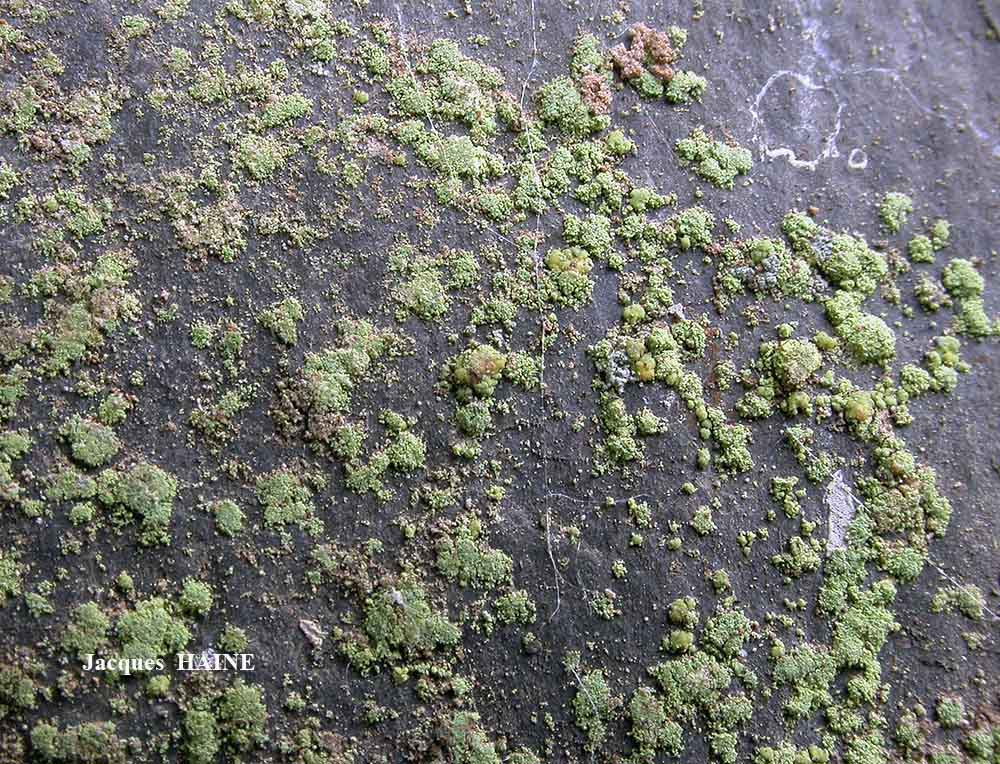
Jacques Haine - Source: http://www.lichensmaritimes.org/index.php?task=fiche&lichen=709&lang=en
France, Ardennes, Monthermé

Wolfgang von Brackel - CC BY-4.0
Czech Republic, Sumava

Wolfgang von Brackel - CC BY-4.0
Germany, Bavaria, Silberberg

Felix Schumm - CC BY 4.0
[VZ2391], Austria. Styria. Regio Steirisches Randgebirge, Gleinalpe, in valleculo Rockstallgraben, Markt-Übelbach, supra Neuhof, 740 m. Ad praeruptis saxorum ferruginosum secus viam publicam. Leg. J. Poelt et A. Vezda, 12.11.1981. EX A. VEZDA LICHENES SELECTI EXSICCATI NR. 2391.