Glaucomaria flavescens (Cl. Roux & Tønsberg) Ivanovich-Hichins
in Ivanovich-Hichins & al., Lichenologist, 57: 293, 2025. Basionym: Lepraria flavescens Cl. Roux & Tønsberg - in Tønsberg, Graphis Scripta, 13, 2, 48, 2002.
Synonyms: Lecanora rouxii S. Ekman & Tønsberg; Lepraria flavescens Clauzade & Cl. Roux nom. inval.
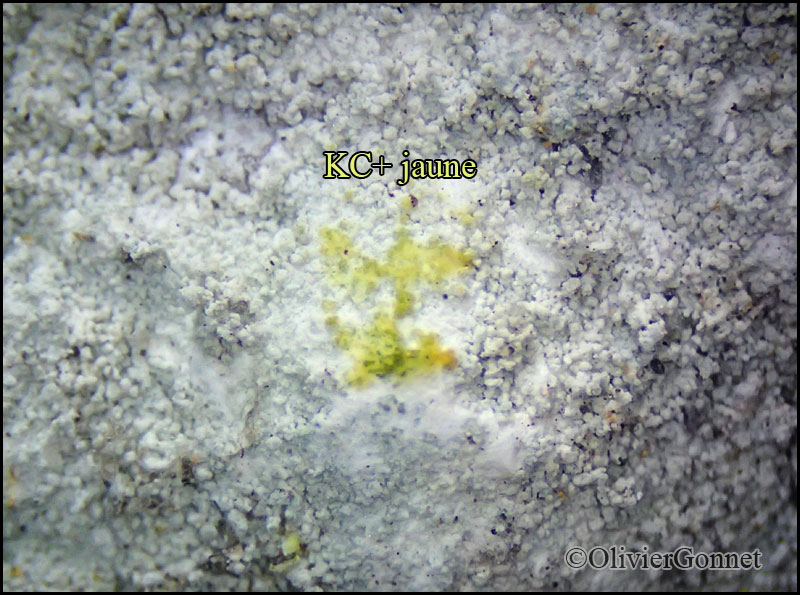
Description: Thallus leprose, episubstratic, whitish to cream-coloured, clearly delimited, usually rosette-forming, often falling off in the central parts, consisting of a soft mass of soredia-like, up to 200 µm wide granules. Medulla white, well-developed and thick. Apothecia extremely rare, lecanorine, partly immersed to almost superficial, mostly 0.5-1 mm across, with a pinkish, pruinose disc reacting C+ and KC+ yellow and a more or less distinct, sorediate thalline margin. Mature asci and spores not known. Photobiont chlorococcoid. Spot tests: K+ yellow, C+ bright yellow, KC+ yellow-orange, P+ yellow, UV+ violet; apothecial disc C+ and KC+ bright lemon yellow. Chemistry: atranorin, eugenitol, flavescin, sordidone and 4 unknown substances.
Growth form: Leprose
Substrata: rocks
Photobiont: green algae other than Trentepohlia
Reproductive strategy: mainly asexual, by soredia, or soredia-like structures (e.g. blastidia)
In underhangs rarely wetted by rain
Commonnes-rarity: (info)
Alpine belt: absent
Subalpine belt: absent
Montane belt: rather rare
Dry submediterranean belt: rather rare
Humid submediterranean belt: absent
Padanian area: absent
pH of the substrata:
1 2 3 4 5

Solar irradiation:
1 2 3 4 5
Aridity:
1 2 3 4 5
Eutrophication:
1 2 3 4 5
Poleotolerance:
0 1 2 3
Altitudinal distribution:
1 2 3 4 5 6
Rarity
absent
extremely rare
very rare
rare
rather rare
rather common
common
very common
extremely common
Loading data...
Occurrence data
Predictive map
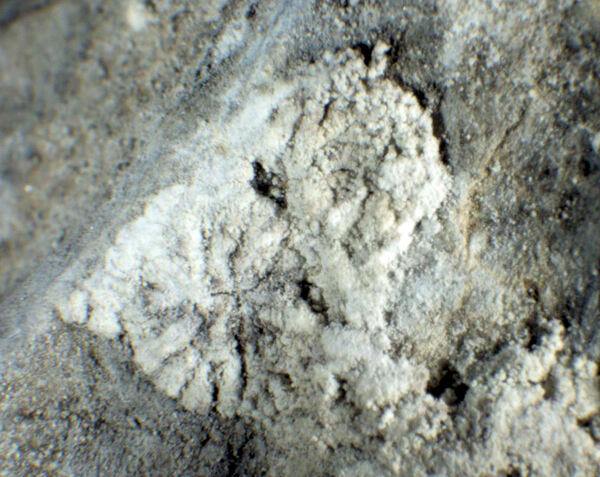
P.L. Nimis CC BY-SA 4.0
TSB 32754
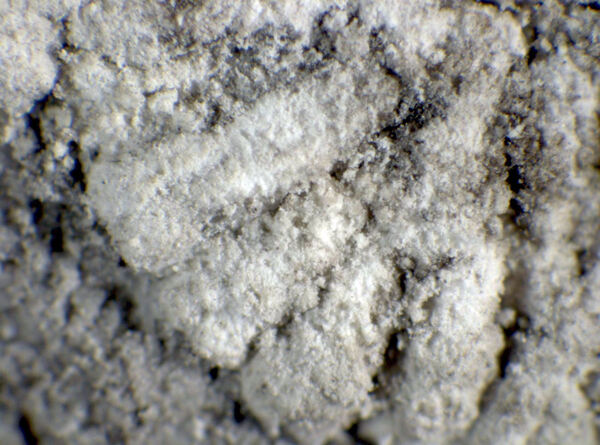
P.L. Nimis CC BY-SA 4.0
TSB 32754
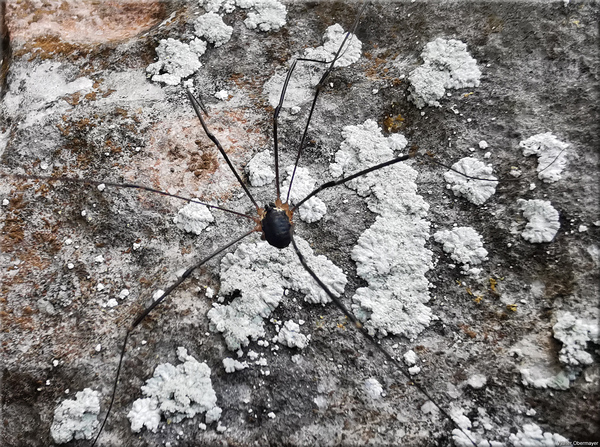
Walter Obermayer CC BY-SA 4.0 - Source: Lichens of Noricum - http://lichens-of-noricum.uni-graz.at/
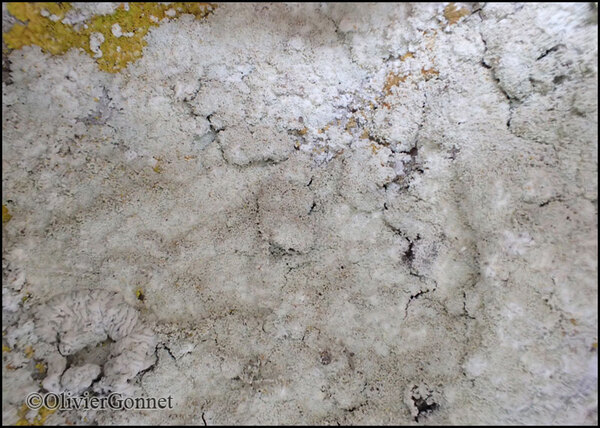
Courtesy Danièle et Olivier Gonnet - Source: https://www.afl-lichenologie.fr/Photos_AFL/Photos_AFL_L/Texte_L_3/Lecanora_rouxii.htm
France, session AFL 2015 dans le Lot, Blanzaguet
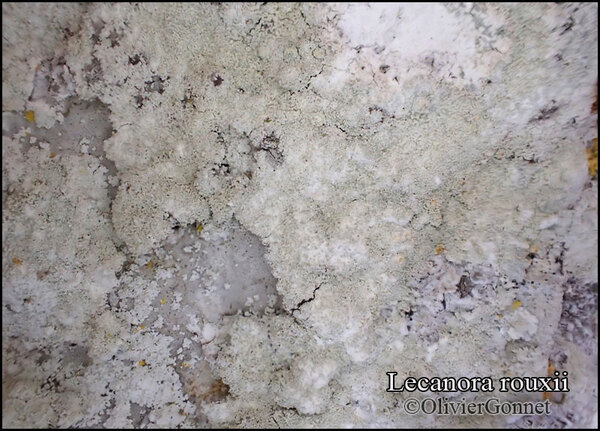
Courtesy Danièle et Olivier Gonnet - Source: https://www.afl-lichenologie.fr/Photos_AFL/Photos_AFL_L/Texte_L_3/Lecanora_rouxii.htm
France, session AFL 2015 dans le Lot, Blanzaguet
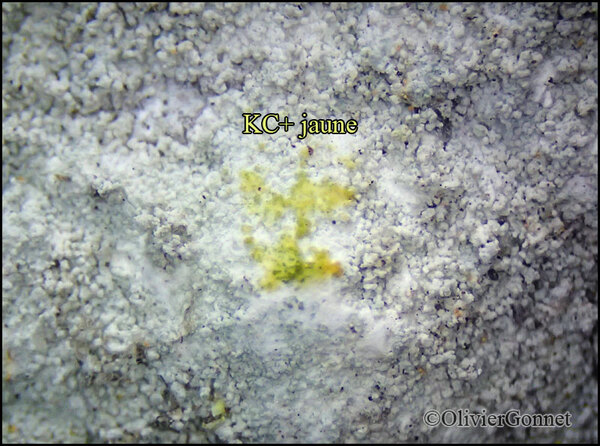
Courtesy Danièle et Olivier Gonnet - Source: https://www.afl-lichenologie.fr/Photos_AFL/Photos_AFL_L/Texte_L_3/Lecanora_rouxii.htm
France, session AFL 2015 dans le Lot, Blanzaguet
Growth form: Leprose
Substrata: rocks
Photobiont: green algae other than Trentepohlia
Reproductive strategy: mainly asexual, by soredia, or soredia-like structures (e.g. blastidia)
In underhangs rarely wetted by rain
Commonnes-rarity: (info)
Alpine belt: absent
Subalpine belt: absent
Montane belt: rather rare
Dry submediterranean belt: rather rare
Humid submediterranean belt: absent
Padanian area: absent
pH of the substrata:
| 1 | 2 | 3 | 4 | 5 |
Solar irradiation:
| 1 | 2 | 3 | 4 | 5 |
Aridity:
| 1 | 2 | 3 | 4 | 5 |
Eutrophication:
| 1 | 2 | 3 | 4 | 5 |
Poleotolerance:
| 0 | 1 | 2 | 3 |
Altitudinal distribution:
| 1 | 2 | 3 | 4 | 5 | 6 |
Rarity
absent
extremely rare
very rare
rare
rather rare
rather common
common
very common
extremely common
Loading data...
Occurrence data
Predictive map

P.L. Nimis CC BY-SA 4.0
TSB 32754
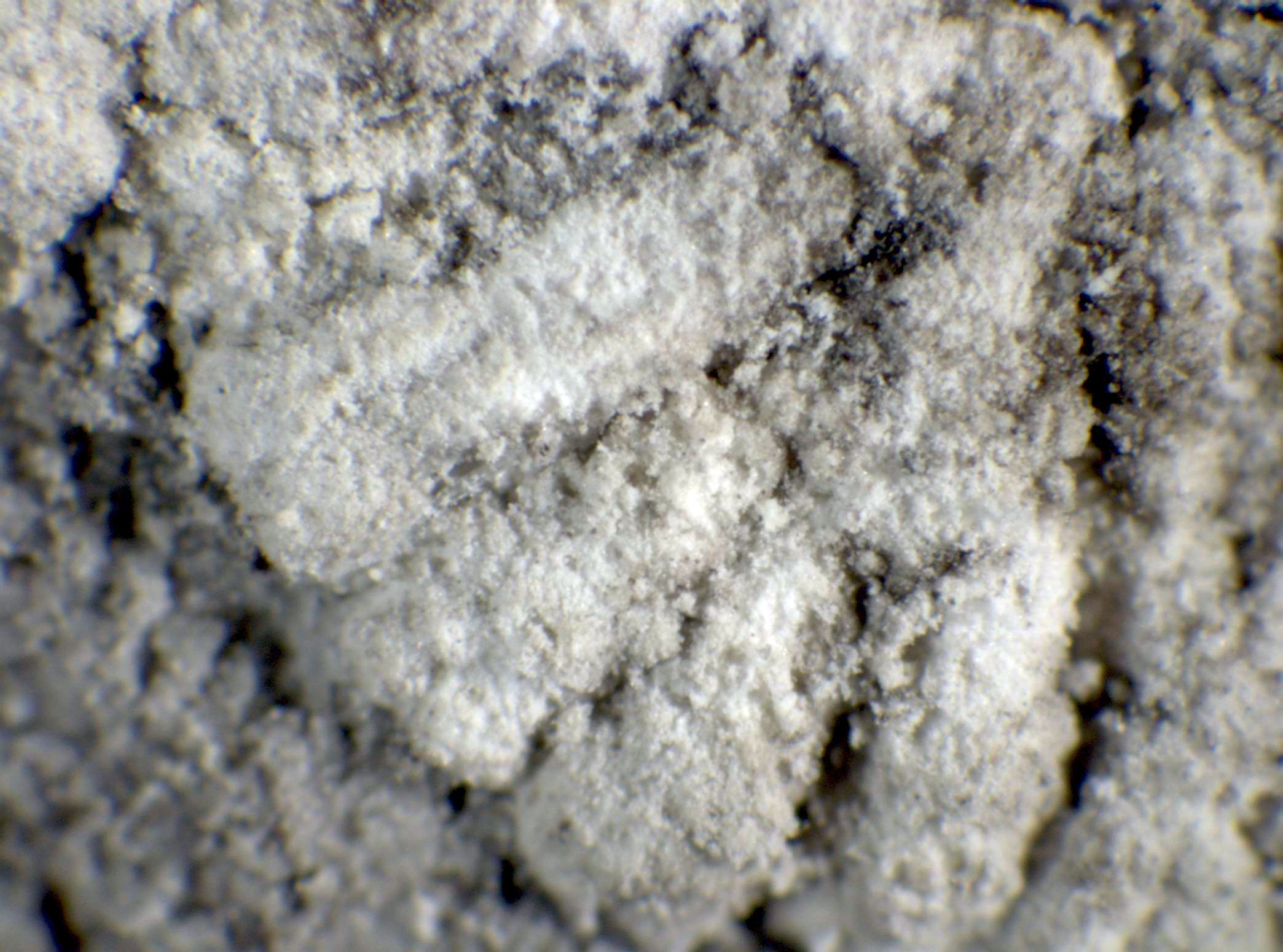
P.L. Nimis CC BY-SA 4.0
TSB 32754
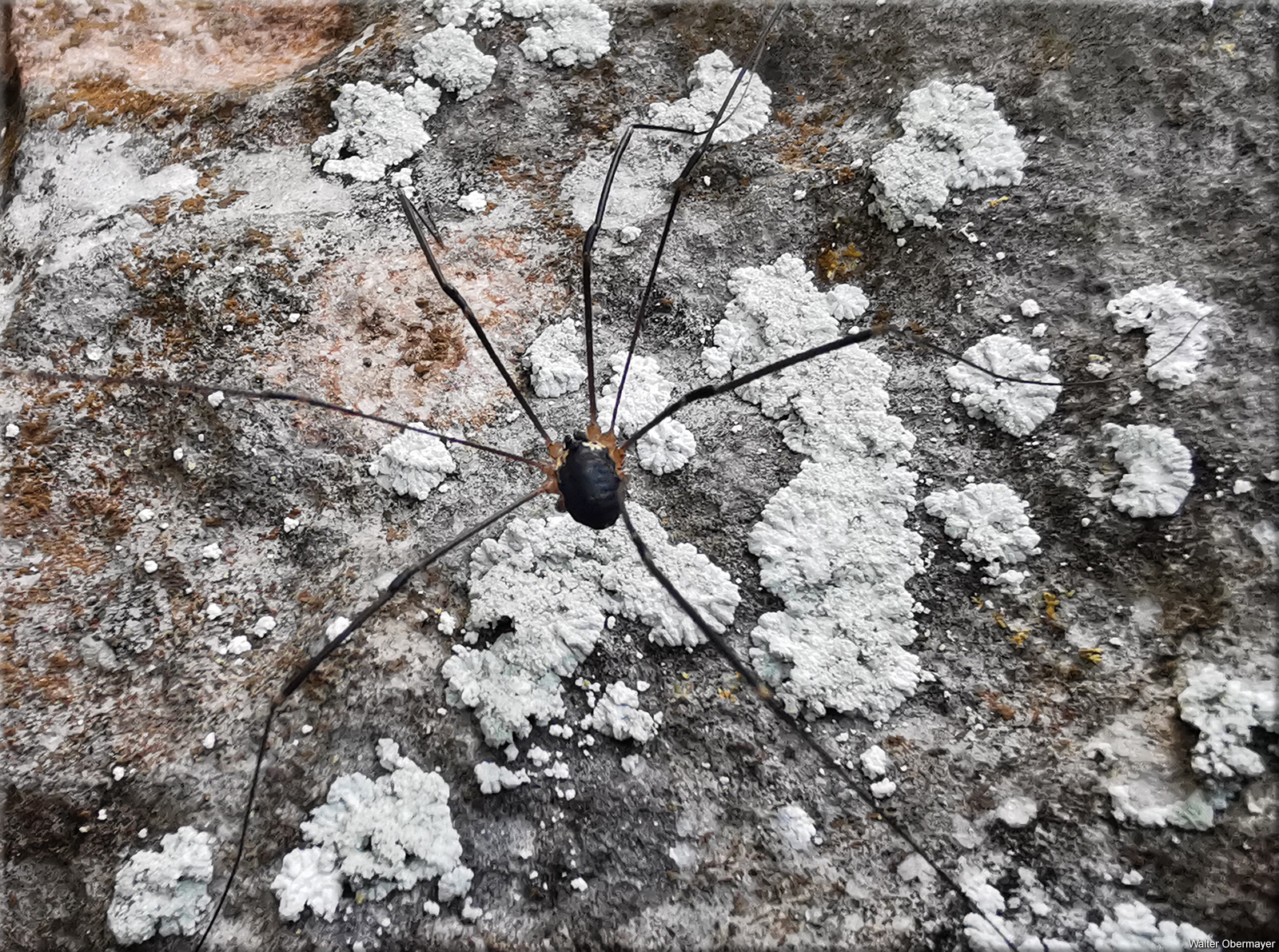
Walter Obermayer CC BY-SA 4.0 - Source: Lichens of Noricum - http://lichens-of-noricum.uni-graz.at/
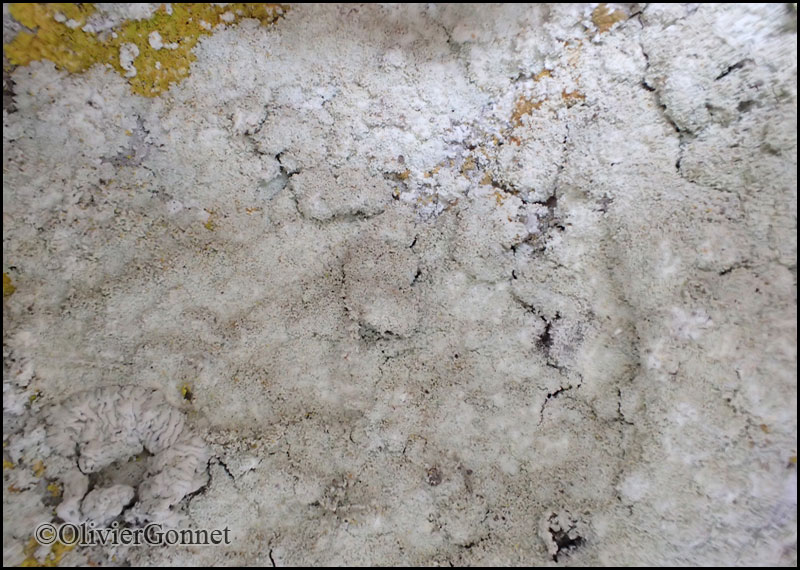
Courtesy Danièle et Olivier Gonnet - Source: https://www.afl-lichenologie.fr/Photos_AFL/Photos_AFL_L/Texte_L_3/Lecanora_rouxii.htm
France, session AFL 2015 dans le Lot, Blanzaguet
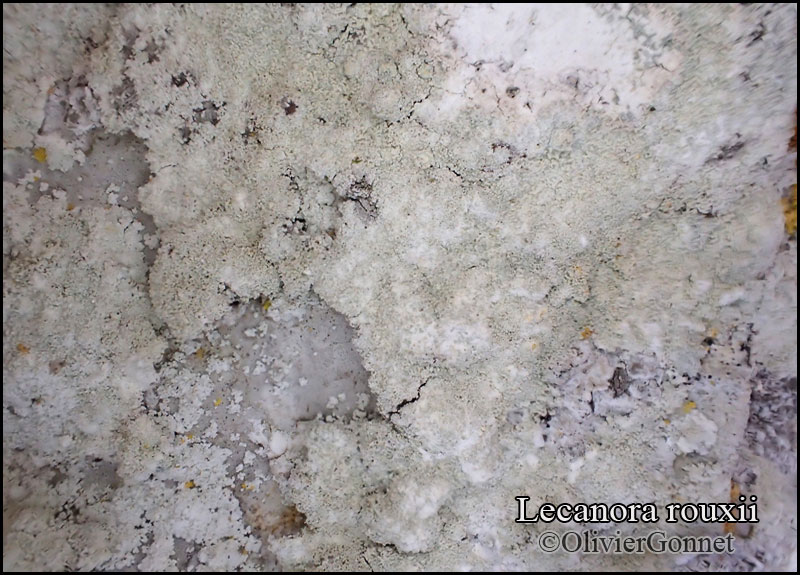
Courtesy Danièle et Olivier Gonnet - Source: https://www.afl-lichenologie.fr/Photos_AFL/Photos_AFL_L/Texte_L_3/Lecanora_rouxii.htm
France, session AFL 2015 dans le Lot, Blanzaguet