Lecidea leprarioides Tønsberg
Sommerfeltia, 14: 173, 1992.
Synonyms: Lecidea turgidula Fr. var. pulveracea Th. Fr.
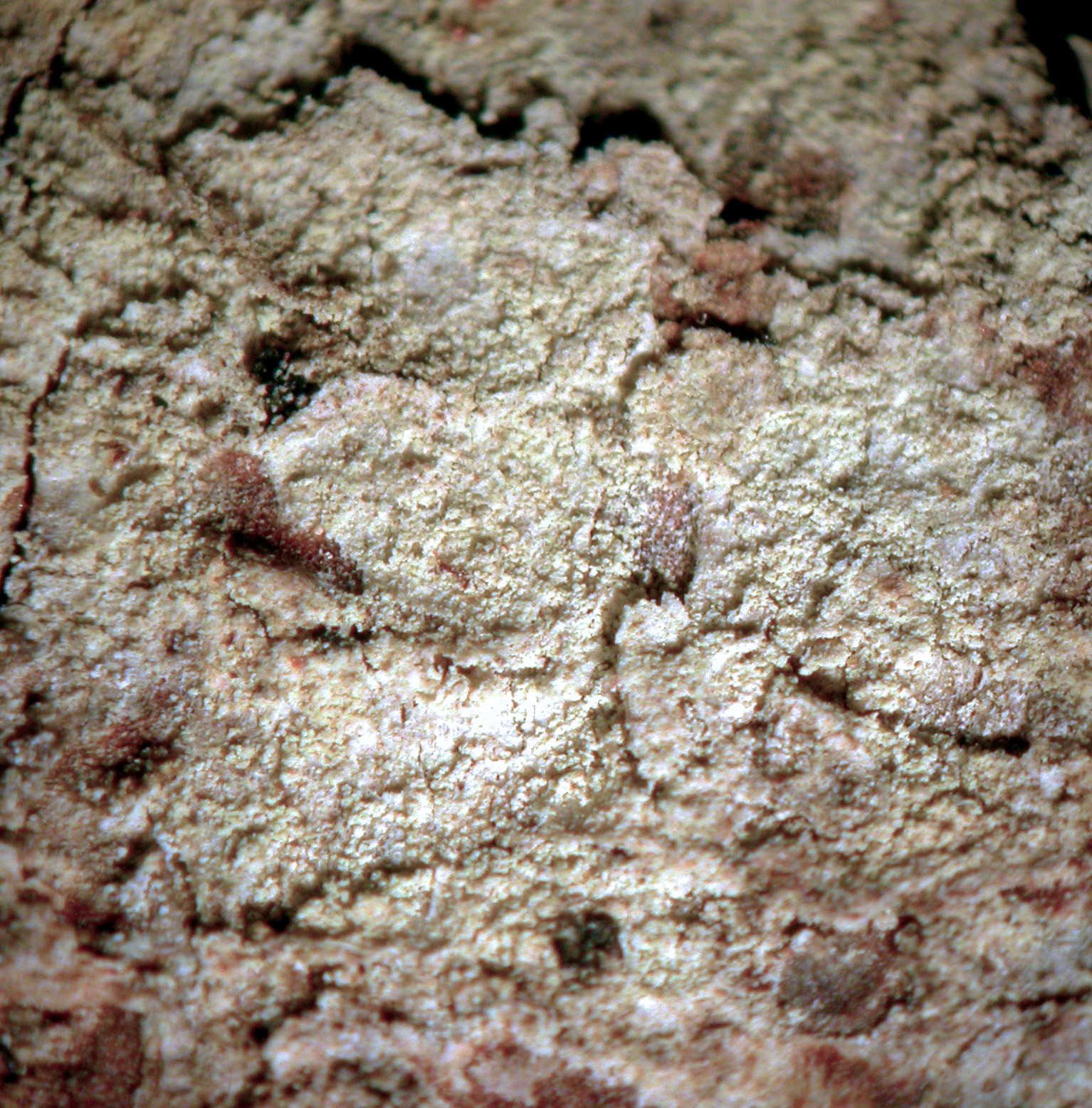
Description: Thallus crustose, endosubstratic in non-sorediate parts to thinly episubstratic, greyish white to greenish grey, rarely with a pale brown tinge, forming irregular patches up to several dm across, usually sorediate, without a distinct prothallus. Soralia at first scattered and irregular, but soon confluent and forming a discontinuous subleprose crust, the soredia farinose, 10-30 μm in diam. Apothecia biatorine, sessile and constricted at base, (0.2-)0.3-0.6(-1) mm across, sometimes tuberculate, with a grey to black, often bluish-pruinose, convex disc and a very thin, soon excluded proper margin. Exciple blue-green near the hymenium, colourless to brown in lower part, of branched and anastomosing, radially arranged hyphae, the pigmented parts N+ violet; epithecium greenish to blue-green, inspersed with ochraceous, 5-10 μm thick granules, N+ violet; hymenium colourless to pale green, 25-40 μm high; paraphyses slender, moderately branched and anastomosing, up to 1 μm thick at base, hardly swollen at tips; hypothecium pale yellow to reddish brown. Asci 8-spored, clavate, Bacidia-type. Ascospores 1-celled, hyaline, narrowly ellipsoid, straight or slightly curved, 7-11.5 x 2.5-3.5(-4) µm. Photobiont chlorococcoid. Spot tests: thallus K-, C-, KC-, P-, UV-. Chemistry: pseudoplacodiolic acid.
Growth form: Crustose
Substrata: bark
Photobiont: green algae other than Trentepohlia
Reproductive strategy: mainly asexual, by soredia, or soredia-like structures (e.g. blastidia)
Commonnes-rarity: (info)
Alpine belt: absent
Subalpine belt: extremely rare
Montane belt: extremely rare
Dry submediterranean belt: absent
Humid submediterranean belt: absent
Padanian area: absent
pH of the substrata:
1 2 3 4 5

Solar irradiation:
1 2 3 4 5
Aridity:
1 2 3 4 5
Eutrophication:
1 2 3 4 5
Poleotolerance:
0 1 2 3
Altitudinal distribution:
1 2 3 4 5 6
Rarity
absent
extremely rare
very rare
rare
rather rare
rather common
common
very common
extremely common
Loading data...
Occurrence data
Predictive map
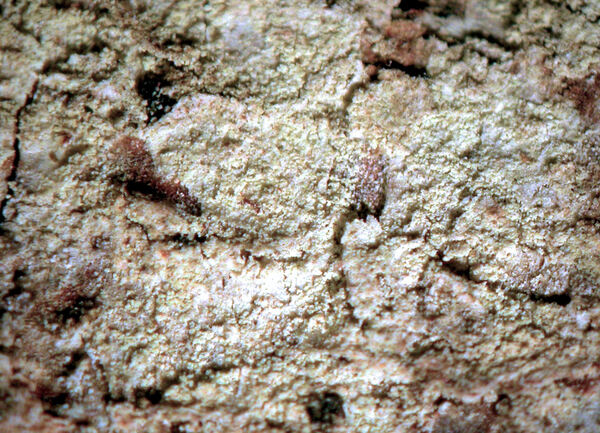
J. Nascimbene CC BY-SA 4.0
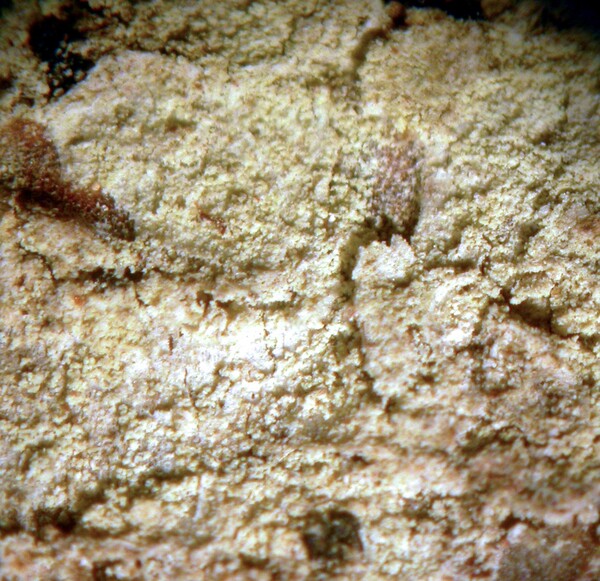
Juri Nascimbene; Owner: Department of Life Sciences, University of Trieste
05.02.2015
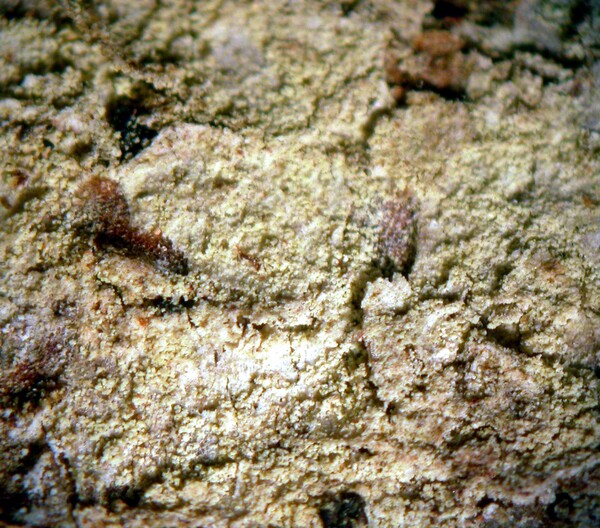
Juri Nascimbene; Owner: Department of Life Sciences, University of Trieste
05.02.2015
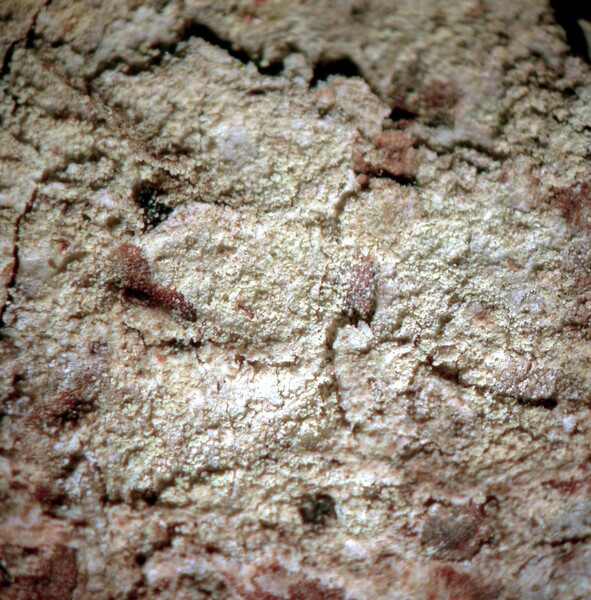
Juri Nascimbene; Owner: Department of Life Sciences, University of Trieste
05.02.2015
Growth form: Crustose
Substrata: bark
Photobiont: green algae other than Trentepohlia
Reproductive strategy: mainly asexual, by soredia, or soredia-like structures (e.g. blastidia)
Commonnes-rarity: (info)
Alpine belt: absent
Subalpine belt: extremely rare
Montane belt: extremely rare
Dry submediterranean belt: absent
Humid submediterranean belt: absent
Padanian area: absent
pH of the substrata:
| 1 | 2 | 3 | 4 | 5 |
Solar irradiation:
| 1 | 2 | 3 | 4 | 5 |
Aridity:
| 1 | 2 | 3 | 4 | 5 |
Eutrophication:
| 1 | 2 | 3 | 4 | 5 |
Poleotolerance:
| 0 | 1 | 2 | 3 |
Altitudinal distribution:
| 1 | 2 | 3 | 4 | 5 | 6 |
Rarity
absent
extremely rare
very rare
rare
rather rare
rather common
common
very common
extremely common
Loading data...
Occurrence data
Predictive map
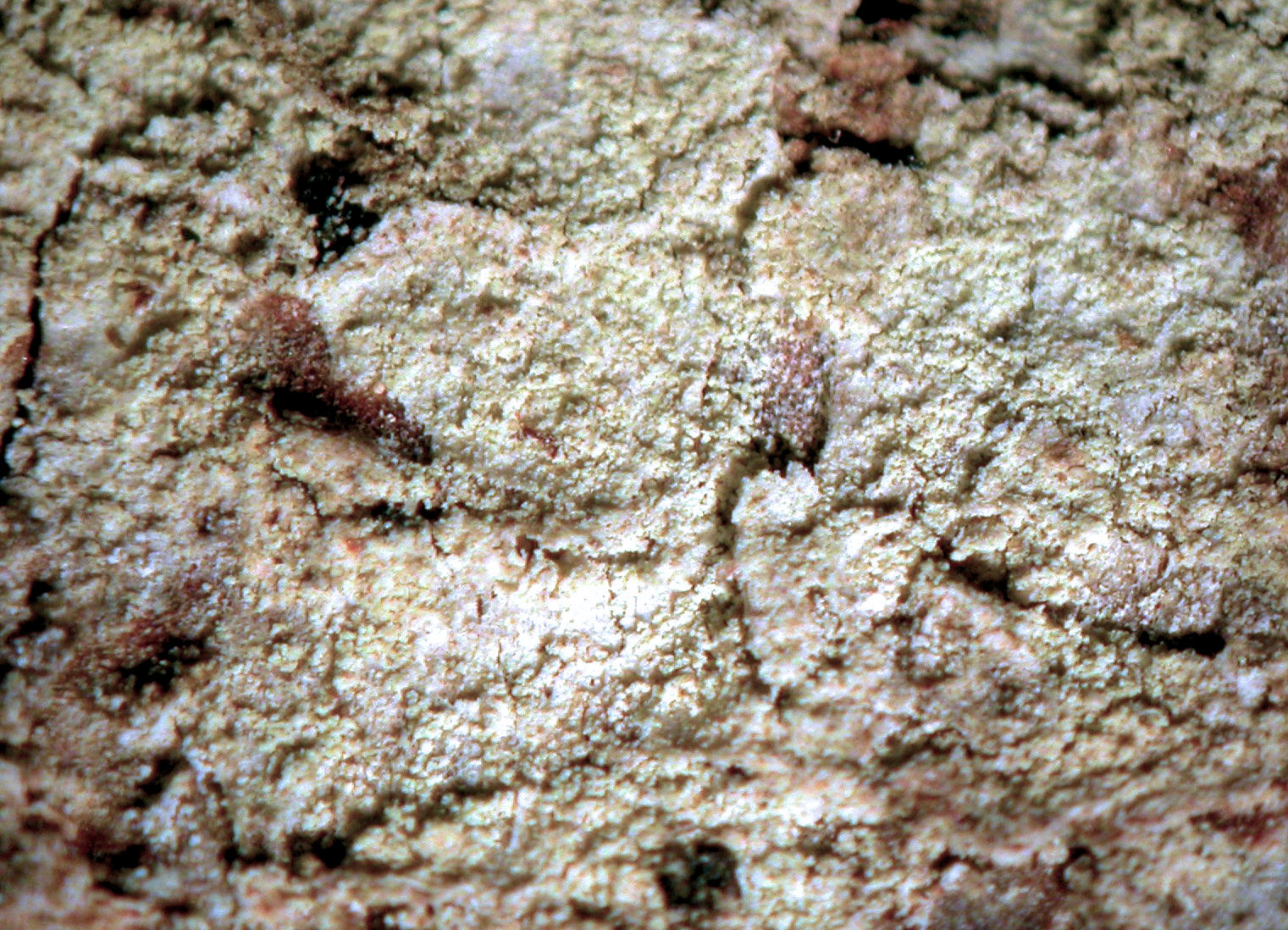
J. Nascimbene CC BY-SA 4.0
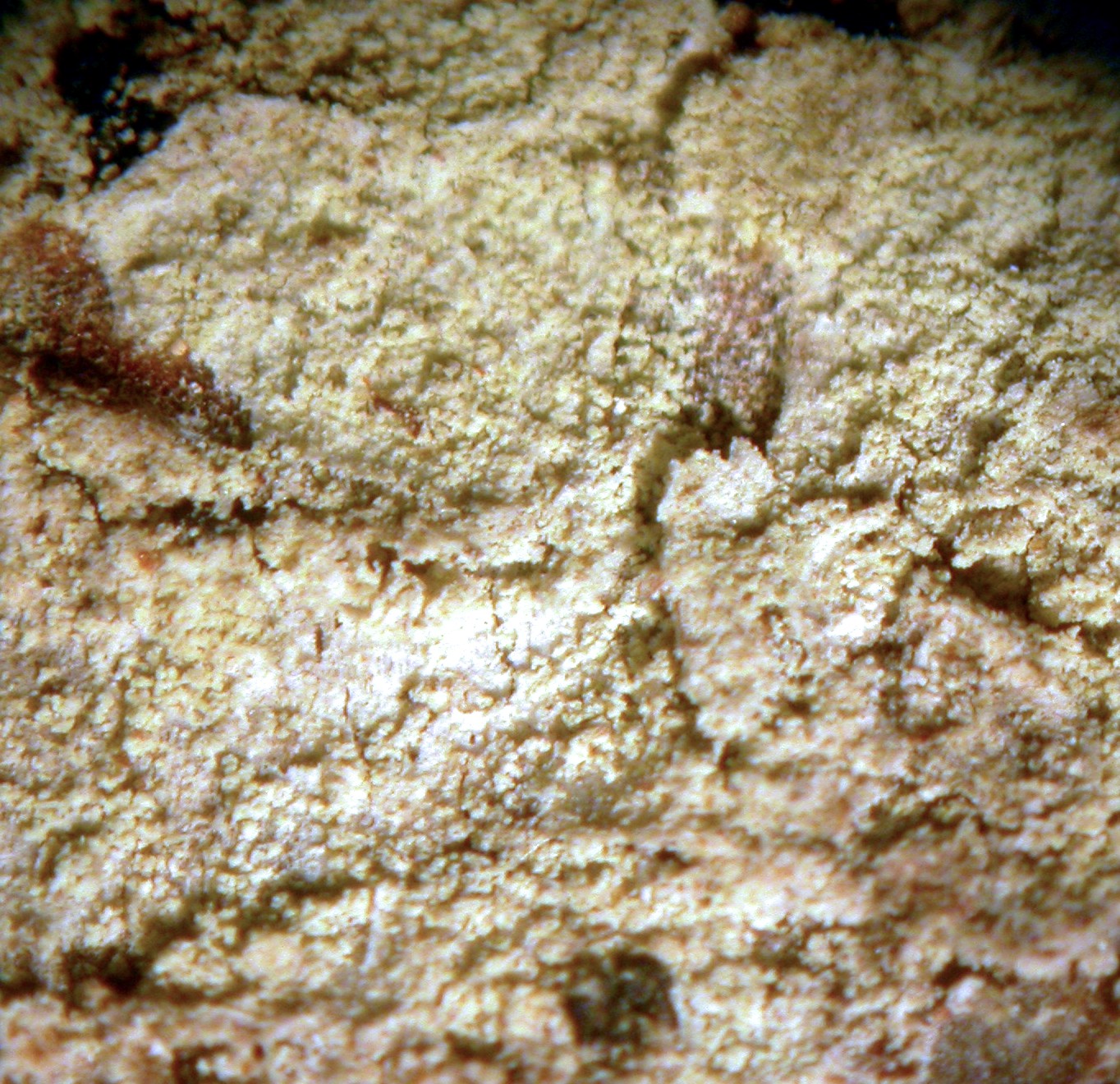
Juri Nascimbene; Owner: Department of Life Sciences, University of Trieste
05.02.2015
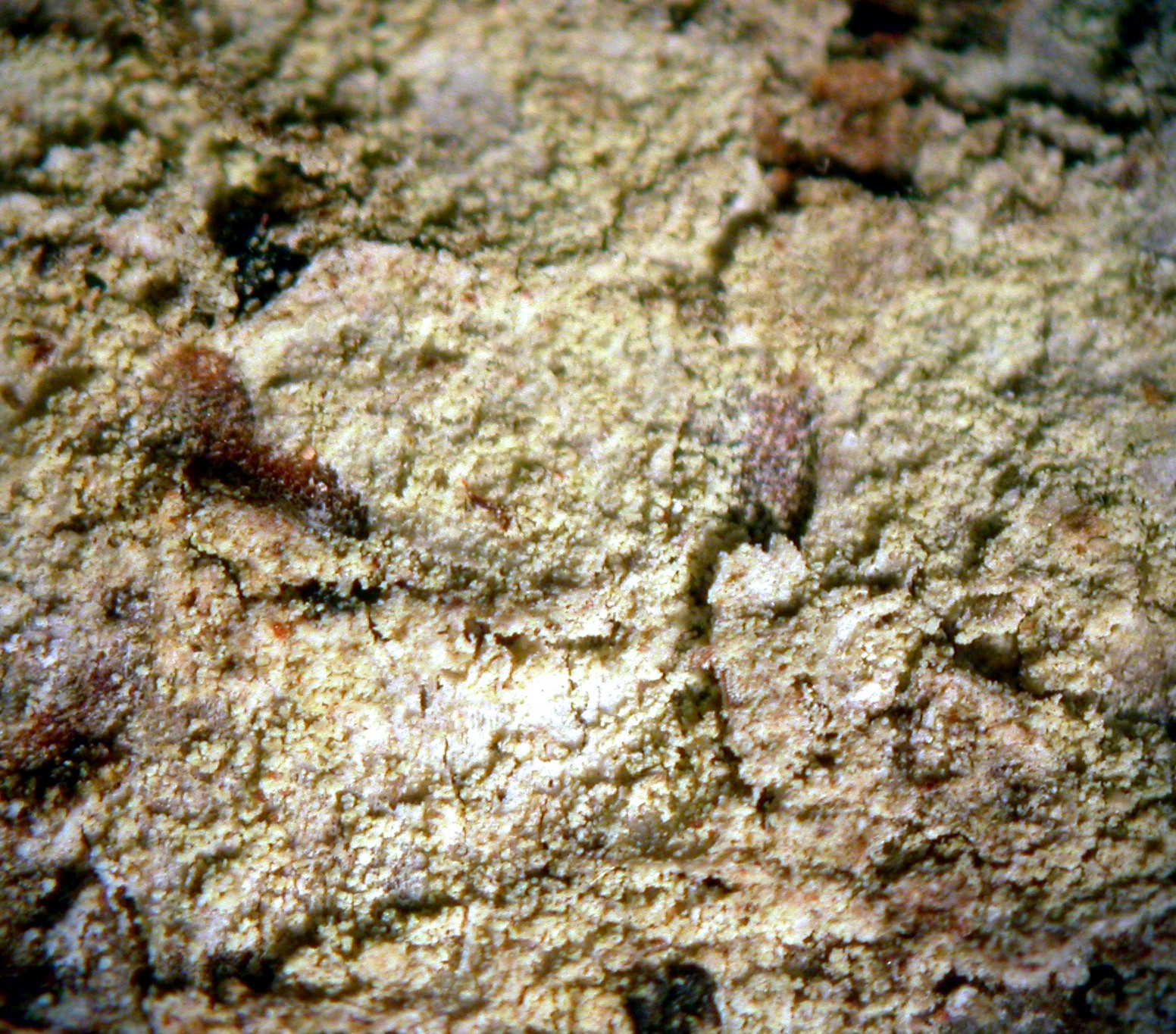
Juri Nascimbene; Owner: Department of Life Sciences, University of Trieste
05.02.2015