Lecidea leprosolimbata (Arnold) Poelt
Lettau ex Poelt, Mitt. Bot. Staatss. München, 3: 587, 1960. Basionym: Psora atrobrunnea var. leprosolimbata Arnold - Verh. zool.-bot. Ges. Wien, 39: 264, 1889.
Synonyms: Lecidea atrobrunnea f. leprosolimbata (Arnold) Lettau
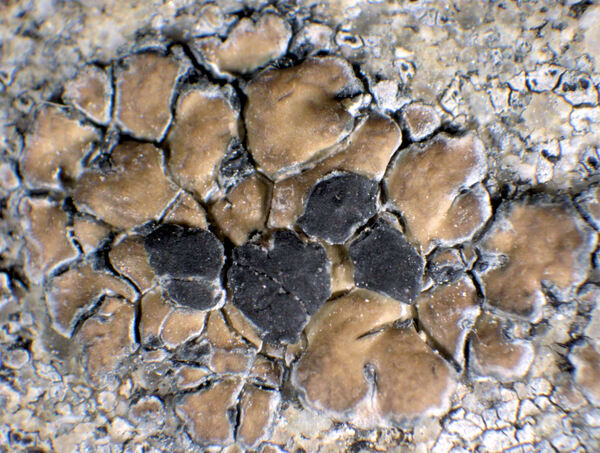
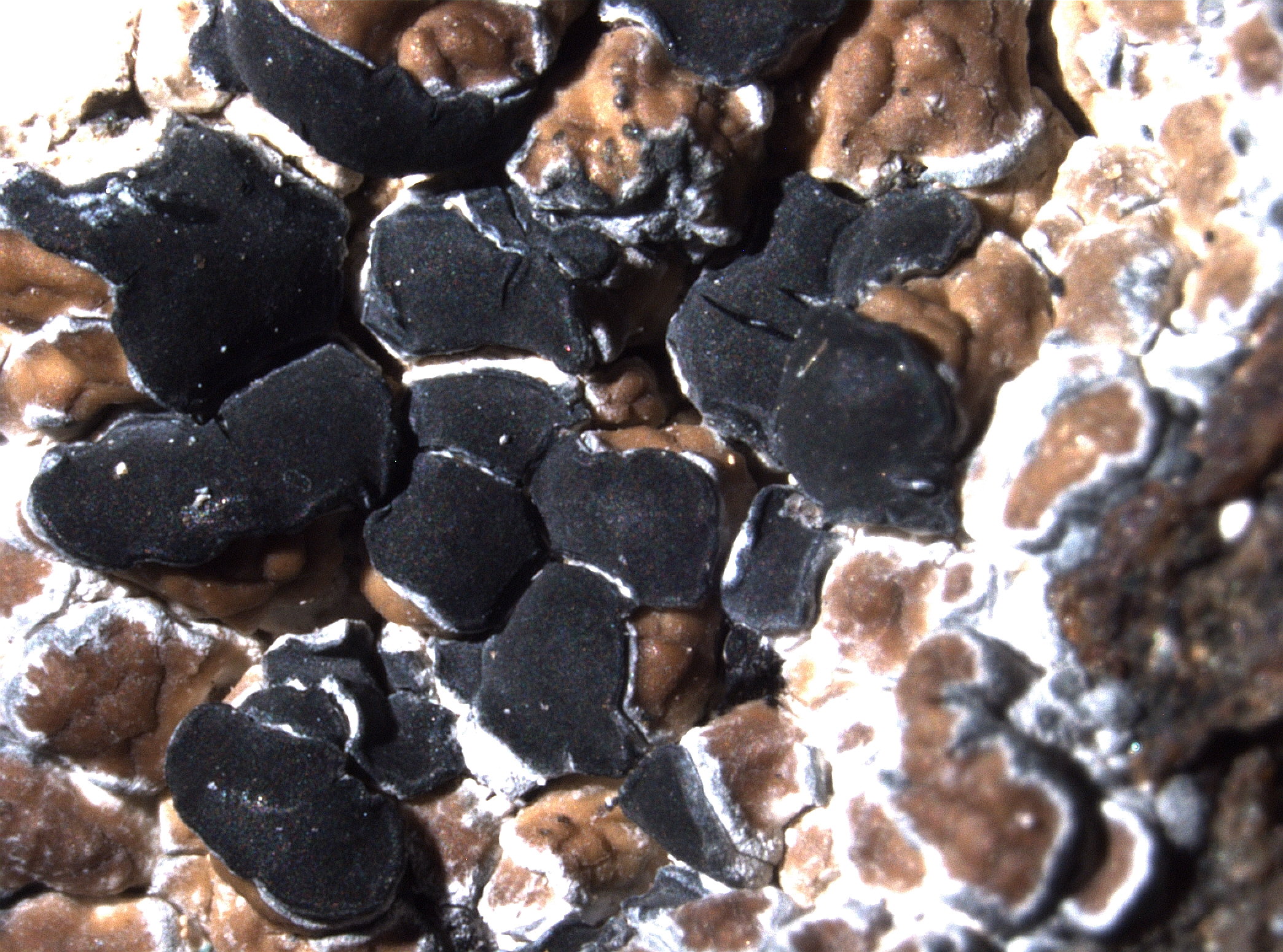
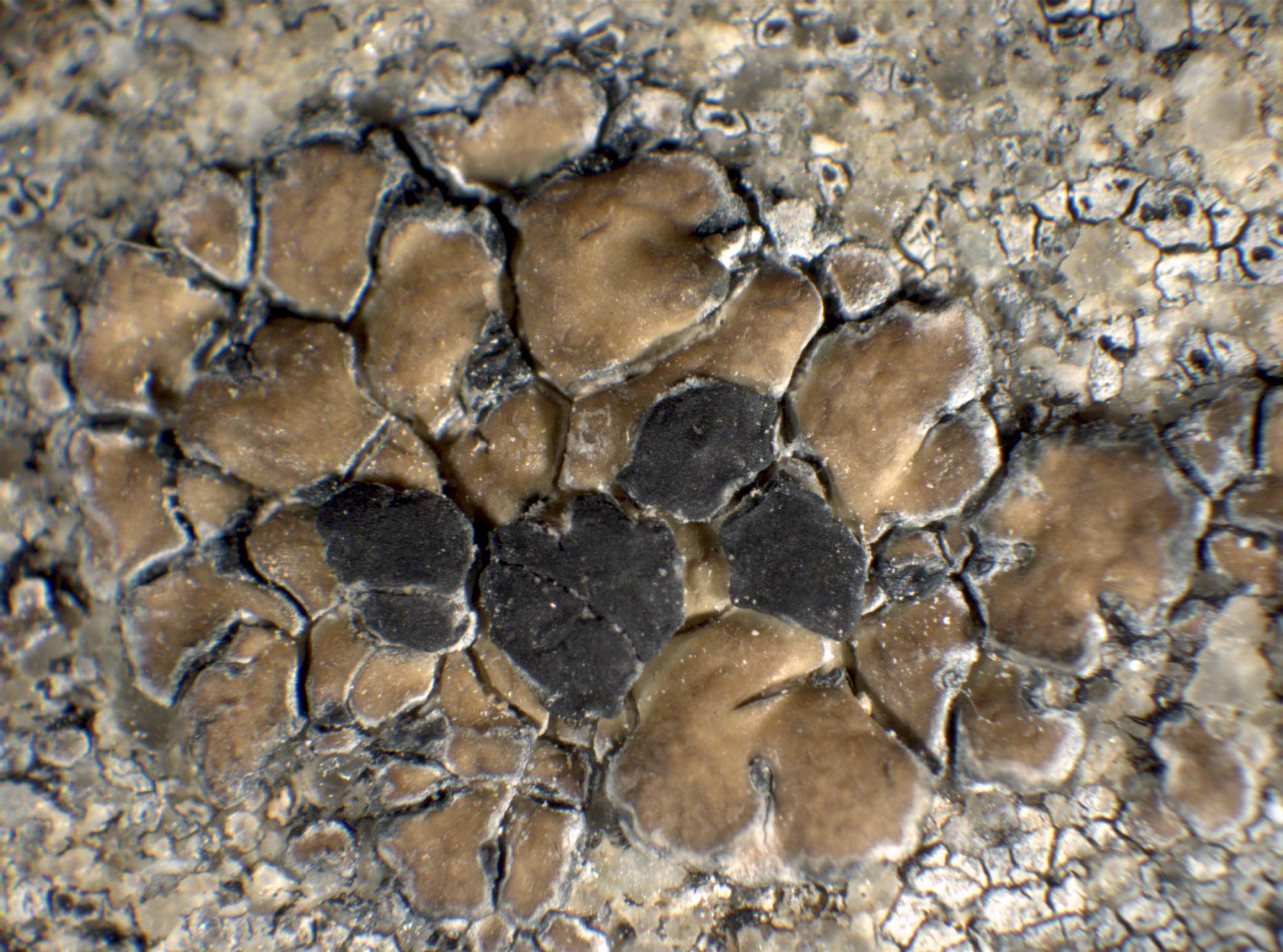
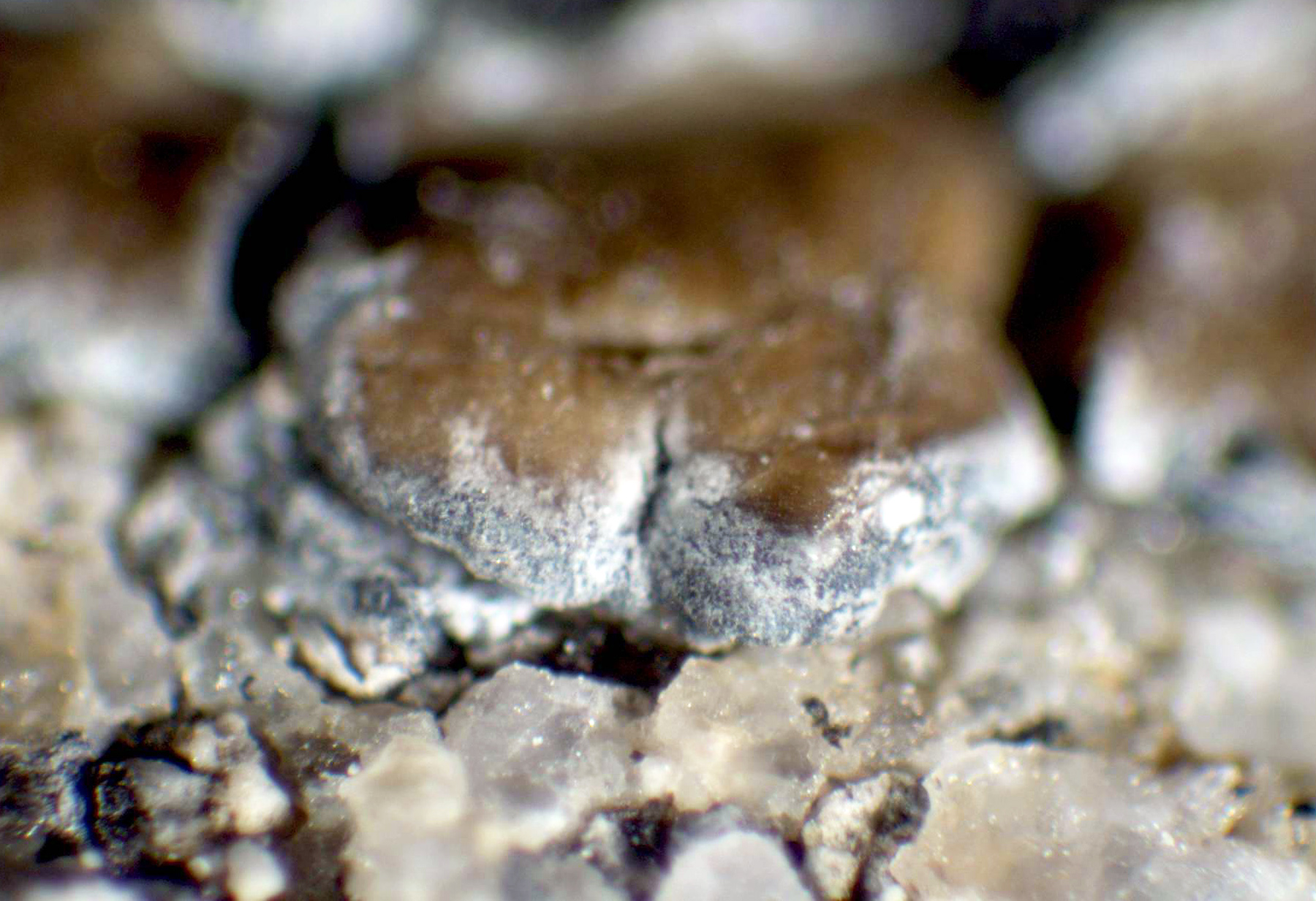
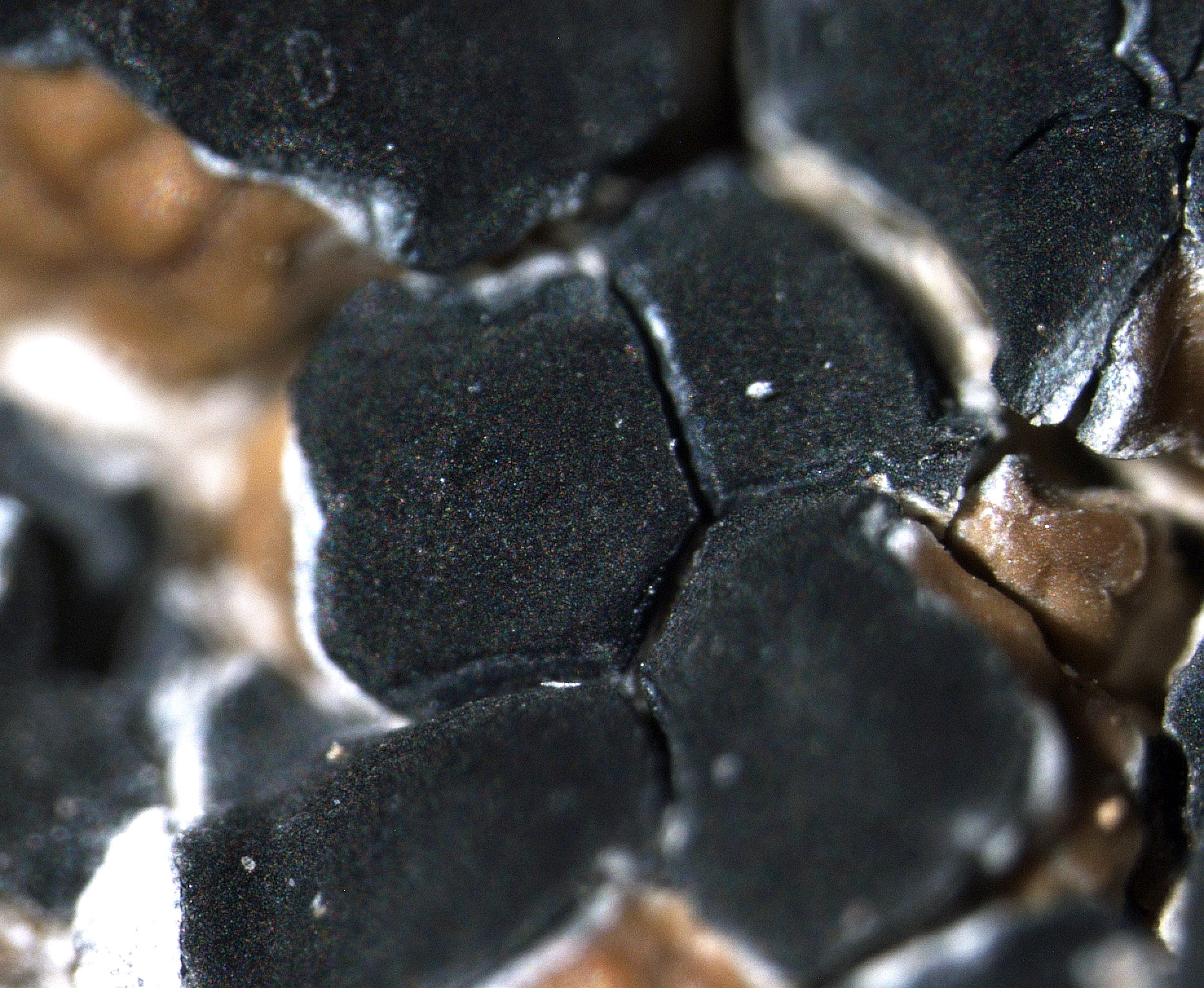
Description: Thallus crustose, episubstratic, 0.5-2 mm thick, areolate to subsquamulose, of flat to strongly convex, up to 3 mm wide, yellow-brown, copper-brown or dark reddish brown areoles with a whitish to grey edge (due to the production of thallospores), starting the life-cycle on the thalli of Bellemerea subcandida; prothallususually conspicuous, dark, rarely absent. Algal layer strongly discontinuous; medulla white, I+ intensely blue-violet, Apothecia lecideine, black, 0.5-1.5(-2) mm across, often clustered, slightly constricted base, with a flat to convex, rarely bluish-pruinose disc, and a persistent, raised, often slightly wavy proper margin. Proper exciple of parallel-radiating, 3-7 µm thick hyphae, blue- to green-black in outer part, colourless or very pale brown within; epithecium bright green, bluish-green, or olive-green; hymenium colourless to very pale greenish in upper part, 40-65 µm high, I+ blue; paraphyses coherent, usually simple, rarely anastomosing, 1.5-2.5 µm thick at mid-level, the apical cells clavate, 3-5 µm wide; hypothecium colourless to pale brown, I+ blue. Asci 8-spored, narrowly clavate, thick-walled, with a K/I+ pale blue tholus and a strongly amyloid, thin apical cushion, surrounded by a I+ blue outer layer, Lecidea-type. Ascospores 1-celled, hyaline, ellipsoid-oblong, with rounded ends, 5-13 x 3-7 µm. Pycnidia black, immersed with a usually irregular to graphidoid ostiolar region. Conidia bacilliform. Photobiont chlorococcoid. Spot tests K+ yellow turning red (needle-like crystals), C-, KC-, P+ yellow-orange. Chemistry: norstictic acid syndrome.
Growth form: Crustose
Substrata: rocks
Photobiont: green algae other than Trentepohlia
Subcontinental: restricted to areas with a dry-subcontinental climate (e.g. dry Alpine valleys, parts of Mediterranean Italy)
paras Bellemerea subcandida
Commonnes-rarity: (info)
Alpine belt: rare
Subalpine belt: rather rare
Montane belt: very rare
Dry submediterranean belt: absent
Humid submediterranean belt: absent
Padanian area: absent
pH of the substrata:
1 2 3 4 5

Solar irradiation:
1 2 3 4 5
Aridity:
1 2 3 4 5
Eutrophication:
1 2 3 4 5
Poleotolerance:
0 1 2 3
Altitudinal distribution:
1 2 3 4 5 6
Rarity
absent
extremely rare
very rare
rare
rather rare
rather common
common
very common
extremely common
Loading data...
Occurrence data
Predictive map
P.L. Nimis CC BY-SA 4.0
TSB 33667
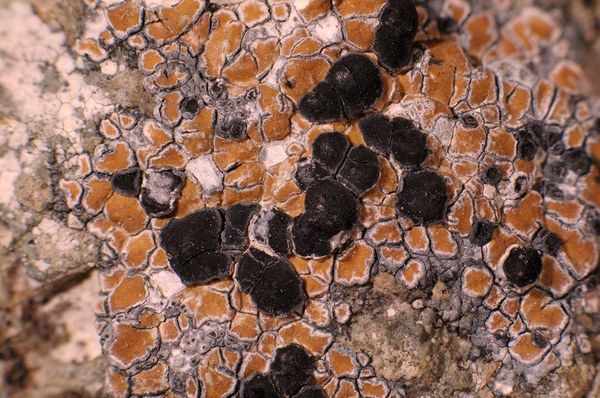
Einar Timdal - Source: http://nhm2.uio.no/lav/web/index.html - CC BY-NC
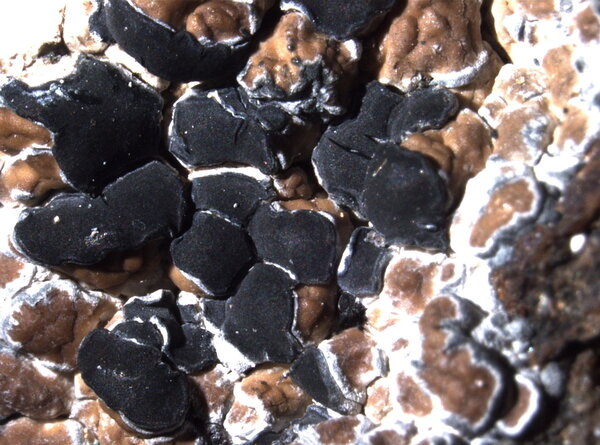
Pier Luigi Nimis CC BY-SA 4.0
TSB 41625
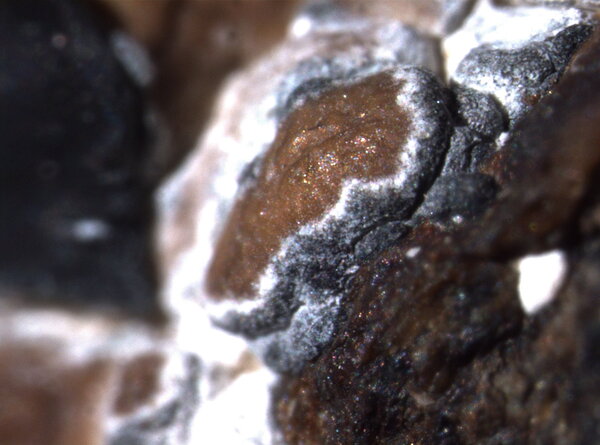
Pier Luigi Nimis CC BY-SA 4.0
TSB 41625
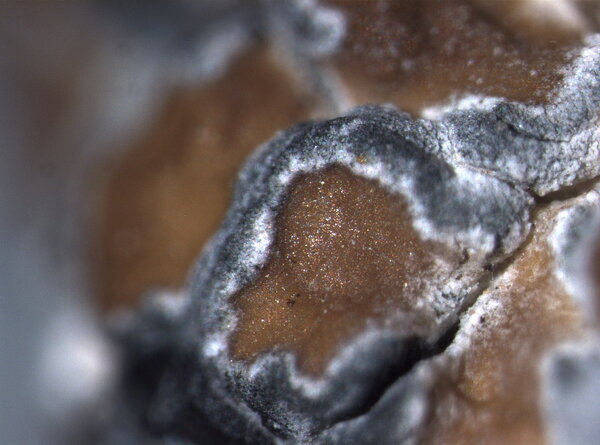
Pier Luigi Nimis CC BY-SA 4.0
TSB 41625
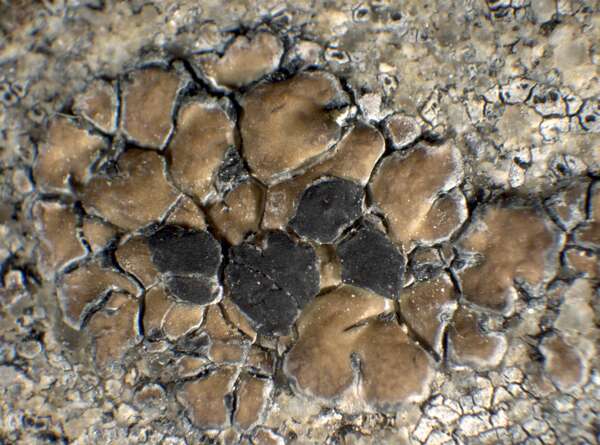
P.L. Nimis; Owner: Department of Life Sciences, University of Trieste
Herbarium: TSB (33667)
2001/11/22
with remains of the host, Bellemerea subcandida
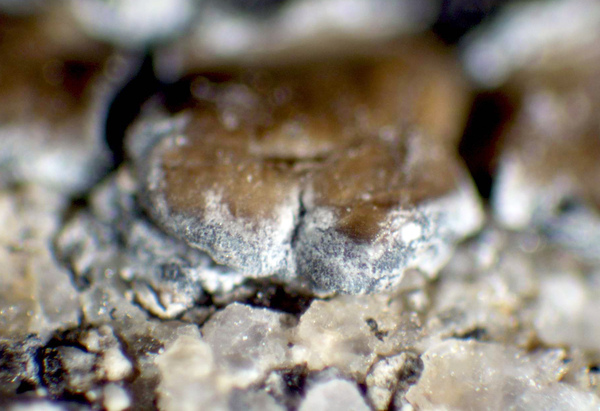
P.L. Nimis CC BY-SA 04
TSB 33667
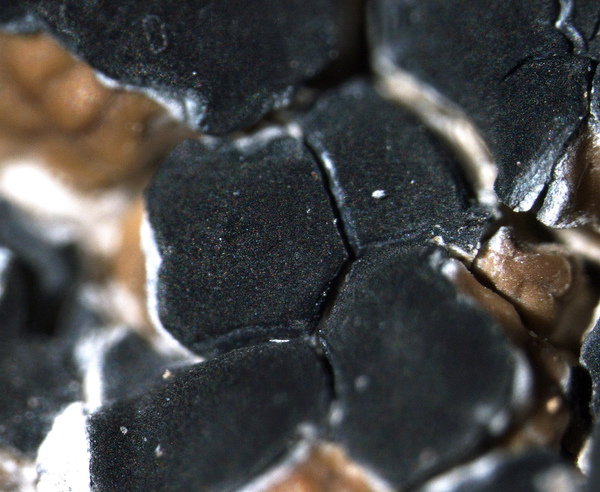
P.L. Nimis CC BY-SA 04
TSB 41625
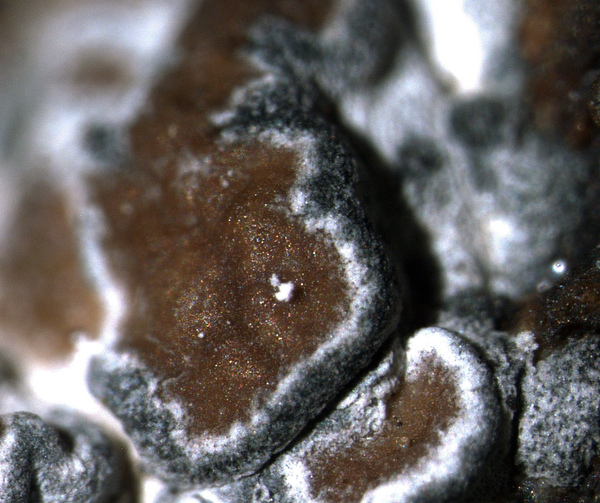
P.L. Nimis CC BY-SA 04
TSB 41625
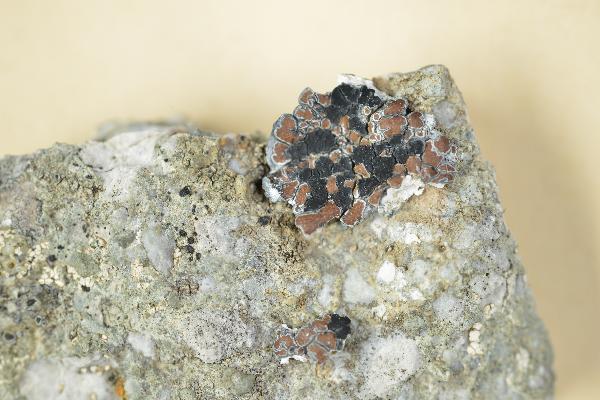
Source:https://nhm2.uio.no/typephotos/lichens/arkiv/O-L-001221d.jpg
ITALY: auf der Höhe des Wiesenberges (Vièsena) bei Predazzo in Südtirol, 1888.07.23, Arnold, F. - ISOTYPE
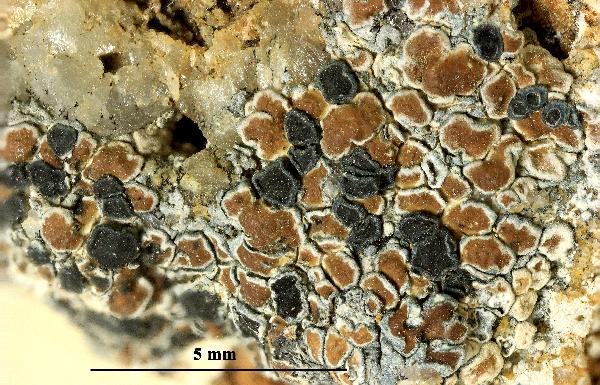
Felix Schumm - CC BY 4.0
[VZ1059], Gallia. Savoie. Reservatum nationale Vanoise, inter Super-
Tignes et Col de la Leisse, 2700 m. Ad saxa dolomitica. Leg. J. Asta et
Cl. Roux, 23.7.1971. EX A. VEZDA LICHENES SELECTI EXSICCATI NR.
1059. - As Lecidea atrobrunnea f. leprosolimbata
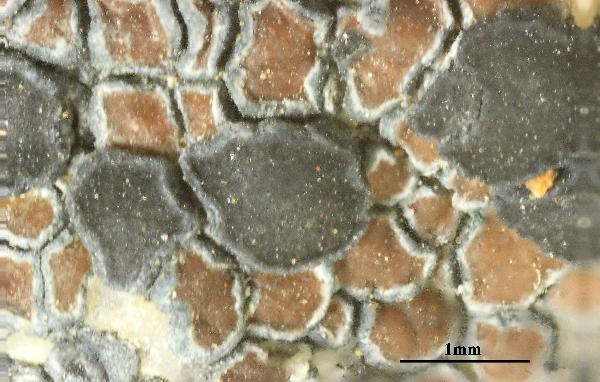
Felix Schumm - CC BY 4.0
[VZ1059], Gallia. Savoie. Reservatum nationale Vanoise, inter Super-
Tignes et Col de la Leisse, 2700 m. Ad saxa dolomitica. Leg. J. Asta et
Cl. Roux, 23.7.1971. EX A. VEZDA LICHENES SELECTI EXSICCATI NR.
1059. - As Lecidea atrobrunnea f. leprosolimbata
Growth form: Crustose
Substrata: rocks
Photobiont: green algae other than Trentepohlia
Subcontinental: restricted to areas with a dry-subcontinental climate (e.g. dry Alpine valleys, parts of Mediterranean Italy)
paras Bellemerea subcandida
Commonnes-rarity: (info)
Alpine belt: rare
Subalpine belt: rather rare
Montane belt: very rare
Dry submediterranean belt: absent
Humid submediterranean belt: absent
Padanian area: absent
pH of the substrata:
| 1 | 2 | 3 | 4 | 5 |
Solar irradiation:
| 1 | 2 | 3 | 4 | 5 |
Aridity:
| 1 | 2 | 3 | 4 | 5 |
Eutrophication:
| 1 | 2 | 3 | 4 | 5 |
Poleotolerance:
| 0 | 1 | 2 | 3 |
Altitudinal distribution:
| 1 | 2 | 3 | 4 | 5 | 6 |
Rarity
absent
extremely rare
very rare
rare
rather rare
rather common
common
very common
extremely common
Loading data...
Occurrence data
Predictive map
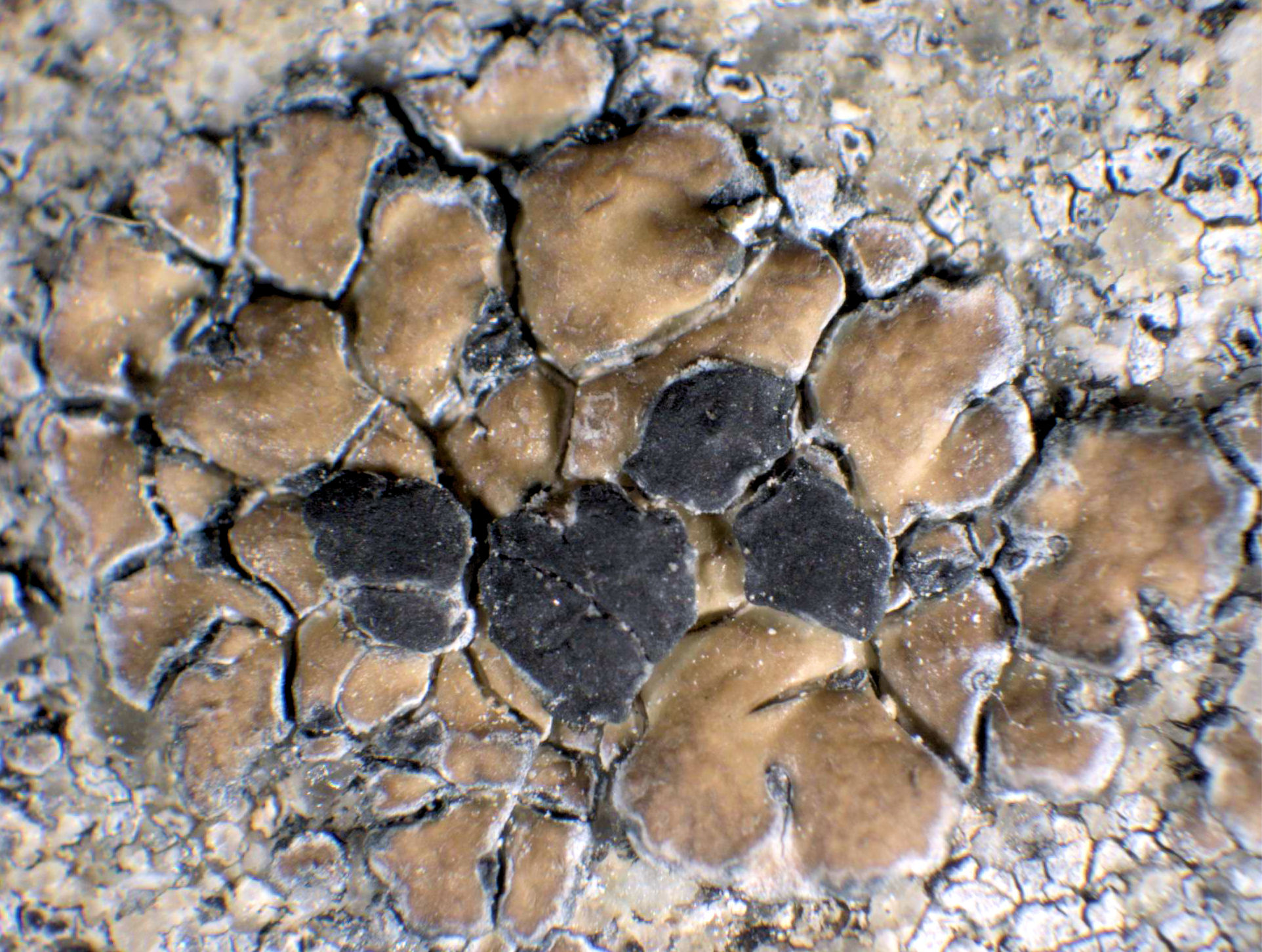
P.L. Nimis CC BY-SA 4.0
TSB 33667

Einar Timdal - Source: http://nhm2.uio.no/lav/web/index.html - CC BY-NC
Pier Luigi Nimis CC BY-SA 4.0
TSB 41625

Pier Luigi Nimis CC BY-SA 4.0
TSB 41625

Pier Luigi Nimis CC BY-SA 4.0
TSB 41625
P.L. Nimis; Owner: Department of Life Sciences, University of Trieste
Herbarium: TSB (33667)
2001/11/22
with remains of the host, Bellemerea subcandida
P.L. Nimis CC BY-SA 04
TSB 33667
P.L. Nimis CC BY-SA 04
TSB 41625
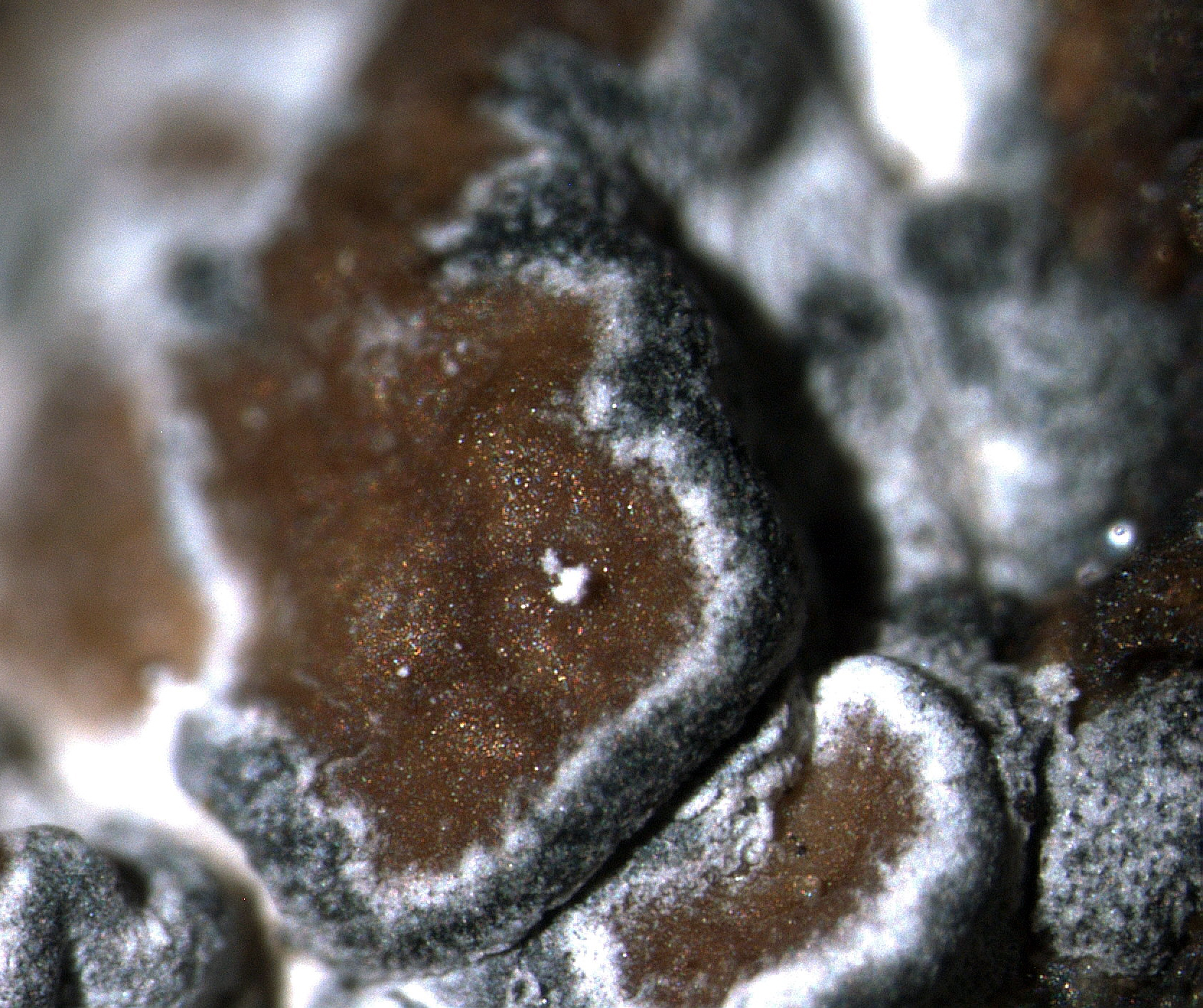
P.L. Nimis CC BY-SA 04
TSB 41625

Source:https://nhm2.uio.no/typephotos/lichens/arkiv/O-L-001221d.jpg
ITALY: auf der Höhe des Wiesenberges (Vièsena) bei Predazzo in Südtirol, 1888.07.23, Arnold, F. - ISOTYPE
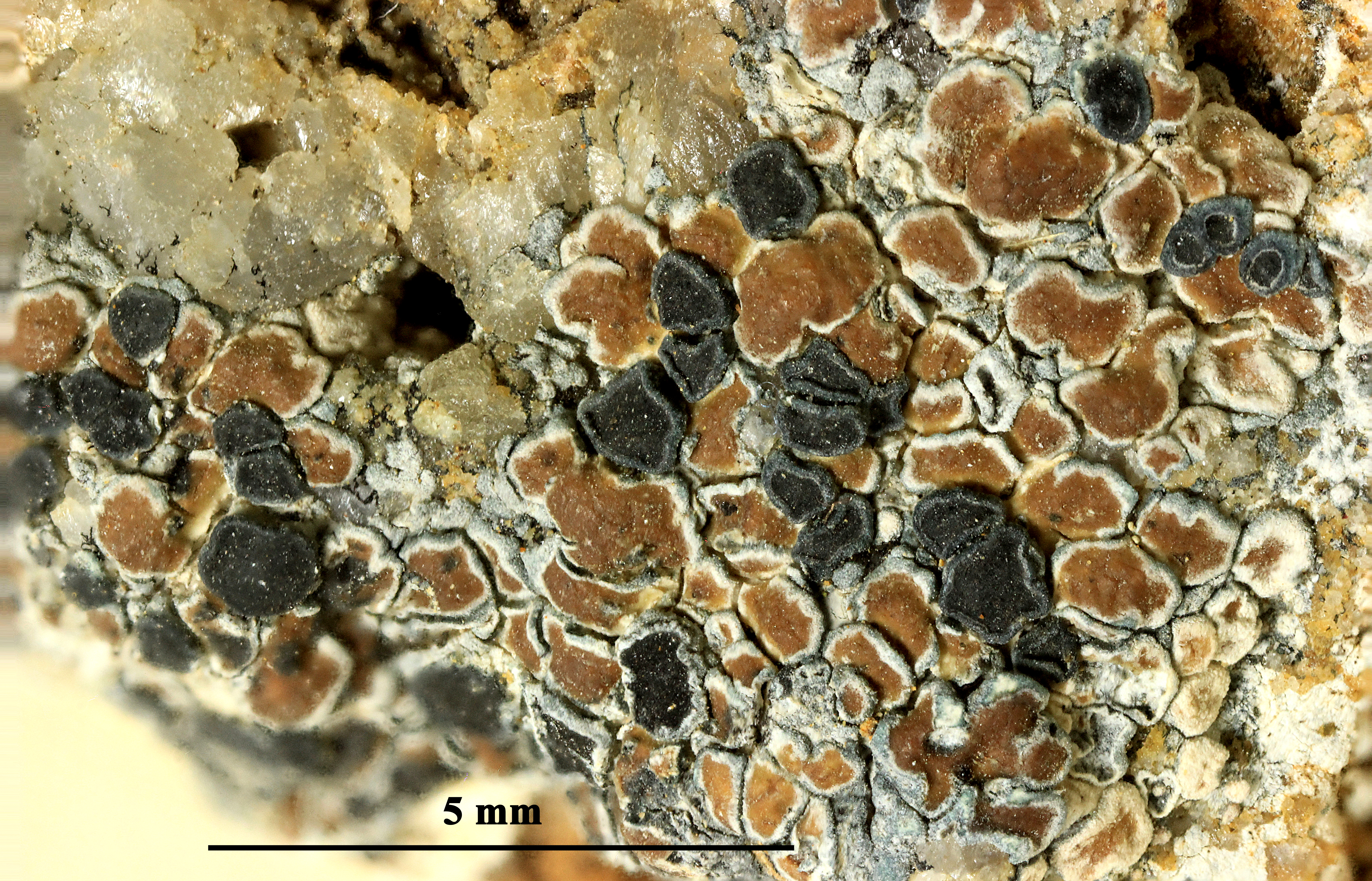
Felix Schumm - CC BY 4.0
[VZ1059], Gallia. Savoie. Reservatum nationale Vanoise, inter Super- Tignes et Col de la Leisse, 2700 m. Ad saxa dolomitica. Leg. J. Asta et Cl. Roux, 23.7.1971. EX A. VEZDA LICHENES SELECTI EXSICCATI NR. 1059. - As Lecidea atrobrunnea f. leprosolimbata