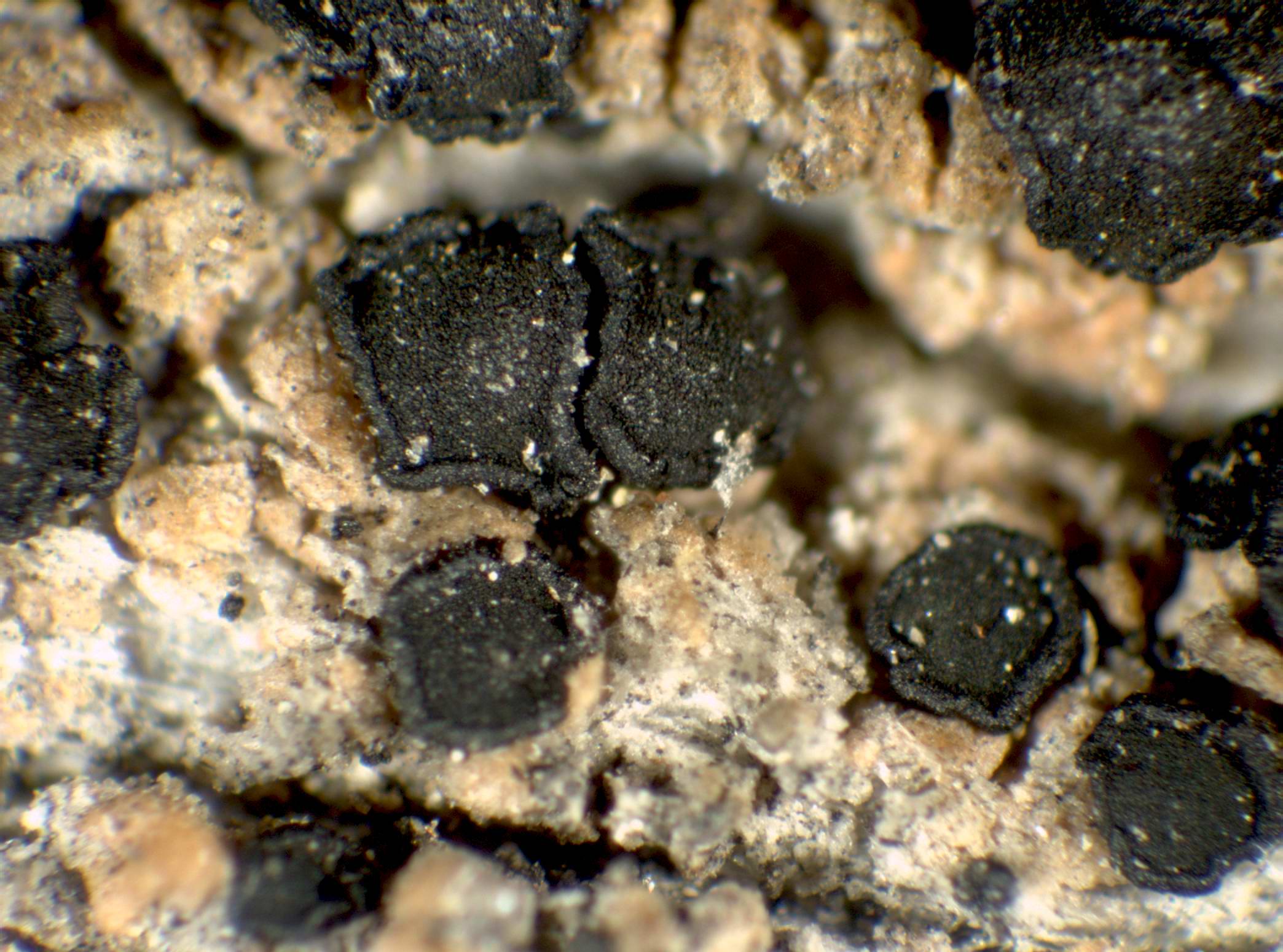
Lecidella pulveracea (Schaer.) P. Syd.
Die Flecht. Deutschl.: 211, 1887. Basionym: Lecidea enteroleuca var. pulveracea Flörke ex Schaer. - Enumer. Critic. Lich. Europ.: 128, 1850.
Synonyms: Biatora pulveracea (Schaer.) Stein.; Lecidea dubia Turner & Borrer non Schaer.; Lecidea pulveracea (Schaer.) Th. Fr.
Description: Thallus subleprose, consisting in a thin to rather thick, continuous or cracked crust of farinose, to 0.1 mm thick, pale yellowish white to yellowish grey blastidia. Apothecia very rare, lecideine, 0.3-0.8 mm across, at first immersed in the thallus, then sessile, with flat to finally convex, black disc and a thin, often wavy, finally excluded proper margin. Proper exciple dark blue-green throughout; epithecium dark blue-green, granular; hymenium colourless, 70-110 μm high, containing crystals; paraphyses easily made free in K, mostly simple, c. 1 μm thick at mid-level, the apical cells slightly swollen; hypothecium pale yellow to golden brown. Asci 8-spored, clavate, with an intensely K/I+ blue tholus penetrated by a faintly amyloid, broadly cylindrical axial mass, and a poorly developed ocular chamber, the wall K/I-, surrounded by a K/I+ blue outer layer, approaching the Lecanora-type. Ascospores 1-celled, hyaline, ellipsoid to ovoid, 8-13(-17) x 4-7(-9) μm. Photobiont chlorococcoid. Spot tests: thallus (blastidia) K+ yellow, C+ orange, KC+ orange, P-. Chemistry: 2,7-dichlor-6-O-methylnorlichenxanthone.
Growth form: Crustose
Substrata: bark
Photobiont: green algae other than Trentepohlia
Reproductive strategy: mainly asexual, by soredia, or soredia-like structures (e.g. blastidia)
Commonnes-rarity: (info)
Alpine belt: absent
Subalpine belt: absent
Montane belt: very rare
Dry submediterranean belt: extremely rare
Humid submediterranean belt: absent
Padanian area: absent
pH of the substrata:
1 2 3 4 5

Solar irradiation:
1 2 3 4 5
Aridity:
1 2 3 4 5
Eutrophication:
1 2 3 4 5
Poleotolerance:
0 1 2 3
Altitudinal distribution:
1 2 3 4 5 6
Rarity
absent
extremely rare
very rare
rare
rather rare
rather common
common
very common
extremely common
Loading data...
Occurrence data
Predictive map
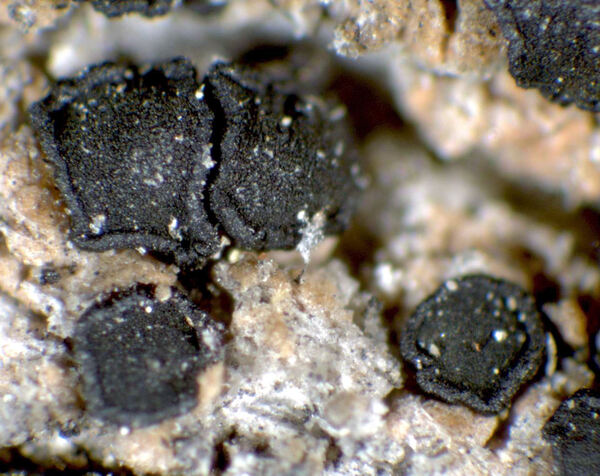
P.L. Nimis CC BY-SA 4.0
TSB 15106
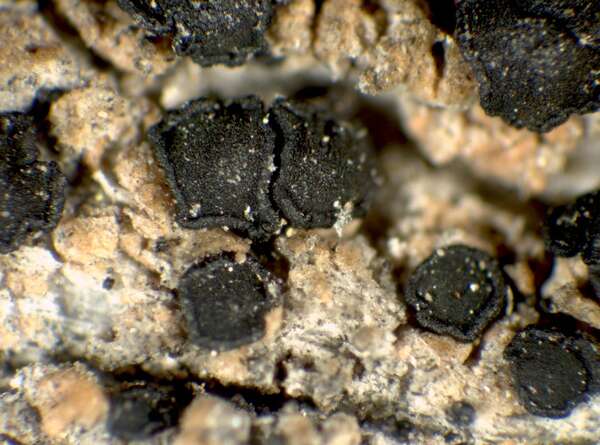
P.L. Nimis; Owner: Department of Life Sciences, University of Trieste
Herbarium: TSB (15106)
2001/12/12
Growth form: Crustose
Substrata: bark
Photobiont: green algae other than Trentepohlia
Reproductive strategy: mainly asexual, by soredia, or soredia-like structures (e.g. blastidia)
Commonnes-rarity: (info)
Alpine belt: absent
Subalpine belt: absent
Montane belt: very rare
Dry submediterranean belt: extremely rare
Humid submediterranean belt: absent
Padanian area: absent
pH of the substrata:
| 1 | 2 | 3 | 4 | 5 |
Solar irradiation:
| 1 | 2 | 3 | 4 | 5 |
Aridity:
| 1 | 2 | 3 | 4 | 5 |
Eutrophication:
| 1 | 2 | 3 | 4 | 5 |
Poleotolerance:
| 0 | 1 | 2 | 3 |
Altitudinal distribution:
| 1 | 2 | 3 | 4 | 5 | 6 |
Rarity
absent
extremely rare
very rare
rare
rather rare
rather common
common
very common
extremely common
Loading data...
Occurrence data
Predictive map
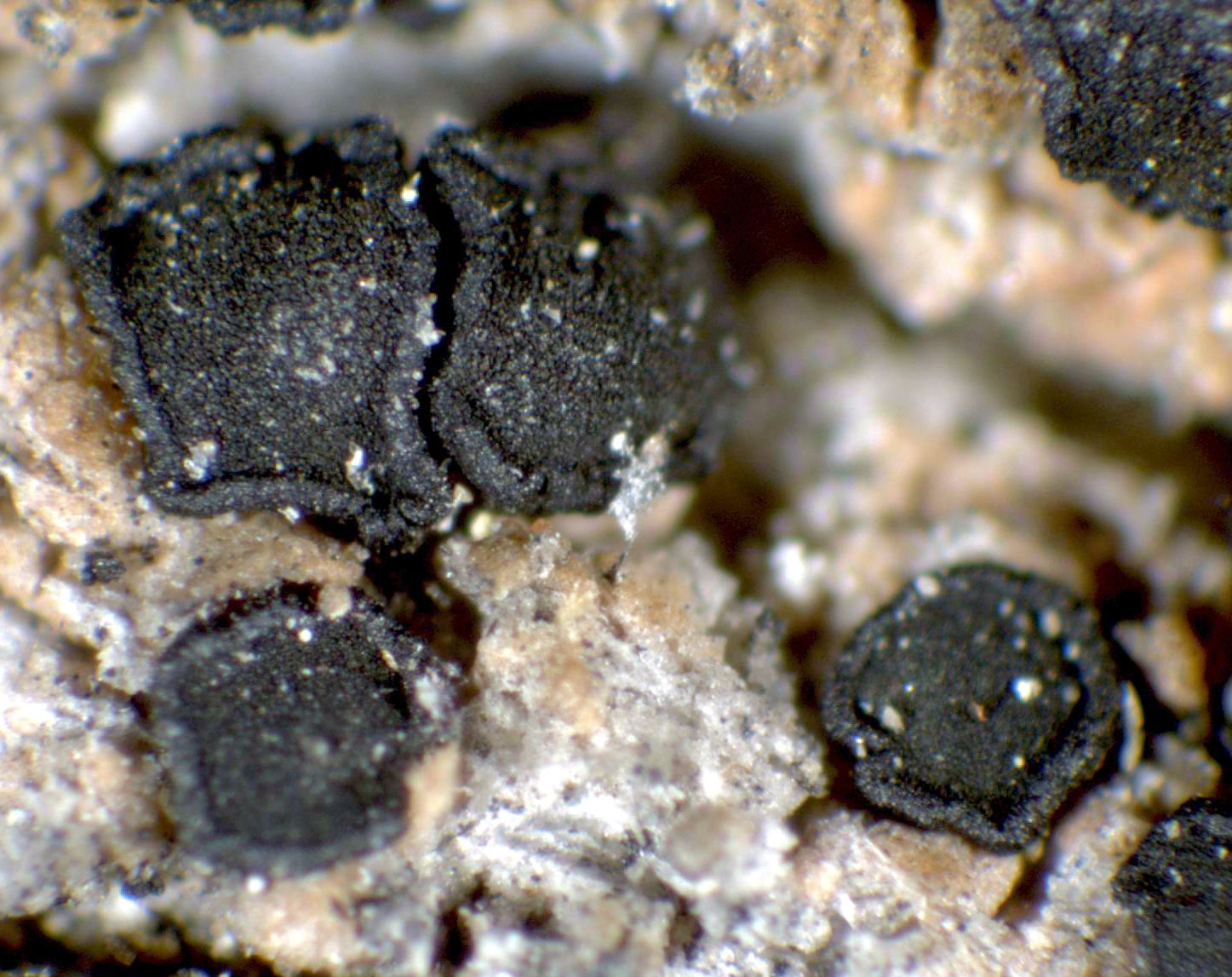
P.L. Nimis CC BY-SA 4.0
TSB 15106