Lepraria isidiata (Llimona) Llimona & A. Crespo
in Wirth & al., Guìa de Campo de los Liquenes, Musgos y Hepàticas: 309, 2004. Basionym: Lepraria crassissima var. isidiata Llimona in Vězda - Lich. Sel. Exs., 47: 7 (nr. 1175), 1973.
Synonyms:
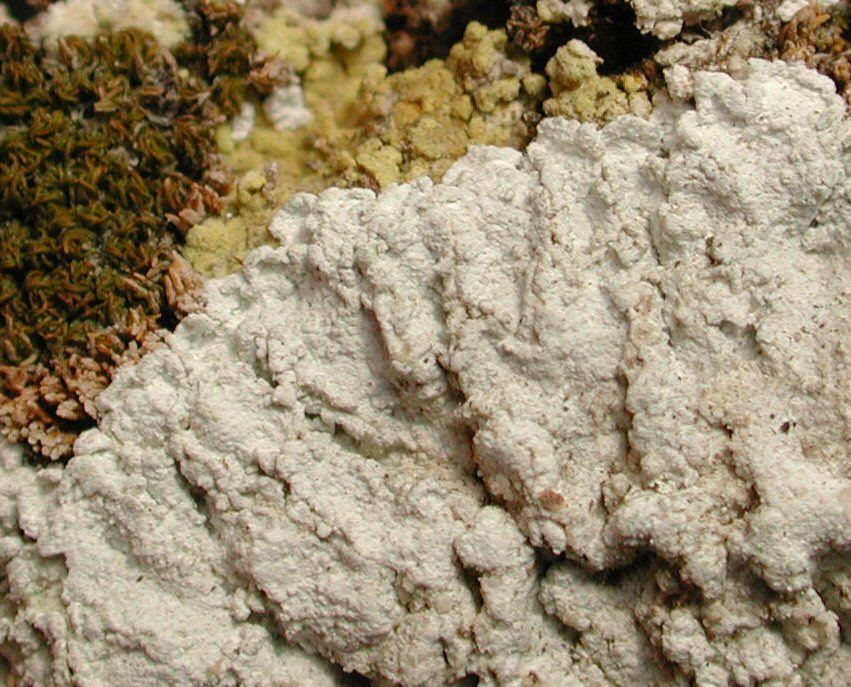
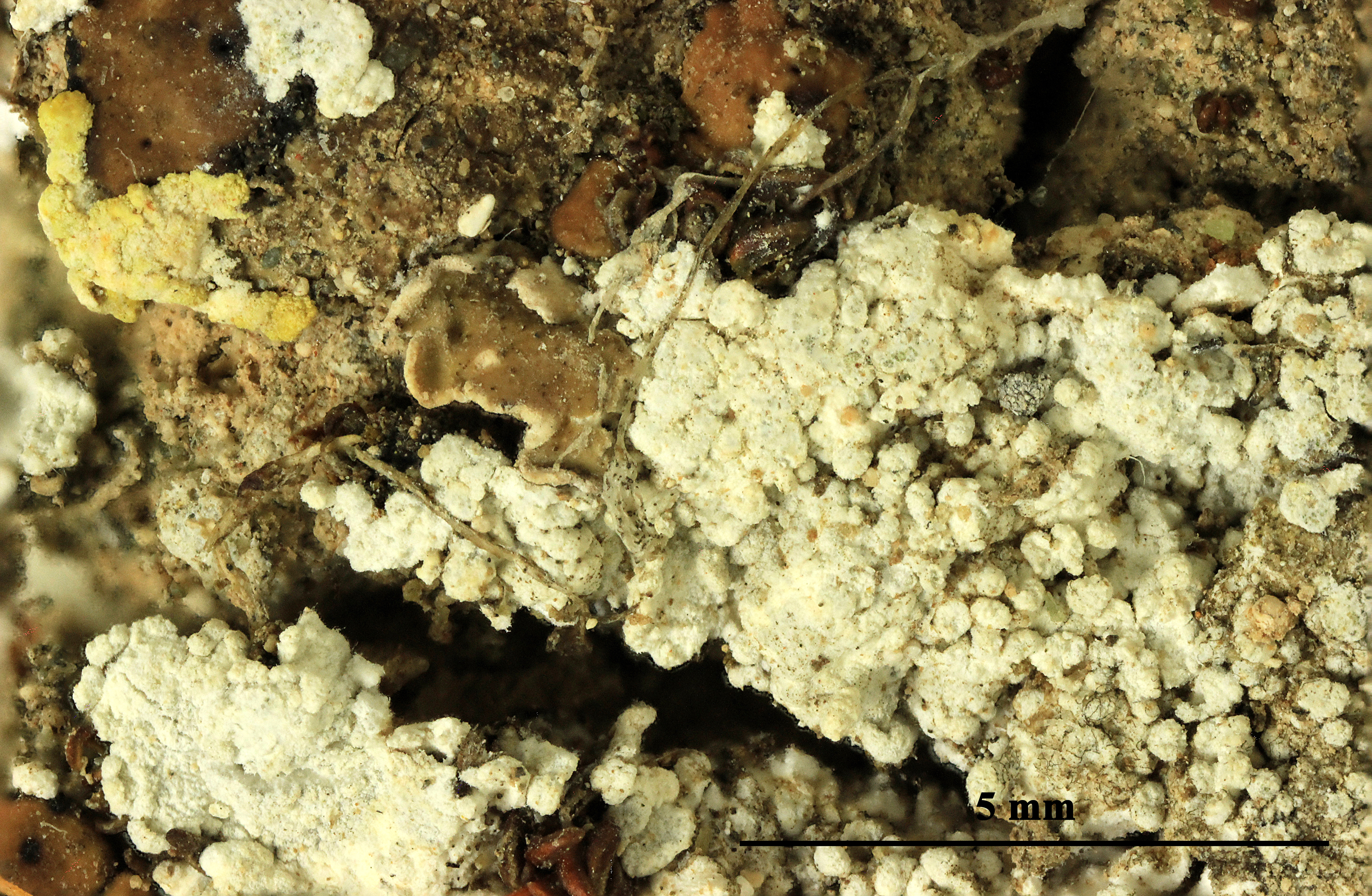
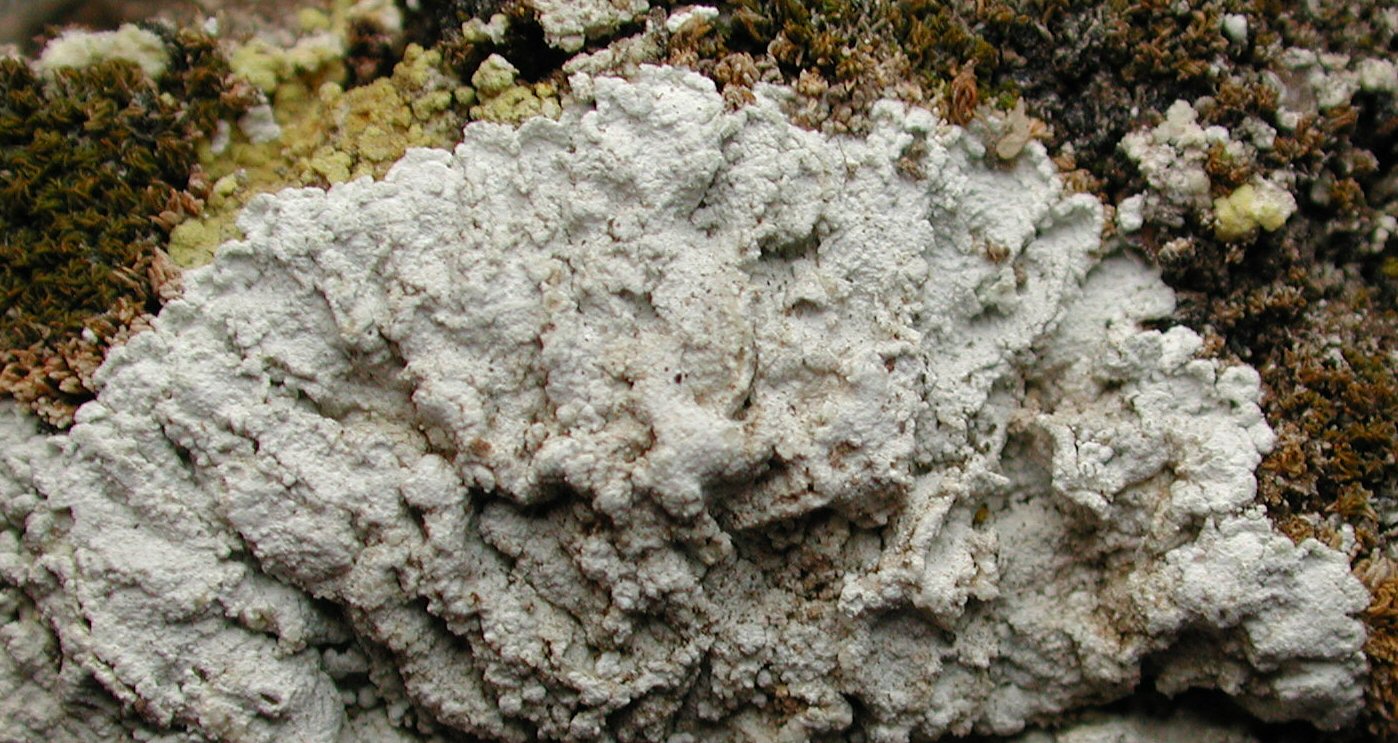
Description: Thallus crustose-subplacodioid to subsquamulose, subleprose, white, pale grey to dark grey in central parts, (0.3-)0.5-1.5 mm thick, well delimited, forming regular, robust up to 8 cm wide rosettes. Marginal lobes well-developed, pruinose, with raised, thick margins, sometimes with subcorticate, paraplectenchymatous patches; hypothallus usually poorly developed, formed by pale brown, hyphae reacting K-; prothallus absent. Central part of thallus coarsely granular, often slightly convex, loosely attached, with a chalky consistency due to rich deposits of calcium oxalate crystals. Granules isidioid, subspherical to ellipsoid, 0.3-0.5(-0.9) mm thick, with a compact outer layer of heavily encrusted hyphae, and no or poorly developed, 40-50 μm long projecting hyphae, eventually dissolving into soredia-like granules. Medulla white, compact; hypothallus compact, composed of tightly intertwined hyphae. Photobiont chlorococcoid. Spot tests: thallus K+ yellow or K-, C-, KC- or KC+ yellow, P+ reddish orange, UV-. Chemistry: chemotype 1: atranorin, protocetraric, fumarprotocetraric and roccellic acids; chemotype 2: atranorin, protocetraric and roccellic acids; chemotype 3: atranorin, fumarprotocetraric and roccellic acids.
Growth form: Leprose
Substrata: soil, terricolous mosses, and plant debris
Photobiont: green algae other than Trentepohlia
Reproductive strategy: mainly asexual, by soredia, or soredia-like structures (e.g. blastidia)
Commonnes-rarity: (info)
Alpine belt: absent
Subalpine belt: absent
Montane belt: absent
Dry submediterranean belt: rare
Humid submediterranean belt: rather rare
Padanian area: absent
pH of the substrata:
1 2 3 4 5

Solar irradiation:
1 2 3 4 5
Aridity:
1 2 3 4 5
Eutrophication:
1 2 3 4 5
Poleotolerance:
0 1 2 3
Altitudinal distribution:
1 2 3 4 5 6
Rarity
absent
extremely rare
very rare
rare
rather rare
rather common
common
very common
extremely common
Loading data...
Occurrence data
Predictive map
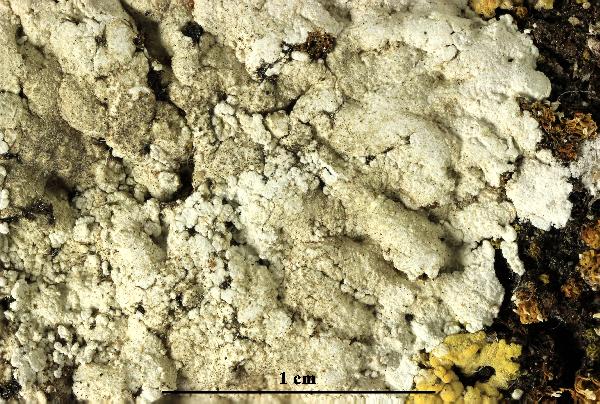
Felix Schumm - CC BY 4.0
[VZ1175], Hispania. Catalonia. Prope Igualada loco Coll del Guix
dicto, 400 m. Supra terram ad saxa gypsacea septentrionalem et occidentem
versus spectantia, 30°-90° inclinata. Leg. Llimona, 2.11.1972.
EX A. VEZDA LICHENES SELECTI EXSICCATI NR. 1175.
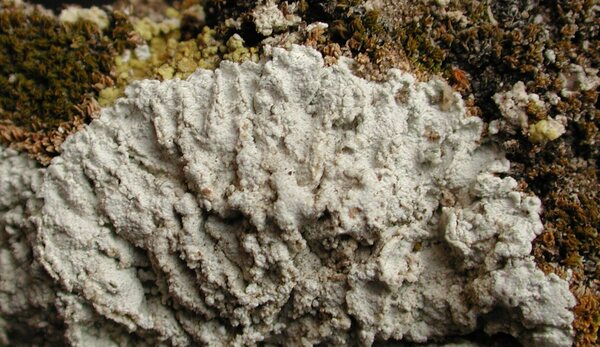
ELena Pittao - CC BY-SA 4.0
Herbarium: TSB 36930
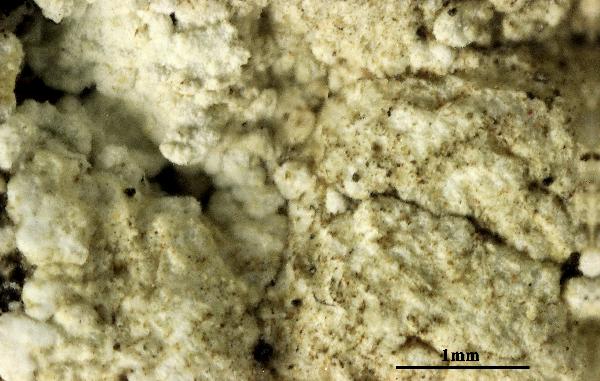
Felix Schumm - CC BY 4.0
[VZ1175], Hispania. Catalonia. Prope Igualada loco Coll del Guix
dicto, 400 m. Supra terram ad saxa gypsacea septentrionalem et occidentem
versus spectantia, 30°-90° inclinata. Leg. Llimona, 2.11.1972.
EX A. VEZDA LICHENES SELECTI EXSICCATI NR. 1175.
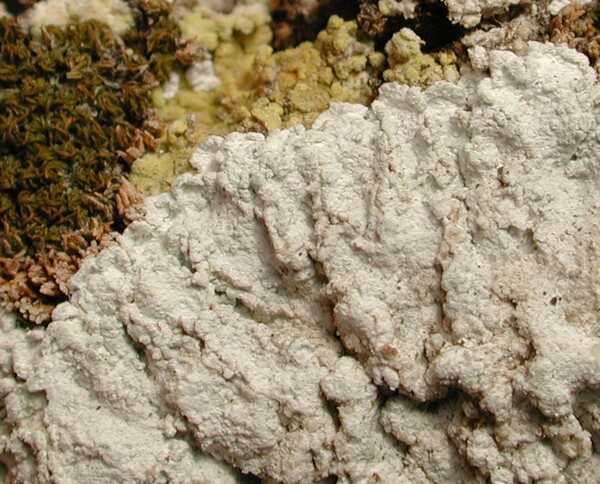
ELena Pittao - CC BY-SA 4.0
Herbarium: TSB 36930
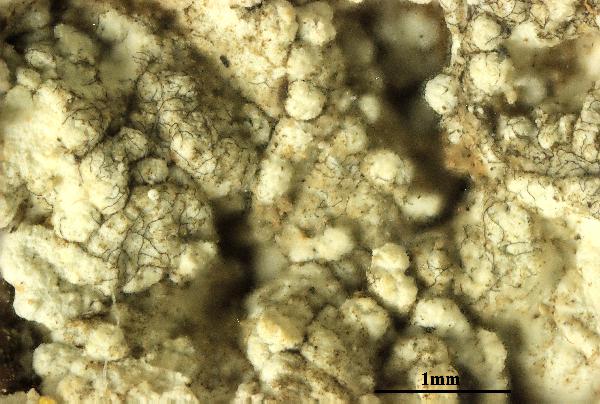
Felix Schumm - CC BY 4.0
[VZ2192], Cyprus. Larnaca, in vicinitate pagi Oroklini, haud procul a
litore, 5 m . Ad saxa conglomerata loco subgypsaceo. Leg. A. Vezda,
25.6.1987. EX A. VEZDA LICHENES SELECTI EXSICCATI NR. 2192. As Lepraria crassissima isidiata
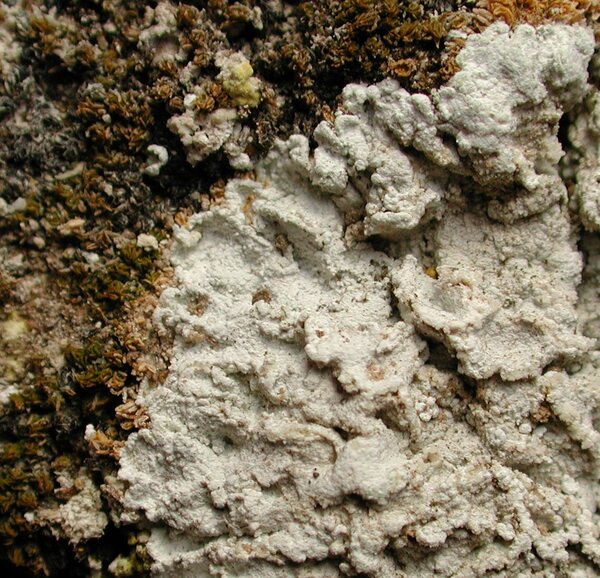
ELena Pittao - CC BY-SA 4.0
Herbarium: TSB 36930
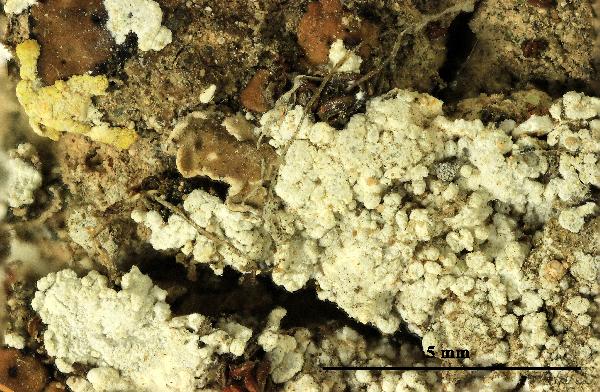
Felix Schumm - CC BY 4.0
[VZ2192], Cyprus. Larnaca, in vicinitate pagi Oroklini, haud procul a
litore, 5 m . Ad saxa conglomerata loco subgypsaceo. Leg. A. Vezda,
25.6.1987. EX A. VEZDA LICHENES SELECTI EXSICCATI NR. 2192. As Lepraria crassissima isidiata
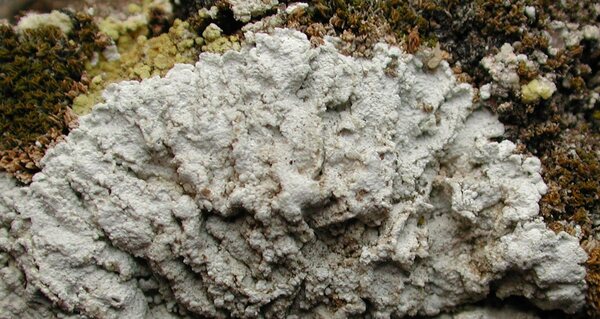
ELena Pittao - CC BY-SA 4.0
Herbarium: TSB 36930
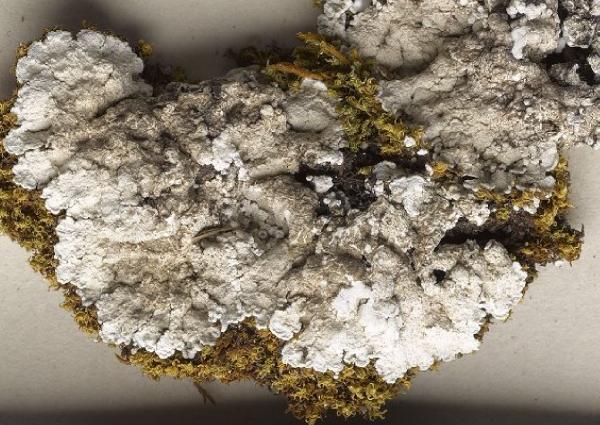
Detail from: https://gzu.jacq.org/GZU000291947
GZU000291947 - Collector Llimona,X. Vězda, A.: Lichenes Selecti Exsiccati 1175
Date 1972-11-02
Location Spain / Cataluña
Label Hispania. Catalonia. Prope Igualada loco Coll del Guix dicto ; Alt. 400 m
Habitat Supra terram et saxa gypsacea septentrionem et occidentem versus spectantia, 30° – 90° inclinata.
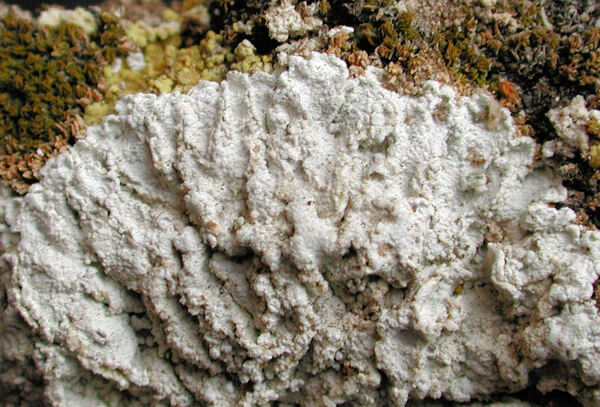
E. Pittao CC BY-SA 4.0
TSB 36930
Growth form: Leprose
Substrata: soil, terricolous mosses, and plant debris
Photobiont: green algae other than Trentepohlia
Reproductive strategy: mainly asexual, by soredia, or soredia-like structures (e.g. blastidia)
Commonnes-rarity: (info)
Alpine belt: absent
Subalpine belt: absent
Montane belt: absent
Dry submediterranean belt: rare
Humid submediterranean belt: rather rare
Padanian area: absent
pH of the substrata:
| 1 | 2 | 3 | 4 | 5 |
Solar irradiation:
| 1 | 2 | 3 | 4 | 5 |
Aridity:
| 1 | 2 | 3 | 4 | 5 |
Eutrophication:
| 1 | 2 | 3 | 4 | 5 |
Poleotolerance:
| 0 | 1 | 2 | 3 |
Altitudinal distribution:
| 1 | 2 | 3 | 4 | 5 | 6 |
Rarity
absent
extremely rare
very rare
rare
rather rare
rather common
common
very common
extremely common
Loading data...
Occurrence data
Predictive map

Felix Schumm - CC BY 4.0
[VZ1175], Hispania. Catalonia. Prope Igualada loco Coll del Guix dicto, 400 m. Supra terram ad saxa gypsacea septentrionalem et occidentem versus spectantia, 30°-90° inclinata. Leg. Llimona, 2.11.1972. EX A. VEZDA LICHENES SELECTI EXSICCATI NR. 1175.
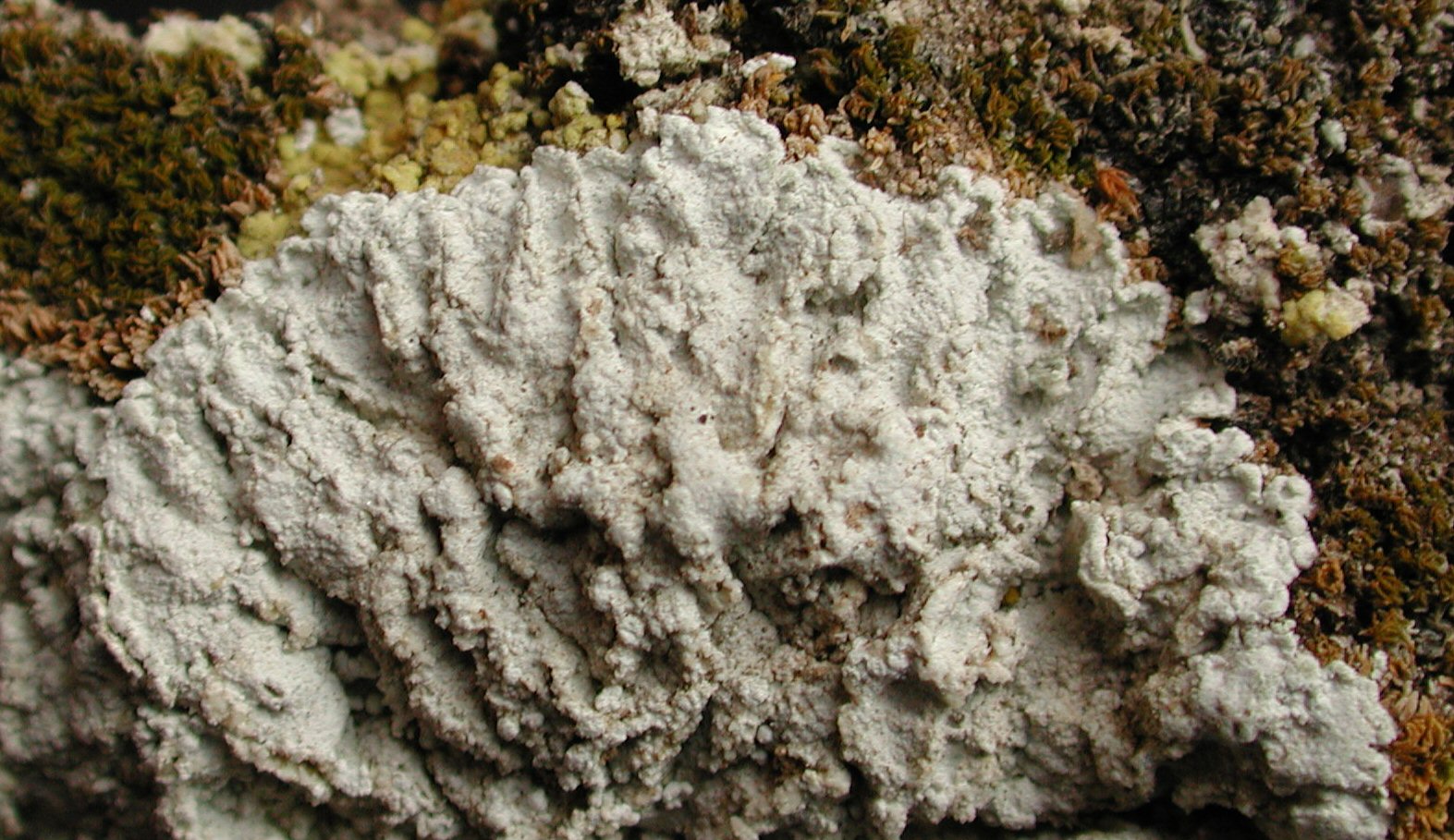
ELena Pittao - CC BY-SA 4.0
Herbarium: TSB 36930

Felix Schumm - CC BY 4.0
[VZ1175], Hispania. Catalonia. Prope Igualada loco Coll del Guix dicto, 400 m. Supra terram ad saxa gypsacea septentrionalem et occidentem versus spectantia, 30°-90° inclinata. Leg. Llimona, 2.11.1972. EX A. VEZDA LICHENES SELECTI EXSICCATI NR. 1175.
ELena Pittao - CC BY-SA 4.0
Herbarium: TSB 36930

Felix Schumm - CC BY 4.0
[VZ2192], Cyprus. Larnaca, in vicinitate pagi Oroklini, haud procul a litore, 5 m . Ad saxa conglomerata loco subgypsaceo. Leg. A. Vezda, 25.6.1987. EX A. VEZDA LICHENES SELECTI EXSICCATI NR. 2192. As Lepraria crassissima isidiata

ELena Pittao - CC BY-SA 4.0
Herbarium: TSB 36930
Felix Schumm - CC BY 4.0
[VZ2192], Cyprus. Larnaca, in vicinitate pagi Oroklini, haud procul a litore, 5 m . Ad saxa conglomerata loco subgypsaceo. Leg. A. Vezda, 25.6.1987. EX A. VEZDA LICHENES SELECTI EXSICCATI NR. 2192. As Lepraria crassissima isidiata
ELena Pittao - CC BY-SA 4.0
Herbarium: TSB 36930

Detail from: https://gzu.jacq.org/GZU000291947
GZU000291947 - Collector Llimona,X. Vězda, A.: Lichenes Selecti Exsiccati 1175 Date 1972-11-02 Location Spain / Cataluña Label Hispania. Catalonia. Prope Igualada loco Coll del Guix dicto ; Alt. 400 m Habitat Supra terram et saxa gypsacea septentrionem et occidentem versus spectantia, 30° – 90° inclinata.