Lepraria membranacea (Dicks.) Vain.
Acta Soc. Fauna Fl. Fenn., 49, 2: 265, 1921. Basionym: Lichen membranaceus Dicks. - Fasc. Pl. Crypt. Brit., 2: 21, tab. 6, fig. 1, 1790.
Synonyms: Amphiloma lanuginosum (Ach.) Nyl.; Crocynia lanuginosa (Ach.) Hue; Crocynia membranacea (Dicks.) Zahlbr.; Leproloma lanuginosum (Ach.) Nyl.; Leproloma membranaceum (Dicks.) Vain.; Pannaria lanuginosa (Ach.) Körb.; Psoroma lanuginosum (Ach.) Müll. Arg.
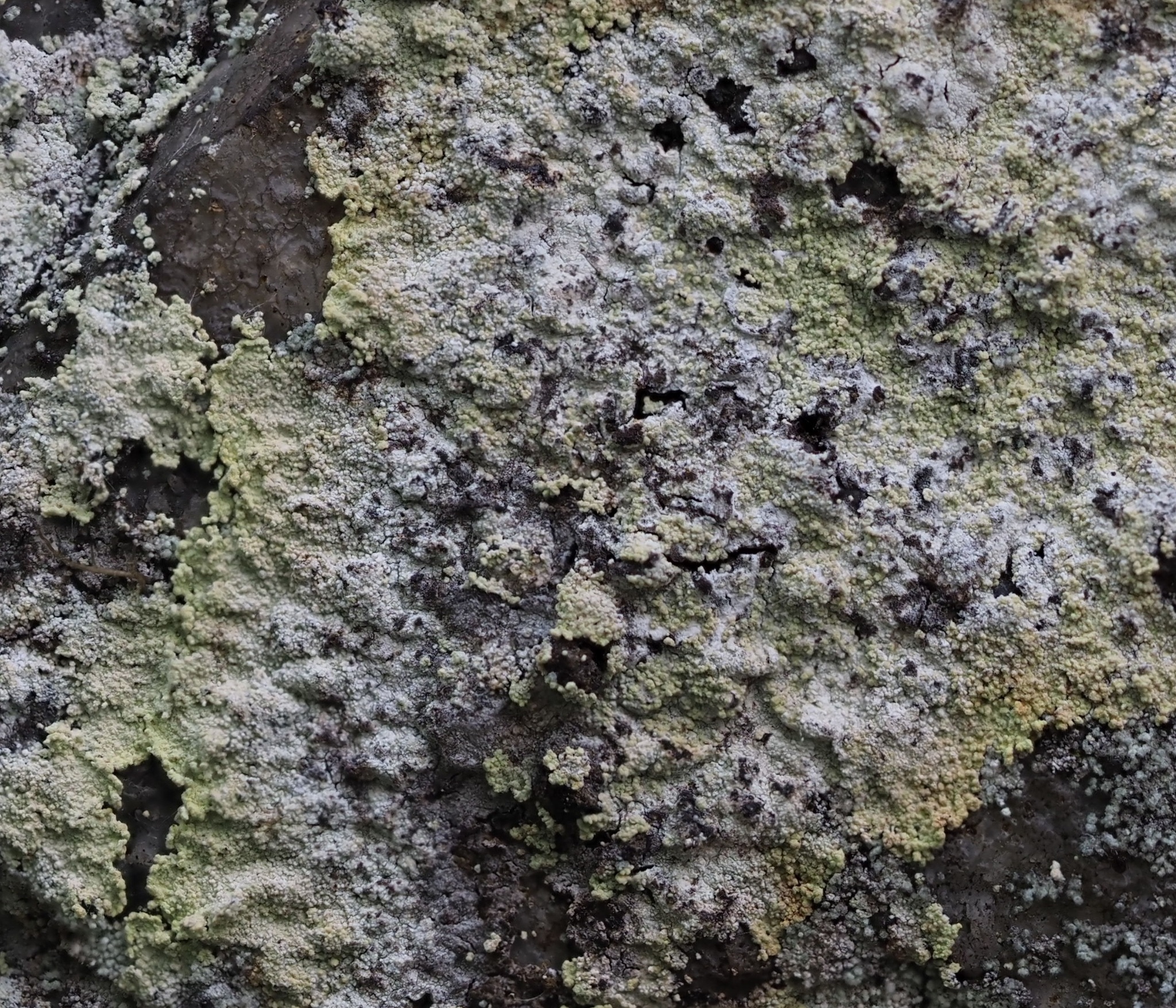
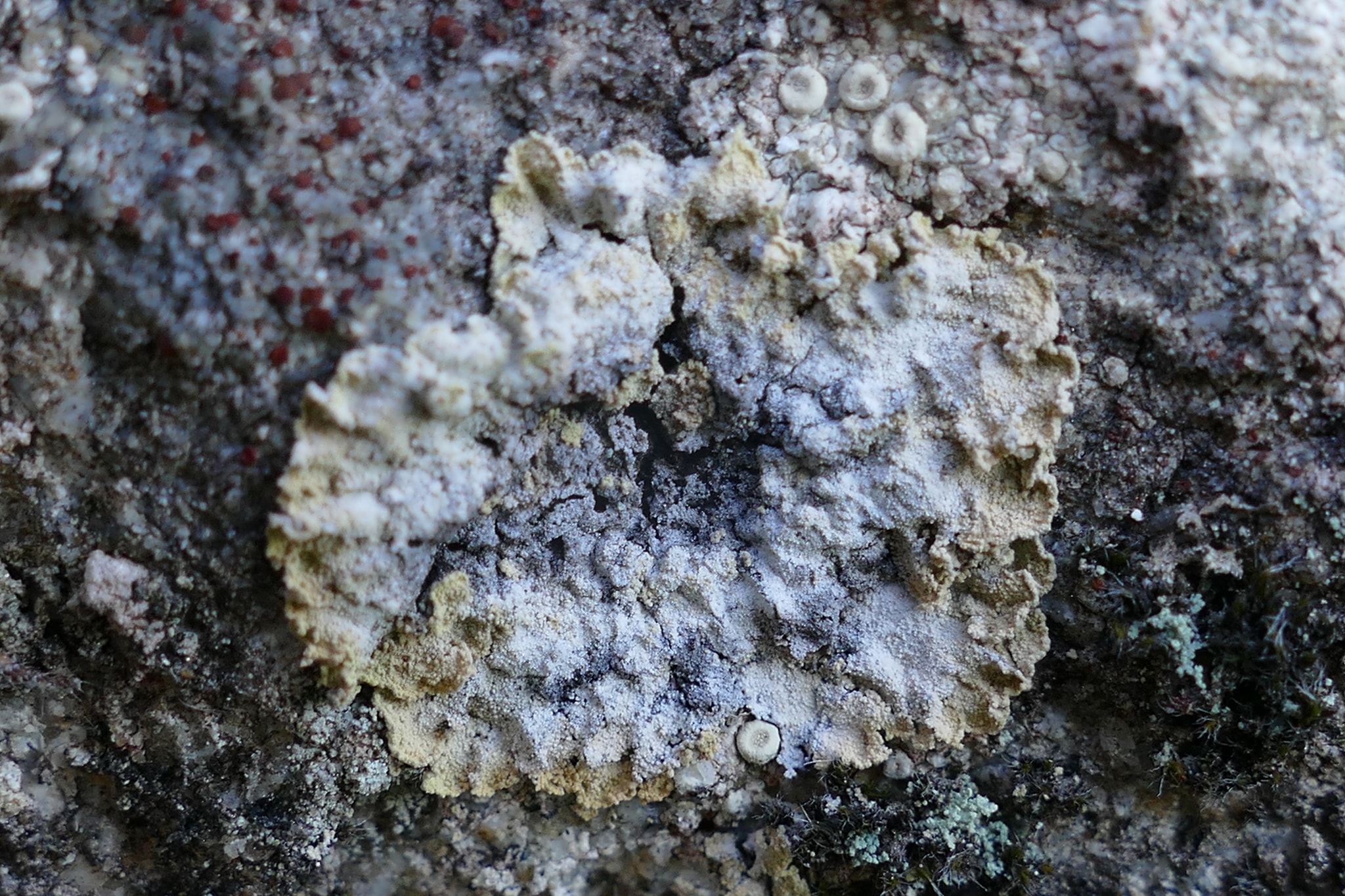
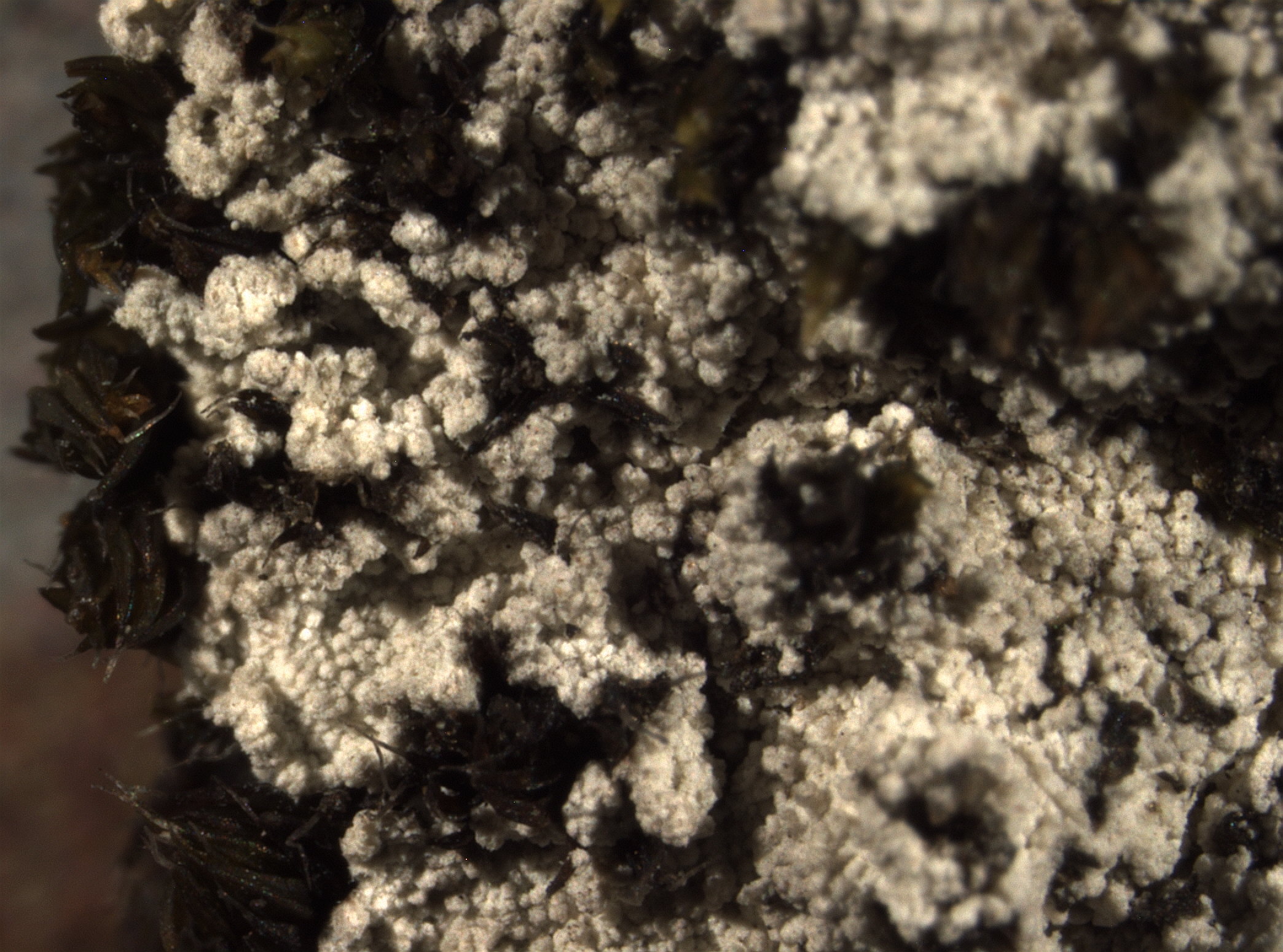
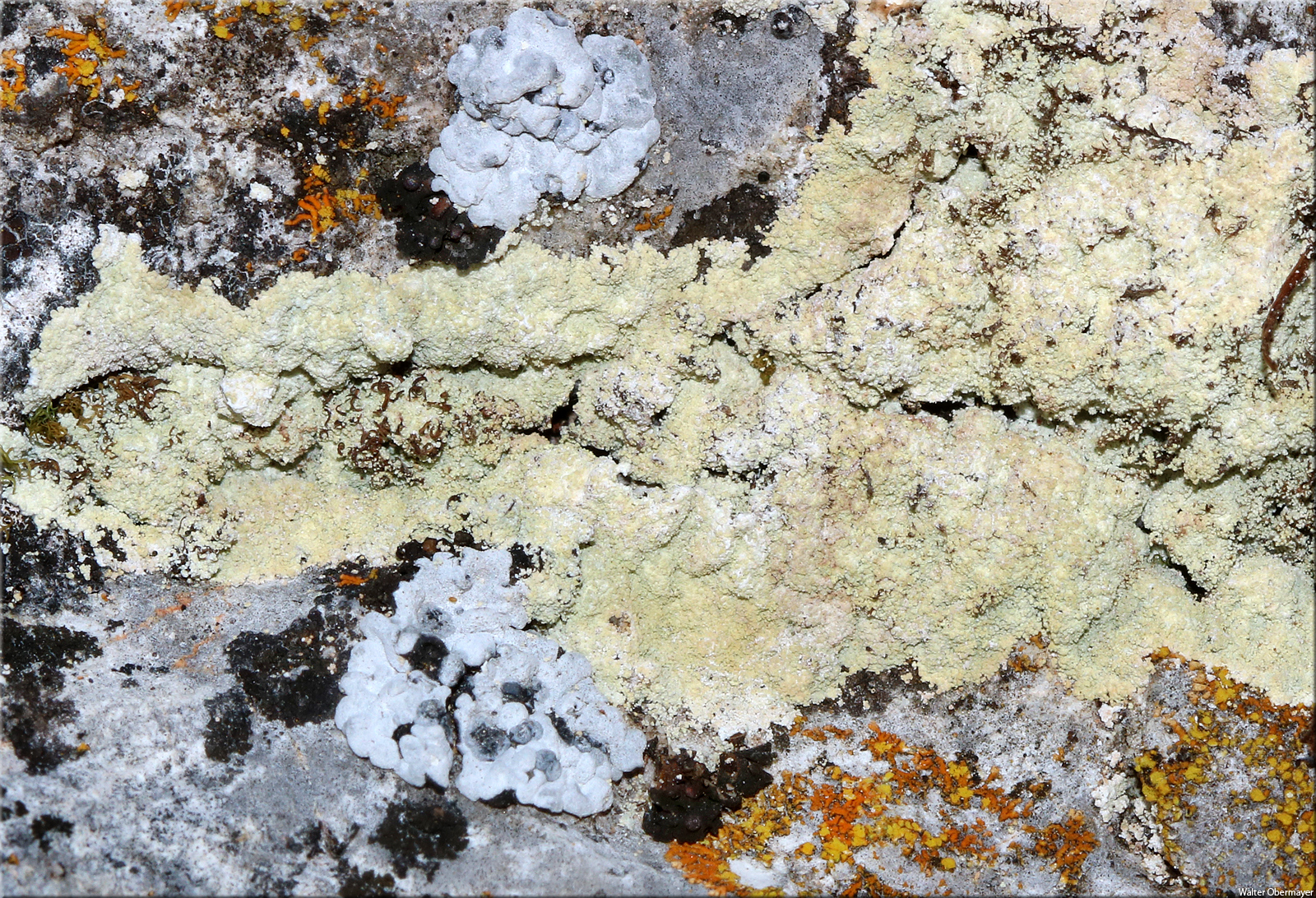
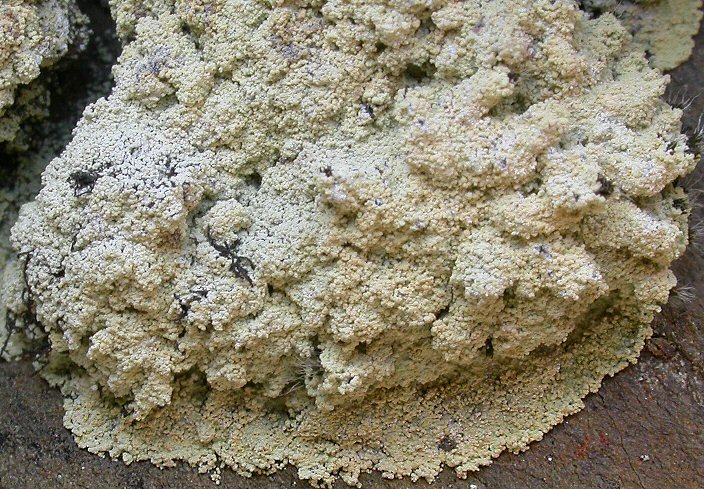
Description: Thallus leprose, 0.2-0.6 mm thick, pale yellowish (at least in marginal parts) to cream-coloured, forming a very well-delimited, lobed, membrane-like rosette, the lobes to 3.5 mm wide, with raised, often wavy margins. Surface covered in a soft mass of soredia-like, 40-120 μm wide, ecorticate granules, sometimes gathered into up to 300 μm wide aggregates, especially in the central parts of thallus, often with short projecting hyphae. Medulla distinct, white in upper part, brownish in lower part, forming a grey to brown hypothallus-like layer. Photobiont chlorococcoid. Spot tests: K+ yellow to orange (rarely K-), C- or C+ yellow, P+ orange-red, UV-. Chemistry: pannaric acid (major) with satellite dibenzofurans (minor to traces), roccellic/angardianic acid (rarely absent), atranorin (major to trace).
Growth form: Leprose
Photobiont: green algae other than Trentepohlia
Reproductive strategy: mainly asexual, by soredia, or soredia-like structures (e.g. blastidia)
In underhangs rarely wetted by rain
Commonnes-rarity: (info)
Alpine belt: extremely rare
Subalpine belt: very rare
Montane belt: rare
Dry submediterranean belt: rather rare
Humid submediterranean belt: rather common
Padanian area: absent
pH of the substrata:
1 2 3 4 5

Solar irradiation:
1 2 3 4 5
Aridity:
1 2 3 4 5
Eutrophication:
1 2 3 4 5
Poleotolerance:
0 1 2 3
Altitudinal distribution:
1 2 3 4 5 6
Rarity
absent
extremely rare
very rare
rare
rather rare
rather common
common
very common
extremely common
Loading data...
Occurrence data
Predictive map
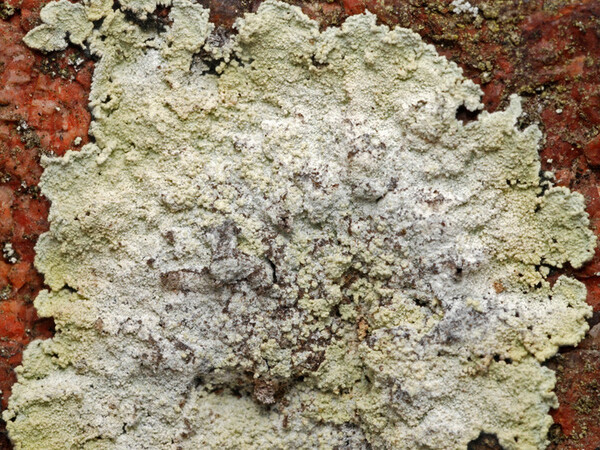
Author: Leif Stridvall - Source: http://www.stridvall.se/la/galleries.php
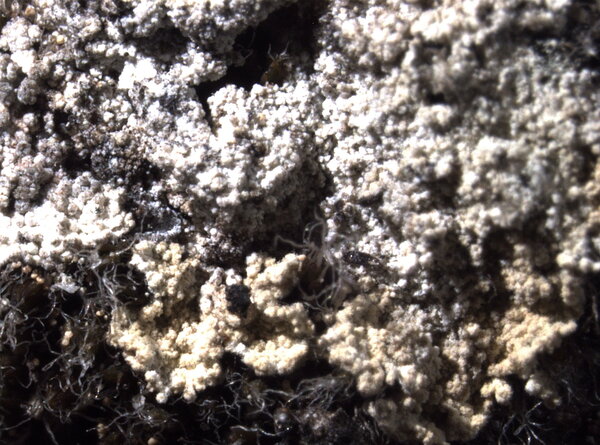
Pier Luigi Nimis CC BY-SA 4.0
TSB 41633
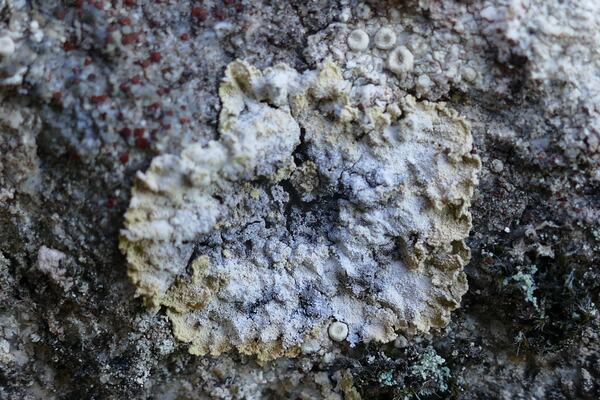
Nere Sorrentino
Spain

Pier Luigi Nimis CC BY-SA 4.0
TSB 42572
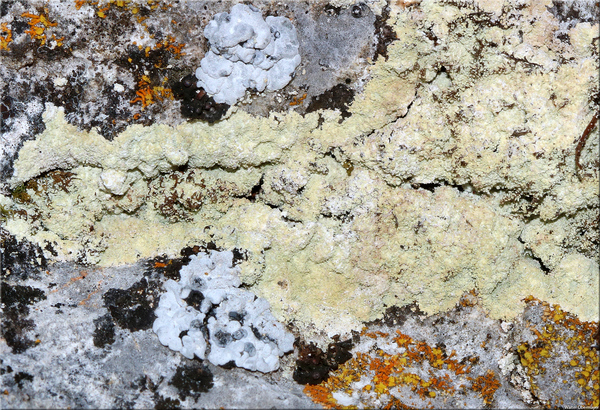
Walter Obermayer CC BY-SA 4.0 - Source: Lichens of Noricum - http://lichens-of-noricum.uni-graz.at/

Bernard Bouffinier - Source:http://www.lichensmaritimes.org/index.php?task=fiche&lichen=350&lang=en
France, St. Herbot
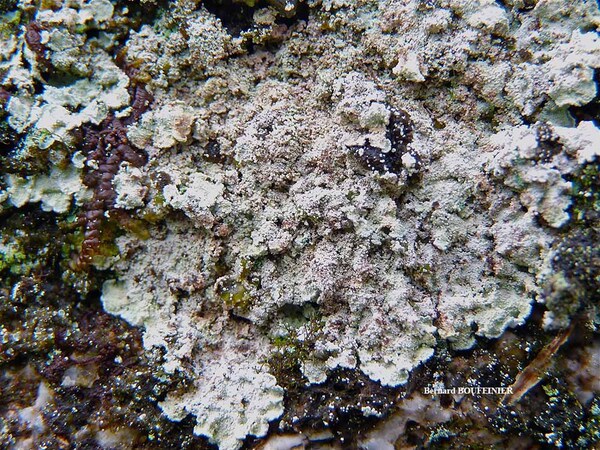
Bernard Bouffinier - Source:http://www.lichensmaritimes.org/index.php?task=fiche&lichen=350&lang=en
France, St. Herbot
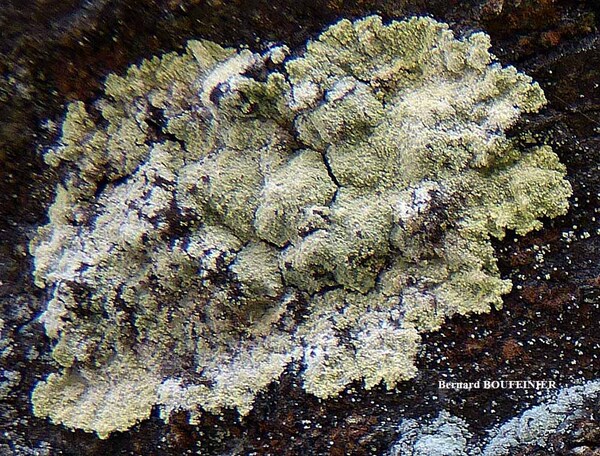
Bernard Bouffinier - Source:http://www.lichensmaritimes.org/index.php?task=fiche&lichen=350&lang=en
France, Roc'h Trédudon
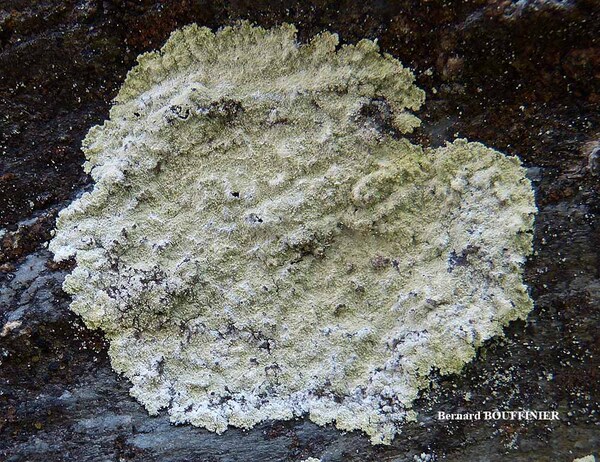
Bernard Bouffinier - Source:http://www.lichensmaritimes.org/index.php?task=fiche&lichen=350&lang=en
France, Roc'h Trédudon
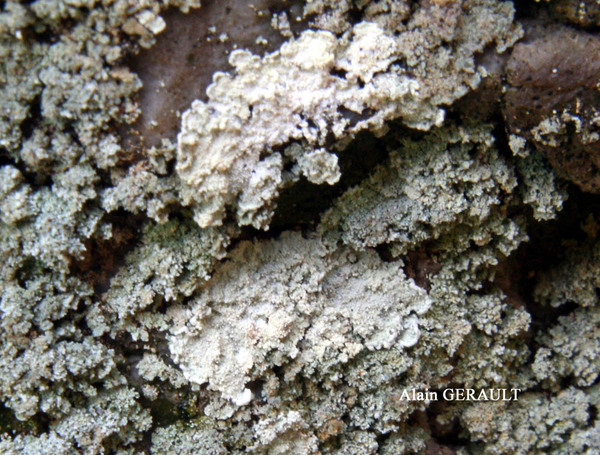
Alain Gerault - Source:http://www.lichensmaritimes.org/index.php?task=fiche&lichen=350&lang=en
France, Argol
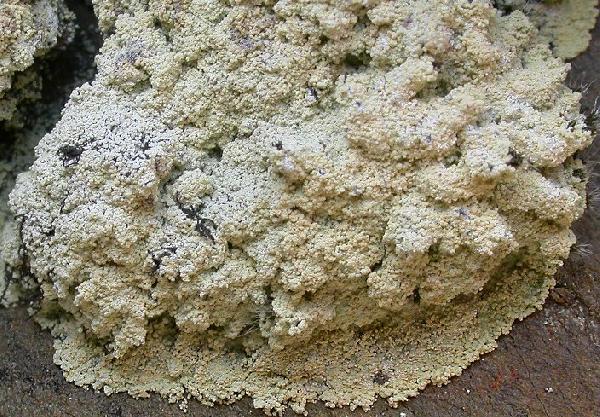
Ulrich Kirschbaum CC BY-SA 4.0 - Source: https://www.thm.de/lse/ulrich-kirschbaum/flechtenbilder
Central Europe; Germany: Hesse.
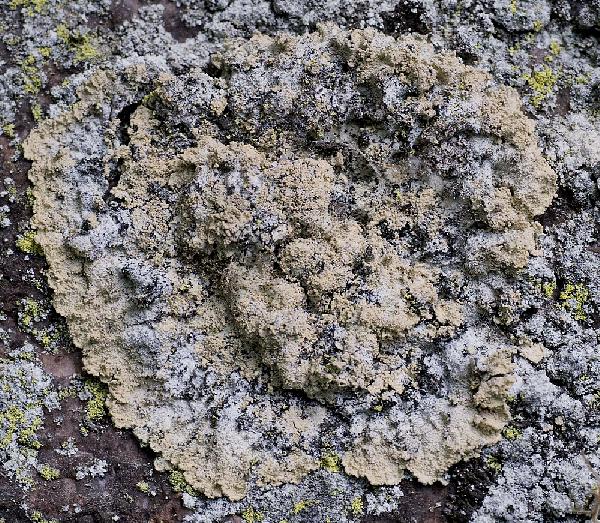
Ulrich Kirschbaum CC BY-SA 4.0 - Source: https://www.thm.de/lse/ulrich-kirschbaum/flechtenbilder
Central Europe; Germany: Hesse.
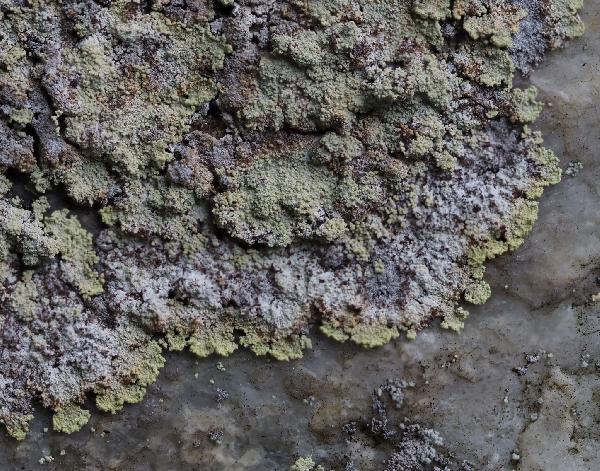
Marko Doboš
34330, Velika, Croatia
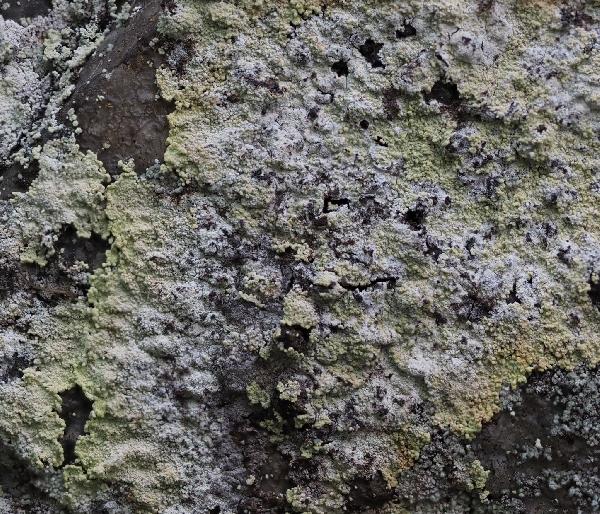
Marko Doboš
34330, Velika, Croatia
Growth form: Leprose
Photobiont: green algae other than Trentepohlia
Reproductive strategy: mainly asexual, by soredia, or soredia-like structures (e.g. blastidia)
In underhangs rarely wetted by rain
Commonnes-rarity: (info)
Alpine belt: extremely rare
Subalpine belt: very rare
Montane belt: rare
Dry submediterranean belt: rather rare
Humid submediterranean belt: rather common
Padanian area: absent
pH of the substrata:
| 1 | 2 | 3 | 4 | 5 |
Solar irradiation:
| 1 | 2 | 3 | 4 | 5 |
Aridity:
| 1 | 2 | 3 | 4 | 5 |
Eutrophication:
| 1 | 2 | 3 | 4 | 5 |
Poleotolerance:
| 0 | 1 | 2 | 3 |
Altitudinal distribution:
| 1 | 2 | 3 | 4 | 5 | 6 |
Rarity
absent
extremely rare
very rare
rare
rather rare
rather common
common
very common
extremely common
Loading data...
Occurrence data
Predictive map
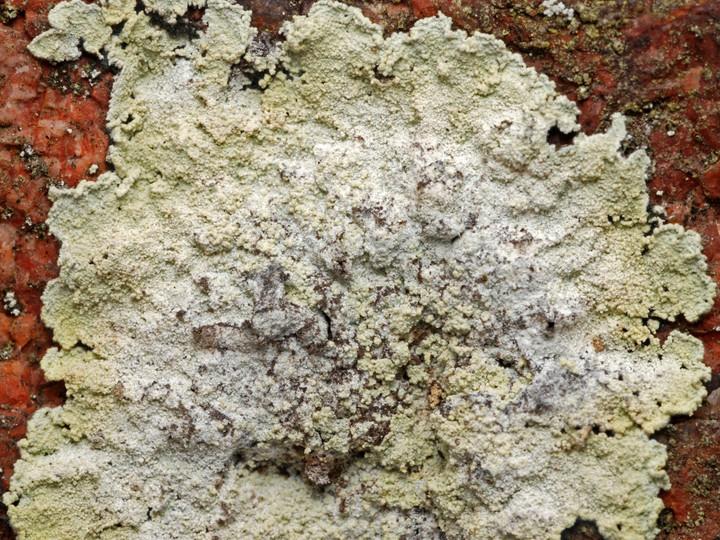
Author: Leif Stridvall - Source: http://www.stridvall.se/la/galleries.php
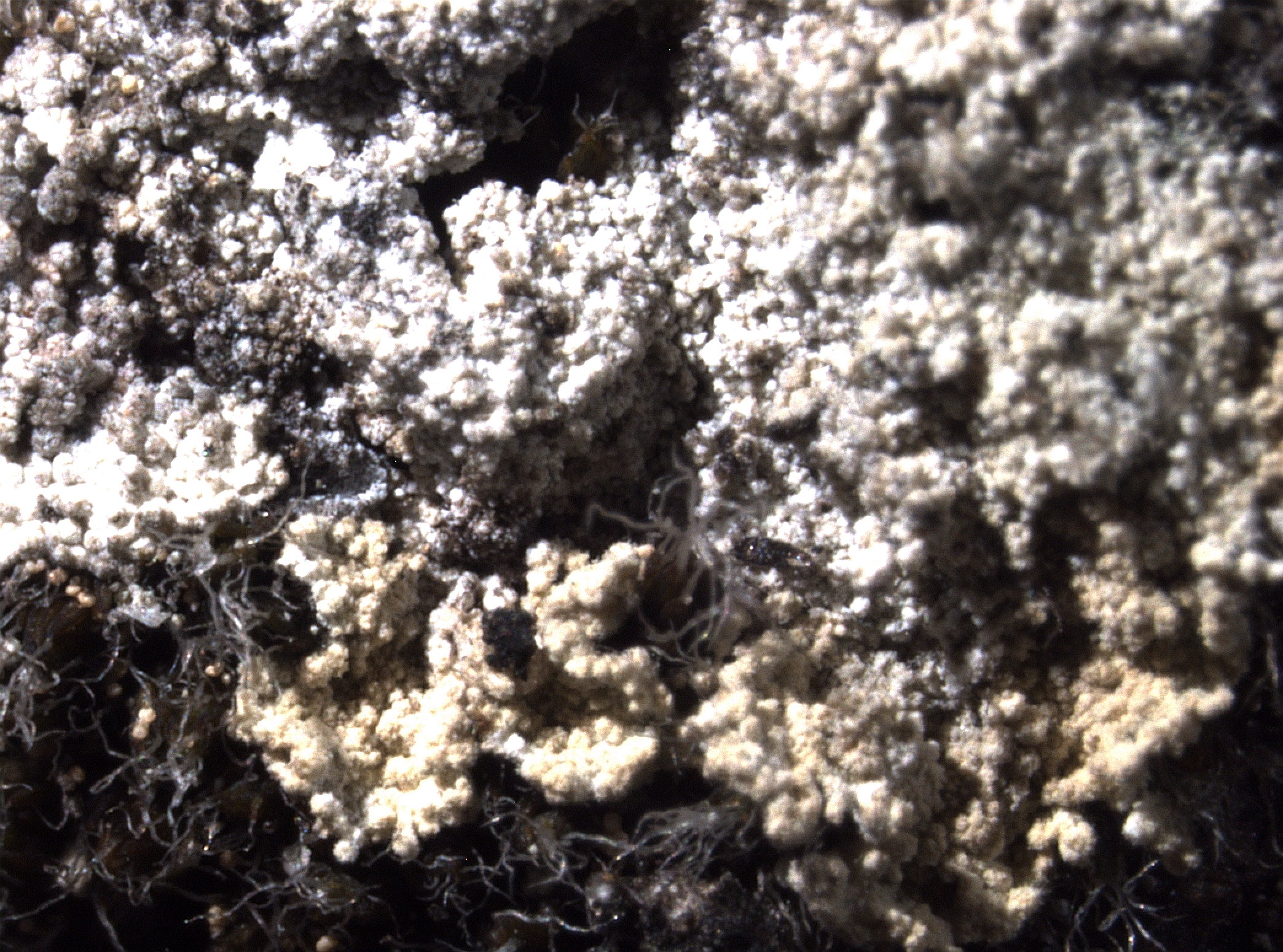
Pier Luigi Nimis CC BY-SA 4.0
TSB 41633
Nere Sorrentino
Spain
Pier Luigi Nimis CC BY-SA 4.0
TSB 42572
Walter Obermayer CC BY-SA 4.0 - Source: Lichens of Noricum - http://lichens-of-noricum.uni-graz.at/

Bernard Bouffinier - Source:http://www.lichensmaritimes.org/index.php?task=fiche&lichen=350&lang=en
France, St. Herbot

Bernard Bouffinier - Source:http://www.lichensmaritimes.org/index.php?task=fiche&lichen=350&lang=en
France, St. Herbot

Bernard Bouffinier - Source:http://www.lichensmaritimes.org/index.php?task=fiche&lichen=350&lang=en
France, Roc'h Trédudon

Bernard Bouffinier - Source:http://www.lichensmaritimes.org/index.php?task=fiche&lichen=350&lang=en
France, Roc'h Trédudon

Alain Gerault - Source:http://www.lichensmaritimes.org/index.php?task=fiche&lichen=350&lang=en
France, Argol
Ulrich Kirschbaum CC BY-SA 4.0 - Source: https://www.thm.de/lse/ulrich-kirschbaum/flechtenbilder
Central Europe; Germany: Hesse.

Ulrich Kirschbaum CC BY-SA 4.0 - Source: https://www.thm.de/lse/ulrich-kirschbaum/flechtenbilder
Central Europe; Germany: Hesse.

Marko Doboš
34330, Velika, Croatia