Lepraria neglecta (Nyl.) Erichsen
Flechtenfl. Nordwestdeutschl.: 394, 1957. Basionym: Lecidea neglecta Nyl. - Not. Sällsk. Fauna Fl. Fenn. Förh., 4: 233, 1859.
Synonyms: Crocynia neglecta (Nyl.) Hue; Lecidella neglecta (Nyl.) Stein
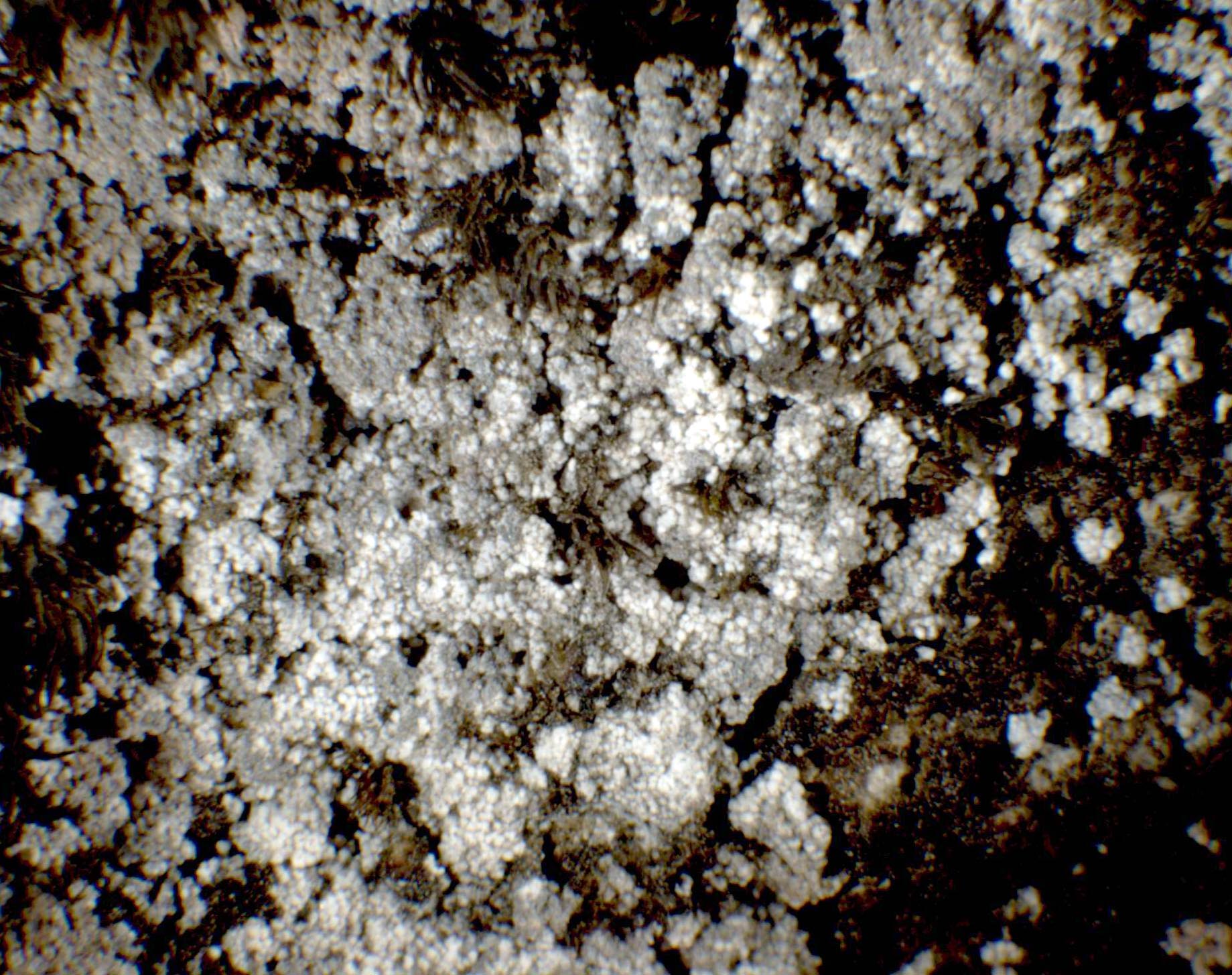
Description: Thallus crustose to subleprose, whitish to whitish grey, often somehow darker in central parts, usually well-delimited and sometimes obscurely lobed, entirely consisting in a compact mass of convex, rather firmly attached granules. The thallus starts developing as isolated, dispersed granules that form piles, or aggregations (best visible along the margins, where the dispersion of the young granules is most readily observed) which eventually overlap and become confluent, giving the false appearance of a continuous thallus in older areas. Old specimens stain herbarium paper red-brown (alectorialic aicd). Granules 80-150(-200) μm in diam., sometimes grouped into larger, up to 300 μm wide aggregates, pseudocorticate, the surface compact, without projecting hyphae. Medulla greyish white, rarely exposed, the hyphae 2-5 μm thick, covered in places with small, colourless crystals. Photobiont chlorococcoid, the cells up to 17 μm wide. Spot tests: K+ yellow, C- or C+ reddish orange, KC+ reddish orange to orange-pink, P+ lemon yellow, UV-. Chemistry: alectorialic and roccellic/angardianic acids.
Growth form: Leprose
Photobiont: green algae other than Trentepohlia
Reproductive strategy: mainly asexual, by soredia, or soredia-like structures (e.g. blastidia)
Commonnes-rarity: (info)
Alpine belt: very common
Subalpine belt: common
Montane belt: very rare
Dry submediterranean belt: absent
Humid submediterranean belt: absent
Padanian area: absent
pH of the substrata:
1 2 3 4 5

Solar irradiation:
1 2 3 4 5
Aridity:
1 2 3 4 5
Eutrophication:
1 2 3 4 5
Poleotolerance:
0 1 2 3
Altitudinal distribution:
1 2 3 4 5 6
Rarity
absent
extremely rare
very rare
rare
rather rare
rather common
common
very common
extremely common
Loading data...
Occurrence data
Predictive map
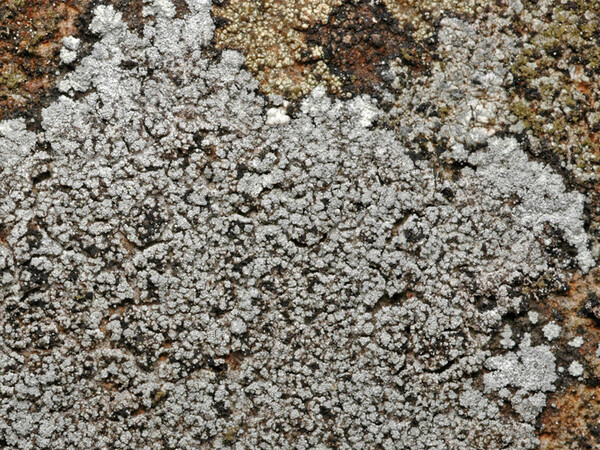
Leif Stridvall - Source: http://www.stridvall.se/la/galleries.php . Courtesy: Anita Stridvall
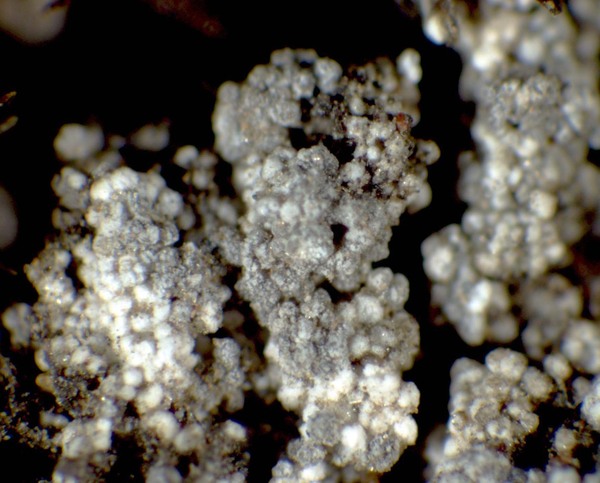
P.L. Nimis CC BY-SA 04
TSB 32763
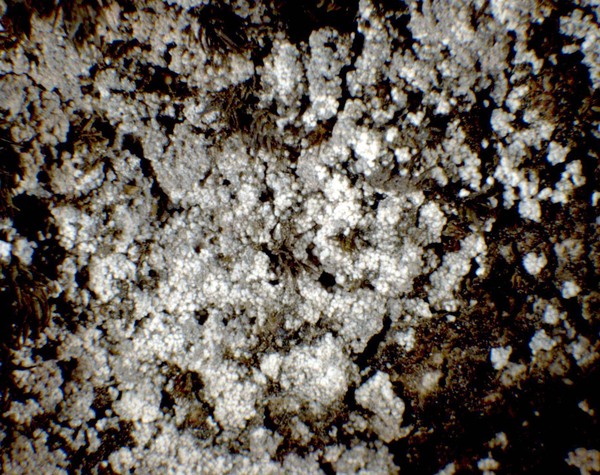
P.L. Nimis CC BY-SA 04
TSB 32763
Growth form: Leprose
Photobiont: green algae other than Trentepohlia
Reproductive strategy: mainly asexual, by soredia, or soredia-like structures (e.g. blastidia)
Commonnes-rarity: (info)
Alpine belt: very common
Subalpine belt: common
Montane belt: very rare
Dry submediterranean belt: absent
Humid submediterranean belt: absent
Padanian area: absent
pH of the substrata:
| 1 | 2 | 3 | 4 | 5 |
Solar irradiation:
| 1 | 2 | 3 | 4 | 5 |
Aridity:
| 1 | 2 | 3 | 4 | 5 |
Eutrophication:
| 1 | 2 | 3 | 4 | 5 |
Poleotolerance:
| 0 | 1 | 2 | 3 |
Altitudinal distribution:
| 1 | 2 | 3 | 4 | 5 | 6 |
Rarity
absent
extremely rare
very rare
rare
rather rare
rather common
common
very common
extremely common
Loading data...
Occurrence data
Predictive map

Leif Stridvall - Source: http://www.stridvall.se/la/galleries.php . Courtesy: Anita Stridvall
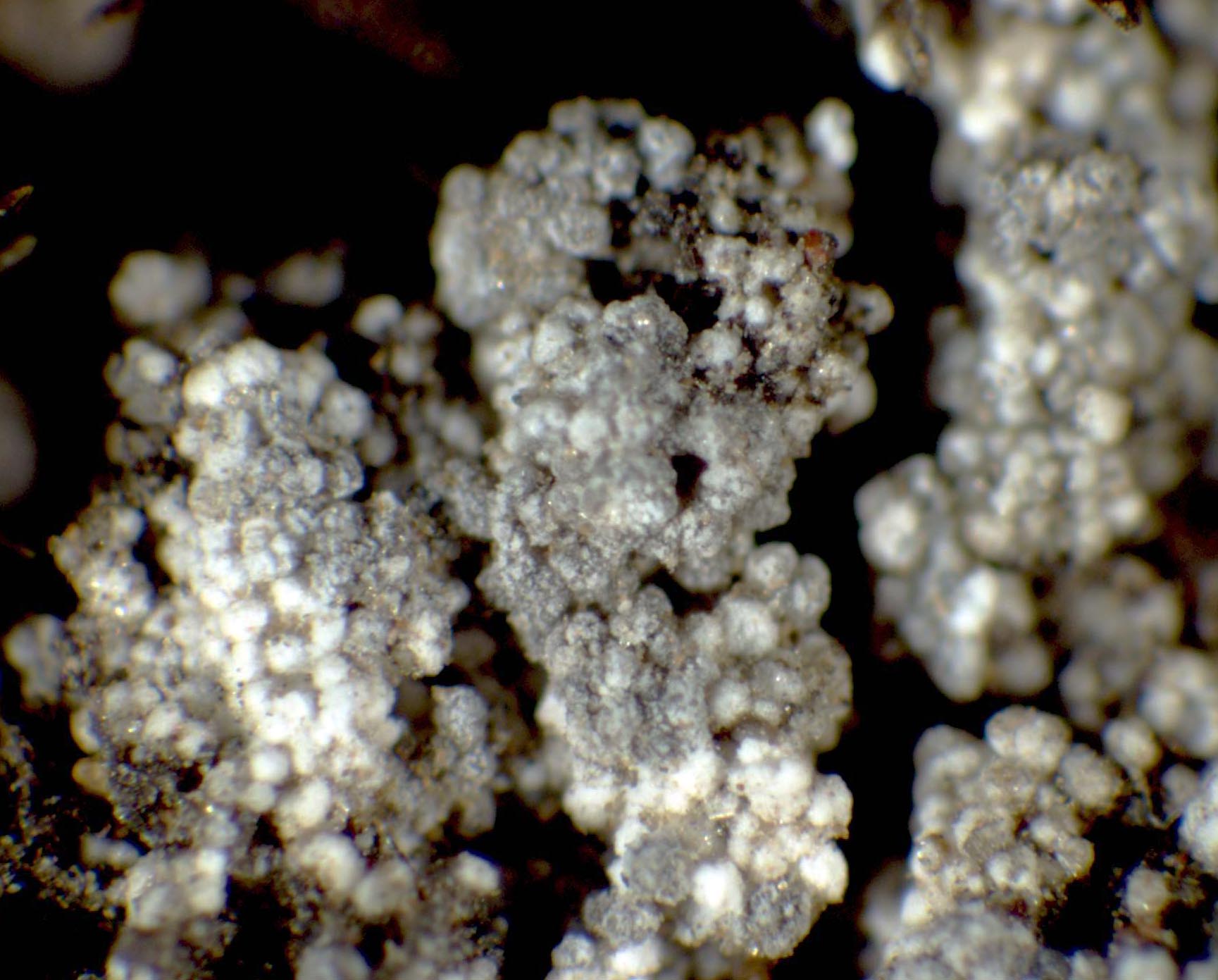
P.L. Nimis CC BY-SA 04
TSB 32763