Lepraria nylanderiana Kümmerl. & Leuckert
Bibl. Lichenol., 58: 250, 1995.
Synonyms:
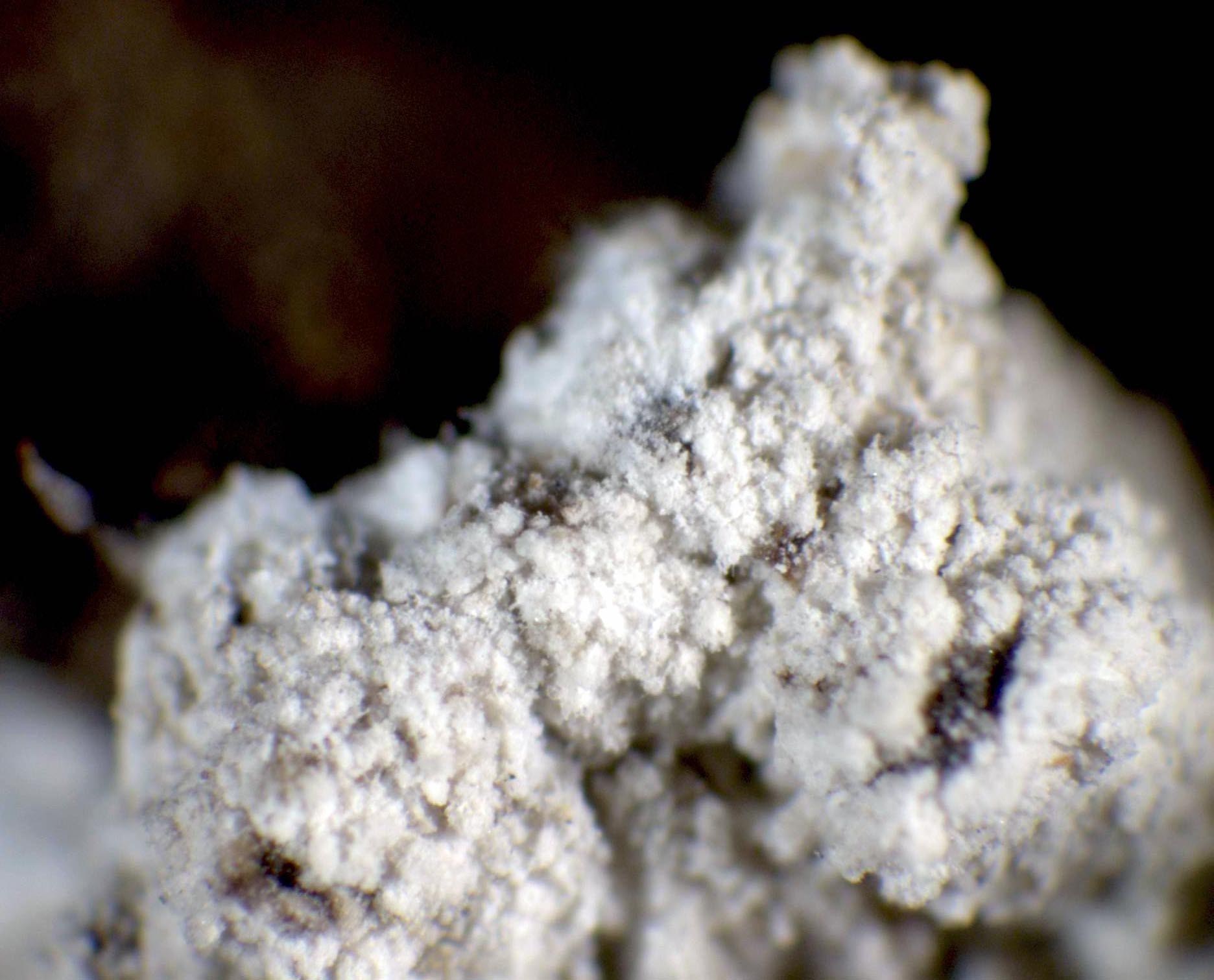
Description: Thallus leprose, whitish to pale bluish grey, marginally more or less well-delimited, thick, often rosette-shaped and indistinctly lobulate, sometimes with a greyish hypothallus. Upper surface covered in a soft mass of coarse, 100-300 µm wide, soredia-like granules with short projecting hyphae. Hyphae of the thallus 3-5 µm thick. Medulla thick to thin and poorly defined, whitish, sometimes exposed in places. Photobiont chlorococcoid, the cells 7-15 µm in diam. Spot tests: K+ bright lemon-yellow, C-, KC-, P+ bright orange-yellow, UV-. Chemistry: thamnolic and roccellic (angardianic) acids, occasionally with traces of atranorin.
Growth form: Leprose
Photobiont: green algae other than Trentepohlia
Reproductive strategy: mainly asexual, by soredia, or soredia-like structures (e.g. blastidia)
In underhangs rarely wetted by rain
Commonnes-rarity: (info)
Alpine belt: absent
Subalpine belt: absent
Montane belt: very rare
Dry submediterranean belt: absent
Humid submediterranean belt: rare
Padanian area: absent
pH of the substrata:
1 2 3 4 5

Solar irradiation:
1 2 3 4 5
Aridity:
1 2 3 4 5
Eutrophication:
1 2 3 4 5
Poleotolerance:
0 1 2 3
Altitudinal distribution:
1 2 3 4 5 6
Rarity
absent
extremely rare
very rare
rare
rather rare
rather common
common
very common
extremely common
Loading data...
Occurrence data
Predictive map
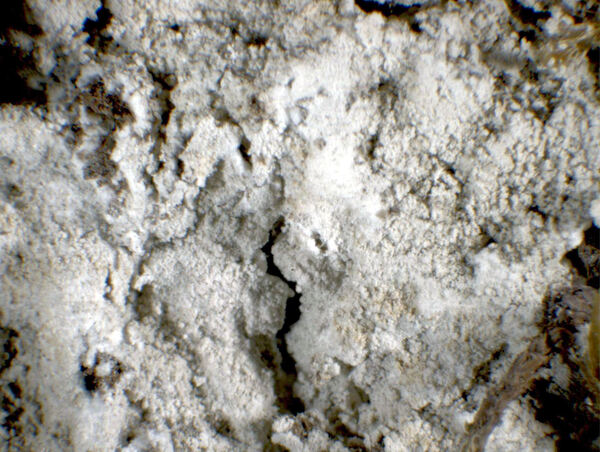
P.L. Nimis CC BY-SA 4.0
TSB 32767
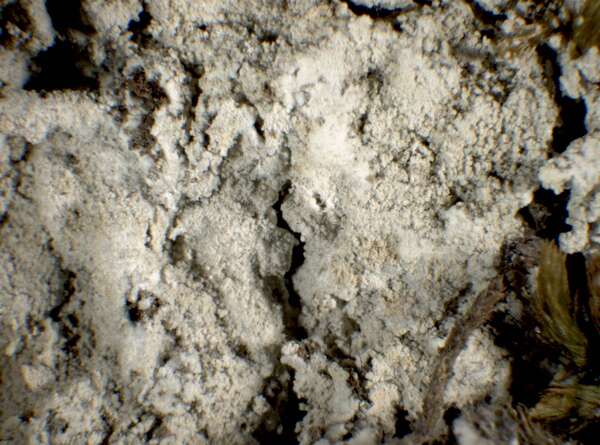
P.L. Nimis; Owner: Department of Life Sciences, University of Trieste
Herbarium: TSB (32767)
2001/12/13
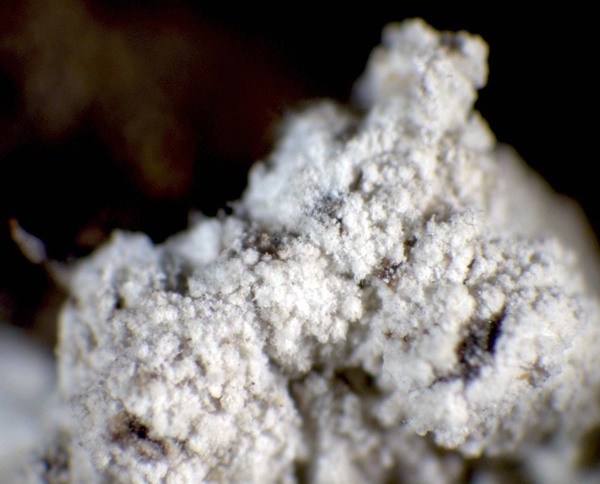
P.L. Nimis CC BY-SA 04
TSB 32767
Growth form: Leprose
Photobiont: green algae other than Trentepohlia
Reproductive strategy: mainly asexual, by soredia, or soredia-like structures (e.g. blastidia)
In underhangs rarely wetted by rain
Commonnes-rarity: (info)
Alpine belt: absent
Subalpine belt: absent
Montane belt: very rare
Dry submediterranean belt: absent
Humid submediterranean belt: rare
Padanian area: absent
pH of the substrata:
| 1 | 2 | 3 | 4 | 5 |
Solar irradiation:
| 1 | 2 | 3 | 4 | 5 |
Aridity:
| 1 | 2 | 3 | 4 | 5 |
Eutrophication:
| 1 | 2 | 3 | 4 | 5 |
Poleotolerance:
| 0 | 1 | 2 | 3 |
Altitudinal distribution:
| 1 | 2 | 3 | 4 | 5 | 6 |
Rarity
absent
extremely rare
very rare
rare
rather rare
rather common
common
very common
extremely common
Loading data...
Occurrence data
Predictive map

P.L. Nimis CC BY-SA 4.0
TSB 32767
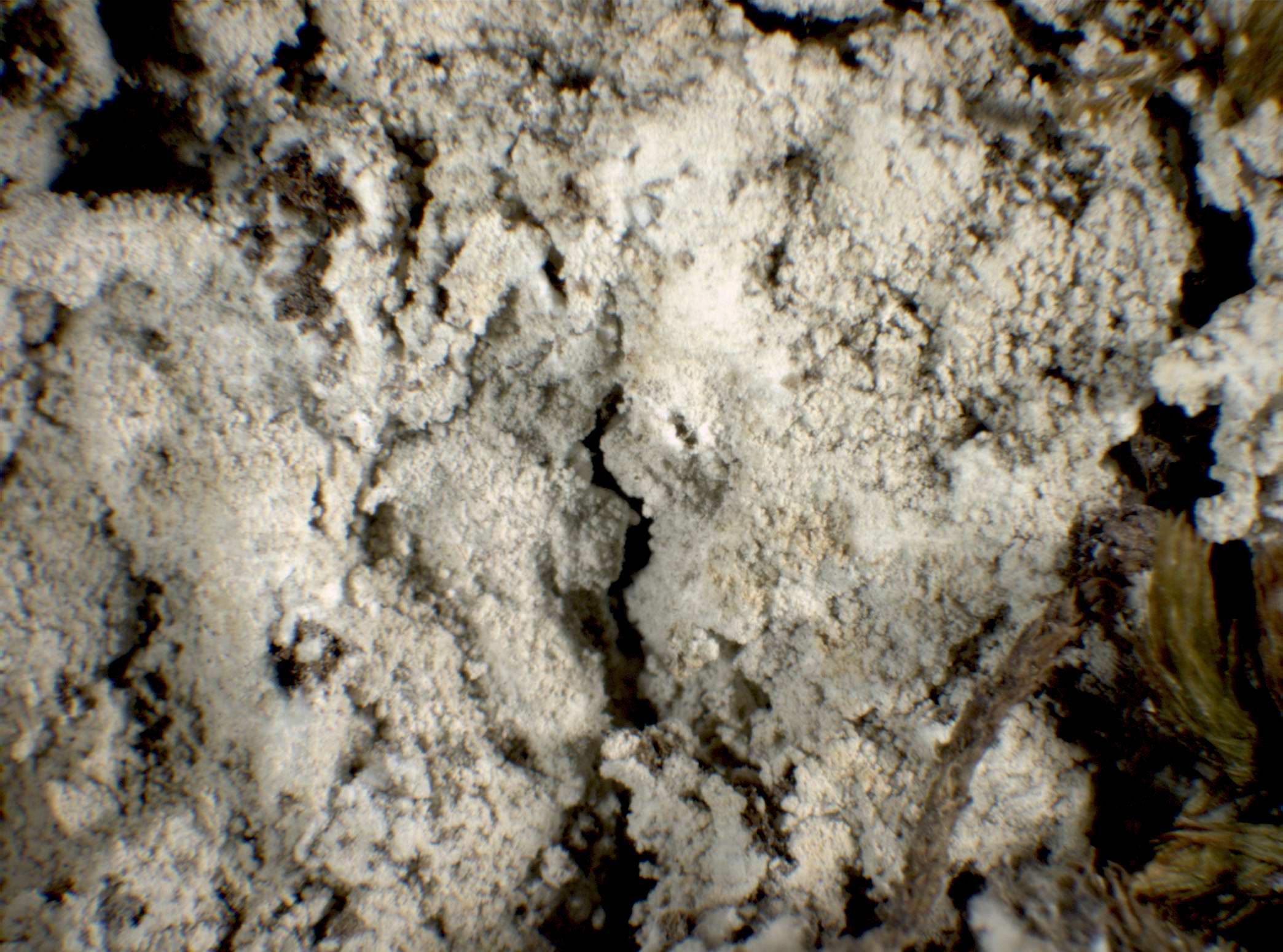
P.L. Nimis; Owner: Department of Life Sciences, University of Trieste
Herbarium: TSB (32767)
2001/12/13