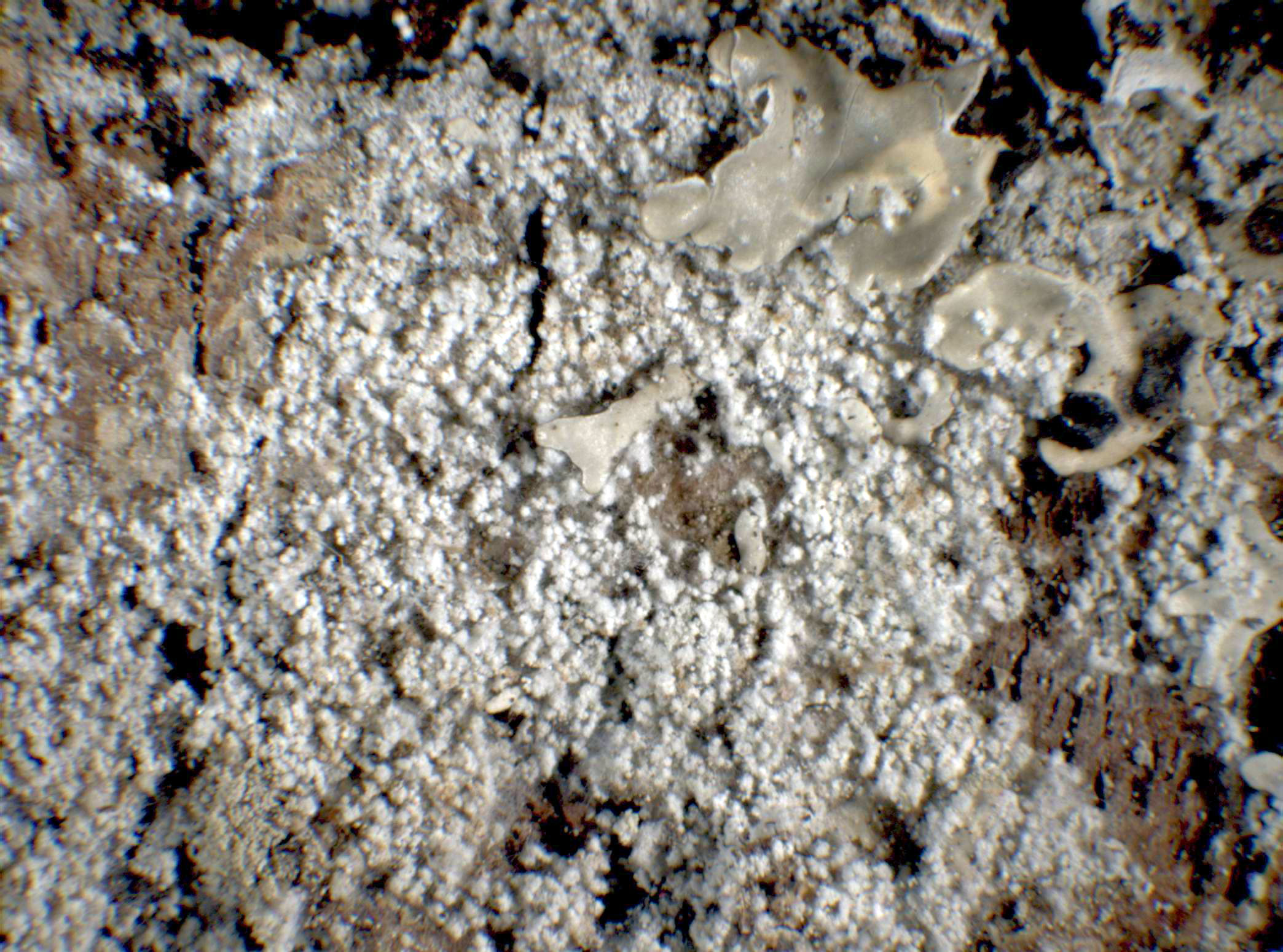
Lepraria rigidula (B. de Lesd.) Tønsberg
Sommerfeltia, 14: 205, 1992. Basionym: Crocynia rigidula B. de Lesd. in Hue - Bull. Soc. Bot. France, 71: 331-332, 1924.
Synonyms:
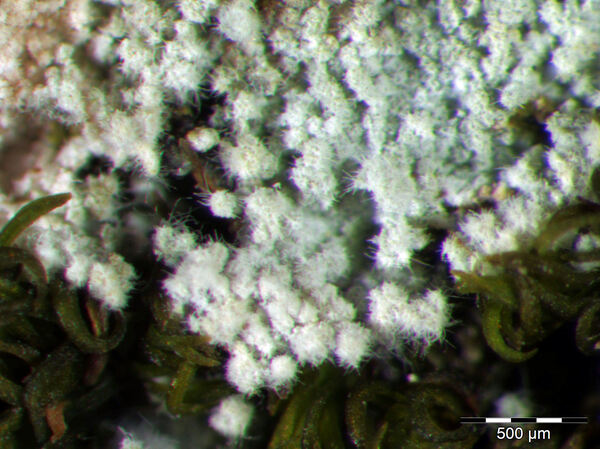
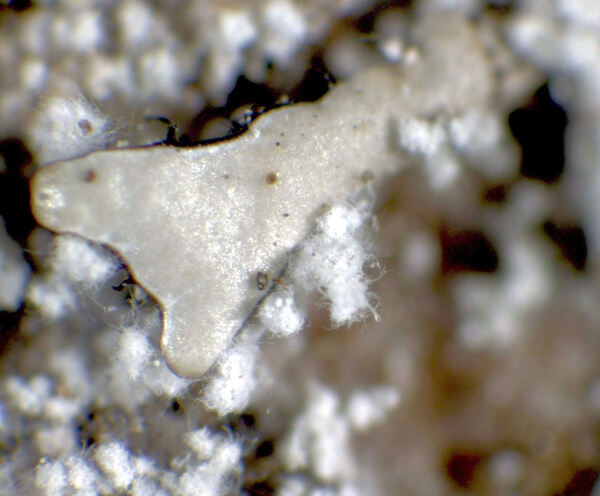
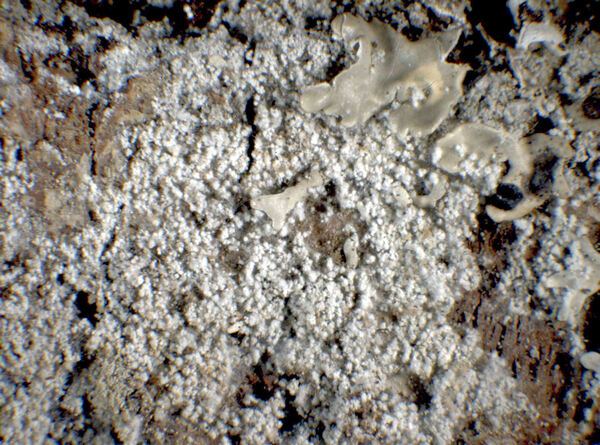
Description: Thallus leprose, cottony, whitish to pale grey, not sharply delimited, forming a soft, up to 0.2 mm thick, more or less continuous, irregularly spreading crust, not lobed or obscurely lobed in young thalli, covered in up to 60(-80) µm wide, coarse, ecorticate soredia-like granules which are often clustered into up to 300 µm wide aggregates, with long (60-120 µm), conspicuous projecting hyphae which are visible with a hand-lens. Medulla absent or very poorly developed. Photobiont chlorococcoid, the cells globose, up to 20 µm diam. Spot tests: K+ yellow, C-, KC- or KC+ faintly yellow, P- or P+ faintly yellow, UV-, or UV+ dull pink. Chemistry: atranorin and nephrosteranic acid.
Growth form: Leprose
Photobiont: green algae other than Trentepohlia
Reproductive strategy: mainly asexual, by soredia, or soredia-like structures (e.g. blastidia)
In underhangs rarely wetted by rain
Commonnes-rarity: (info)
Alpine belt: extremely rare
Subalpine belt: very rare
Montane belt: rather rare
Dry submediterranean belt: common
Humid submediterranean belt: common
Padanian area: rather rare
pH of the substrata:
1 2 3 4 5

Solar irradiation:
1 2 3 4 5
Aridity:
1 2 3 4 5
Eutrophication:
1 2 3 4 5
Poleotolerance:
0 1 2 3
Altitudinal distribution:
1 2 3 4 5 6
Rarity
absent
extremely rare
very rare
rare
rather rare
rather common
common
very common
extremely common
Loading data...
Occurrence data
Predictive map
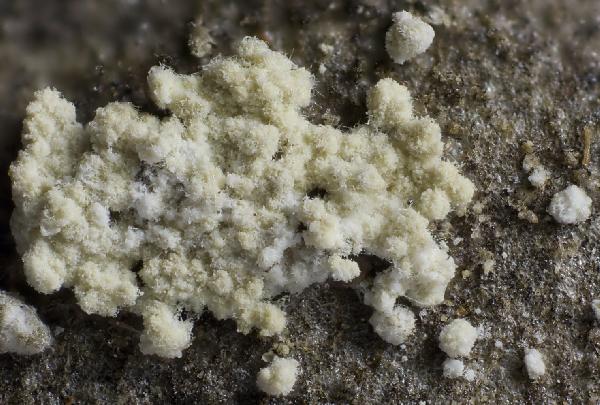
Ulrich Kirschbaum CC BY-SA 4.0 - Source: https://www.thm.de/lse/ulrich-kirschbaum/flechtenbilder
Central Europe; Germany: Hesse.
Harrie Sipman http://www.bgbm.fu-berlin.de/sipman/Zschackia/AegeanLichens/CaloplacaAC.htm - As Caloplaca oasis
P.L. Nimis CC BY-SA 4.0
TSB 32768
P.L. Nimis CC BY-SA 4.0
TSB 32768
Growth form: Leprose
Photobiont: green algae other than Trentepohlia
Reproductive strategy: mainly asexual, by soredia, or soredia-like structures (e.g. blastidia)
In underhangs rarely wetted by rain
Commonnes-rarity: (info)
Alpine belt: extremely rare
Subalpine belt: very rare
Montane belt: rather rare
Dry submediterranean belt: common
Humid submediterranean belt: common
Padanian area: rather rare
pH of the substrata:
| 1 | 2 | 3 | 4 | 5 |
Solar irradiation:
| 1 | 2 | 3 | 4 | 5 |
Aridity:
| 1 | 2 | 3 | 4 | 5 |
Eutrophication:
| 1 | 2 | 3 | 4 | 5 |
Poleotolerance:
| 0 | 1 | 2 | 3 |
Altitudinal distribution:
| 1 | 2 | 3 | 4 | 5 | 6 |
Rarity
absent
extremely rare
very rare
rare
rather rare
rather common
common
very common
extremely common
Loading data...
Occurrence data
Predictive map
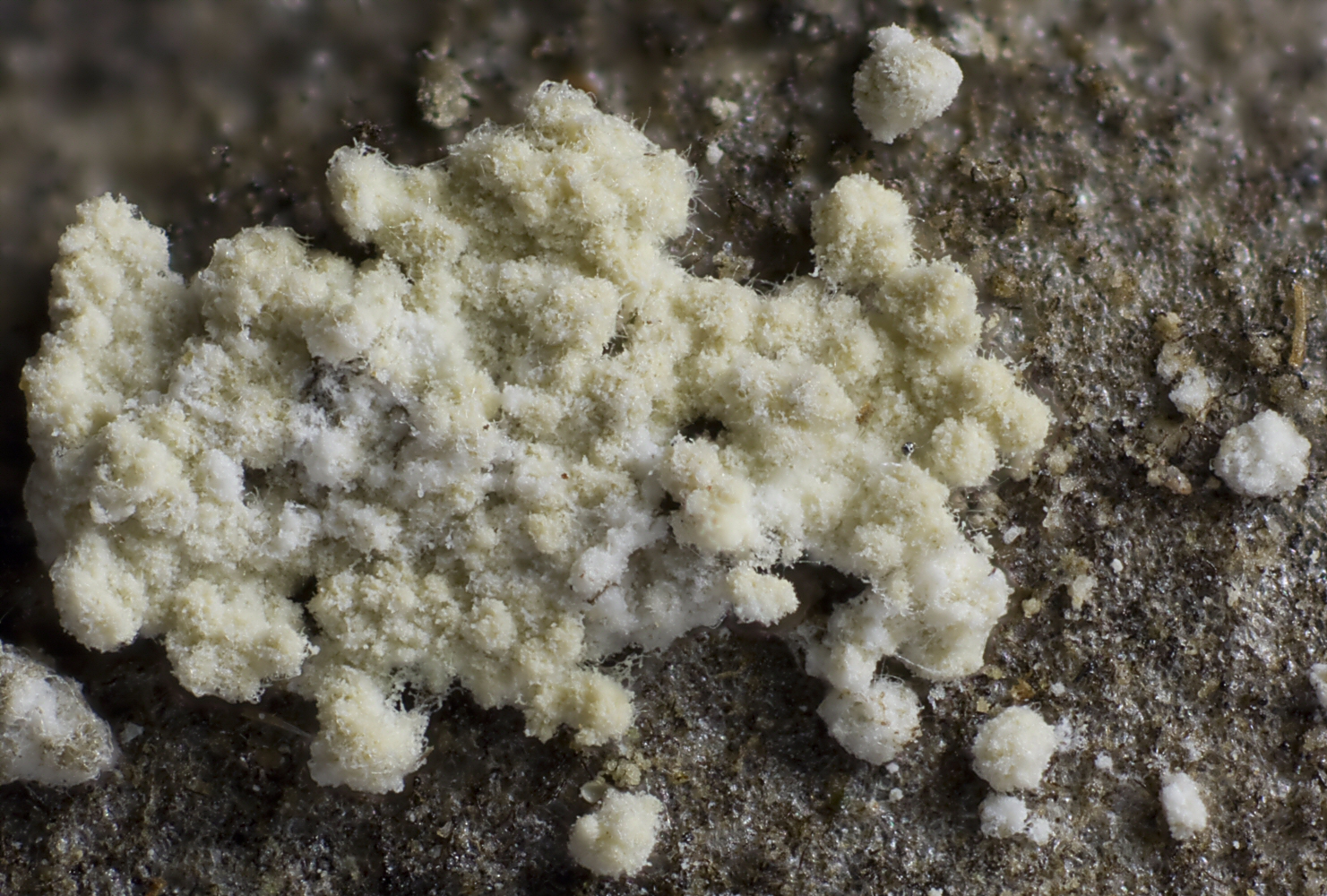
Ulrich Kirschbaum CC BY-SA 4.0 - Source: https://www.thm.de/lse/ulrich-kirschbaum/flechtenbilder
Central Europe; Germany: Hesse.
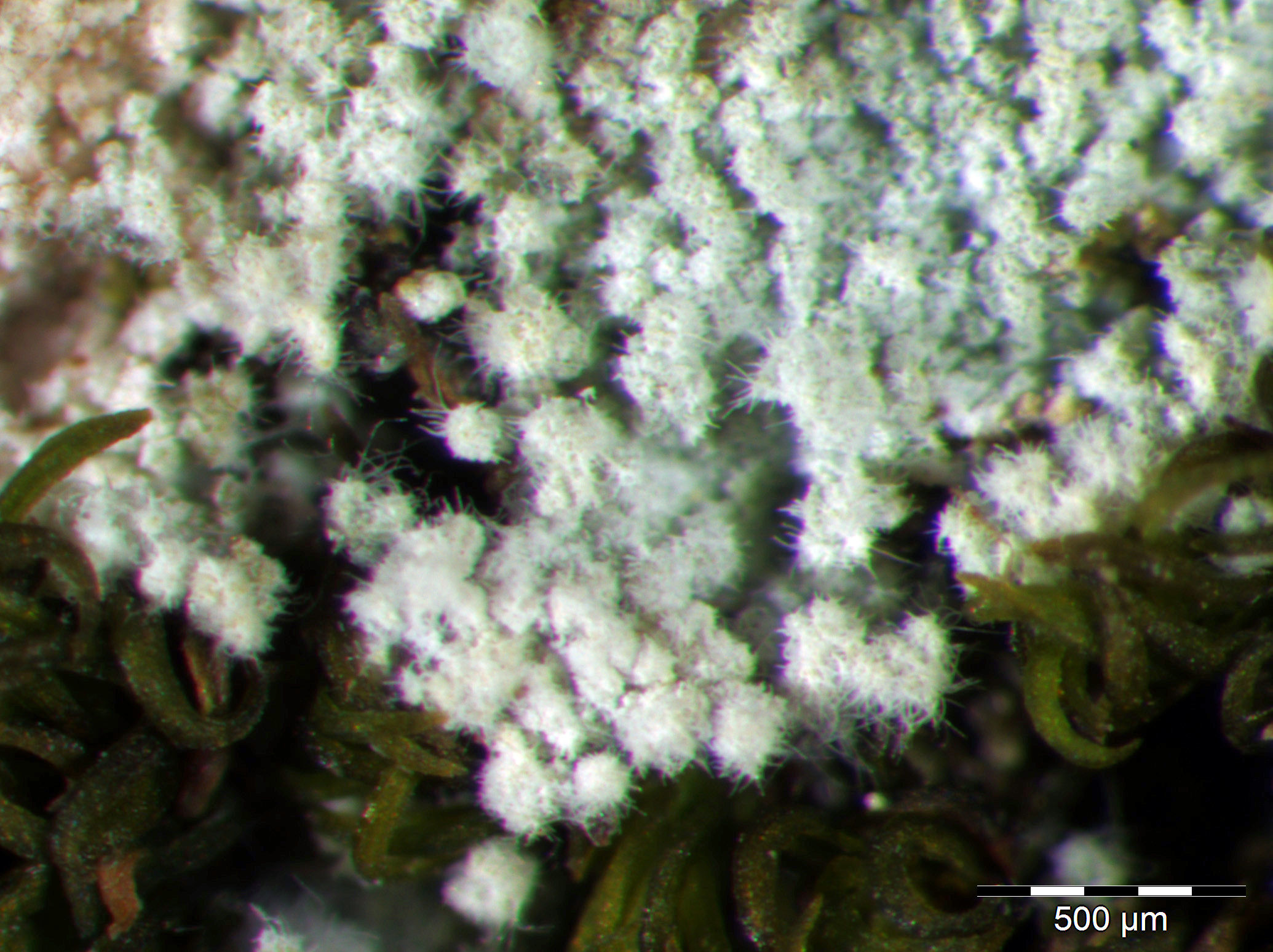
Harrie Sipman http://www.bgbm.fu-berlin.de/sipman/Zschackia/AegeanLichens/CaloplacaAC.htm - As Caloplaca oasis
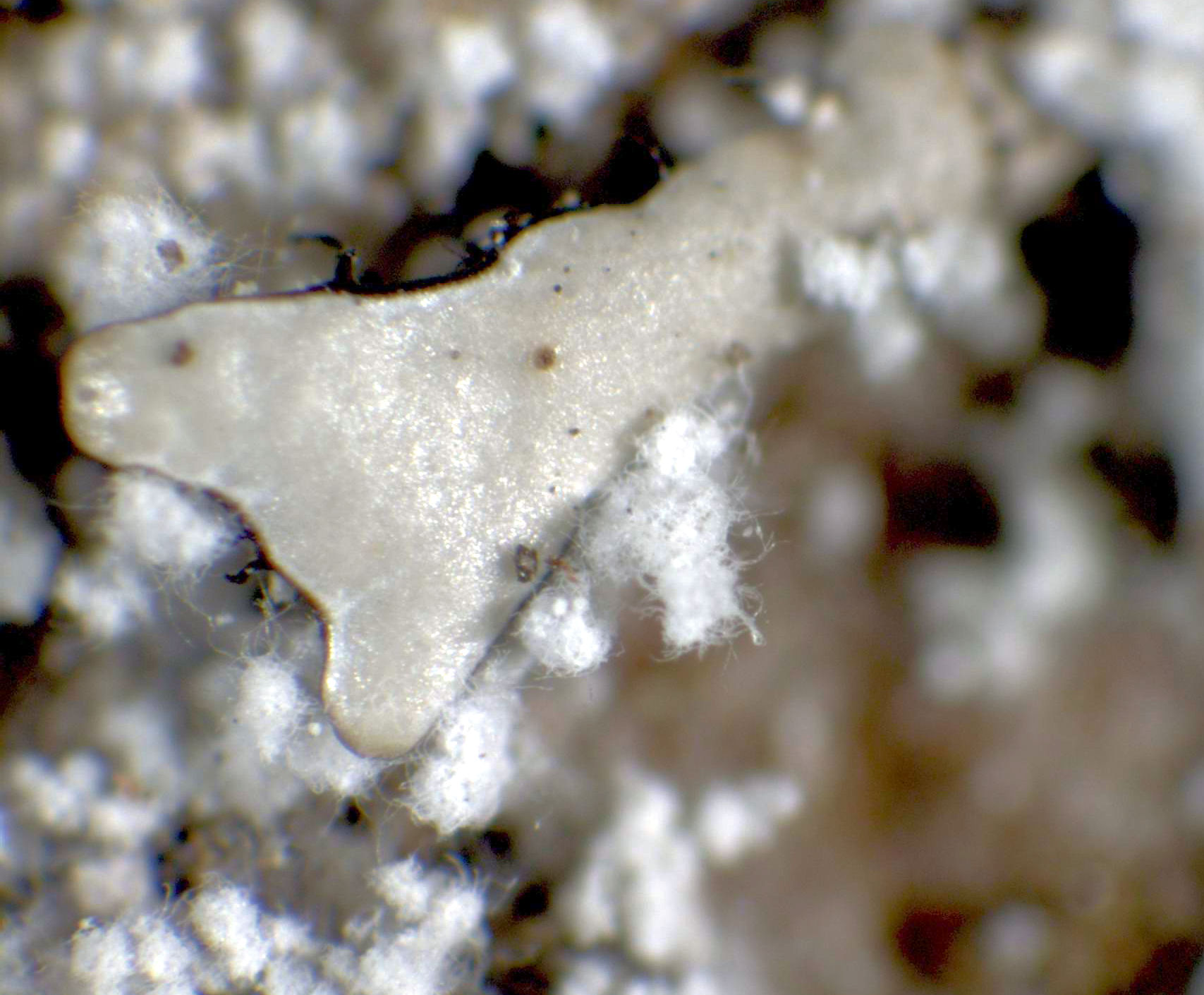
P.L. Nimis CC BY-SA 4.0
TSB 32768