Micarea botryoides (Nyl.) Coppins
in Hawksworth & al., Lichenologist, 12: 107, 1980. Basionym: Lecidea apochroeella var. botryoides Nyl. - Flora, 50: 373, 1867.
Synonyms: Lecidea botryoides (Nyl.) Nyl.
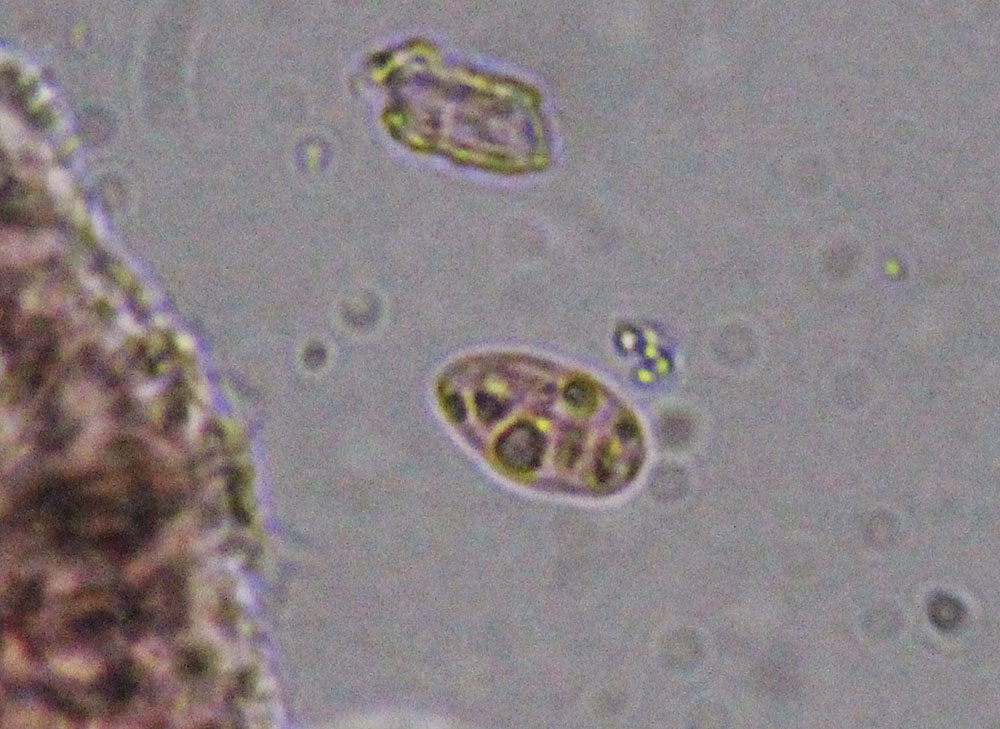
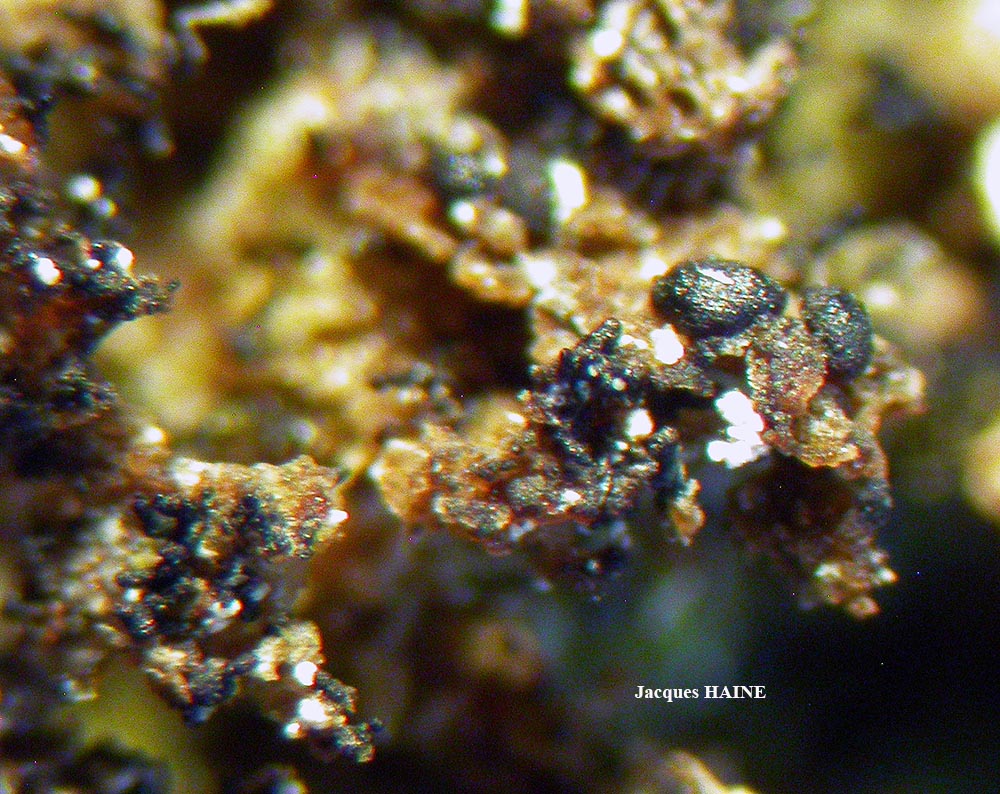
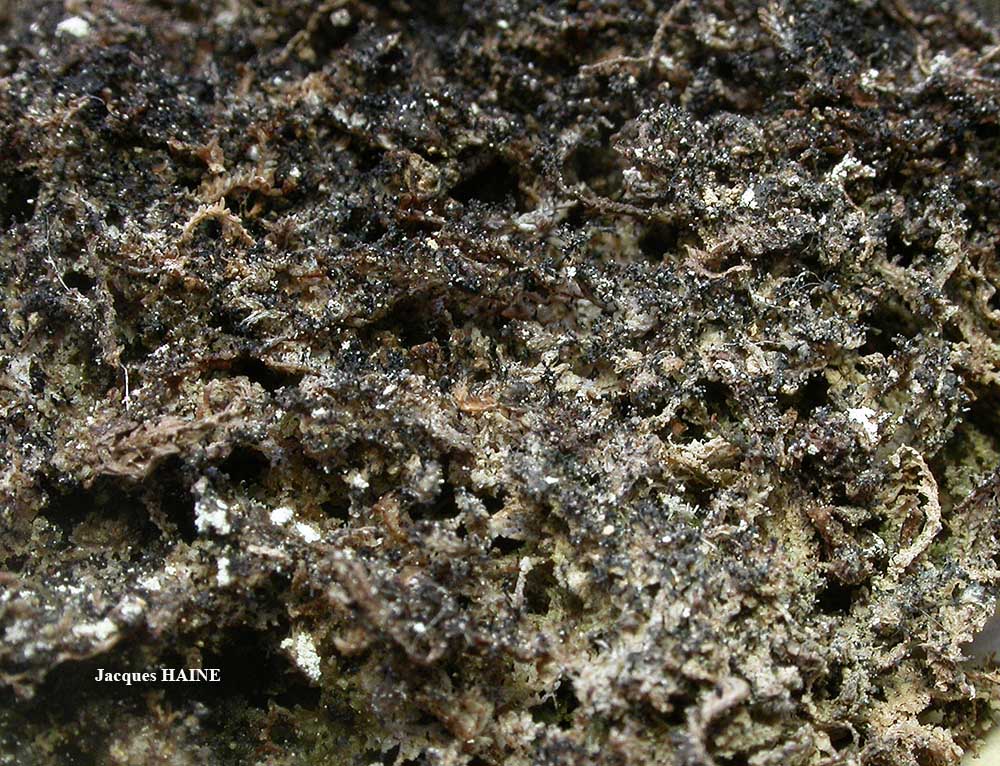
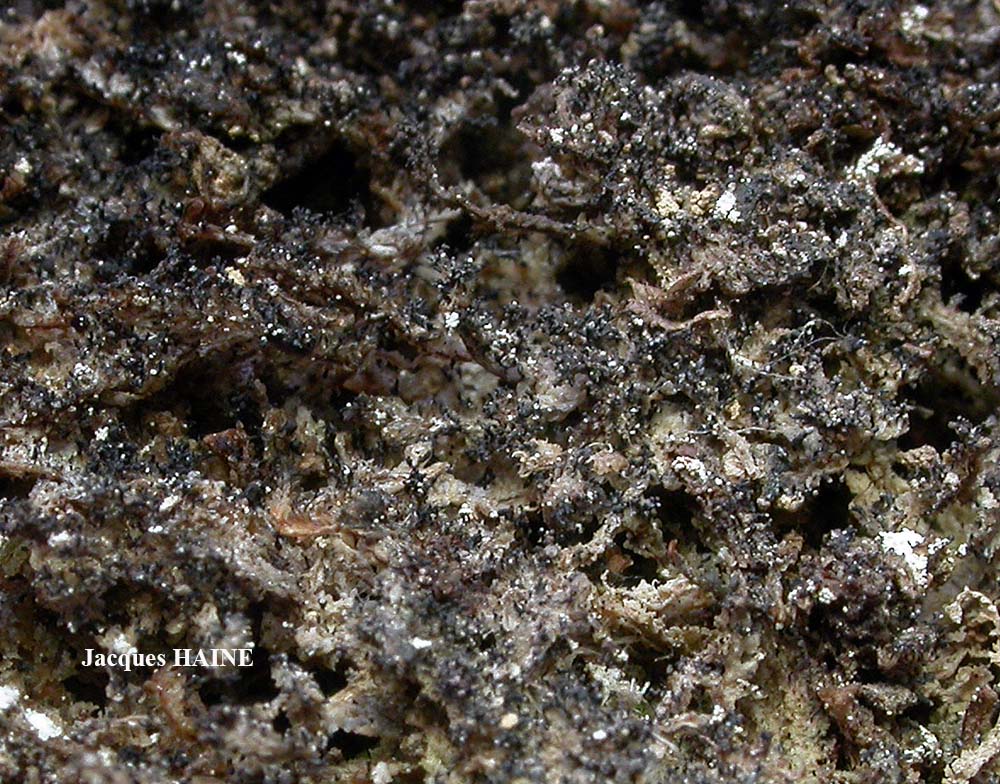
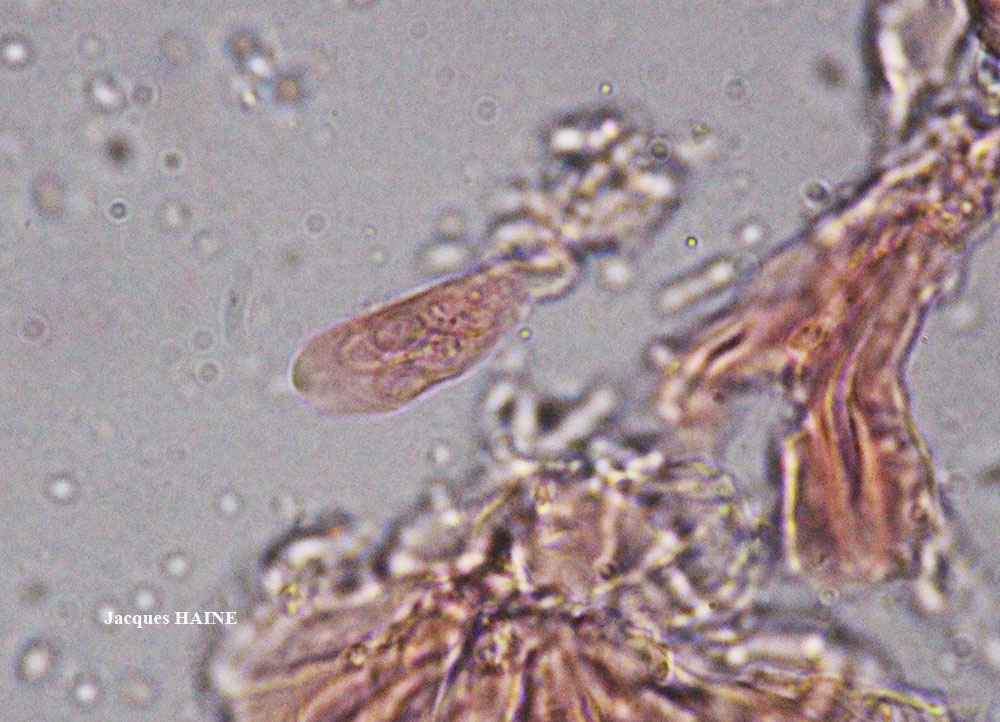
Description: Thallus crustose, thinly episubstratic, sometimes inconspicuous, pale to dark green or brown-black, pale brown in shade-forms, finely granulose, the granules 15-50 μm wide. Apothecia rare, micareoid, black, 0.1-0.25 mm across, sometimes confluent into tuberculate, up to 0.5 mm wide aggregates, with an initially flat, then rapidly convex disc, without a proper margin. Proper exciple indistinct; epithecium poorly differentiated from the hymenium; hymenium colourless or partly brownish or olivaceous, 25-35 μm high, with dark brown vertical streaks reacting K- or K+ olive, N+ reddish; paraphyses rather few, of two types: a) 0.5-1 mm thick (to 1.5 μm at apices), hyaline and often branched, b) 2-2.5 μm thick (to 3.5 μm at apices), fasciculate and brownish (producing the brown streaks in the hymenium); hypothecium dark reddish brown, K-, N-. Asci 8-spored, clavate to cylindrical-clavate; in K/I with a blue outer layer and apical dome and unstained wall, the dome with an apical cushion. Ascospores 0-1(-3)-septate, hyaline, ovoid to oblong-ellipsoid, 8-13(-16) x 2.3-4 μm, sometimes slightly curved, thin-walled. Pycnidia very abundant, black, stalked, 0.2-0.5 mm tall, the stalk simple or branched, thorn-like, black, often with white apices, the wall dark greenish brown, K- or K+ greenish, N+ red. Mesocnidia cylindrical, often biguttulate, 3.5-5 x 1-1.5 μm. Photobiont micareoid, the cells 4-7 μm wide. Spot tests: K-, C-, KC-, P-, UV-. Chemistry: thallus without lichen substances.
Growth form: Crustose
Photobiont: green algae other than Trentepohlia
Most common in areas with a humid-warm climate (e.g. most of Tyrrenian Italy)
In underhangs rarely wetted by rain
Commonnes-rarity: (info)
Alpine belt: absent
Subalpine belt: absent
Montane belt: rare
Dry submediterranean belt: rare
Humid submediterranean belt: absent
Padanian area: absent
pH of the substrata:
1 2 3 4 5

Solar irradiation:
1 2 3 4 5
Aridity:
1 2 3 4 5
Eutrophication:
1 2 3 4 5
Poleotolerance:
0 1 2 3
Altitudinal distribution:
1 2 3 4 5 6
Rarity
absent
extremely rare
very rare
rare
rather rare
rather common
common
very common
extremely common
Loading data...
Occurrence data
Predictive map
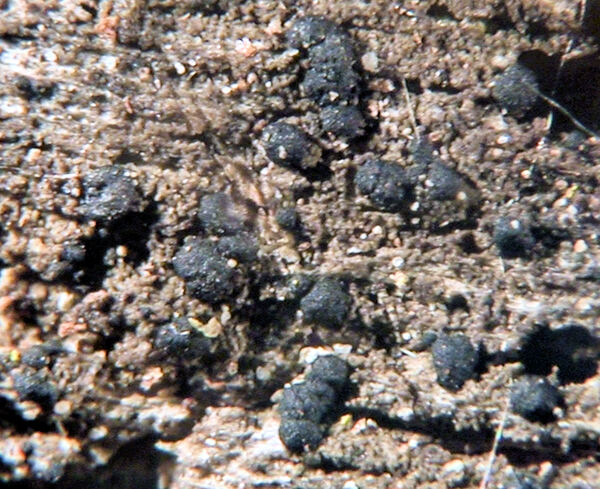
P.L. Nimis CC BY-SA 4.0
TSB 23615
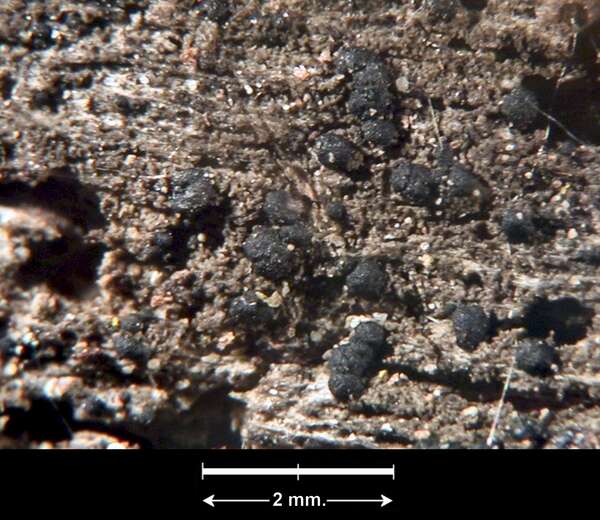
G. Incerti; Owner: Department of Life Sciences, University of Trieste
Herbarium: TSB (23615)
2001/11/26
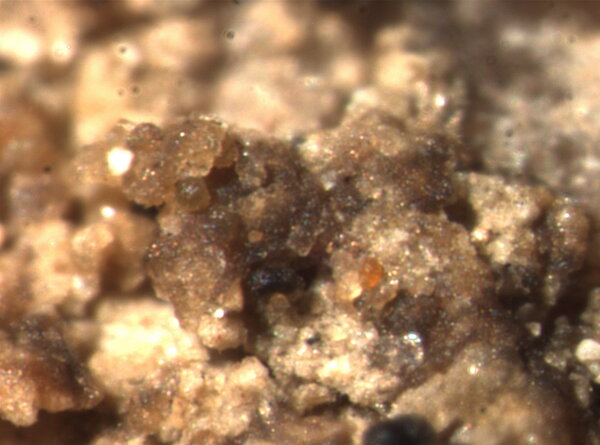
Pier Luigi Nimis - CC BY-SA 4.0
TSB 30294
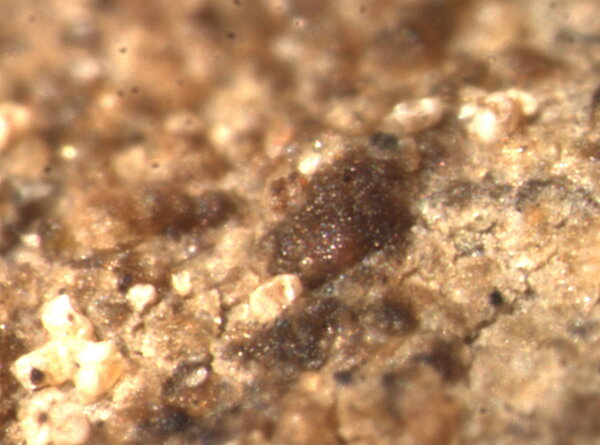
Pier Luigi Nimis - CC BY-SA 4.0
TSB 30294
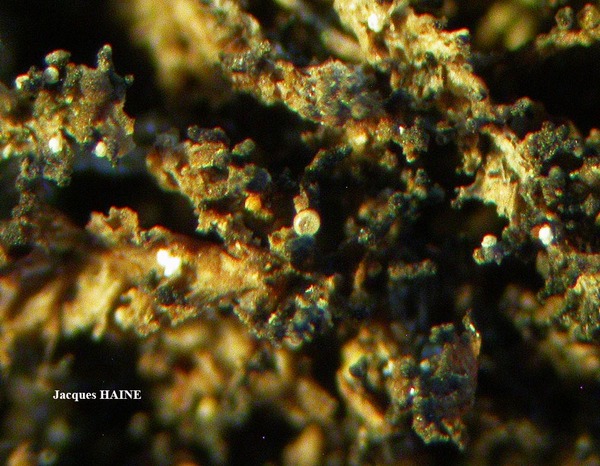
Jacques Haine - Source: http://www.lichensmaritimes.org/index.php?task=fiche&lichen=717&lang=en
Belgium, Nismes
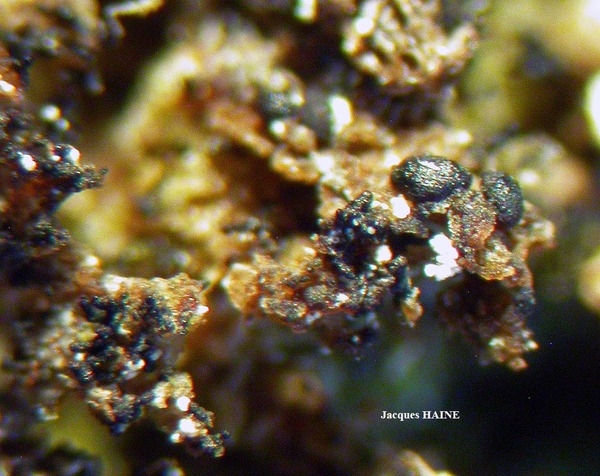
Jacques Haine - Source: http://www.lichensmaritimes.org/index.php?task=fiche&lichen=717&lang=en
Belgium, Nismes
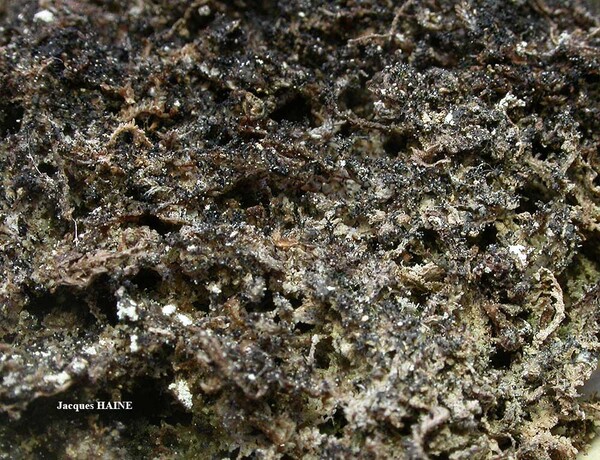
Jacques Haine - Source: http://www.lichensmaritimes.org/index.php?task=fiche&lichen=717&lang=en
Belgium, Nismes
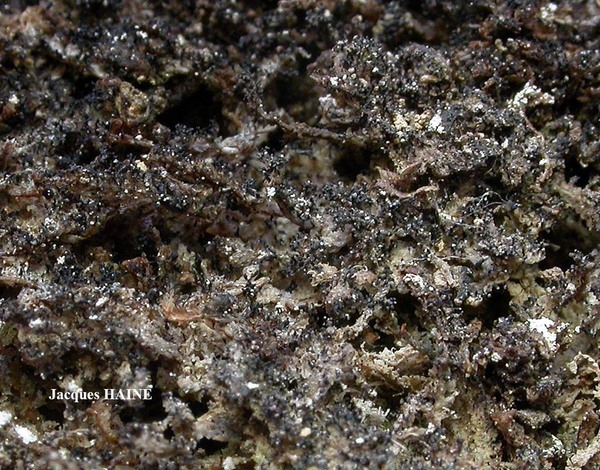
Jacques Haine - Source: http://www.lichensmaritimes.org/index.php?task=fiche&lichen=717&lang=en
Belgium, Nismes
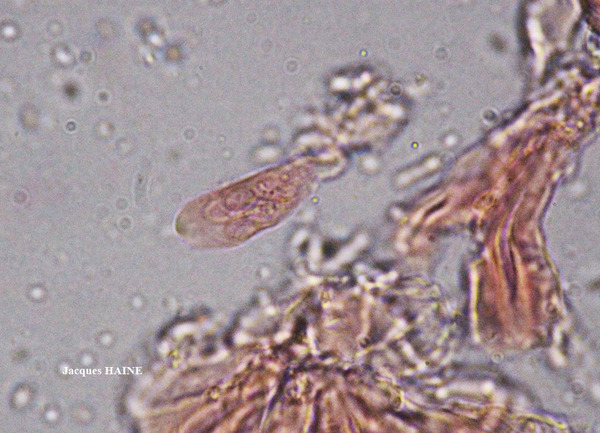
Jacques Haine - Source: http://www.lichensmaritimes.org/index.php?task=fiche&lichen=717&lang=en
Belgium, Nismes
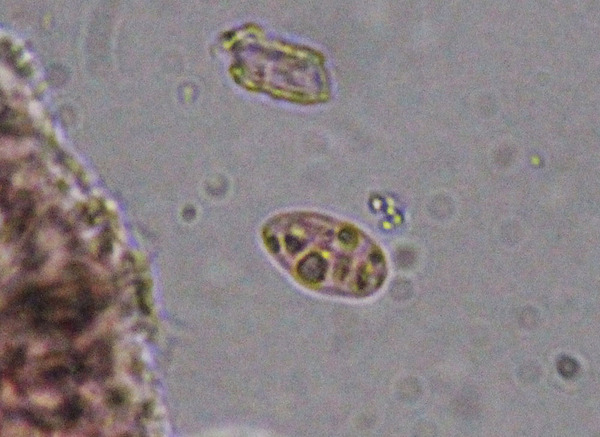
Jacques Haine - Source: http://www.lichensmaritimes.org/index.php?task=fiche&lichen=717&lang=en
Belgium, Nismes
Growth form: Crustose
Photobiont: green algae other than Trentepohlia
Most common in areas with a humid-warm climate (e.g. most of Tyrrenian Italy)
In underhangs rarely wetted by rain
Commonnes-rarity: (info)
Alpine belt: absent
Subalpine belt: absent
Montane belt: rare
Dry submediterranean belt: rare
Humid submediterranean belt: absent
Padanian area: absent
pH of the substrata:
| 1 | 2 | 3 | 4 | 5 |
Solar irradiation:
| 1 | 2 | 3 | 4 | 5 |
Aridity:
| 1 | 2 | 3 | 4 | 5 |
Eutrophication:
| 1 | 2 | 3 | 4 | 5 |
Poleotolerance:
| 0 | 1 | 2 | 3 |
Altitudinal distribution:
| 1 | 2 | 3 | 4 | 5 | 6 |
Rarity
absent
extremely rare
very rare
rare
rather rare
rather common
common
very common
extremely common
Loading data...
Occurrence data
Predictive map
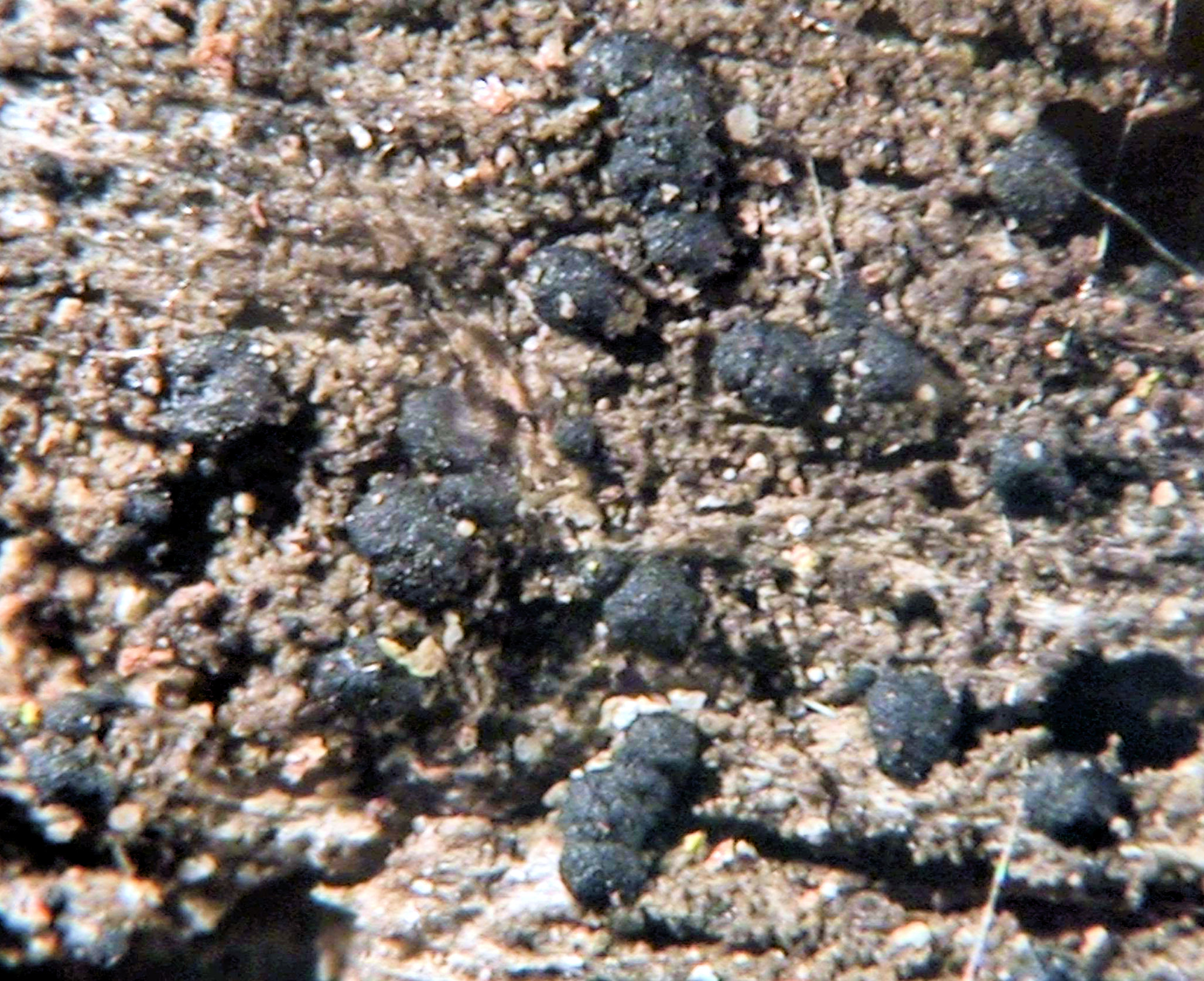
P.L. Nimis CC BY-SA 4.0
TSB 23615
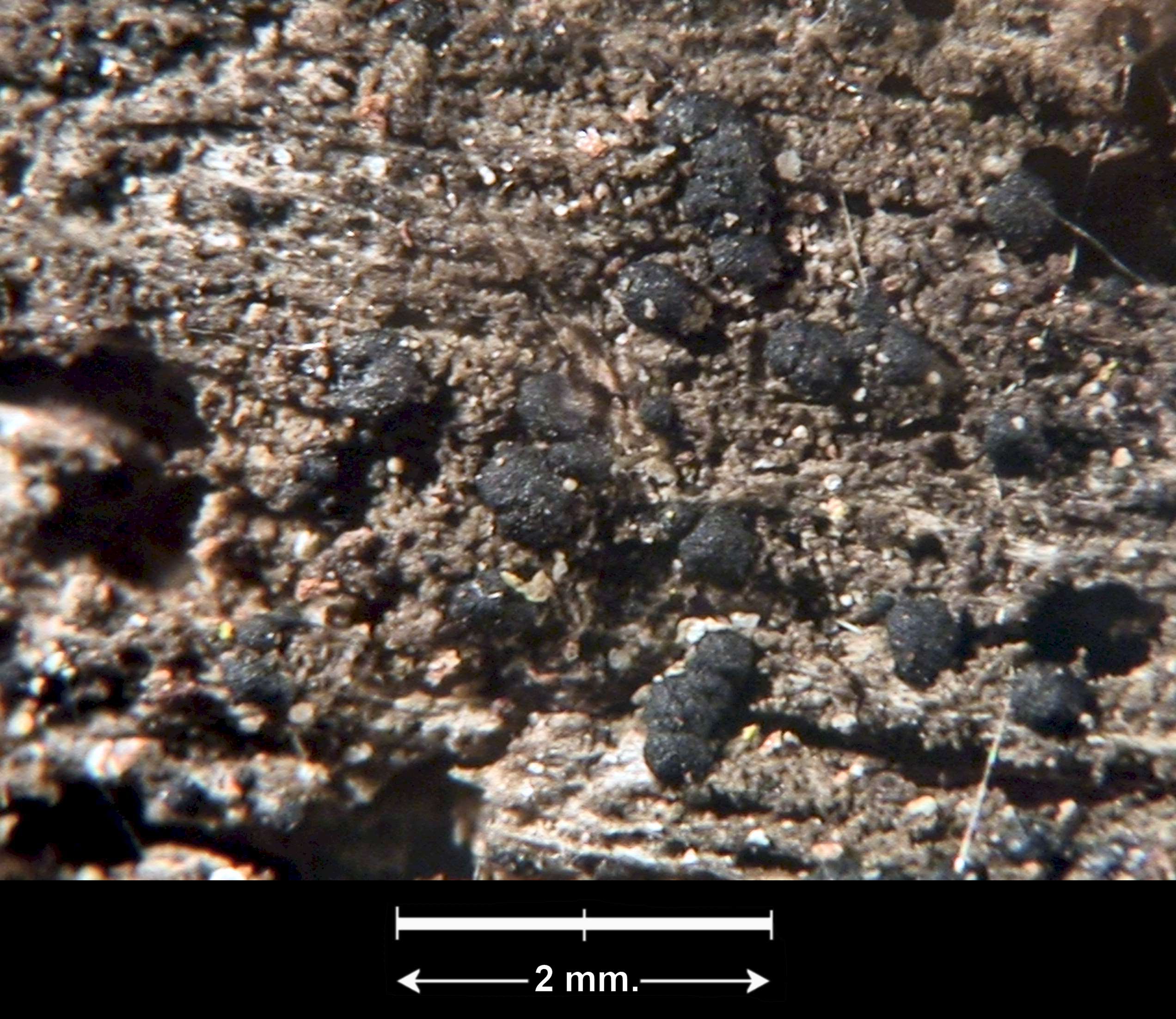
G. Incerti; Owner: Department of Life Sciences, University of Trieste
Herbarium: TSB (23615)
2001/11/26
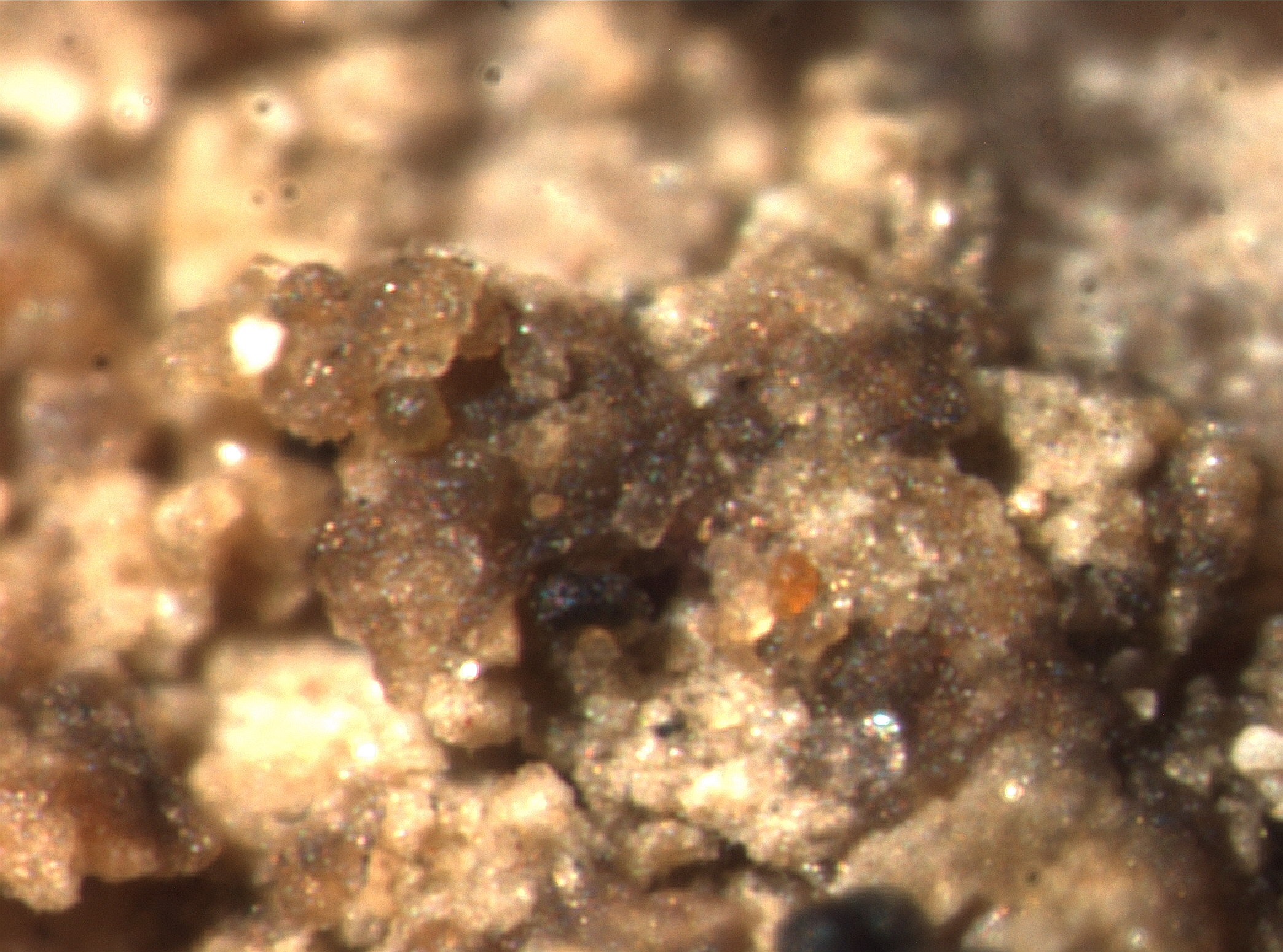
Pier Luigi Nimis - CC BY-SA 4.0
TSB 30294

Pier Luigi Nimis - CC BY-SA 4.0
TSB 30294
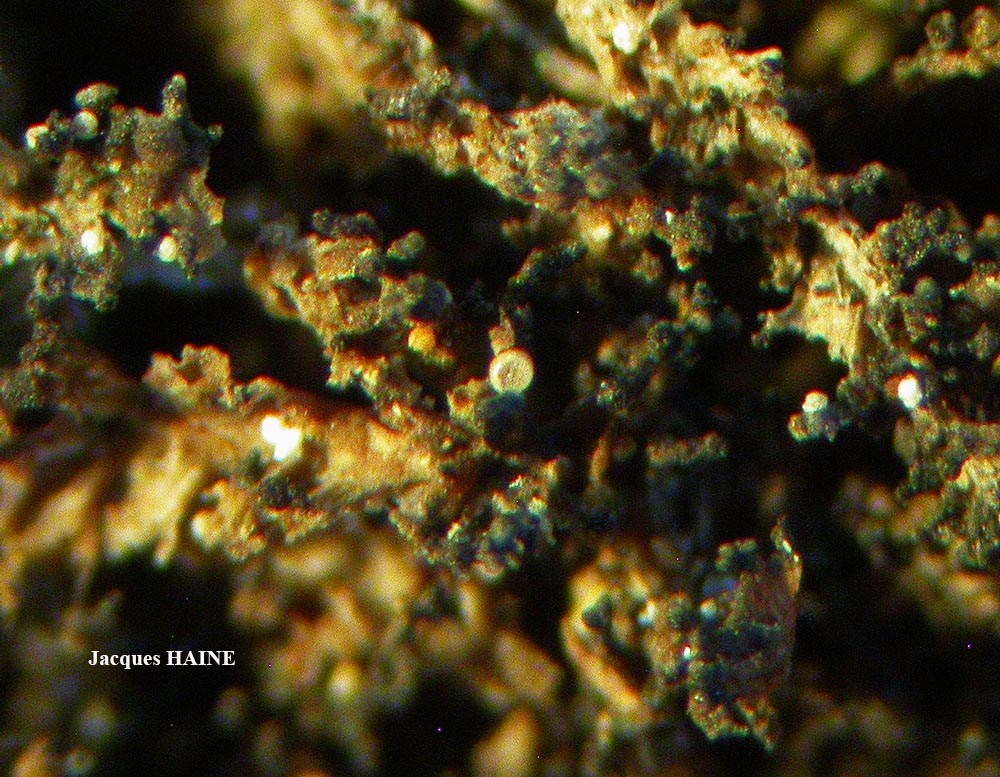
Jacques Haine - Source: http://www.lichensmaritimes.org/index.php?task=fiche&lichen=717&lang=en
Belgium, Nismes
Jacques Haine - Source: http://www.lichensmaritimes.org/index.php?task=fiche&lichen=717&lang=en
Belgium, Nismes
Jacques Haine - Source: http://www.lichensmaritimes.org/index.php?task=fiche&lichen=717&lang=en
Belgium, Nismes
Jacques Haine - Source: http://www.lichensmaritimes.org/index.php?task=fiche&lichen=717&lang=en
Belgium, Nismes
Jacques Haine - Source: http://www.lichensmaritimes.org/index.php?task=fiche&lichen=717&lang=en
Belgium, Nismes