Arthonia medusula (Pers.) Nyl.
Mém. Soc. Imp. Sc. Nat. Cherbourg, 5: 132, 1857. Basionym: Opegrapha medusula Pers. - Ann. Wetter. Gesellsch. Ges. Naturk., 2: 15, 1810.
Synonyms:
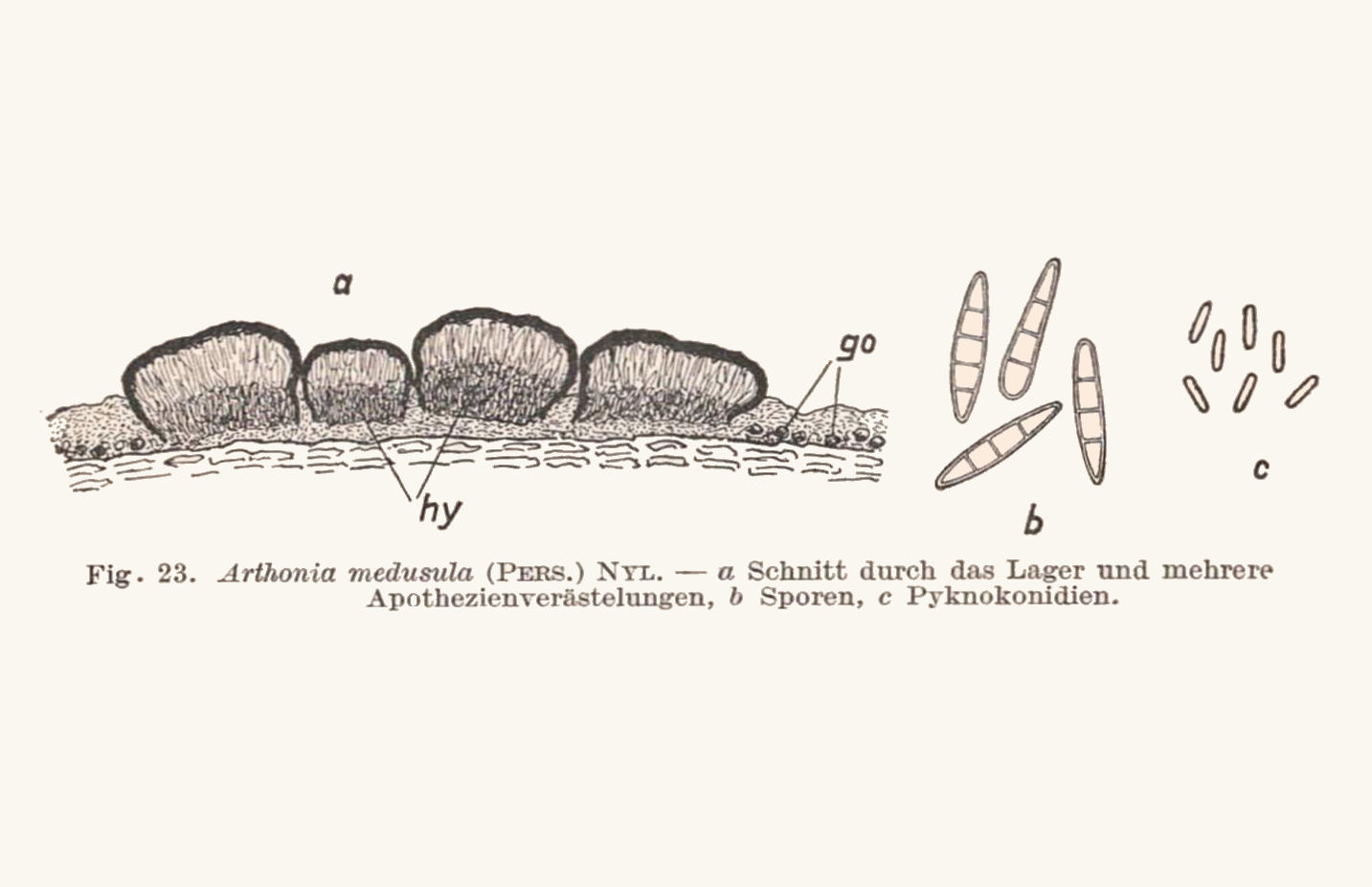
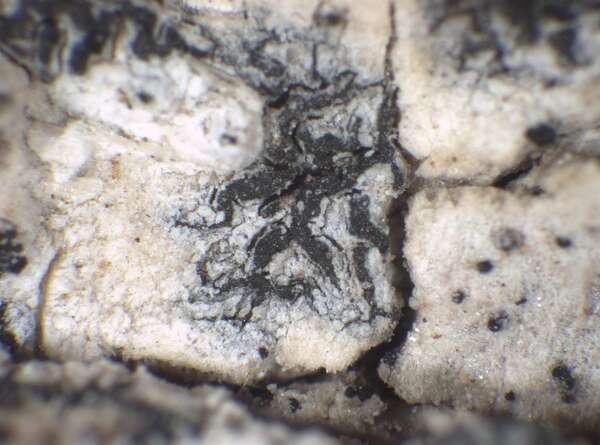
Description: Thallus crustose, episubstratic, thin, whitish to yellowish white. Apothecia arthonioid, lirelliform, brown-black, semi-immersed in the thallus, 0.5-2 mm long, branched to stellate, with a mostly flat, grey-pruinose or rarely epruinose disc. Proper exciple poorly evident; epithecium blue-black, rarely dark olive-brown, K+ greenish; hymenium colourless to pale brown, 50-75 µm high, I+ blue; hypothecium colourless to pale yellowish. Asci 8-spored, broadly clavate, semi-fissitunicate, with a large apical dome and a distinct ocular chamber, Arthonia-type. Ascospores (2-)3(-4) septate, hyaline, more or less fusiform, 9-18 x 2-3 µm, the apical cell not enlarged. Pycnidia common, black but often white-pruinose, slightly emerging from thallus. Conidia bacilliform, 5-6 x 1-1.2 µm. Photobiont trentepohlioid. Spot tests: thallus K- or K+ yellowish, C-, KC-, P-. Chemistry: unidentified substances in thallus.
Growth form: Crustose
Substrata: bark
Photobiont: Trentepohlia
Reproductive strategy: mainly sexual
Most common in areas with a humid-warm climate (e.g. most of Tyrrenian Italy)
In underhangs rarely wetted by rain
Commonnes-rarity: (info)
Alpine belt: absent
Subalpine belt: absent
Montane belt: absent
Dry submediterranean belt: extremely rare
Humid submediterranean belt: extremely rare
Padanian area: absent
pH of the substrata:
1 2 3 4 5

Solar irradiation:
1 2 3 4 5
Aridity:
1 2 3 4 5
Eutrophication:
1 2 3 4 5
Poleotolerance:
0 1 2 3
Altitudinal distribution:
1 2 3 4 5 6
Rarity
absent
extremely rare
very rare
rare
rather rare
rather common
common
very common
extremely common
Loading data...
Occurrence data
Predictive map
P.L. Nimis; Owner: Department of Life Sciences, University of Trieste
Herbarium: TSB (5733)
2003/01/23
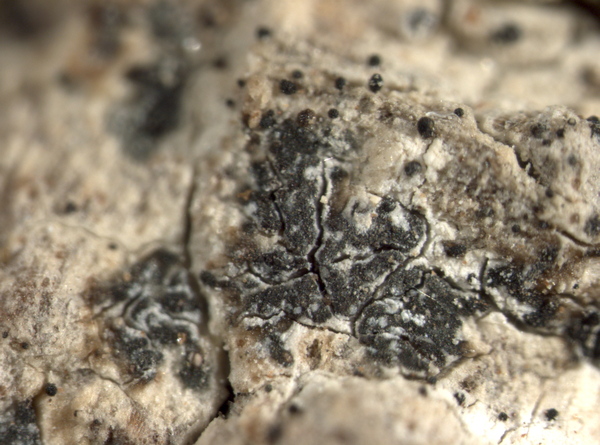
Elena Pittao; Owner: Department of Life Sciences, University of Trieste
Herbarium: TSB 5733
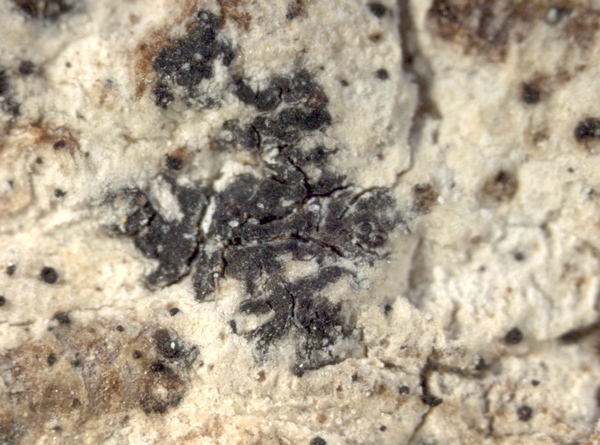
Elena Pittao; Owner: Department of Life Sciences, University of Trieste
Herbarium: TSB 5733
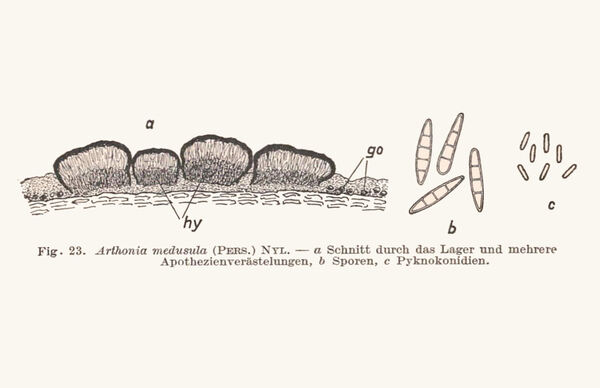
Redinger, K. (1938) Arthoniaceae, Graphidaceae . In Kryptogamen-Flora von Deutschland, Österreich und der Schweiz. Band 9, 2 Abt., Part 1 (G. L. Rabenhorst, ed.): 181–404. Leipzig: Borntraeger
Growth form: Crustose
Substrata: bark
Photobiont: Trentepohlia
Reproductive strategy: mainly sexual
Most common in areas with a humid-warm climate (e.g. most of Tyrrenian Italy)
In underhangs rarely wetted by rain
Commonnes-rarity: (info)
Alpine belt: absent
Subalpine belt: absent
Montane belt: absent
Dry submediterranean belt: extremely rare
Humid submediterranean belt: extremely rare
Padanian area: absent
pH of the substrata:
| 1 | 2 | 3 | 4 | 5 |
Solar irradiation:
| 1 | 2 | 3 | 4 | 5 |
Aridity:
| 1 | 2 | 3 | 4 | 5 |
Eutrophication:
| 1 | 2 | 3 | 4 | 5 |
Poleotolerance:
| 0 | 1 | 2 | 3 |
Altitudinal distribution:
| 1 | 2 | 3 | 4 | 5 | 6 |
Rarity
absent
extremely rare
very rare
rare
rather rare
rather common
common
very common
extremely common
Loading data...
Occurrence data
Predictive map
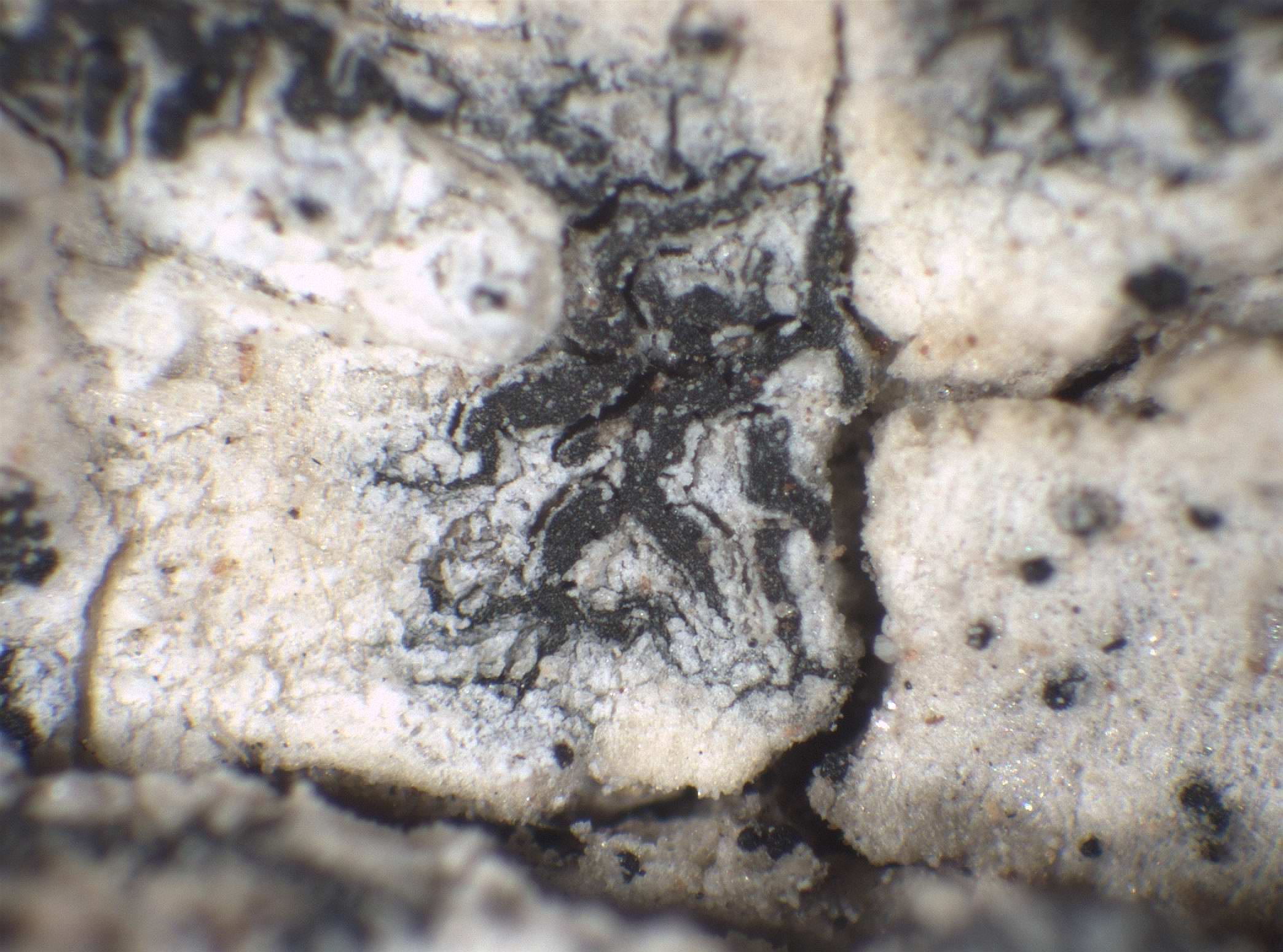
P.L. Nimis; Owner: Department of Life Sciences, University of Trieste
Herbarium: TSB (5733)
2003/01/23

Elena Pittao; Owner: Department of Life Sciences, University of Trieste
Herbarium: TSB 5733
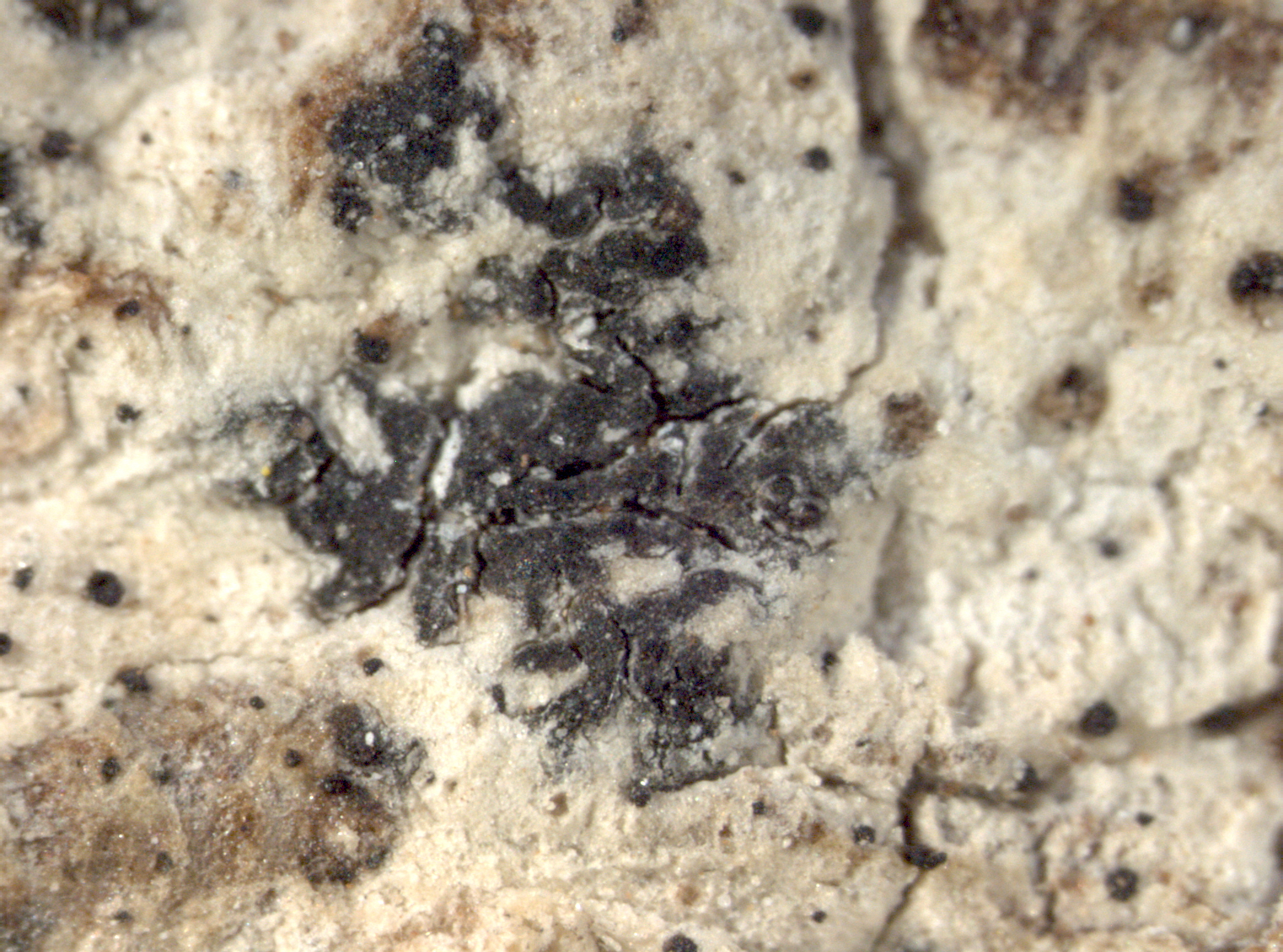
Elena Pittao; Owner: Department of Life Sciences, University of Trieste
Herbarium: TSB 5733