Mycobilimbia olivacea Aragón, Sarrión & Hafellner
in Sarrión & al., Lichenologist, 35: 3, 2003.
Synonyms:
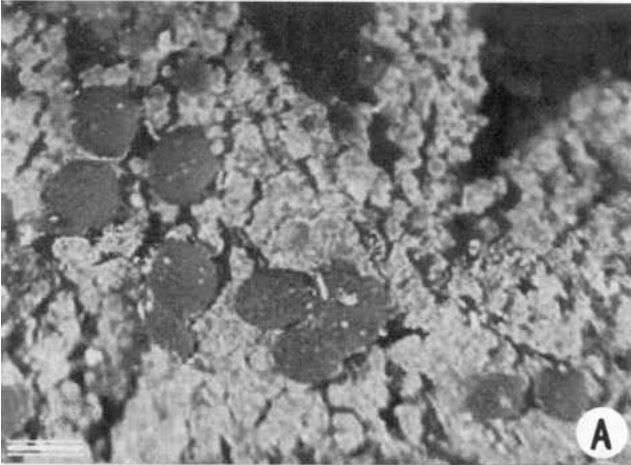
Description: Thallus crustose to subsquamulose, episubstratic, continuous, dark green to dark olive-brown, of more or less imbricate, 0.2-0.7(-l) mm wide, flat to convex, thinly corticate areoles with sinuate to lobulate margins. Apothecia lecideine to biatorine, 0.2-0.8(-l) mm across, sessile and more or less constricted at base, with a flat to convex, dark reddish brown disc, and a thin, finally excluded proper margin. Proper exciple 48-55 µm wide laterally, the outer part prosoplectenchymatous, reddish brown, of 6-8 µm wide cells, the inner part paler, with up to 13 µm wide cells; epithecium ochraceous brown, 5-12 µm high; hymenium colourless, 45-80 µm high; paraphyses sparingly branched and anastomosing, 1.5-2.5 µm thick at mid-level, the apical cells 3-4(-5) µm wide, with an orange-brown apical cap; hypothecium colourless, 50-70(-75) µm high, with photobiont cells in inner part. Asci 8-spored, clavate, with a thick, K/I + dark blue apical apparatus containing a K/I+ darker blue tubular pore. Ascospores 1-celled, hyaline, elongate to subcylindrical or ovoid, (9-)11-15(-17) x 5-6.5(-7.5) µm, with a smooth epispore. Photobiont chlorococcoid, the cells 5-9 µm in diam. Spot tests: thallus K-, C-, KC-, P-, UV-. Chemistry: without lichen substances.
Growth form: Crustose
Photobiont: green algae other than Trentepohlia
Reproductive strategy: mainly sexual
Commonnes-rarity: (info)
Alpine belt: absent
Subalpine belt: absent
Montane belt: very rare
Dry submediterranean belt: absent
Humid submediterranean belt: absent
Padanian area: absent
pH of the substrata:
1 2 3 4 5

Solar irradiation:
1 2 3 4 5
Aridity:
1 2 3 4 5
Eutrophication:
1 2 3 4 5
Poleotolerance:
0 1 2 3
Altitudinal distribution:
1 2 3 4 5 6
Rarity
absent
extremely rare
very rare
rare
rather rare
rather common
common
very common
extremely common
Loading data...
Occurrence data
Predictive map
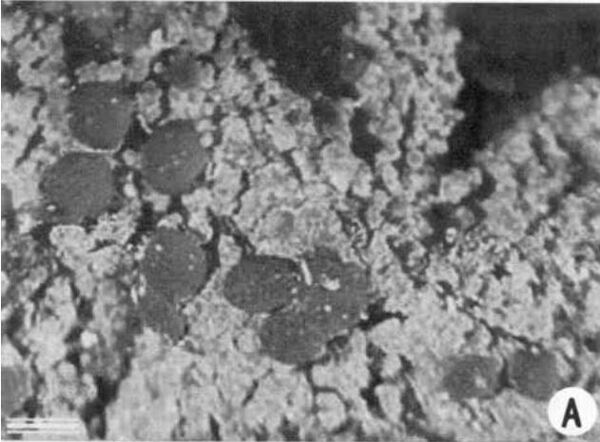
Source: Sarrión F.J., Aragon G. , Hafellner J., Rico V.J., Burgaz A.R. 2003. Two new species of Mycobilimbia from Spain. Lichenologist 35, 1: 1-10.
Spain
Growth form: Crustose
Photobiont: green algae other than Trentepohlia
Reproductive strategy: mainly sexual
Commonnes-rarity: (info)
Alpine belt: absent
Subalpine belt: absent
Montane belt: very rare
Dry submediterranean belt: absent
Humid submediterranean belt: absent
Padanian area: absent
pH of the substrata:
| 1 | 2 | 3 | 4 | 5 |
Solar irradiation:
| 1 | 2 | 3 | 4 | 5 |
Aridity:
| 1 | 2 | 3 | 4 | 5 |
Eutrophication:
| 1 | 2 | 3 | 4 | 5 |
Poleotolerance:
| 0 | 1 | 2 | 3 |
Altitudinal distribution:
| 1 | 2 | 3 | 4 | 5 | 6 |
Rarity
absent
extremely rare
very rare
rare
rather rare
rather common
common
very common
extremely common
Loading data...
Occurrence data
Predictive map