Myochroidea rufofusca (Anzi) Printzen, T. Sprib. & Tønsberg
Lichenologist, 40: 204, 2008. Basionym: Biatora rufofusca Anzi - Cat. Lich. Sondr.: 76, 1860.
Synonyms: Biatora porphyroplaca Hinter. & Poelt; Lecidea rufofusca (Anzi) Th. Fr.
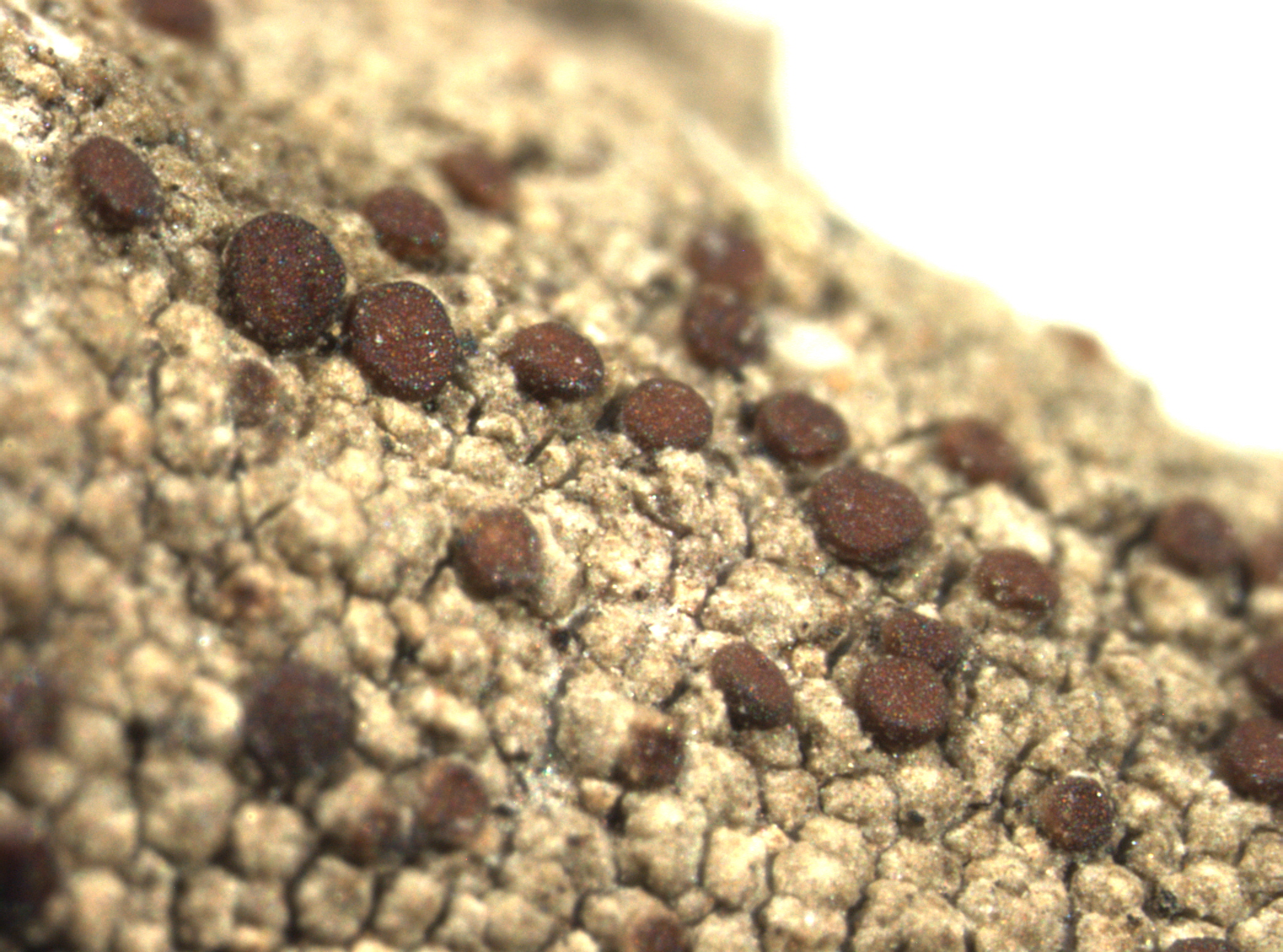
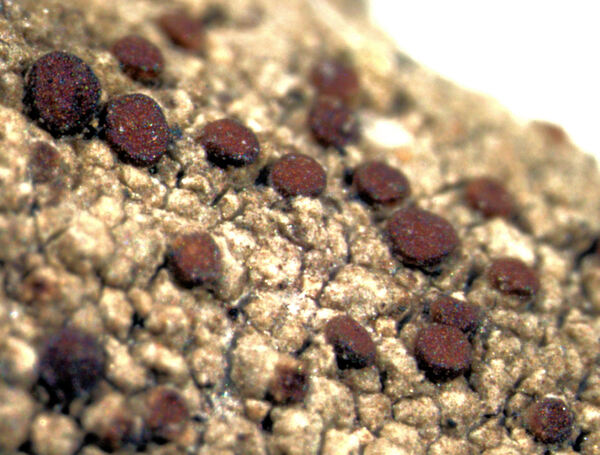
Description: Thallus crustose, episubstratic, grey-white, grey-brown or greenish brown, warted-areolate, consisting of (0.1-)0.2-0.5 mm wide, weakly to strongly convex, often crenate, sometimes subcoralloid areoles with more or less elevated margins, sometimes delimited by a dark prothallus. Apothecia biatorine, round to flexuose in outline, rarely tuberculate, sessile and slightly constricted at base, 0.3-0.8(-1.4) mm across, with a reddish to blackish brown, rarely ochraceous, flat to strongly convex, epruinose disc and a distinct, not or only weakly prominent, finally sometimes excluded proper margin. Proper exciple 35-90 µm wide laterally, orange to reddish brown in outer part, colourless to pale orange-brown within, of densely entangled, branched and anastomosing hyphae with slightly thickened and pigmented apical cells; epithecium orange-brown to dark reddish brown, 10-15 µm high, K-; hymenium colourless, 60-90(-100) µm high, I+ blue; paraphyses rather lax, sparingly branched and anastomosing, 0.7-1 µm thick at mid-level, the apical cells to 3(-5) µm wide; hypothecium colourless to pale yellowish, 70-150(-200) µm high. Asci 8-spored, cylindrical-clavate, the I+ blue tholus with a wide, I+ dark blue tube structure that expands towards the top, without a pale axial body, approaching the Micarea-type. Ascospores 1-celled, hyaline, ellipsoid to ovoid (9-)11-15(-18) x (4-)6-8(-9) µm. Pycnidia rare, immersed in the thallus, c. 0.1 mm across, ochraceous brown to dark brown. Microconidia rare, bacilliform, 5-8 x 0.5-0.8 µm; macroconidia more frequent, thread-like, 12-25 x 0.5-0.8 µm. Photobiont chlorococcoid. Spot tests: thallus K- or K+ faintly yellow, C- or C+ faintly yellow, KC-, P- or P+ faintly yellow, UV+ yellow-orange. Chemistry thallus with different xanthones.
Growth form: Crustose
Substrata: soil, terricolous mosses, and plant debris
Photobiont: green algae other than Trentepohlia
Reproductive strategy: mainly sexual
Poorly known taxon in need of further study
Commonnes-rarity: (info)
Alpine belt: extremely rare
Subalpine belt: very rare
Montane belt: absent
Dry submediterranean belt: absent
Humid submediterranean belt: absent
Padanian area: absent
pH of the substrata:
1 2 3 4 5

Solar irradiation:
1 2 3 4 5
Aridity:
1 2 3 4 5
Eutrophication:
1 2 3 4 5
Poleotolerance:
0 1 2 3
Altitudinal distribution:
1 2 3 4 5 6
Rarity
absent
extremely rare
very rare
rare
rather rare
rather common
common
very common
extremely common
Loading data...
Occurrence data
Predictive map
P.L. Nimis CC BY-SA 4.0
TSB 20788
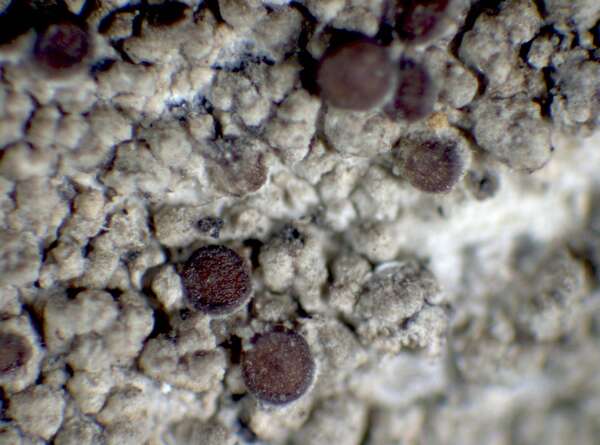
P.L. Nimis; Owner: Department of Life Sciences, University of Trieste
Herbarium: TSB (20788)
2001/11/22
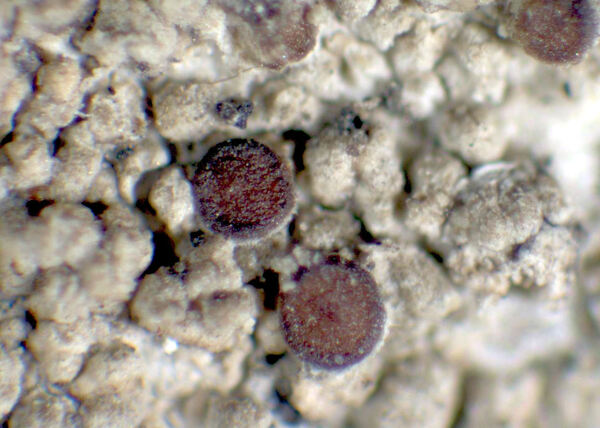
P.L. Nimis CC BY-SA 4.0
TSB 20788
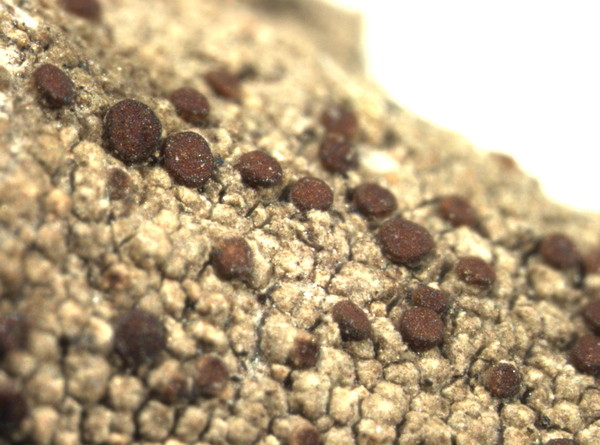
Pier Luigi Nimis - CC BY-SA 4.0
Herbarium: TSB 20788
Growth form: Crustose
Substrata: soil, terricolous mosses, and plant debris
Photobiont: green algae other than Trentepohlia
Reproductive strategy: mainly sexual
Poorly known taxon in need of further study
Commonnes-rarity: (info)
Alpine belt: extremely rare
Subalpine belt: very rare
Montane belt: absent
Dry submediterranean belt: absent
Humid submediterranean belt: absent
Padanian area: absent
pH of the substrata:
| 1 | 2 | 3 | 4 | 5 |
Solar irradiation:
| 1 | 2 | 3 | 4 | 5 |
Aridity:
| 1 | 2 | 3 | 4 | 5 |
Eutrophication:
| 1 | 2 | 3 | 4 | 5 |
Poleotolerance:
| 0 | 1 | 2 | 3 |
Altitudinal distribution:
| 1 | 2 | 3 | 4 | 5 | 6 |
Rarity
absent
extremely rare
very rare
rare
rather rare
rather common
common
very common
extremely common
Loading data...
Occurrence data
Predictive map
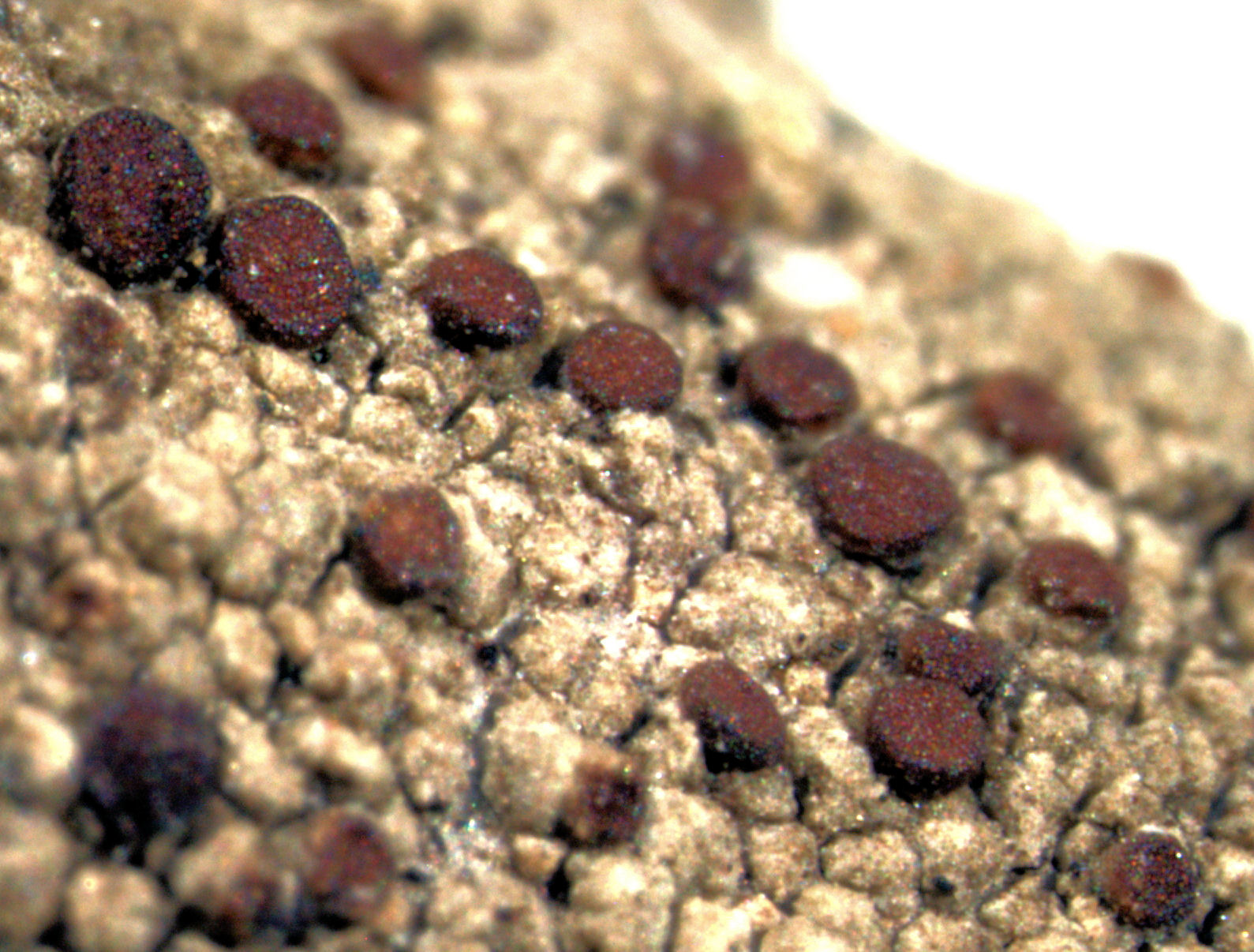
P.L. Nimis CC BY-SA 4.0
TSB 20788
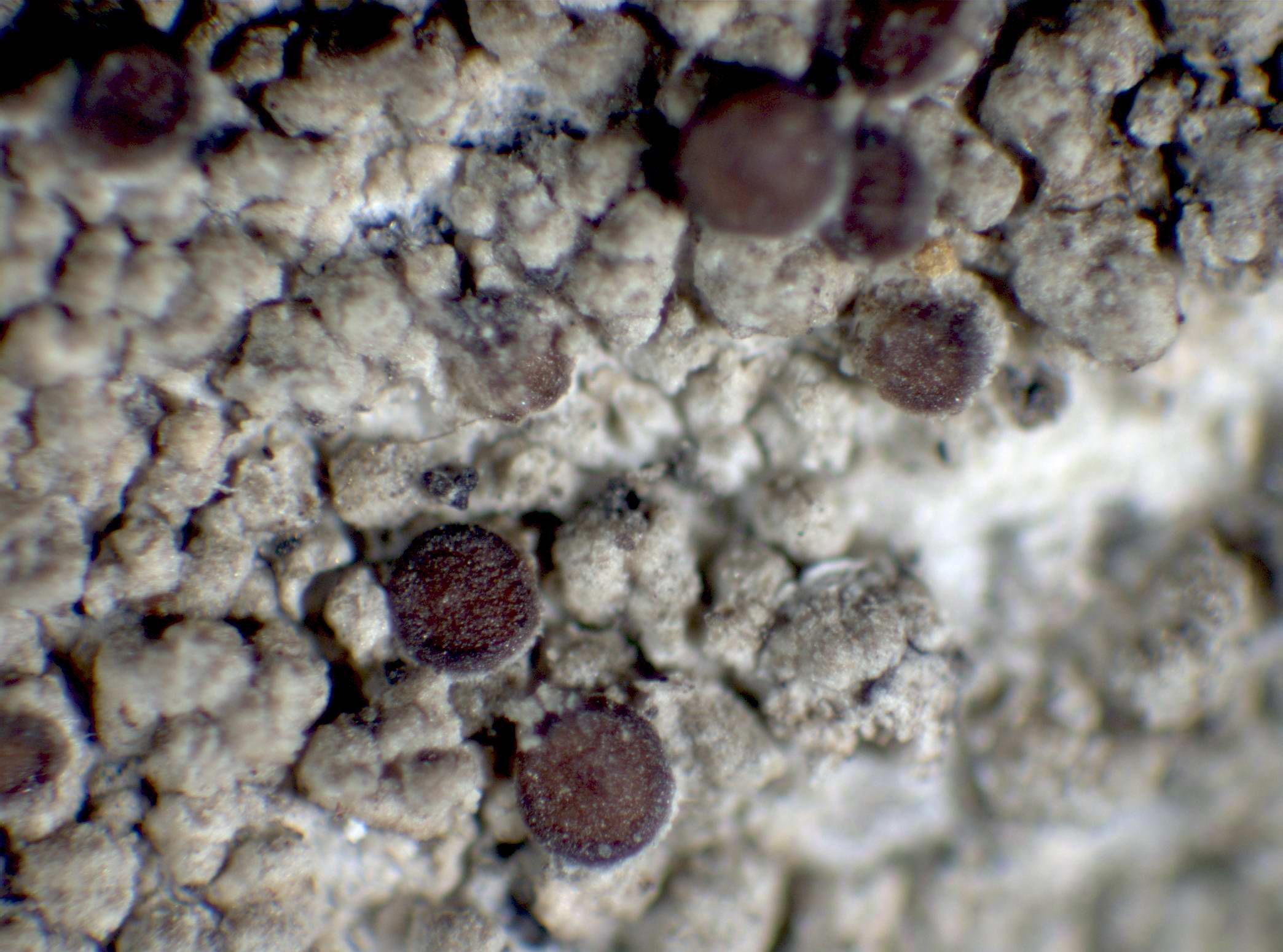
P.L. Nimis; Owner: Department of Life Sciences, University of Trieste
Herbarium: TSB (20788)
2001/11/22

P.L. Nimis CC BY-SA 4.0
TSB 20788