Arthonia molendoi (Frauenf.) R. Sant.
Thunbergia, 3: 2, 1986. Basionym: Tichothecium molendoi Frauenf. - in Arnold, Verh. zool. bot. Ges. Wien, 14: 461, 1864.
Synonyms: Arthonia molendoi (Arnold) R. Sant.; Bryostigma molendoi (Heufl. ex Arnold) S. Y. Kondr. & Hur
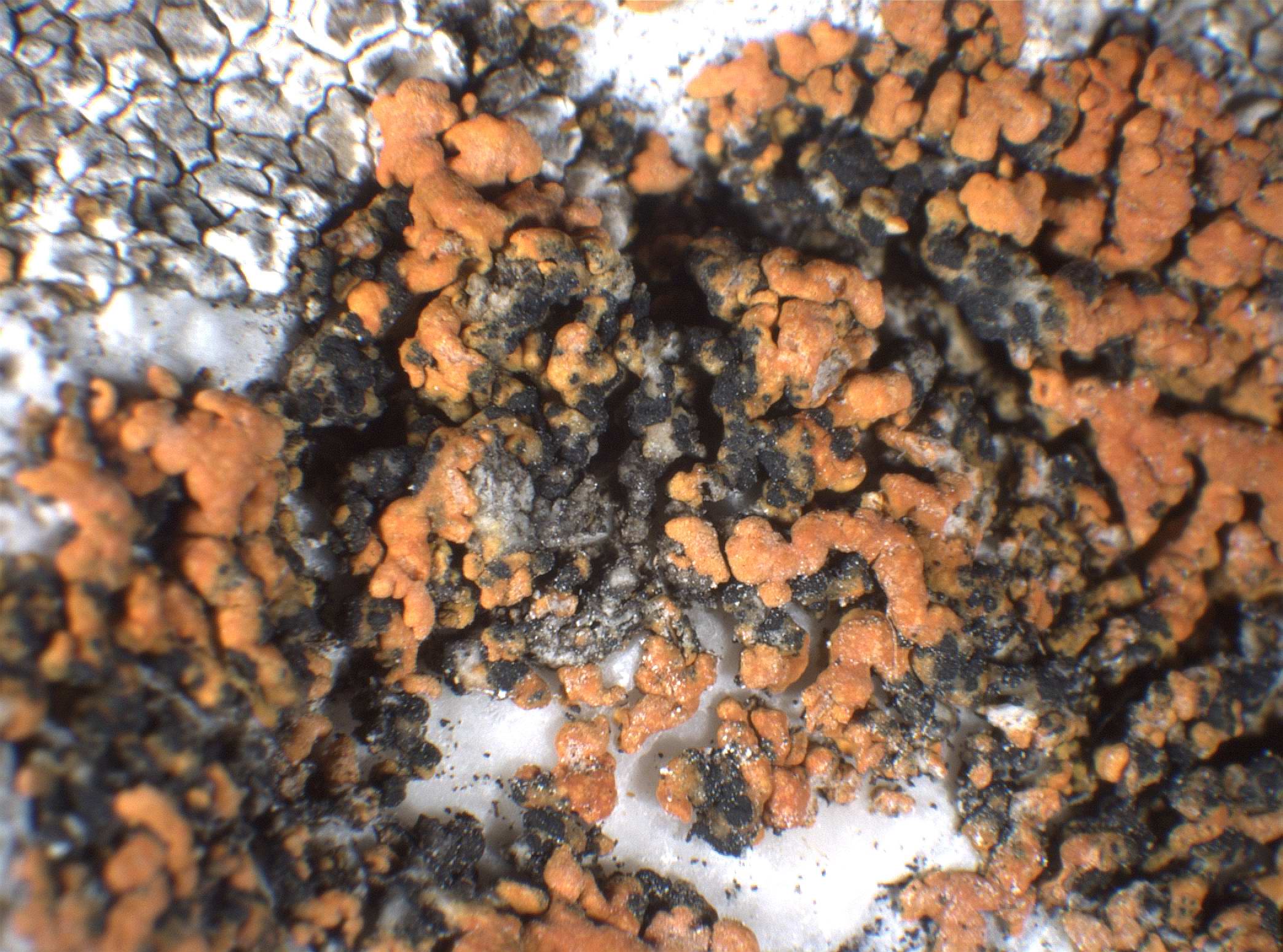
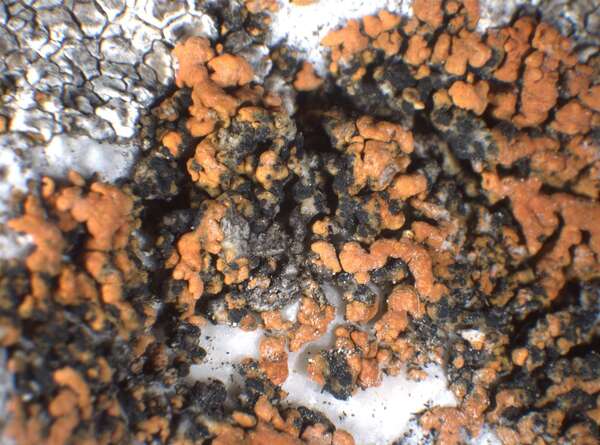
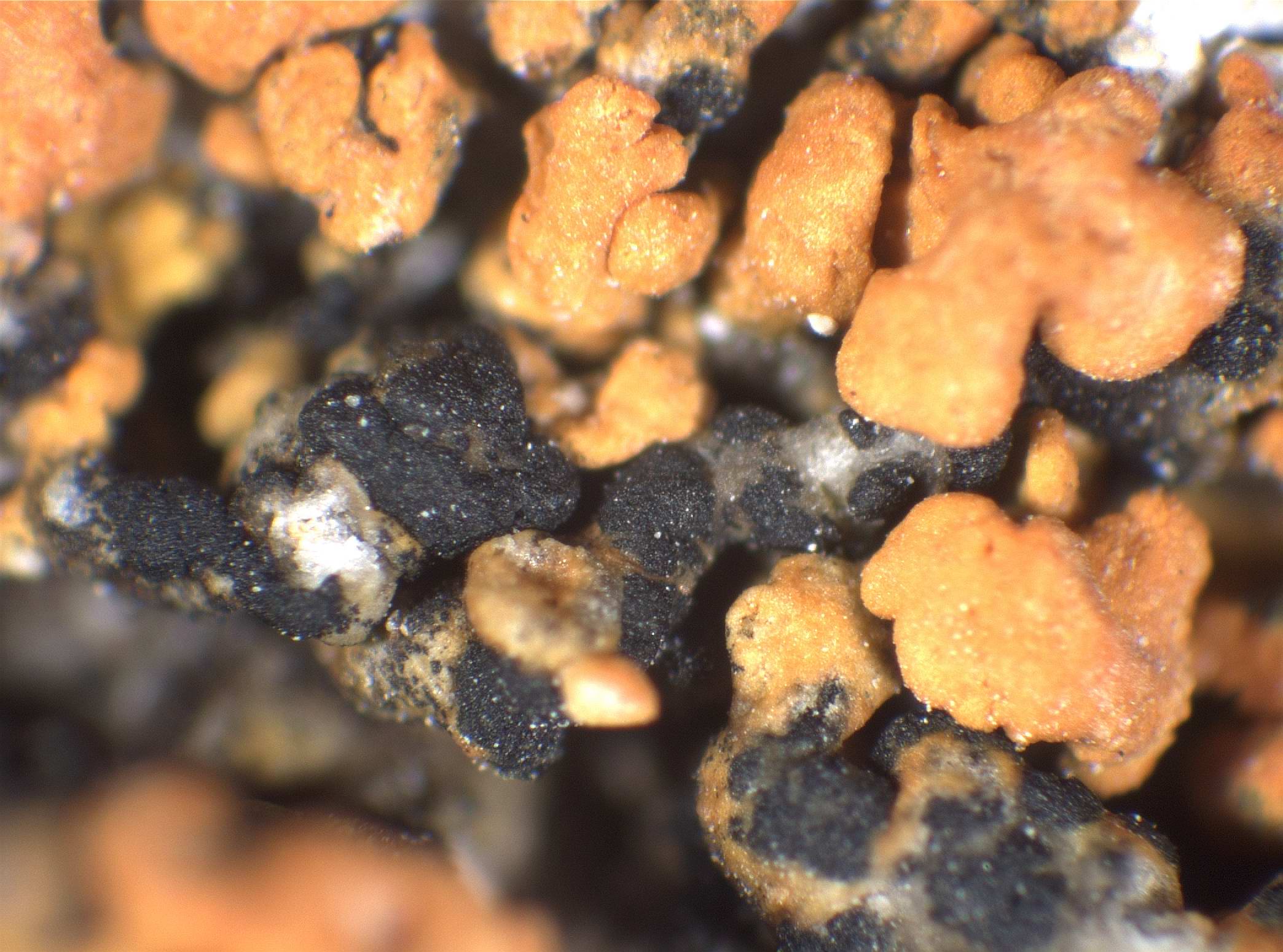
Description: Thallus inapparent, not lichenized, the hyphae developing inside the thalli of crustose and foliose Teloschistaceae. Apothecia arthonioid, emarginate, single or in groups of up to 5(-10) per infection spot, sometimes coalescent, developing in the cortex of the host, more or less round, adnate, 0.1-0.3 mm across, with a jet black, convex disc, without a proper margin. Proper exciple poorly developed; epithecium blackish brown with a dark olivaceous tinge, 15-20 µm high, K-; hymenium colourless to pale brown, up to 45 µm high, I+ red, K/I+ blue; paraphysoids branched and anastomosing, c. 2 µm thickat mid-level, the apical cells up to 4 µm wide; hypothecium colourless to pale yellow, 50-60 µm high. Asci (4-)8-spored, broadly clavate to subglobose, semi-fissitunicate, with a large, non-amyloid apical dome, and a distinct ocular chamber, Arthonia-type, 35-43 x 17-20 µm. Ascospores 1-septate, constricted at septum, one cell slightly attenuated, hyaline, 10-13 x 4-6 µm, with a gelatinous perispore. Photobiont absent. Spot tests: K-, C-, KC-, P-. Chemistry: without lichen substances.
Growth form: Lichenicolous fungus
Substrata: rocks
Reproductive strategy: mainly sexual
paras Xanthoria spp. and Caloplaca s.lat. spp.
Commonnes-rarity: (info)
Alpine belt: absent
Subalpine belt: very rare
Montane belt: rather rare
Dry submediterranean belt: very rare
Humid submediterranean belt: very rare
Padanian area: extremely rare
pH of the substrata:
1 2 3 4 5

Solar irradiation:
1 2 3 4 5
Aridity:
1 2 3 4 5
Eutrophication:
1 2 3 4 5
Poleotolerance:
0 1 2 3
Altitudinal distribution:
1 2 3 4 5 6
Rarity
absent
extremely rare
very rare
rare
rather rare
rather common
common
very common
extremely common
Loading data...
Occurrence data
Predictive map
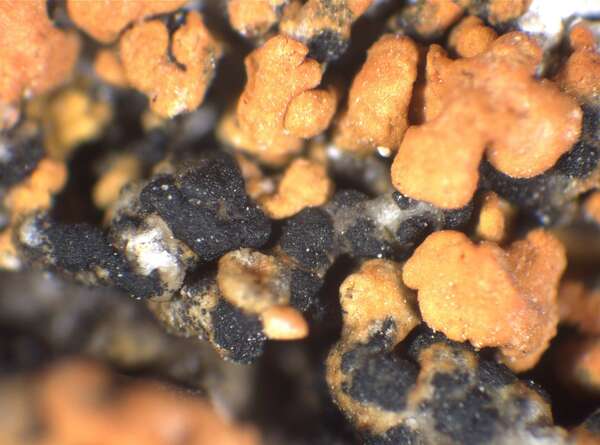
P.L. Nimis; Owner: Department of Life Sciences, University of Trieste
Herbarium: TSB (24445)
2003/01/23
on the thallus of the host, Xanthoria elegans
P.L. Nimis; Owner: Department of Life Sciences, University of Trieste
Herbarium: TSB (24445)
2003/01/23
on the thallus of the host, Xanthoria elegans
Growth form: Lichenicolous fungus
Substrata: rocks
Reproductive strategy: mainly sexual
paras Xanthoria spp. and Caloplaca s.lat. spp.
Commonnes-rarity: (info)
Alpine belt: absent
Subalpine belt: very rare
Montane belt: rather rare
Dry submediterranean belt: very rare
Humid submediterranean belt: very rare
Padanian area: extremely rare
pH of the substrata:
| 1 | 2 | 3 | 4 | 5 |
Solar irradiation:
| 1 | 2 | 3 | 4 | 5 |
Aridity:
| 1 | 2 | 3 | 4 | 5 |
Eutrophication:
| 1 | 2 | 3 | 4 | 5 |
Poleotolerance:
| 0 | 1 | 2 | 3 |
Altitudinal distribution:
| 1 | 2 | 3 | 4 | 5 | 6 |
Rarity
absent
extremely rare
very rare
rare
rather rare
rather common
common
very common
extremely common
Loading data...
Occurrence data
Predictive map
P.L. Nimis; Owner: Department of Life Sciences, University of Trieste
Herbarium: TSB (24445)
2003/01/23
on the thallus of the host, Xanthoria elegans