Polyozosia dispersa (Pers.) S.Y. Kondr., Lőkös & Farkas
in Kondratyuk & al., Acta Bot. Hung., 61, 1-2: 156, 2019. Basionym: Lichen dispersus Pers. - Ann. Bot. (Usteri), 7: 27, 1794.
Synonyms: Lecanora dispersa (Pers.) Röhl.; Lecanora umbrina auct. p.p.; Myriolecis dispersa (Pers.) Śliwa, Zhao Xin & Lumbsch; Patellaria caesioalba var. dispersa (Pers.) Trevis.
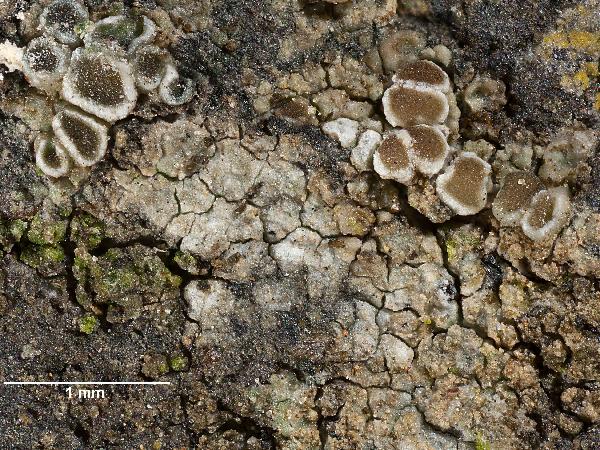
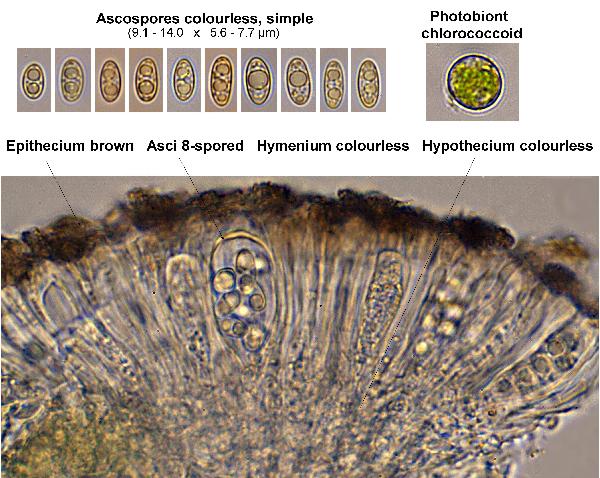
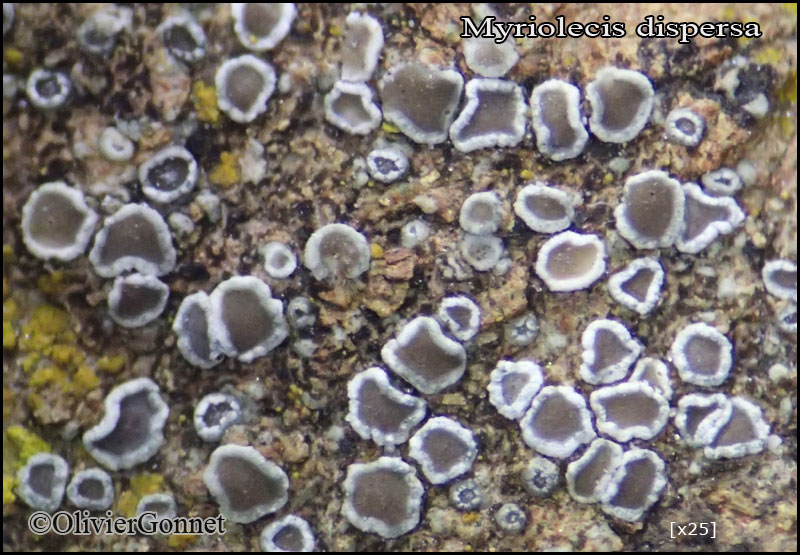
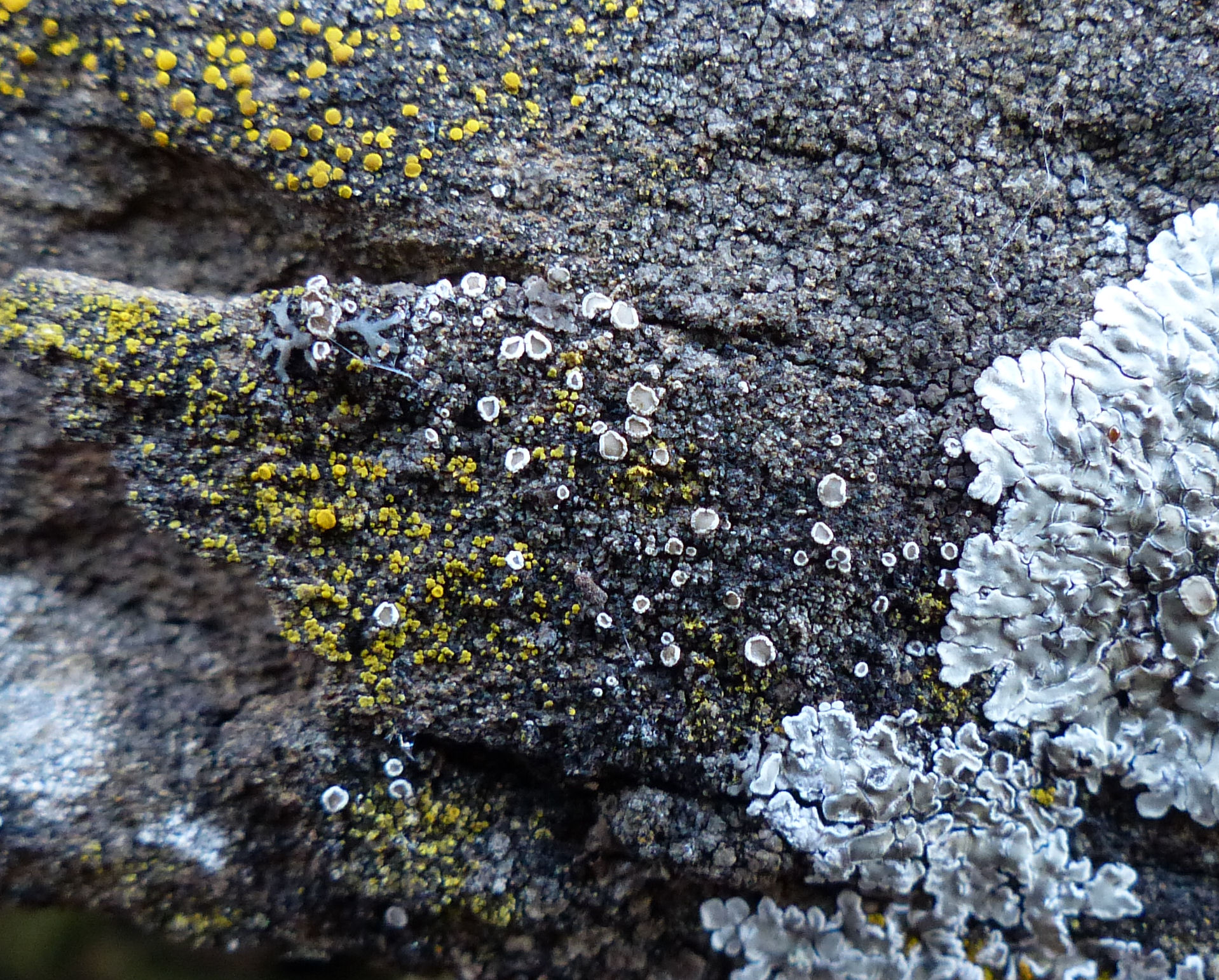
Description: Thallus crustose, endosubstratic, or of inconspicuous granules around the apothecia, usually consisting of the apothecial margin only. Apothecia lecanorine, sessile and constricted at base, 0.3-0.8(-1) mm across, with a slightly concave to finally slightly convex, yellowish grey, brown or almost black, rarely slightly pruinose disc and a white, more or less prominent, smooth, entire thalline margin. Thalline exciple corticate, (60-)90-200 μm thick, the cortex obscured by granules insoluble in K, but soluble in N, 30-80 μm thick laterally, 35-120 μm thick at base; proper exciple indistinct to well delimited and up to 30 μm wide; epithecium yellowish brown, with fine granules located between the tips of paraphyses (sometimes extending into the hymenium), which are insoluble in K and in N, sometimes with an epipsamma insoluble in K but soluble in N; hymenium colourless or pale yellow, 45-70 μm high; paraphyses slender, sparingly branched throughout, with few anastomoses, not expanded at apex, coherent in K; hypothecium colourless, often with some granules. Asci 8-spored, elongate-clavate, very thin-walled, with a K/I+ blue, tall tholus penetrated by a faintly amyloid apical cushion, the wall K/I-, surrounded by a K/I+ blue outer layer, Lecanora-type. Ascospores 1-celled, hyaline, ellipsoid, 8-12(-14) x (3-)4.5-6(-7) μm. Photobiont chlorococcoid. Spot tests: thallus (apothecial margin) K-, C-, KC-, P- or (apothecial margin only) P+ orange. Chemistry: usually without lichen substances, sometimes with 2.7-dichlorlichexanthone and pannarin in apothecial margin.
Growth form: Crustose
Substrata: rocks
Photobiont: green algae other than Trentepohlia
Reproductive strategy: mainly sexual
Commonnes-rarity: (info)
Alpine belt: absent
Subalpine belt: absent
Montane belt: rather rare
Dry submediterranean belt: extremely common
Humid submediterranean belt: extremely common
Padanian area: common
pH of the substrata:
1 2 3 4 5

Solar irradiation:
1 2 3 4 5
Aridity:
1 2 3 4 5
Eutrophication:
1 2 3 4 5
Poleotolerance:
0 1 2 3
Altitudinal distribution:
1 2 3 4 5 6
Rarity
absent
extremely rare
very rare
rare
rather rare
rather common
common
very common
extremely common
Loading data...
Occurrence data
Predictive map
 Current prediction (1981-2010)
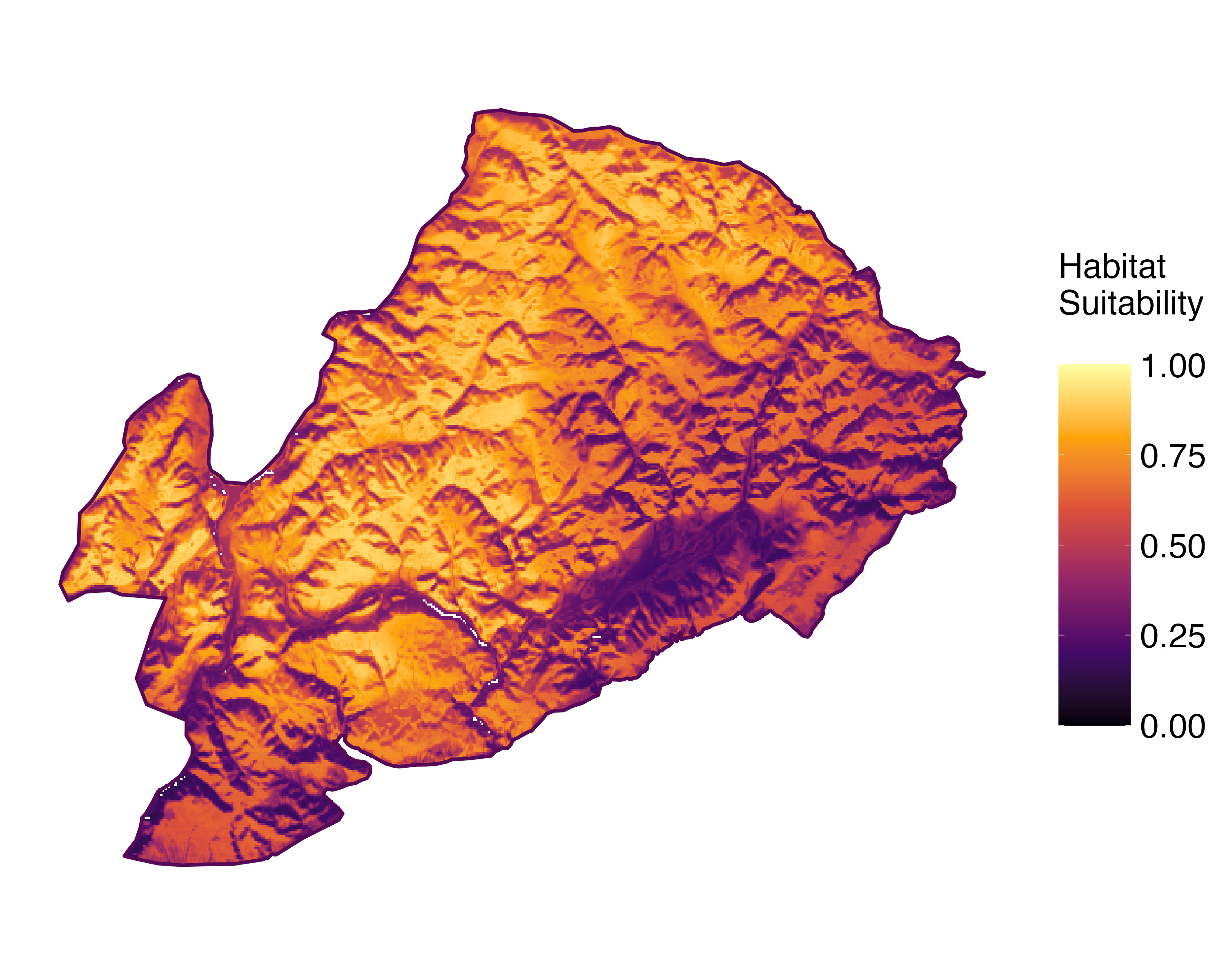 Future prediction (2071-2100) SSP 1-2.6
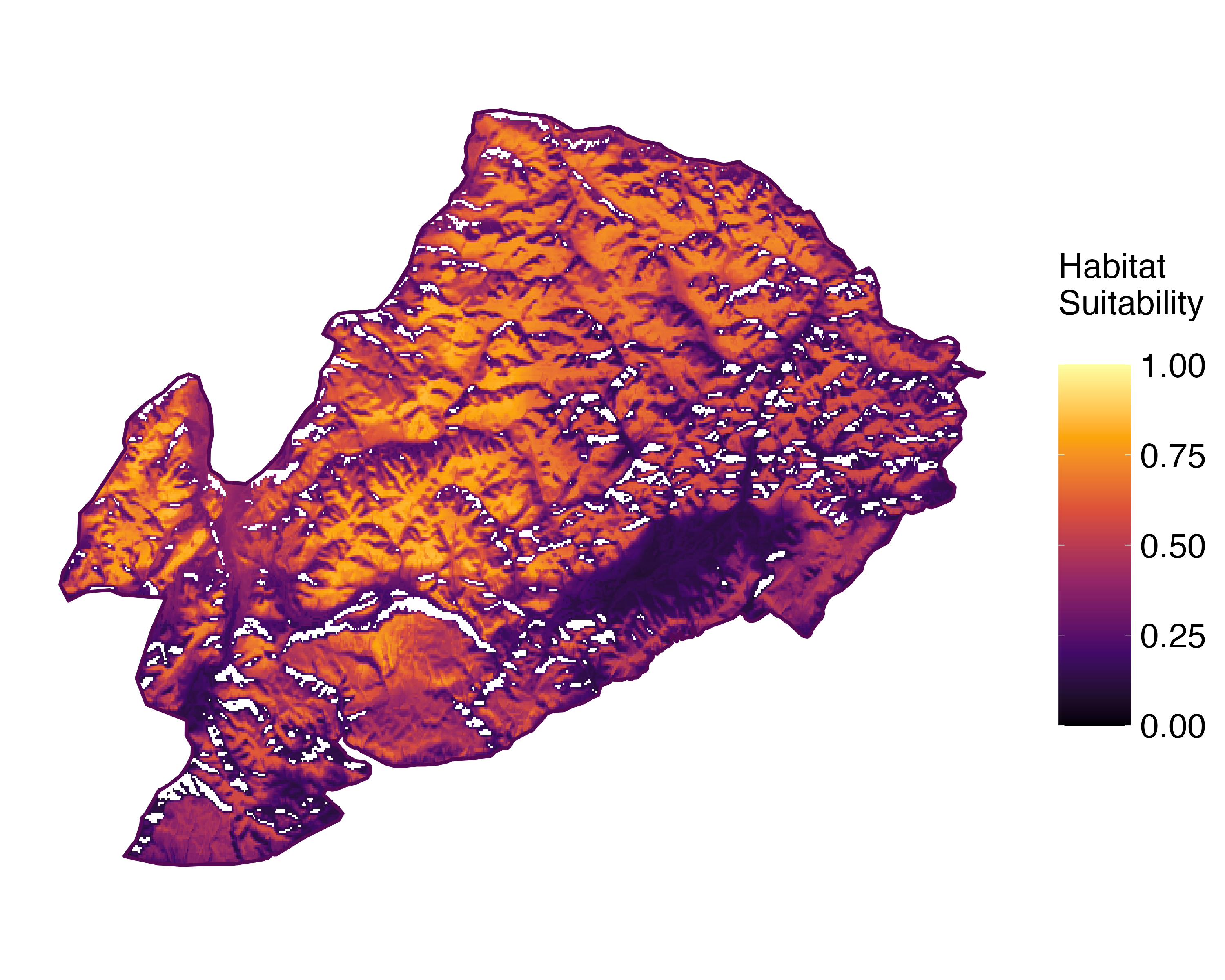 Future prediction (2071-2100) SSP 5-8.5Predictive maps according to Francesconi et al. 2025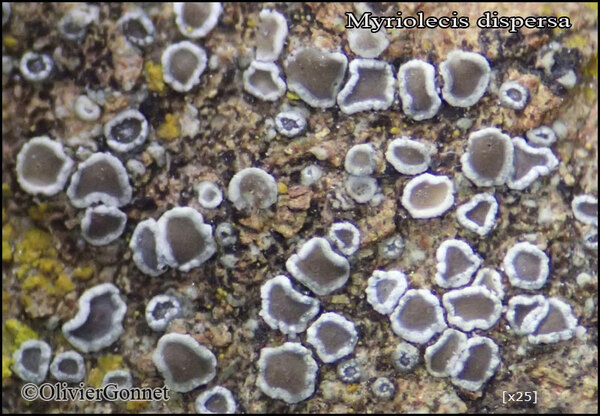
Courtesy Danièle et Olivier Gonnet - Source: https://www.afl-lichenologie.fr/Photos_AFL/Photos_AFL_M/Texte_M/Myriolecis_dispersa.htm
France, Butte calcaire, Chapelle de Jausiers, alt. : 1310 m - Alpes-de-Haute-Provence
21/7/2014
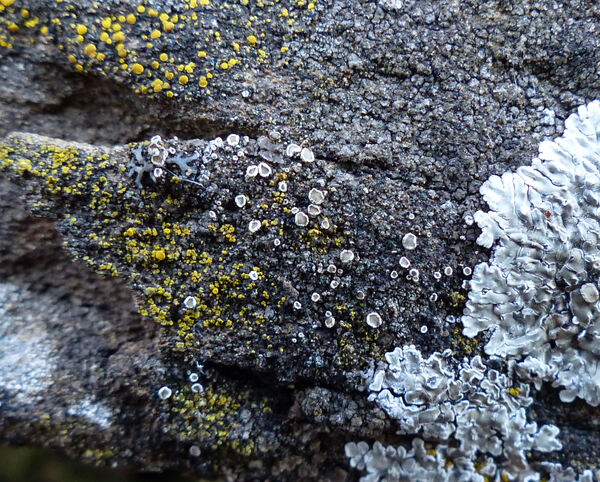
Andrea Moro; Owner: Department of Life Sciences, University of Trieste
Italy, Friuli Venezia Giulia, Trieste, Trieste, Conconello
14/02/2017
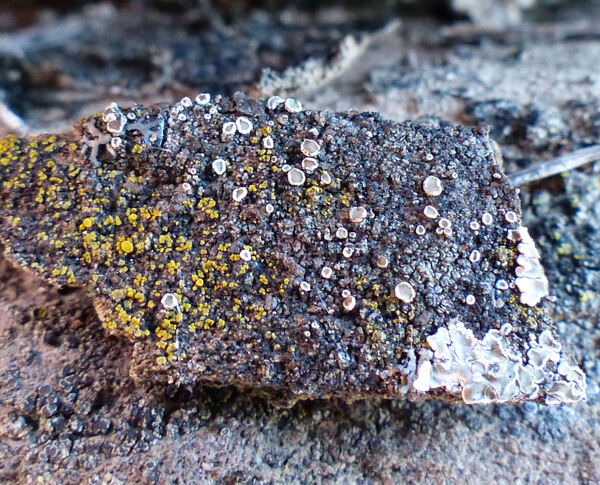
Andrea Moro; Owner: Department of Life Sciences, University of Trieste
Italy, Friuli Venezia Giulia, Trieste, Trieste, Conconello
14/02/2017
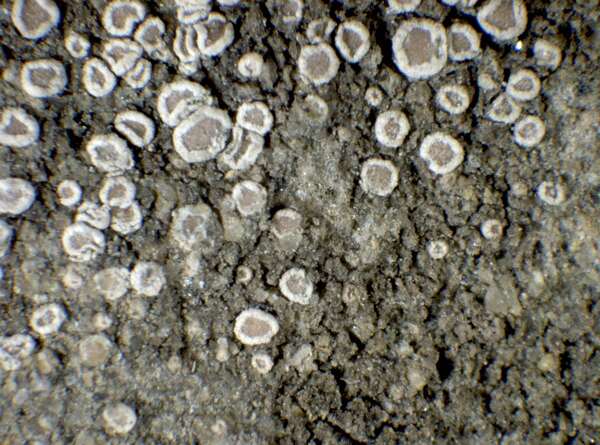
P.L. Nimis; Owner: Department of Life Sciences, University of Trieste
Herbarium: TSB (10933)
2001/12/08
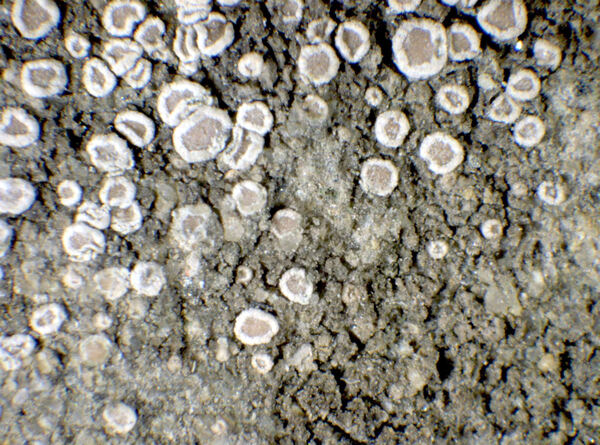
P.L. Nimis CC BY-SA 4.0
TSB 10933
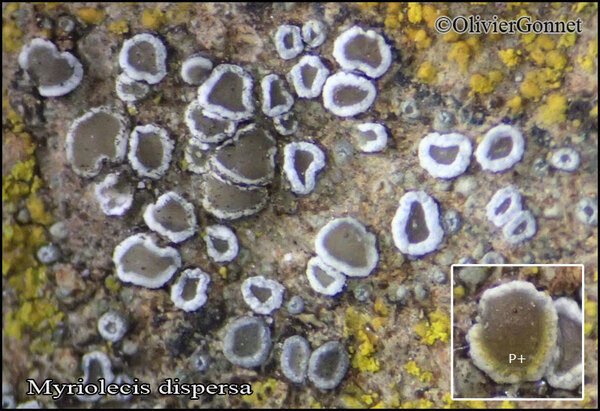
Courtesy Danièle et Olivier Gonnet - Source: https://www.afl-lichenologie.fr/Photos_AFL/Photos_AFL_M/Texte_M/Myriolecis_dispersa.htm
France, Butte calcaire, Chapelle de Jausiers, alt. : 1310 m - Alpes-de-Haute-Provence
21/7/2014
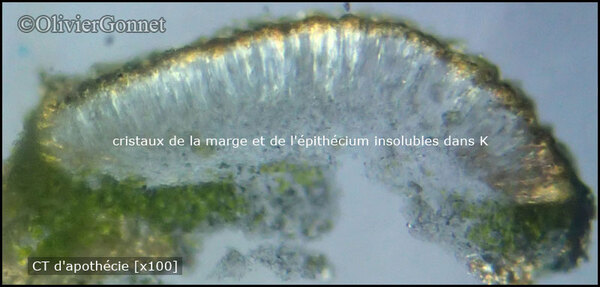
Courtesy Danièle et Olivier Gonnet - Source: https://www.afl-lichenologie.fr/Photos_AFL/Photos_AFL_M/Texte_M/Myriolecis_dispersa.htm
France, Butte calcaire, Chapelle de Jausiers, alt. : 1310 m - Alpes-de-Haute-Provence
21/7/2014
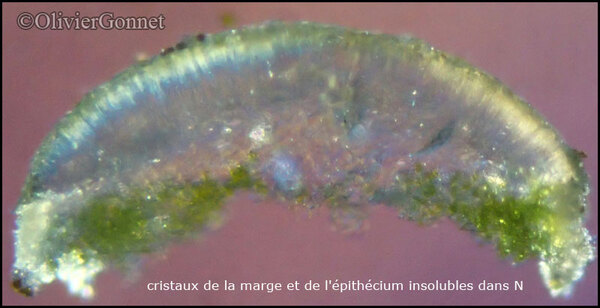
Courtesy Danièle et Olivier Gonnet - Source: https://www.afl-lichenologie.fr/Photos_AFL/Photos_AFL_M/Texte_M/Myriolecis_dispersa.htm
France, Butte calcaire, Chapelle de Jausiers, alt. : 1310 m - Alpes-de-Haute-Provence
21/7/2014
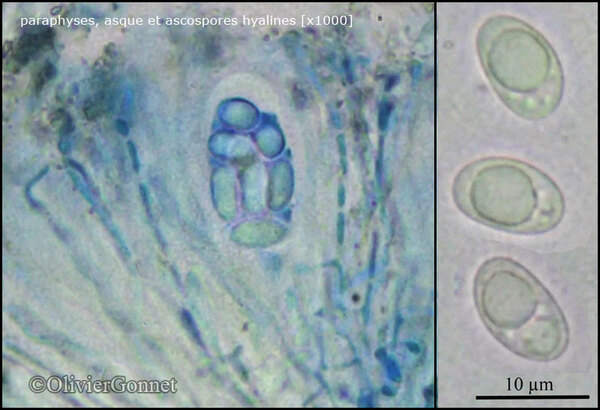
Courtesy Danièle et Olivier Gonnet - Source: https://www.afl-lichenologie.fr/Photos_AFL/Photos_AFL_M/Texte_M/Myriolecis_dispersa.htm
France, Butte calcaire, Chapelle de Jausiers, alt. : 1310 m - Alpes-de-Haute-Provence
21/7/2014
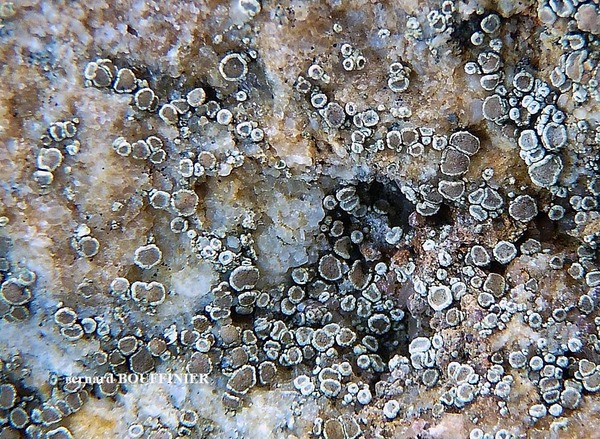
Bernard Bouffinier - Source: http://www.lichensmaritimes.org/index.php?task=fiche&lichen=297&lang=en
France, Le Toulinguet
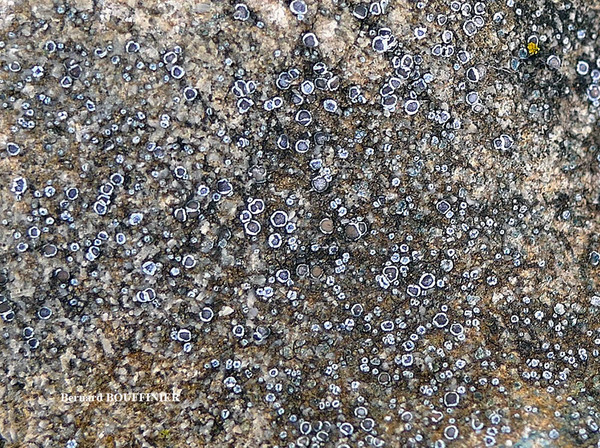
Bernard Bouffinier - Source: http://www.lichensmaritimes.org/index.php?task=fiche&lichen=297&lang=en
France, L'Aber
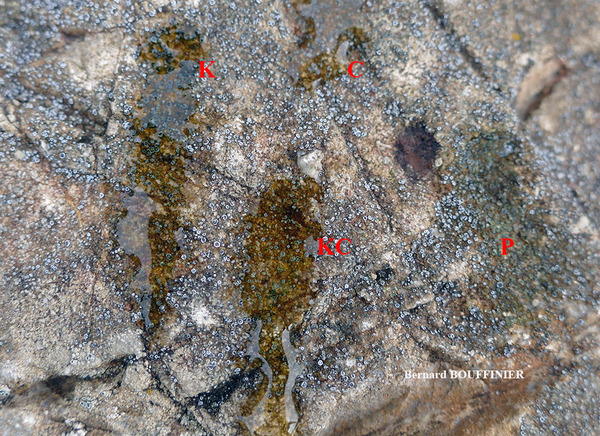
Bernard Bouffinier - Source: http://www.lichensmaritimes.org/index.php?task=fiche&lichen=297&lang=en
France, L'Aber
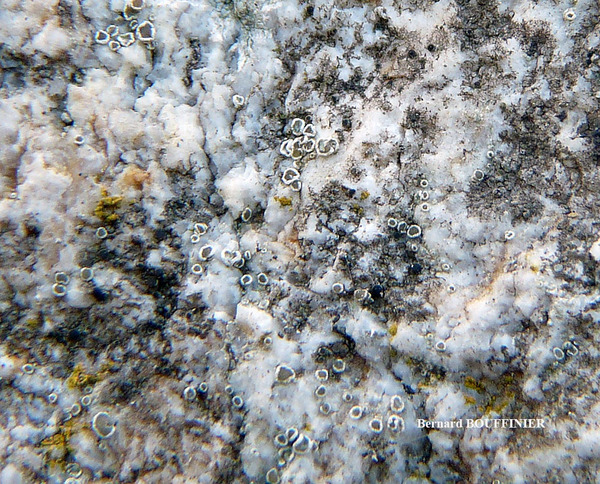
Bernard Bouffinier - Source: http://www.lichensmaritimes.org/index.php?task=fiche&lichen=297&lang=en
France, Le Passage, Plougastel
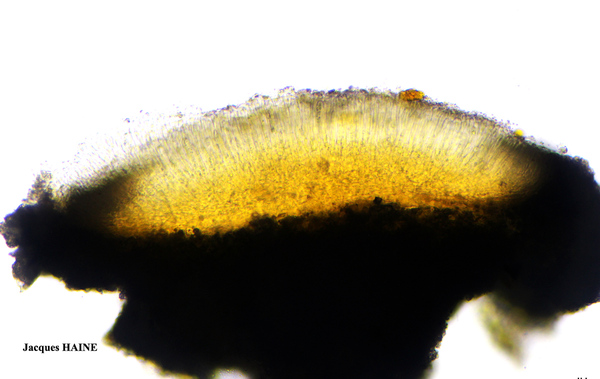
Jacques Haine - Source: http://www.lichensmaritimes.org/index.php?task=fiche&lichen=297&lang=en
France, Ardennes
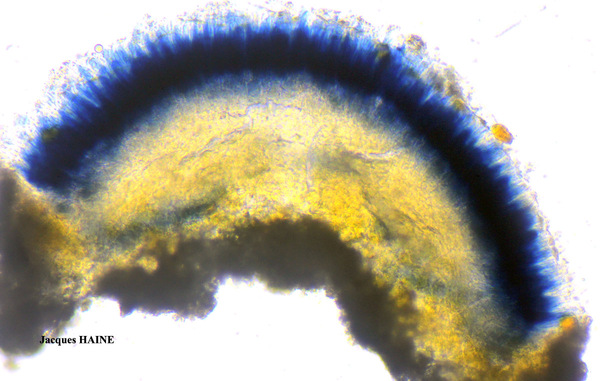
Jacques Haine - Source: http://www.lichensmaritimes.org/index.php?task=fiche&lichen=297&lang=en
France, Ardennes
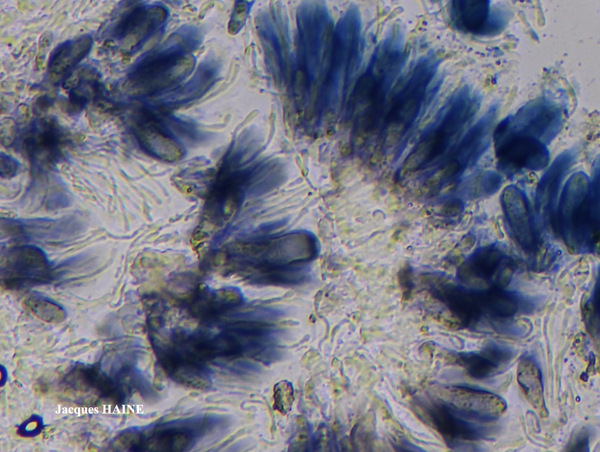
Jacques Haine - Source: http://www.lichensmaritimes.org/index.php?task=fiche&lichen=297&lang=en
France, Ardennes
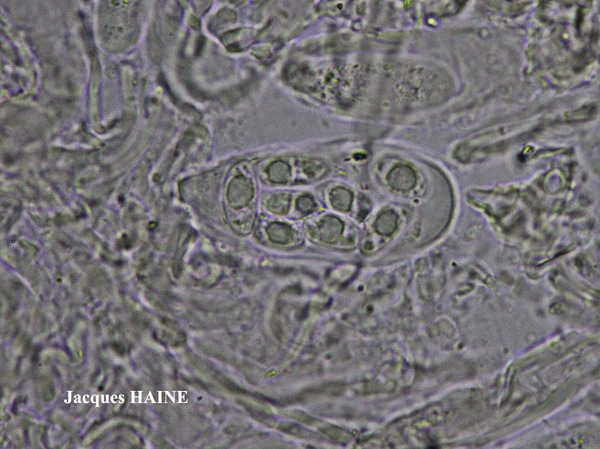
Jacques Haine - Source: http://www.lichensmaritimes.org/index.php?task=fiche&lichen=297&lang=en
France, Ardennes
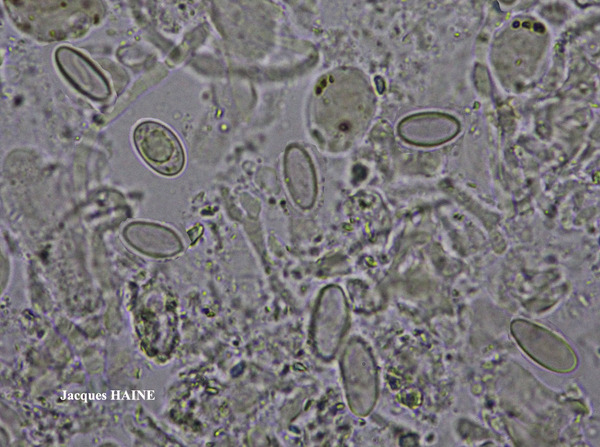
Jacques Haine - Source: http://www.lichensmaritimes.org/index.php?task=fiche&lichen=297&lang=en
France, Ardennes
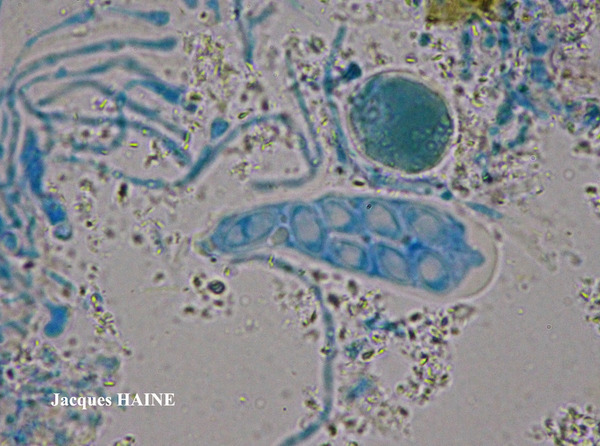
Jacques Haine - Source: http://www.lichensmaritimes.org/index.php?task=fiche&lichen=297&lang=en
France, Ardennes
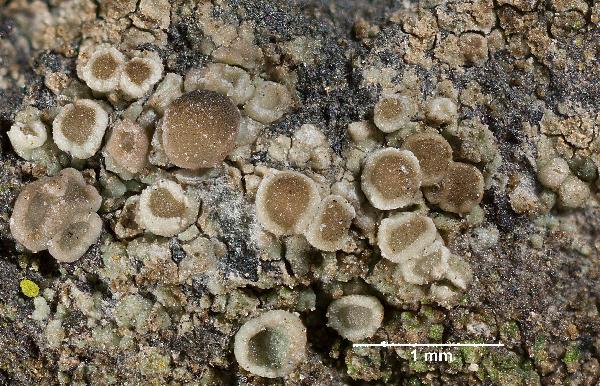
Ulrich Kirschbaum - CC BY 4.0
Germany, Hessen, on an old wall of basalt
Ulrich Kirschbaum - CC BY 4.0
Germany, Hessen, on an old wall of basalt
Ulrich Kirschbaum - CC BY 4.0
Germany, Hessen, on an old wall of basalt
Growth form: Crustose
Substrata: rocks
Photobiont: green algae other than Trentepohlia
Reproductive strategy: mainly sexual
Commonnes-rarity: (info)
Alpine belt: absent
Subalpine belt: absent
Montane belt: rather rare
Dry submediterranean belt: extremely common
Humid submediterranean belt: extremely common
Padanian area: common
pH of the substrata:
| 1 | 2 | 3 | 4 | 5 |
Solar irradiation:
| 1 | 2 | 3 | 4 | 5 |
Aridity:
| 1 | 2 | 3 | 4 | 5 |
Eutrophication:
| 1 | 2 | 3 | 4 | 5 |
Poleotolerance:
| 0 | 1 | 2 | 3 |
Altitudinal distribution:
| 1 | 2 | 3 | 4 | 5 | 6 |
Rarity
absent
extremely rare
very rare
rare
rather rare
rather common
common
very common
extremely common
Loading data...
Occurrence data
Predictive map
Current prediction (1981-2010)Future prediction (2071-2100) SSP 1-2.6Future prediction (2071-2100) SSP 5-8.5Predictive maps according to Francesconi et al. 2025
Courtesy Danièle et Olivier Gonnet - Source: https://www.afl-lichenologie.fr/Photos_AFL/Photos_AFL_M/Texte_M/Myriolecis_dispersa.htm
France, Butte calcaire, Chapelle de Jausiers, alt. : 1310 m - Alpes-de-Haute-Provence
21/7/2014
Andrea Moro; Owner: Department of Life Sciences, University of Trieste
Italy, Friuli Venezia Giulia, Trieste, Trieste, Conconello
14/02/2017
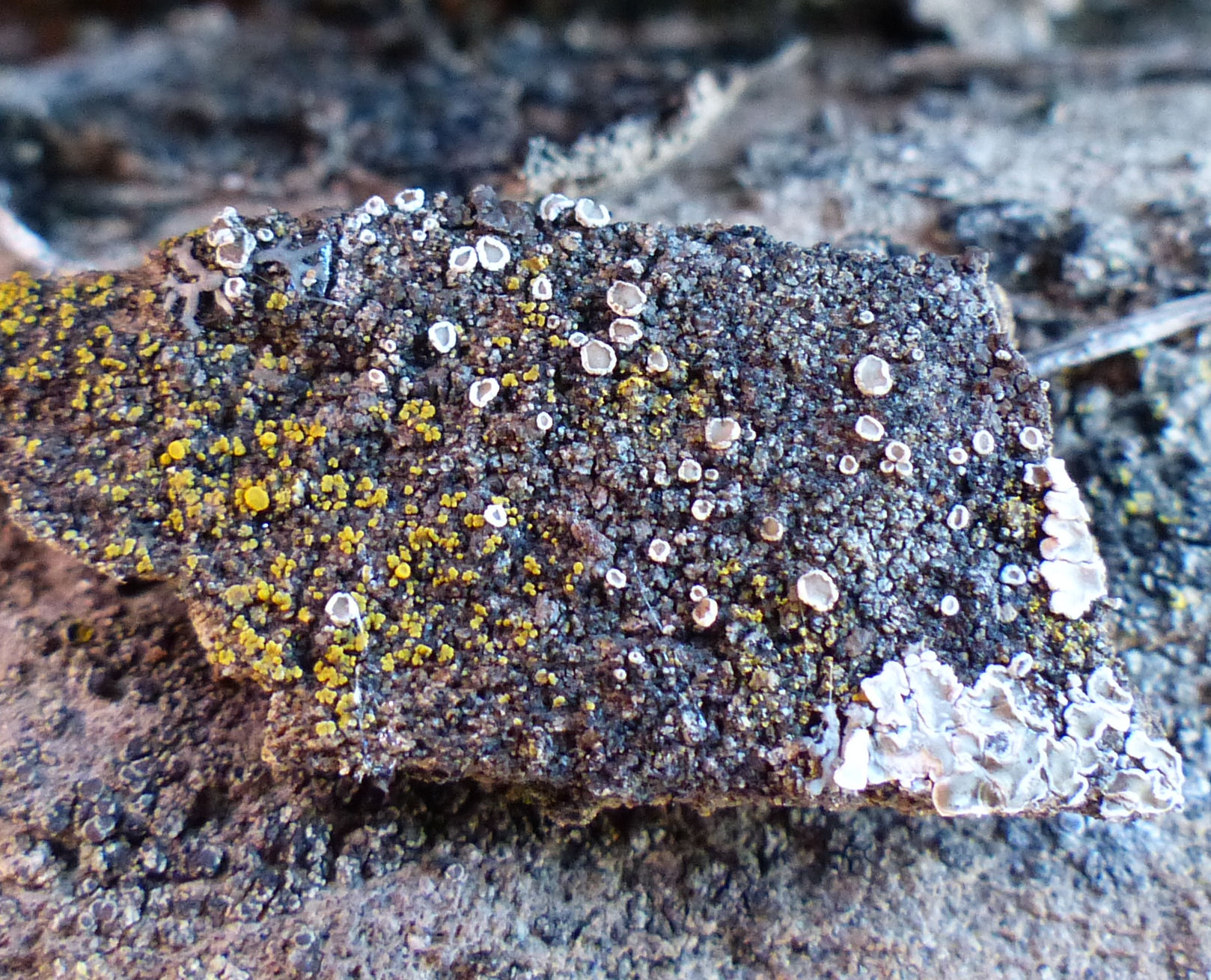
Andrea Moro; Owner: Department of Life Sciences, University of Trieste
Italy, Friuli Venezia Giulia, Trieste, Trieste, Conconello
14/02/2017
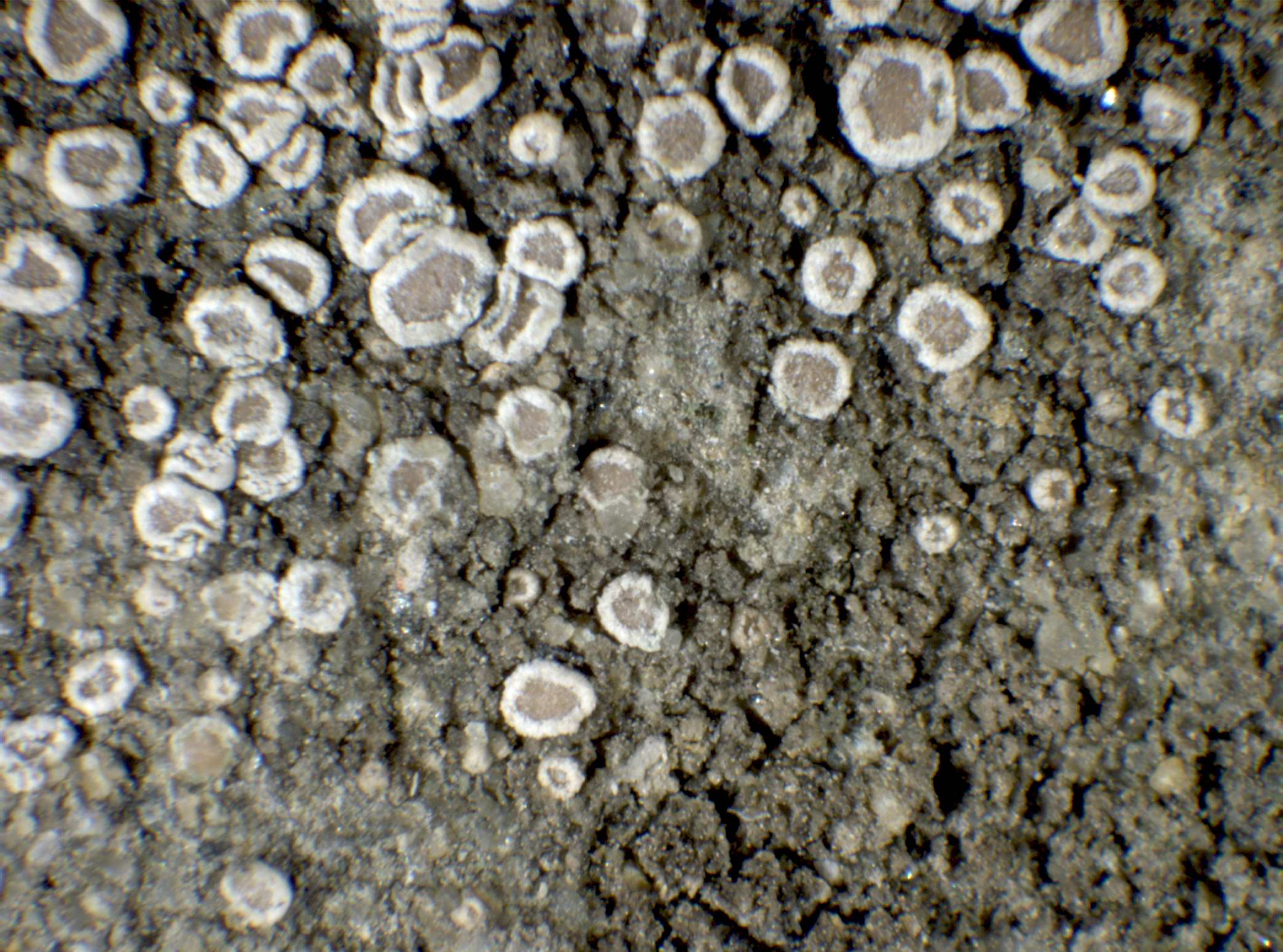
P.L. Nimis; Owner: Department of Life Sciences, University of Trieste
Herbarium: TSB (10933)
2001/12/08
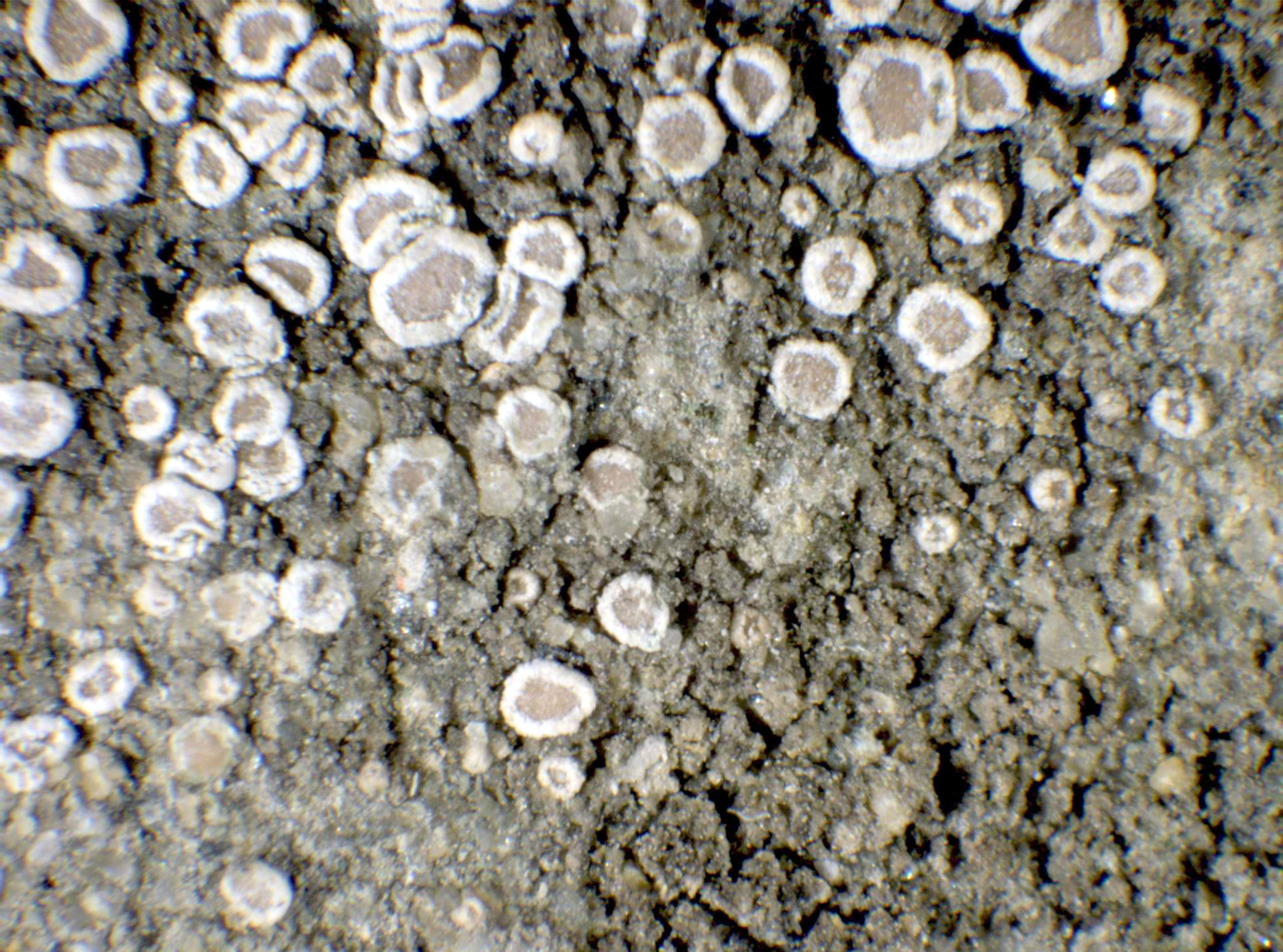
P.L. Nimis CC BY-SA 4.0
TSB 10933
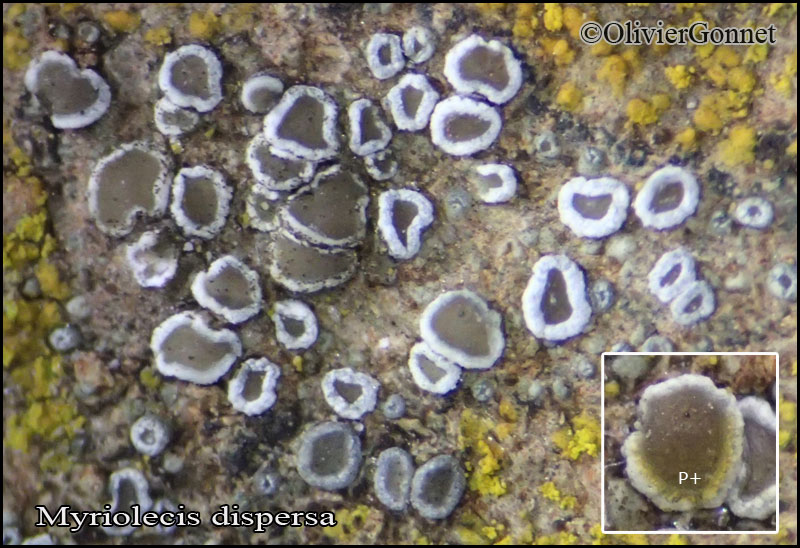
Courtesy Danièle et Olivier Gonnet - Source: https://www.afl-lichenologie.fr/Photos_AFL/Photos_AFL_M/Texte_M/Myriolecis_dispersa.htm
France, Butte calcaire, Chapelle de Jausiers, alt. : 1310 m - Alpes-de-Haute-Provence
21/7/2014
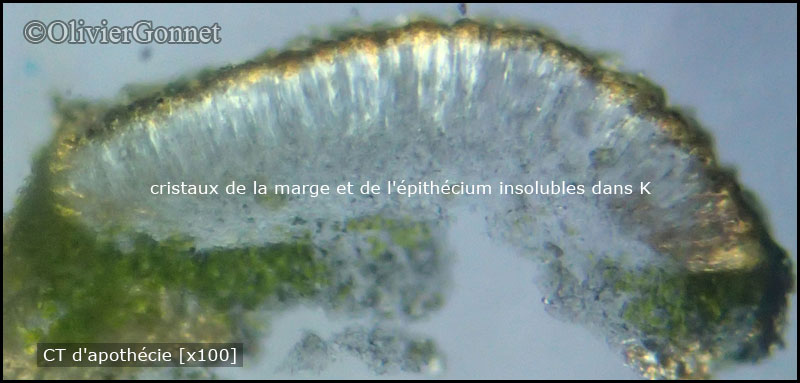
Courtesy Danièle et Olivier Gonnet - Source: https://www.afl-lichenologie.fr/Photos_AFL/Photos_AFL_M/Texte_M/Myriolecis_dispersa.htm
France, Butte calcaire, Chapelle de Jausiers, alt. : 1310 m - Alpes-de-Haute-Provence
21/7/2014
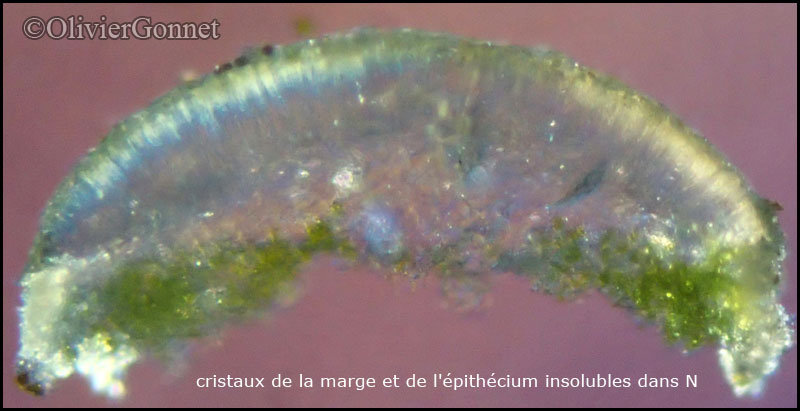
Courtesy Danièle et Olivier Gonnet - Source: https://www.afl-lichenologie.fr/Photos_AFL/Photos_AFL_M/Texte_M/Myriolecis_dispersa.htm
France, Butte calcaire, Chapelle de Jausiers, alt. : 1310 m - Alpes-de-Haute-Provence
21/7/2014
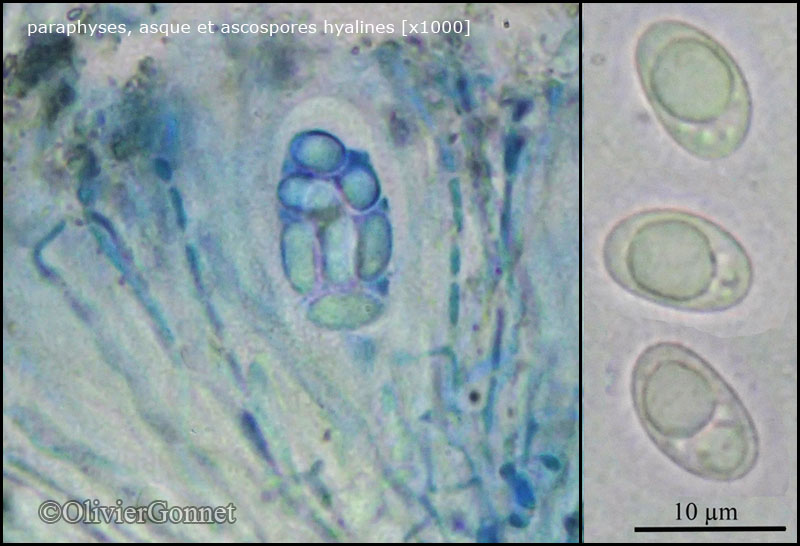
Courtesy Danièle et Olivier Gonnet - Source: https://www.afl-lichenologie.fr/Photos_AFL/Photos_AFL_M/Texte_M/Myriolecis_dispersa.htm
France, Butte calcaire, Chapelle de Jausiers, alt. : 1310 m - Alpes-de-Haute-Provence
21/7/2014
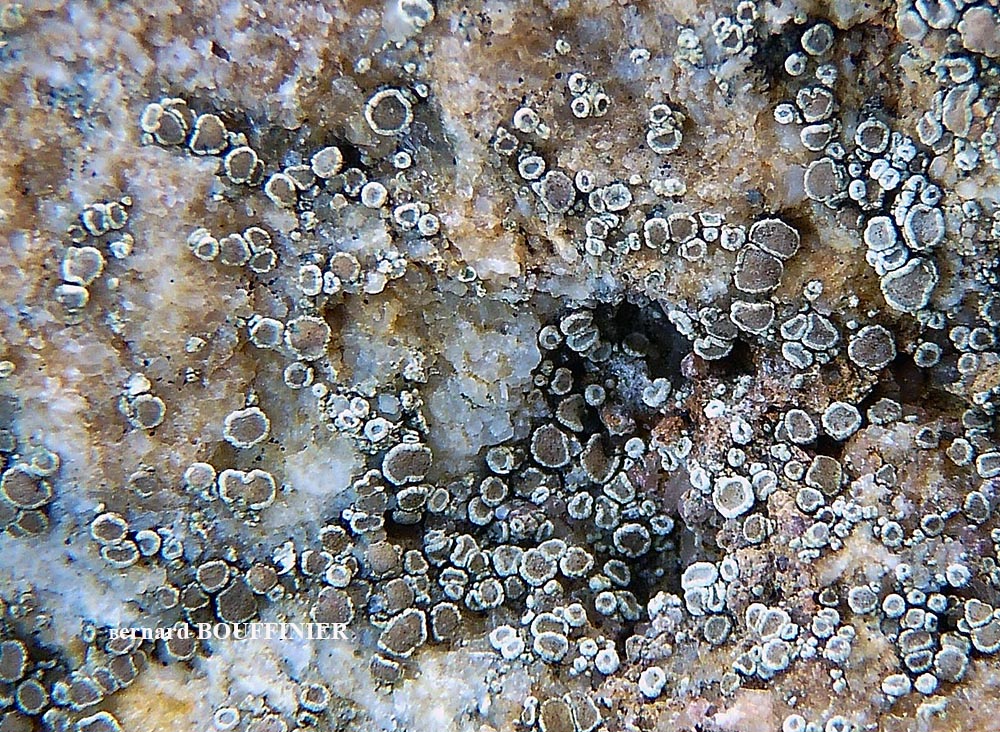
Bernard Bouffinier - Source: http://www.lichensmaritimes.org/index.php?task=fiche&lichen=297&lang=en
France, Le Toulinguet
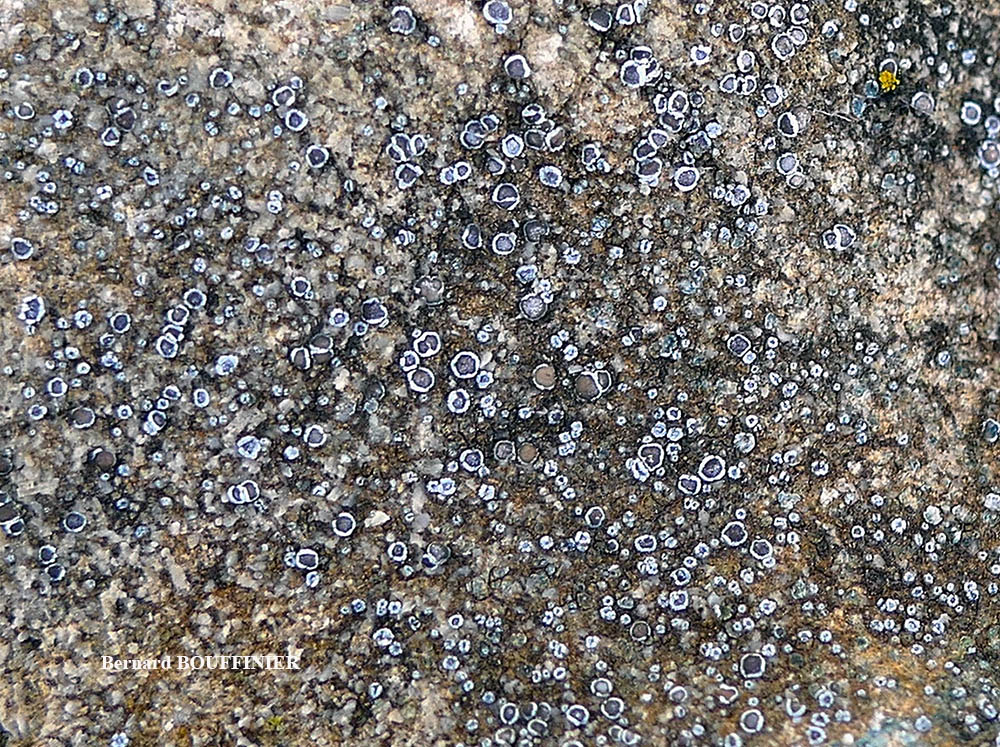
Bernard Bouffinier - Source: http://www.lichensmaritimes.org/index.php?task=fiche&lichen=297&lang=en
France, L'Aber
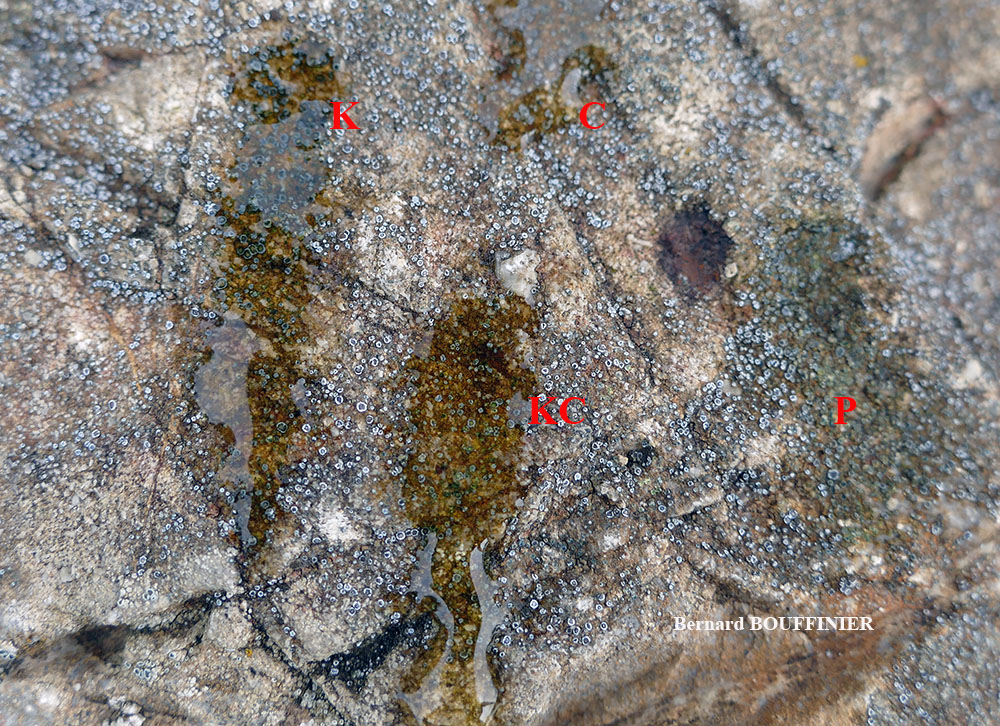
Bernard Bouffinier - Source: http://www.lichensmaritimes.org/index.php?task=fiche&lichen=297&lang=en
France, L'Aber
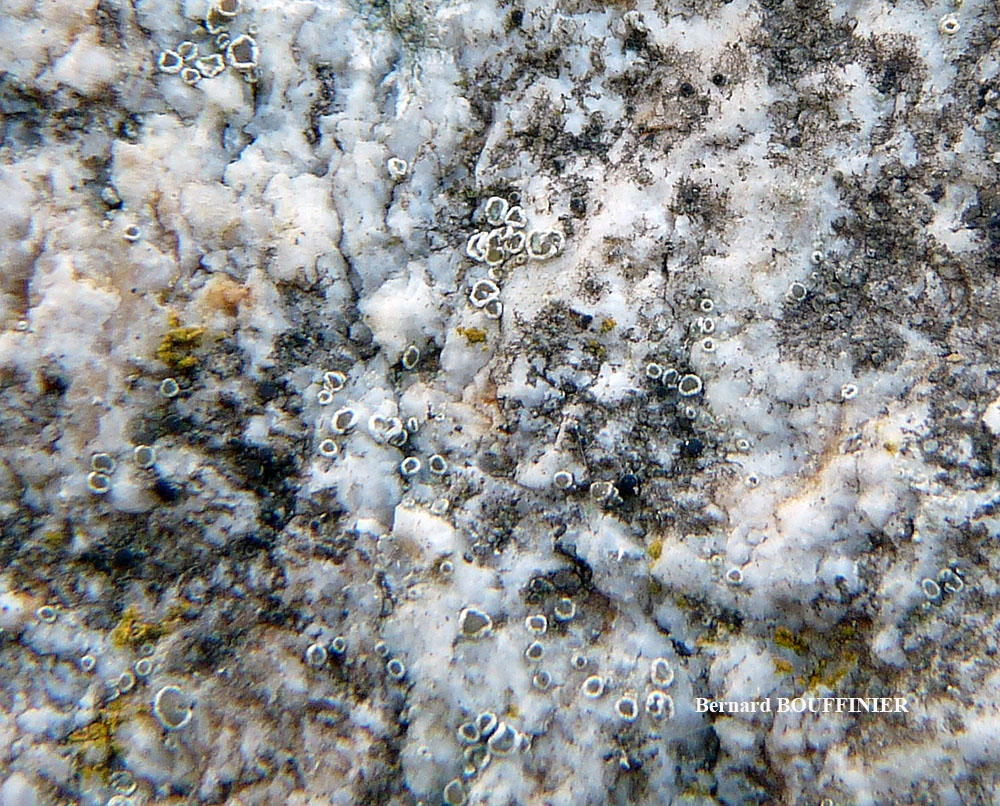
Bernard Bouffinier - Source: http://www.lichensmaritimes.org/index.php?task=fiche&lichen=297&lang=en
France, Le Passage, Plougastel
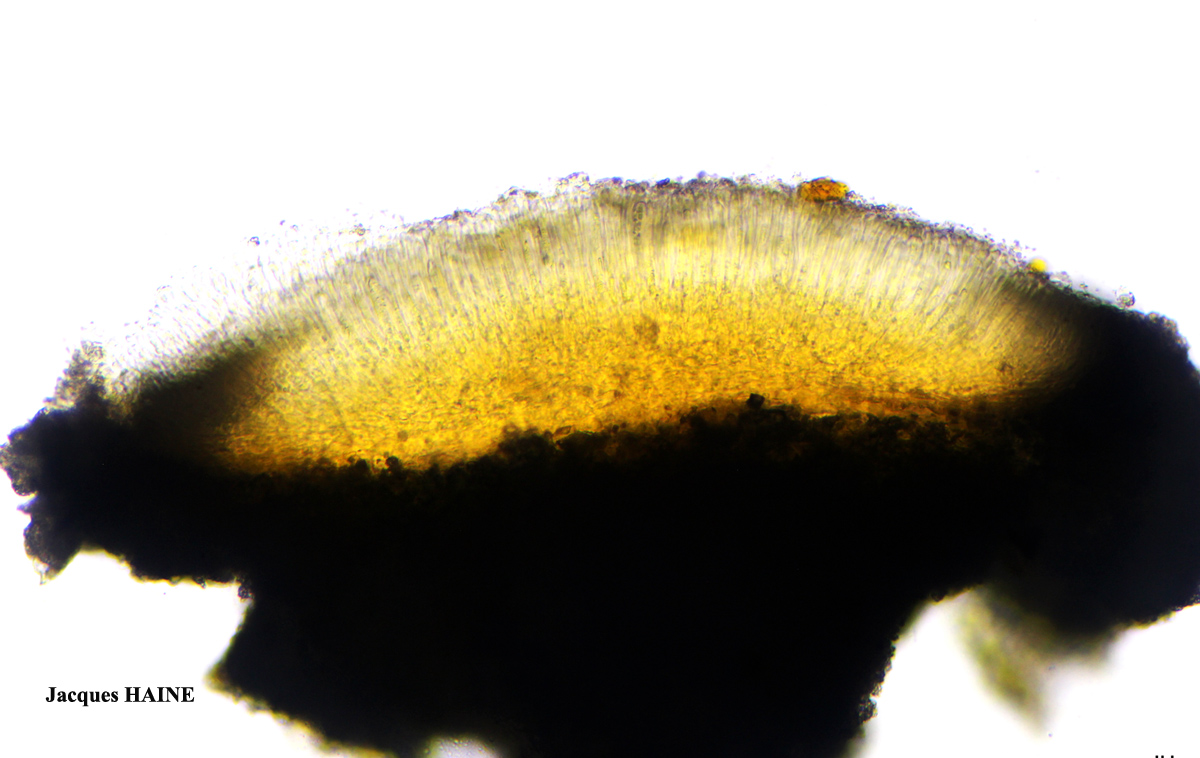
Jacques Haine - Source: http://www.lichensmaritimes.org/index.php?task=fiche&lichen=297&lang=en
France, Ardennes
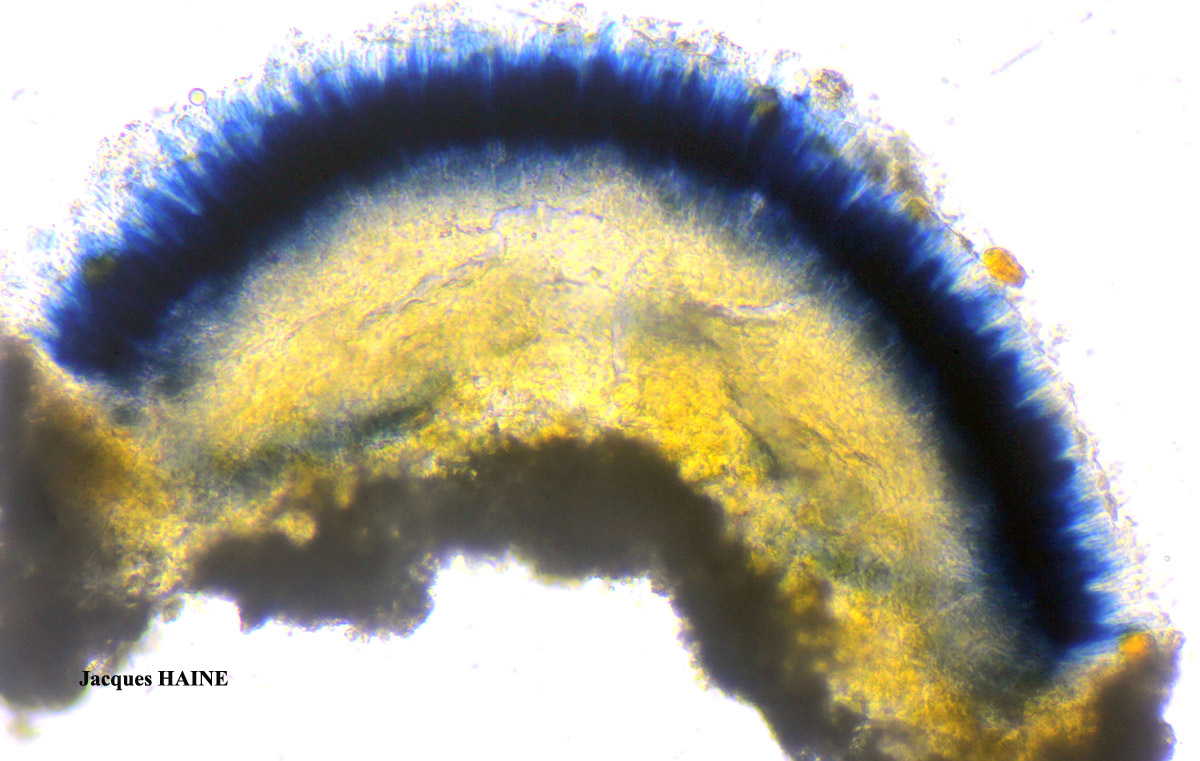
Jacques Haine - Source: http://www.lichensmaritimes.org/index.php?task=fiche&lichen=297&lang=en
France, Ardennes
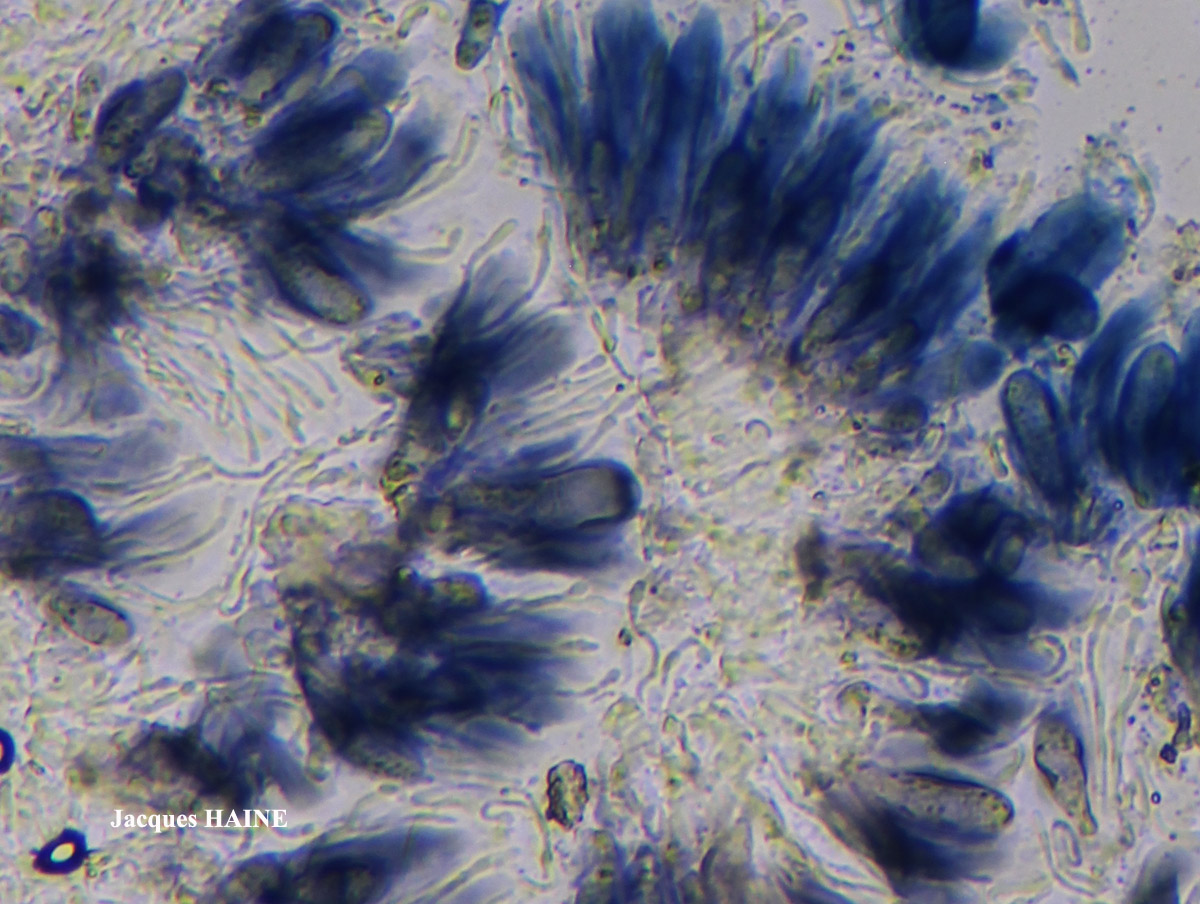
Jacques Haine - Source: http://www.lichensmaritimes.org/index.php?task=fiche&lichen=297&lang=en
France, Ardennes
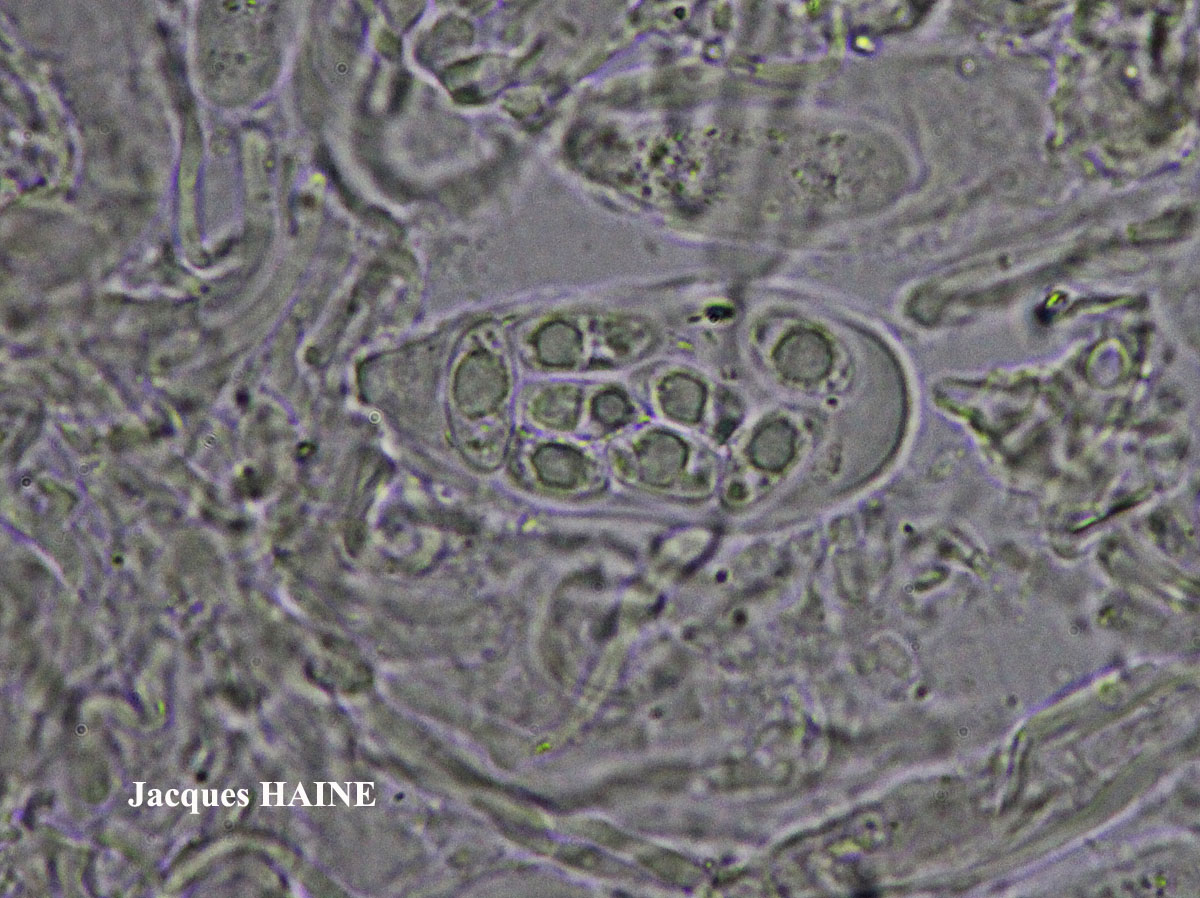
Jacques Haine - Source: http://www.lichensmaritimes.org/index.php?task=fiche&lichen=297&lang=en
France, Ardennes
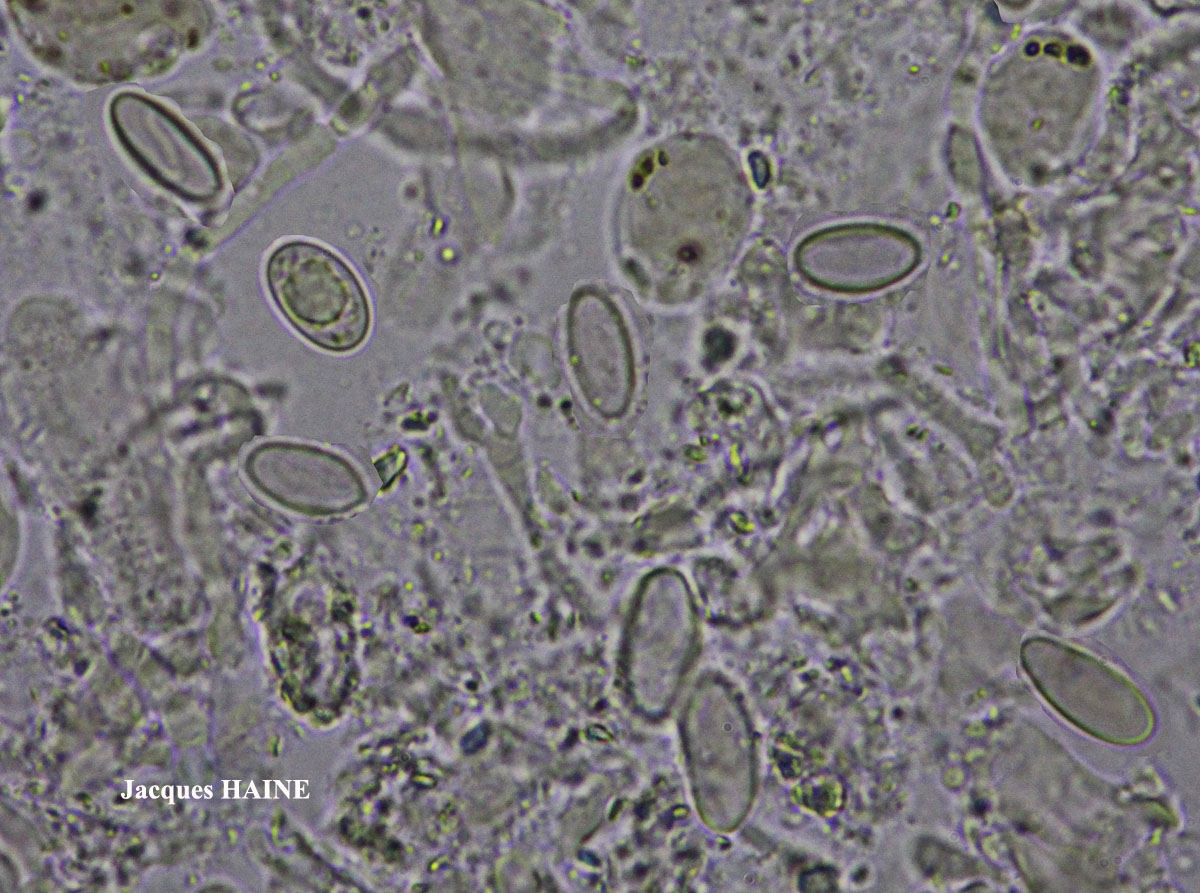
Jacques Haine - Source: http://www.lichensmaritimes.org/index.php?task=fiche&lichen=297&lang=en
France, Ardennes
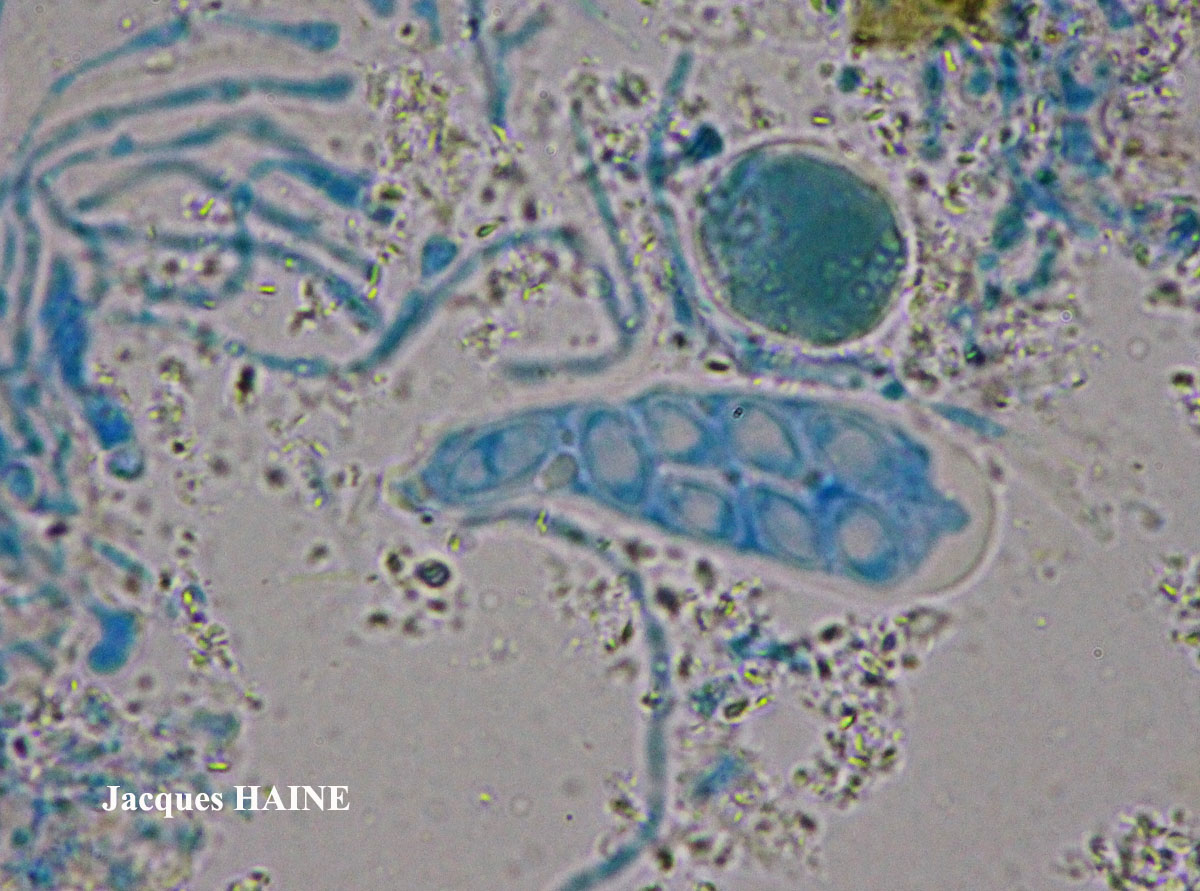
Jacques Haine - Source: http://www.lichensmaritimes.org/index.php?task=fiche&lichen=297&lang=en
France, Ardennes

Ulrich Kirschbaum - CC BY 4.0
Germany, Hessen, on an old wall of basalt

Ulrich Kirschbaum - CC BY 4.0
Germany, Hessen, on an old wall of basalt