Ochrolechia arborea (Kreyer) Almb.
Bot. Not.: 254, 1952. Basionym: Variolaria lactea var. arborea Kreyer - Acta Horti Petropolit., 31: 322, 1913.
Synonyms: Lecanora perleprosa Räsänen; Ochrolechia arborea var. albula (Savicz) Makar.; Ochrolechia sordidogrisea (Erichsen) E. Schreiner & Hafellner; Pertusaria arborea (Kreyer) Zahlbr.; Pertusaria arborea f. albula (Savicz) Erichsen; Pertusaria myriosora Erichsen; Pertusaria sordidogrisea Erichsen; Variolaria arborea (Kreyer) Ljub.; Variolaria arborea var. albula Savicz
Description: Thallus crustose, forming more or less orbicular patches, very thin at margin to somewhat thicker in the older central areas, smooth to rarely verruculose, shiny, yellowish grey to (rarely) yellowish white, sorediate. Soredia greenish to pale yellow-green, more rarely yellowish white, usually coarsely granular, 40-50 μm wide, arranged in small, round, discrete, crater-like, usually <0.6 mm wide soralia which may become confluent in old specimens. Apothecia extremely rare, lecanorine, up to 1.8 mm across, with a flesh-coloured, concave to flat, epruinose disc and an even, pink-brown, esorediate or partly sorediate thalline margin, without salmon pink discoid tissues. Photobiont chlorococcoid. Spot tests: cortex and soralia K-, C+ red, KC+ red, P-; medulla C-, KC-; soralia UV+ bright orange. Chemistry: lichexanthone, gyrophoric acid (major), and lecanoric acid (trace).
Growth form: Crustose
Substrata: bark
Photobiont: green algae other than Trentepohlia
Reproductive strategy: mainly asexual, by soredia, or soredia-like structures (e.g. blastidia)
Commonnes-rarity: (info)
Alpine belt: absent
Subalpine belt: absent
Montane belt: very rare
Dry submediterranean belt: rather rare
Humid submediterranean belt: rather rare
Padanian area: extremely rare
pH of the substrata:
1 2 3 4 5

Solar irradiation:
1 2 3 4 5
Aridity:
1 2 3 4 5
Eutrophication:
1 2 3 4 5
Poleotolerance:
0 1 2 3
Altitudinal distribution:
1 2 3 4 5 6
Rarity
absent
extremely rare
very rare
rare
rather rare
rather common
common
very common
extremely common
Loading data...
Occurrence data
Predictive map
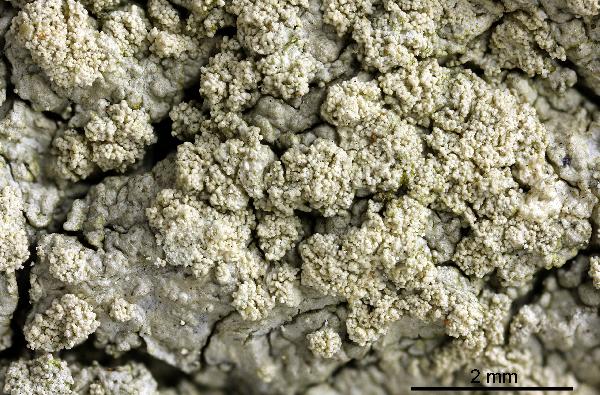
Felix Schumm - CC BY 4.0
[9592], Baden-Württemberg, Kreis Göppingen, Wangen, im Quercus-
Carpinus-Wald Breitenloh östlich des kleinen Teichs von Oberwälden,
48°44.337 N, 9°35.586 E, 440 m. TK: 7223. Leg. F. & D. Schumm,
07.07.2002, det. F. Schumm, 07.07.2002. - Chemistry p128/6: gyrophoric
(major), lecanoric (minor), Lichexanthon; Acetonfleck ++ gelb;
UV:++ leuchtend orangegelb.

P.L. Nimis; Owner: Department of Life Sciences, University of Trieste
Herbarium: TSB (31770)
2001/12/05

Walter Obermayer CC BY-SA 4.0 - Source: Lichens of Noricum - http://lichens-of-noricum.uni-graz.at/
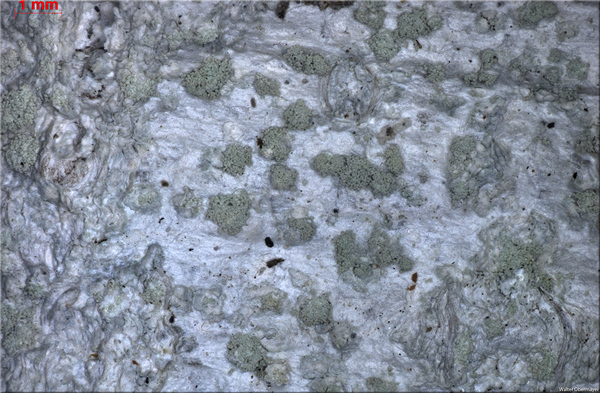
Walter Obermayer CC BY-SA 4.0 - Source: Lichens of Noricum - http://lichens-of-noricum.uni-graz.at/

Walter Obermayer CC BY-SA 4.0 - Source: Lichens of Noricum - http://lichens-of-noricum.uni-graz.at/

P.L. Nimis CC BY-SA 4.0
TSB 31770
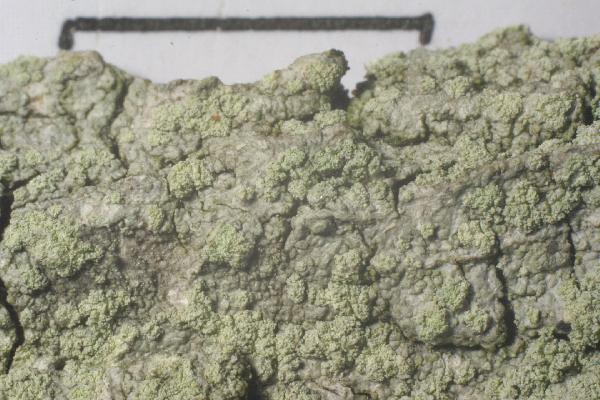
Felix Schumm - CC BY 4.0
[9592], Baden-Württemberg, Kreis Göppingen, Wangen, im Quercus-
Carpinus-Wald Breitenloh östlich des kleinen Teichs von Oberwälden,
48°44.337 N, 9°35.586 E, 440 m. TK: 7223. Leg. F. & D. Schumm,
07.07.2002, det. F. Schumm, 07.07.2002. - Chemistry p128/6: gyrophoric
(major), lecanoric (minor), Lichexanthon; Acetonfleck ++ gelb;
UV:++ leuchtend orangegelb.
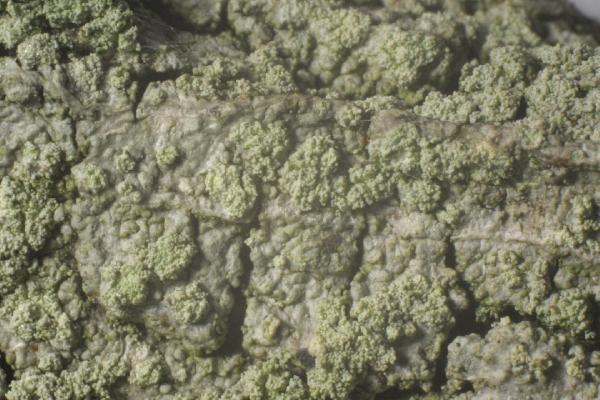
Felix Schumm - CC BY 4.0
[9592], Baden-Württemberg, Kreis Göppingen, Wangen, im Quercus-
Carpinus-Wald Breitenloh östlich des kleinen Teichs von Oberwälden,
48°44.337 N, 9°35.586 E, 440 m. TK: 7223. Leg. F. & D. Schumm,
07.07.2002, det. F. Schumm, 07.07.2002. - Chemistry p128/6: gyrophoric
(major), lecanoric (minor), Lichexanthon; Acetonfleck ++ gelb;
UV:++ leuchtend orangegelb.
Growth form: Crustose
Substrata: bark
Photobiont: green algae other than Trentepohlia
Reproductive strategy: mainly asexual, by soredia, or soredia-like structures (e.g. blastidia)
Commonnes-rarity: (info)
Alpine belt: absent
Subalpine belt: absent
Montane belt: very rare
Dry submediterranean belt: rather rare
Humid submediterranean belt: rather rare
Padanian area: extremely rare
pH of the substrata:
| 1 | 2 | 3 | 4 | 5 |
Solar irradiation:
| 1 | 2 | 3 | 4 | 5 |
Aridity:
| 1 | 2 | 3 | 4 | 5 |
Eutrophication:
| 1 | 2 | 3 | 4 | 5 |
Poleotolerance:
| 0 | 1 | 2 | 3 |
Altitudinal distribution:
| 1 | 2 | 3 | 4 | 5 | 6 |
Rarity
absent
extremely rare
very rare
rare
rather rare
rather common
common
very common
extremely common
Loading data...
Occurrence data
Predictive map

Felix Schumm - CC BY 4.0
[9592], Baden-Württemberg, Kreis Göppingen, Wangen, im Quercus- Carpinus-Wald Breitenloh östlich des kleinen Teichs von Oberwälden, 48°44.337 N, 9°35.586 E, 440 m. TK: 7223. Leg. F. & D. Schumm, 07.07.2002, det. F. Schumm, 07.07.2002. - Chemistry p128/6: gyrophoric (major), lecanoric (minor), Lichexanthon; Acetonfleck ++ gelb; UV:++ leuchtend orangegelb.
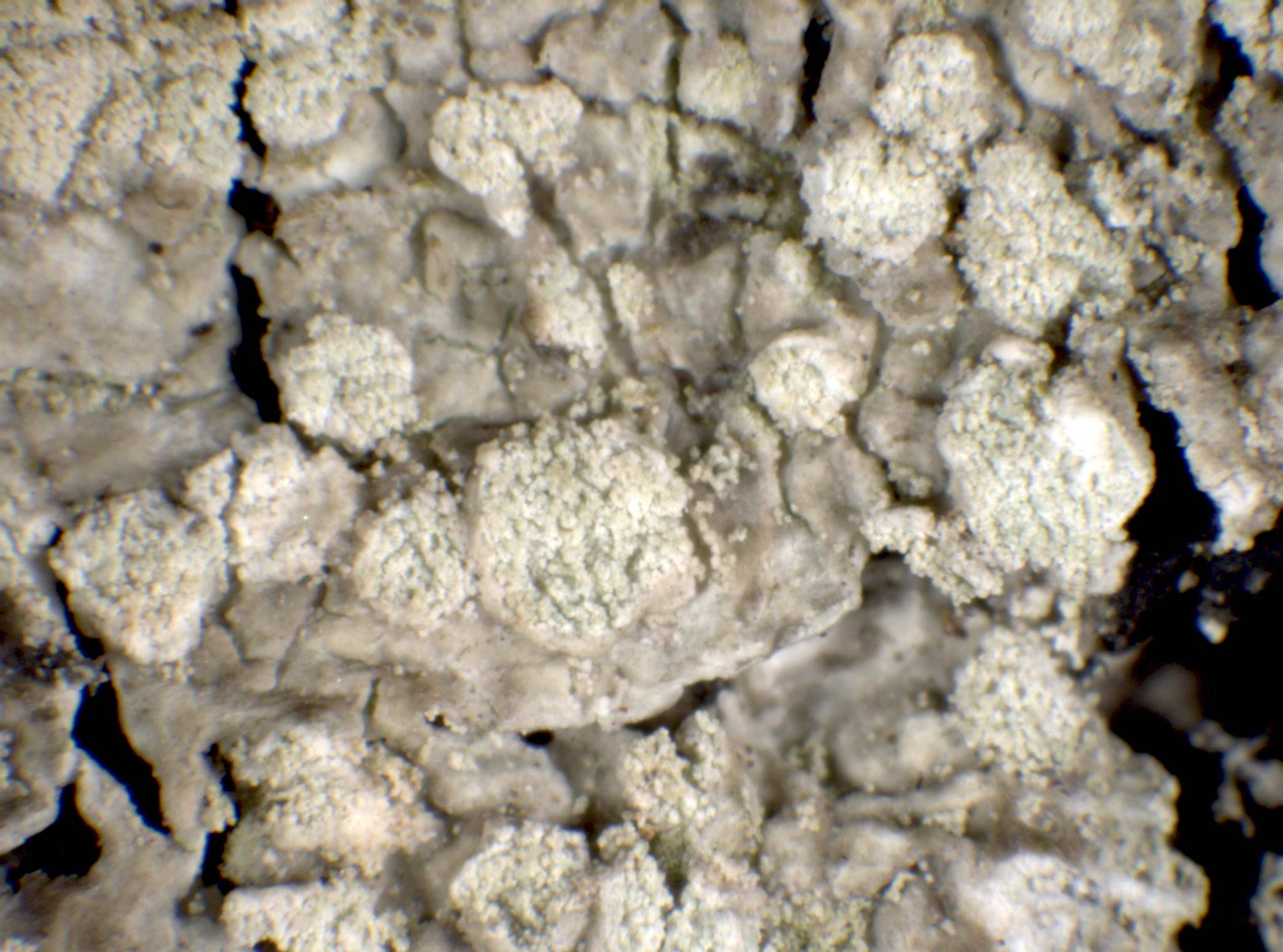
P.L. Nimis; Owner: Department of Life Sciences, University of Trieste
Herbarium: TSB (31770)
2001/12/05
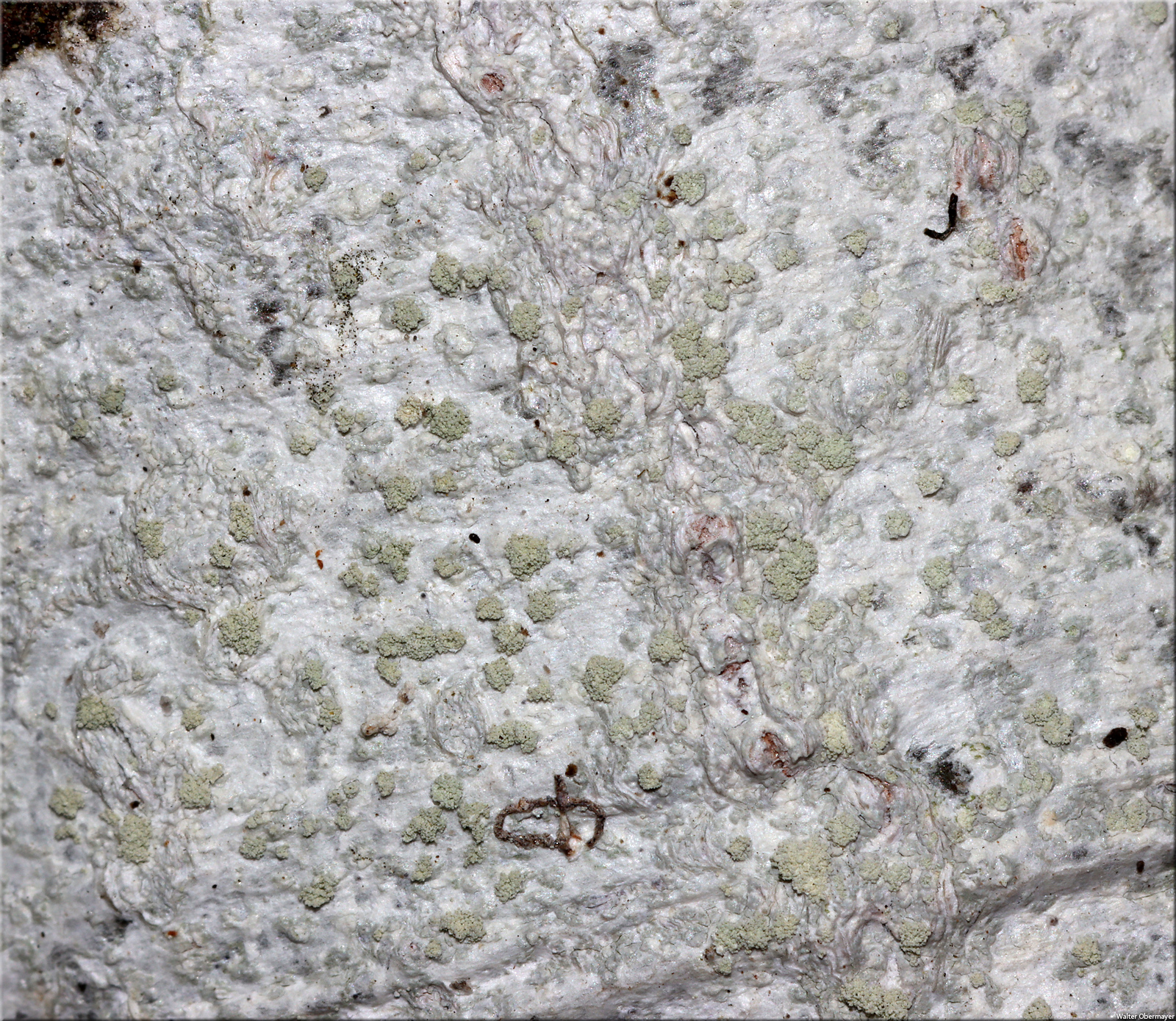
Walter Obermayer CC BY-SA 4.0 - Source: Lichens of Noricum - http://lichens-of-noricum.uni-graz.at/

Walter Obermayer CC BY-SA 4.0 - Source: Lichens of Noricum - http://lichens-of-noricum.uni-graz.at/

Walter Obermayer CC BY-SA 4.0 - Source: Lichens of Noricum - http://lichens-of-noricum.uni-graz.at/

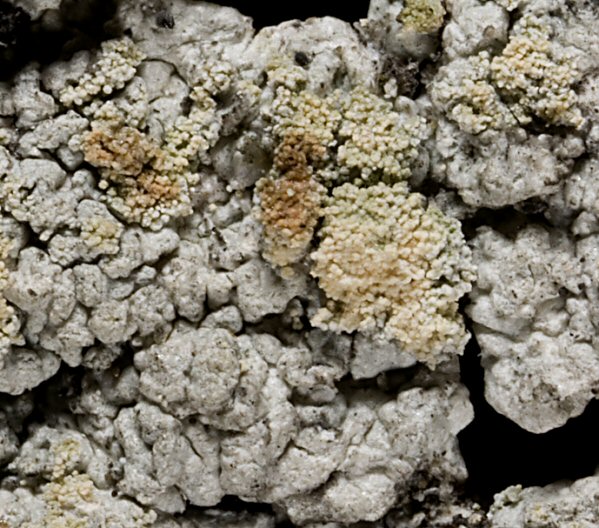
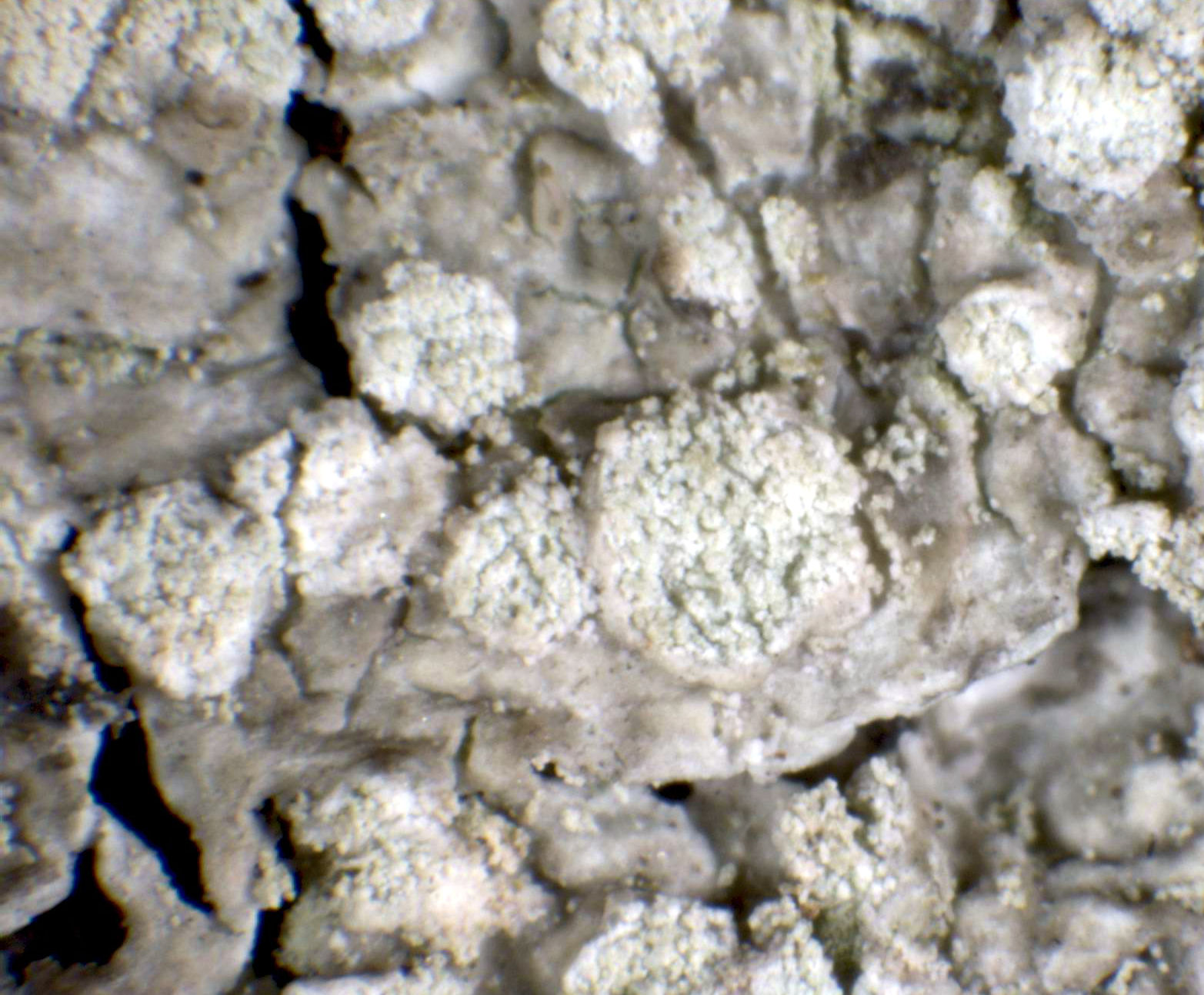
P.L. Nimis CC BY-SA 4.0
TSB 31770

Felix Schumm - CC BY 4.0
[9592], Baden-Württemberg, Kreis Göppingen, Wangen, im Quercus- Carpinus-Wald Breitenloh östlich des kleinen Teichs von Oberwälden, 48°44.337 N, 9°35.586 E, 440 m. TK: 7223. Leg. F. & D. Schumm, 07.07.2002, det. F. Schumm, 07.07.2002. - Chemistry p128/6: gyrophoric (major), lecanoric (minor), Lichexanthon; Acetonfleck ++ gelb; UV:++ leuchtend orangegelb.