
Parmelia serrana A. Crespo, M.C. Molina & D. Hawksw.
in Molina & al., Lichenologist, 36: 48, 2004.
Synonyms:
Description: Thallus foliose, heteromerous, dorsiventral, adnate to rather loosely attached, forming 3-7(-15) cm wide, regular rosettes. Lobes relatively short and broad, (2.5-)3.5-6 mm wide, often overlapping, sublinear, with more or less rounded apices, without lobules. Upper surface pale greenish-grey to whitish grey, weakly ridged, shiny mainly near the margins, sometimes dull and reticulately cracked, epruinose or rarely weakly pruinose at margins, with a conspicuous network of whitish, at first punctiform but soon linear, laminal and marginal pseudocyphellae, and with cylindrical, simple or branched isidia that are up to 0.2-0.5(-0.8) mm tall and 0.05-0.1 mm wide, and mainly clustered on ridges in the central part of thallus or marginal. Lower surface black, with simple or sparingly furcate (never squarrose), 0.2-1.5 mm long rhizines. Upper cortex paraplectenchymatous, of 2-6 layers of densely packed cells, with a usually non-pored epicortex, the cell walls with isolichenan; medulla white; algal layer continuous; lower cortex paraplectenchymatous, thinner than upper cortex. Apothecia rather frequent, lecanorine, subpedicellate, concave, 1-4 mm across, with a brown disc and an often isidiate thalline margin. Proper exciple thin, colourless; epithecium brownish; hymenium colourless, I+ blue; paraphyses mostly simple or sparingly branched; hypothecium colourless. Asci 8-spored, Lecanora-type. Ascospores 1-celled, hyaline, broadly ellipsoid, 16-18 x 11.5-13 μm. Pycnidia black. Conidia cylindrical to bacilliform 5-6 x c. 1 µm. Photobiont chlorococcoid. Spot tests: upper cortex K+ yellow (but often slowly turning dirty red due to medullary substances), C-, KC-, P- or P+ faintly yellow; medulla K+ yellow turning dirty red, C-, KC-, P+ orange-red. Chemistry: upper cortex with atranorin; medulla with salazinic acid (major), consalazinic acid (minor), plus often traces of protocetraric and rarely lobaric acids, and fatty acids (lichesterinic, protolichesterinic, nephrosterinic and isonephrosterinic acids).
Growth form: Foliose, broad lobed
Substrata: bark and rocks
Photobiont: green algae other than Trentepohlia
Reproductive strategy: mainly asexual, by isidia, or isidia-like structures (e.g. schizidia)
Commonnes-rarity: (info)
Alpine belt: absent
Subalpine belt: absent
Montane belt: very rare
Dry submediterranean belt: absent
Humid submediterranean belt: extremely rare
Padanian area: absent
pH of the substrata:
1 2 3 4 5

Solar irradiation:
1 2 3 4 5
Aridity:
1 2 3 4 5
Eutrophication:
1 2 3 4 5
Poleotolerance:
0 1 2 3
Altitudinal distribution:
1 2 3 4 5 6
Rarity
absent
extremely rare
very rare
rare
rather rare
rather common
common
very common
extremely common
Loading data...
Occurrence data
Predictive map
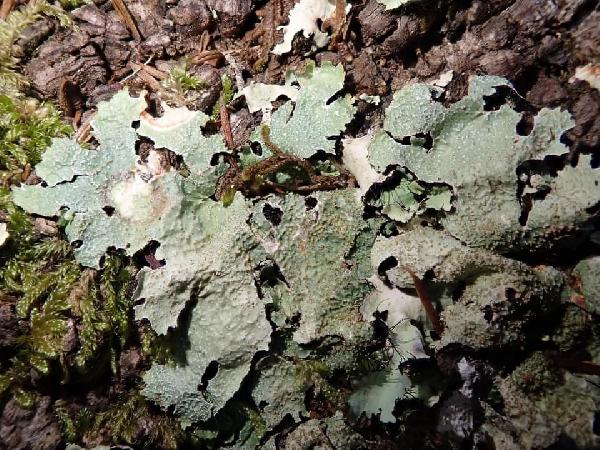
Manuel Gil
Spain, Canary Islands, Tenerife, on Erica
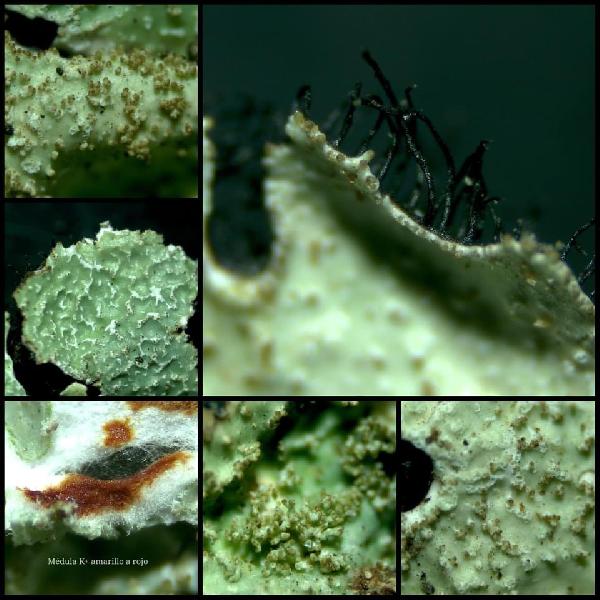
Manuel Gil
Spain, Canary Islands, Tenerife, on Erica
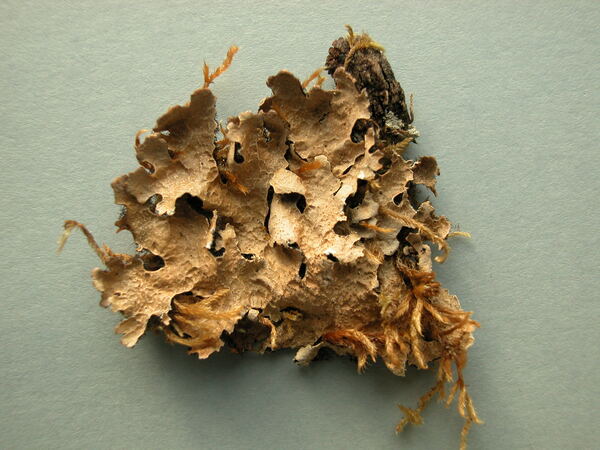
E. Pittao
TSB 8514)
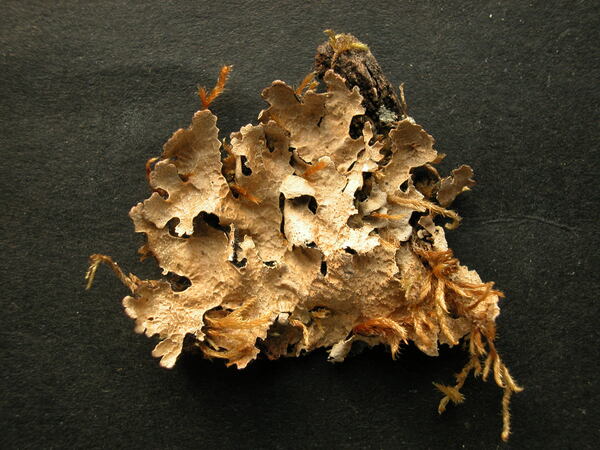
E. Pittao
TSB 8514)
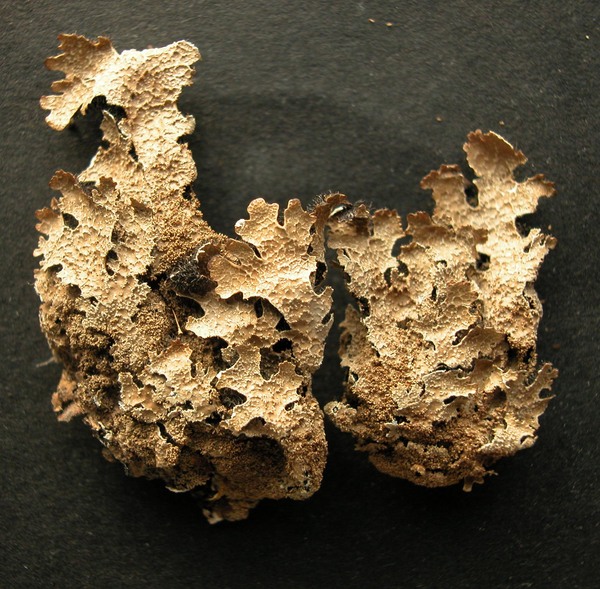
E. Pittao CC BY-SA 04
TSB 8514
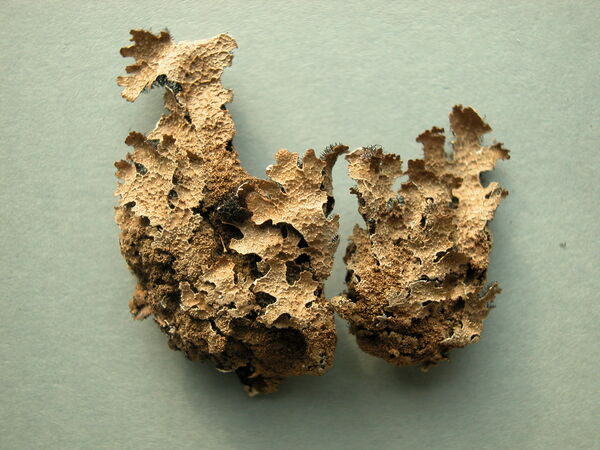
E. Pittao
TSB 8514)
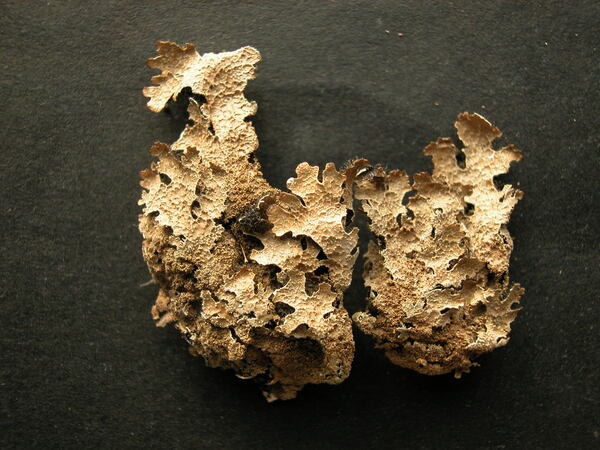
E. Pittao
TSB 8514)
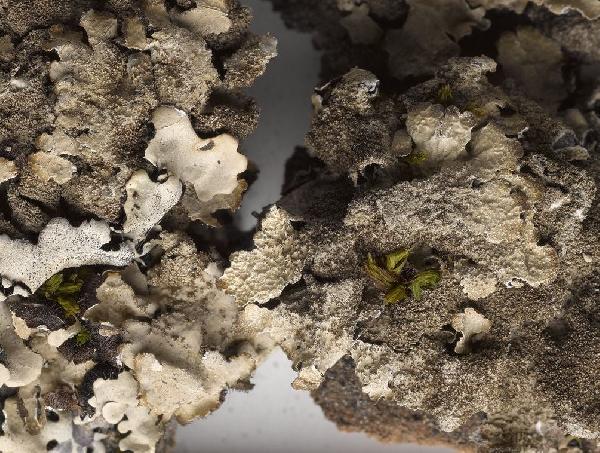
Detail from: https://gzu.jacq.org/GZU000286250
GZU000286250 - Crespo,A. & Divakar,P.K. s.n. Label España: Madrid, Cercedilla ; Alt. 1300 m
Habitat On Quercus pyrenaica trunk
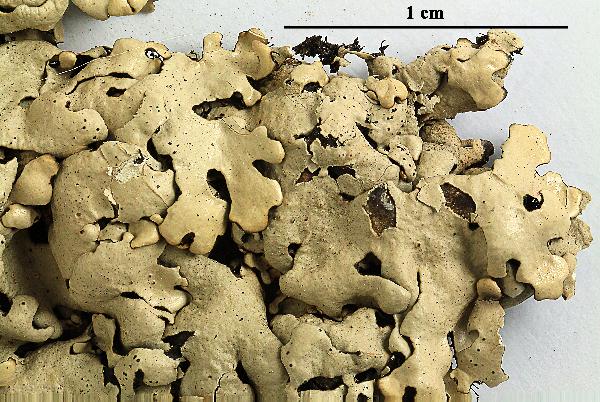
Felix Schumm - CC BY 4.0
[ABL22171], Brazil, Rio Grande do Sul, Viamão, nera Parque Itapua,
100 m, 30°05' S, 51°00' W. On granite. Leg. M. Cáceres & A. Aptroot
(nr.22171), 26.09. 2014. - Chemistry: zeorin, atranorin, chloroatranorin,
alectoronic acid, -collatolic acid, methyl-collatolic acid, K+ yellow
> red, KC+ orange, C-, UV+ white.
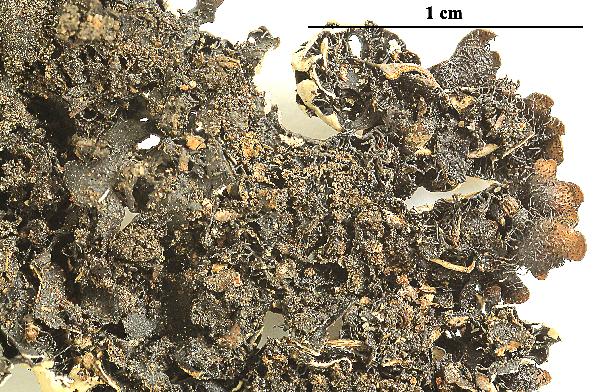
Felix Schumm - CC BY 4.0
[ABL22171], Brazil, Rio Grande do Sul, Viamão, nera Parque Itapua,
100 m, 30°05' S, 51°00' W. On granite. Leg. M. Cáceres & A. Aptroot
(nr.22171), 26.09. 2014. - Chemistry: zeorin, atranorin, chloroatranorin,
alectoronic acid, -collatolic acid, methyl-collatolic acid, K+ yellow
> red, KC+ orange, C-, UV+ white.
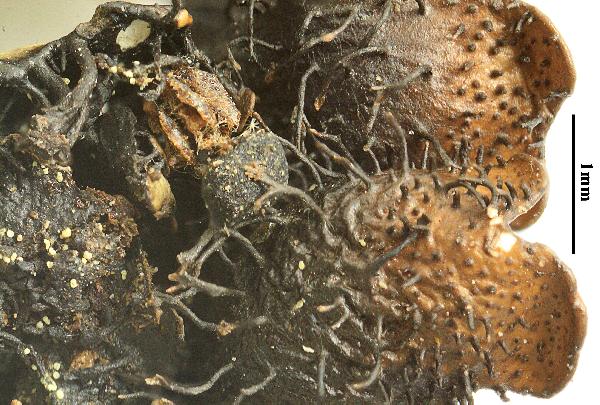
Felix Schumm - CC BY 4.0
[ABL22171], Brazil, Rio Grande do Sul, Viamão, nera Parque Itapua,
100 m, 30°05' S, 51°00' W. On granite. Leg. M. Cáceres & A. Aptroot
(nr.22171), 26.09. 2014. - Chemistry: zeorin, atranorin, chloroatranorin,
alectoronic acid, -collatolic acid, methyl-collatolic acid, K+ yellow
> red, KC+ orange, C-, UV+ white.
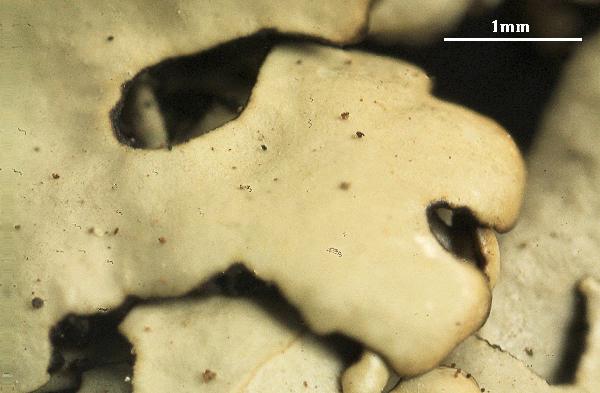
Felix Schumm - CC BY 4.0
[ABL22171], Brazil, Rio Grande do Sul, Viamão, nera Parque Itapua,
100 m, 30°05' S, 51°00' W. On granite. Leg. M. Cáceres & A. Aptroot
(nr.22171), 26.09. 2014. - Chemistry: zeorin, atranorin, chloroatranorin,
alectoronic acid, -collatolic acid, methyl-collatolic acid, K+ yellow
> red, KC+ orange, C-, UV+ white.
Growth form: Foliose, broad lobed
Substrata: bark and rocks
Photobiont: green algae other than Trentepohlia
Reproductive strategy: mainly asexual, by isidia, or isidia-like structures (e.g. schizidia)
Commonnes-rarity: (info)
Alpine belt: absent
Subalpine belt: absent
Montane belt: very rare
Dry submediterranean belt: absent
Humid submediterranean belt: extremely rare
Padanian area: absent
pH of the substrata:
| 1 | 2 | 3 | 4 | 5 |
Solar irradiation:
| 1 | 2 | 3 | 4 | 5 |
Aridity:
| 1 | 2 | 3 | 4 | 5 |
Eutrophication:
| 1 | 2 | 3 | 4 | 5 |
Poleotolerance:
| 0 | 1 | 2 | 3 |
Altitudinal distribution:
| 1 | 2 | 3 | 4 | 5 | 6 |
Rarity
absent
extremely rare
very rare
rare
rather rare
rather common
common
very common
extremely common
Loading data...
Occurrence data
Predictive map
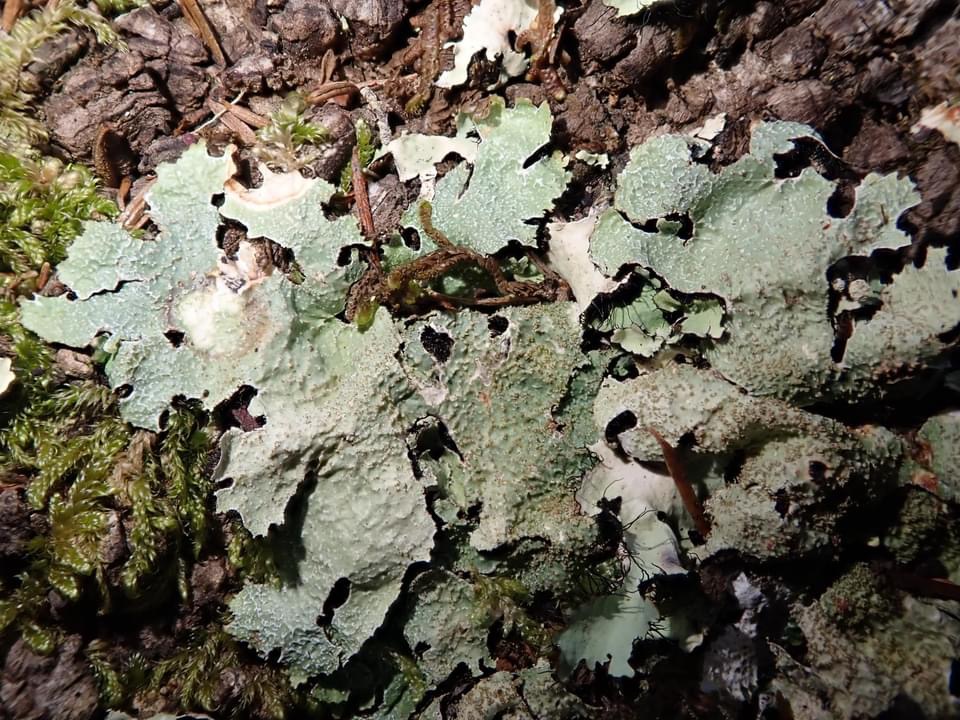
Manuel Gil
Spain, Canary Islands, Tenerife, on Erica
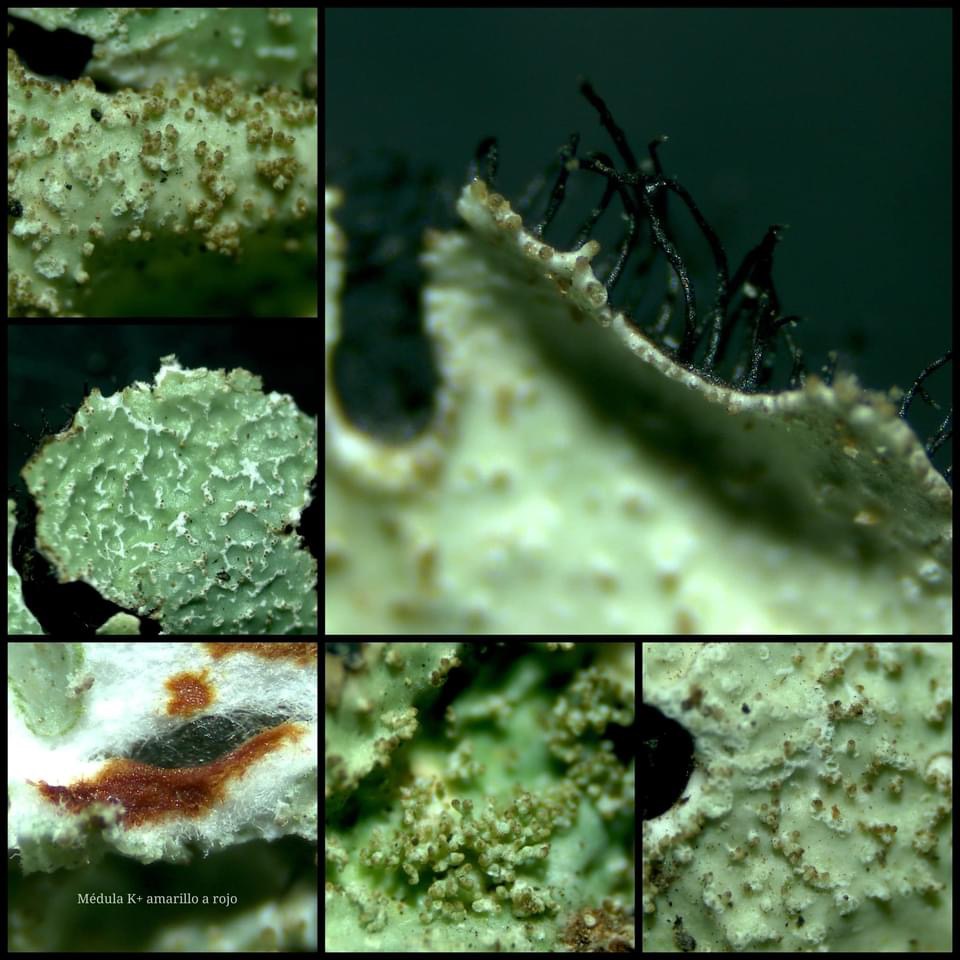
Manuel Gil
Spain, Canary Islands, Tenerife, on Erica
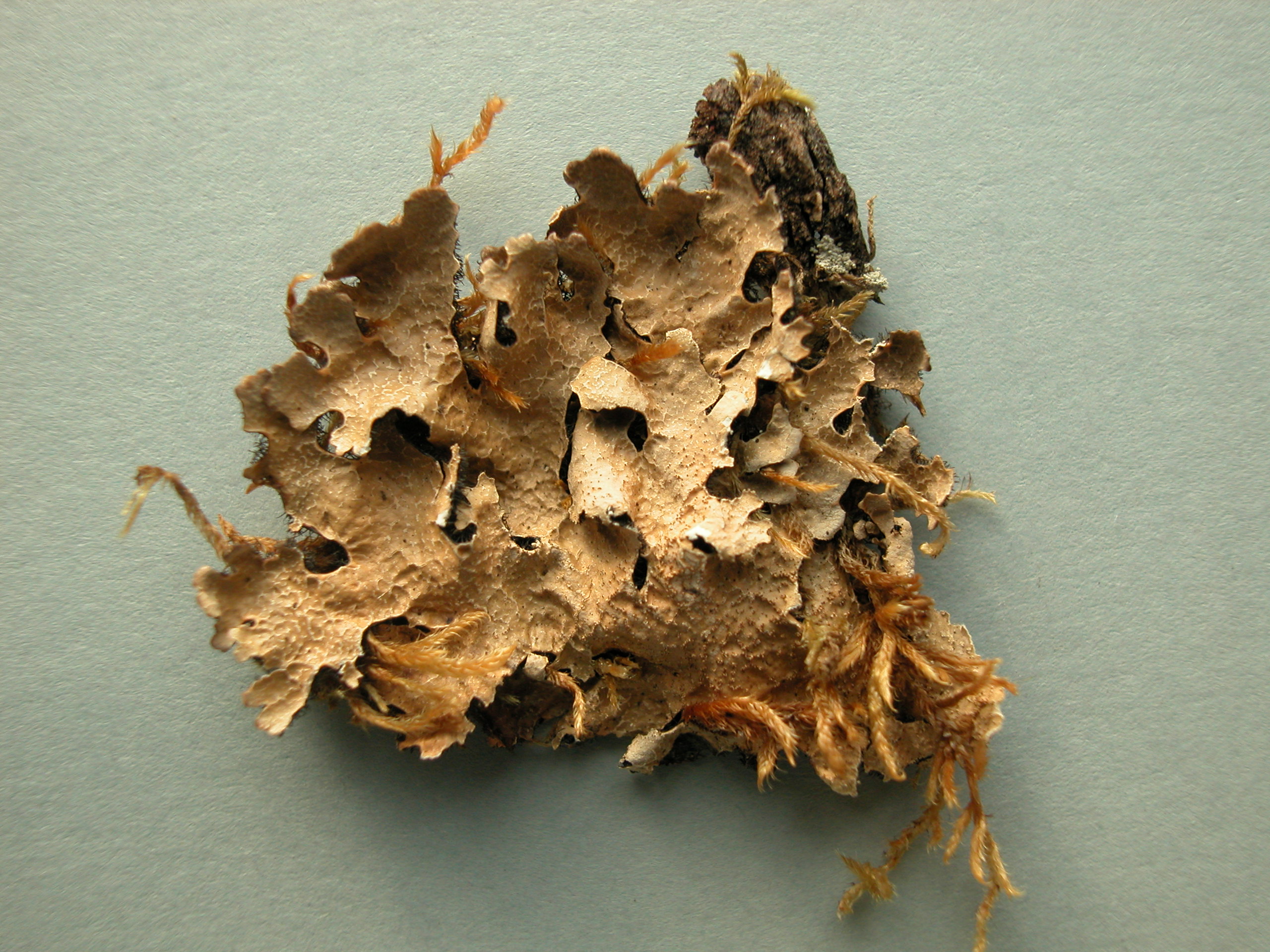
E. Pittao
TSB 8514)
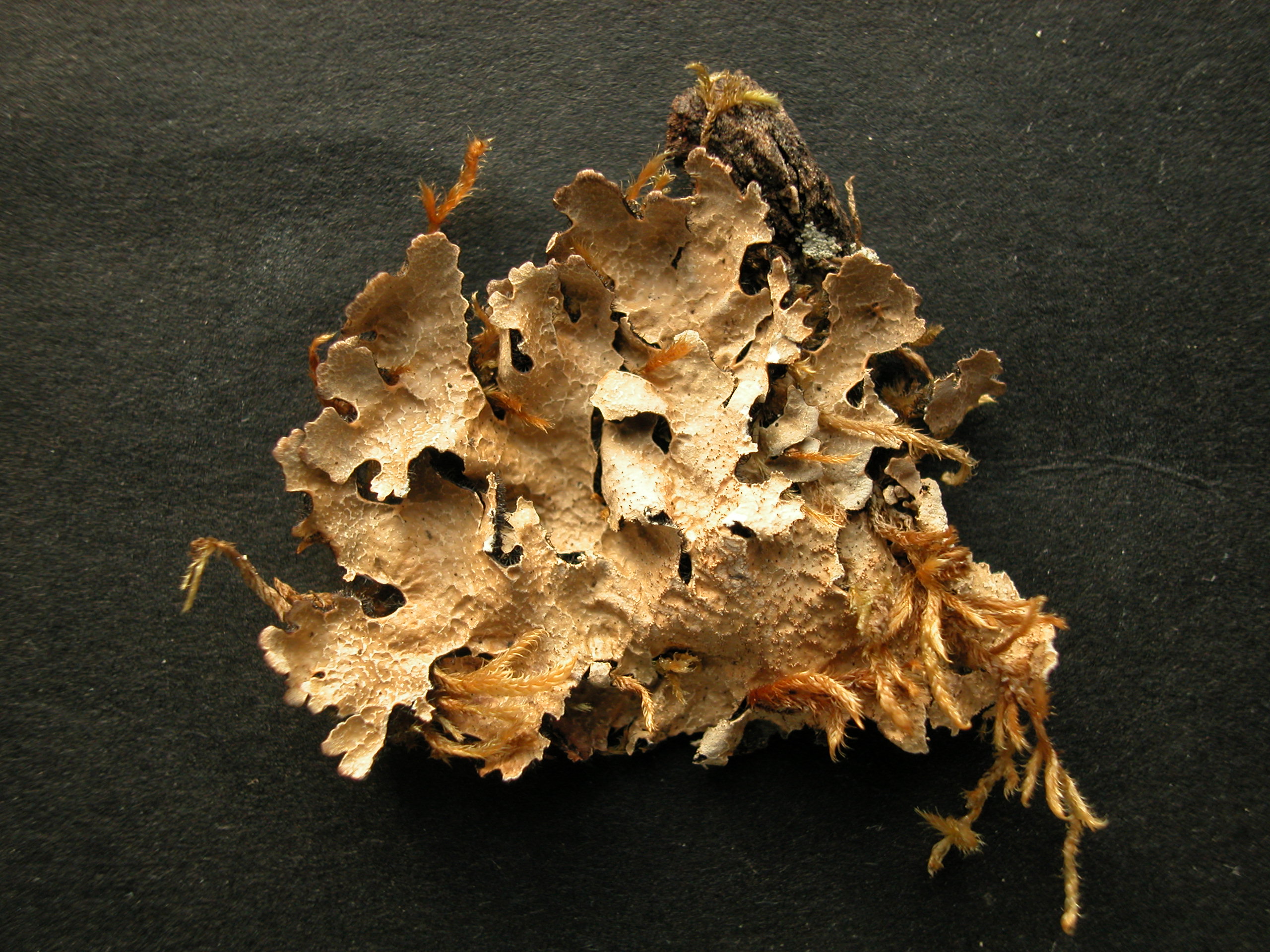
E. Pittao
TSB 8514)
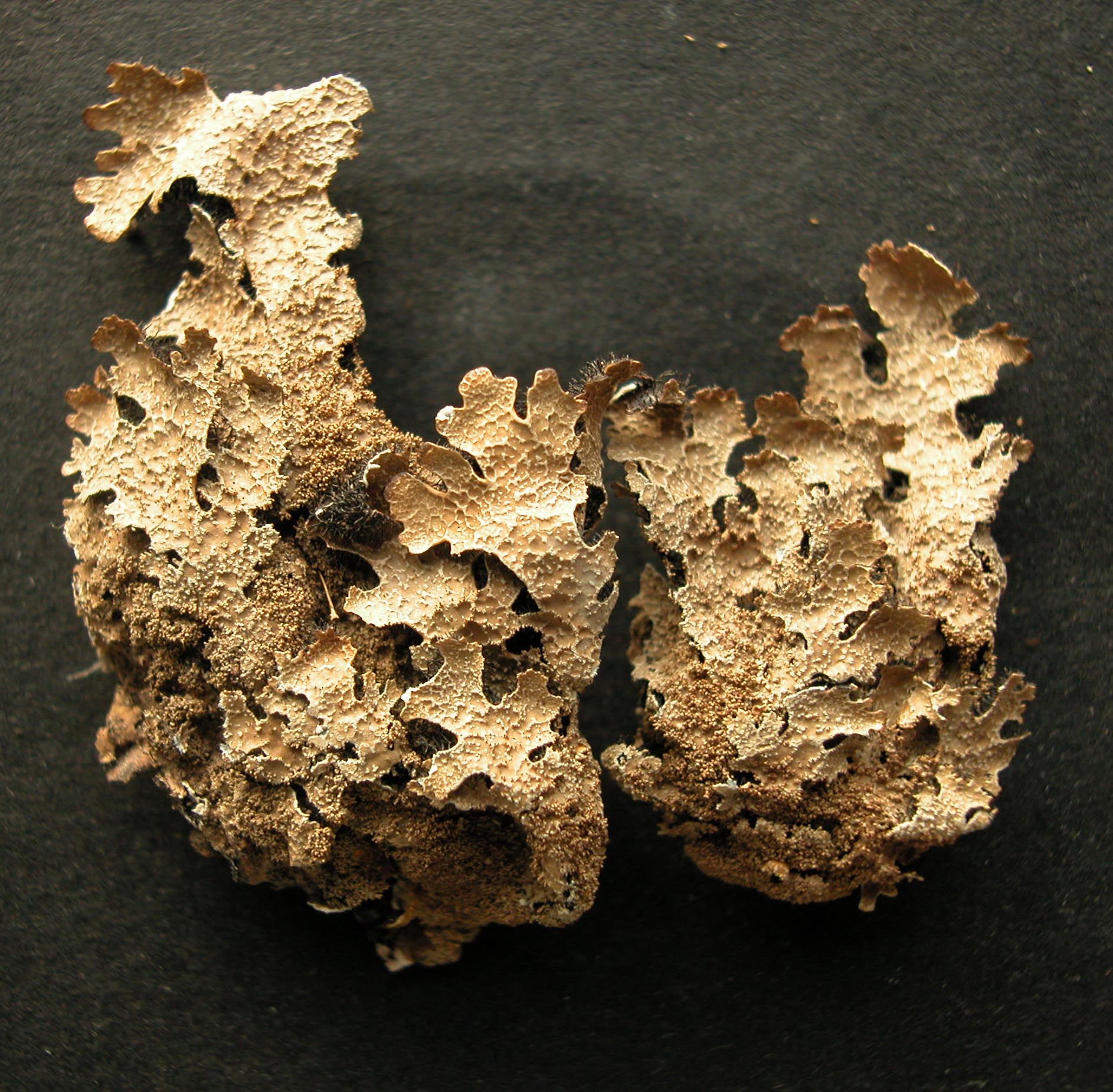
E. Pittao CC BY-SA 04
TSB 8514
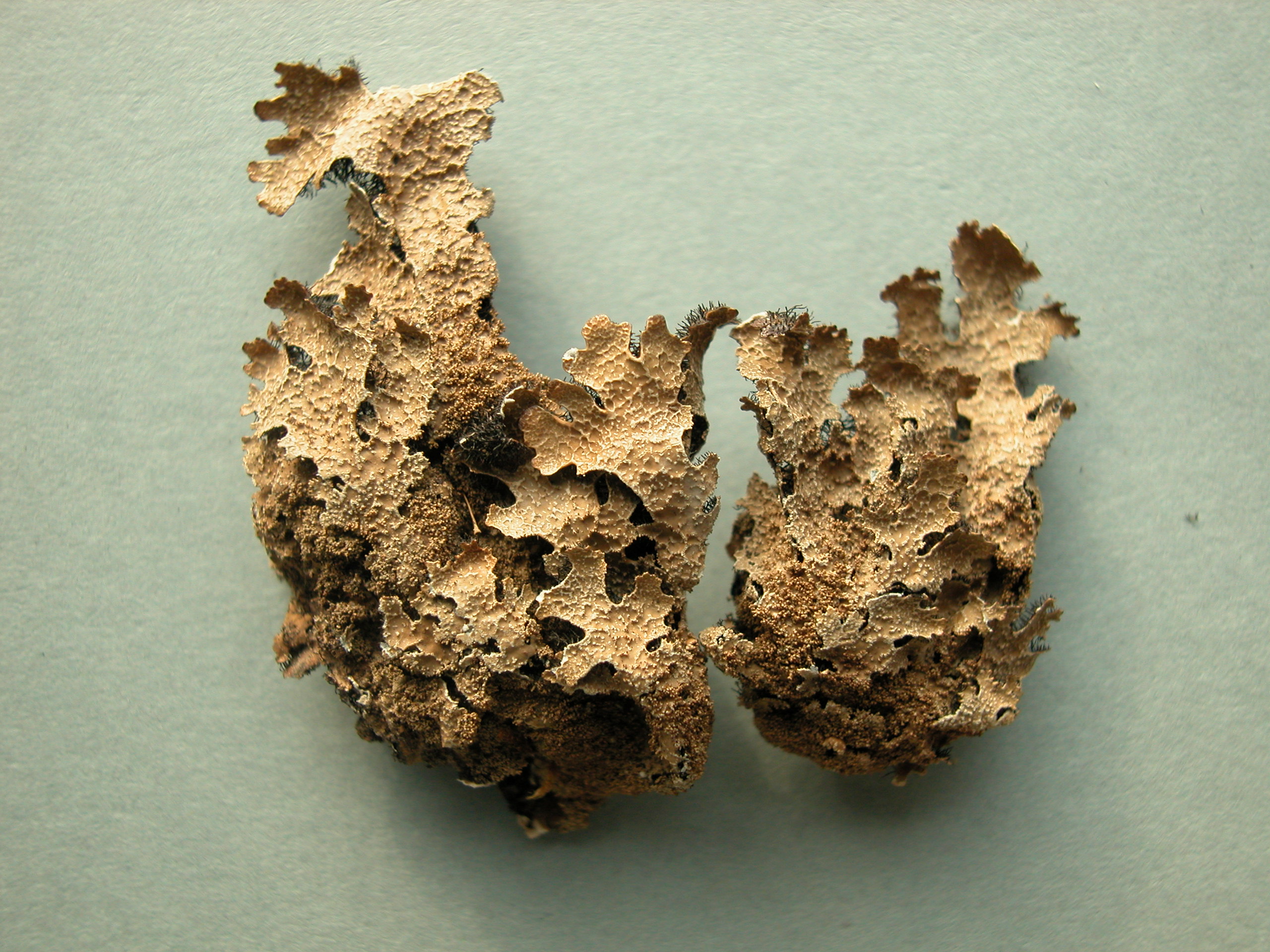
E. Pittao
TSB 8514)
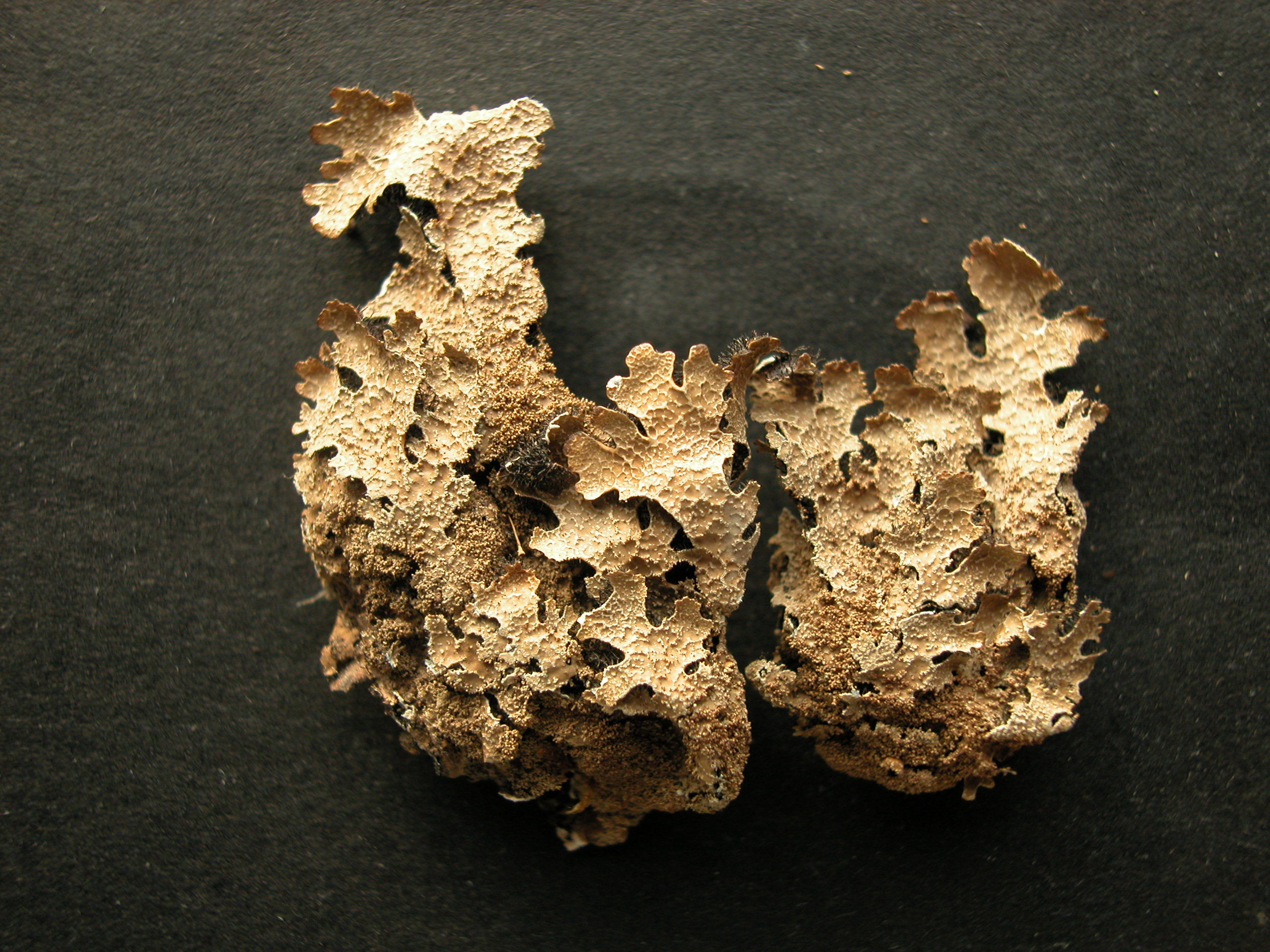
E. Pittao
TSB 8514)

Detail from: https://gzu.jacq.org/GZU000286250
GZU000286250 - Crespo,A. & Divakar,P.K. s.n. Label España: Madrid, Cercedilla ; Alt. 1300 m Habitat On Quercus pyrenaica trunk

Felix Schumm - CC BY 4.0
[ABL22171], Brazil, Rio Grande do Sul, Viamão, nera Parque Itapua, 100 m, 30°05' S, 51°00' W. On granite. Leg. M. Cáceres & A. Aptroot (nr.22171), 26.09. 2014. - Chemistry: zeorin, atranorin, chloroatranorin, alectoronic acid, -collatolic acid, methyl-collatolic acid, K+ yellow > red, KC+ orange, C-, UV+ white.

Felix Schumm - CC BY 4.0
[ABL22171], Brazil, Rio Grande do Sul, Viamão, nera Parque Itapua, 100 m, 30°05' S, 51°00' W. On granite. Leg. M. Cáceres & A. Aptroot (nr.22171), 26.09. 2014. - Chemistry: zeorin, atranorin, chloroatranorin, alectoronic acid, -collatolic acid, methyl-collatolic acid, K+ yellow > red, KC+ orange, C-, UV+ white.

Felix Schumm - CC BY 4.0
[ABL22171], Brazil, Rio Grande do Sul, Viamão, nera Parque Itapua, 100 m, 30°05' S, 51°00' W. On granite. Leg. M. Cáceres & A. Aptroot (nr.22171), 26.09. 2014. - Chemistry: zeorin, atranorin, chloroatranorin, alectoronic acid, -collatolic acid, methyl-collatolic acid, K+ yellow > red, KC+ orange, C-, UV+ white.








