Arthonia epipolytropa Hafellner & Grube
Lichenologist, 55: 243, 2023
Synonyms: Arthonia subvarians auct. non Nyl.
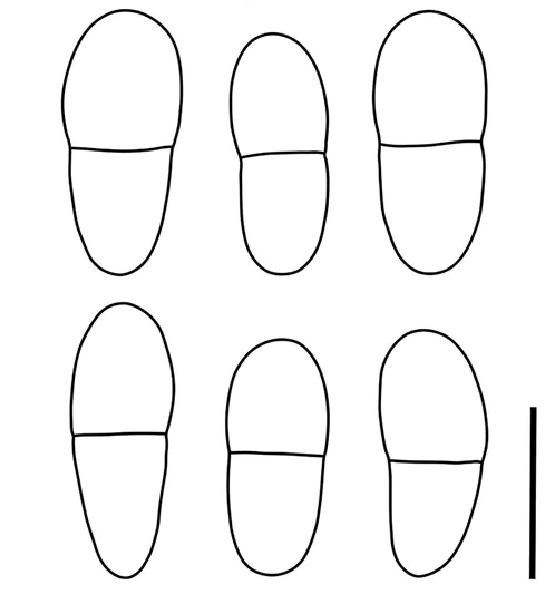
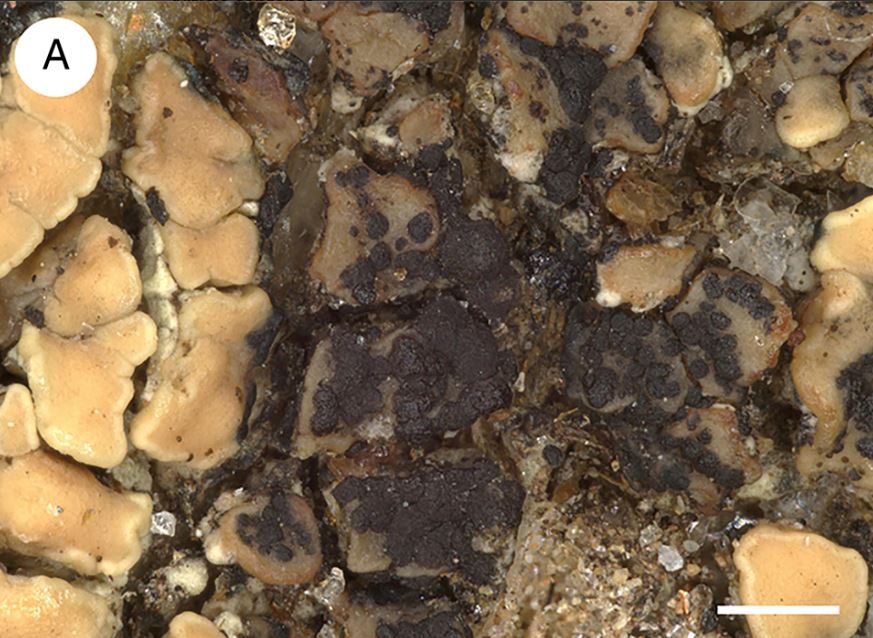
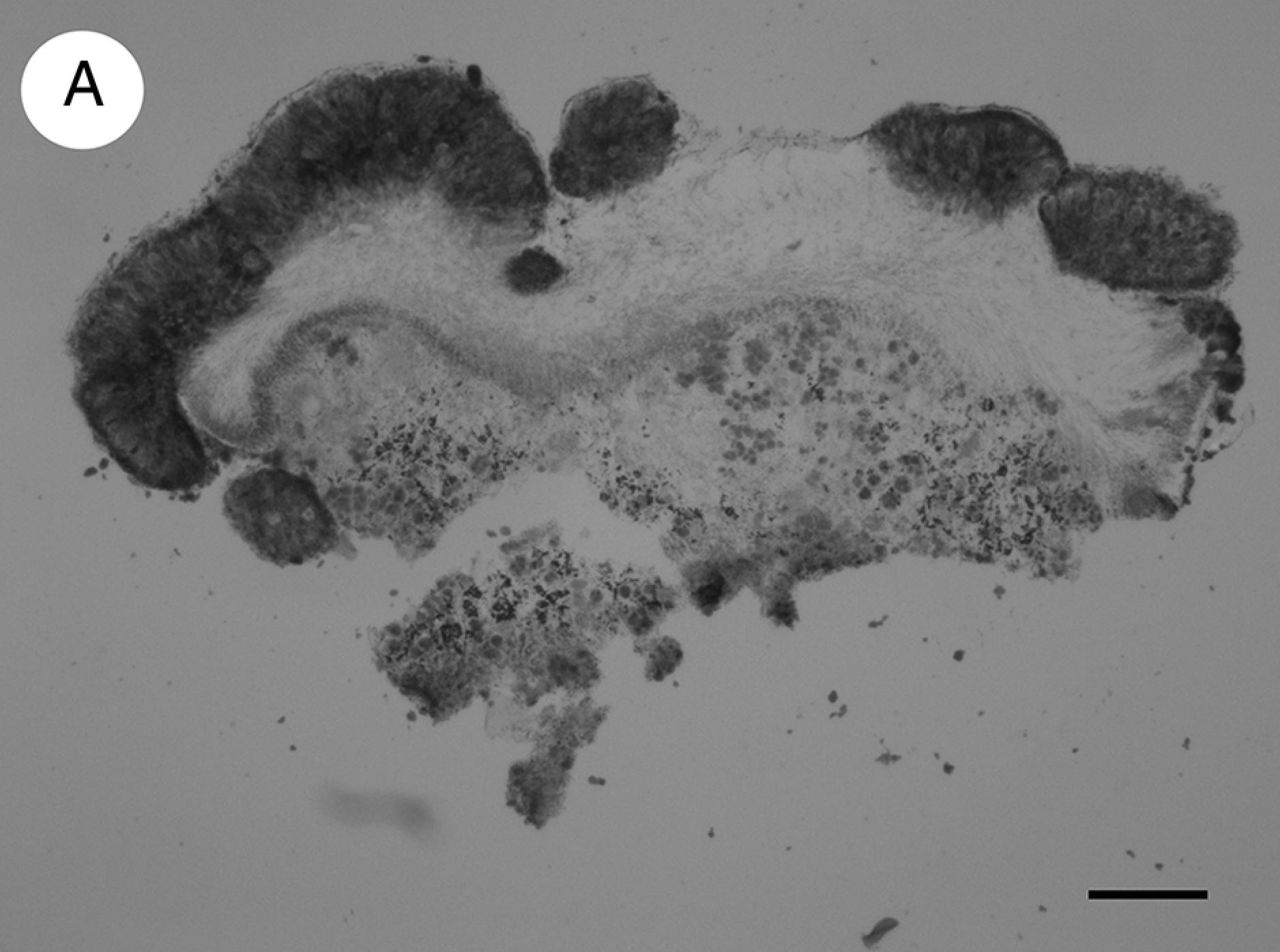
Description: Thallus not lichenized, lichenicolous on species of the Lecanora polytropa-complex, the infections c. 0.5-1 mm wide, later sometimes merging into larger complexes, causing bleaching spots and destroying the apothecia of the host, consisting in often densely agglomerated groups of c. 5 to more than 30 apothecia. Apothecia arthonioid, black to brown-black, appearing cushion-like and becoming confluent, starting the development on those of the host, mainly in the upper part of hymenia, later spreading to thalline margins and occasionally also to sterile thalline areolae, where they are usually single. Individual apothecia round, emarginate, up to 0.3 mm wide and 0.1 mm tall, except for the hypothecial stipe. Epithecium brown, 10-15 μm high; hymenium pale grey-brown, 35-45 μm high, hemiamyloid; paraphysoids branched and anastomosing, c. 1 μm thick, becoming wider in the excipuloid margin (2-3 μm), the apical cells with indistinct caps an amorphous pigment rarely dispersing in small granules; hypothecium 50-70 μm high (excluding a central stipe), medium brown. Asci 8-spored, clavate, fissitunicate, with a tiny K/I+ blue ring basally in the tholus of the endoascus, Arthonia-type, 25-30(-35) x 10-15 μm. Ascospores 1-septate with a more or less median septum, hardly constricted at septum, hyaline, obovate, (9-)10-12(-13) x 4-5 μm, with subequal cells, the upper cell slightly or hardly wider, the lower cell somewhat longer. Photobiont absent. Spot tests: those of the host. Chemistry without lichen substances.
Growth form: Lichenicolous fungus
Substrata: rocks
Reproductive strategy: mainly sexual
paras Lecanora polytropa-group
Commonnes-rarity: (info)
Alpine belt: rare
Subalpine belt: rare
Montane belt: very rare
Dry submediterranean belt: extremely rare
Humid submediterranean belt: extremely rare
Padanian area: absent
pH of the substrata:
1 2 3 4 5

Solar irradiation:
1 2 3 4 5
Aridity:
1 2 3 4 5
Eutrophication:
1 2 3 4 5
Poleotolerance:
0 1 2 3
Altitudinal distribution:
1 2 3 4 5 6
Rarity
absent
extremely rare
very rare
rare
rather rare
rather common
common
very common
extremely common
Loading data...
Occurrence data
Predictive map
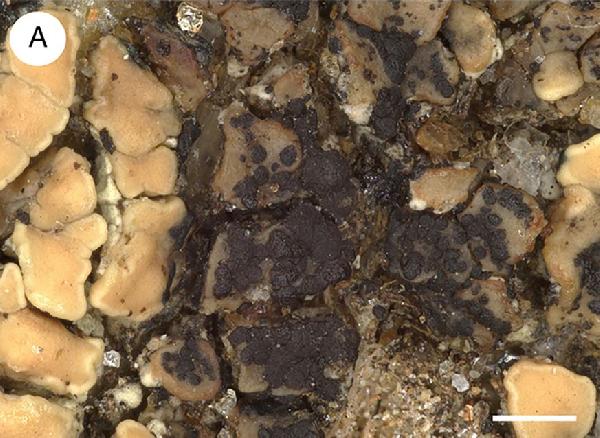
Source: Hafellner, J., & Grube, M. (2023). Arthonia epipolytropa and Arthonia subclemens, two new lichenicolous species on Lecanora polytropa, with a key to the microfungi known on this common species. The Lichenologist, 55(5), 241-251. doi:10.1017/S0024282923000397
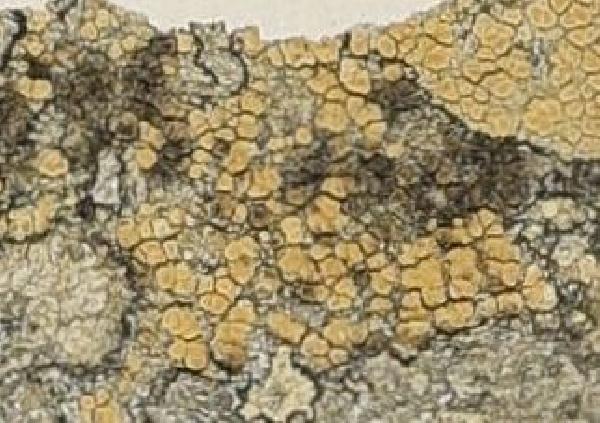
Modified from: https://gzu.jacq.org/GZU000338143
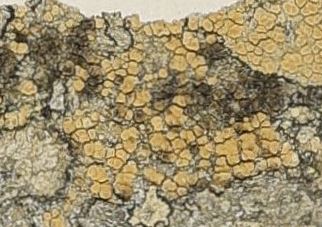
GZU000338143 - J. Hafellner. Österreich, Steiermark: Gurktaler Alpen, Kirbisch ca. 11 km SW von Murau, oberhalb von St Lorenzen, NE-exponierte Hänge knapp unter dem Gipfel, ca. 2100 m, 47°03ʹ05ʺN, 14°03ʹ05ʺE; GF 8950/1 ; Alt. 2100 m
Habitat auf: Lecanora polytropa.
Niedere Schrofen und Blockwerk aus paläozoischen Schiefern zwischen Zwergstrauchheiden; auf Neigungsflächen der Schrofen

Source: Hafellner J, Grube M. Arthonia epipolytropa and Arthonia subclemens, two new lichenicolous species on Lecanora polytropa, with a key to the microfungi known on this common species. The Lichenologist. 2023;55(5):241-251. doi:10.1017/S0024282923000397 - CC BY 4.0
Arthonia epipolytropa (type); cross-section Scale: 100 μm.
Source: Hafellner J, Grube M. Arthonia epipolytropa and Arthonia subclemens, two new lichenicolous species on Lecanora polytropa, with a key to the microfungi known on this common species. The Lichenologist. 2023;55(5):241-251. doi:10.1017/S0024282923000397 - CC BY 4.0
Arthonia epipolytropa (type material); ascospores. Scale: 10 μm.
Growth form: Lichenicolous fungus
Substrata: rocks
Reproductive strategy: mainly sexual
paras Lecanora polytropa-group
Commonnes-rarity: (info)
Alpine belt: rare
Subalpine belt: rare
Montane belt: very rare
Dry submediterranean belt: extremely rare
Humid submediterranean belt: extremely rare
Padanian area: absent
pH of the substrata:
| 1 | 2 | 3 | 4 | 5 |
Solar irradiation:
| 1 | 2 | 3 | 4 | 5 |
Aridity:
| 1 | 2 | 3 | 4 | 5 |
Eutrophication:
| 1 | 2 | 3 | 4 | 5 |
Poleotolerance:
| 0 | 1 | 2 | 3 |
Altitudinal distribution:
| 1 | 2 | 3 | 4 | 5 | 6 |
Rarity
absent
extremely rare
very rare
rare
rather rare
rather common
common
very common
extremely common
Loading data...
Occurrence data
Predictive map
Source: Hafellner, J., & Grube, M. (2023). Arthonia epipolytropa and Arthonia subclemens, two new lichenicolous species on Lecanora polytropa, with a key to the microfungi known on this common species. The Lichenologist, 55(5), 241-251. doi:10.1017/S0024282923000397
Modified from: https://gzu.jacq.org/GZU000338143
GZU000338143 - J. Hafellner. Österreich, Steiermark: Gurktaler Alpen, Kirbisch ca. 11 km SW von Murau, oberhalb von St Lorenzen, NE-exponierte Hänge knapp unter dem Gipfel, ca. 2100 m, 47°03ʹ05ʺN, 14°03ʹ05ʺE; GF 8950/1 ; Alt. 2100 m Habitat auf: Lecanora polytropa. Niedere Schrofen und Blockwerk aus paläozoischen Schiefern zwischen Zwergstrauchheiden; auf Neigungsflächen der Schrofen
Source: Hafellner J, Grube M. Arthonia epipolytropa and Arthonia subclemens, two new lichenicolous species on Lecanora polytropa, with a key to the microfungi known on this common species. The Lichenologist. 2023;55(5):241-251. doi:10.1017/S0024282923000397 - CC BY 4.0
Arthonia epipolytropa (type); cross-section Scale: 100 μm.