Acarospora helvetica H. Magn.
Svensk Bot. Tidskr., 18: 336, 1924.
Synonyms: Acarospora austriaca H. Magn.; Acarospora obscura H. Magn.
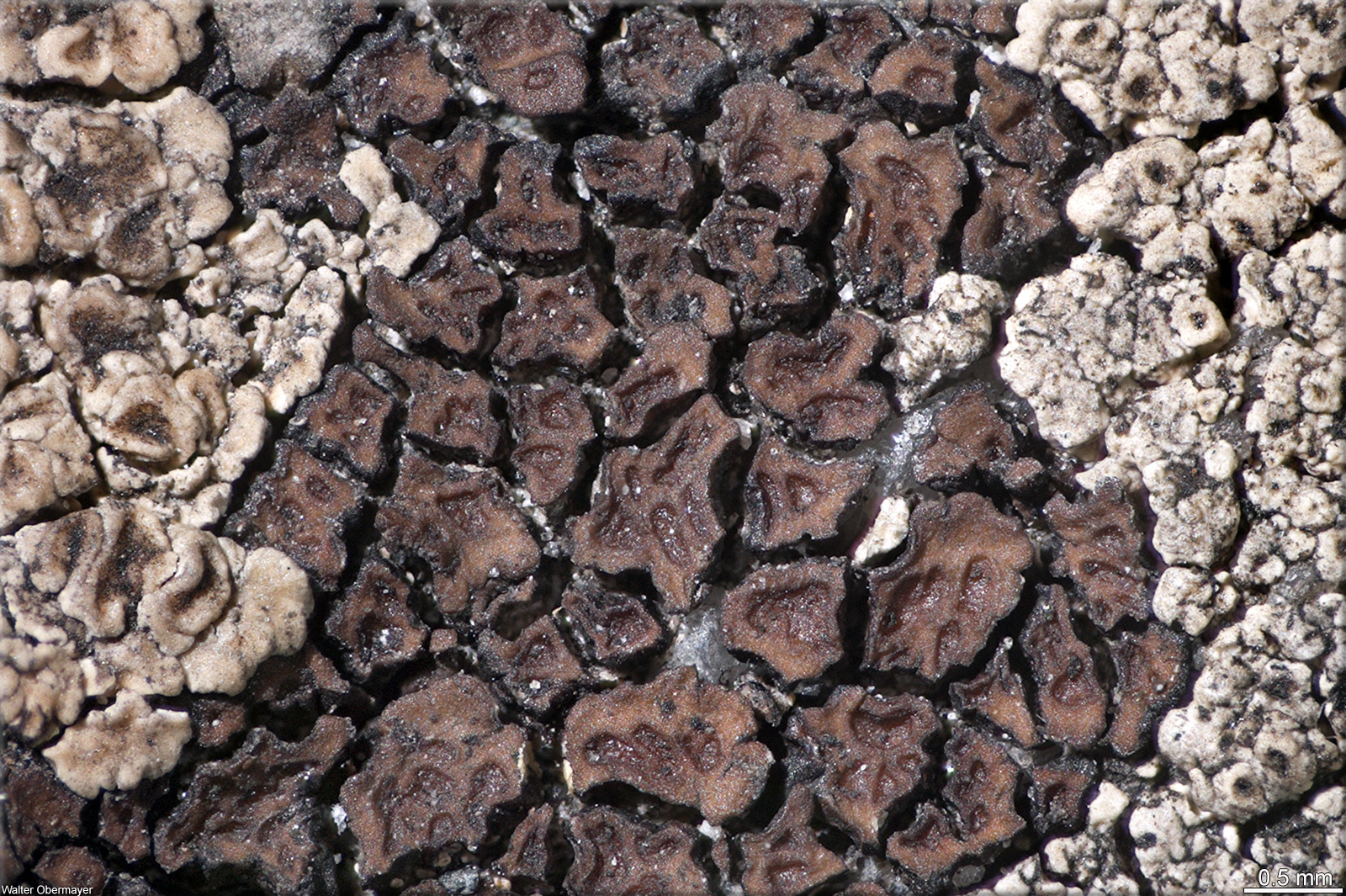
Description: Thallus crustose, episubstratic, areolate, the areoles angular to almost round, 0.2-1(-3) mm wide, contiguous and forming a rather well-delimited thallus, more rarely dispersed, sometimes the peripheral ones indistinctly lobulate, flat to slightly convex, usually dark brown to reddish brown with a darker margin, epruinose. Cortex 15-20(-30) µm thick, the upper part dark brown, the lower part colourless, without a distinct epicortex; algal layer continuous, 30-80 μm thick; medulla white, up to 300 μm thick, the hyphae 3-5 μm thick. Apothecia 0.2-0.5(-1) mm across, usually immersed, 1(-5) per areole, with a slightly concave to flat, smooth, brown to reddish brown disc and a poorly evident to slightly raised thalline margin, the proper margin forming a distinct parathecial ring in mature apothecia. Proper exciple at first thin, later expanding up to 100 μm above the disc; epithecium pale brown 10-15 μm high; hymenium colourless, 70-100(-120) μm high, the hymenial gel hemiamyloid, I+ light blue fading to light red; paraphyses 1.5-2 µm thick at mid-level, the apical cells up to 3 µm wide; subhymenium 20–30 μm high, euamyloid, I+ blue; hypothecium colourless, 10-20 μm high, I-. Asci 100-200-spored, clavate, the apical dome K/I-, 55-75 x 15-17 μm. Ascospores 1-celled, hyaline, narrowly ellipsoid, 3-4(-5) x 1.5-1.7(-2) μm. Pycnidia rare. Conidia c. 2 x 0.5 μm. Photobiont chlorococcoid. Spot tests: cortex and medulla K-, C-, KC-, P-, UV-. Chemistry: without lichen substances.
Growth form: Crustose
Substrata: rocks
Photobiont: green algae other than Trentepohlia
Reproductive strategy: mainly sexual
Pioneer species
Commonnes-rarity: (info)
Alpine belt: extremely rare
Subalpine belt: rare
Montane belt: rare
Dry submediterranean belt: very rare
Humid submediterranean belt: very rare
Padanian area: absent
pH of the substrata:
1 2 3 4 5

Solar irradiation:
1 2 3 4 5
Aridity:
1 2 3 4 5
Eutrophication:
1 2 3 4 5
Poleotolerance:
0 1 2 3
Altitudinal distribution:
1 2 3 4 5 6
Rarity
absent
extremely rare
very rare
rare
rather rare
rather common
common
very common
extremely common
Loading data...
Occurrence data
Predictive map
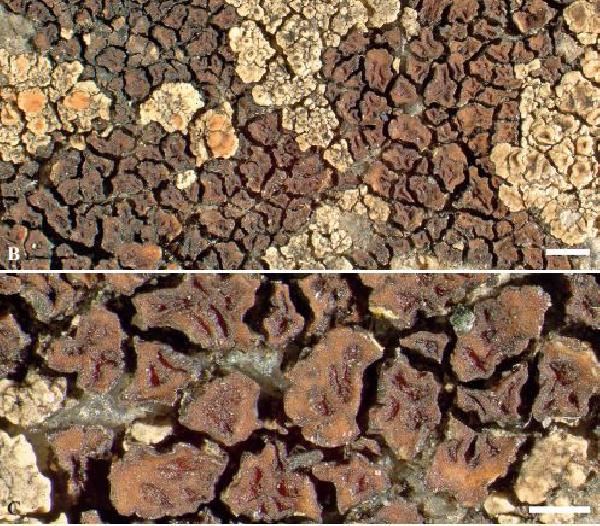
Source: Knudsen K. & Kocourková J. (2020) Herzogia 33(1): 1-8
Austria.
). B. Thallus with apothecia (Poelt,
GZU). C. Detail of the thallus with sharp edged areoles and immersed apothecia. – Scale bars: A, B = 1mm. C =
500 μm.
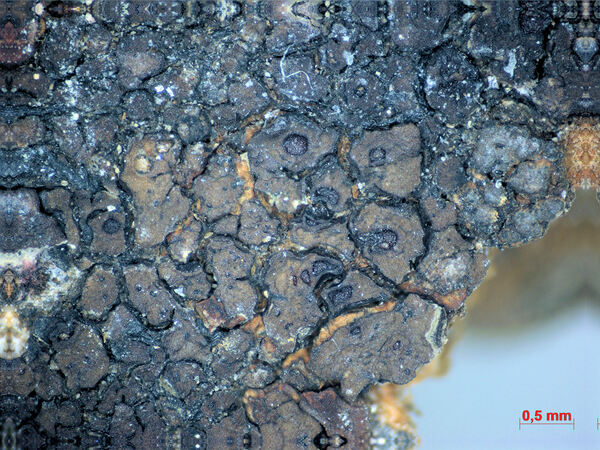
Lucia Muggia CC BY-SA 4.0; Owner: Department of Life Sciences, University of Trieste
Herbarium: GZU (327-81, 1981, Leg. J. Poelt)
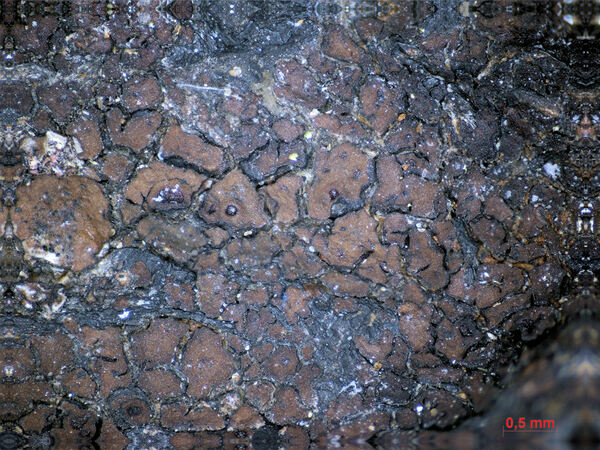
Lucia Muggia CC BY-SA 4.0; Owner: Department of Life Sciences, University of Trieste
Herbarium: GZU (327-81, 1981, Leg. J. Poelt)
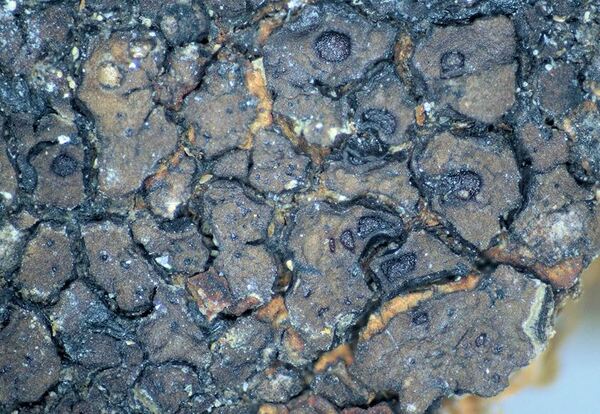
Lucia Muggia CC BY-SA 4.0; Owner: Department of Life Sciences, University of Trieste
Herbarium: GZU (327-81 Leg. J. Poelt)

Elena Pittao CC BY-SA 4.0; Owner: Department of Life Sciences, University of Trieste
Herbarium: TSB (11614)
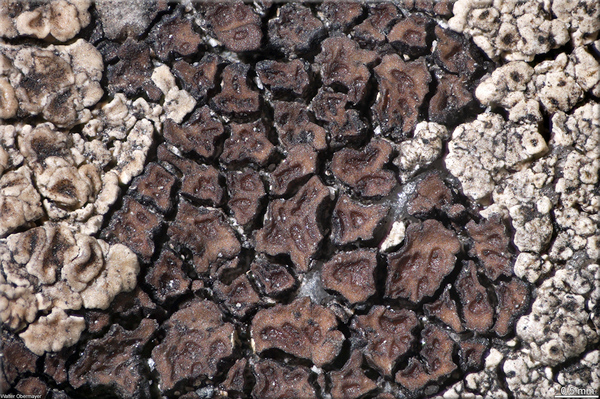
Walter Obermayer - Source: Lichens of Noricum - http://lichens-of-noricum.uni-graz.at/
Stubalm-Speikkogel, Poelt 24.6.1973:
Growth form: Crustose
Substrata: rocks
Photobiont: green algae other than Trentepohlia
Reproductive strategy: mainly sexual
Pioneer species
Commonnes-rarity: (info)
Alpine belt: extremely rare
Subalpine belt: rare
Montane belt: rare
Dry submediterranean belt: very rare
Humid submediterranean belt: very rare
Padanian area: absent
pH of the substrata:
| 1 | 2 | 3 | 4 | 5 |
Solar irradiation:
| 1 | 2 | 3 | 4 | 5 |
Aridity:
| 1 | 2 | 3 | 4 | 5 |
Eutrophication:
| 1 | 2 | 3 | 4 | 5 |
Poleotolerance:
| 0 | 1 | 2 | 3 |
Altitudinal distribution:
| 1 | 2 | 3 | 4 | 5 | 6 |
Rarity
absent
extremely rare
very rare
rare
rather rare
rather common
common
very common
extremely common
Loading data...
Occurrence data
Predictive map

Source: Knudsen K. & Kocourková J. (2020) Herzogia 33(1): 1-8
Austria.
). B. Thallus with apothecia (Poelt,
GZU). C. Detail of the thallus with sharp edged areoles and immersed apothecia. – Scale bars: A, B = 1mm. C =
500 μm.
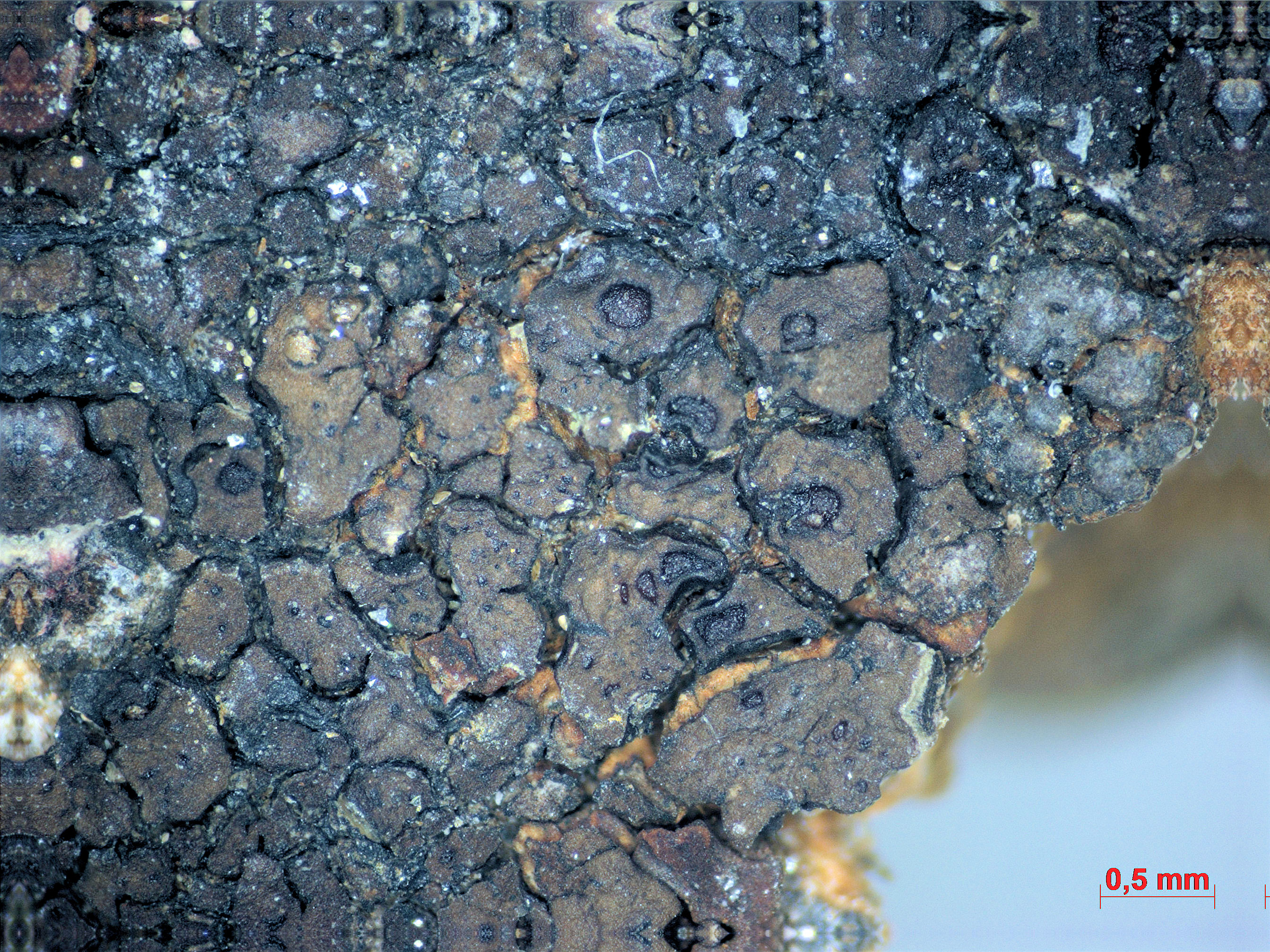
Lucia Muggia CC BY-SA 4.0; Owner: Department of Life Sciences, University of Trieste
Herbarium: GZU (327-81, 1981, Leg. J. Poelt)
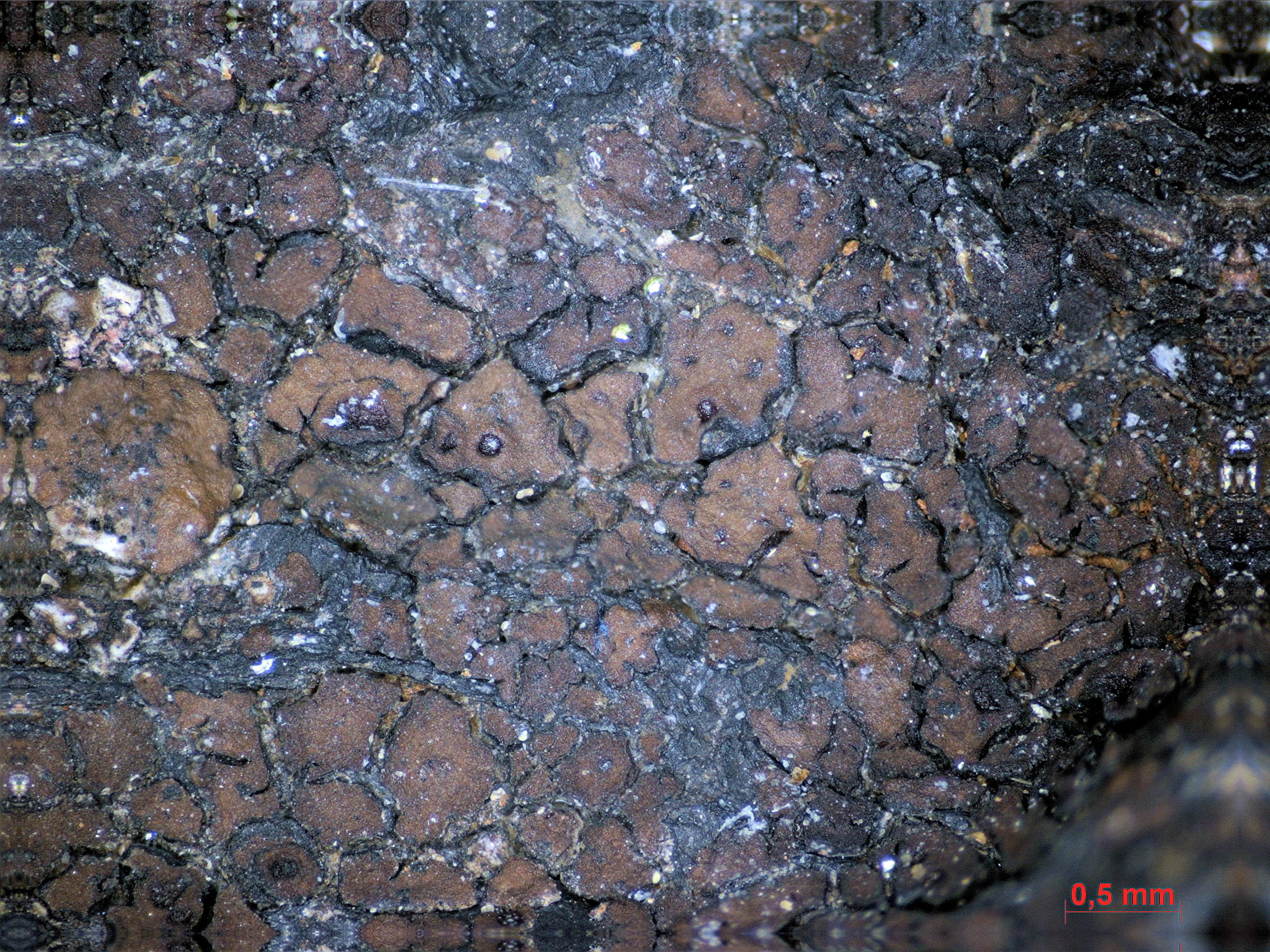
Lucia Muggia CC BY-SA 4.0; Owner: Department of Life Sciences, University of Trieste
Herbarium: GZU (327-81, 1981, Leg. J. Poelt)
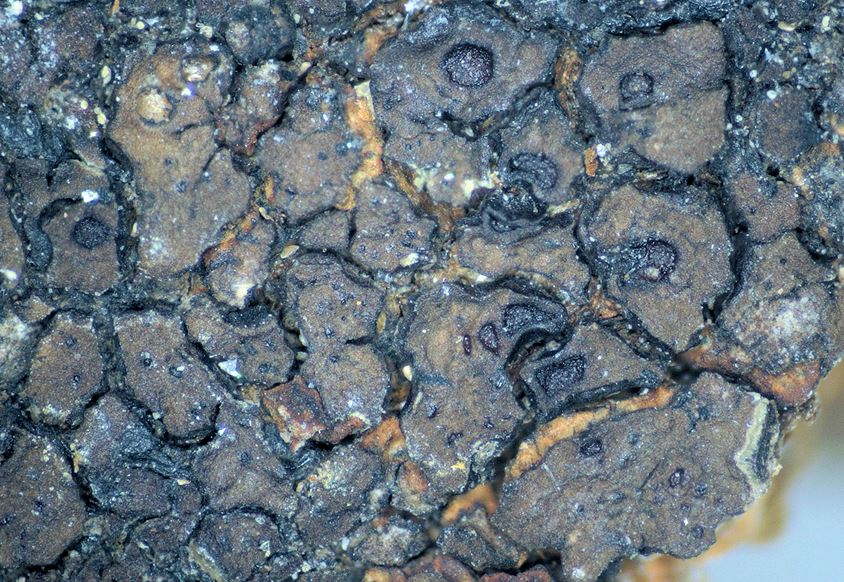
Lucia Muggia CC BY-SA 4.0; Owner: Department of Life Sciences, University of Trieste
Herbarium: GZU (327-81 Leg. J. Poelt)
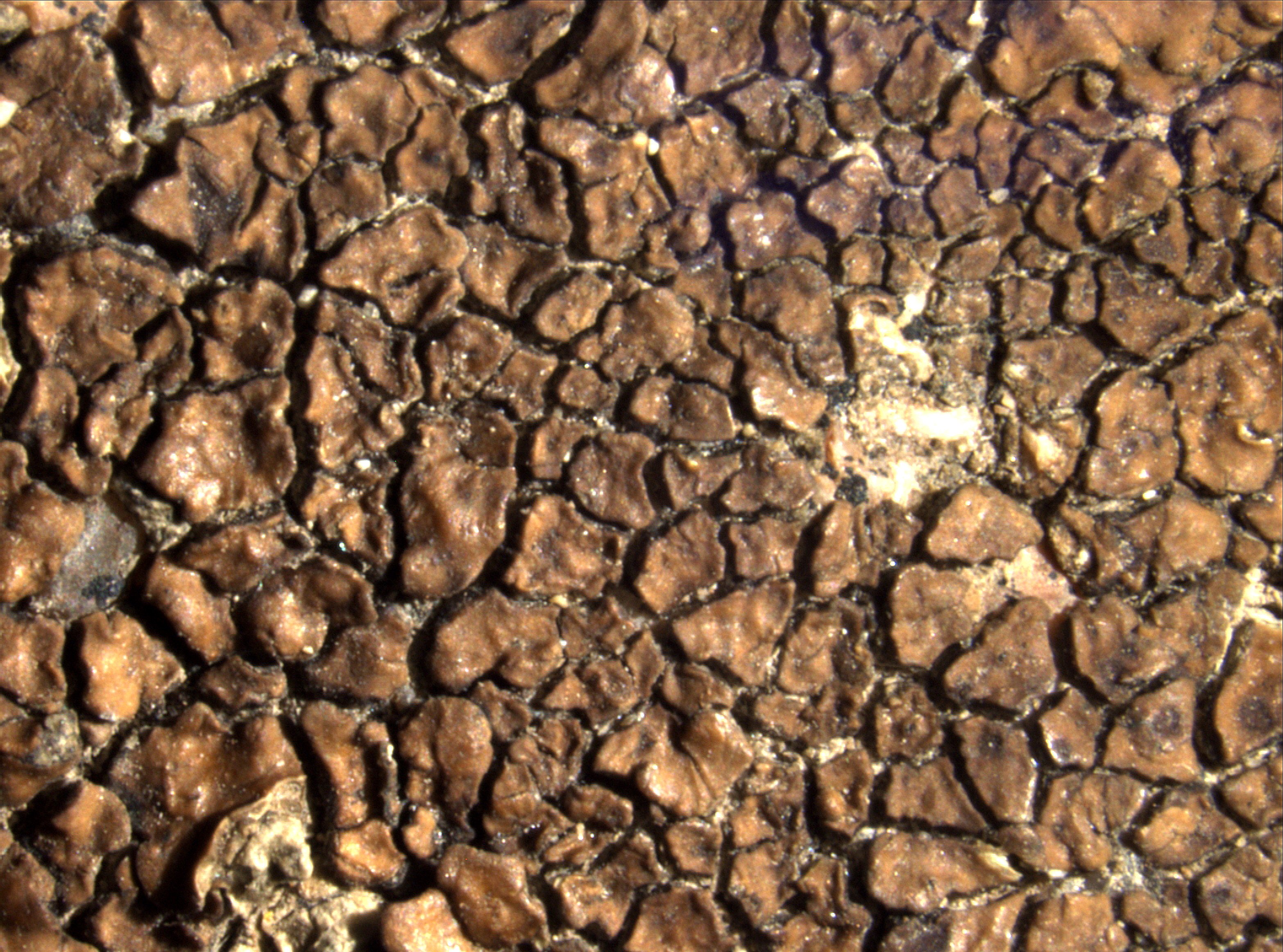
Elena Pittao CC BY-SA 4.0; Owner: Department of Life Sciences, University of Trieste
Herbarium: TSB (11614)