Arthopyrenia cerasi (Schrad.) A. Massal.
Ric. Auton. Lich. Crost.: 167, 1852. Basionym: Verrucaria cerasi Schrad. - Ann. Bot. (Usteri), 22: 87, 1797.
Synonyms: Arthopyrenia crombei A.L. Sm.; Metasphaeria cerasi (Schrad.) Vain.; Pseudosagedia cerasi (Schrad.) M. Choisy; Pyrenula cerasi (Schrad.) Trevis.; Spermatodium cerasi (Schrad.) Trevis.; Verrucaria epidermidis var. cerasi (Schrad.) Ach.
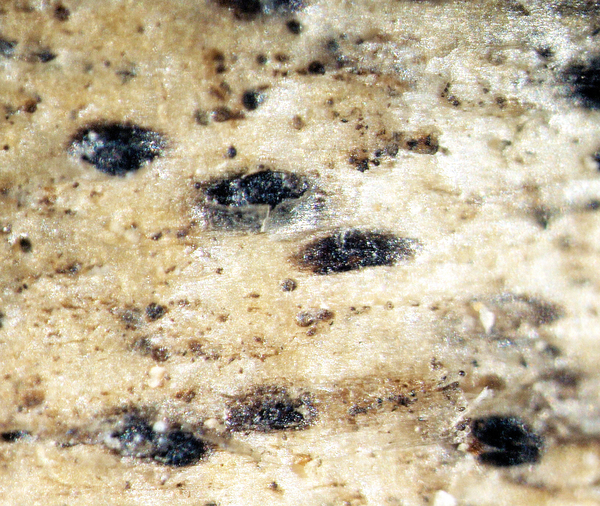
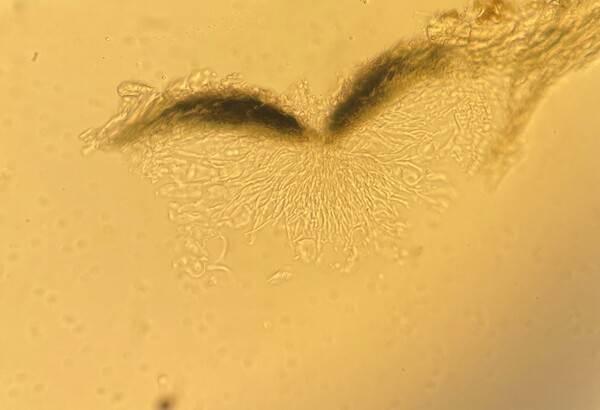
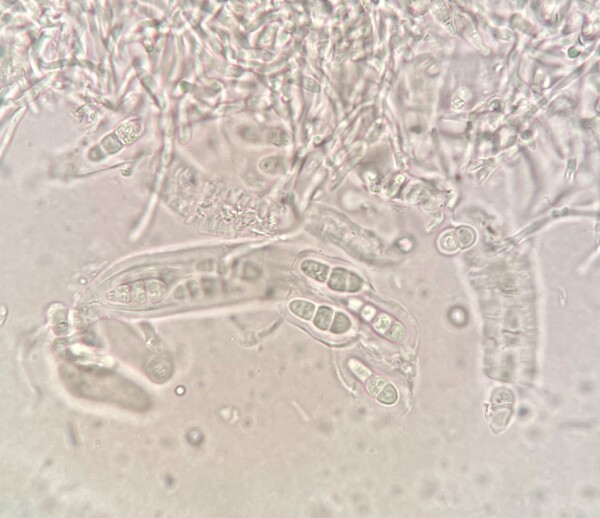
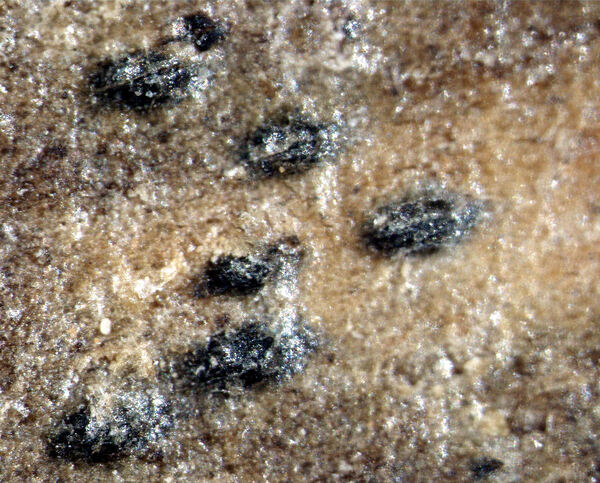
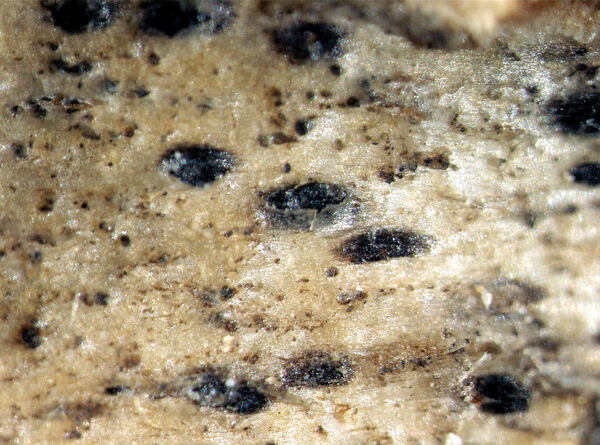
Description: Thallus crustose, mostly endosubstratic, inapparent or appearing as a paler patch on the bark, non-lichenized. Perithecia black, usually ellipsoid in surface view, 0.3-0.5 x 0.2-0.4 mm, the ostiole distinct, centrally located. Involucrellum dimidiate, dark brown in water, K+ greenish, of compacted hyphae and bark cells; exciple thin, colourless to pale brown, surrounding the centrum; pseudoparaphyses persistent, slender, simple or sparingly branched, 1.5-2 μm thick, the cells c. 8-14 μm long; downwardly projecting periphysoids present near the ostiole. Asci 8-spored, cylindrical-clavate, fissitunicate, with two functional wall layers, 60-75 x 14-18 μm, with biseriately arranged spores. Ascospores 3-septate, more or less constricted at septa, especially the median one, hyaline, clavate or obovoid with rounded apices, (15-)17-22(-23) x 5-7 μm, surrounded by a c. 2 μm thick (in K), distinct perispore. Pycnidia black, 80-120 μm across, with either macro- or microconidia. Macroconidia 3-septate, hyaline, oblong, 11-13 x 2-3 μm; microconidia filiform, 9-14 x c. 0.8 μm. Photobiont absent. Spot tests: thallus K-, C-, KC-, P-, UV-. Chemistry: without lichen substances.
Growth form: Fungus
Substrata: bark
Reproductive strategy: mainly sexual
Pioneer species
Commonnes-rarity: (info)
Alpine belt: absent
Subalpine belt: absent
Montane belt: absent
Dry submediterranean belt: rather rare
Humid submediterranean belt: rather rare
Padanian area: extremely rare
pH of the substrata:
1 2 3 4 5

Solar irradiation:
1 2 3 4 5
Aridity:
1 2 3 4 5
Eutrophication:
1 2 3 4 5
Poleotolerance:
0 1 2 3
Altitudinal distribution:
1 2 3 4 5 6
Rarity
absent
extremely rare
very rare
rare
rather rare
rather common
common
very common
extremely common
Loading data...
Occurrence data
Predictive map
P.L. Nimis CC BY-SA 04
TSB 24759
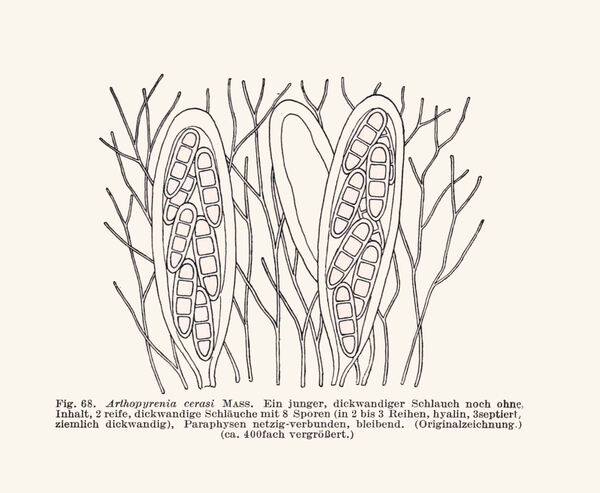
Source: Keissler K. von 1938. Pyrenulaceae, Mycoporaceae, Coniocarpineae. In: Rabenhorst G L: Kryptogamen-Flora von Deutschland, Österreich und der Schweiz. 2nd, IX, Die Flechten, Abt. 1, 2. Gebr. Borntraeger, Leipzig, pp. 1-846.
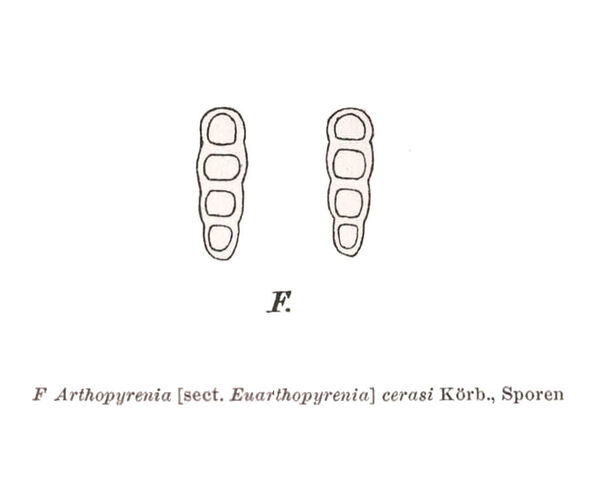
Zahlbruckner A. 1926. Lichenes (Flechten). In: Engler A. (ed.): Die natürlichen Pflanzenfamilien. 2nd ed., vol 8, W. Engelmann, Leipzig, 270 pp.
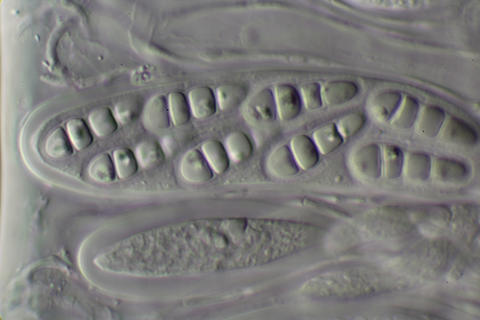
Photo uploaded by P. Cannon - CC BY-SA NC - Source: http://fungi.myspecies.info/all-fungi/arthopyrenia-cerasi
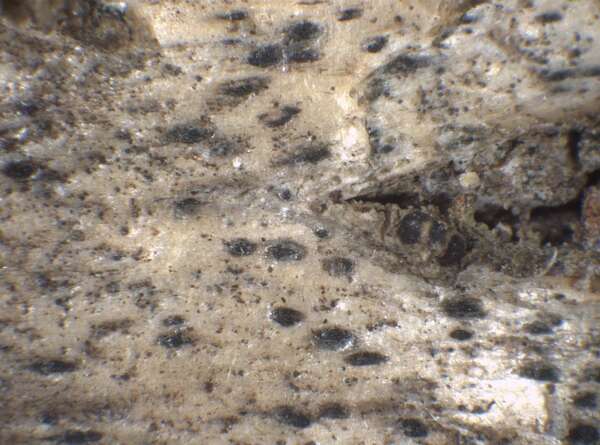
P.L. Nimis; Owner: Department of Life Sciences, University of Trieste
Herbarium: TSB (24759)
2003/03/12
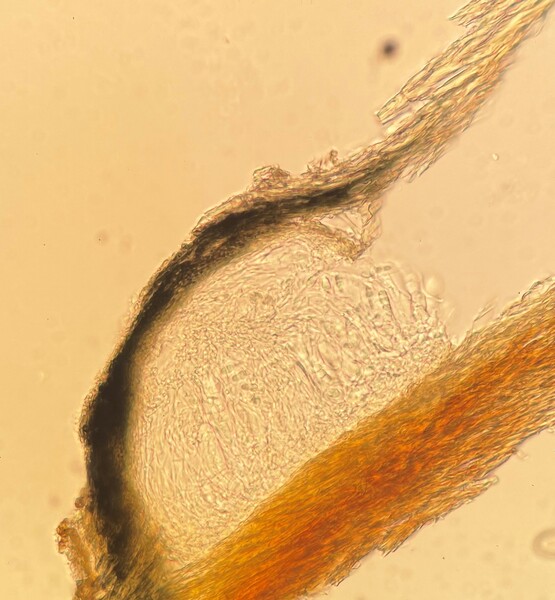
Sonia Ravera
Involucrellum K+ green
Sonia Ravera
Pseudoparaphyses
Sonia Ravera
Ascospores
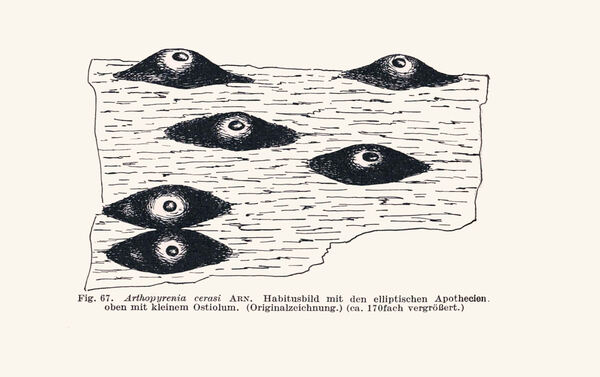
Source: Keissler K. von 1938. Pyrenulaceae, Mycoporaceae, Coniocarpineae. In: Rabenhorst G L: Kryptogamen-Flora von Deutschland, Österreich und der Schweiz. 2nd, IX, Die Flechten, Abt. 1, 2. Gebr. Borntraeger, Leipzig, pp. 1-846.
P.L. Nimis CC BY-SA 4.0
TSB 24759
P.L. Nimis CC BY-SA 4.0
TSB 24759
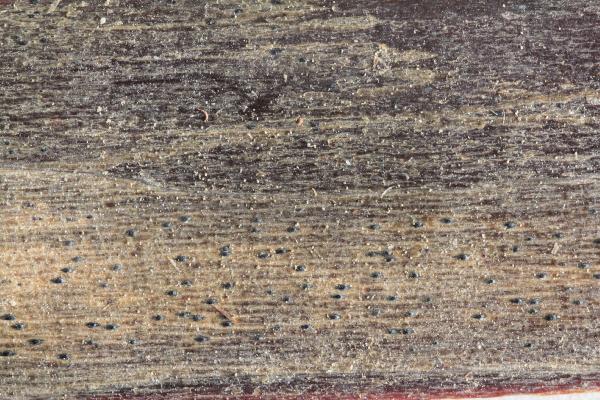
Collezione lichenologica Abramo Massalongo del Museo di Storia Naturale G. Ligabue di Venezia - Autori: Seggi, Linda; Trabucco, Raffaella Proprietà: Fondazione Musei Civici di Venezia - CC BY-NC
Italy, ad truncos Cerasi Pr.
Growth form: Fungus
Substrata: bark
Reproductive strategy: mainly sexual
Pioneer species
Commonnes-rarity: (info)
Alpine belt: absent
Subalpine belt: absent
Montane belt: absent
Dry submediterranean belt: rather rare
Humid submediterranean belt: rather rare
Padanian area: extremely rare
pH of the substrata:
| 1 | 2 | 3 | 4 | 5 |
Solar irradiation:
| 1 | 2 | 3 | 4 | 5 |
Aridity:
| 1 | 2 | 3 | 4 | 5 |
Eutrophication:
| 1 | 2 | 3 | 4 | 5 |
Poleotolerance:
| 0 | 1 | 2 | 3 |
Altitudinal distribution:
| 1 | 2 | 3 | 4 | 5 | 6 |
Rarity
absent
extremely rare
very rare
rare
rather rare
rather common
common
very common
extremely common
Loading data...
Occurrence data
Predictive map
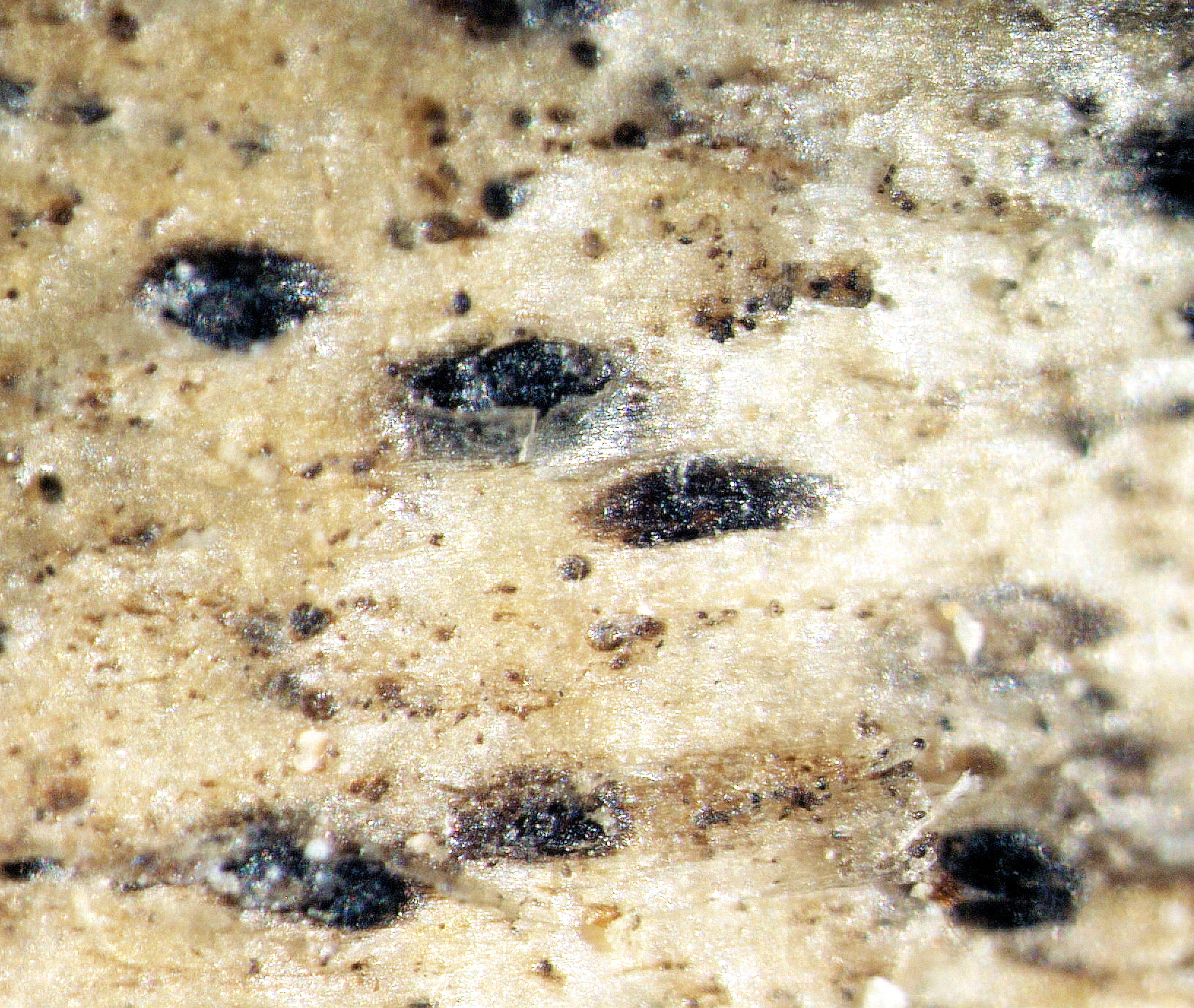
P.L. Nimis CC BY-SA 04
TSB 24759

Source: Keissler K. von 1938. Pyrenulaceae, Mycoporaceae, Coniocarpineae. In: Rabenhorst G L: Kryptogamen-Flora von Deutschland, Österreich und der Schweiz. 2nd, IX, Die Flechten, Abt. 1, 2. Gebr. Borntraeger, Leipzig, pp. 1-846.

Zahlbruckner A. 1926. Lichenes (Flechten). In: Engler A. (ed.): Die natürlichen Pflanzenfamilien. 2nd ed., vol 8, W. Engelmann, Leipzig, 270 pp.
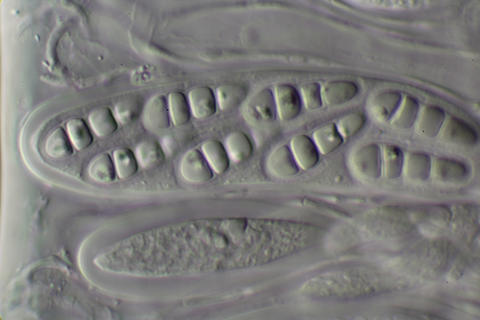
Photo uploaded by P. Cannon - CC BY-SA NC - Source: http://fungi.myspecies.info/all-fungi/arthopyrenia-cerasi

P.L. Nimis; Owner: Department of Life Sciences, University of Trieste
Herbarium: TSB (24759)
2003/03/12

Sonia Ravera
Involucrellum K+ green
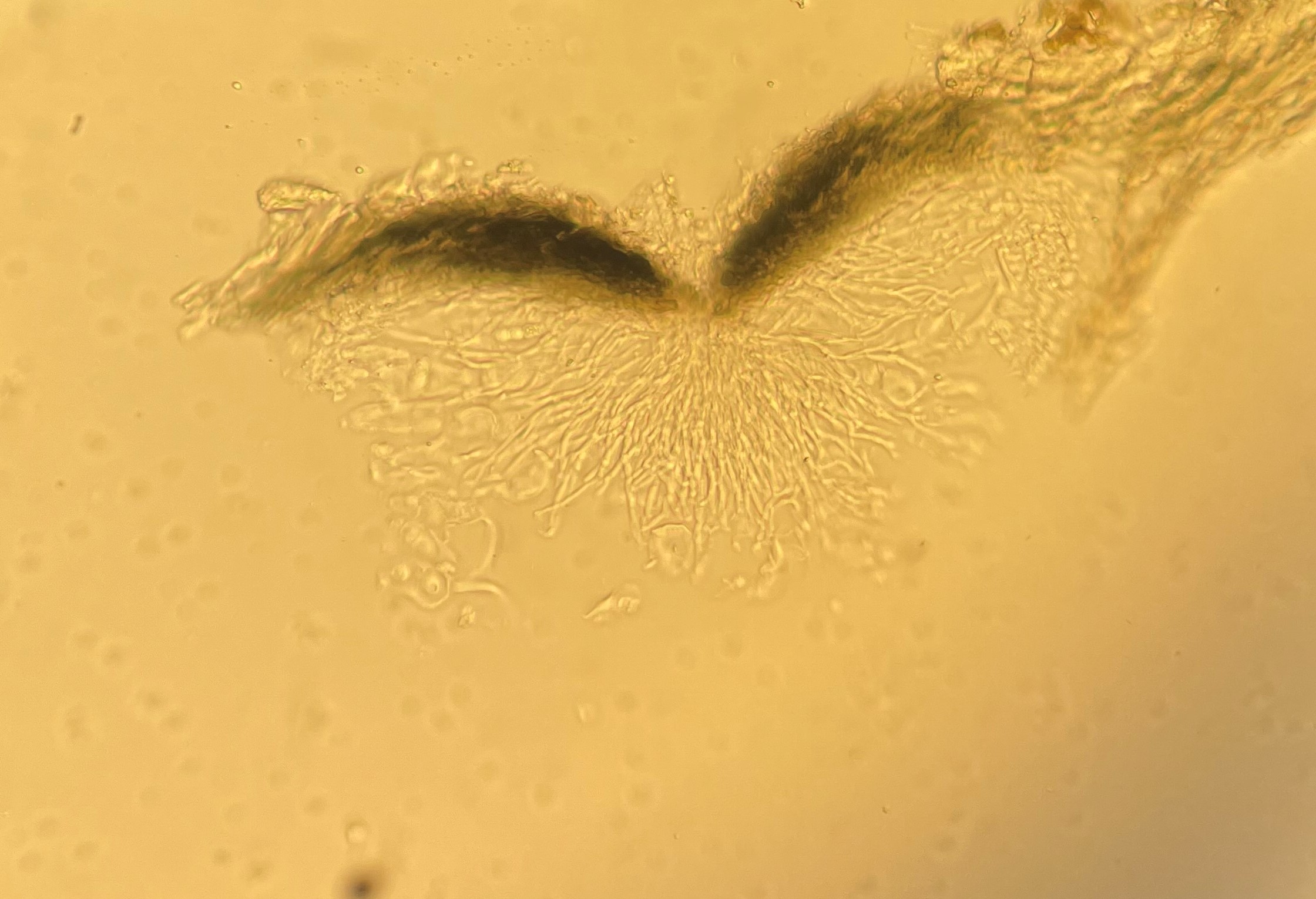
Sonia Ravera
Pseudoparaphyses
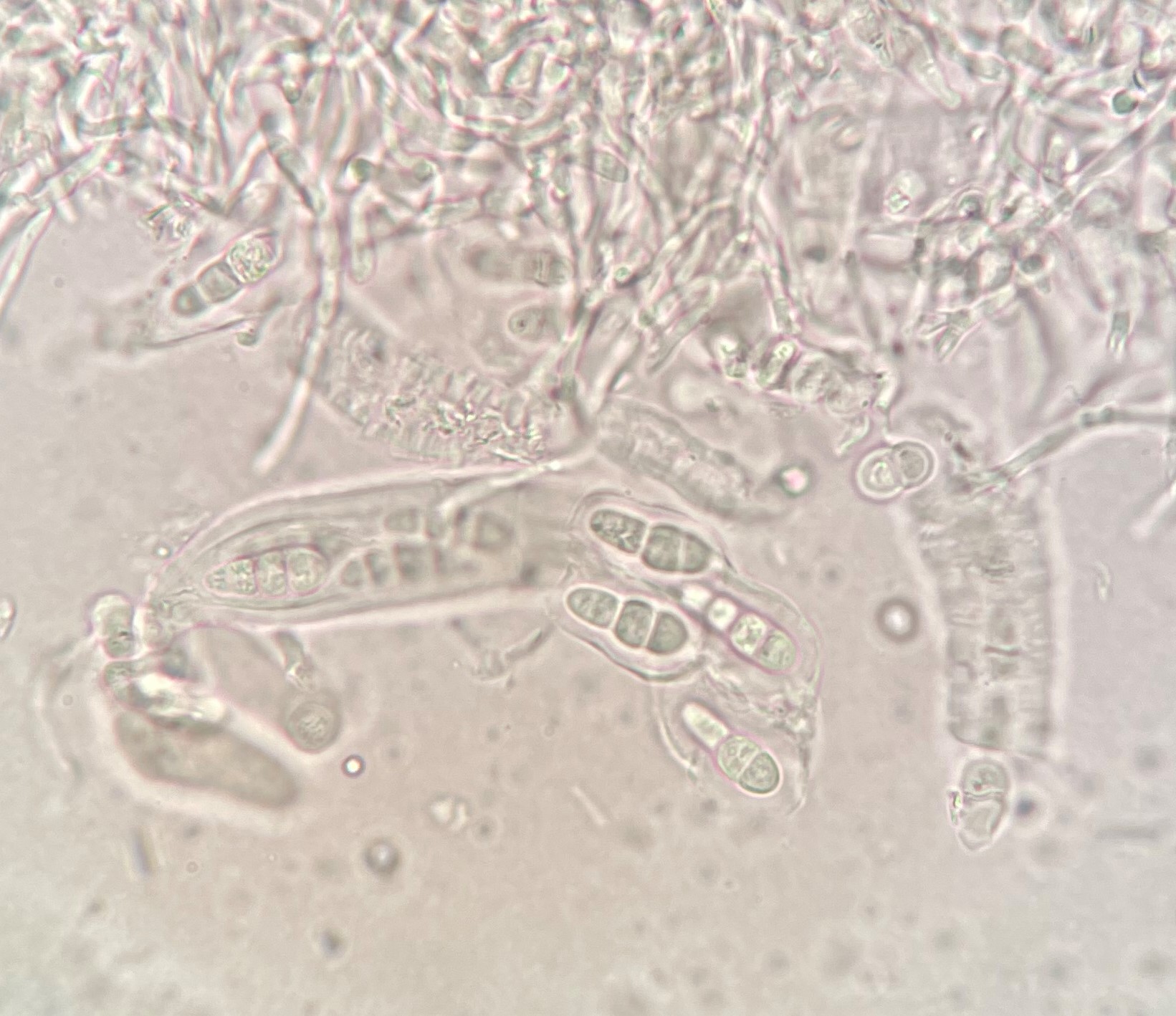
Sonia Ravera
Ascospores
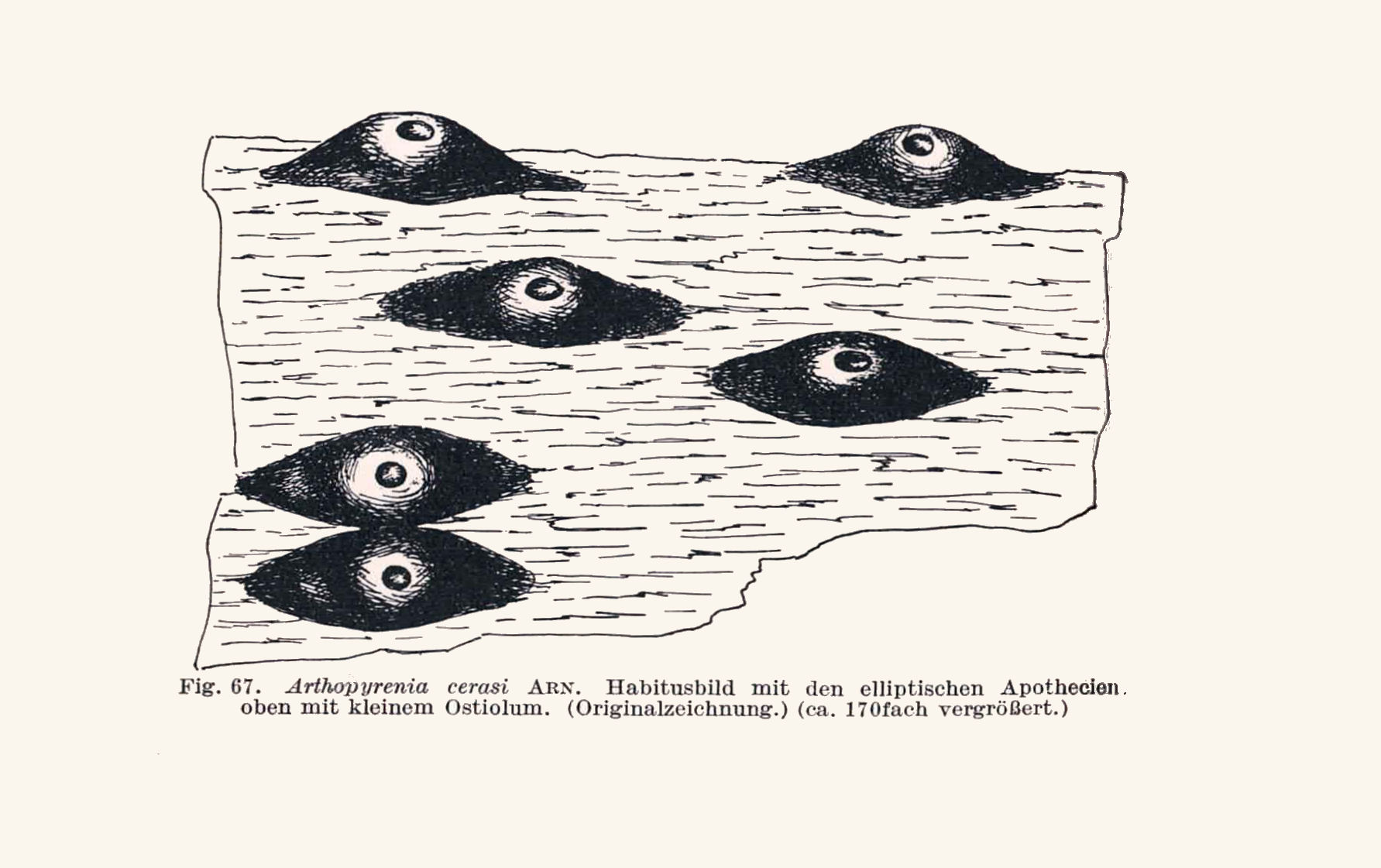
Source: Keissler K. von 1938. Pyrenulaceae, Mycoporaceae, Coniocarpineae. In: Rabenhorst G L: Kryptogamen-Flora von Deutschland, Österreich und der Schweiz. 2nd, IX, Die Flechten, Abt. 1, 2. Gebr. Borntraeger, Leipzig, pp. 1-846.
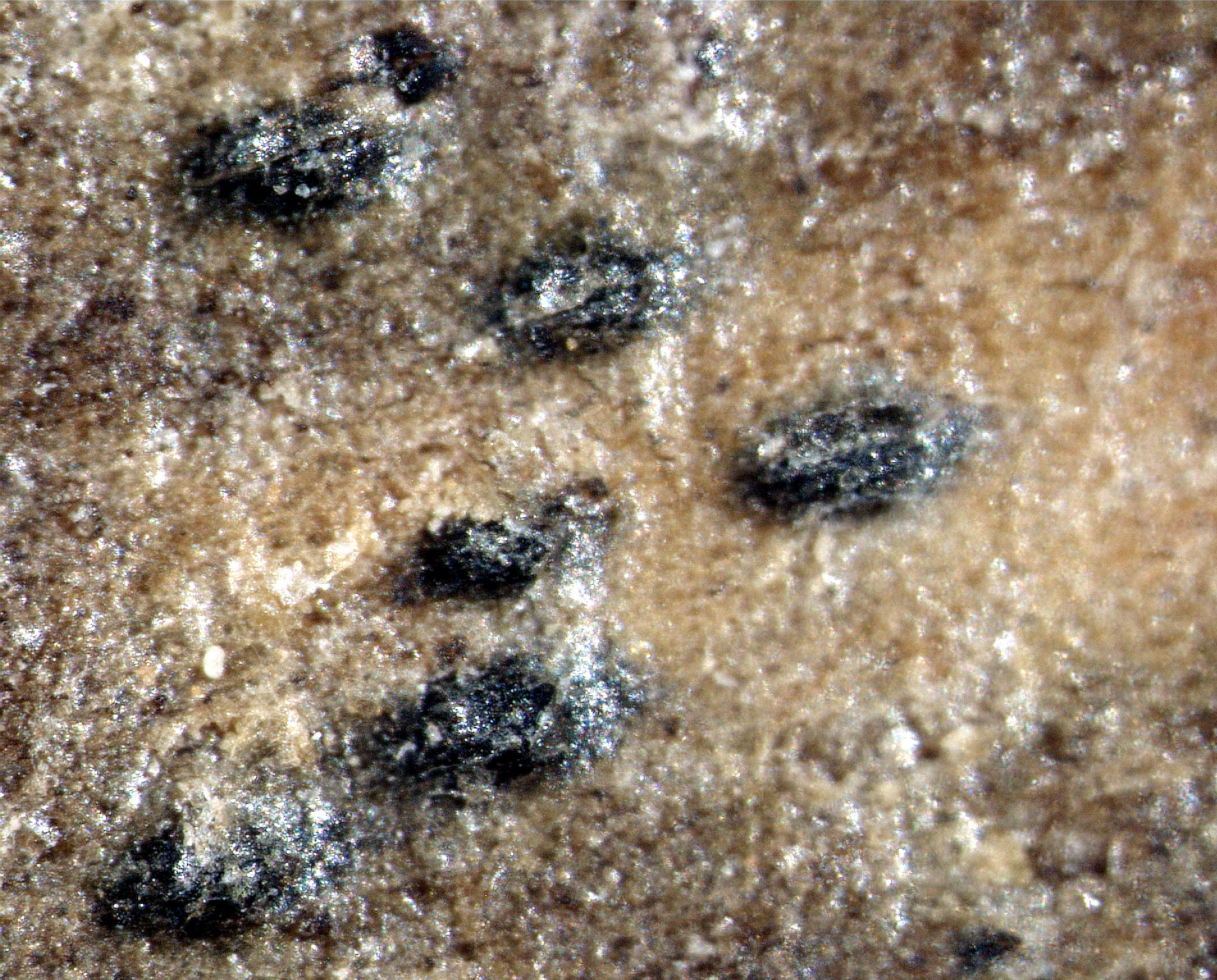
P.L. Nimis CC BY-SA 4.0
TSB 24759
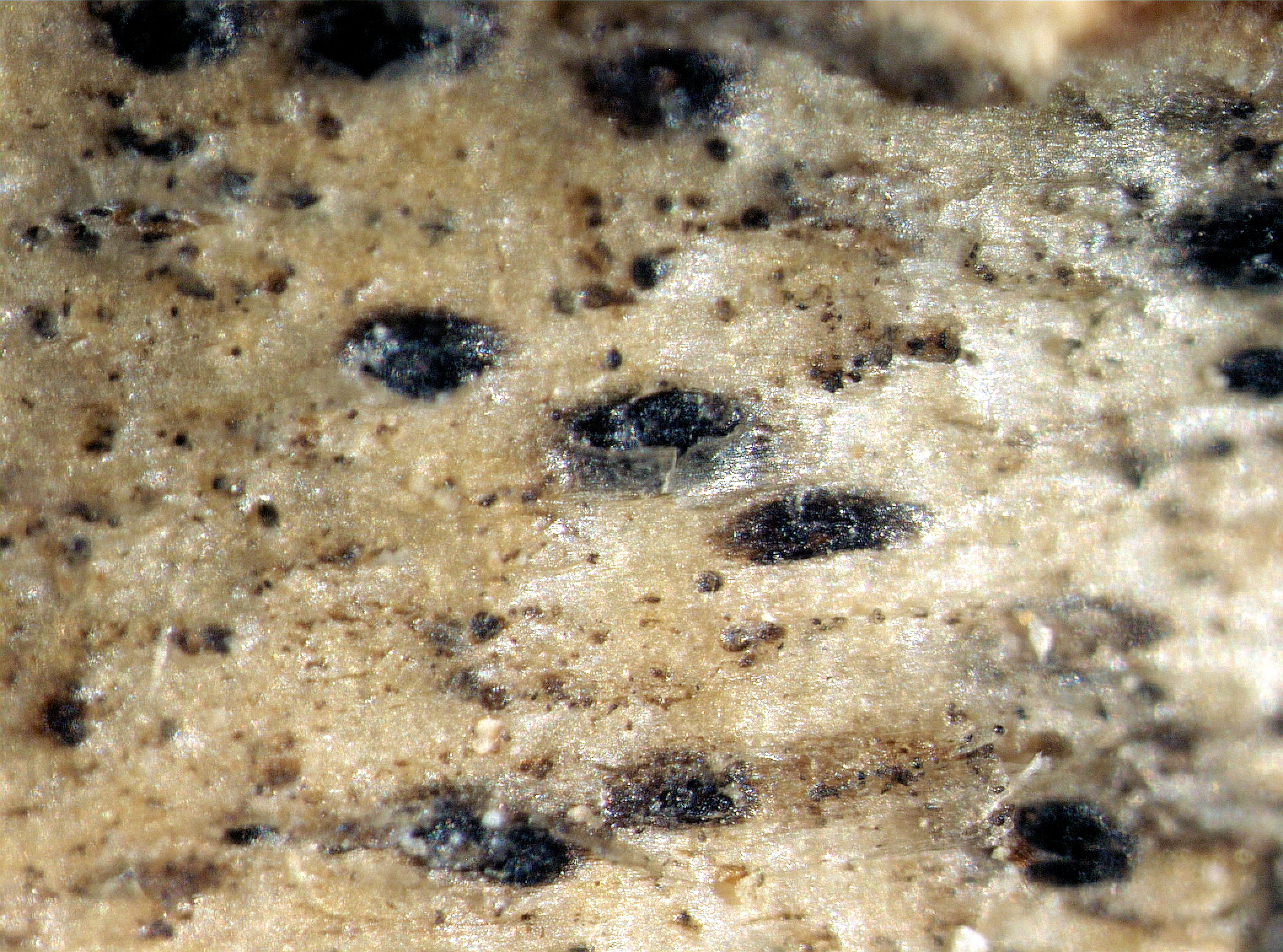
P.L. Nimis CC BY-SA 4.0
TSB 24759