Placynthium caesium (Fr.) Jatta
Syll. Lich. Ital.: 38, 1900. Basionym: Lecidea contigua var. caesia Fr. - Lich. Eur.: 302, 1831.
Synonyms: Bacidia caesitia (Nyl.) Jatta; Collolechia caesia (Fr.) A. Massal.; Lecidea caesitia Nyl.; Lecidea triptophylla var. caesia Schaer.; Placynthium caesitium (Nyl.) Hue; Placynthium caesitium f. pseudonigrum Gyeln.; Placynthium garovaglii sensu Malme; Placynthium garovaglii var. subtile Czeika & Czeika; Racoblenna caesia (Schaer.) A. Massal. nomen sed non planta; Scoliciosporum caesitium (Nyl.) Jatta
Description: Thallus crustose to subleprose, rimose-areolate, ecorticate, small-warted-granulose, blackish brown but often grey-pruinose due to crystals of calcium oxalates, matt, 1(-1.5) mm thick in central parts, forming convex, 3-5 cm wide patches, sometimes indistinctly lobed at margins, without a distinct prothallus. Central parts covered in densely crowded, 0.5(-0.8) mm long, 0.15(-0.2) mm thick, erect, clavate to cylindrical papillae. Apothecia blue-black, to 0.8 mm across, half-immersed to sessile, with a flat to convex disc and a smooth proper margin. Epithecium dark blue-green; hymenium colourless, amyloid; paraphyses distinctly septate, sparingly branched and anastomosing, hardly swollen at apex; subhymenium brownish. Asci 8-spored, apically thickened, with a distinct amyloid tube structure in the apex. Ascospores 3-5-septate, hyaline, spindle-shaped, (18-)25-35(-53) x (3-)4-6(-7) µm. Pycnidia immersed, 50-120 μm across, the wall blue-green at least in upper part. Conidia bacilliform, (5-)6.5-7.5 x 0.5-1 μm. Photobiont cyanobacterial, Scytonema-like. Spot tests: all negative. Chemistry: without lichen substances.
Growth form: Crustose
Substrata: rocks
Photobiont: cyanobacteria, filamentous (e.g. Nostoc, Scytonema)
Reproductive strategy: mainly sexual
On otherwise dry surfaces with short periods of water seepage after rain
Commonnes-rarity: (info)
Alpine belt: absent
Subalpine belt: very rare
Montane belt: rather rare
Dry submediterranean belt: extremely rare
Humid submediterranean belt: absent
Padanian area: absent
pH of the substrata:
1 2 3 4 5

Solar irradiation:
1 2 3 4 5
Aridity:
1 2 3 4 5
Eutrophication:
1 2 3 4 5
Poleotolerance:
0 1 2 3
Altitudinal distribution:
1 2 3 4 5 6
Rarity
absent
extremely rare
very rare
rare
rather rare
rather common
common
very common
extremely common
Loading data...
Occurrence data
Predictive map
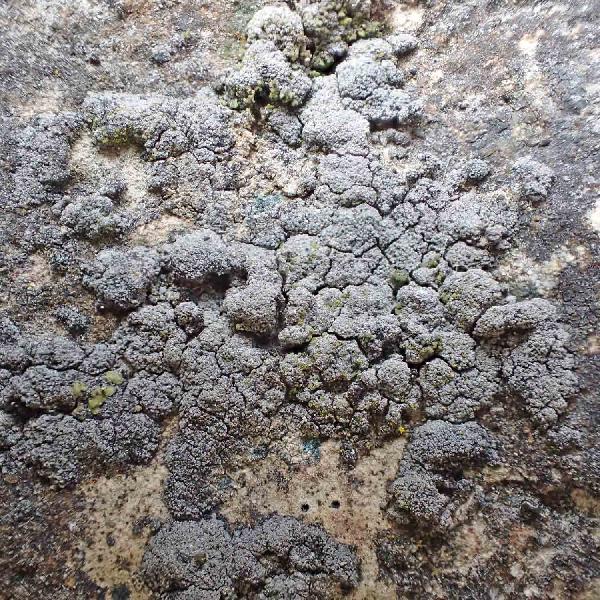
Source: https://fungi.myspecies.info/sites/fungi.myspecies.info/files/P4200317.jpg Photo uploaded by Paul Cannon CC BY NC
Placynthium caesium, thallus on limestone, VC64 MW Yorkshire. ID uncertain.
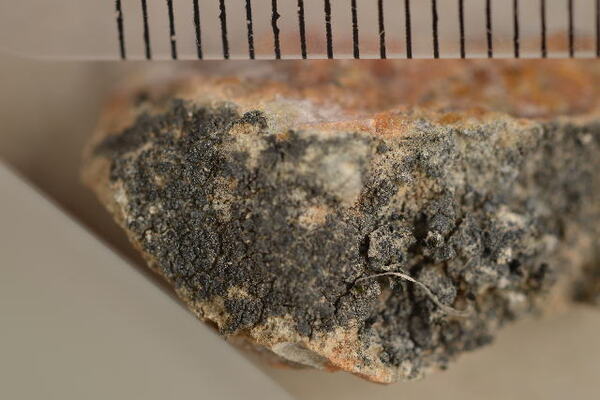
Alica Kosuthova, Slovak Academy of Science – CC BY-SA NC – ; Owner: Source: http://v3.boldsystems.org/index.php/Taxbrowser_Taxonpage?taxid=744253
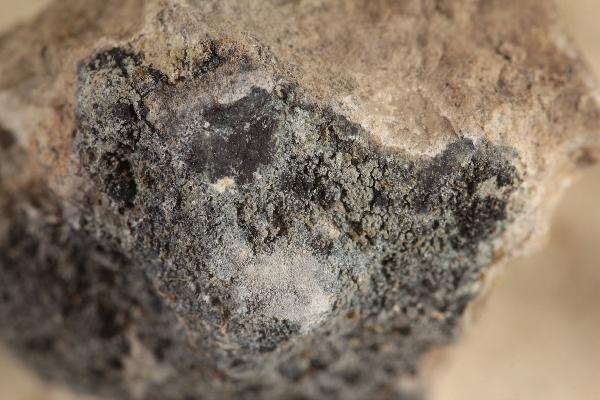
Collezione lichenologica Abramo Massalongo del Museo di Storia Naturale G. Ligabue di Venezia - Autori: Seggi, Linda; Trabucco, Raffaella Proprietà: Fondazione Musei Civici di Venezia - CC BY-NC
Italy, Veneto, Avesa Pr. Ver. 1855
as Collolechia caesia
Growth form: Crustose
Substrata: rocks
Photobiont: cyanobacteria, filamentous (e.g. Nostoc, Scytonema)
Reproductive strategy: mainly sexual
On otherwise dry surfaces with short periods of water seepage after rain
Commonnes-rarity: (info)
Alpine belt: absent
Subalpine belt: very rare
Montane belt: rather rare
Dry submediterranean belt: extremely rare
Humid submediterranean belt: absent
Padanian area: absent
pH of the substrata:
| 1 | 2 | 3 | 4 | 5 |
Solar irradiation:
| 1 | 2 | 3 | 4 | 5 |
Aridity:
| 1 | 2 | 3 | 4 | 5 |
Eutrophication:
| 1 | 2 | 3 | 4 | 5 |
Poleotolerance:
| 0 | 1 | 2 | 3 |
Altitudinal distribution:
| 1 | 2 | 3 | 4 | 5 | 6 |
Rarity
absent
extremely rare
very rare
rare
rather rare
rather common
common
very common
extremely common
Loading data...
Occurrence data
Predictive map
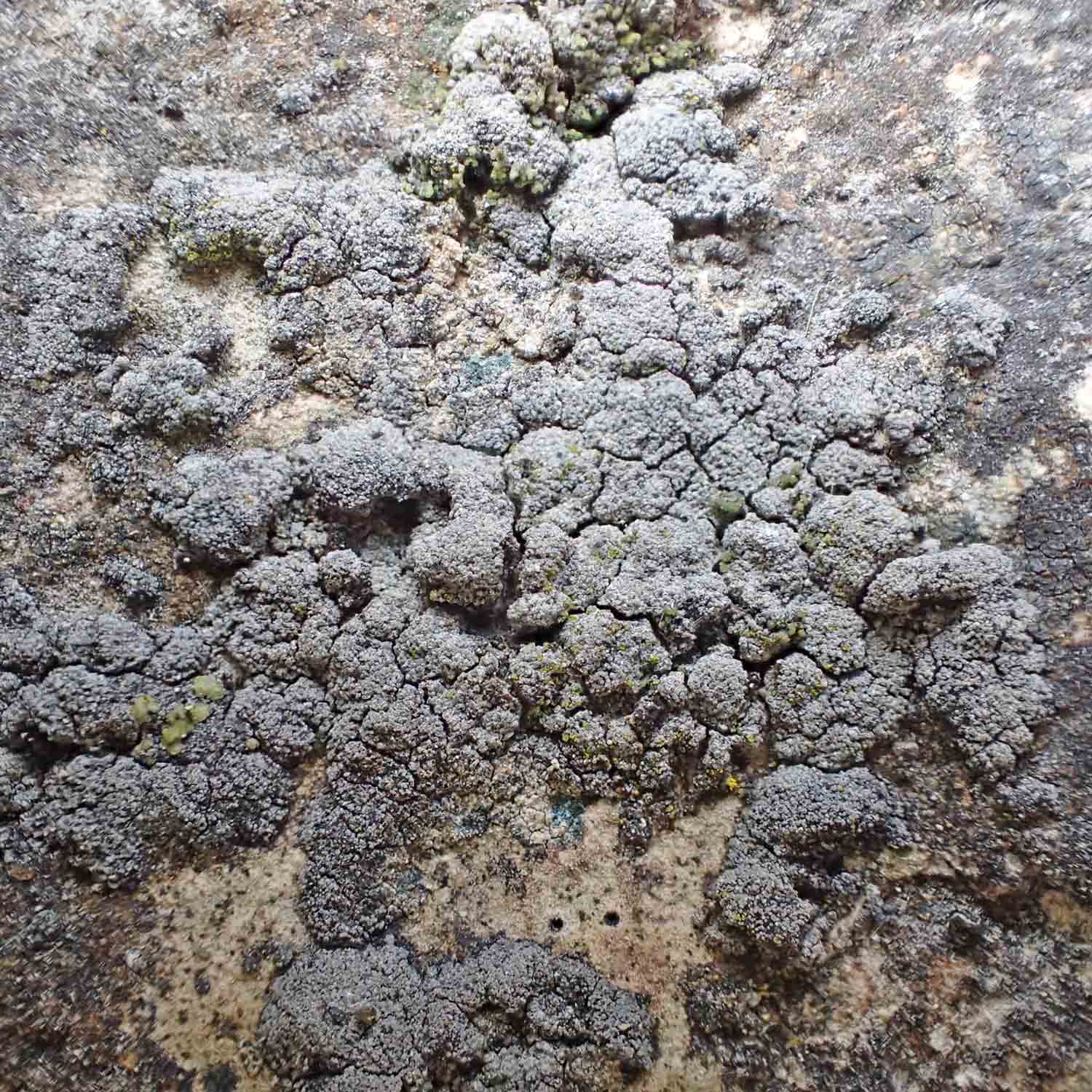
Source: https://fungi.myspecies.info/sites/fungi.myspecies.info/files/P4200317.jpg Photo uploaded by Paul Cannon CC BY NC
Placynthium caesium, thallus on limestone, VC64 MW Yorkshire. ID uncertain.
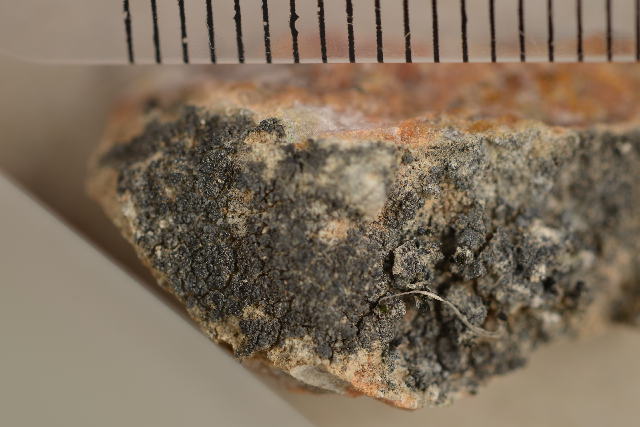
Alica Kosuthova, Slovak Academy of Science – CC BY-SA NC – ; Owner: Source: http://v3.boldsystems.org/index.php/Taxbrowser_Taxonpage?taxid=744253