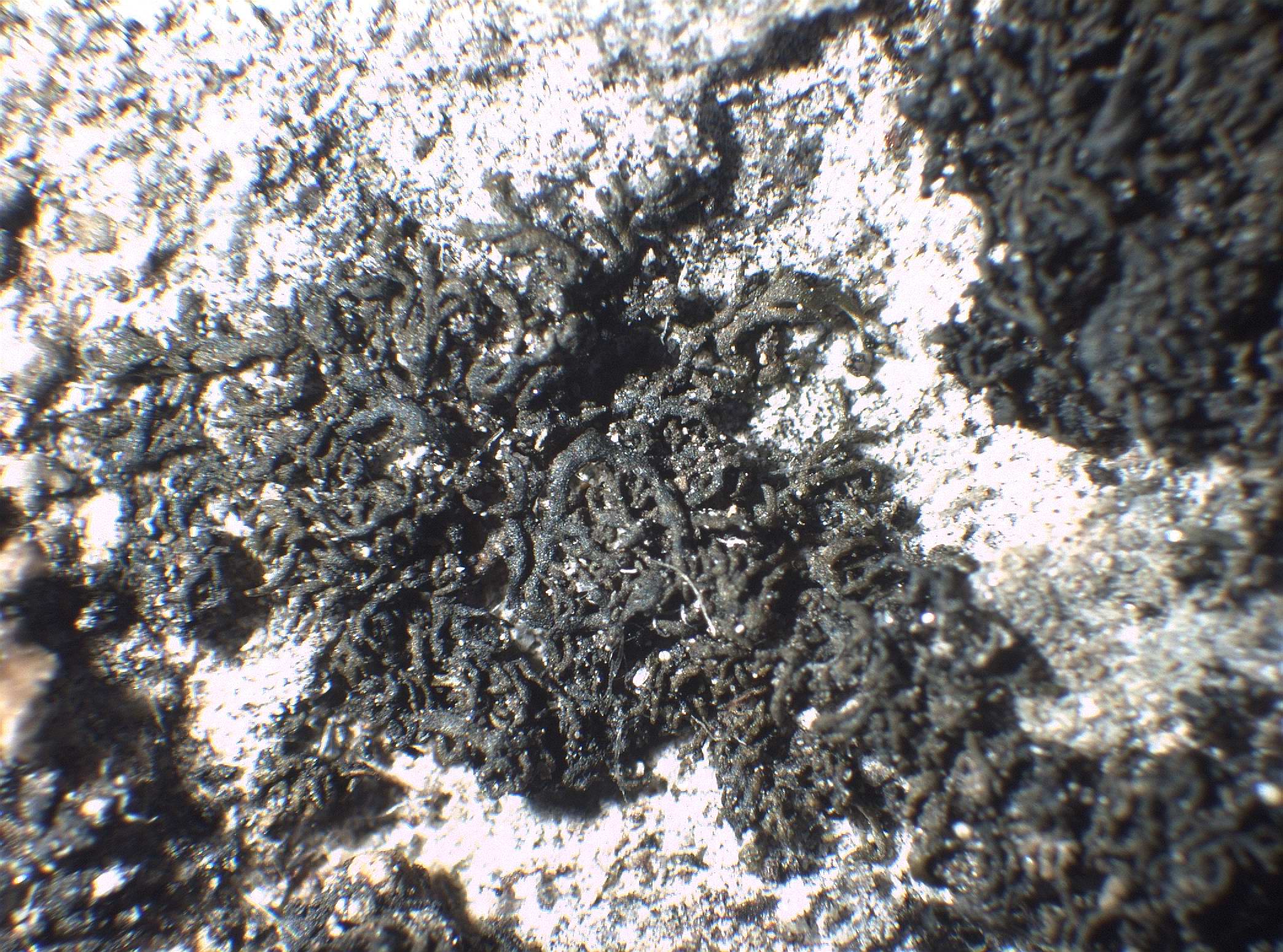
Placynthium filiforme (Garov.) M. Choisy
Bull. Mens. Soc. Linn. Lyon, 20: 86, 1951. Basionym: Parmelia filiformis Garov. in Nyl. - Bot. Not.: 164, 1853.
Synonyms: Leptogium cornicularioides Bagl.; Polychidium centrifugum (Nyl.) Jatta; Pterygium centrifugum Nyl.; Pterygium filiforme (Garov.) A.L. Sm.
Description: Thallus subcrustose-placodioid tu subfruticose, olive-brown in peripheral parts to black in central parts, rarely weakly blue-grey-pruinose, consisting of initially radiating, then irregularly spreading, divergent, often overlapping, loosely attached lobes, forming up to 2(-3) cm wide, often irregular patches, the central parts usually dying off, or consisting of small papillae; prothallus absent. Lobes up to 5(-6) mm long, 0.15-0.3(-0.5) mm thick, terete or very slightly compressed, dichotomously branched in lower part, often palmately branched at apices, usually longitudinally striate, sometimes bearing granulose to cylindrical, isidia-like outgrowths in older parts. Outer hyphae of lobes of longitudinally arranged, the photobionts more dense near the surface; innermost parts of lobes with a central hyphal strand. Apothecia lecideine, sessile, up to 0.5 mm across, with a black disc and a persistent to finally excluded proper margin. Epithecium blue-green; hymenium colourless, I+ blue; paraphyses distinctly septate, sparingly branched; hypothecium pale brown. Asci 8-spored, apically thickened, with an amyloid cap. Ascospores 1-septate, hyaline, ellipsoid, (9-)11-15(-16) x 5-6(-7) μm. Pycnidia immersed in small warts, the wall blue-green at least in upper part. Conidia bacilliform, 5-9 x 1-1.5 μm. Photobiont cyanobacterial, Scytonema-like. Spot tests: all negative. Chemistry: without lichen substances.
Growth form: Crustose
Substrata: rocks
Photobiont: cyanobacteria, filamentous (e.g. Nostoc, Scytonema)
Reproductive strategy: mainly sexual
On otherwise dry surfaces with short periods of water seepage after rain
Commonnes-rarity: (info)
Alpine belt: absent
Subalpine belt: extremely rare
Montane belt: rather rare
Dry submediterranean belt: very rare
Humid submediterranean belt: very rare
Padanian area: absent
pH of the substrata:
1 2 3 4 5

Solar irradiation:
1 2 3 4 5
Aridity:
1 2 3 4 5
Eutrophication:
1 2 3 4 5
Poleotolerance:
0 1 2 3
Altitudinal distribution:
1 2 3 4 5 6
Rarity
absent
extremely rare
very rare
rare
rather rare
rather common
common
very common
extremely common
Loading data...
Occurrence data
Predictive map
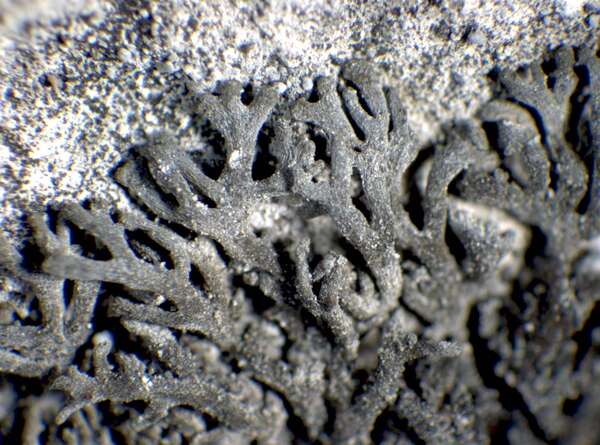
P.L. Nimis; Owner: Department of Life Sciences, University of Trieste
Herbarium: TSB (31397)
2001/12/10
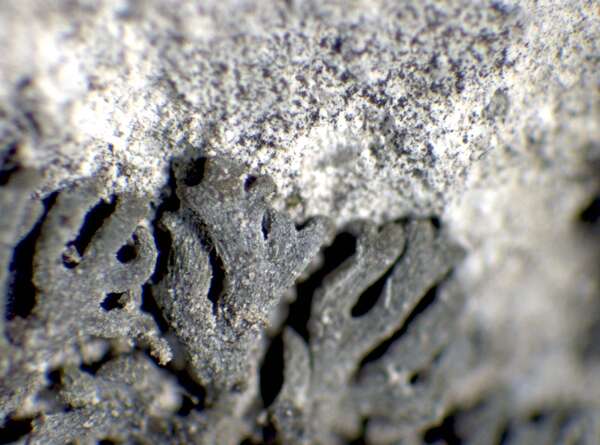
P.L. Nimis; Owner: Department of Life Sciences, University of Trieste
Herbarium: TSB (31397)
2001/12/10
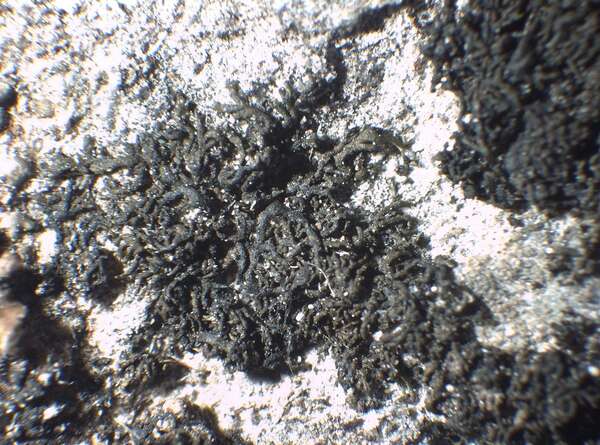
P.L. Nimis; Owner: Department of Life Sciences, University of Trieste
Herbarium: GZU (Lichenes Alpium 279)
2003/04/28
Growth form: Crustose
Substrata: rocks
Photobiont: cyanobacteria, filamentous (e.g. Nostoc, Scytonema)
Reproductive strategy: mainly sexual
On otherwise dry surfaces with short periods of water seepage after rain
Commonnes-rarity: (info)
Alpine belt: absent
Subalpine belt: extremely rare
Montane belt: rather rare
Dry submediterranean belt: very rare
Humid submediterranean belt: very rare
Padanian area: absent
pH of the substrata:
| 1 | 2 | 3 | 4 | 5 |
Solar irradiation:
| 1 | 2 | 3 | 4 | 5 |
Aridity:
| 1 | 2 | 3 | 4 | 5 |
Eutrophication:
| 1 | 2 | 3 | 4 | 5 |
Poleotolerance:
| 0 | 1 | 2 | 3 |
Altitudinal distribution:
| 1 | 2 | 3 | 4 | 5 | 6 |
Rarity
absent
extremely rare
very rare
rare
rather rare
rather common
common
very common
extremely common
Loading data...
Occurrence data
Predictive map
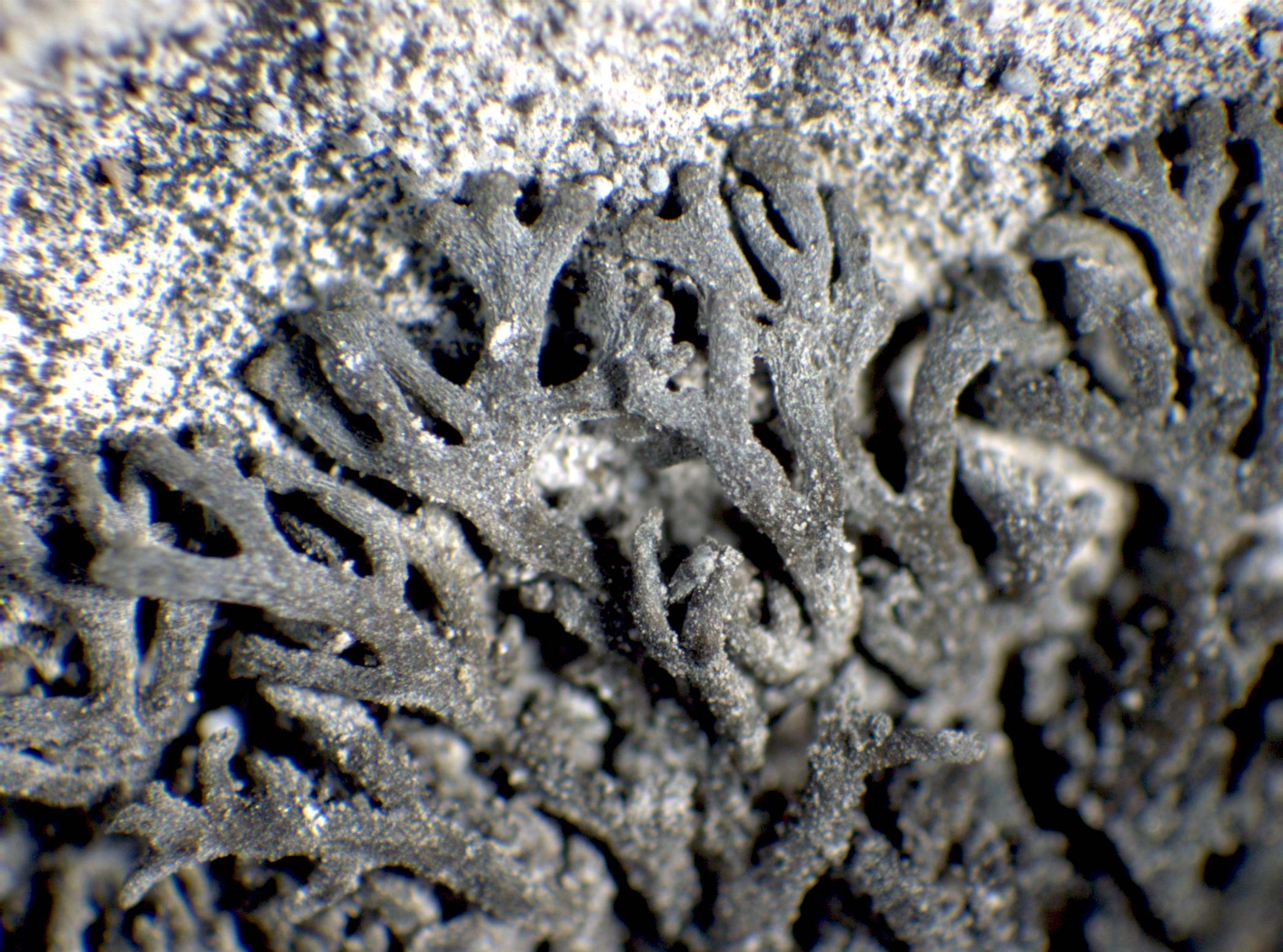
P.L. Nimis; Owner: Department of Life Sciences, University of Trieste
Herbarium: TSB (31397)
2001/12/10
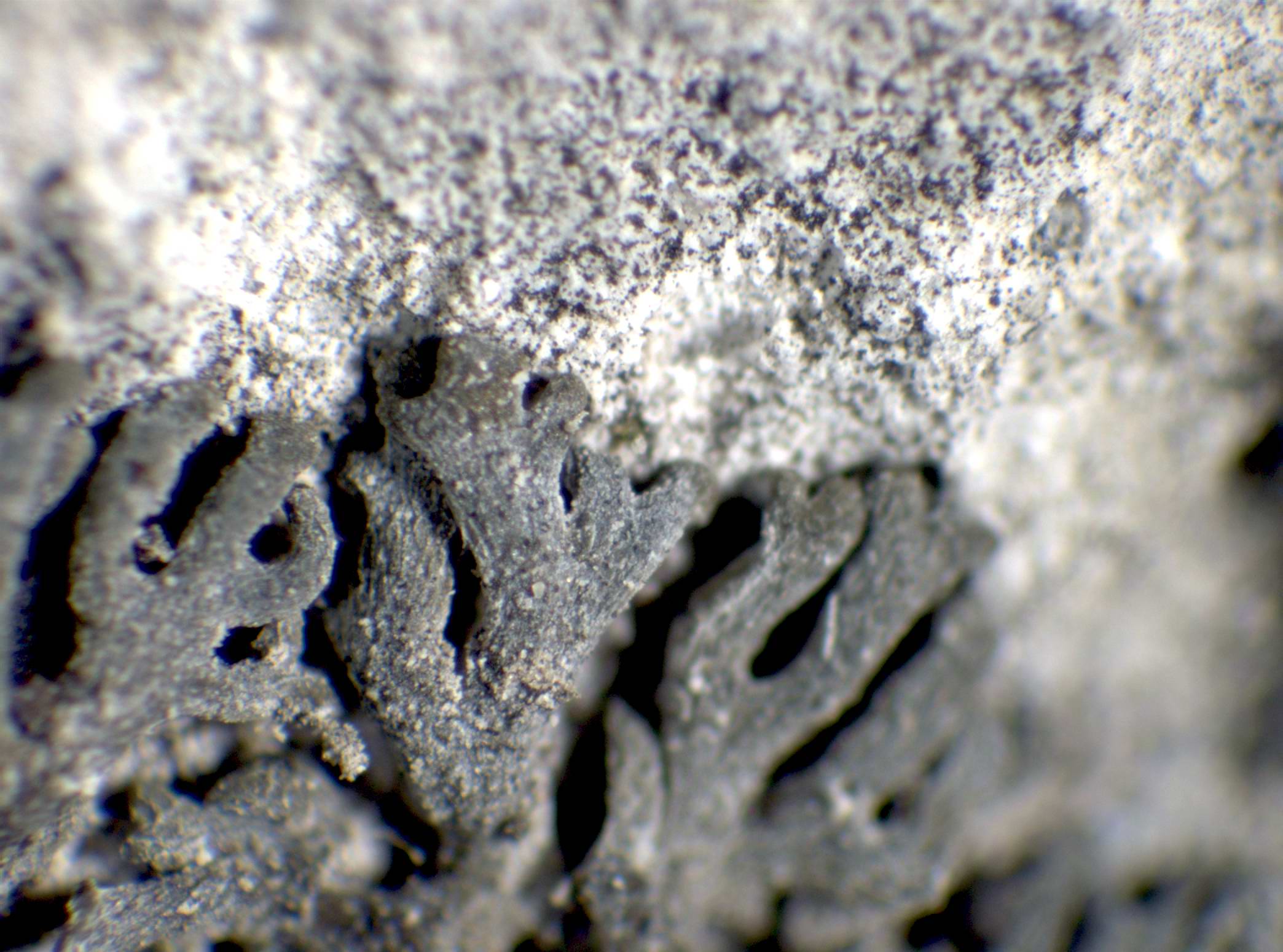
P.L. Nimis; Owner: Department of Life Sciences, University of Trieste
Herbarium: TSB (31397)
2001/12/10