Polyblastia fuscoargillacea Anzi
Comm. Soc. Critt. Ital., 2, 1: 26, 1864.
Synonyms: Polyblastia abstrahenda Arnold?
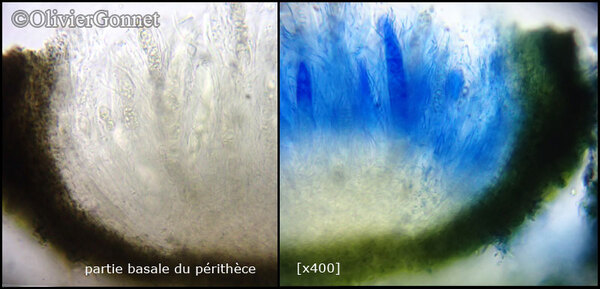
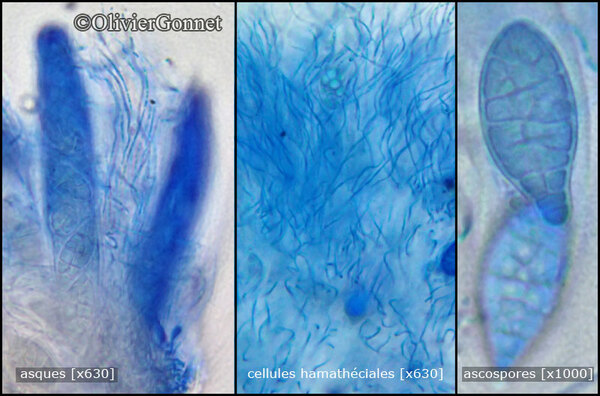
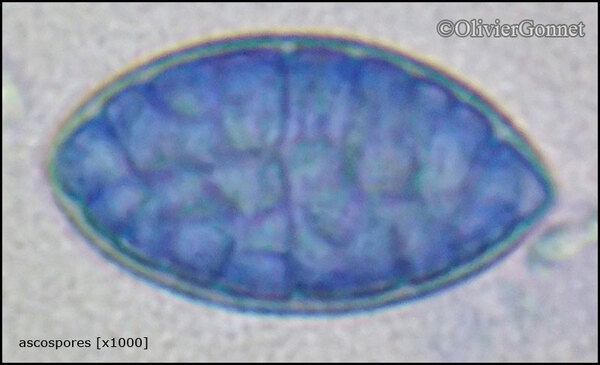
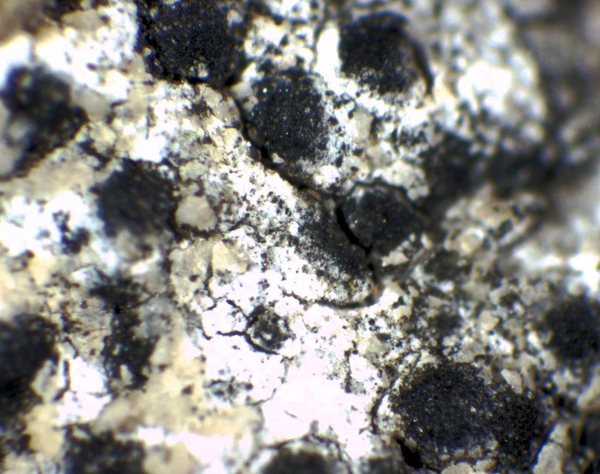
Description: Thallus crustose, episubstratic, areolate to verrucose, the areoles 0.4-0.55 mm wide, rust-brown, patchily ochraceous or rarely ash-grey. Perithecia black, 0.3-0.4 mm across, subglobose, often with a depressed ostiolar region, at maturity immersed only at the base, usually located in the centre of the areoles. Basal parts of perithecia and surroundings sometimes K+ deep red. Involucrellum well-developed, 43-53 μm thick, clearly distinct from exciple except in the ostiolar region, reaching halfway down the perithecium, adpressed or only slightly diverging in the lowermost part; exciple dark brown throughout, 18-23 μm thick, merged with the involucrellum in the ostiolar region, pseudoparenchymatous; hamathecium of periphyses and periphysoids, interascal filaments absent; periphysoids slender, branched, 31-39 μm long, c. 1.5 μm thick; hymenial gel I+ red, K/I+ blue. Asci 8-spored, clavate, K/I-, fissitunicate, the wall thickened above, with an ocular chamber, dehiscent by extrusion of an endotunica to form a delicate rostrum. Ascospores muriform, with 6-7 oblique transverse septa and 3-4 longitudinal septa, hyaline or rarely turning pale yellowish brown when overmature, broadly ellipsoid, 24-32 x 14-18 μm. Photobiont chlorococcoid. Spot tests: K-, C-, KC-, P-, UV-. Chemistry: without lichen substances.
Growth form: Crustose
Substrata: rocks
Photobiont: green algae other than Trentepohlia
Reproductive strategy: mainly sexual
Pioneer species
Commonnes-rarity: (info)
Alpine belt: very rare
Subalpine belt: extremely rare
Montane belt: absent
Dry submediterranean belt: absent
Humid submediterranean belt: absent
Padanian area: absent
pH of the substrata:
1 2 3 4 5

Solar irradiation:
1 2 3 4 5
Aridity:
1 2 3 4 5
Eutrophication:
1 2 3 4 5
Poleotolerance:
0 1 2 3
Altitudinal distribution:
1 2 3 4 5 6
Rarity
absent
extremely rare
very rare
rare
rather rare
rather common
common
very common
extremely common
Loading data...
Occurrence data
Predictive map
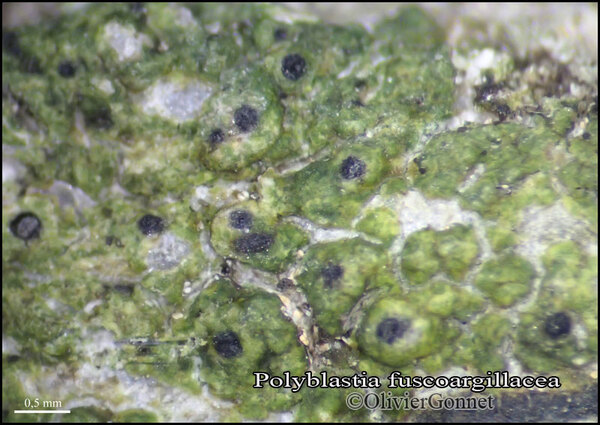
Courtesy Danièle et Olivier Gonnet - Source: https://www.afl-lichenologie.fr/Photos_AFL/Photos_AFL_P/Text_P_4/Polyblastia_fuscoargillacea.htm
France, 10/7/2013 - Asco - Corse
Courtesy Danièle et Olivier Gonnet - Source: https://www.afl-lichenologie.fr/Photos_AFL/Photos_AFL_P/Text_P_4/Polyblastia_fuscoargillacea.htm
France, 10/7/2013 - Asco - Corse
Courtesy Danièle et Olivier Gonnet - Source: https://www.afl-lichenologie.fr/Photos_AFL/Photos_AFL_P/Text_P_4/Polyblastia_fuscoargillacea.htm
France, 10/7/2013 - Asco - Corse
Courtesy Danièle et Olivier Gonnet - Source: https://www.afl-lichenologie.fr/Photos_AFL/Photos_AFL_P/Text_P_4/Polyblastia_fuscoargillacea.htm
France, 10/7/2013 - Asco - Corse
P.L. Nimis CC BY-SA 04
TSB 34519
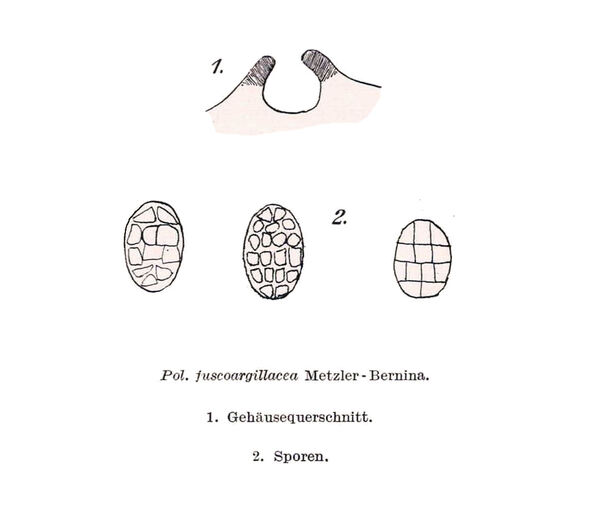
Zschacke, H. (1934) Epigloeaceae, Verrucariaceae und Dermatocarpaceae. In: Dr. L. Rabenhorst‘s Kryptogamen-Flora, Band 9, Abt. 1, Teil 1. Akademische Verlagsgesellschaft, Leipzig, 695 pp. - Public Domain
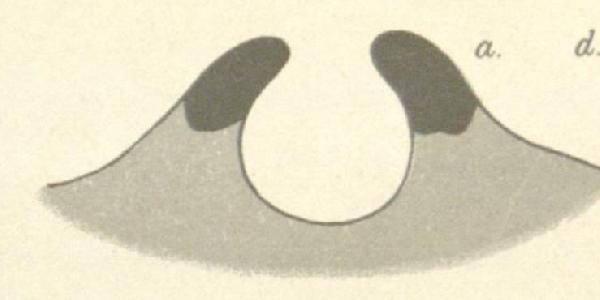
Source: Zschacke H. 1914. Die mitteleuropäsche Verrucariaceen. II. Hedwigia, 55: 286-324. Public Domain
Metzler-Bernina: a Perithezium, b, c, d Sporen.

Source: Zschacke H. 1914. Die mitteleuropäsche Verrucariaceen. II. Hedwigia, 55: 286-324. Public Domain
Metzler-Bernina: a Perithezium, b, c, d Sporen.
Growth form: Crustose
Substrata: rocks
Photobiont: green algae other than Trentepohlia
Reproductive strategy: mainly sexual
Pioneer species
Commonnes-rarity: (info)
Alpine belt: very rare
Subalpine belt: extremely rare
Montane belt: absent
Dry submediterranean belt: absent
Humid submediterranean belt: absent
Padanian area: absent
pH of the substrata:
| 1 | 2 | 3 | 4 | 5 |
Solar irradiation:
| 1 | 2 | 3 | 4 | 5 |
Aridity:
| 1 | 2 | 3 | 4 | 5 |
Eutrophication:
| 1 | 2 | 3 | 4 | 5 |
Poleotolerance:
| 0 | 1 | 2 | 3 |
Altitudinal distribution:
| 1 | 2 | 3 | 4 | 5 | 6 |
Rarity
absent
extremely rare
very rare
rare
rather rare
rather common
common
very common
extremely common
Loading data...
Occurrence data
Predictive map
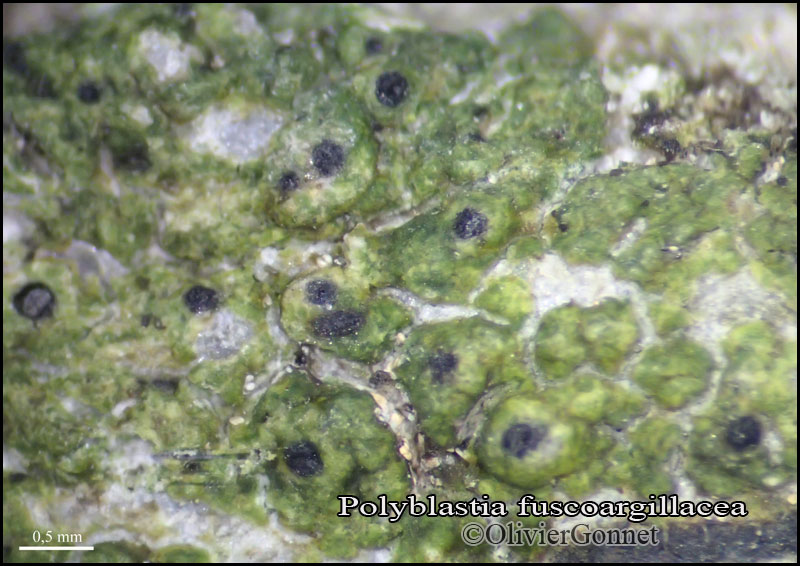
Courtesy Danièle et Olivier Gonnet - Source: https://www.afl-lichenologie.fr/Photos_AFL/Photos_AFL_P/Text_P_4/Polyblastia_fuscoargillacea.htm
France, 10/7/2013 - Asco - Corse
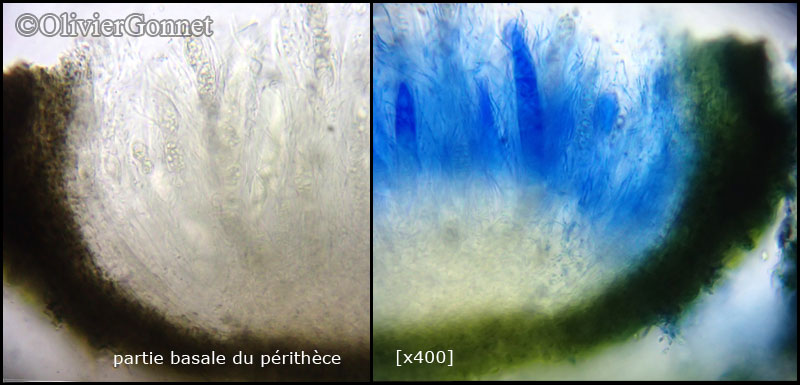
Courtesy Danièle et Olivier Gonnet - Source: https://www.afl-lichenologie.fr/Photos_AFL/Photos_AFL_P/Text_P_4/Polyblastia_fuscoargillacea.htm
France, 10/7/2013 - Asco - Corse
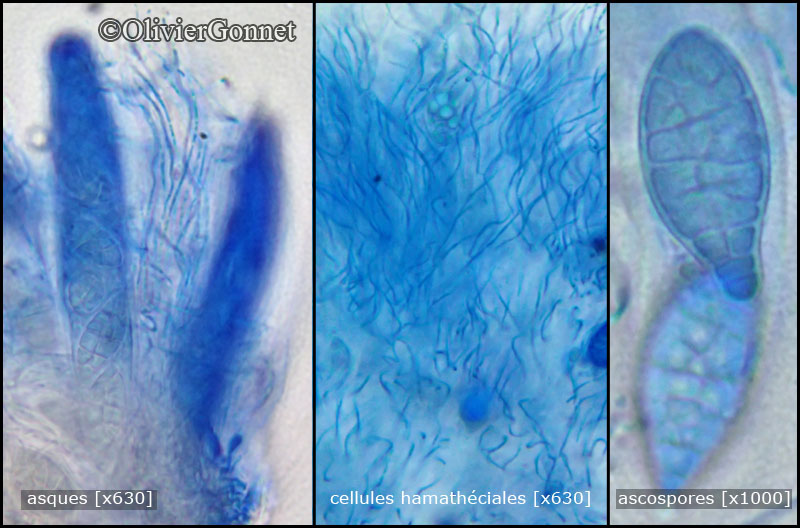
Courtesy Danièle et Olivier Gonnet - Source: https://www.afl-lichenologie.fr/Photos_AFL/Photos_AFL_P/Text_P_4/Polyblastia_fuscoargillacea.htm
France, 10/7/2013 - Asco - Corse
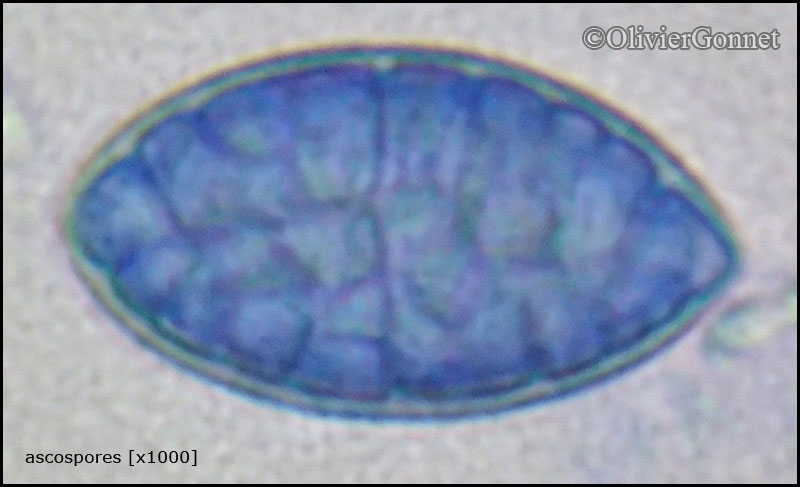
Courtesy Danièle et Olivier Gonnet - Source: https://www.afl-lichenologie.fr/Photos_AFL/Photos_AFL_P/Text_P_4/Polyblastia_fuscoargillacea.htm
France, 10/7/2013 - Asco - Corse
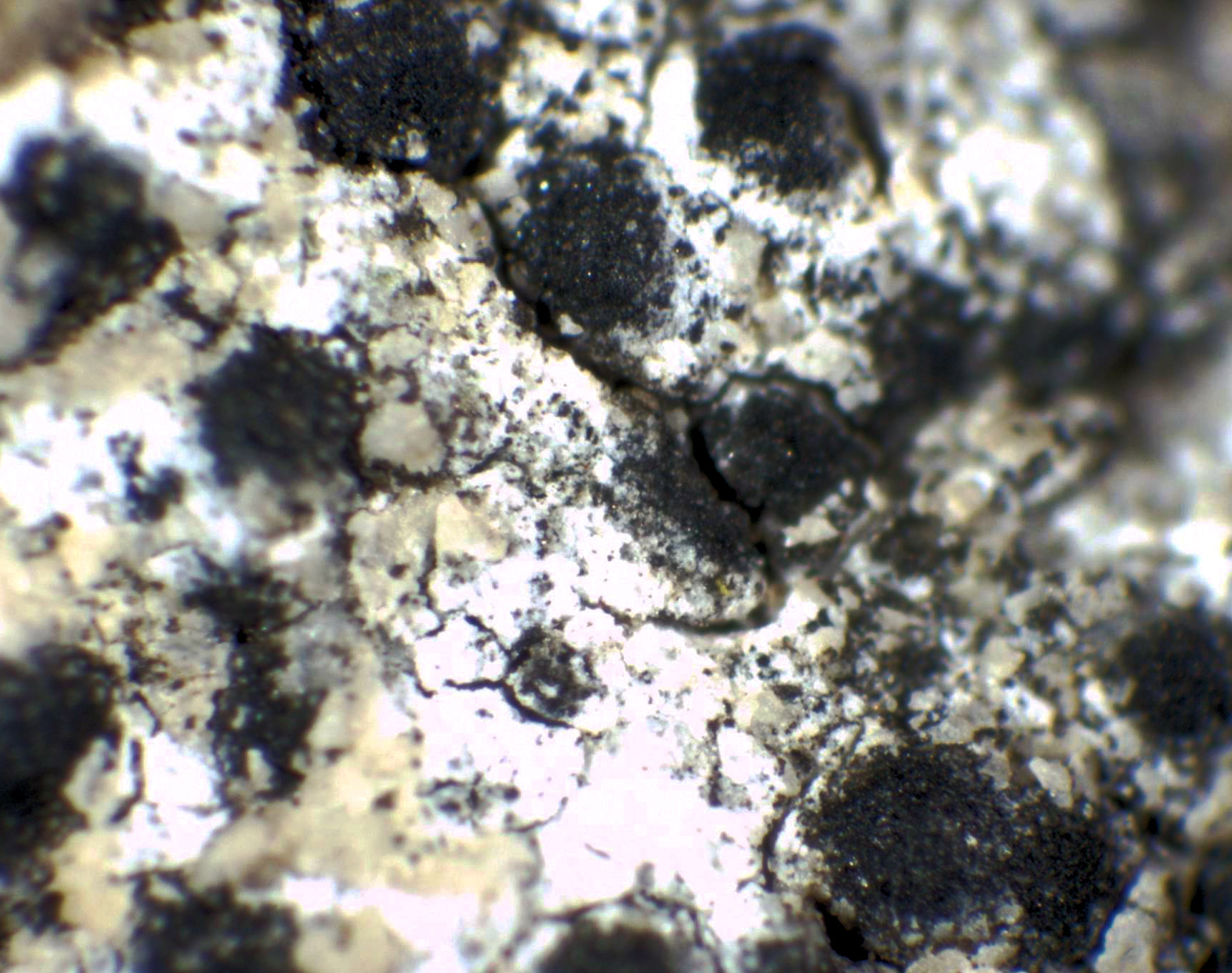
P.L. Nimis CC BY-SA 04
TSB 34519
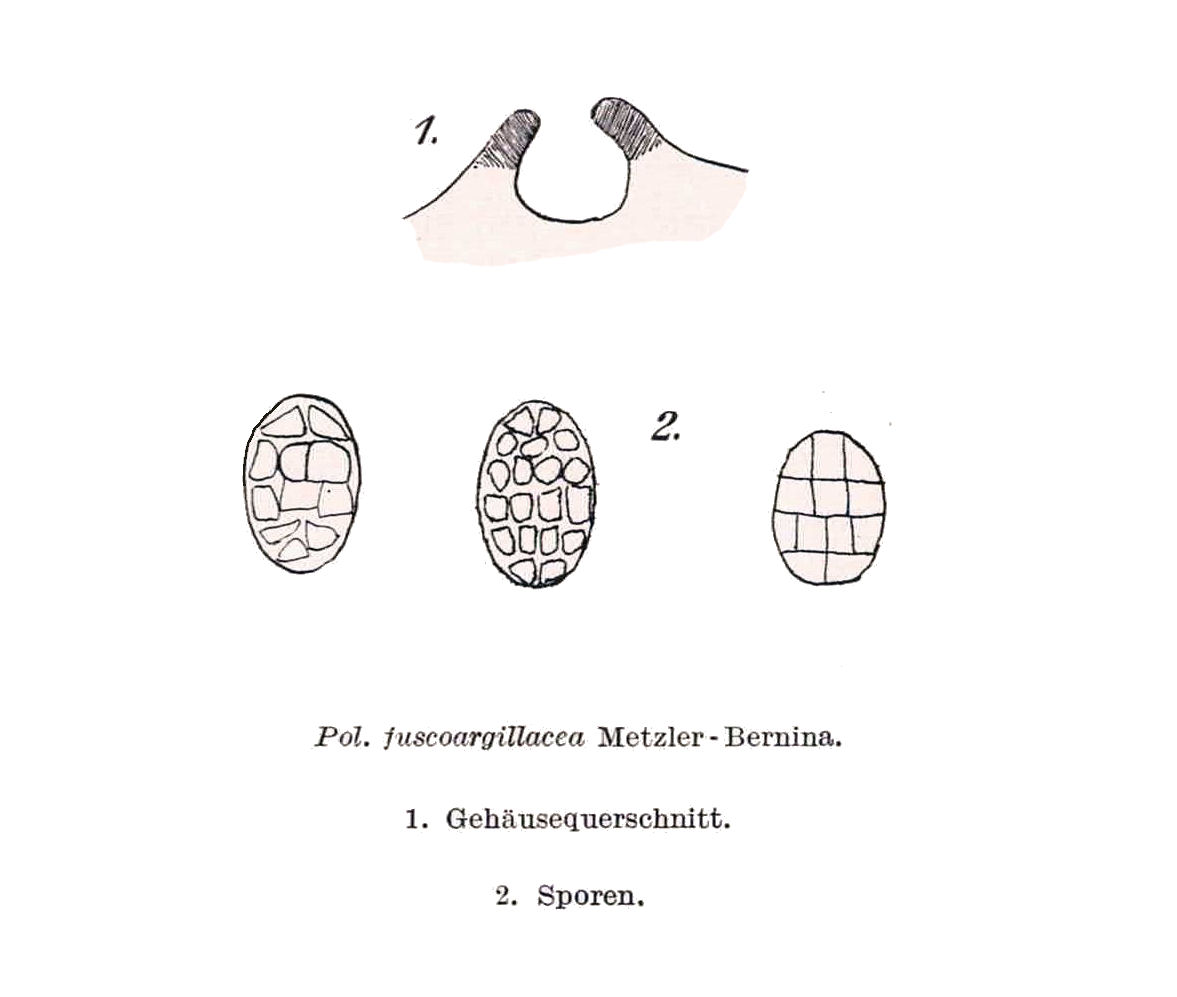
Zschacke, H. (1934) Epigloeaceae, Verrucariaceae und Dermatocarpaceae. In: Dr. L. Rabenhorst‘s Kryptogamen-Flora, Band 9, Abt. 1, Teil 1. Akademische Verlagsgesellschaft, Leipzig, 695 pp. - Public Domain

Source: Zschacke H. 1914. Die mitteleuropäsche Verrucariaceen. II. Hedwigia, 55: 286-324. Public Domain
Metzler-Bernina: a Perithezium, b, c, d Sporen.