Porpidia trullisata (Kremp.) Körb.
Syst. Lich. Germ.: 221, 1855. Basionym: Diplotomma trullisatum Kremp. - Flora, 36: 442-444, 1853.
Synonyms: Lecidea euspeirea Nyl.; Lecidea speirea f. trullisata (Kremp.) Stein; Lecidea speirea var. trullisata (Kremp.) Arnold; Lecidea trullisata (Kremp.) Anzi
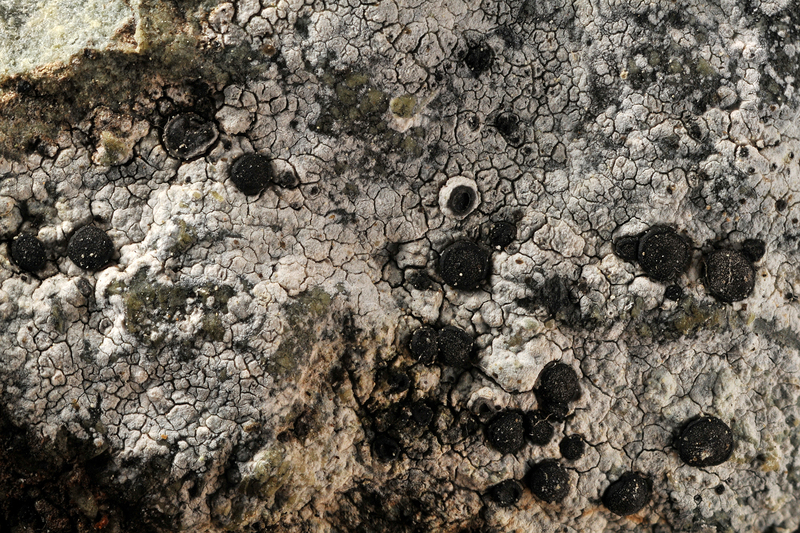
Description: Thallus crustose, episubstratic, to 2.5 mm thick, chalky white to pale grey, continuous to rimose-areolate. Medulla white, I- or I+ pale blue. Apothecia lecideine, black, 0.5-2.5(-3.5) mm across, at first immersed, but soon broadly sessile, with a strongly bluish-pruinose, flat to strongly convex disc and a less pruinose to epruinose, initially evident but soon excluded proper margin. Proper exciple thin, black-brown throughout, K-, continuous with hypothecium; epithecium brownish green to green-black, 15-20 µm high; hymenium very pale yellowish green to colourless, 80-120 µm high; paraphyses strongly coherent, branched and anastomosing in upper part, 1.5-2.2 µm thick at mid-level, the apical cell to 3.5 µm wide; hypothecium brown-black. Asci 8-spored, elongate-clavate, with a thin, outer amyloid layer and a thickened tholus penetrated by a pore, the sides of which are strongly amyloid, Porpidia-type. Ascospores 1-celled, hyaline, ellipsoid 10-16(-21) x 5-9(-11) µm. Photobiont chlorococcoid. Spot tests: thallus K-, C-, KC-, P-; medulla sometimes K+ faintly yellow, P+ faintly orange-yellow. Chemistry: without lichen substances, or medulla with stictic acid (usually in low amounts or traces).
Growth form: Crustose
Substrata: rocks
Photobiont: green algae other than Trentepohlia
Reproductive strategy: mainly sexual
Commonnes-rarity: (info)
Alpine belt: rare
Subalpine belt: very rare
Montane belt: absent
Dry submediterranean belt: absent
Humid submediterranean belt: absent
Padanian area: absent
pH of the substrata:
1 2 3 4 5

Solar irradiation:
1 2 3 4 5
Aridity:
1 2 3 4 5
Eutrophication:
1 2 3 4 5
Poleotolerance:
0 1 2 3
Altitudinal distribution:
1 2 3 4 5 6
Rarity
absent
extremely rare
very rare
rare
rather rare
rather common
common
very common
extremely common
Loading data...
Occurrence data
Predictive map
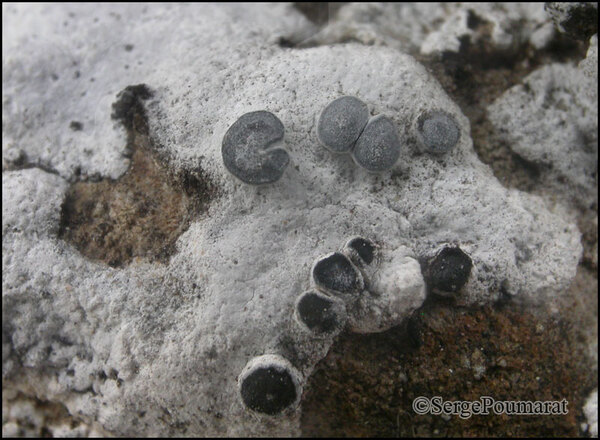
Serge Poumarat - Source: https://www.afl-lichenologie.fr/Photos_AFL/Photos_AFL_P/Text_P_4/Porpidia_trullisata.htm
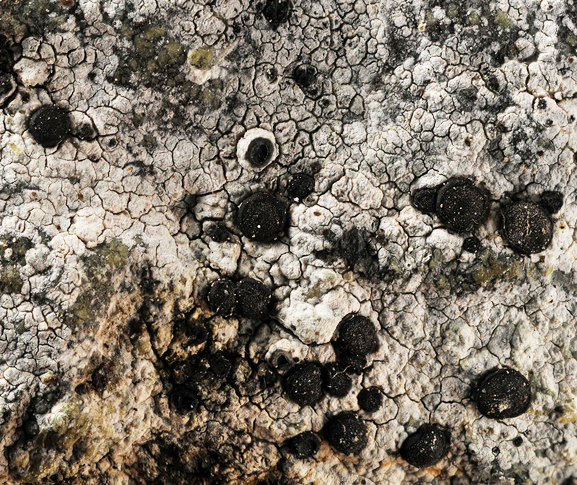
Einar Timdal - Source: http://nhm2.uio.no/lav/web/index.html - CC BY-NC
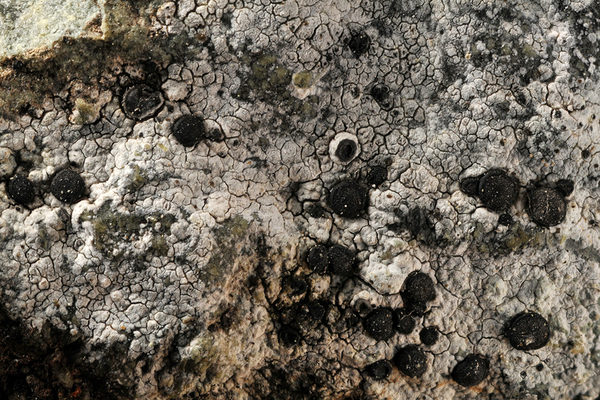
Einar Timdal - Source: http://nhm2.uio.no/lav/web/index.html - CC BY-NC
Growth form: Crustose
Substrata: rocks
Photobiont: green algae other than Trentepohlia
Reproductive strategy: mainly sexual
Commonnes-rarity: (info)
Alpine belt: rare
Subalpine belt: very rare
Montane belt: absent
Dry submediterranean belt: absent
Humid submediterranean belt: absent
Padanian area: absent
pH of the substrata:
| 1 | 2 | 3 | 4 | 5 |
Solar irradiation:
| 1 | 2 | 3 | 4 | 5 |
Aridity:
| 1 | 2 | 3 | 4 | 5 |
Eutrophication:
| 1 | 2 | 3 | 4 | 5 |
Poleotolerance:
| 0 | 1 | 2 | 3 |
Altitudinal distribution:
| 1 | 2 | 3 | 4 | 5 | 6 |
Rarity
absent
extremely rare
very rare
rare
rather rare
rather common
common
very common
extremely common
Loading data...
Occurrence data
Predictive map
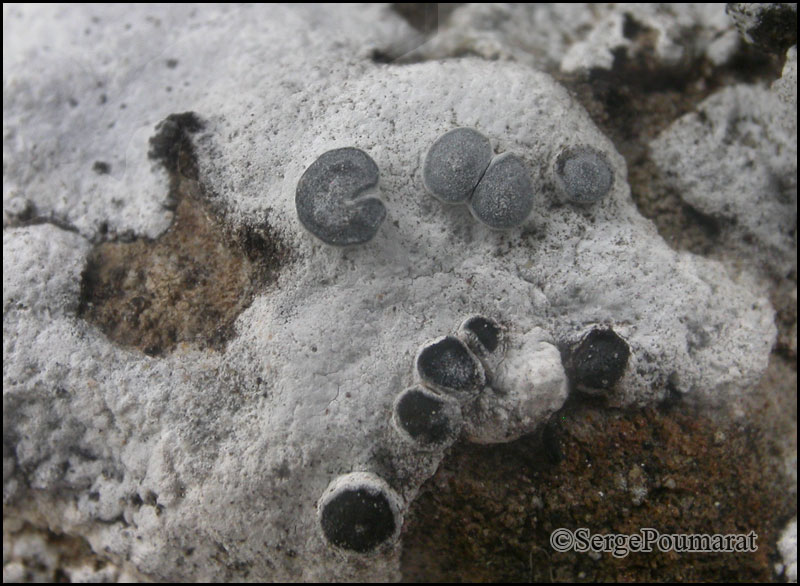
Serge Poumarat - Source: https://www.afl-lichenologie.fr/Photos_AFL/Photos_AFL_P/Text_P_4/Porpidia_trullisata.htm
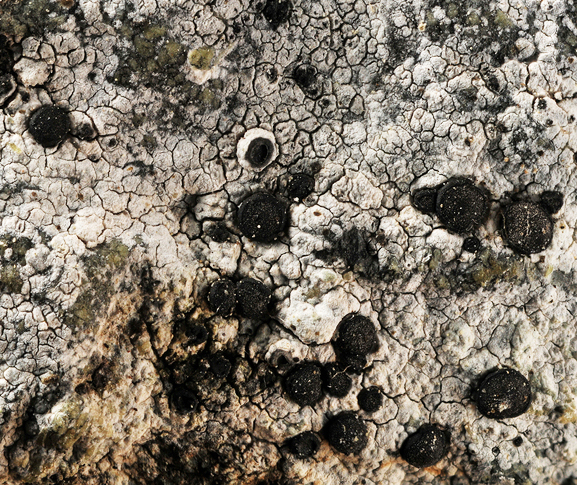
Einar Timdal - Source: http://nhm2.uio.no/lav/web/index.html - CC BY-NC