Arthrorhaphis vacillans Th. Fr.
Th. Fr. & Almq. ex Th. Fr., Bot. Not.: 107, 1867.
Synonyms: Arthrorhaphis anziana (Lynge) Poelt; Bacidia anziana Lynge; Bacidia vacillans (Th. Fr.) Rostr.
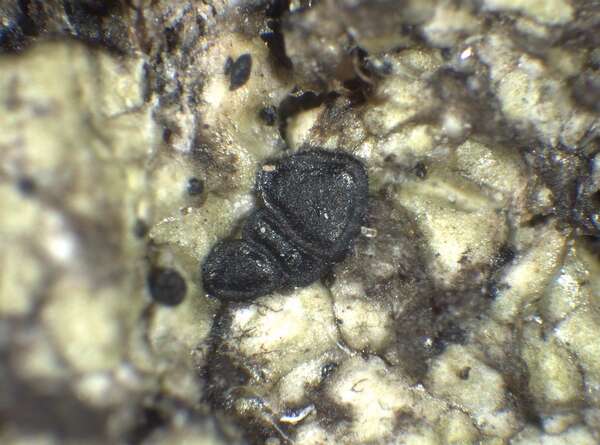
Description: Thallus crustose, episubstratic, areolate to verrucose, forming a compact crust, the areoles at first pale greenish yellow, then bright yellow-green, thick, 1-2 mm wide, flat to usually strongly convex, contiguous, with an epinecral layer. Medulla well-developed, white to yellowish, filled with Ca-oxalate crystals insoluble in acetone. Apothecia lecideine, black, sessile, to 1.5 mm across, often clustered, with an initially concave, then soon flat, smooth disc and a thin, smooth, black proper margin. Exciple brown-black in outermost part, blue-green within; epithecium and hypothecium dark grey green, K-, N+ emerald green; hymenium colourless, inspersed with oil droplets, I-; paraphyses lax, slender, branched and anastomosing, not apically thickened, c. 1.5 µm thick. Asci 4-6(-8)-spored, bitunicate, clavate, I-, scarcely thickened at apex, with a small ocular chamber. Ascospores 3(-4)-septate, hyaline, fusiform, thin-walled, (14-)16-22(-25) x 3-3.5(-4) µm. Photobiont chlorococcoid. Spot tests: cortex and medulla K-, C-, KC-, P-, UV+ orange. Chemistry: rhizocarpic acid, epanorin, and sometimes traces of atranorin.
Growth form: Crustose
Substrata: soil, terricolous mosses, and plant debris
Photobiont: green algae other than Trentepohlia
Reproductive strategy: mainly sexual
paras Baeomyces placophyllus
Commonnes-rarity: (info)
Alpine belt: very rare
Subalpine belt: rare
Montane belt: absent
Dry submediterranean belt: absent
Humid submediterranean belt: absent
Padanian area: absent
pH of the substrata:
1 2 3 4 5

Solar irradiation:
1 2 3 4 5
Aridity:
1 2 3 4 5
Eutrophication:
1 2 3 4 5
Poleotolerance:
0 1 2 3
Altitudinal distribution:
1 2 3 4 5 6
Rarity
absent
extremely rare
very rare
rare
rather rare
rather common
common
very common
extremely common
Loading data...
Occurrence data
Predictive map
P.L. Nimis; Owner: Department of Life Sciences, University of Trieste
Herbarium: GZU H.Mayrhofer (9796)
2003/04/28
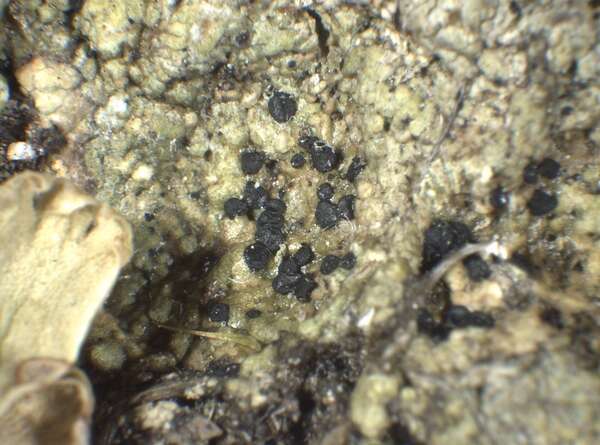
P.L. Nimis; Owner: Department of Life Sciences, University of Trieste
Herbarium: GZU H.Mayrhofer (9796)
2003/04/28
on the thallus of the host, Baeomyces rufus
Growth form: Crustose
Substrata: soil, terricolous mosses, and plant debris
Photobiont: green algae other than Trentepohlia
Reproductive strategy: mainly sexual
paras Baeomyces placophyllus
Commonnes-rarity: (info)
Alpine belt: very rare
Subalpine belt: rare
Montane belt: absent
Dry submediterranean belt: absent
Humid submediterranean belt: absent
Padanian area: absent
pH of the substrata:
| 1 | 2 | 3 | 4 | 5 |
Solar irradiation:
| 1 | 2 | 3 | 4 | 5 |
Aridity:
| 1 | 2 | 3 | 4 | 5 |
Eutrophication:
| 1 | 2 | 3 | 4 | 5 |
Poleotolerance:
| 0 | 1 | 2 | 3 |
Altitudinal distribution:
| 1 | 2 | 3 | 4 | 5 | 6 |
Rarity
absent
extremely rare
very rare
rare
rather rare
rather common
common
very common
extremely common
Loading data...
Occurrence data
Predictive map
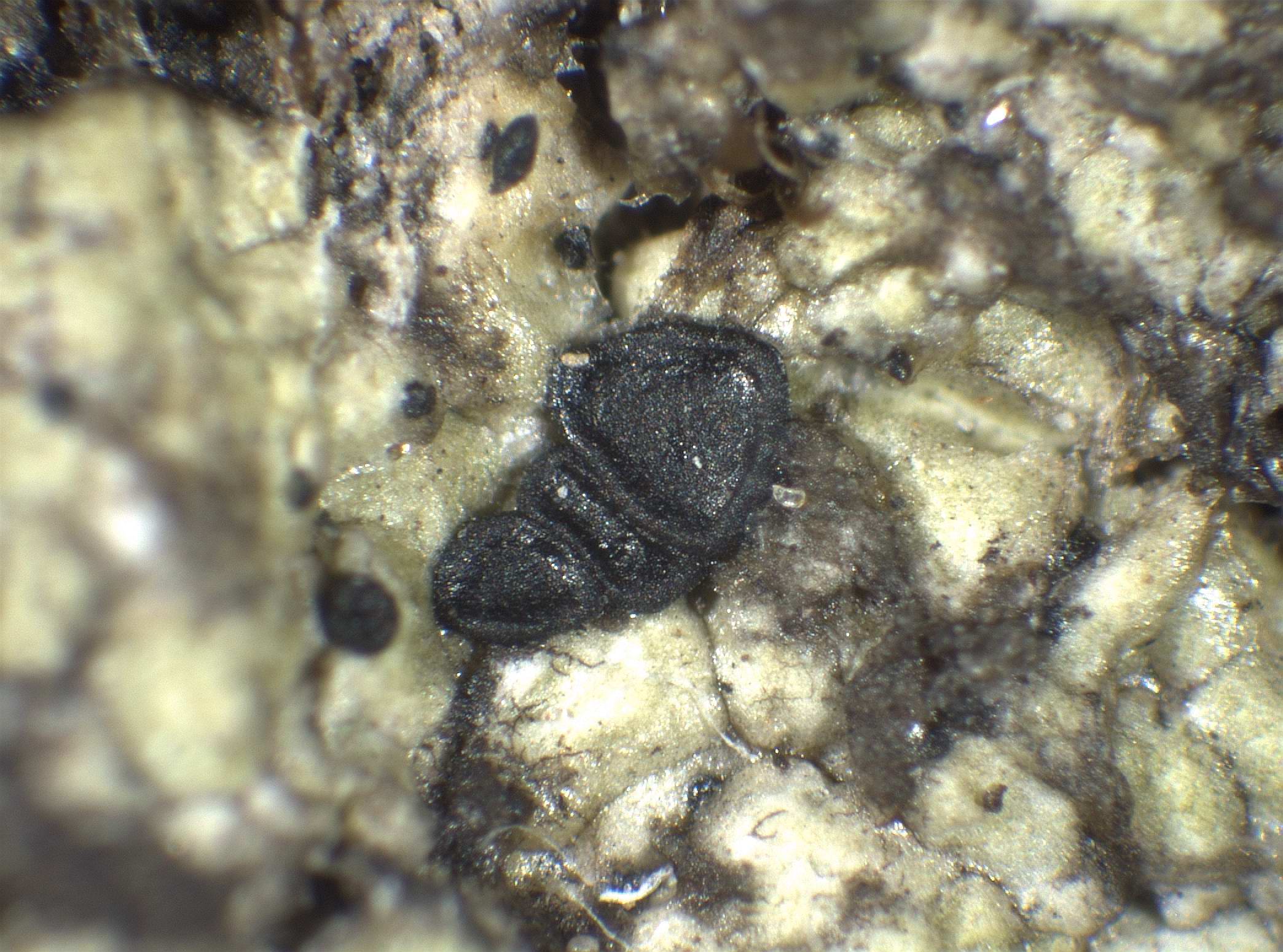
P.L. Nimis; Owner: Department of Life Sciences, University of Trieste
Herbarium: GZU H.Mayrhofer (9796)
2003/04/28