Psorula rufonigra (Tuck.) Gotth. Schneid.
Bibl. Lichenol., 13: 136, 1980 ("1979"). Basionym: Biatora rufonigra Tuck. - Proc. Amer. Acad. Arts, 1: 250, 1848.
Synonyms: Lecidea rufonigra (Tuck.) Nyl.; Psora rufonigra (Tuck.) A. Schneid.
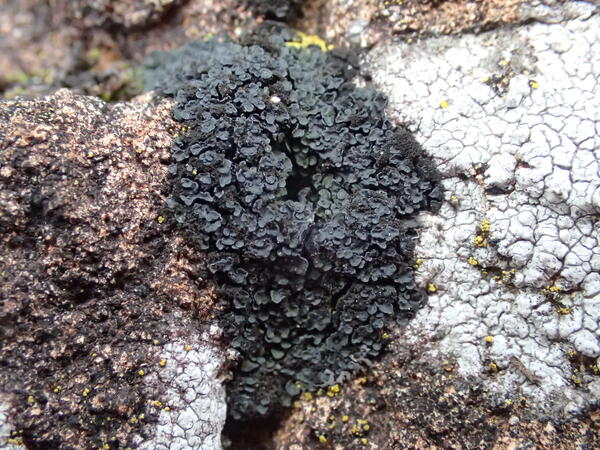
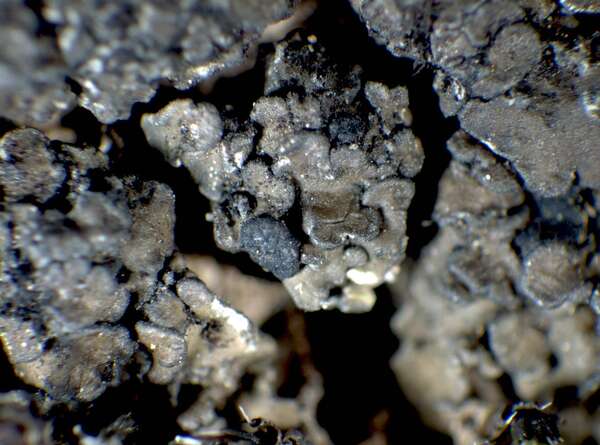
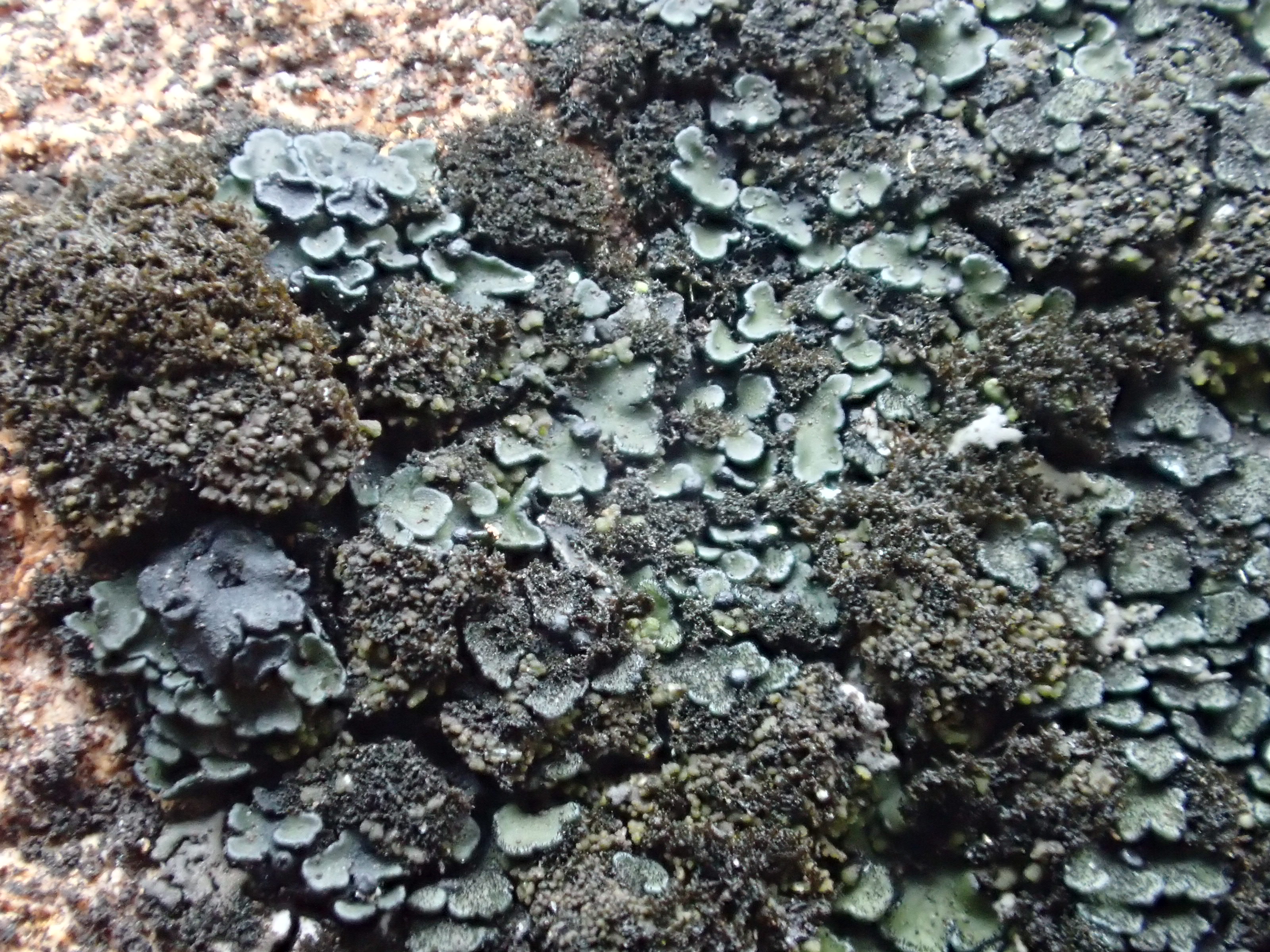
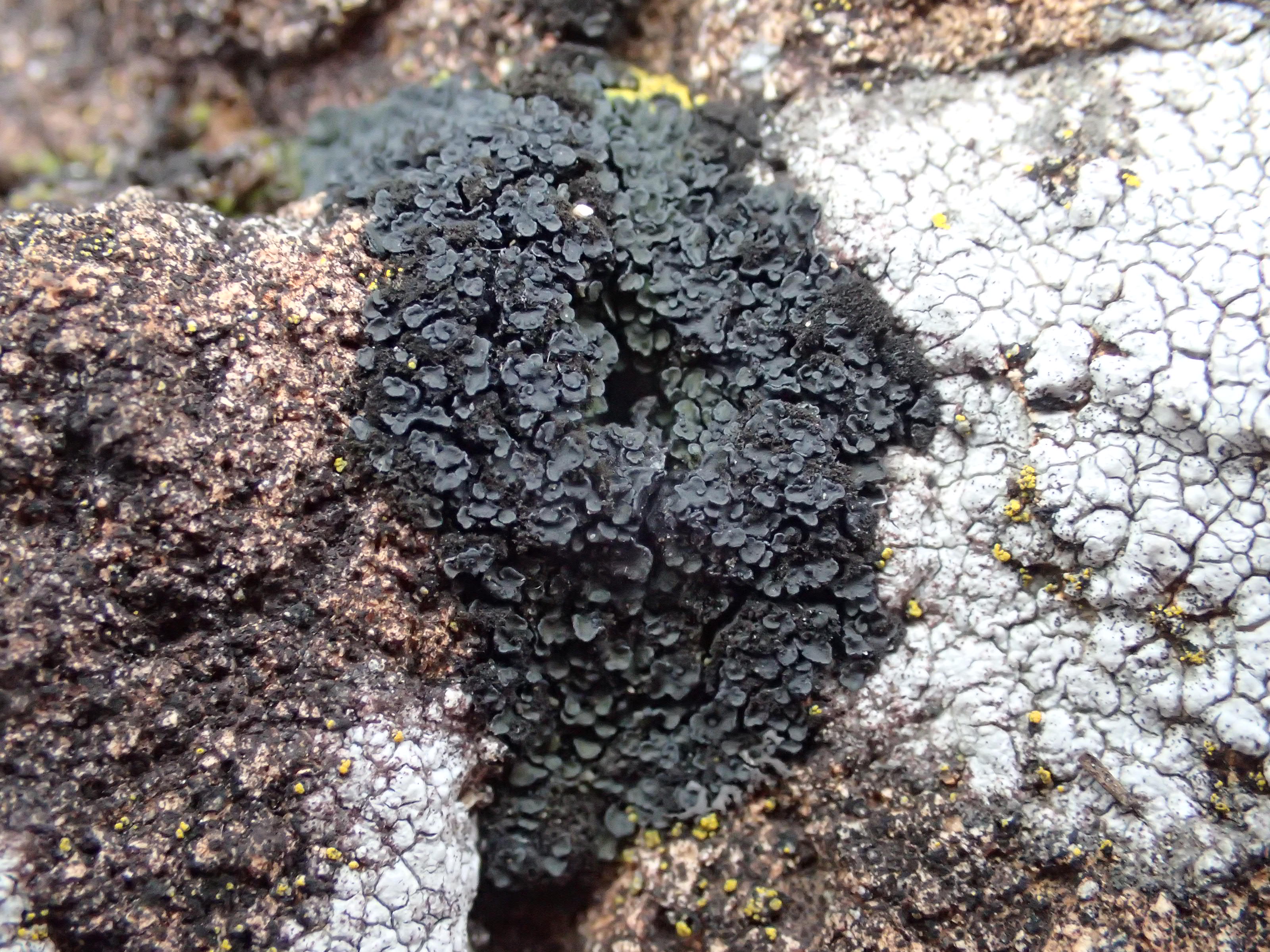
Description: Thallus squamulose, heteromerous, forming up to 4 cm wide patches, the squamules at first adnate and dispersed, then slightly ascending and clearly imbricate, 0.5-2(-3) mm wide, concave and ear-like to flat, dark olivaceous brown, smooth, with entire or slightly lobed, usually raised, dark brown to blue-black margins; lower surface dark, attached by rhizinose hyphal strands. Upper cortex 30-50 µm thick, overlain by a thin epinecral layer, the lower layer with a brown pigment, consisting of rather thin-walled, anticlinally oriented hyphae; algal layer continuous; medulla white, thin, of intricately interwoven hyphae, I-; lower cortex 20-40 µm thick, greenish black, of thick-walled hyphae. Apothecia lecideine, black, marginal, sessile, 0.8-1.5 mm across, epruinose, often forming aggregates, with a flat to weakly convex, shiny disc and a thin, persistent or sometimes finally excluded proper margin. Proper exciple greenish black in outer part, dark reddish brown within, of thick-walled, strongly conglutinated, radiating hyphae; epithecium blue-green, often with a brown tinge, without crystals, K-, N+ purple; hymenium colourless to greenish in upper part, 60-80 µm high, I+ blue; paraphyses sparingly branched and anastomosing, strongly coherent, c. 3 µm thick at mid-level, the apical cell not or only slightly swollen, up to 4 µm wide; hypothecium colourless to pale reddish brown. Asci 8-spored, clavate, with a well-developed, amyloid tholus containing a deeper amyloid tube and lacking an ocular chamber, Porpidia-type. Ascospores 1-celled, hyaline, ellipsoid, 8-15 x 5-7 µm. Pycnidia marginal, sessile, black, with a dark green to brown wall and intricately branched conidiophores. Conidia pleurogenous, narrowly ellipsoid, 3-5 x c. 1.5 µm. Photobiont chlorococcoid. Spot tests: cortex and medulla K-, C-, KC-, P-, UV-. Chemistry: without lichen substances.
Growth form: Squamulose
Substrata: rocks
Photobiont: green algae other than Trentepohlia
Reproductive strategy: mainly sexual
Subcontinental: restricted to areas with a dry-subcontinental climate (e.g. dry Alpine valleys, parts of Mediterranean Italy)
paras Spilonema spp.
Commonnes-rarity: (info)
Alpine belt: absent
Subalpine belt: absent
Montane belt: absent
Dry submediterranean belt: rare
Humid submediterranean belt: absent
Padanian area: absent
pH of the substrata:
1 2 3 4 5

Solar irradiation:
1 2 3 4 5
Aridity:
1 2 3 4 5
Eutrophication:
1 2 3 4 5
Poleotolerance:
0 1 2 3
Altitudinal distribution:
1 2 3 4 5 6
Rarity
absent
extremely rare
very rare
rare
rather rare
rather common
common
very common
extremely common
Loading data...
Occurrence data
Predictive map
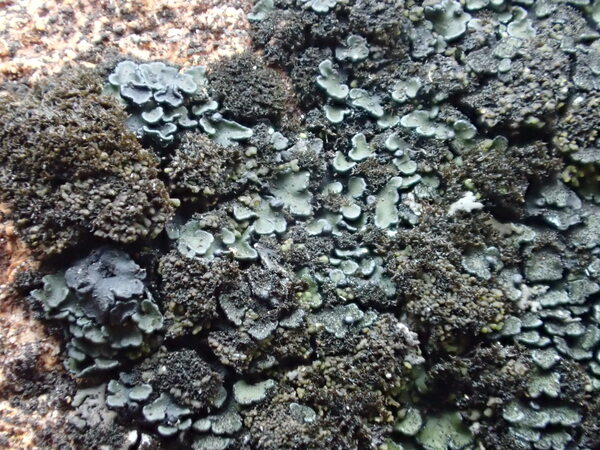
Mark Rahill - CC BY-SA 4.0
USA
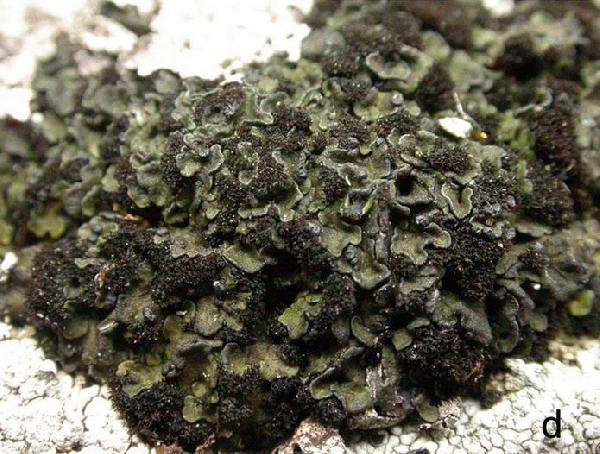
Source: Evankow, A.M., Yin, A., Zulfiqar, R. et al. Psora mediterranea (Lecanorales, Psoraceae), a new lichen species from Europe, including a new concept for P. himalayana and a revised key to the European species. Mycol Progress 24, 26 (2025). https://doi.org/10.1007/s11557-025-02045-8 - CC BY 4.0
Norway
Norway, O-L-123000, Photo: E. Timdal
Mark Rahill - CC BY-SA 4.0
USA
P.L. Nimis; Owner: Department of Life Sciences, University of Trieste
Herbarium: TSB (13283)
2001/11/29

Wolfgang von Brackel - CC BY-4.0

Sebastiano Dose - CC BY 4.0
Armenia, Vayots Dzor Province, municipality of Areni, on the rock walls along the Noravank Monastery Road, at the bottom of the Noravank gorge; on sandstone and conglomerate/calcareous rocks, ca. 1050-1100 m. 28.09.2024. leg., Dose, Nimis & Muggia TSB 45067
Growth form: Squamulose
Substrata: rocks
Photobiont: green algae other than Trentepohlia
Reproductive strategy: mainly sexual
Subcontinental: restricted to areas with a dry-subcontinental climate (e.g. dry Alpine valleys, parts of Mediterranean Italy)
paras Spilonema spp.
Commonnes-rarity: (info)
Alpine belt: absent
Subalpine belt: absent
Montane belt: absent
Dry submediterranean belt: rare
Humid submediterranean belt: absent
Padanian area: absent
pH of the substrata:
| 1 | 2 | 3 | 4 | 5 |
Solar irradiation:
| 1 | 2 | 3 | 4 | 5 |
Aridity:
| 1 | 2 | 3 | 4 | 5 |
Eutrophication:
| 1 | 2 | 3 | 4 | 5 |
Poleotolerance:
| 0 | 1 | 2 | 3 |
Altitudinal distribution:
| 1 | 2 | 3 | 4 | 5 | 6 |
Rarity
absent
extremely rare
very rare
rare
rather rare
rather common
common
very common
extremely common
Loading data...
Occurrence data
Predictive map
Mark Rahill - CC BY-SA 4.0
USA

Source: Evankow, A.M., Yin, A., Zulfiqar, R. et al. Psora mediterranea (Lecanorales, Psoraceae), a new lichen species from Europe, including a new concept for P. himalayana and a revised key to the European species. Mycol Progress 24, 26 (2025). https://doi.org/10.1007/s11557-025-02045-8 - CC BY 4.0
Norway
Norway, O-L-123000, Photo: E. Timdal
Mark Rahill - CC BY-SA 4.0
USA
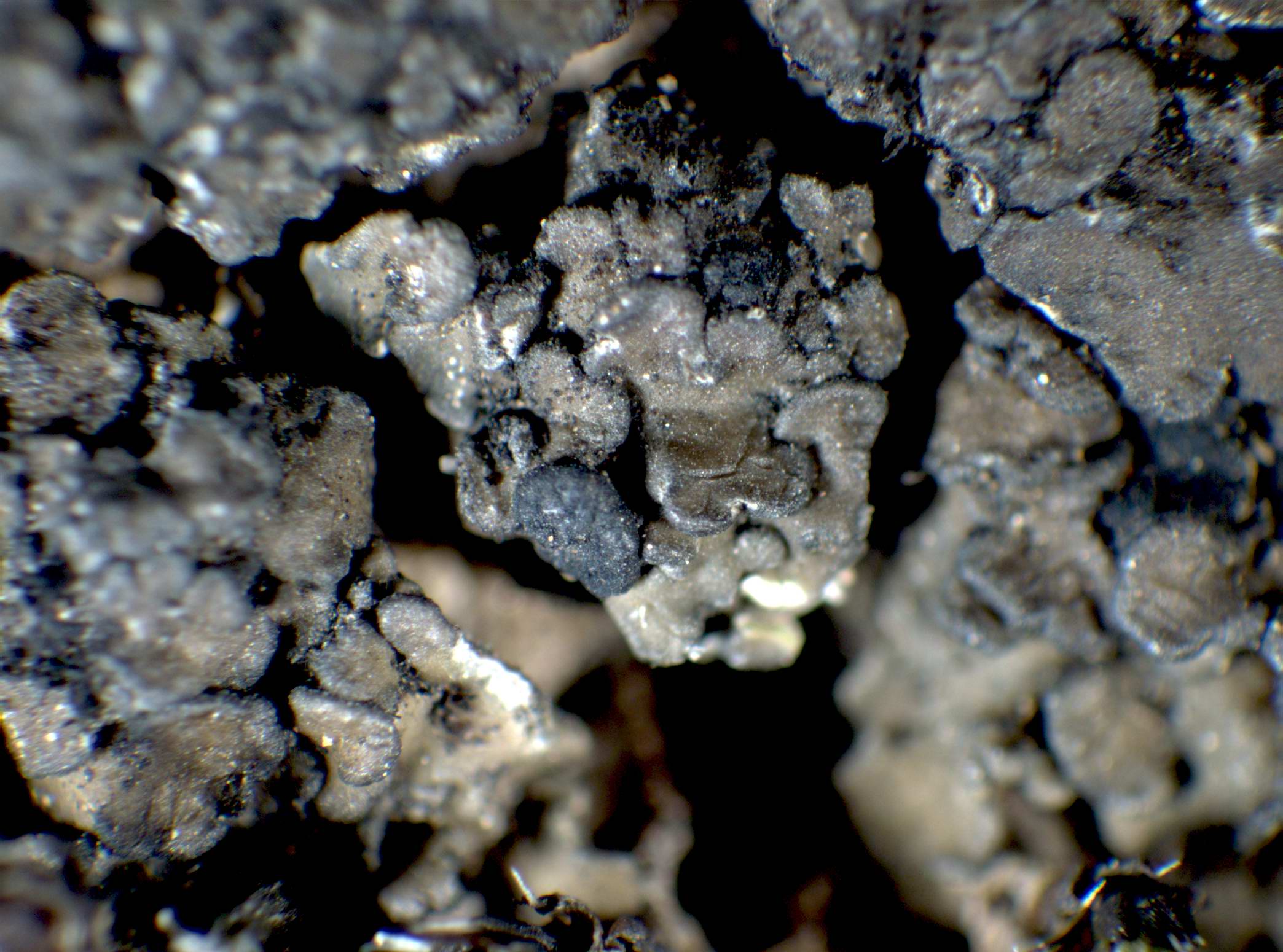
P.L. Nimis; Owner: Department of Life Sciences, University of Trieste
Herbarium: TSB (13283)
2001/11/29

Wolfgang von Brackel - CC BY-4.0