Forssellia affinis (A. Massal.) Zahlbr.
Nat. Pflanzenfam., 1(1*): 161, 1906.. Basionym: Enchylium affine A. Massal. - Mem. Lichenogr.: 94, 1853.
Synonyms: Enchylium affine var. melanophaeum A. Massal.; Enchylium affine var. pulvinatum A. Massal.; Enchylium flageyi Harm.; Enchylium rubbianum A. Massal.; Heppia adriatica Zahlbr.; Heppia purpurascens (Nyl.) Nyl.; Heppia tenebrata Nyl.; Lecanora purpurascens Nyl.; Pterygiopsis affinis (A. Massal.) Henssen
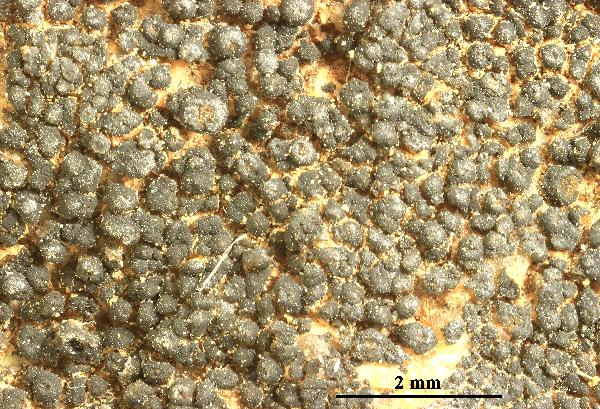
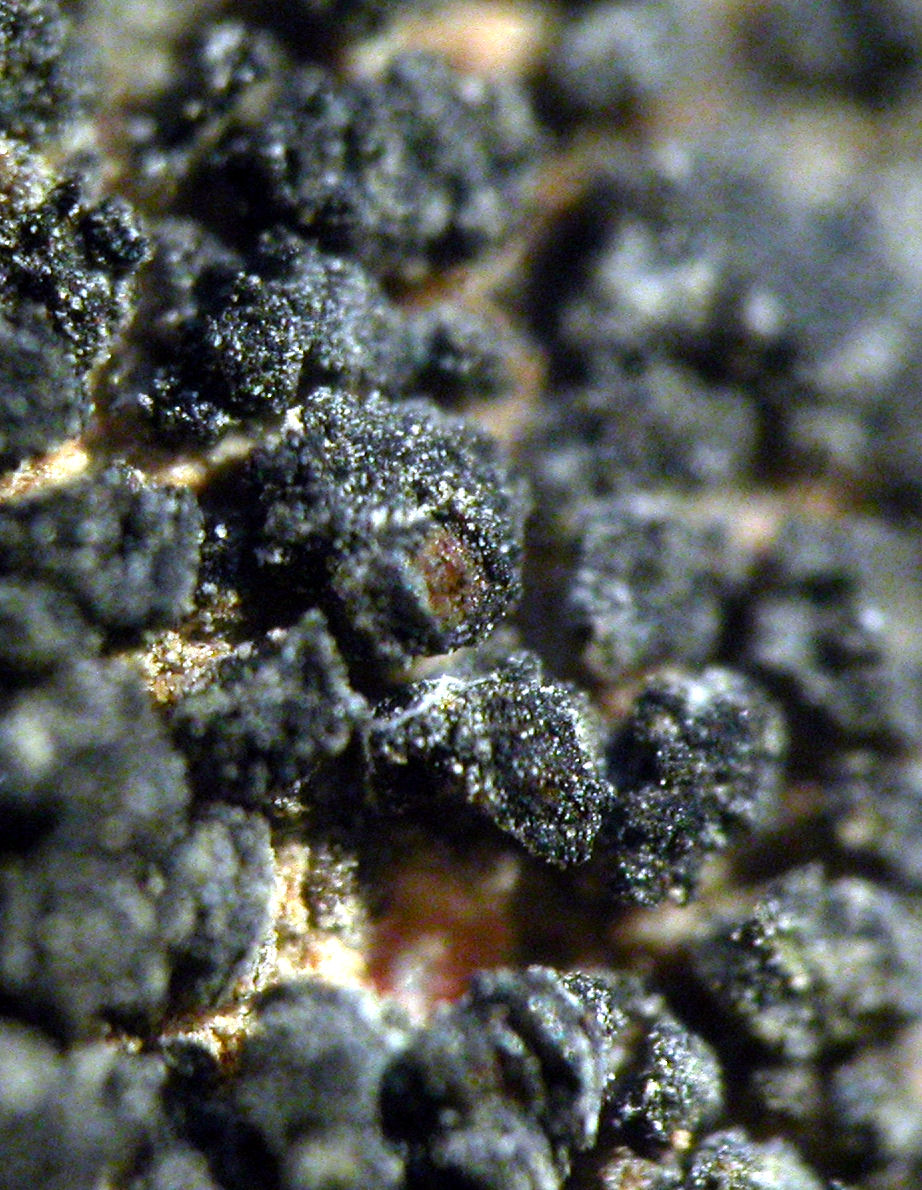
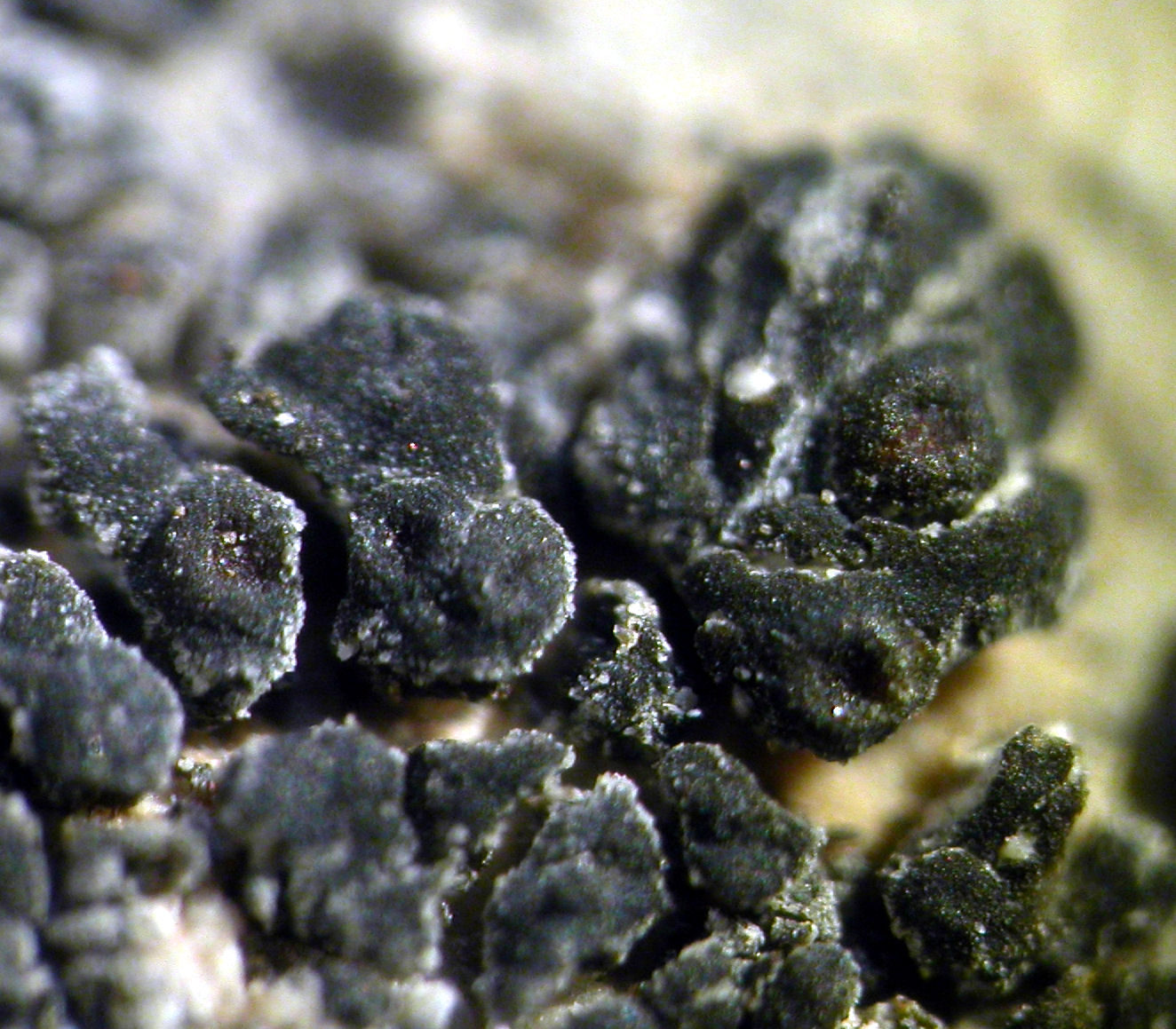
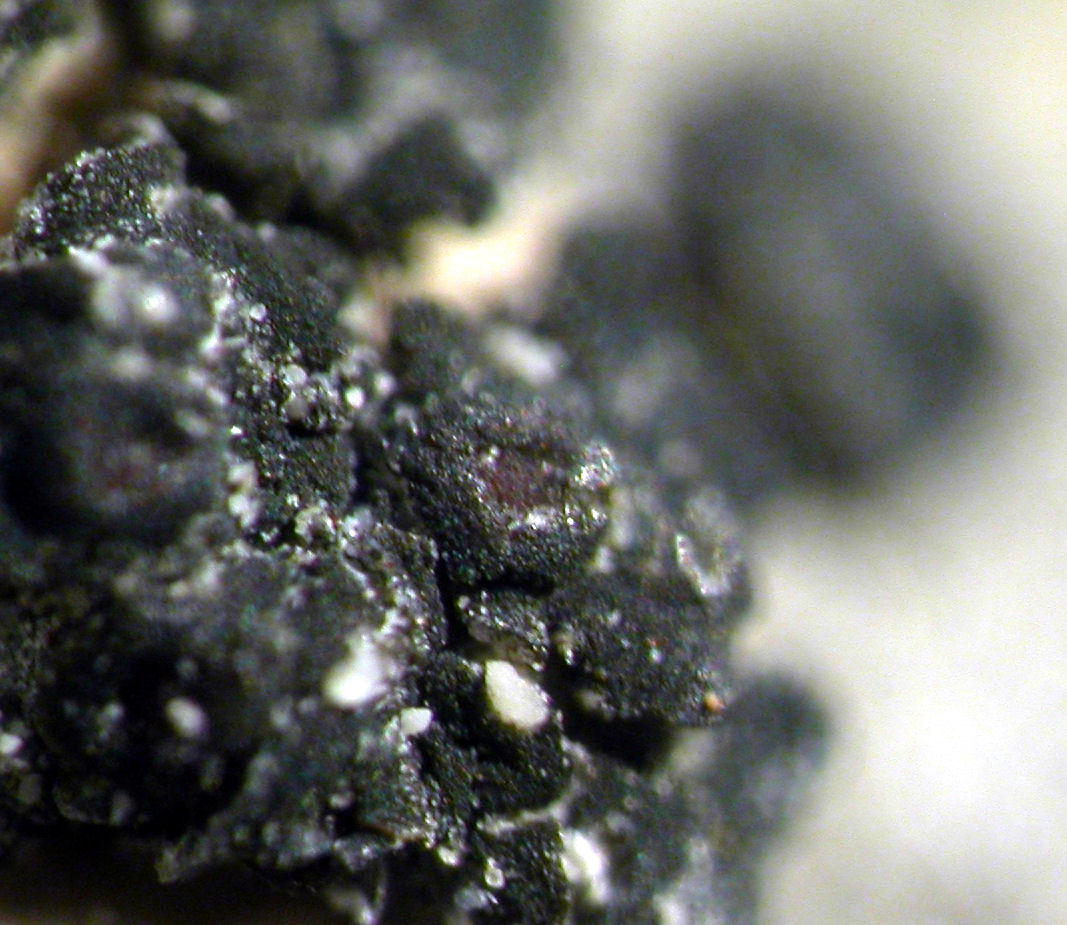
Description: Thallus crustose-placodioid, episubstratic, rimose-areolate, black when dry (sometimes bluish-pruinose), dark olive-brown and weakly subgelatinous when wet, forming up to 2 cm wide, orbicular to irregular rosettes, Areoles 0.4-0.7 mm wide, c. 0.2 mm thick, separated by thin fissures, the central ones often reduced to wart-like granules, the peripheral ones distinctly elongated and radiating, up to 0.8(-0.9) x 0.3-0.5 mm, contiguous or slightly diverging at tips, slightly concave to slightly convex, sometimes poorly evident in old thalli. Thallus anatomy paraplectenchymatous throughout, with short-celled, 3-9 µm thick hyphae arranged in a fan-like way. Apothecia zeorine pycnoascoarps, at first immersed, then emerging and semi-sessile, round, 0.25-0.5 mm across, with a concave to flat, dark reddish disc and a thick, persistent, sometimes minutely granulose proper margin. Proper exciple well-developed, cupuliform, prosoplectenchymatous, up to 25 µm thick; epithecium brownish, poorly differentiated; hymenium colourless, in mature apothecia subdivided into separate compartments by bundles of sterile hyphae, 100-130 µm high, I+ and K/I+ blue; paraphyses anastomosing, slightly constricted at septa in upper part, 2-3 µm thick, not capitate; hypothecium colourless, 30-50 µm high. Asci 16-32-spored, prototunicate, with a very thin wall disintegrating or opening by apical ruptures, without apical amyloid thickenings, Lichina-type. Ascospores 1-celled, hyaline, subglobose to broadly ellipsoid, (5-)6-12 x 3-6(-7) µm. Pycnidia immersed, unilocular or rarely secondarily plurilocular, 80-120 µm wide. Conidia globose or subglobose, 2-3 x 1.5-2 µm. Photobiont cyanobacterial, chroococcoid, with vertically arranged clusters of cells measuring 6-10 x 5-7 µm, penetrated by haustoria and surrounded by a yellowish brown gelatinous sheath. Spot tests: all negative. Chemistry: without lichen substances.
Growth form: Crustose
Substrata: rocks
Photobiont: cyanobacteria, coccaceous (e.g. Gloeocapsa)
Reproductive strategy: mainly sexual
On otherwise dry surfaces with short periods of water seepage after rain
Commonnes-rarity: (info)
Alpine belt: absent
Subalpine belt: absent
Montane belt: very rare
Dry submediterranean belt: rare
Humid submediterranean belt: very rare
Padanian area: absent
pH of the substrata:
1 2 3 4 5

Solar irradiation:
1 2 3 4 5
Aridity:
1 2 3 4 5
Eutrophication:
1 2 3 4 5
Poleotolerance:
0 1 2 3
Altitudinal distribution:
1 2 3 4 5 6
Rarity
absent
extremely rare
very rare
rare
rather rare
rather common
common
very common
extremely common
Loading data...
Occurrence data
Predictive map
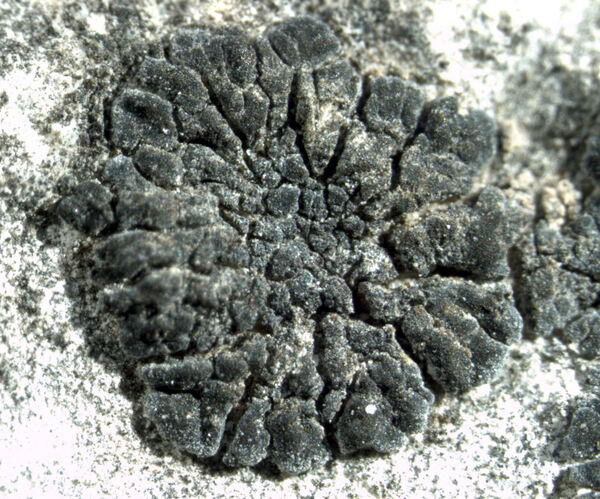
Silvia Ongaro - CC BY-SA 4.0; Owner: Department of Life Sciences, University of Trieste
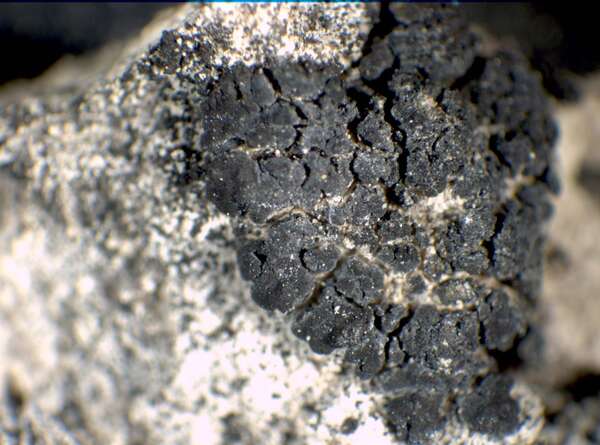
P.L. Nimis; Owner: Department of Life Sciences, University of Trieste
Herbarium: TSB (30596)
2001/12/10
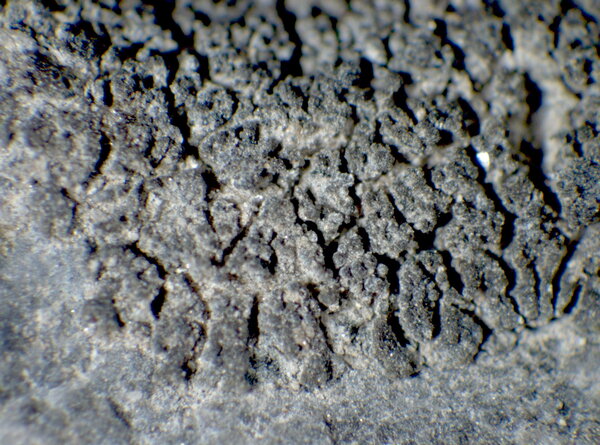
P.L. Nimis; Owner: Department of Life Sciences, University of Trieste
Herbarium: TSB (34674)
2002/02/01
a form with pruinose, pseudoisidiate thallus, which probably belongs to another species
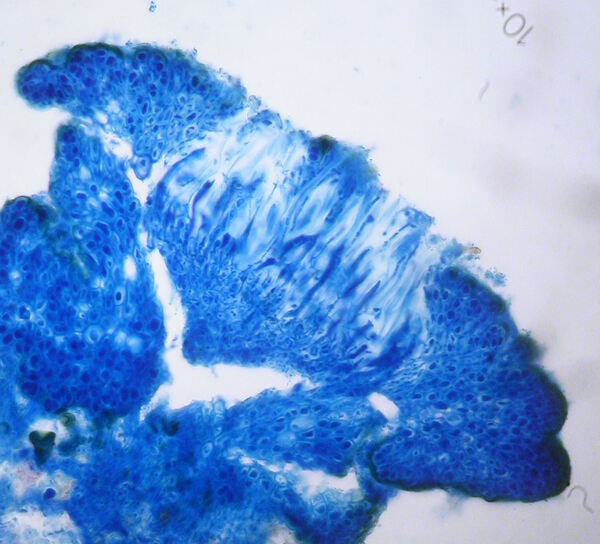
Silvia Ongaro - CC BY-SA 4.0; Owner: Department of Life Sciences, University of Trieste
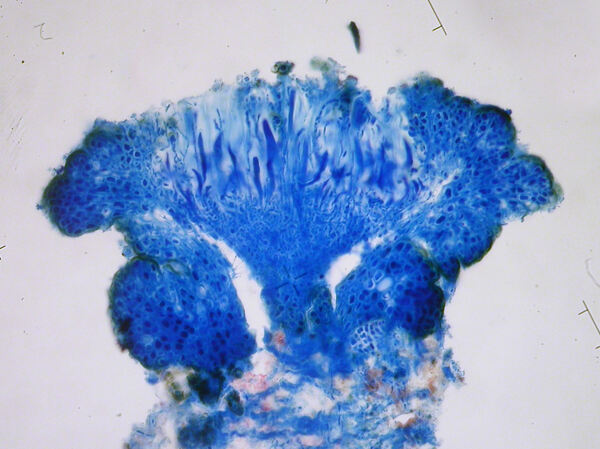
Silvia Ongaro - CC BY-SA 4.0; Owner: Department of Life Sciences, University of Trieste
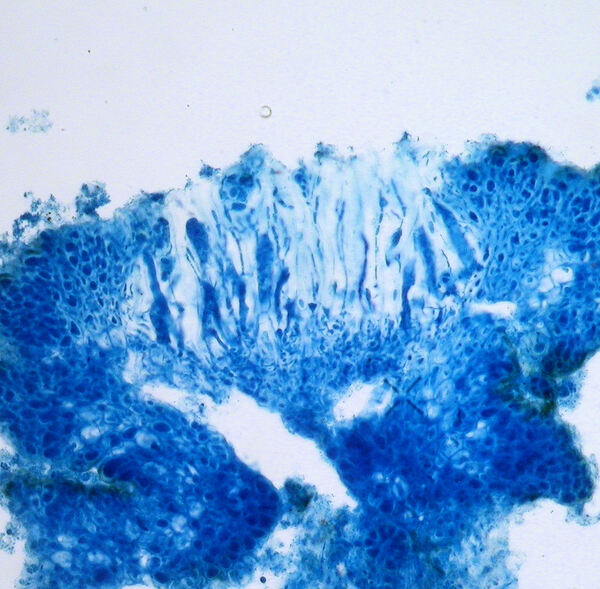
Silvia Ongaro - CC BY-SA 4.0; Owner: Department of Life Sciences, University of Trieste
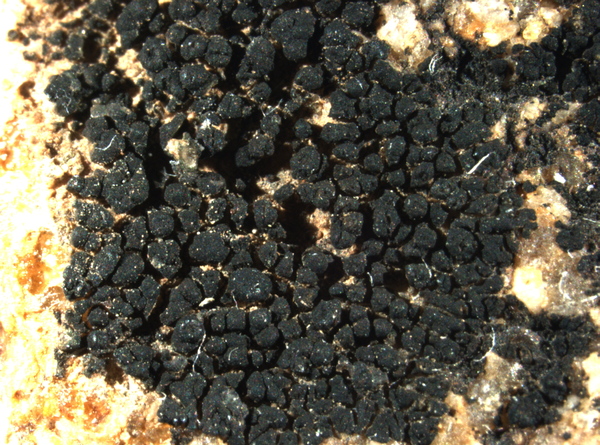
Pier Luigi Nimis - CC BY-SA 4.0
Sardinia, Italy.
Herbarium: Herb. H
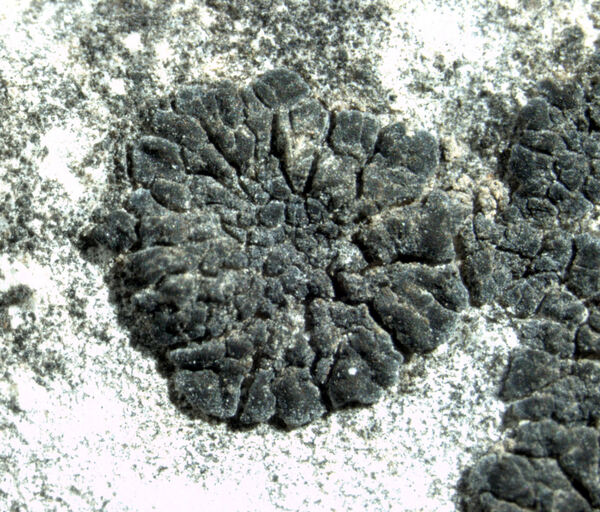
Silvia Ongaro - CC BY-SA 4.0; Owner: Department of Life Sciences, University of Trieste
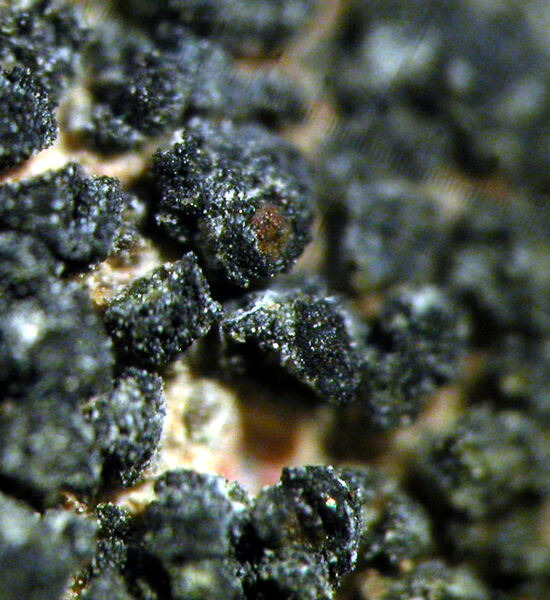
Silvia Ongaro - CC BY-SA 4.0; Owner: Department of Life Sciences, University of Trieste
Herbarium: TSB (30588)
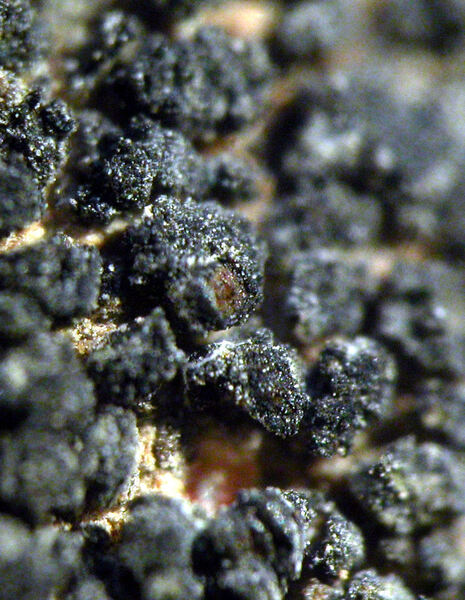
Silvia Ongaro - CC BY-SA 4.0; Owner: Department of Life Sciences, University of Trieste
Herbarium: TSB (30588)
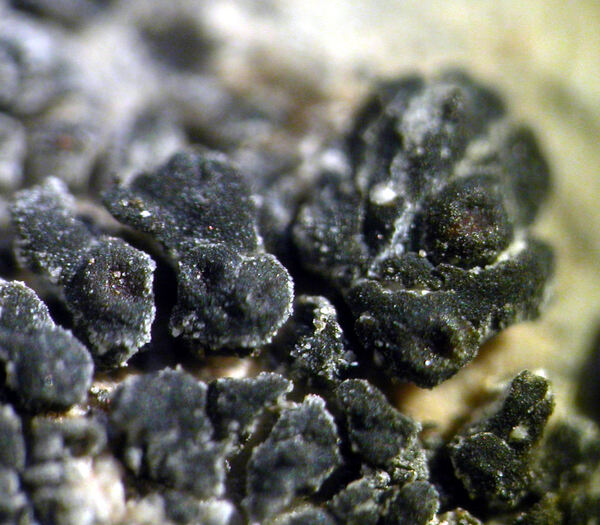
Silvia Ongaro - CC BY-SA 4.0; Owner: Department of Life Sciences, University of Trieste
Herbarium: TSB (31981)
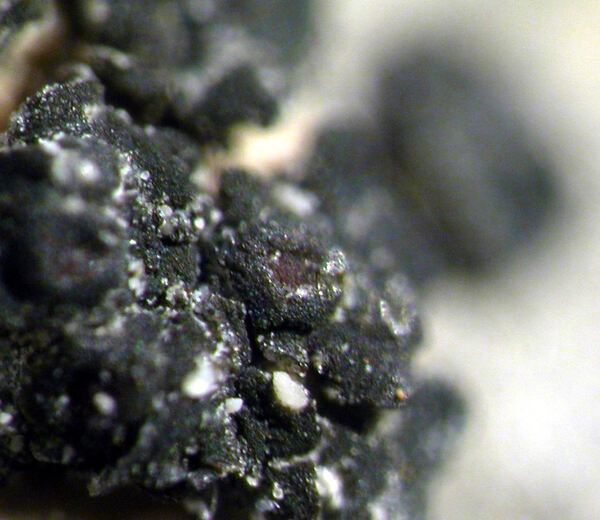
Silvia Ongaro - CC BY-SA 4.0; Owner: Department of Life Sciences, University of Trieste
Herbarium: TSB (31981)
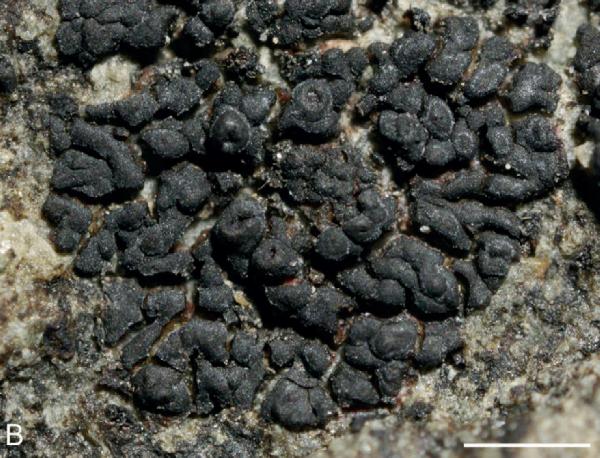
Source: Prieto M., Wedin M., Schultz M. 2024. Phylogeny, evolution and a re-classification of the Lichinomycetes. Studies in Mycology, 109: 595-655. - CC BY-NC-ND
Forssellia affinis, crustose, margin effigurate, apothecia semi-immersed to sessile (Yoshi 100198). Scale bar: 1 mm
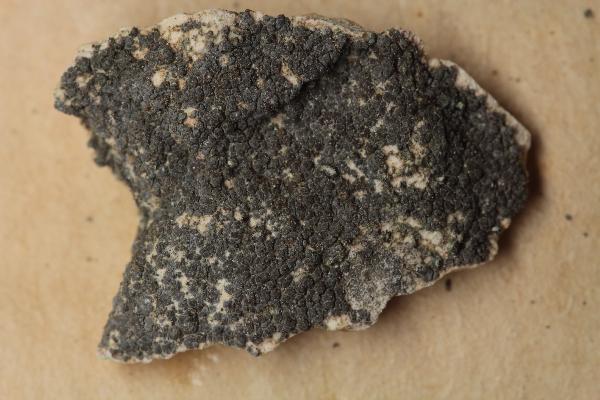
Collezione lichenologica Abramo Massalongo del Museo di Storia Naturale G. Ligabue di Venezia - Autori: Seggi, Linda; Trabucco, Raffaella Proprietà: Fondazione Musei Civici di Venezia - CC BY-NC
Italy, in op. Garda
as Enchylium affine
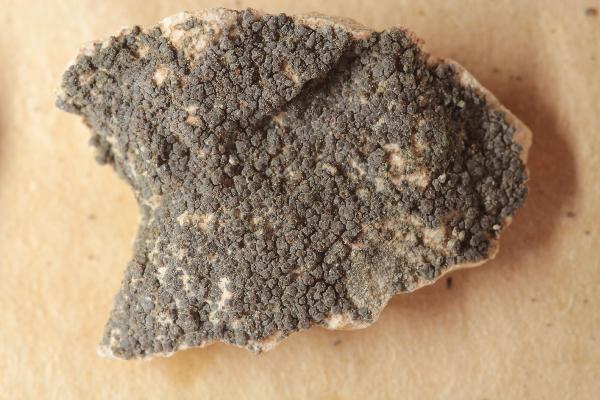
Collezione lichenologica Abramo Massalongo del Museo di Storia Naturale G. Ligabue di Venezia - Autori: Seggi, Linda; Trabucco, Raffaella Proprietà: Fondazione Musei Civici di Venezia - CC BY-NC
Italy, in op. Garda
as Enchylium affine
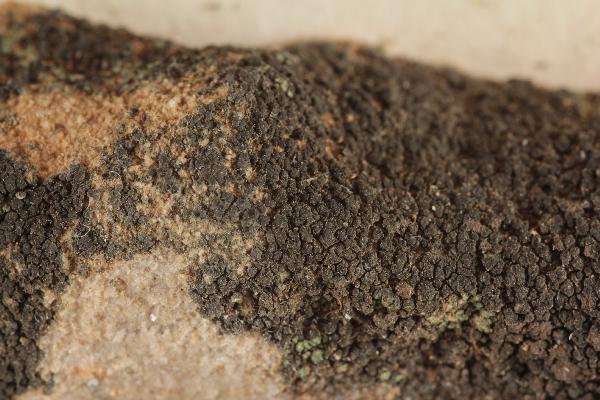
Collezione lichenologica Abramo Massalongo del Museo di Storia Naturale G. Ligabue di Venezia - Autori: Seggi, Linda; Trabucco, Raffaella Proprietà: Fondazione Musei Civici di Venezia - CC BY-NC
Italy, Veneto, in opp. Tregnago (M. Castello) 1855
as Enchylium affine

Felix Schumm - CC BY-SA 4.0
[VZR355], Italia. Sardinia. Cagliari: reservatum naturae Monte Arcosu,
supra domum forestalem Casa Perdu Melis, loco dicto Concale
Petuntu, 520 m. Ad saxa silicea aprica interdum aqua irrorata. Leg. P.
L. Nimis, C. Roux, M. Tretiach & A. Vezda, 29.8.1989, det. A. Vezda.
EX A. VEZDA: LICHENES RARIORES EXSICCATI NR. 355. As Pterygiopsis affinis
Felix Schumm - CC BY-SA 4.0
[VZR355], Italia. Sardinia. Cagliari: reservatum naturae Monte Arcosu,
supra domum forestalem Casa Perdu Melis, loco dicto Concale
Petuntu, 520 m. Ad saxa silicea aprica interdum aqua irrorata. Leg. P.
L. Nimis, C. Roux, M. Tretiach & A. Vezda, 29.8.1989, det. A. Vezda.
EX A. VEZDA: LICHENES RARIORES EXSICCATI NR. 355. As Pterygiopsis affinis
Growth form: Crustose
Substrata: rocks
Photobiont: cyanobacteria, coccaceous (e.g. Gloeocapsa)
Reproductive strategy: mainly sexual
On otherwise dry surfaces with short periods of water seepage after rain
Commonnes-rarity: (info)
Alpine belt: absent
Subalpine belt: absent
Montane belt: very rare
Dry submediterranean belt: rare
Humid submediterranean belt: very rare
Padanian area: absent
pH of the substrata:
| 1 | 2 | 3 | 4 | 5 |
Solar irradiation:
| 1 | 2 | 3 | 4 | 5 |
Aridity:
| 1 | 2 | 3 | 4 | 5 |
Eutrophication:
| 1 | 2 | 3 | 4 | 5 |
Poleotolerance:
| 0 | 1 | 2 | 3 |
Altitudinal distribution:
| 1 | 2 | 3 | 4 | 5 | 6 |
Rarity
absent
extremely rare
very rare
rare
rather rare
rather common
common
very common
extremely common
Loading data...
Occurrence data
Predictive map
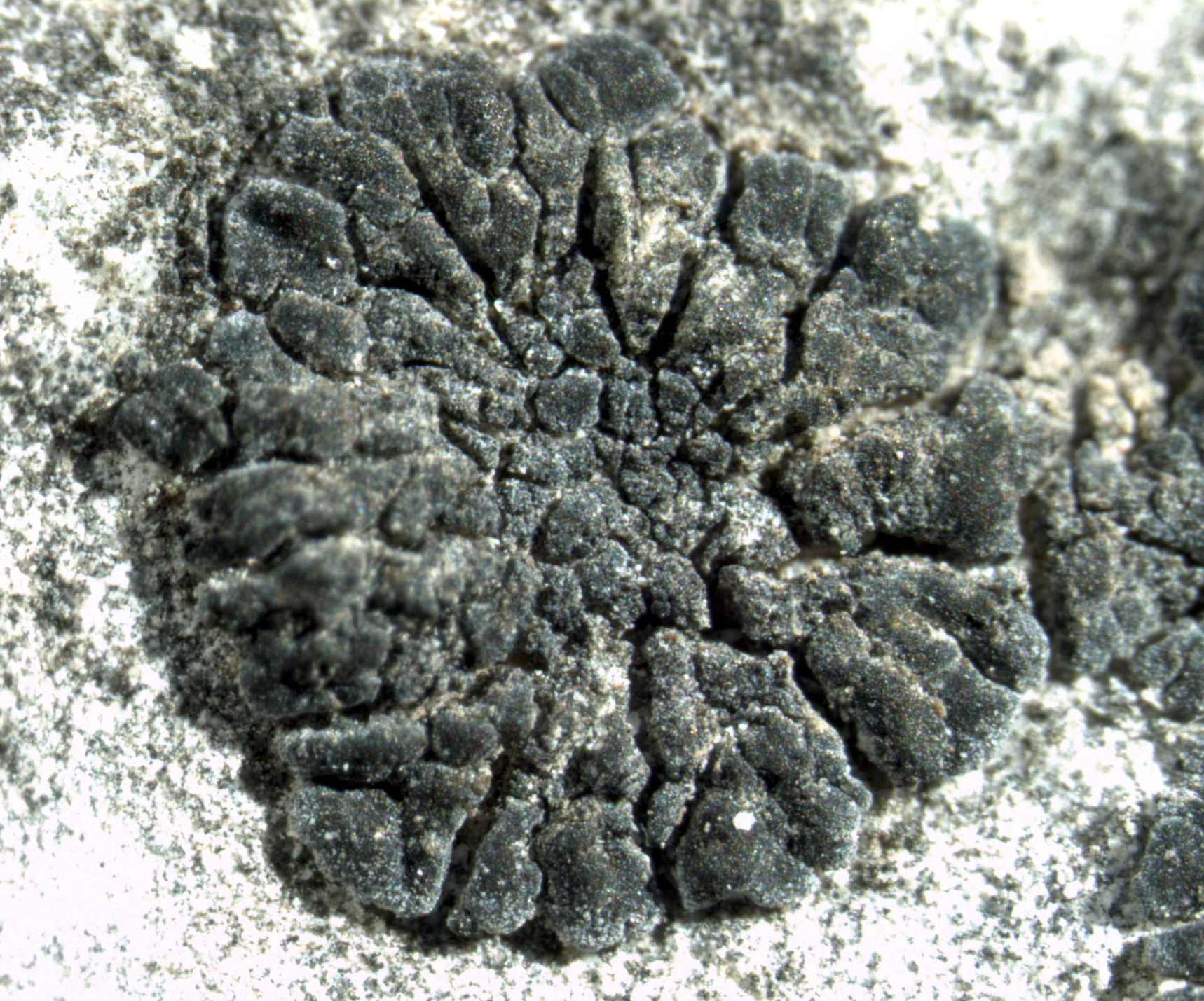
Silvia Ongaro - CC BY-SA 4.0; Owner: Department of Life Sciences, University of Trieste
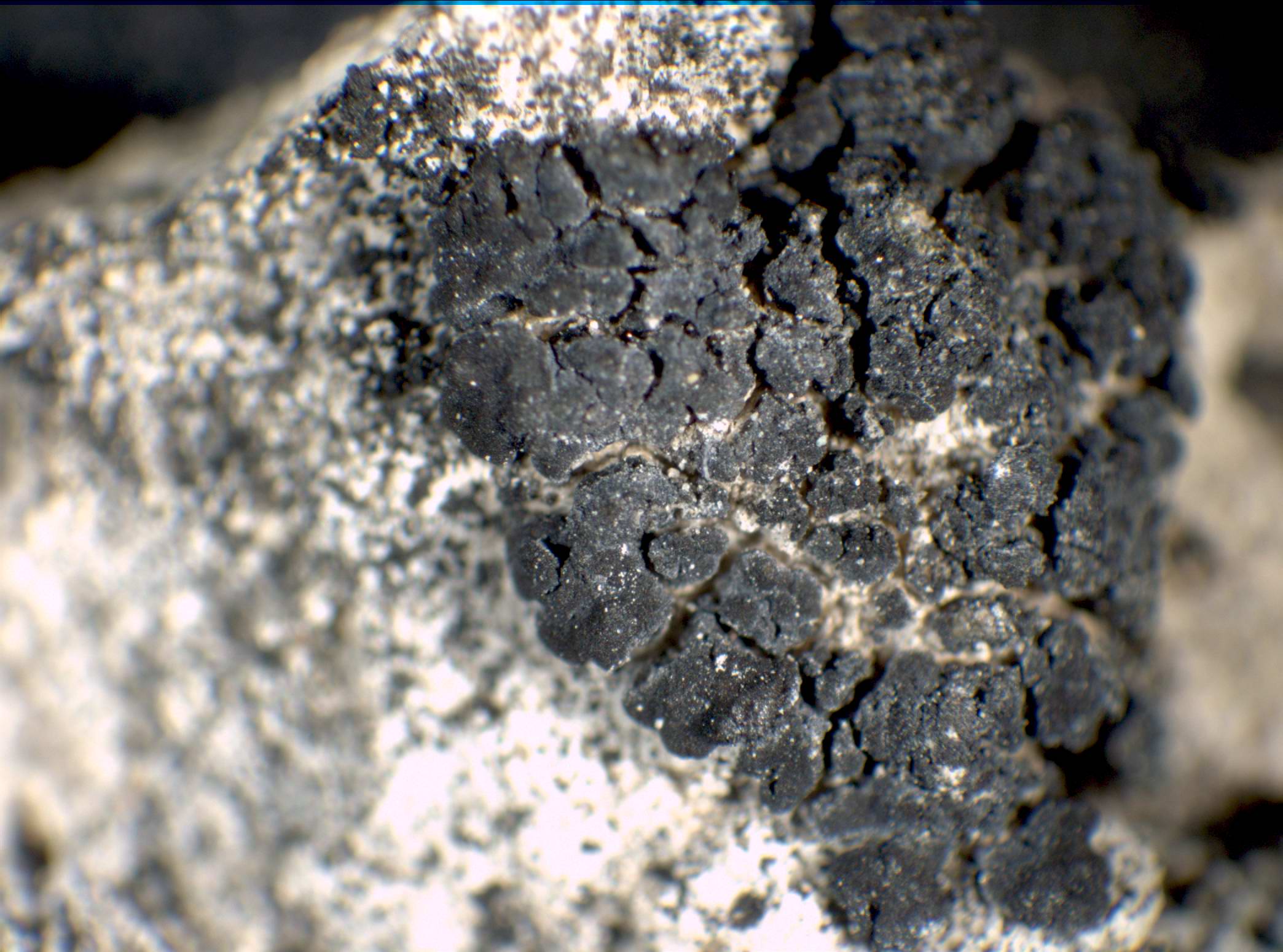
P.L. Nimis; Owner: Department of Life Sciences, University of Trieste
Herbarium: TSB (30596)
2001/12/10
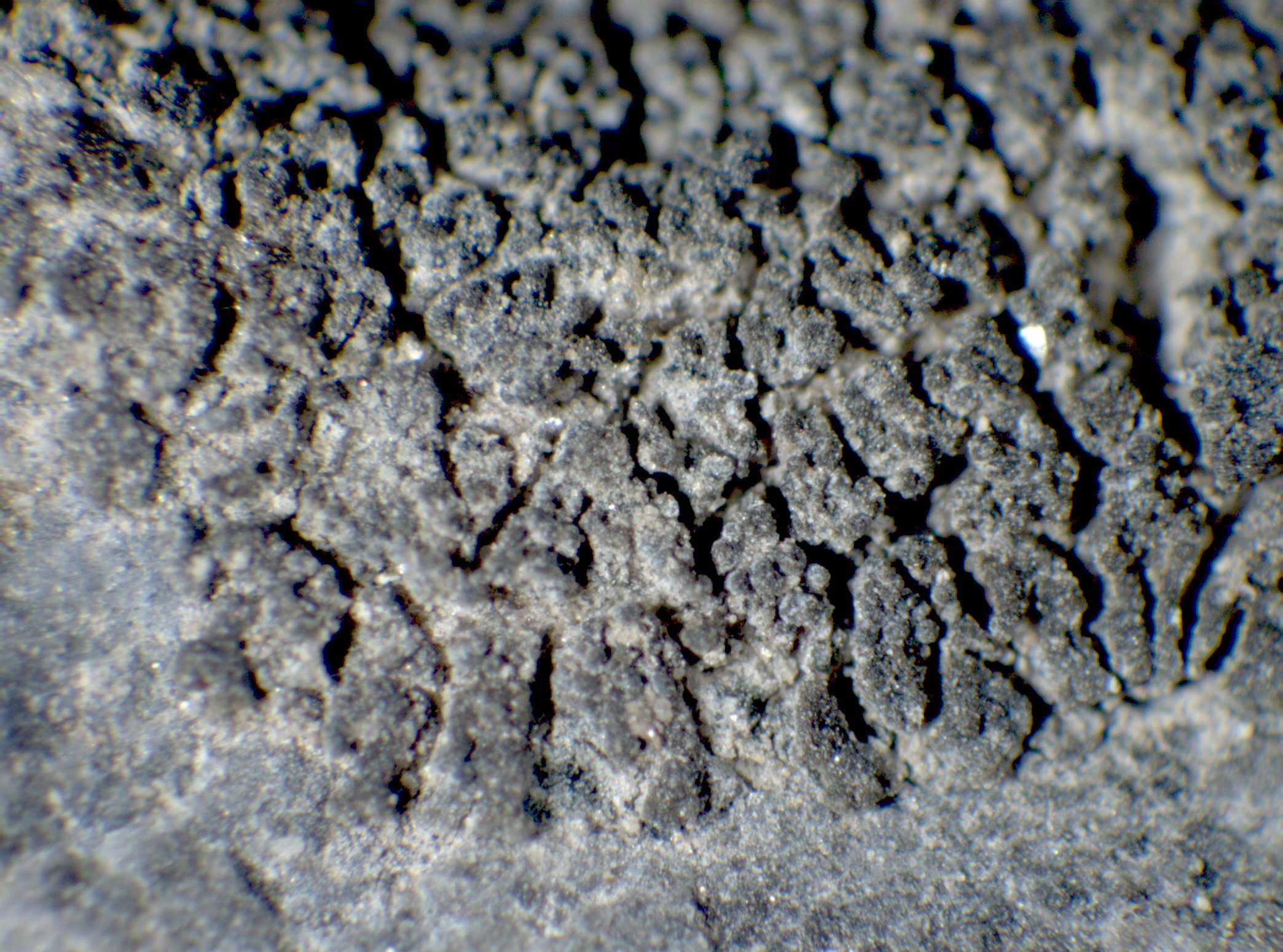
P.L. Nimis; Owner: Department of Life Sciences, University of Trieste
Herbarium: TSB (34674)
2002/02/01
a form with pruinose, pseudoisidiate thallus, which probably belongs to another species
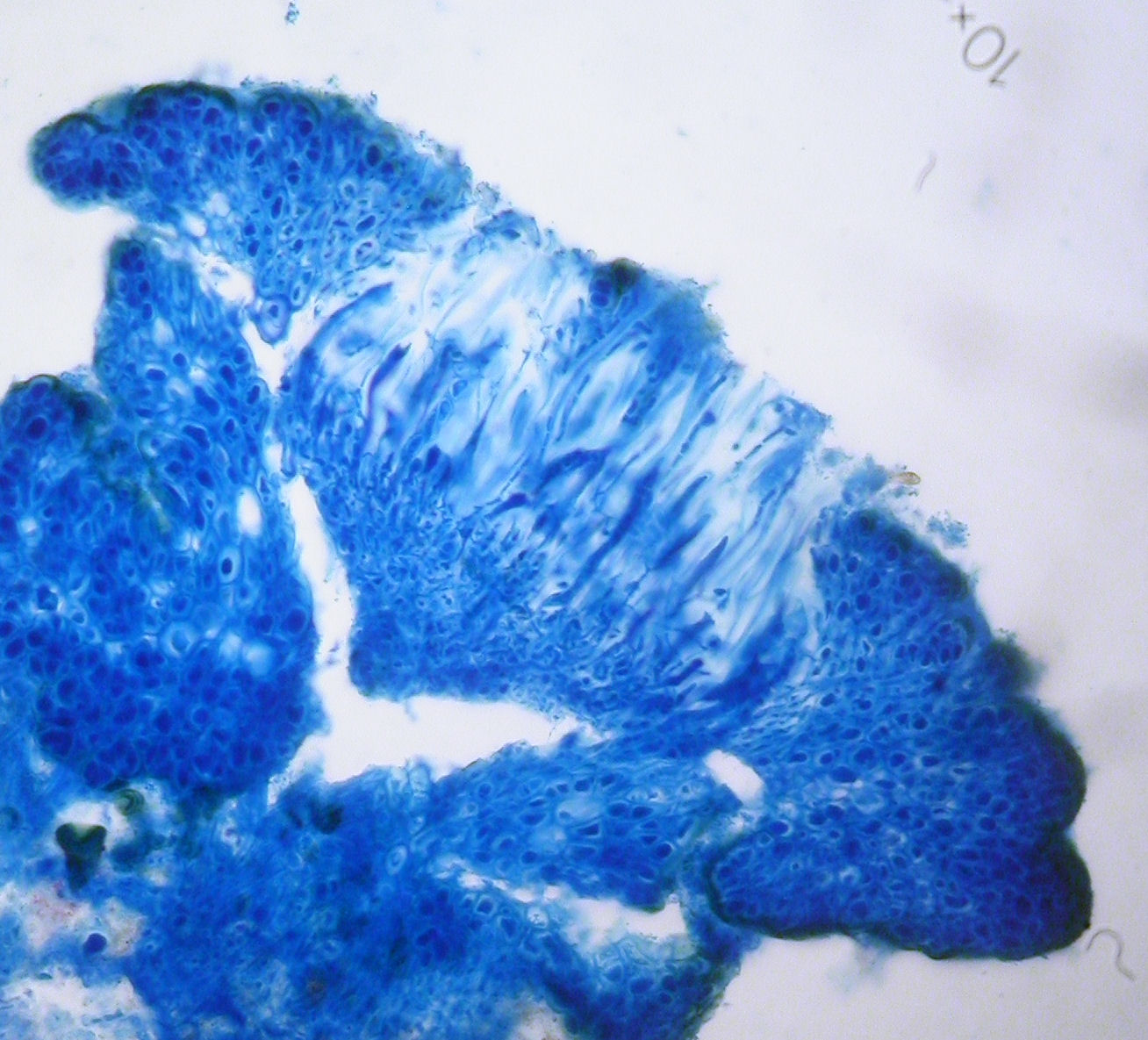
Silvia Ongaro - CC BY-SA 4.0; Owner: Department of Life Sciences, University of Trieste
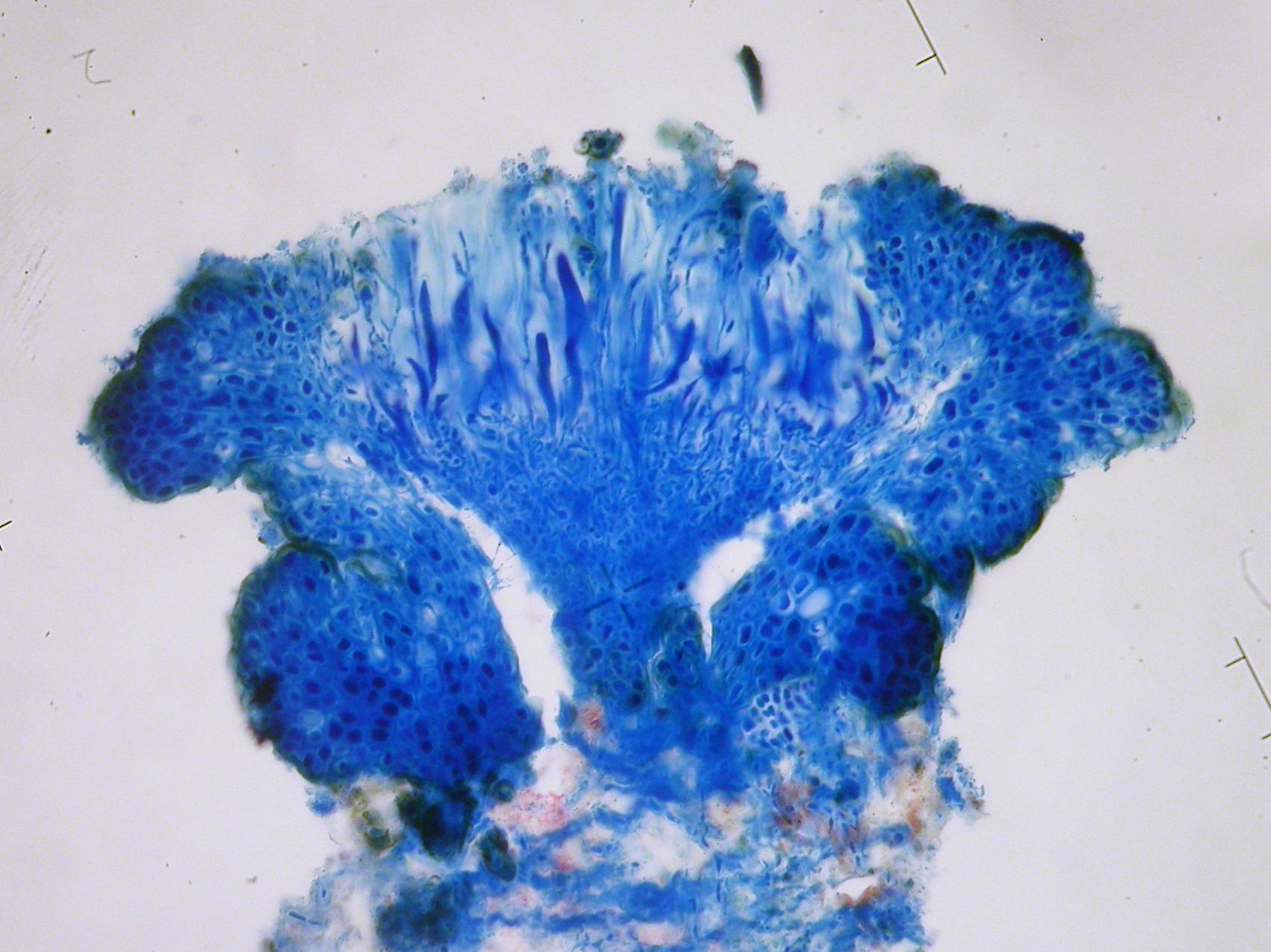
Silvia Ongaro - CC BY-SA 4.0; Owner: Department of Life Sciences, University of Trieste
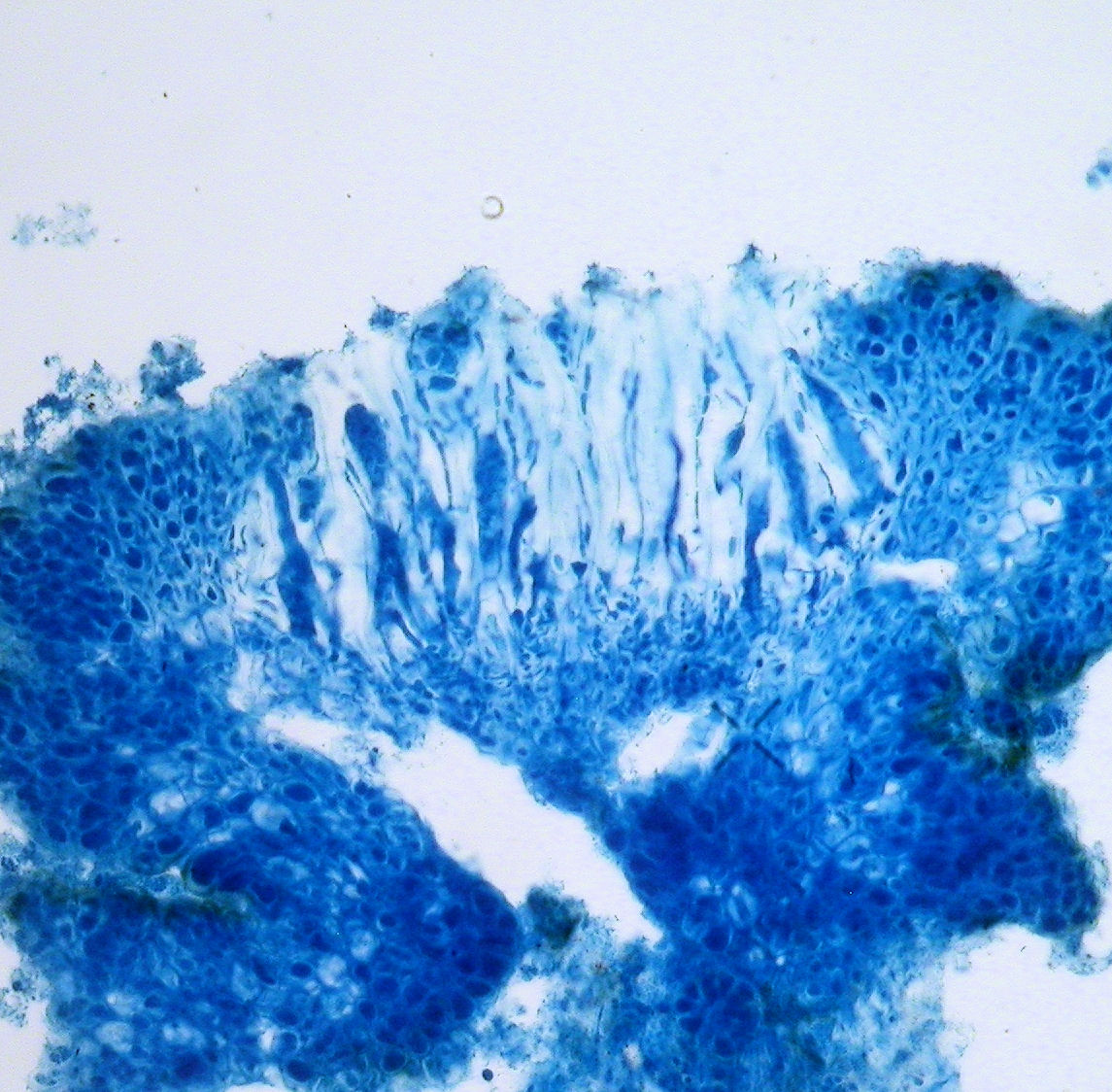
Silvia Ongaro - CC BY-SA 4.0; Owner: Department of Life Sciences, University of Trieste
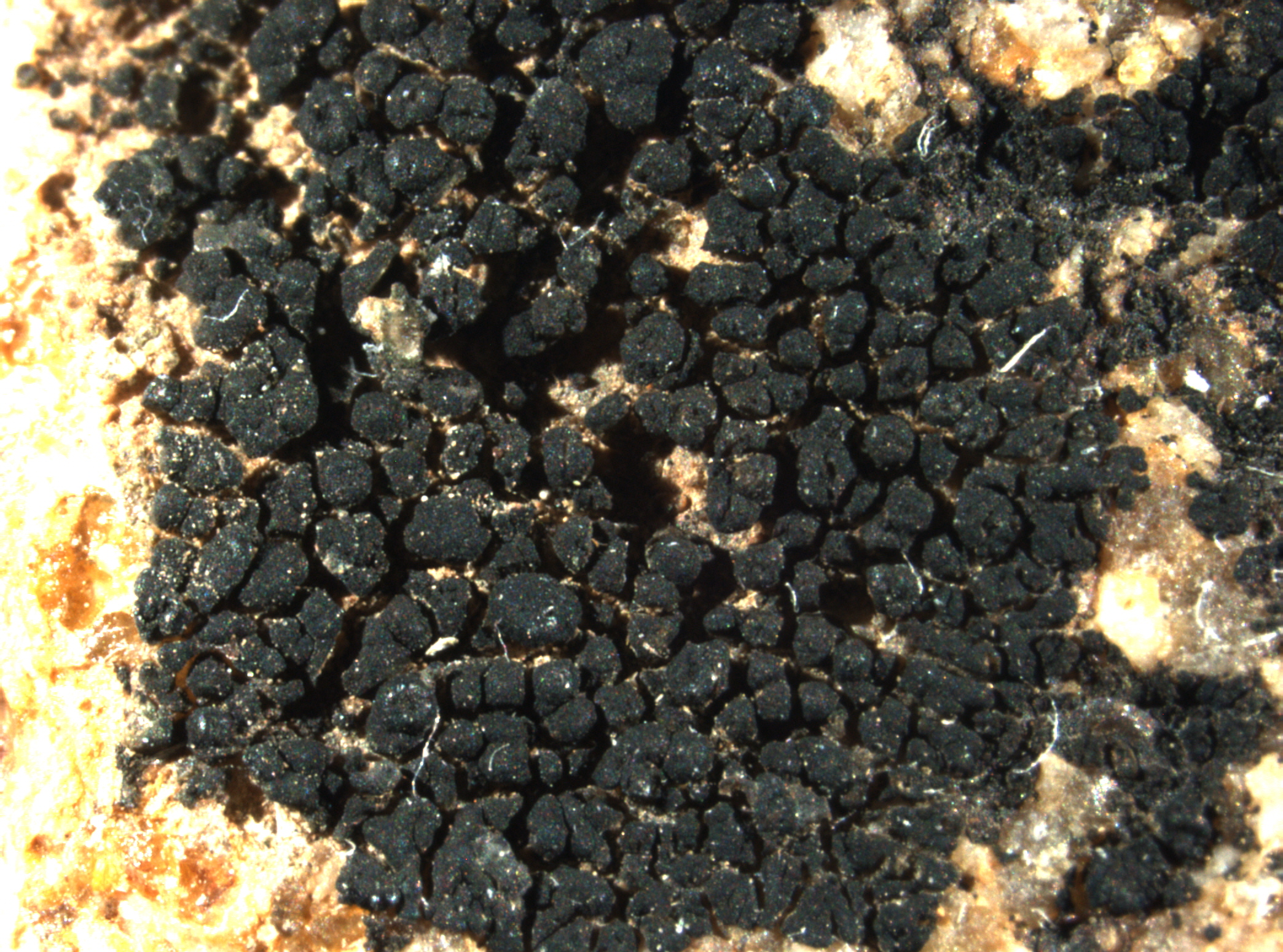
Pier Luigi Nimis - CC BY-SA 4.0
Sardinia, Italy.
Herbarium: Herb. H
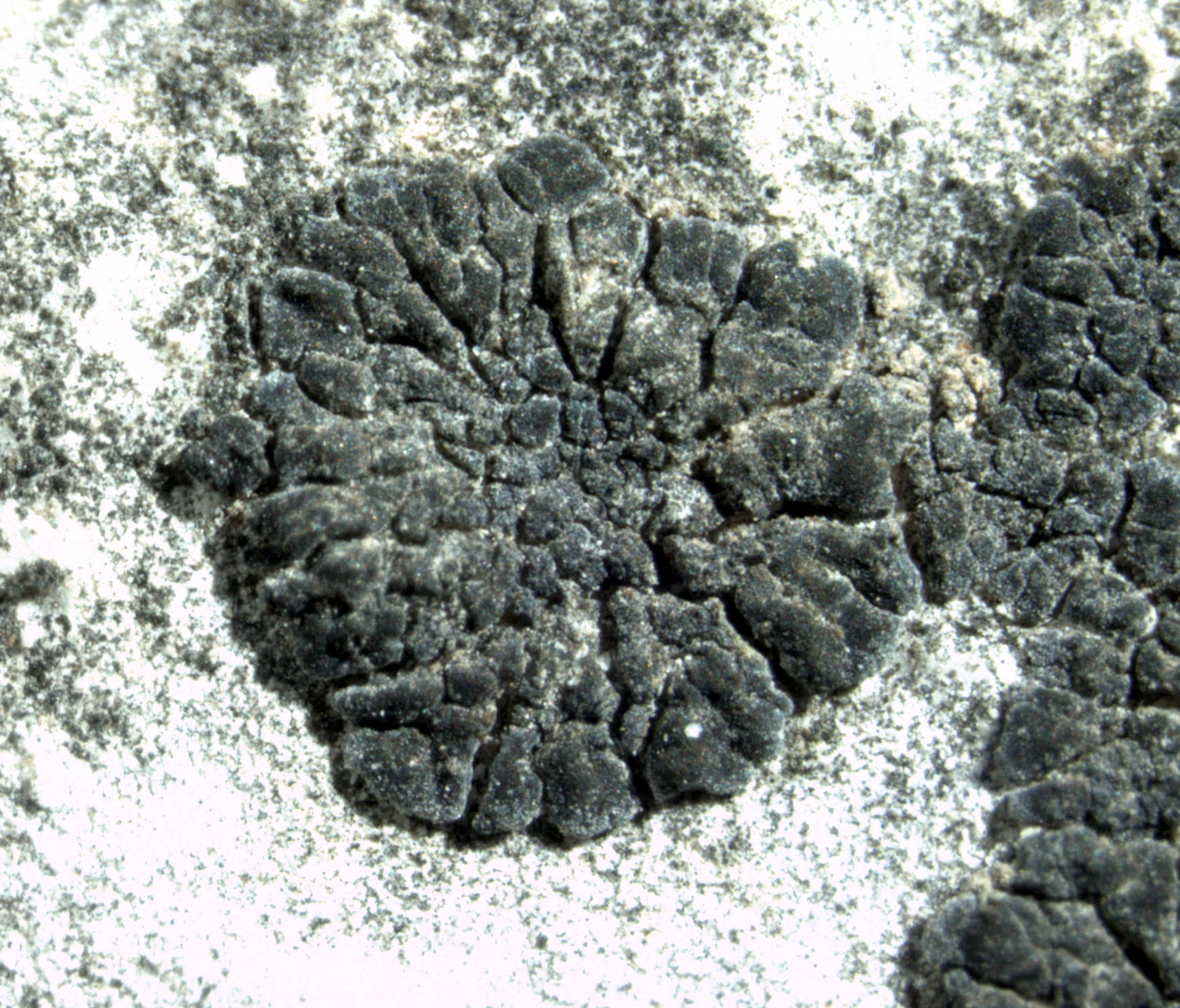
Silvia Ongaro - CC BY-SA 4.0; Owner: Department of Life Sciences, University of Trieste
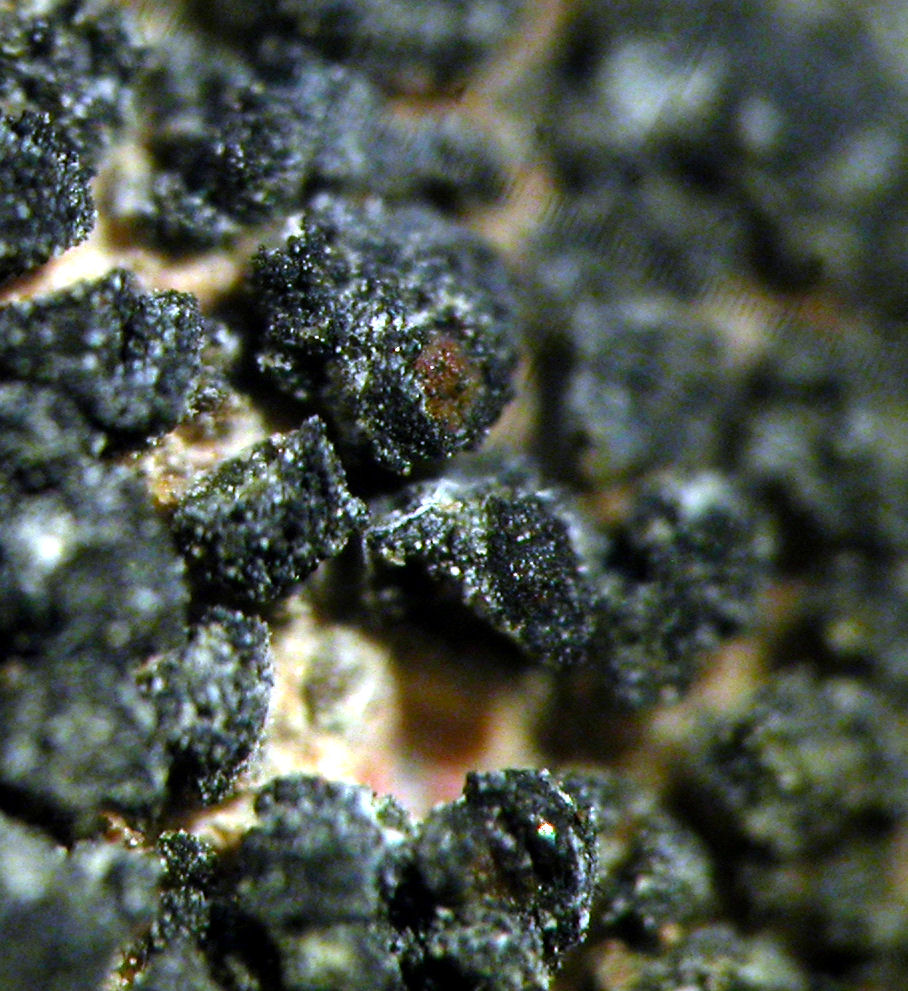
Silvia Ongaro - CC BY-SA 4.0; Owner: Department of Life Sciences, University of Trieste
Herbarium: TSB (30588)
Silvia Ongaro - CC BY-SA 4.0; Owner: Department of Life Sciences, University of Trieste
Herbarium: TSB (30588)
Silvia Ongaro - CC BY-SA 4.0; Owner: Department of Life Sciences, University of Trieste
Herbarium: TSB (31981)
Silvia Ongaro - CC BY-SA 4.0; Owner: Department of Life Sciences, University of Trieste
Herbarium: TSB (31981)

Source: Prieto M., Wedin M., Schultz M. 2024. Phylogeny, evolution and a re-classification of the Lichinomycetes. Studies in Mycology, 109: 595-655. - CC BY-NC-ND
Forssellia affinis, crustose, margin effigurate, apothecia semi-immersed to sessile (Yoshi 100198). Scale bar: 1 mm

Collezione lichenologica Abramo Massalongo del Museo di Storia Naturale G. Ligabue di Venezia - Autori: Seggi, Linda; Trabucco, Raffaella Proprietà: Fondazione Musei Civici di Venezia - CC BY-NC
Italy, in op. Garda
as Enchylium affine

Collezione lichenologica Abramo Massalongo del Museo di Storia Naturale G. Ligabue di Venezia - Autori: Seggi, Linda; Trabucco, Raffaella Proprietà: Fondazione Musei Civici di Venezia - CC BY-NC
Italy, in op. Garda
as Enchylium affine

Collezione lichenologica Abramo Massalongo del Museo di Storia Naturale G. Ligabue di Venezia - Autori: Seggi, Linda; Trabucco, Raffaella Proprietà: Fondazione Musei Civici di Venezia - CC BY-NC
Italy, Veneto, in opp. Tregnago (M. Castello) 1855
as Enchylium affine

Felix Schumm - CC BY-SA 4.0
[VZR355], Italia. Sardinia. Cagliari: reservatum naturae Monte Arcosu, supra domum forestalem Casa Perdu Melis, loco dicto Concale Petuntu, 520 m. Ad saxa silicea aprica interdum aqua irrorata. Leg. P. L. Nimis, C. Roux, M. Tretiach & A. Vezda, 29.8.1989, det. A. Vezda. EX A. VEZDA: LICHENES RARIORES EXSICCATI NR. 355. As Pterygiopsis affinis