Rehmia umbilicata (Ramond) E.J. Möller, Timdal, Haugan & Bendiksby
Fungal Syst. Evol, 16: 224, 2025. Basionym: Lecidea umbilicata Ramond - Mém. Acad. R. Sc. Inst. France, 6: 128, 1827.
Synonyms: Diplotomma calcareum (Ach.) Flot.; Diplotomma calcareum var. reagens B. de Lesd.; Lecidea calcarea (Ach.) Schaer.; Lecidea petraea var. umbilicata (Ramond) Nyl.; Rhizocarpon calcareum (Ach.) Anzi; Rhizocarpon pseudospeireum (Th. Fr.) Lynge; Rhizocarpon umbilicatum (Ramond) Flagey; Rhizocarpon umbilicatum var. reagens (B. de Lesd.) Clauzade & Cl. Roux; Siegertia calcarea (Ach.) Körb.; Siegertia pseudospeirea (Th. Fr.) V. Wirth comb. inval.; Siegertia umbilicata (Ramond) V. Wirth comb. inval.
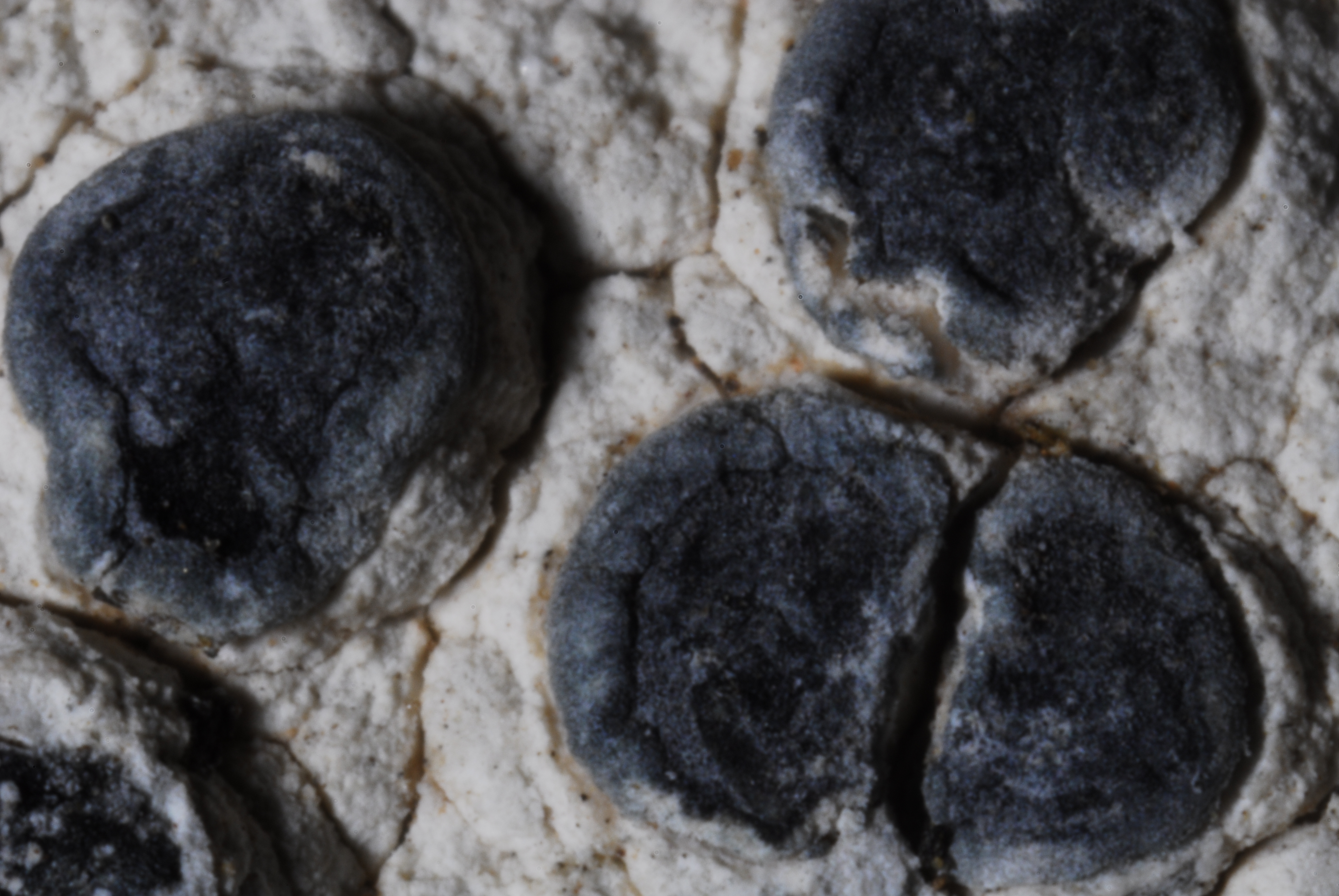
Description: Thallus crustose, episubstratic, thick, continuous to rimose-areolate, chalky white, heavily pruinose, the pruina 10-60 mm thick (when eroded, thallus surface grey to brown), forming up to 5 cm wide patches, sometimes delimited by a black prothallus. Medulla white, I-. Apothecia lecideine, black, (0.3-)0.6-1.5(-2.2) mm across, semi-immersed in the thallus, with a flat to slightly convex, usually epruinose disc and a thick, persistent, grey-pruinose proper margin which is often surrounded laterally by a white, finally excluded thalline layer. Exciple brown- or green-black in outermost part, paler brown or colourless within, with crystals partly dissolving in K; epithecium olive-brown, with K+ yellow crystals dissolving in K; hymenium colourless, (100-)150-250(-300) μm high, K/I+ blue; paraphysoids coherent, richly branched and anastomosing, the apical cell slightly thickened; hypothecium dark brown, K-. Asci 8-spored, clavate, fissitunicate, with a well-developed tholus that is K/I- in lower part and K/I+ blue near the apex, lacking an ocular chamber, Rhizocarpon-type. Ascospores submuriform, with 6-8(-10) cells in optical view, persistently hyaline, (20-)22-27(-30) x (10-)11-15(-18) mm, halonate. Photobiont chlorococcoid. Spot tests: medulla K+ yellow, C-, KC-, P+ orange. Chemistry: medulla with stictic acid.
Growth form: Crustose
Substrata: rocks
Photobiont: green algae other than Trentepohlia
Reproductive strategy: mainly sexual
Commonnes-rarity: (info)
Alpine belt: very common
Subalpine belt: common
Montane belt: rare
Dry submediterranean belt: absent
Humid submediterranean belt: absent
Padanian area: absent
pH of the substrata:
1 2 3 4 5

Solar irradiation:
1 2 3 4 5
Aridity:
1 2 3 4 5
Eutrophication:
1 2 3 4 5
Poleotolerance:
0 1 2 3
Altitudinal distribution:
1 2 3 4 5 6
Rarity
absent
extremely rare
very rare
rare
rather rare
rather common
common
very common
extremely common
Loading data...
Occurrence data
Predictive map
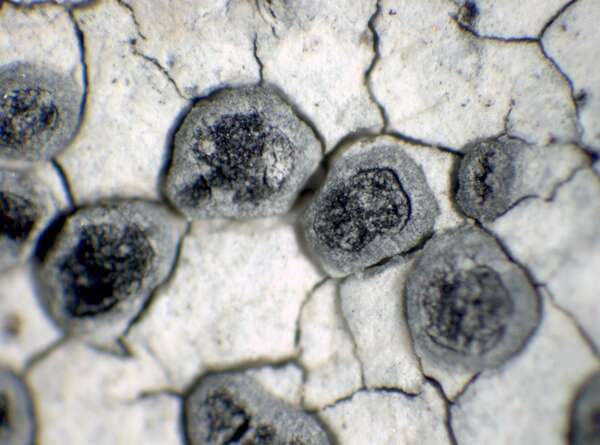
P.L. Nimis; Owner: Department of Life Sciences, University of Trieste
Herbarium: TSB (33935)
2001/12/10
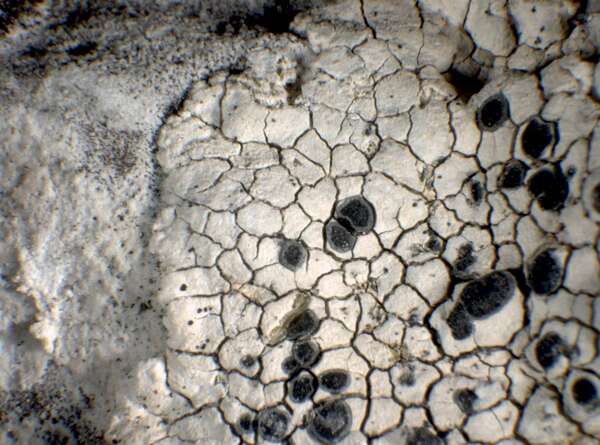
P.L. Nimis; Owner: Department of Life Sciences, University of Trieste
Herbarium: TSB (24483)
2001/12/10
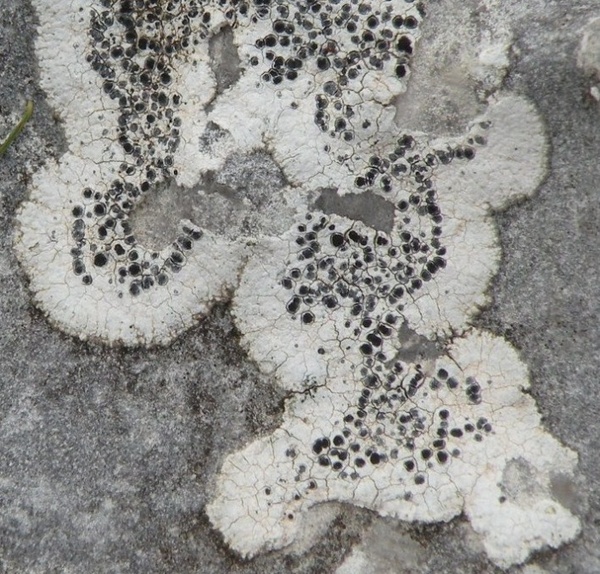
Gabriele Gheza; Owner: Gabriele Gheza
Italy, Lombarida, Alpi Orobie; altitude: 1850 m
2010
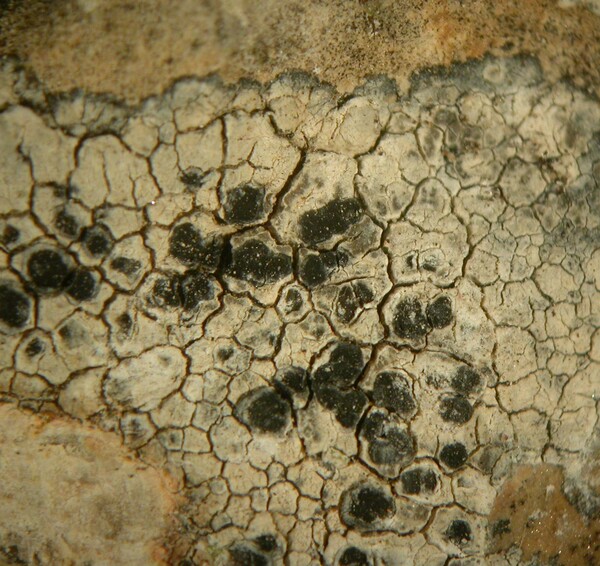
Juri Nascimbene - CC BY-SA 4.0
Italy, Trentino-Alto Adige, Bolzano/Bozen, Sciliar/Schlern
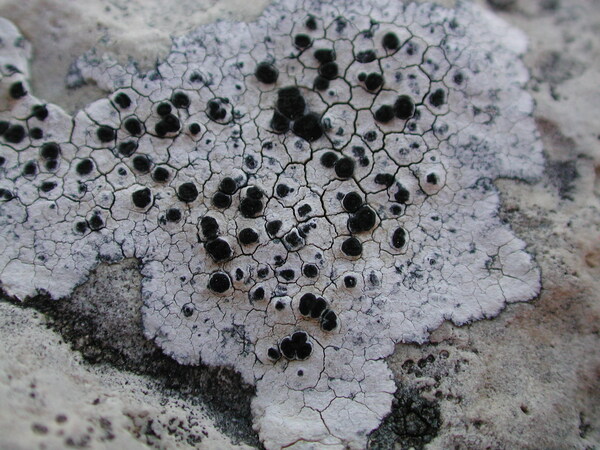
Juri Nascimbene - CC BY-SA 4.0; Owner: ITALIC - Dyades Project - Dept. of Life Sciences, University of Trieste
Italy, Trentino-Alto Adige, Bolzano/Bozen, Sciliar/Schlern
2007
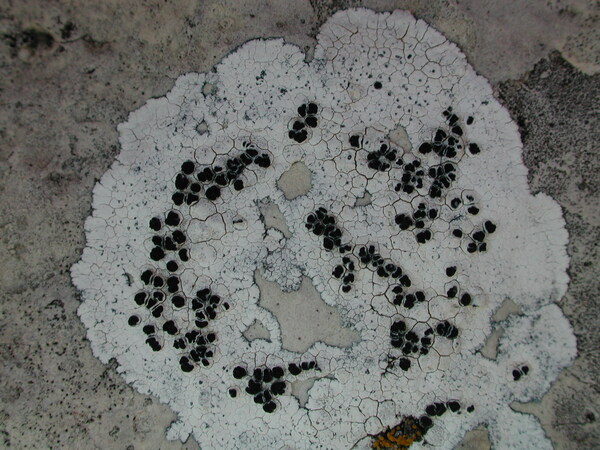
Juri Nascimbene - CC BY-SA 4.0; Owner: ITALIC - Dyades Project - Dept. of Life Sciences, University of Trieste
Italy, Trentino-Alto Adige, Bolzano/Bozen, Sciliar/Schlern
2007
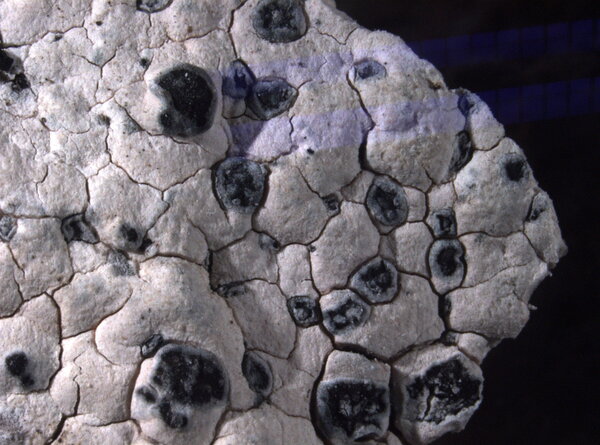
Pier Luigi Nimis CC BY-SA 4.0
TSB 41152
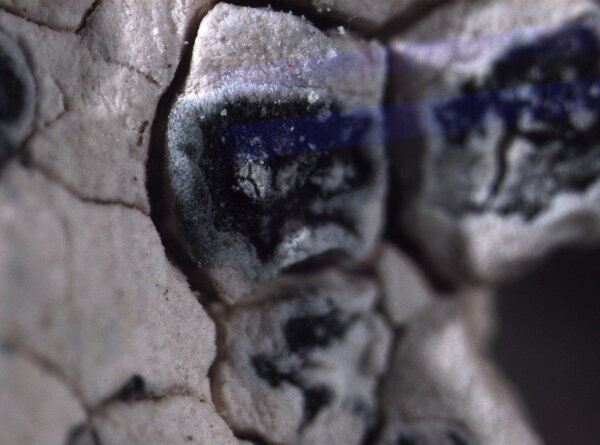
Pier Luigi Nimis CC BY-SA 4.0
TSB 41152
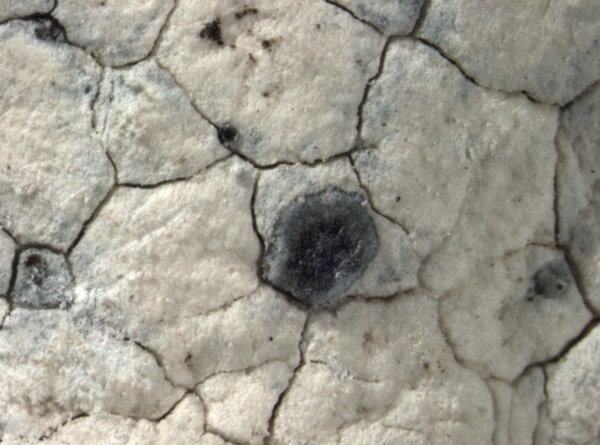
Pier Luigi Nimis - CC BY-SA 4.0
TSB 37851
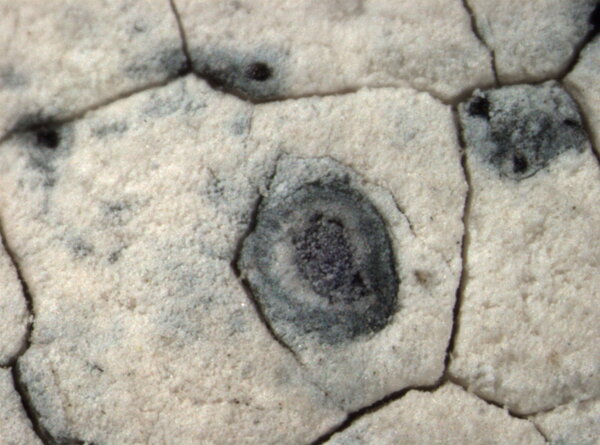
Pier Luigi Nimis - CC BY-SA 4.0
TSB 37851
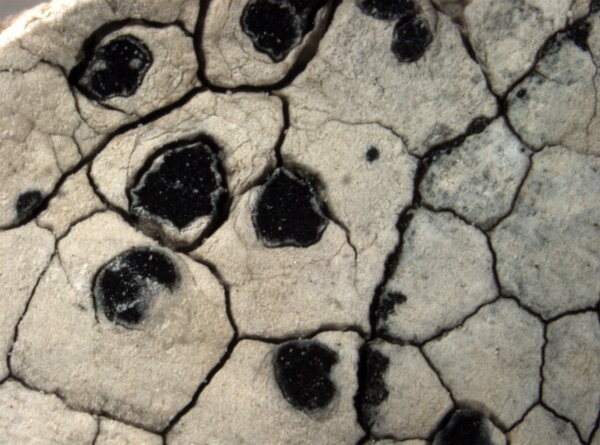
Pier Luigi Nimis - CC BY-SA 4.0
TSB 37887
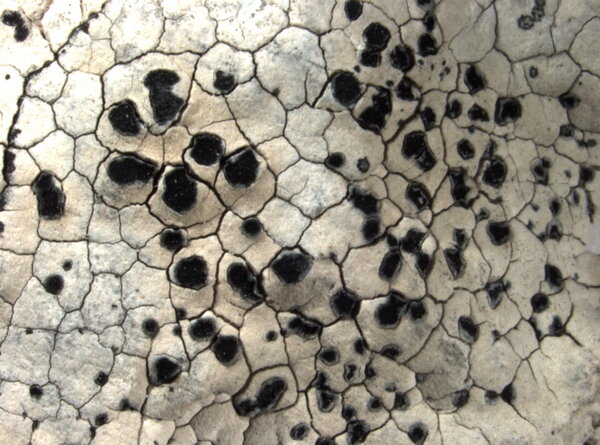
Pier Luigi Nimis - CC BY-SA 4.0
TSB 37887
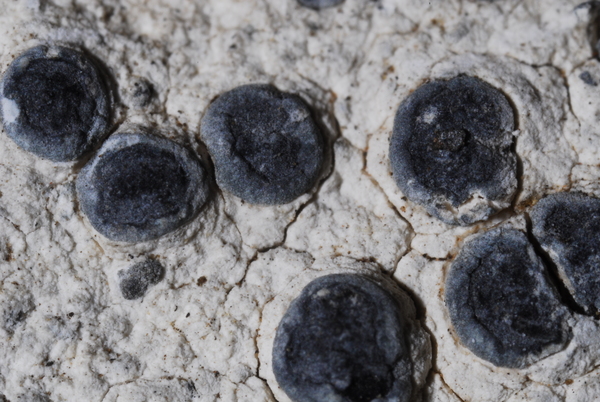
Domenico Puntillo - CC BY-SA 4.0
Italy
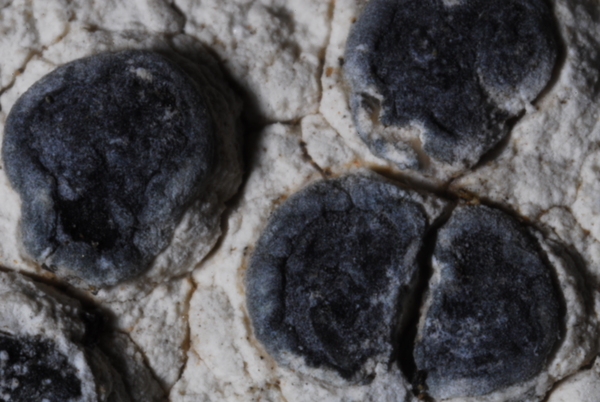
Domenico Puntillo - CC BY-SA 4.0
Italy
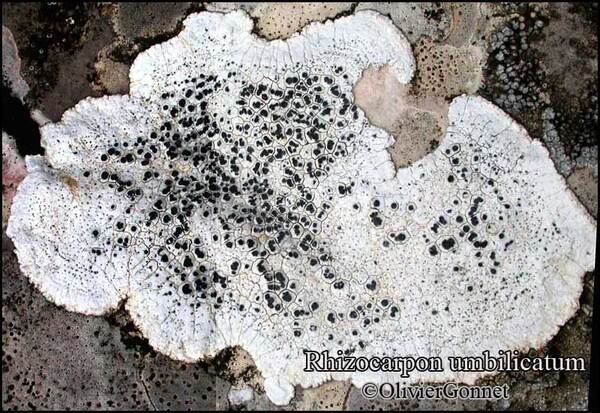
Courtesy Danièle et Olivier Gonnet - Source: https://www.afl-lichenologie.fr/Photos_AFL/Photos_AFL_R/Rhizocarpon_umbilicatum.htm
France, session AFL 2005 en Lozère
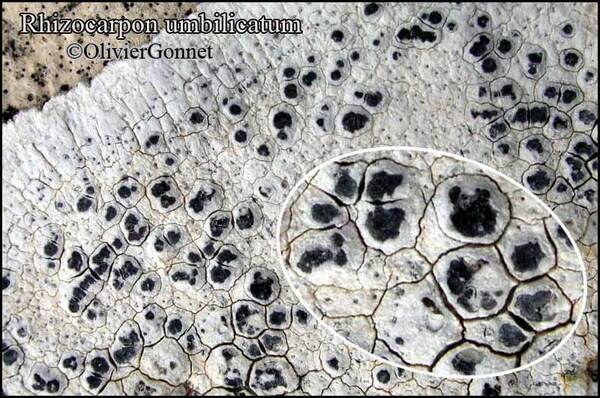
Courtesy Danièle et Olivier Gonnet - Source: https://www.afl-lichenologie.fr/Photos_AFL/Photos_AFL_R/Rhizocarpon_umbilicatum.htm
France, session AFL 2005 en Lozère
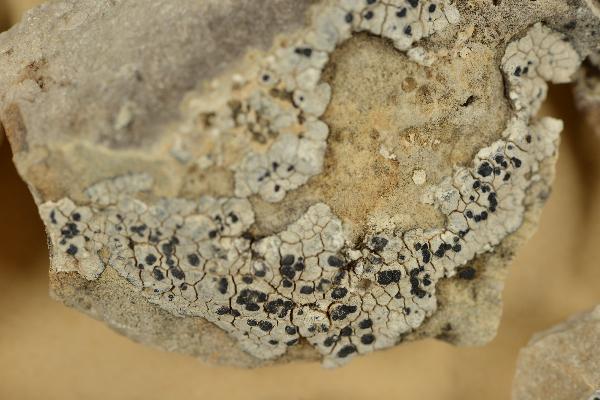
Source: https://nhm2.uio.no/typephotos/lichens/arkiv/O-L-106433d.jpg
AUSTRIA, TIROL: Schlern, 1912.08.21, Zahlbruckner, A. & Lynge, B. - NEOTYPE
Growth form: Crustose
Substrata: rocks
Photobiont: green algae other than Trentepohlia
Reproductive strategy: mainly sexual
Commonnes-rarity: (info)
Alpine belt: very common
Subalpine belt: common
Montane belt: rare
Dry submediterranean belt: absent
Humid submediterranean belt: absent
Padanian area: absent
pH of the substrata:
| 1 | 2 | 3 | 4 | 5 |
Solar irradiation:
| 1 | 2 | 3 | 4 | 5 |
Aridity:
| 1 | 2 | 3 | 4 | 5 |
Eutrophication:
| 1 | 2 | 3 | 4 | 5 |
Poleotolerance:
| 0 | 1 | 2 | 3 |
Altitudinal distribution:
| 1 | 2 | 3 | 4 | 5 | 6 |
Rarity
absent
extremely rare
very rare
rare
rather rare
rather common
common
very common
extremely common
Loading data...
Occurrence data
Predictive map
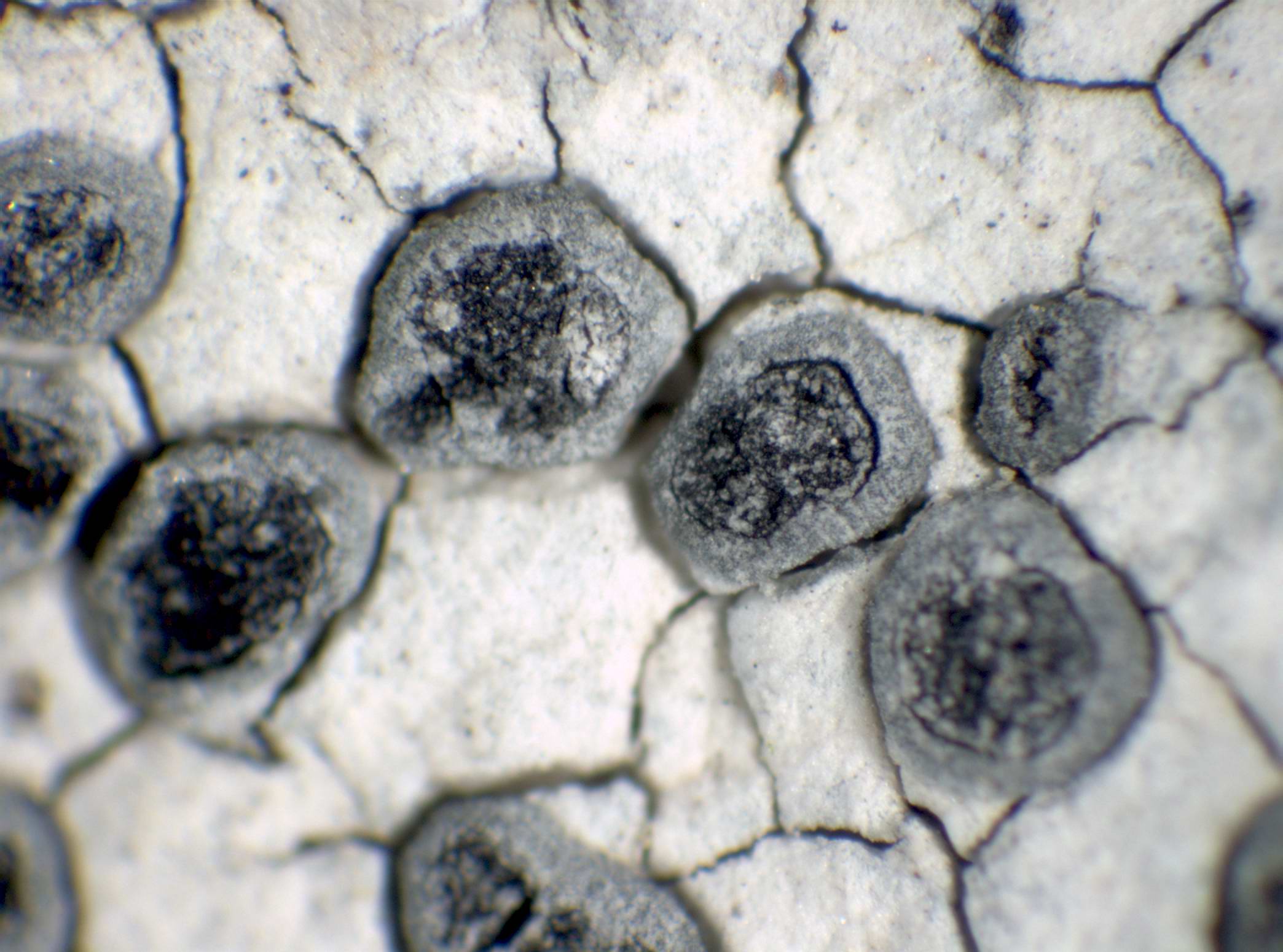
P.L. Nimis; Owner: Department of Life Sciences, University of Trieste
Herbarium: TSB (33935)
2001/12/10
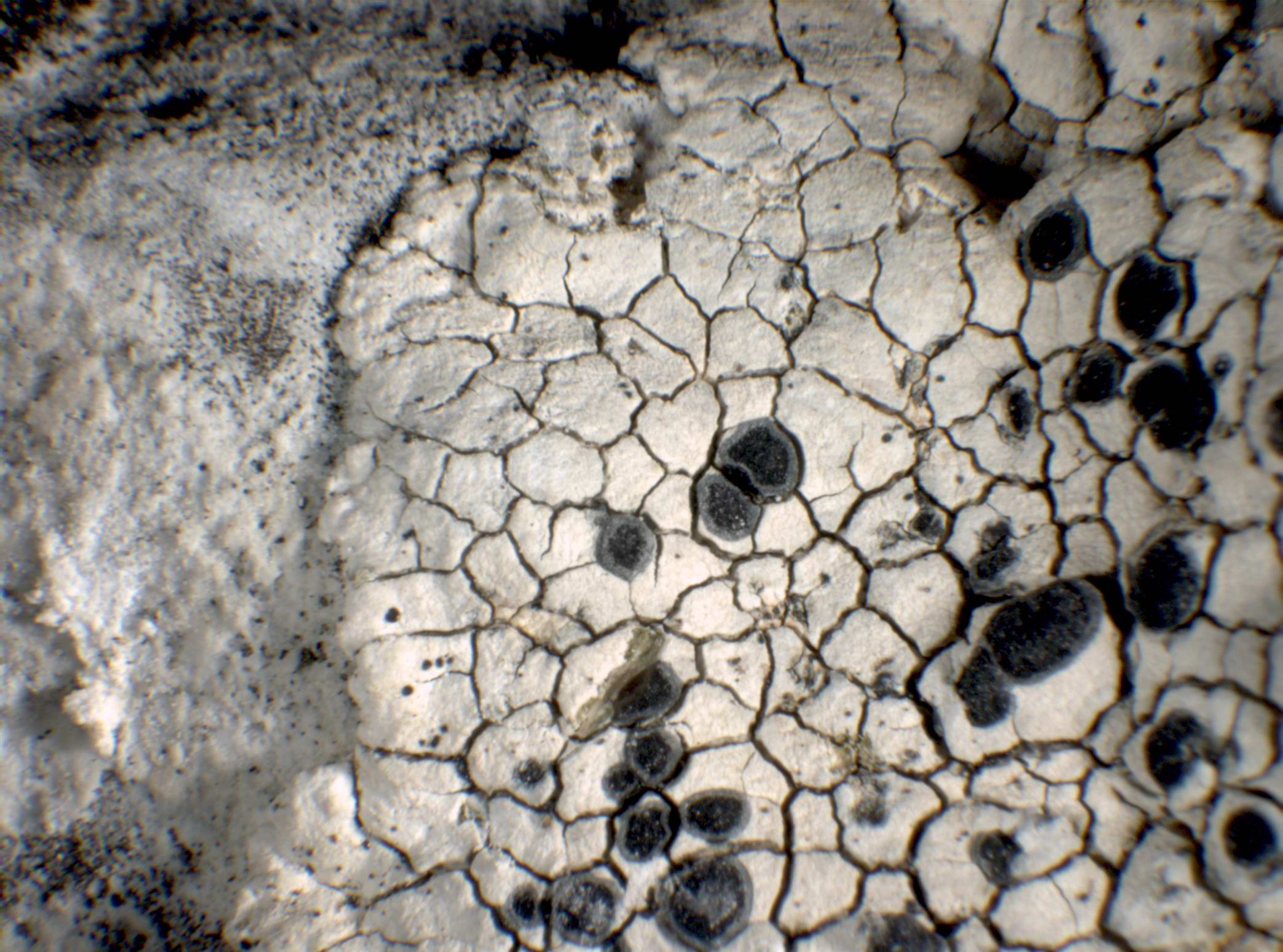
P.L. Nimis; Owner: Department of Life Sciences, University of Trieste
Herbarium: TSB (24483)
2001/12/10
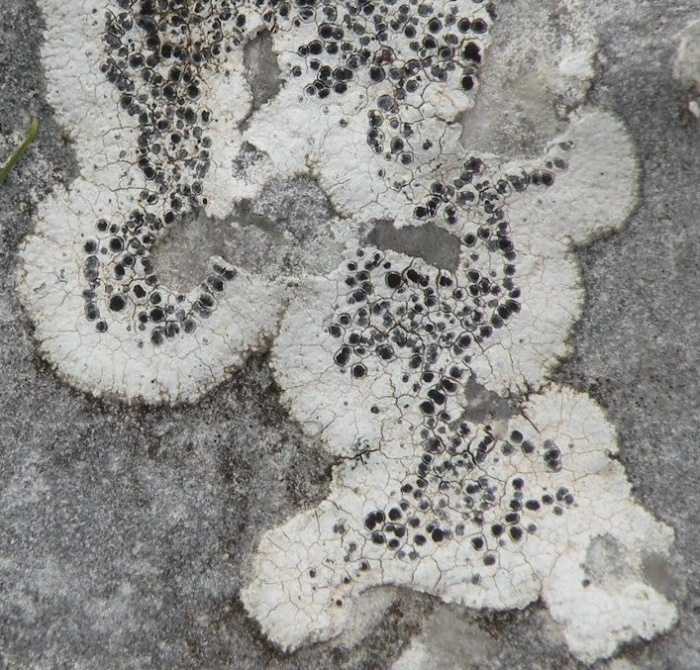
Gabriele Gheza; Owner: Gabriele Gheza
Italy, Lombarida, Alpi Orobie; altitude: 1850 m
2010
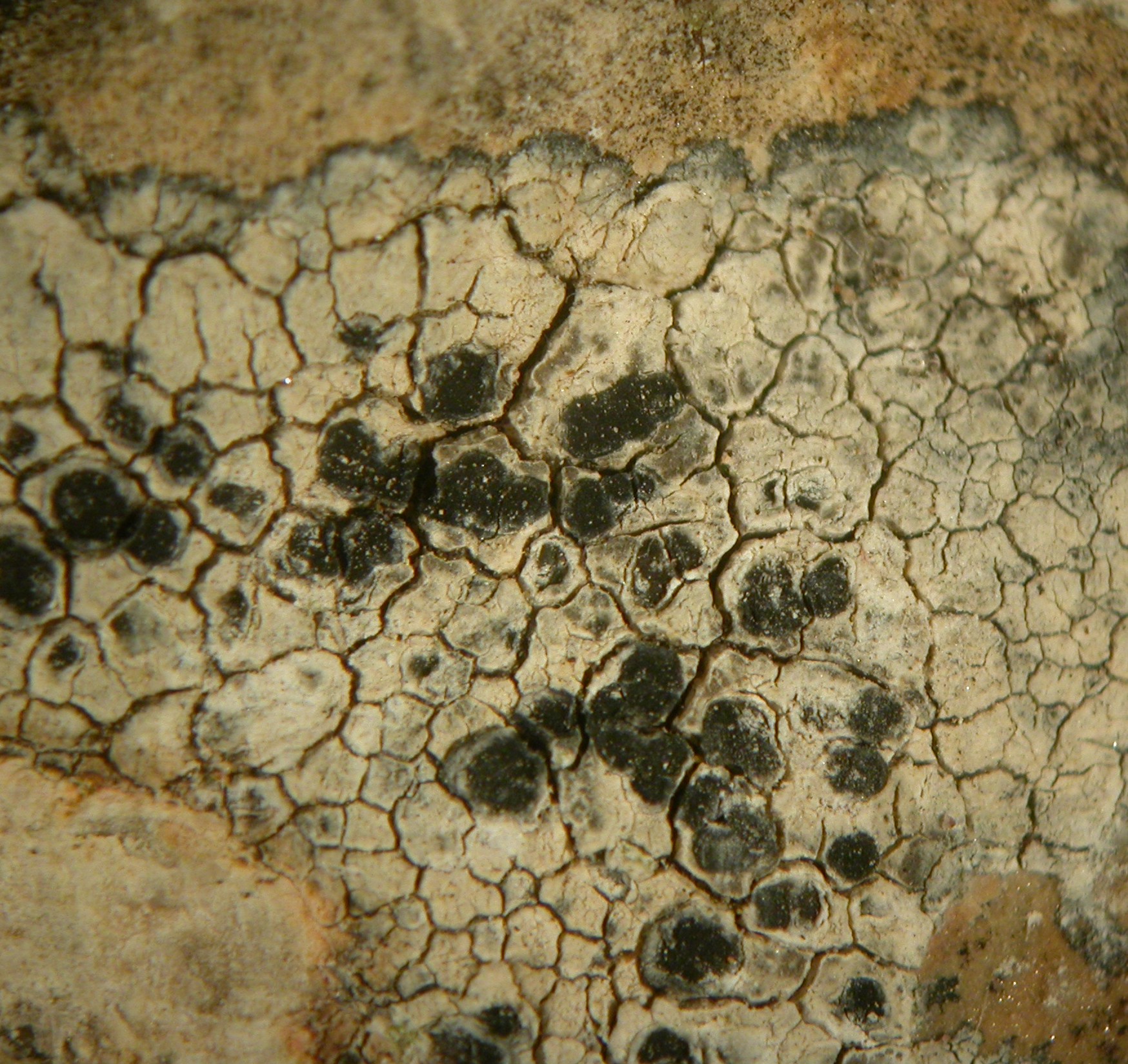
Juri Nascimbene - CC BY-SA 4.0
Italy, Trentino-Alto Adige, Bolzano/Bozen, Sciliar/Schlern
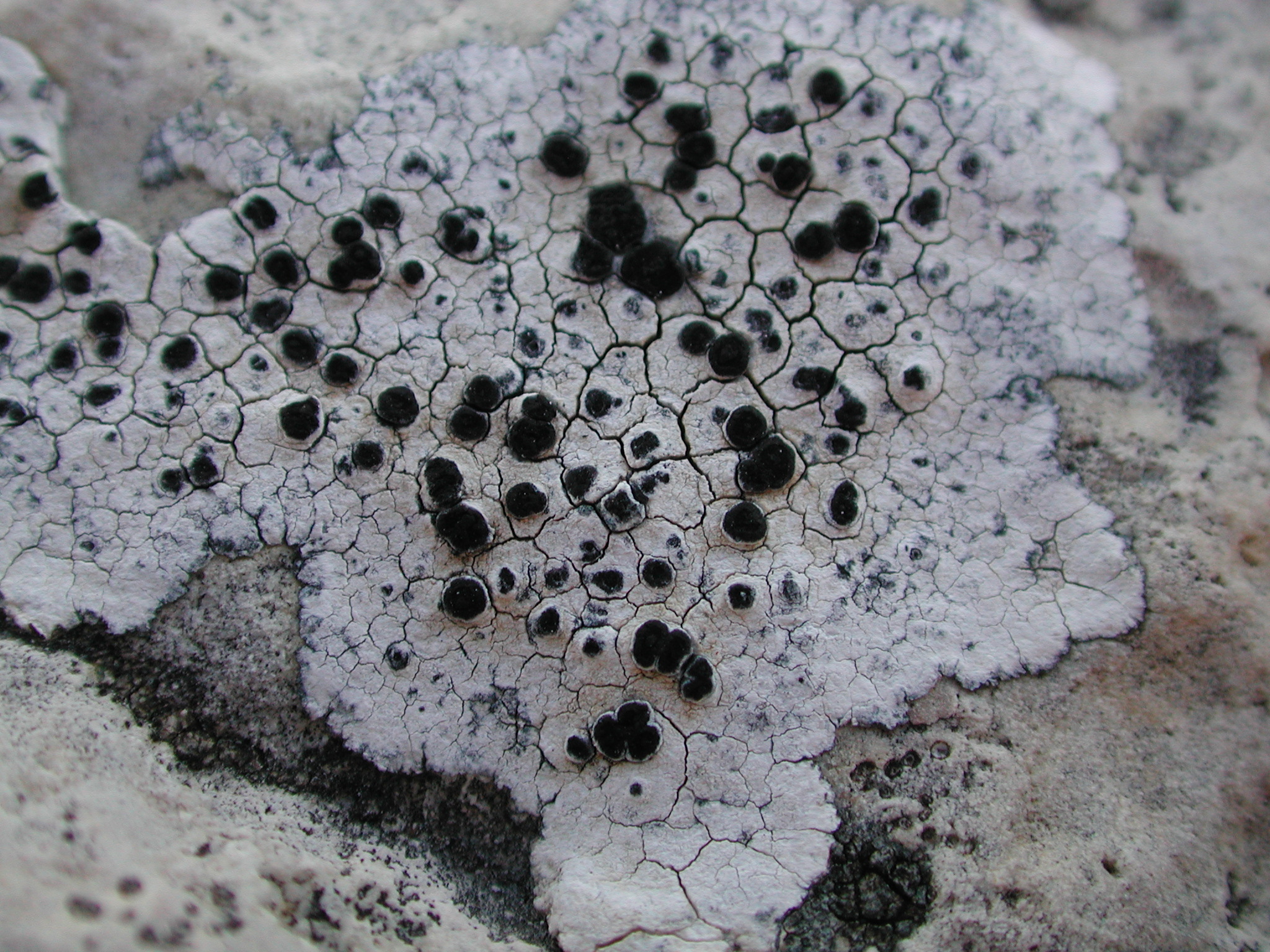
Juri Nascimbene - CC BY-SA 4.0; Owner: ITALIC - Dyades Project - Dept. of Life Sciences, University of Trieste
Italy, Trentino-Alto Adige, Bolzano/Bozen, Sciliar/Schlern
2007
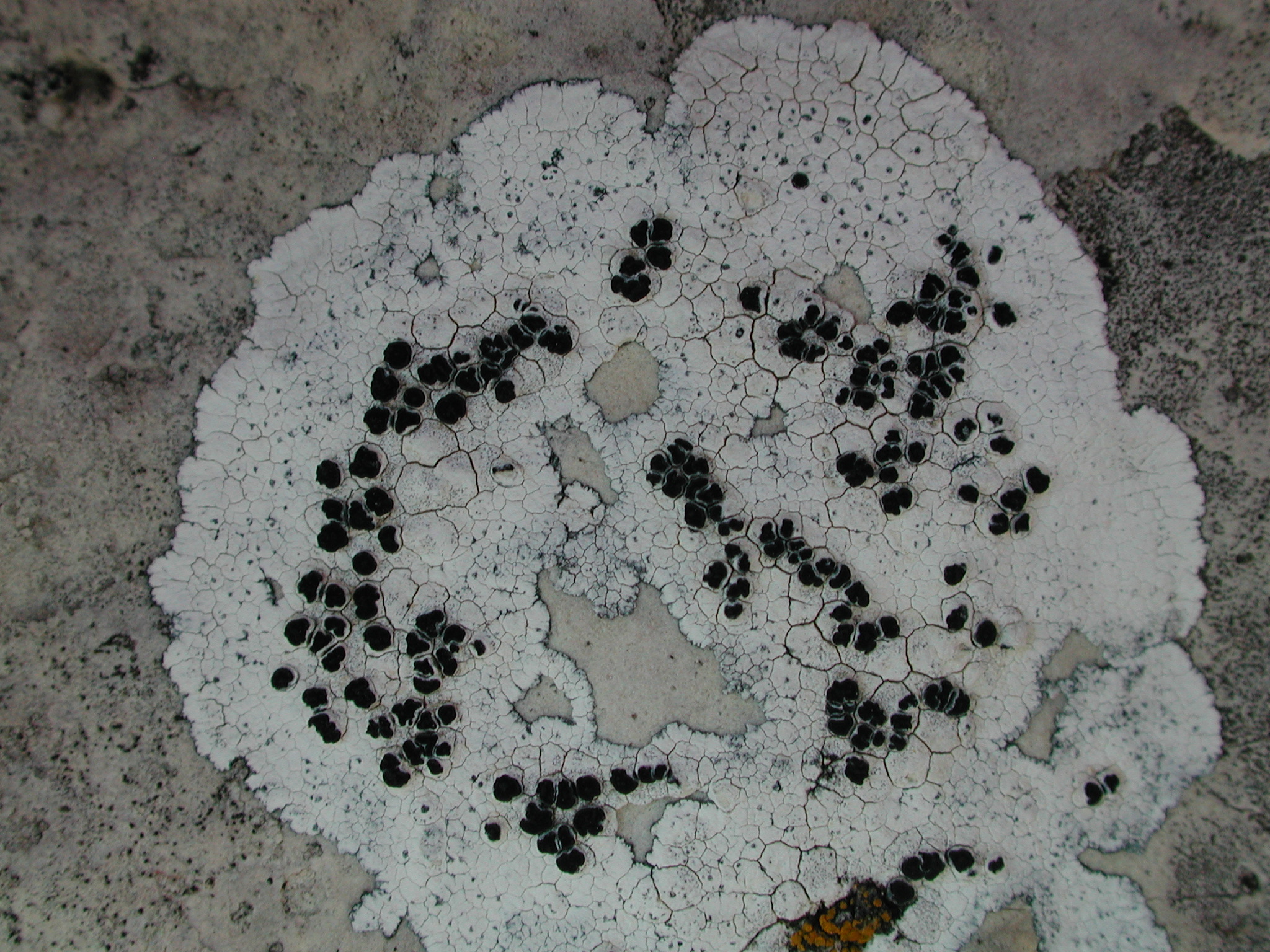
Juri Nascimbene - CC BY-SA 4.0; Owner: ITALIC - Dyades Project - Dept. of Life Sciences, University of Trieste
Italy, Trentino-Alto Adige, Bolzano/Bozen, Sciliar/Schlern
2007
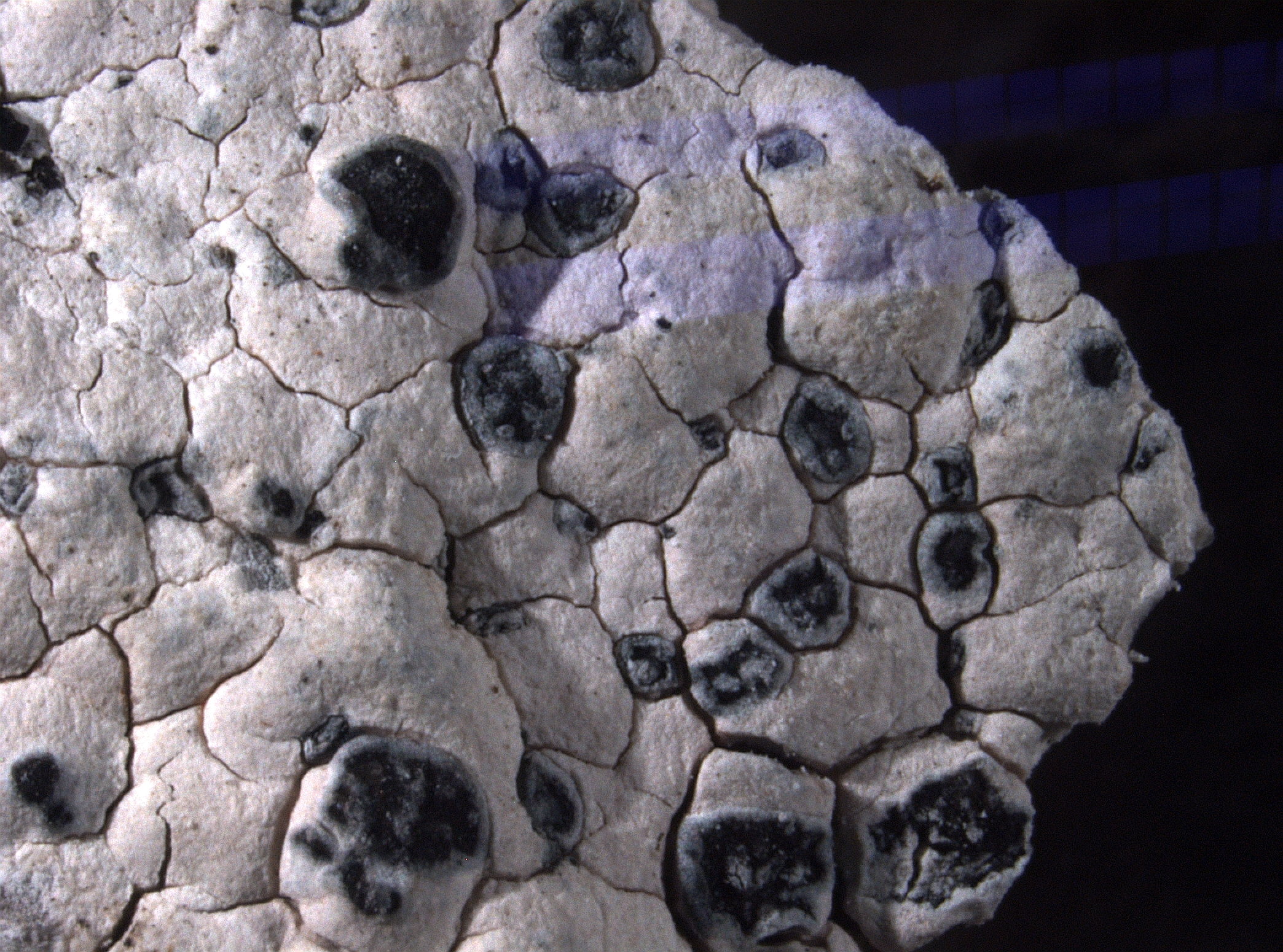
Pier Luigi Nimis CC BY-SA 4.0
TSB 41152
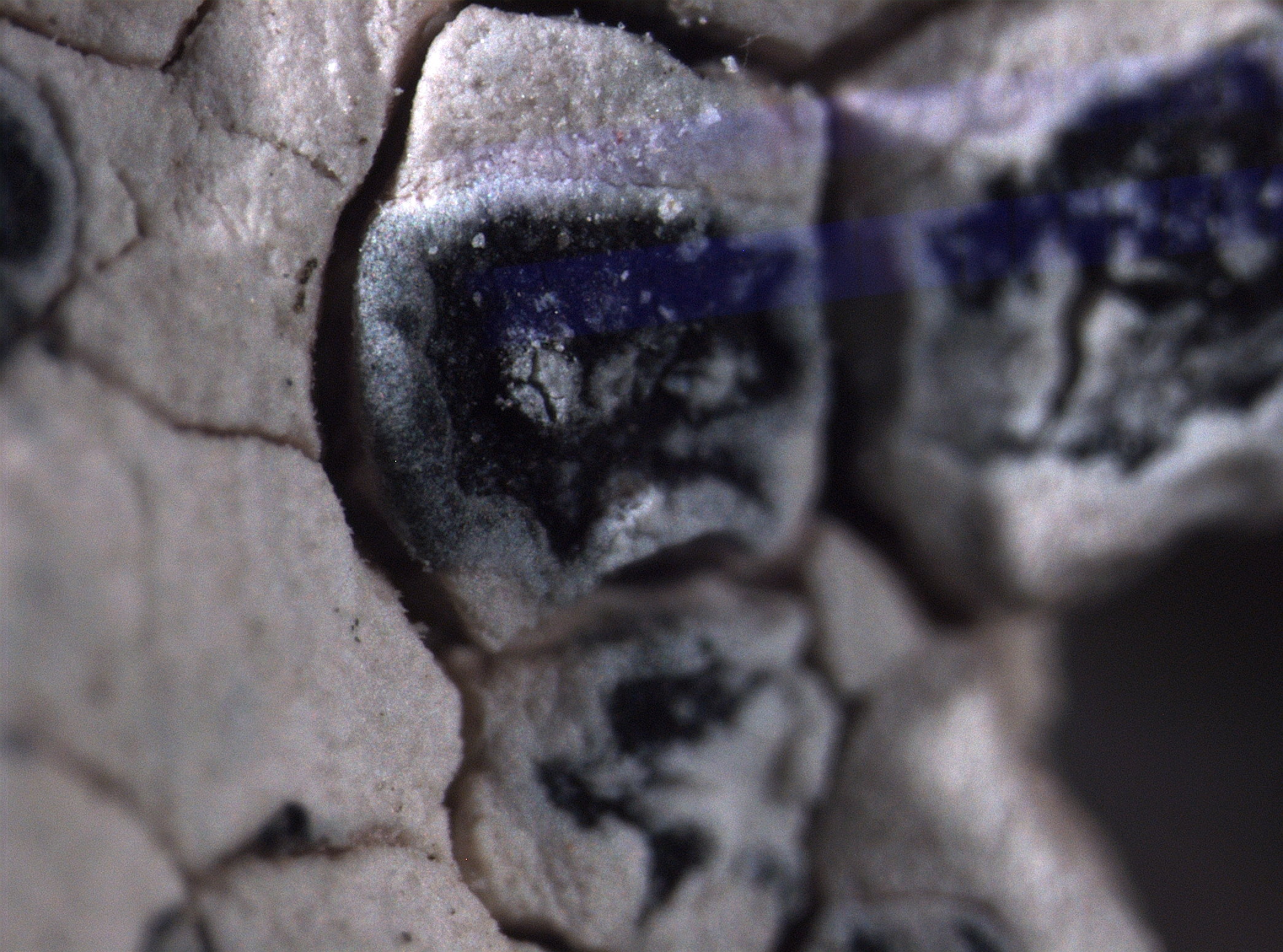
Pier Luigi Nimis CC BY-SA 4.0
TSB 41152
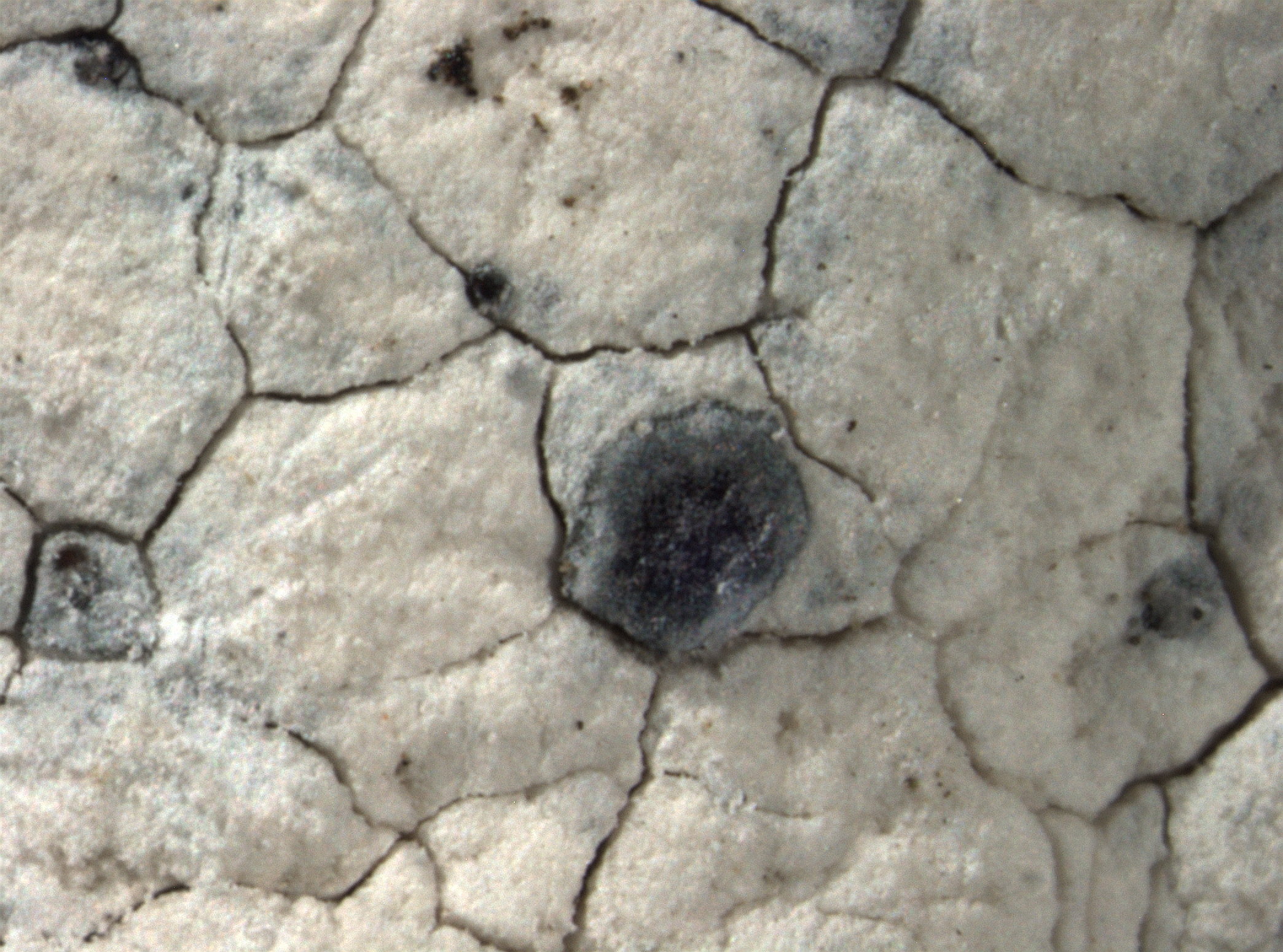
Pier Luigi Nimis - CC BY-SA 4.0
TSB 37851
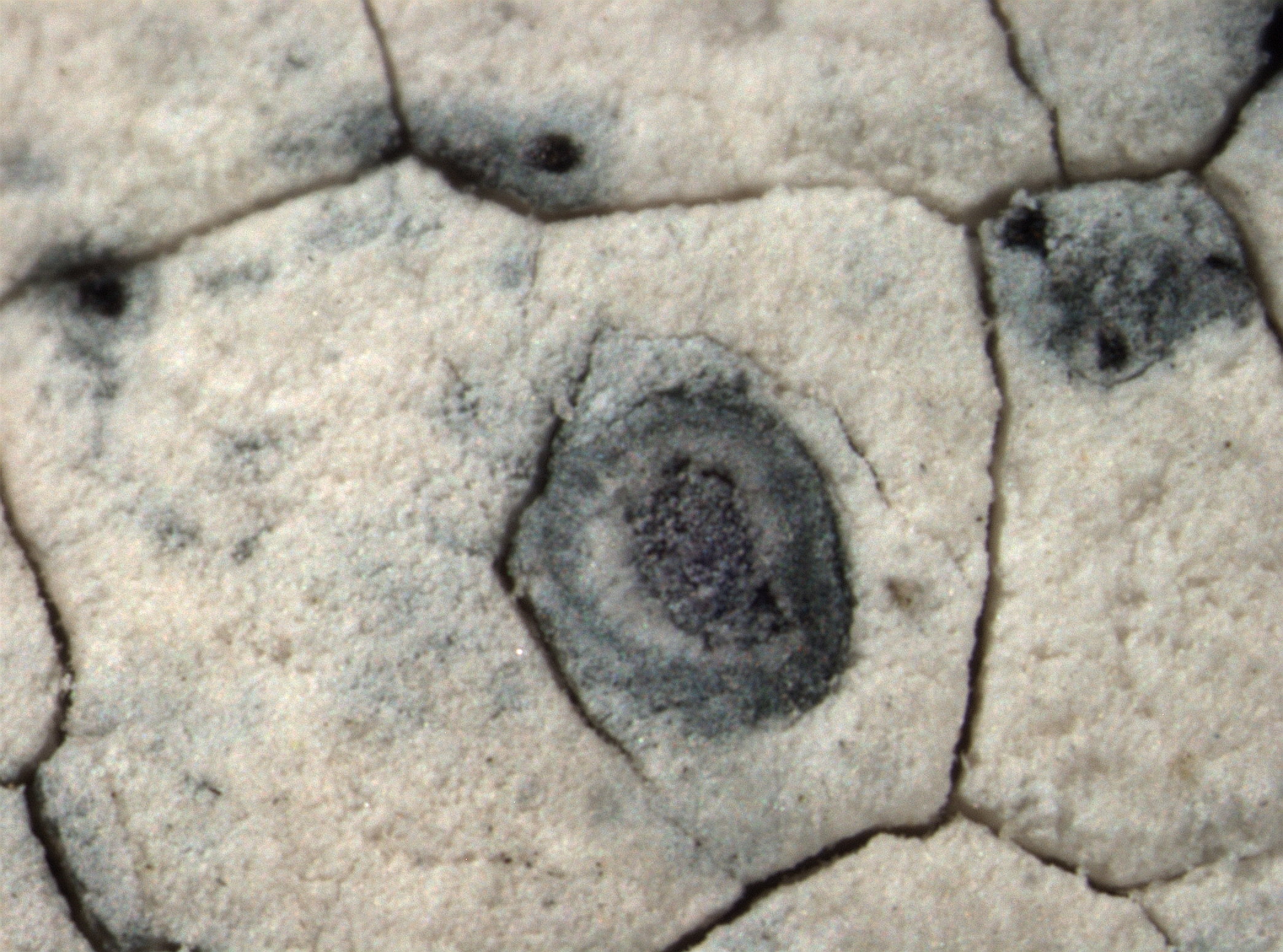
Pier Luigi Nimis - CC BY-SA 4.0
TSB 37851
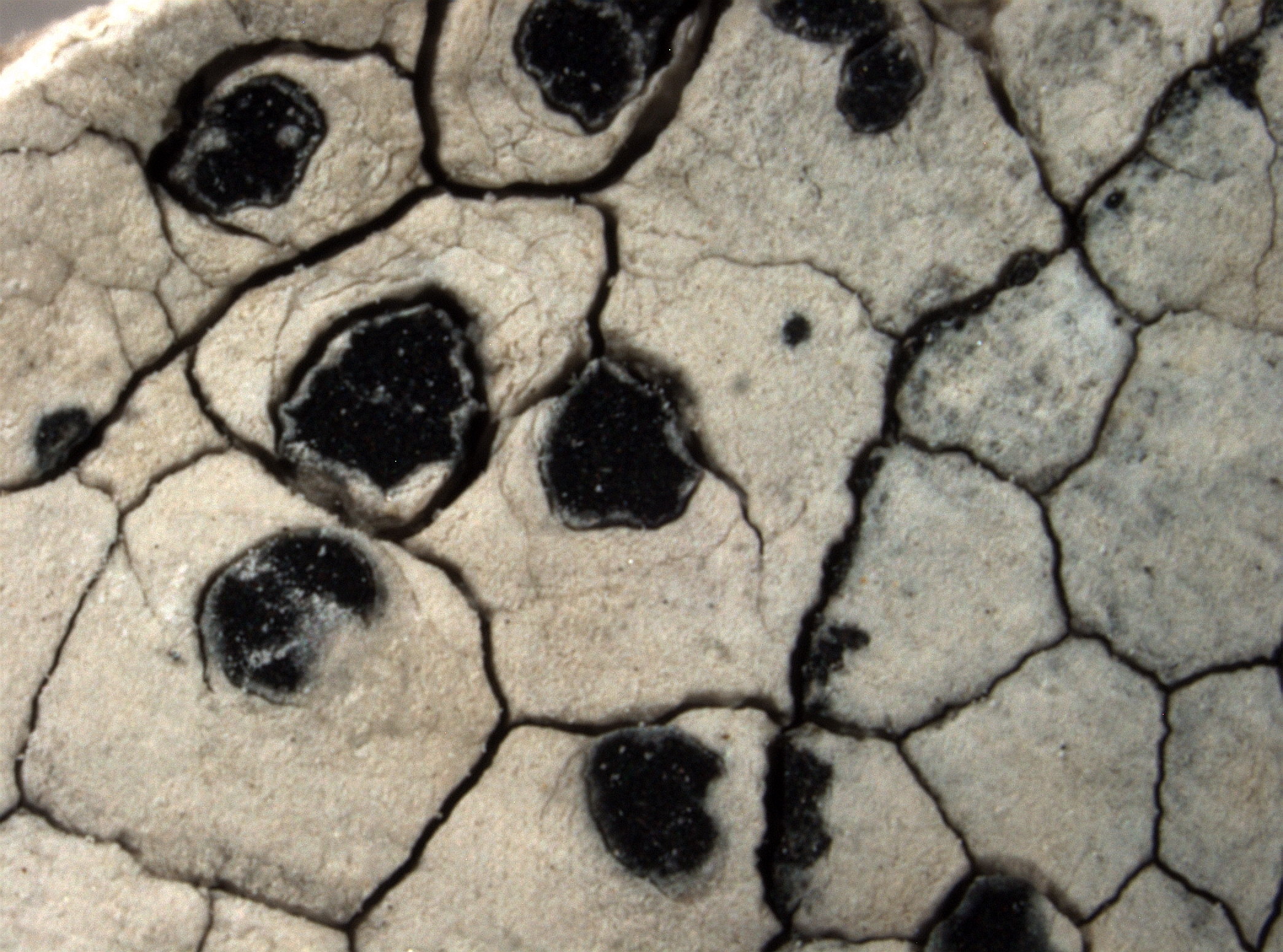
Pier Luigi Nimis - CC BY-SA 4.0
TSB 37887
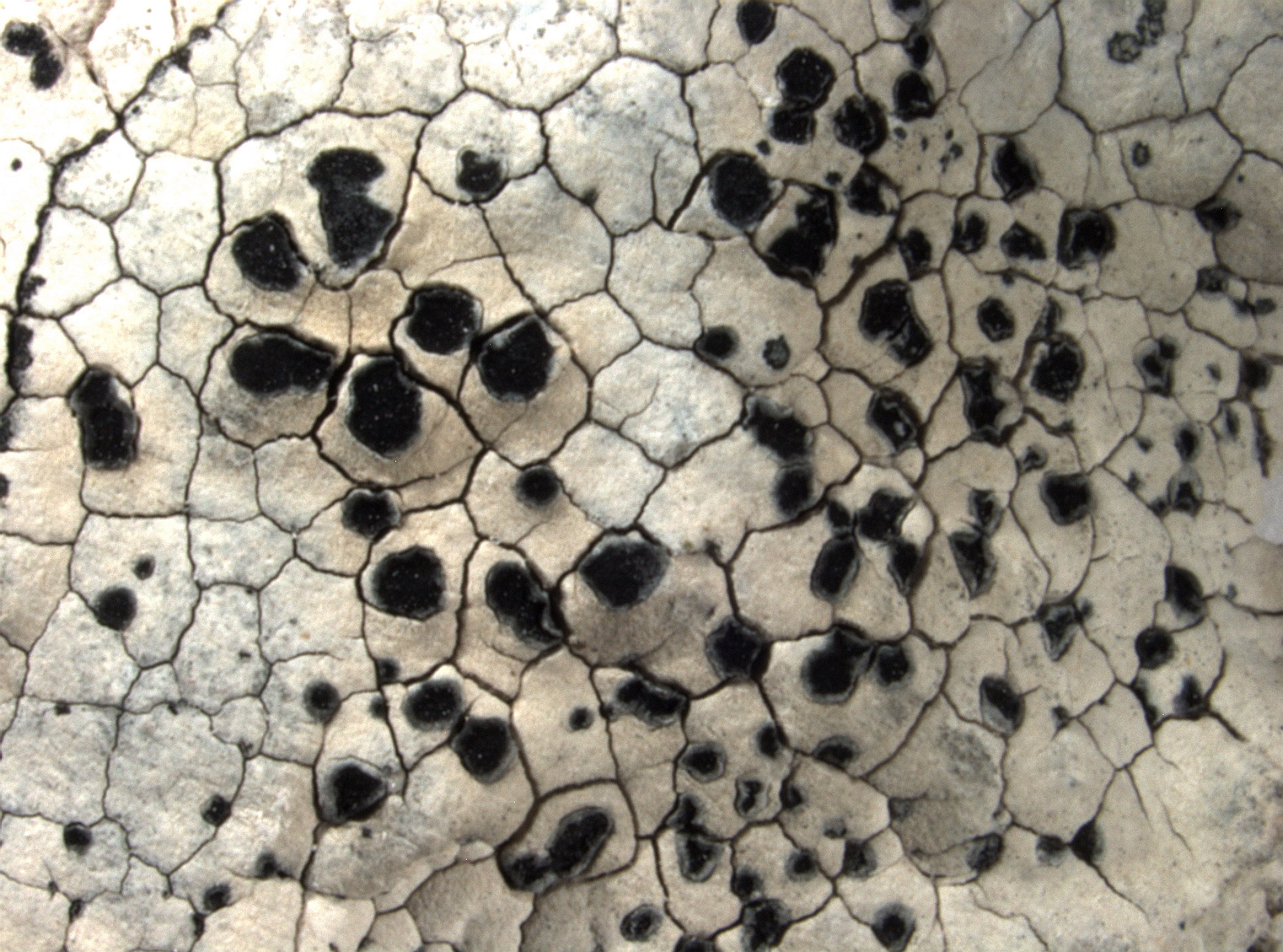
Pier Luigi Nimis - CC BY-SA 4.0
TSB 37887
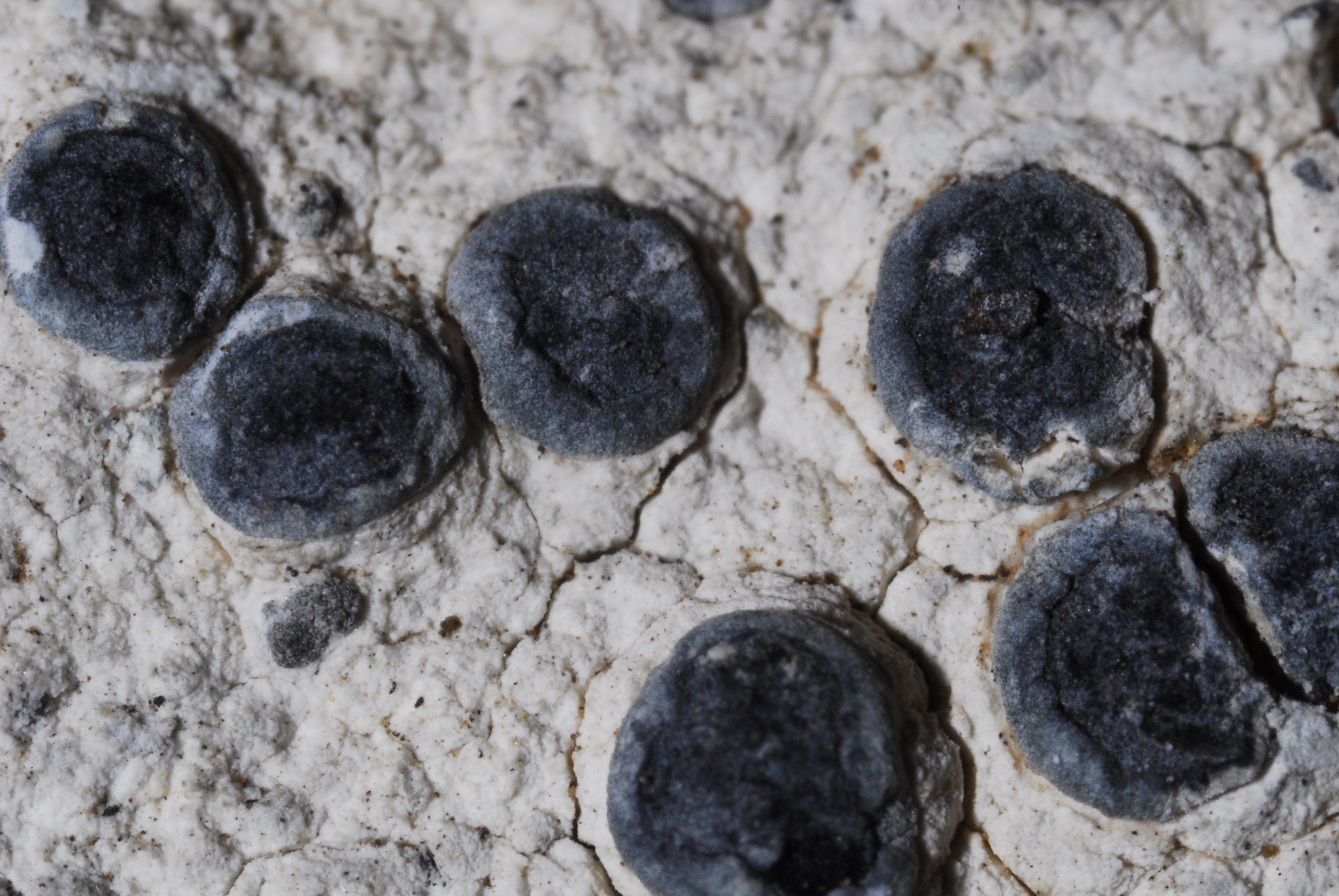
Domenico Puntillo - CC BY-SA 4.0
Italy
Domenico Puntillo - CC BY-SA 4.0
Italy
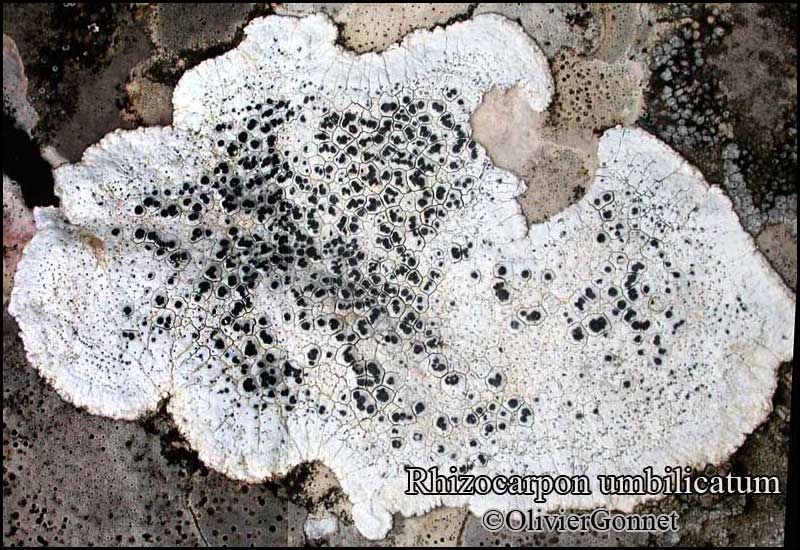
Courtesy Danièle et Olivier Gonnet - Source: https://www.afl-lichenologie.fr/Photos_AFL/Photos_AFL_R/Rhizocarpon_umbilicatum.htm
France, session AFL 2005 en Lozère
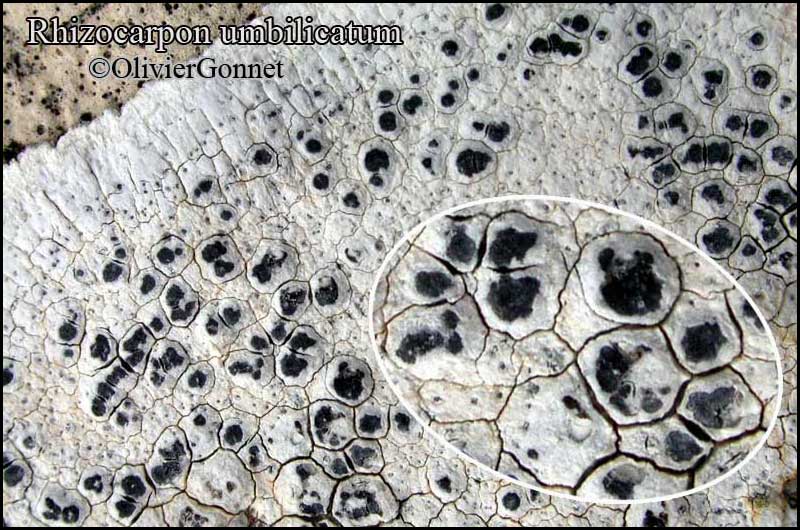
Courtesy Danièle et Olivier Gonnet - Source: https://www.afl-lichenologie.fr/Photos_AFL/Photos_AFL_R/Rhizocarpon_umbilicatum.htm
France, session AFL 2005 en Lozère