Rinodina freyi H. Magn.
Acta Horti Gothob., 17: 236, 1947.
Synonyms: Rinodina glauca Ropin; Rinodina ramulicola Kernst. ex Arnold nom. illegit.; Rinodina septentrionalis auct. p.p. non Malme
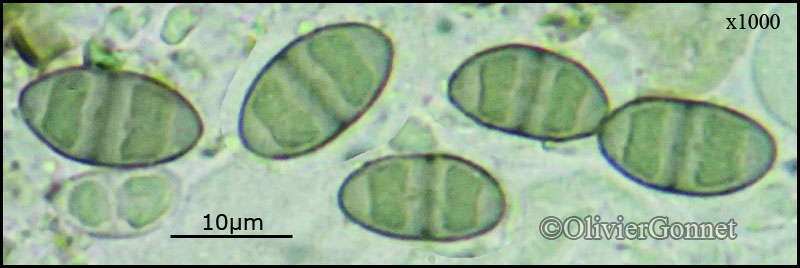
Description: Thallus crustose, episubstratic, rimose to areolate, sometimes poorly evident, dark grey to grey-green or grey-brown, dull, without a distinct prothallus, the areoles flat, contiguous, >0.2 mm wide. Apothecia lecanorine, crowded, 0.3-0.7 mm across, with a dark brown to rarely black, mostly flat disc and a thin, entire to flexuose, persistent thalline margin. Thalline exciple 50-70 µm wide laterally, corticate, more or less expanded below in a prosoplectenchymatous tissue, I-; proper exciple 5-10 µm wide laterally, expanding to 15-30 µm at periphery; epithecium pale red-brown, K-; hymenium colourless, 60-80 µm high; paraphyses coherent, (1.5-)2-3 µm thick at mid-level, the apical cells 4-5(-7) µm wide, immersed in a dispersed pigment; hypothecium colourless, (15-)30-70 µm high. Asci 8-spored, clavate, the K/I+ blue tholus penetrated by a faintly amyloid apical cushion with parallel or diverging flanks, the wall K/I-, surrounded by a K/I+ blue outer layer, Lecanora-type. Ascospores 1-septate, brown, ellipsoid, (11.5-)14-15.5(-18) x (5.5-)7-8(-9.5) µm, Physcia-type, thick-walled at apices, with a prominent torus, the ontogeny of type A (apical wall thickening after septum formation). Pycnidia black, immersed, the ostioles dark brown. Conidia bacilliform, 3.5-4 µm x c. 1 µm. Photobiont chlorococcoid. Spot tests: K-, C-, KC-, P-, UV-. Chemistry: without lichen substances.
Growth form: Crustose
Substrata: bark
Photobiont: green algae other than Trentepohlia
Reproductive strategy: mainly sexual
Pioneer species
Commonnes-rarity: (info)
Alpine belt: absent
Subalpine belt: very rare
Montane belt: very rare
Dry submediterranean belt: absent
Humid submediterranean belt: absent
Padanian area: absent
pH of the substrata:
1 2 3 4 5

Solar irradiation:
1 2 3 4 5
Aridity:
1 2 3 4 5
Eutrophication:
1 2 3 4 5
Poleotolerance:
0 1 2 3
Altitudinal distribution:
1 2 3 4 5 6
Rarity
absent
extremely rare
very rare
rare
rather rare
rather common
common
very common
extremely common
Loading data...
Occurrence data
Predictive map
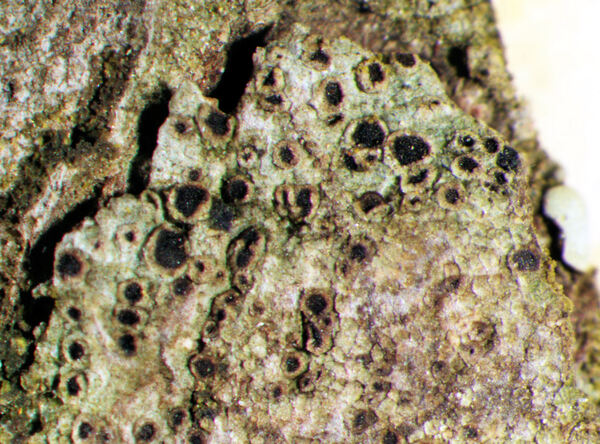
Harrie Sipman – Source http://www.bgbm.fu-berlin.de/sipman/Zschackia/AegeanLichens/CaloplacaAC.htm - As Caloplaca oasis
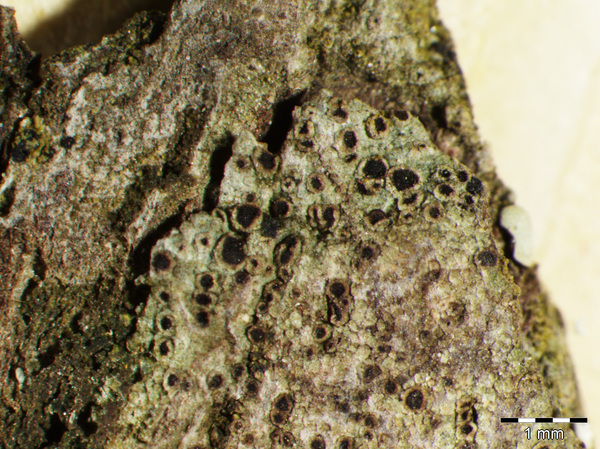
Harrie Sipman – Source http://www.bgbm.fu-berlin.de/sipman/Zschackia/AegeanLichens/CaloplacaAC.htm - As Caloplaca oasis
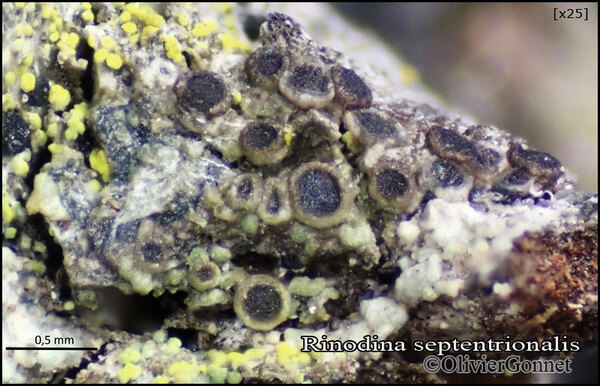
Courtesy Danièle et Olivier Gonnet - Source: https://www.afl-lichenologie.fr/Photos_AFL/Photos_AFL_R/Textes_R/Rinodina_septentrionalis.htm
France, 7/6/2016 - sur Juniperus communis - Névache - Hautes-Alpes
as R. septentrionalis
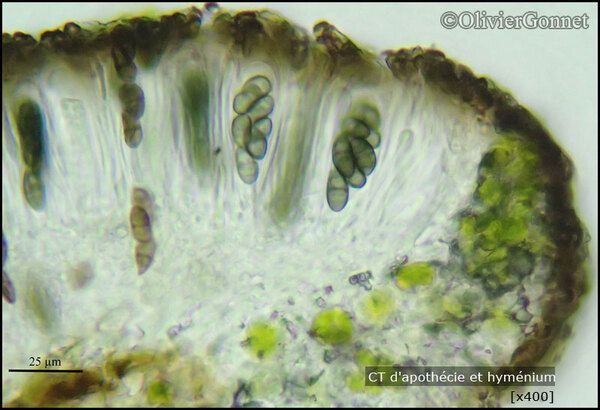
Courtesy Danièle et Olivier Gonnet - Source: https://www.afl-lichenologie.fr/Photos_AFL/Photos_AFL_R/Textes_R/Rinodina_septentrionalis.htm
France, 7/6/2016 - sur Juniperus communis - Névache - Hautes-Alpes
as R. septentrionalis
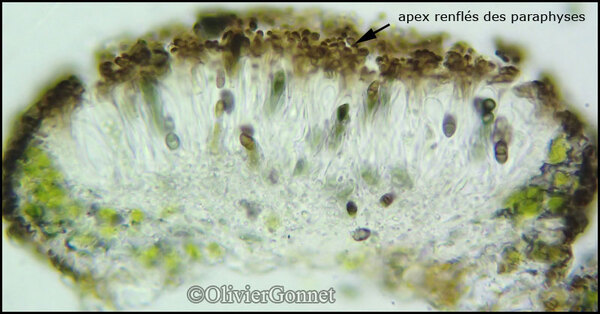
Courtesy Danièle et Olivier Gonnet - Source: https://www.afl-lichenologie.fr/Photos_AFL/Photos_AFL_R/Textes_R/Rinodina_septentrionalis.htm
France, 7/6/2016 - sur Juniperus communis - Névache - Hautes-Alpes
as R. septentrionalis
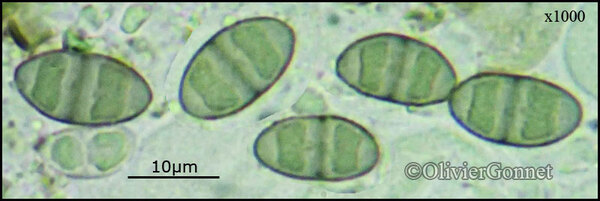
Courtesy Danièle et Olivier Gonnet - Source: https://www.afl-lichenologie.fr/Photos_AFL/Photos_AFL_R/Textes_R/Rinodina_septentrionalis.htm
France, 7/6/2016 - sur Juniperus communis - Névache - Hautes-Alpes
as R. septentrionalis
Growth form: Crustose
Substrata: bark
Photobiont: green algae other than Trentepohlia
Reproductive strategy: mainly sexual
Pioneer species
Commonnes-rarity: (info)
Alpine belt: absent
Subalpine belt: very rare
Montane belt: very rare
Dry submediterranean belt: absent
Humid submediterranean belt: absent
Padanian area: absent
pH of the substrata:
| 1 | 2 | 3 | 4 | 5 |
Solar irradiation:
| 1 | 2 | 3 | 4 | 5 |
Aridity:
| 1 | 2 | 3 | 4 | 5 |
Eutrophication:
| 1 | 2 | 3 | 4 | 5 |
Poleotolerance:
| 0 | 1 | 2 | 3 |
Altitudinal distribution:
| 1 | 2 | 3 | 4 | 5 | 6 |
Rarity
absent
extremely rare
very rare
rare
rather rare
rather common
common
very common
extremely common
Loading data...
Occurrence data
Predictive map
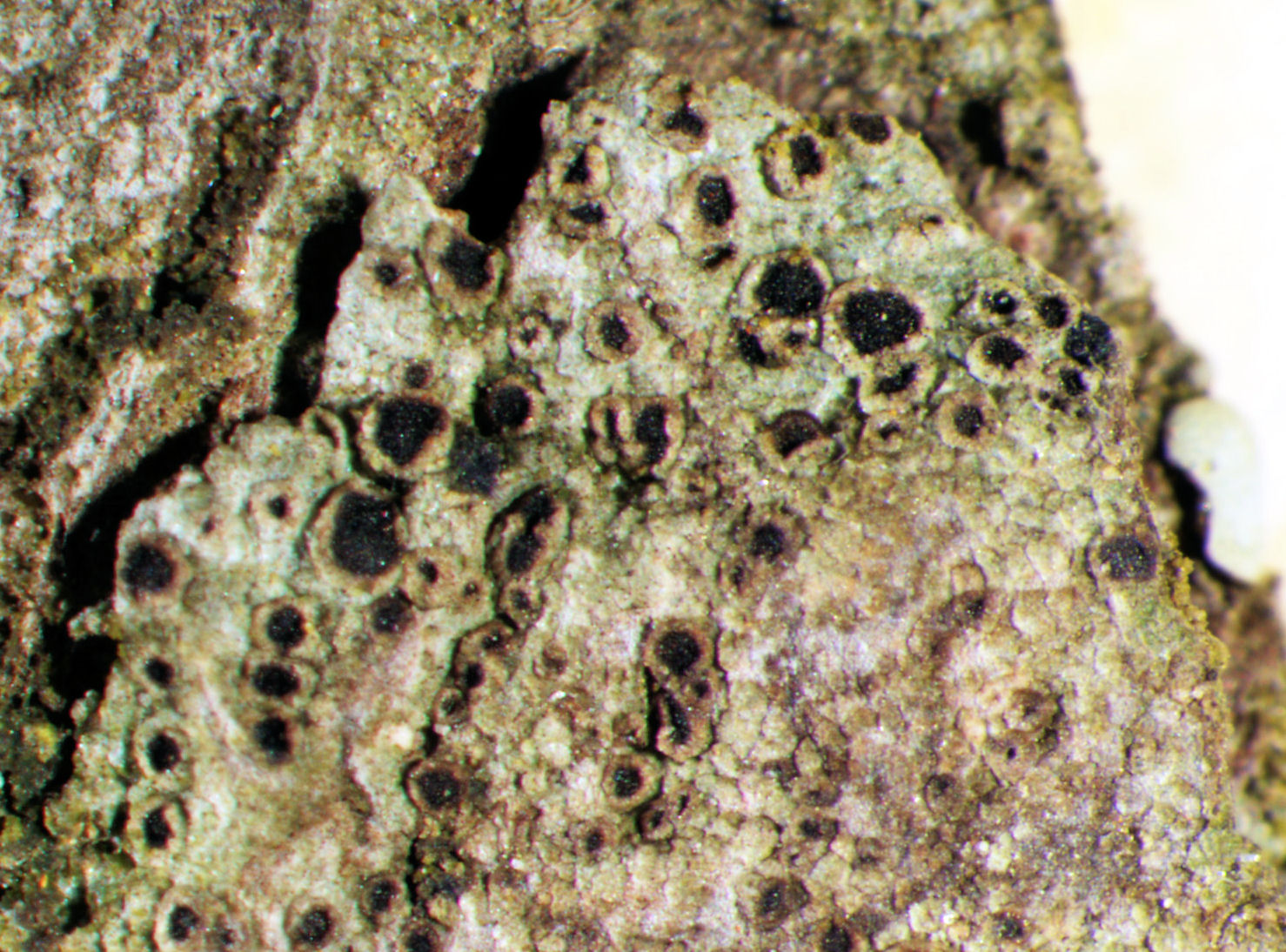
Harrie Sipman – Source http://www.bgbm.fu-berlin.de/sipman/Zschackia/AegeanLichens/CaloplacaAC.htm - As Caloplaca oasis
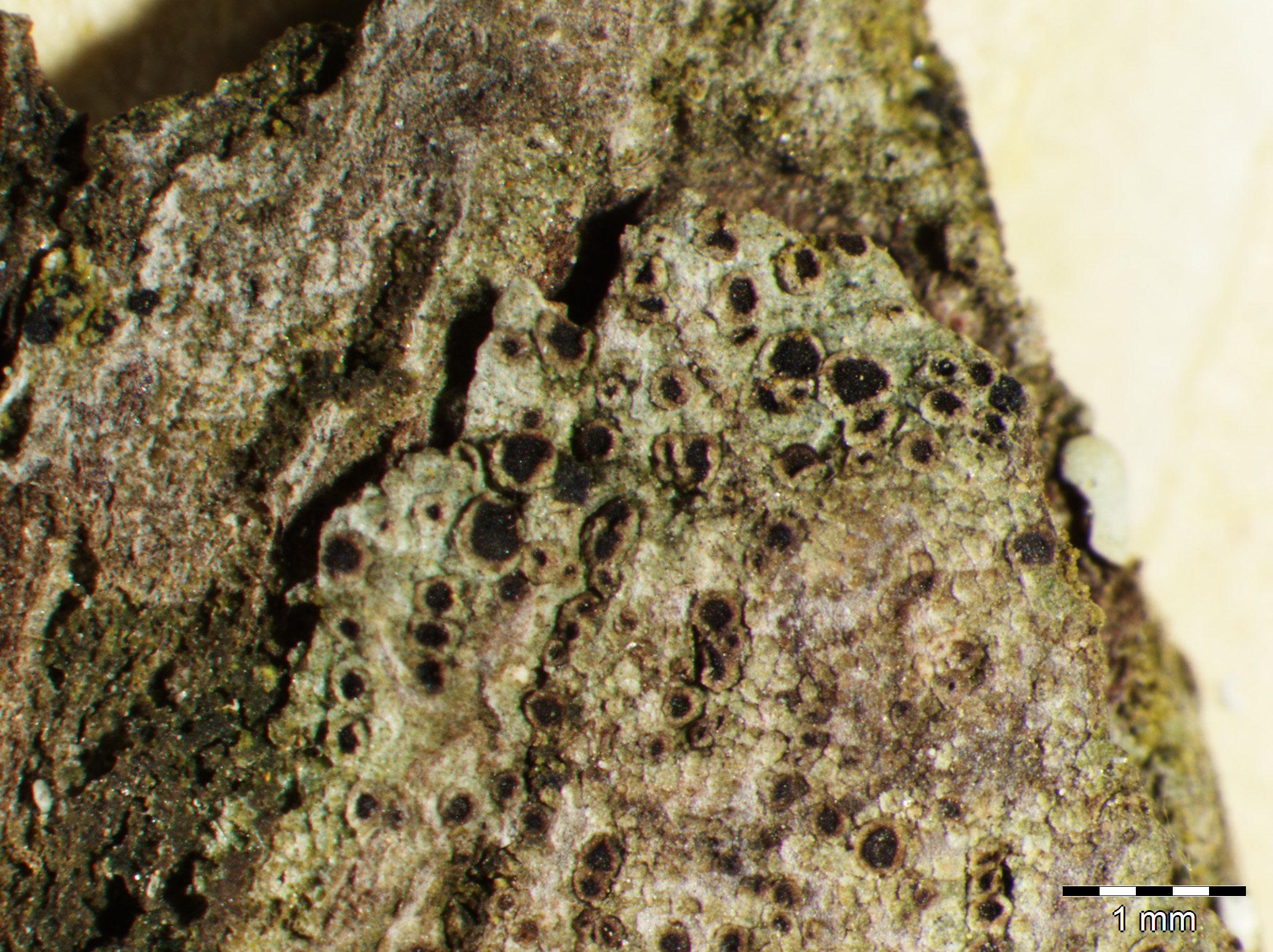
Harrie Sipman – Source http://www.bgbm.fu-berlin.de/sipman/Zschackia/AegeanLichens/CaloplacaAC.htm - As Caloplaca oasis
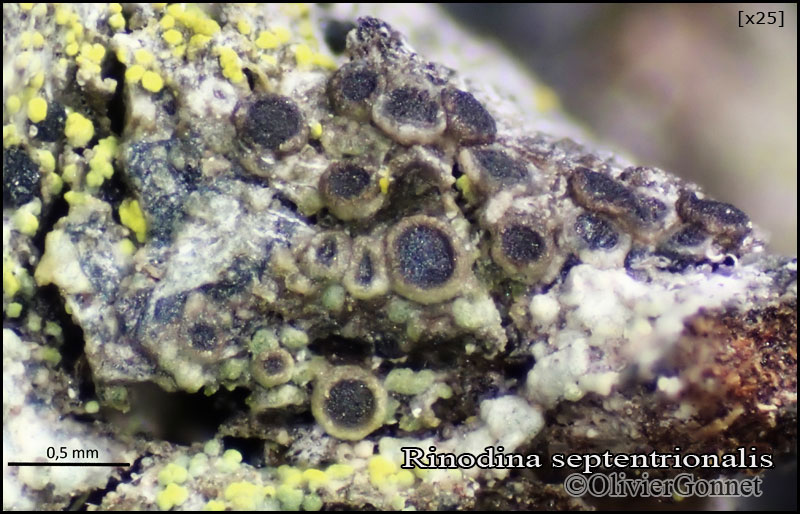
Courtesy Danièle et Olivier Gonnet - Source: https://www.afl-lichenologie.fr/Photos_AFL/Photos_AFL_R/Textes_R/Rinodina_septentrionalis.htm
France, 7/6/2016 - sur Juniperus communis - Névache - Hautes-Alpes
as R. septentrionalis
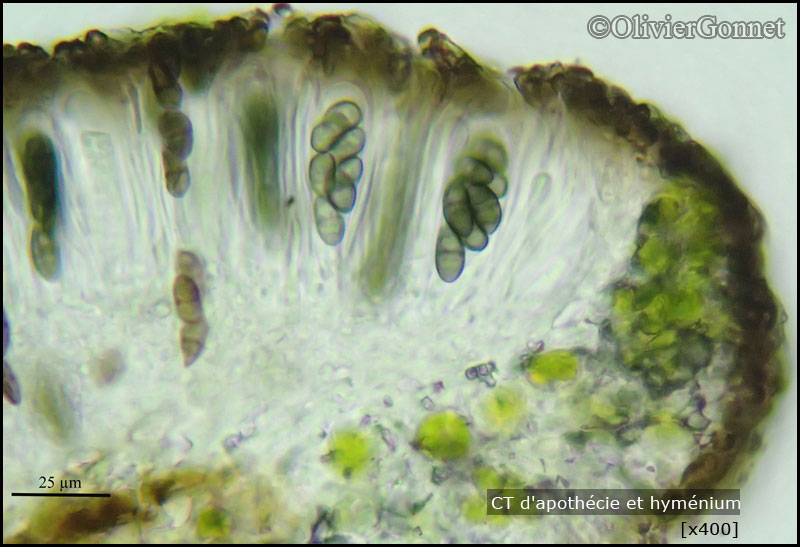
Courtesy Danièle et Olivier Gonnet - Source: https://www.afl-lichenologie.fr/Photos_AFL/Photos_AFL_R/Textes_R/Rinodina_septentrionalis.htm
France, 7/6/2016 - sur Juniperus communis - Névache - Hautes-Alpes
as R. septentrionalis
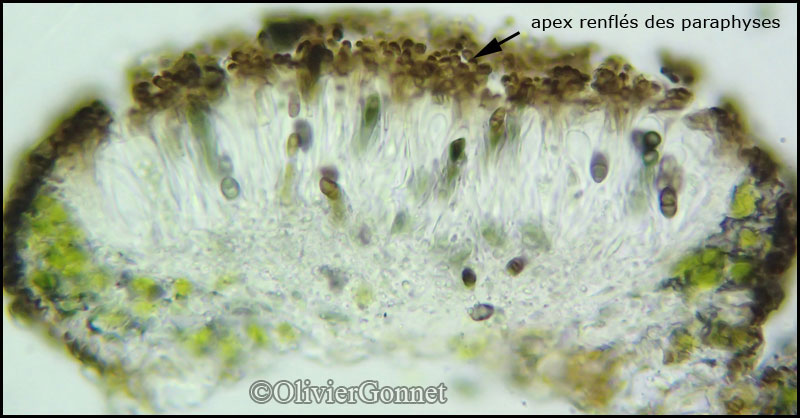
Courtesy Danièle et Olivier Gonnet - Source: https://www.afl-lichenologie.fr/Photos_AFL/Photos_AFL_R/Textes_R/Rinodina_septentrionalis.htm
France, 7/6/2016 - sur Juniperus communis - Névache - Hautes-Alpes
as R. septentrionalis