Rinodina intermedia Bagl.
Comm. Soc. Critt. Ital., 1: 313, 1863.
Synonyms: Psora turfacea f. ligustica Rabenh.; Rinodina lusitanica Arnold
Description: Thallus crustose to subsquamulose, episubstratic, thick to thin and evanescent, usually pale grey-green, ochraceous or pale brown, without a distinct prothallus. Apothecia lecanorine, subimmersed to adnate, rarely sessile, 0.5-1 mm across, with a dark brown to black, flat to convex disc, and a thin, entire and persistent, rarely poorly developed thalline margin. Thalline exciple 70-120 µm wide laterally, corticate, the cortex overlain by an epinecral layer; proper exciple colourless, 10-20 µm wide laterally, expanding to 30-80 µm in upper part; epithecium orange-brown, K-; hymenium colourless, 100-150 µm high; paraphyses richly branched and anastomosing in upper part, 2-3 µm thick at mid-level, the apical cells 3-5 µm wide, immersed in dispersed pigment; hypothecium colourless or pale yellowish brown, 90-120 µm high. Asci 8-spored, clavate, the K/I+ blue tholus penetrated by a faintly amyloid apical cushion with parallel or diverging flanks, the wall K/I-, surrounded by a K/I+ blue outer layer, Lecanora-type. Ascospores at first 1-3-septate, then submuriform and up to 6-celled, brown, ellipsoid, with irregularly rounded locules, (21-)24-32(-36) x (10-)12-14(-16) µm, the ontogeny of type A (apical wall thickening after septum formation). Pycnidia dark, pear-shaped, immersed. Conidia bacilliform, 3.5-4 µm long. Photobiont chlorococcoid. Spot tests: K- or K+ rose-violet, C-, KC-, P-. Chemistry: deoxylichesterinic acid, sometimes traces of skyrin, graciliformin, and pannarin.
Growth form: Crustose
Substrata: soil, terricolous mosses, and plant debris
Photobiont: green algae other than Trentepohlia
Reproductive strategy: mainly sexual
Most common in areas with a humid-warm climate (e.g. most of Tyrrenian Italy)
Commonnes-rarity: (info)
Alpine belt: absent
Subalpine belt: absent
Montane belt: absent
Dry submediterranean belt: extremely rare
Humid submediterranean belt: very rare
Padanian area: absent
pH of the substrata:
1 2 3 4 5

Solar irradiation:
1 2 3 4 5
Aridity:
1 2 3 4 5
Eutrophication:
1 2 3 4 5
Poleotolerance:
0 1 2 3
Altitudinal distribution:
1 2 3 4 5 6
Rarity
absent
extremely rare
very rare
rare
rather rare
rather common
common
very common
extremely common
Loading data...
Occurrence data
Predictive map
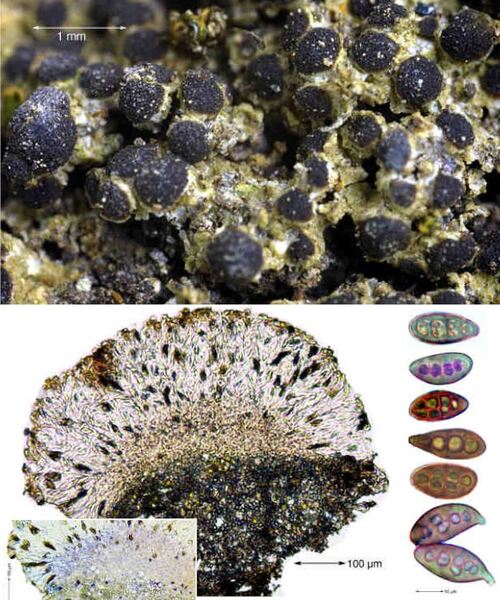
Felix Schumm – CC BY-SA 4.0
Image from: F. Schumm (2008) - Flechten Madeiras, der Kanaren und Azoren. Beck, OHG - ISBN: 978-3-00-023700-3
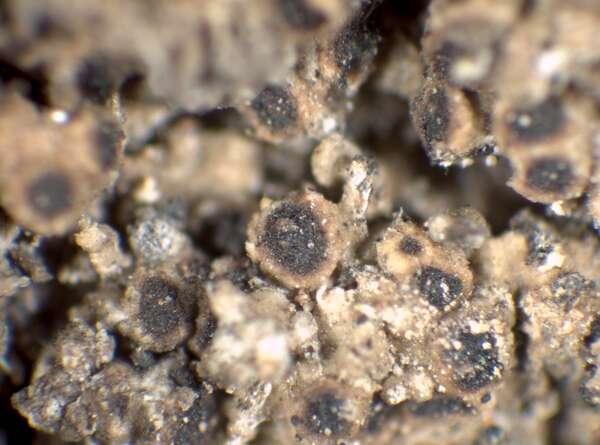
P.L. Nimis; Owner: Department of Life Sciences, University of Trieste
Herbarium: TSB (4759)
2002/05/13
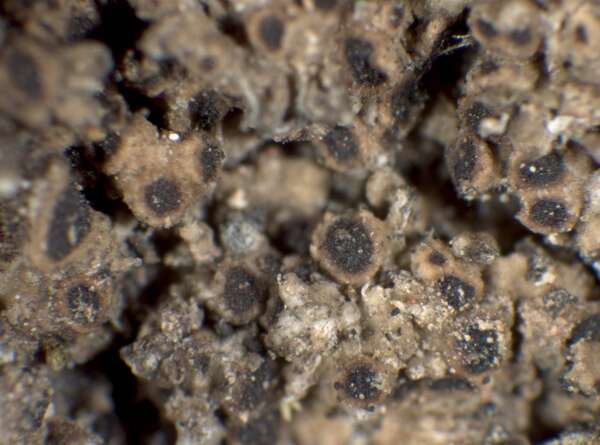
P.L. Nimis; Owner: Department of Life Sciences, University of Trieste
Herbarium: TSB (4759)
2002/05/13
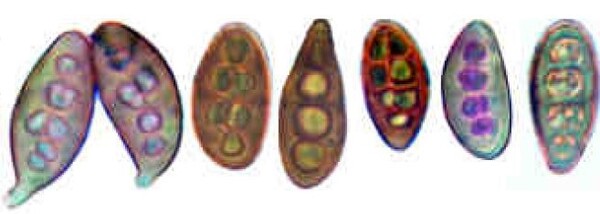
Felix Schumm - CC BY-SA 4.0; Owner: Image from: F. Schumm (2008) - Flechten Madeiras, der Kanaren und Azoren. Beck, OHG - ISBN: 978-3-00-023700-3
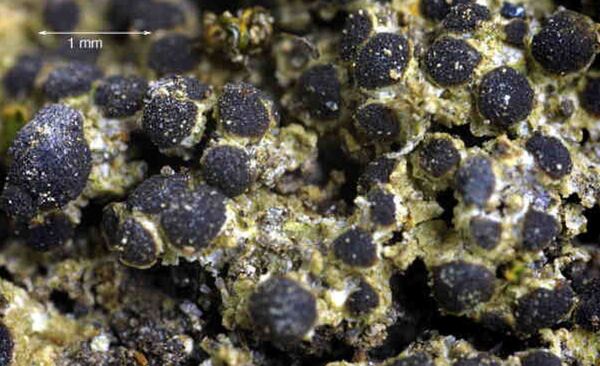
Felix Schumm - CC BY-SA 4.0; Owner: Image from: F. Schumm (2008) - Flechten Madeiras, der Kanaren und Azoren. Beck, OHG - ISBN: 978-3-00-023700-3
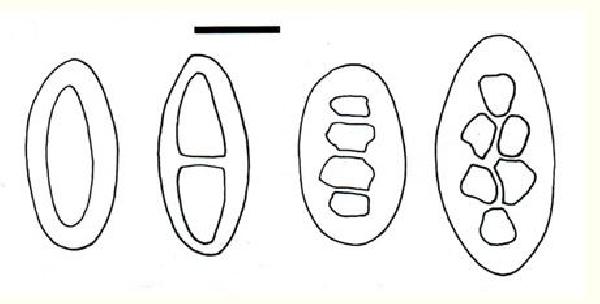
Source: Giralt M. (2001) Bibliotheca lichenologica 79: 1-160.
Growth form: Crustose
Substrata: soil, terricolous mosses, and plant debris
Photobiont: green algae other than Trentepohlia
Reproductive strategy: mainly sexual
Most common in areas with a humid-warm climate (e.g. most of Tyrrenian Italy)
Commonnes-rarity: (info)
Alpine belt: absent
Subalpine belt: absent
Montane belt: absent
Dry submediterranean belt: extremely rare
Humid submediterranean belt: very rare
Padanian area: absent
pH of the substrata:
| 1 | 2 | 3 | 4 | 5 |
Solar irradiation:
| 1 | 2 | 3 | 4 | 5 |
Aridity:
| 1 | 2 | 3 | 4 | 5 |
Eutrophication:
| 1 | 2 | 3 | 4 | 5 |
Poleotolerance:
| 0 | 1 | 2 | 3 |
Altitudinal distribution:
| 1 | 2 | 3 | 4 | 5 | 6 |
Rarity
absent
extremely rare
very rare
rare
rather rare
rather common
common
very common
extremely common
Loading data...
Occurrence data
Predictive map
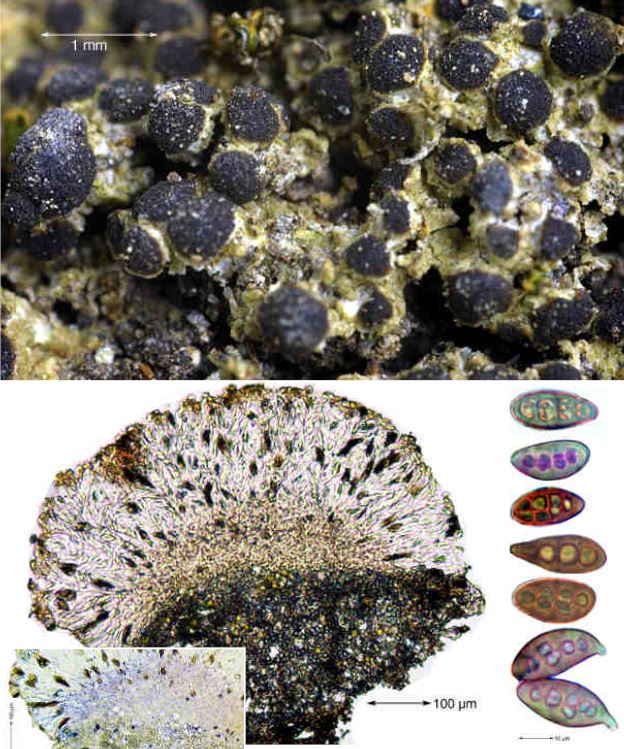
Felix Schumm – CC BY-SA 4.0
Image from: F. Schumm (2008) - Flechten Madeiras, der Kanaren und Azoren. Beck, OHG - ISBN: 978-3-00-023700-3
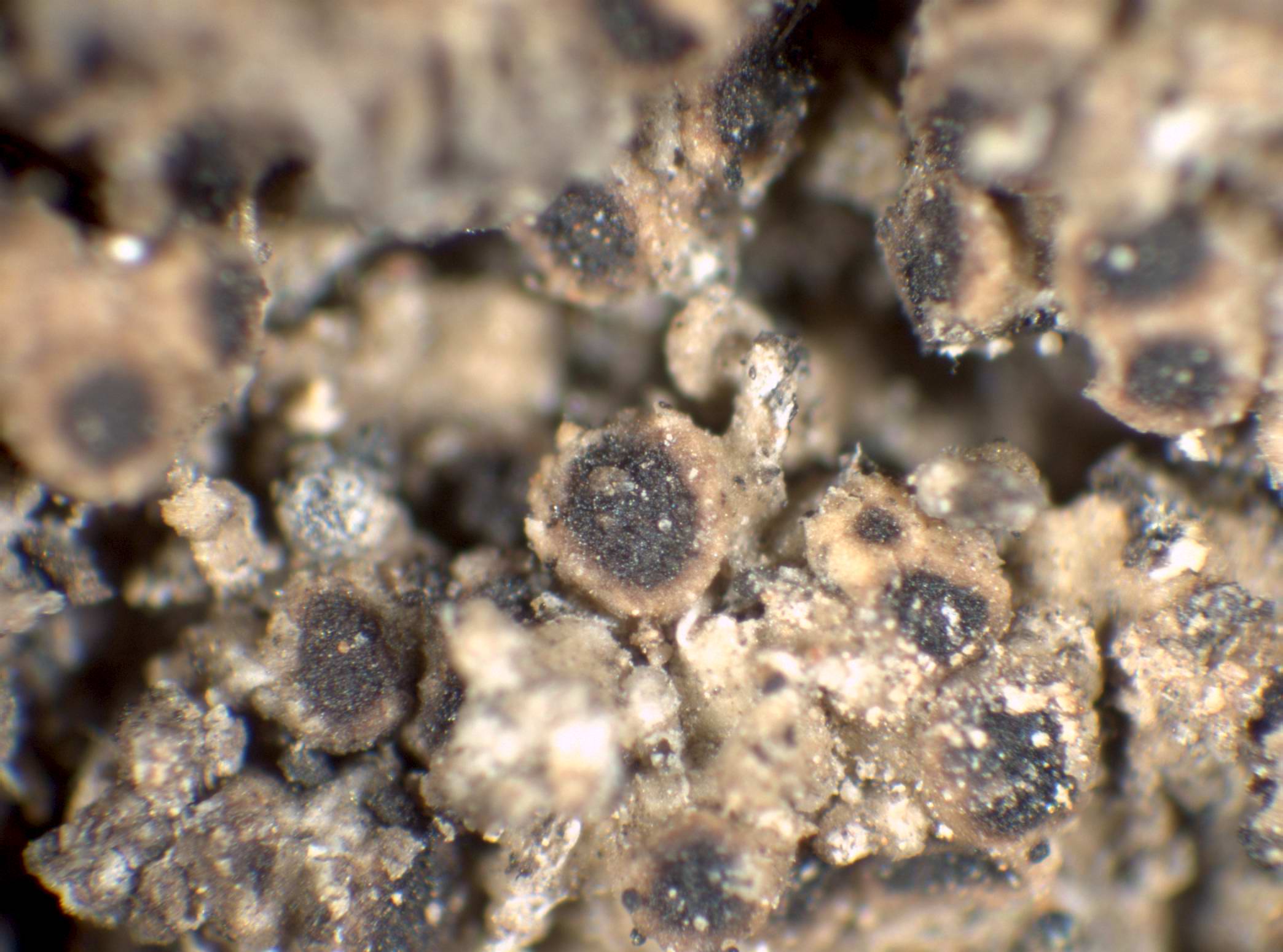
P.L. Nimis; Owner: Department of Life Sciences, University of Trieste
Herbarium: TSB (4759)
2002/05/13
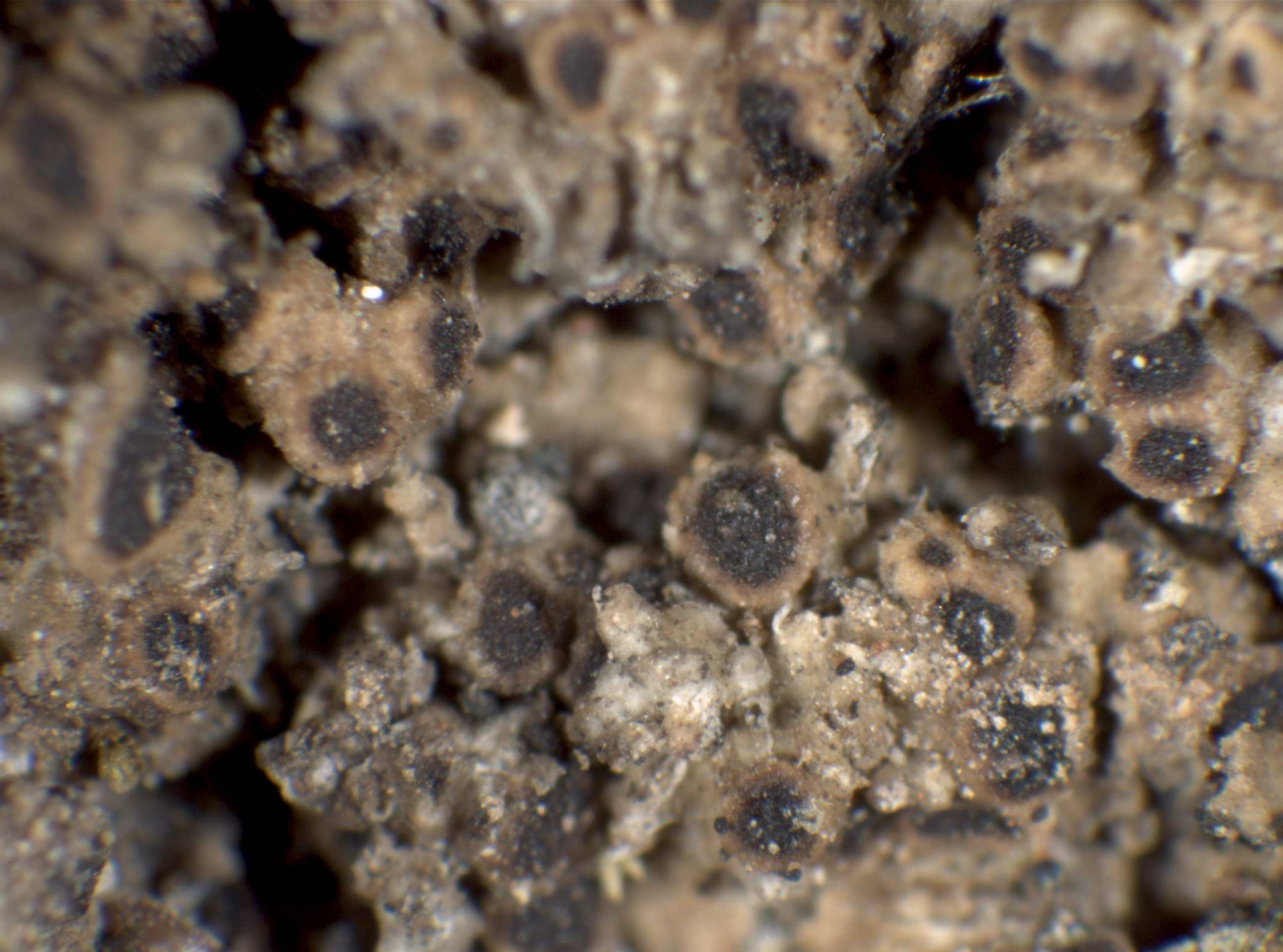
P.L. Nimis; Owner: Department of Life Sciences, University of Trieste
Herbarium: TSB (4759)
2002/05/13
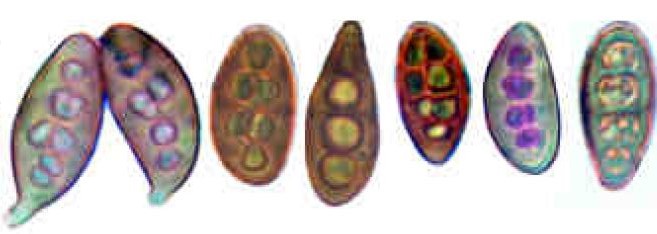
Felix Schumm - CC BY-SA 4.0; Owner: Image from: F. Schumm (2008) - Flechten Madeiras, der Kanaren und Azoren. Beck, OHG - ISBN: 978-3-00-023700-3
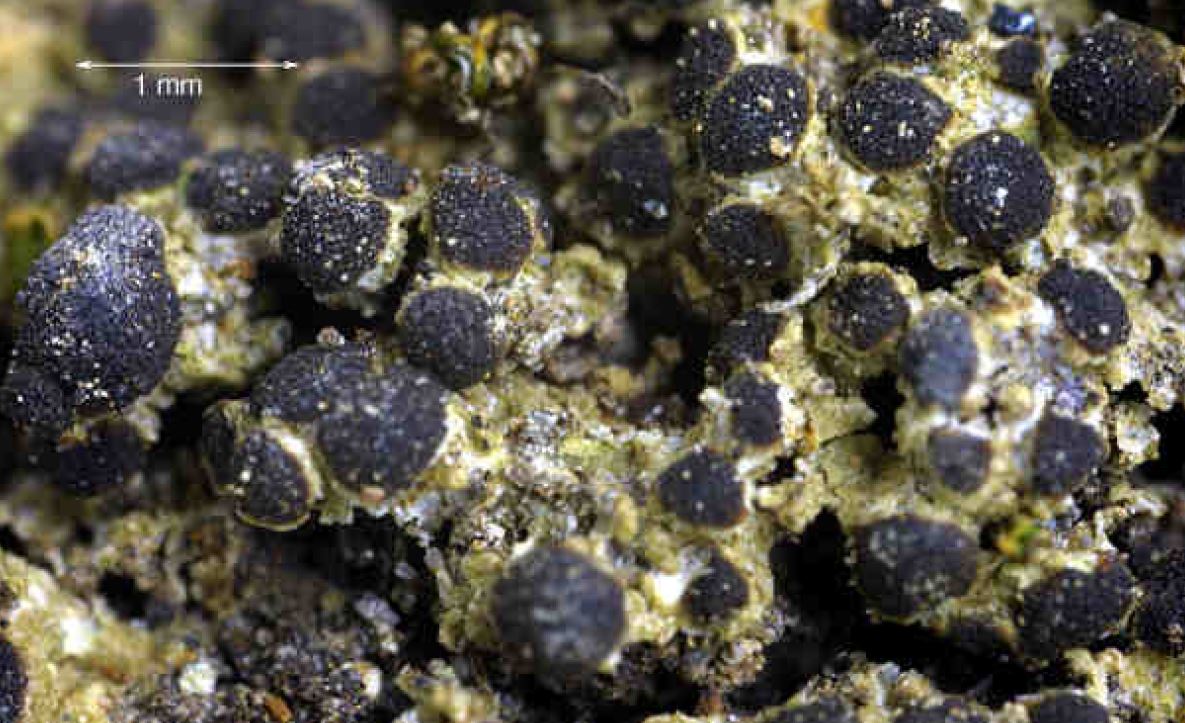
Felix Schumm - CC BY-SA 4.0; Owner: Image from: F. Schumm (2008) - Flechten Madeiras, der Kanaren und Azoren. Beck, OHG - ISBN: 978-3-00-023700-3