
Rinodina malangica (Norman) Arnold
Flora, 64: 196, 1881. Basionym: Rinodina leprosa subsp. malangica Norman - K. Norske Vid. Selsk. Skr., 5: 342, 1868.
Synonyms: Rinodina pyrina f. rhododendri ("Hepp") Arnold; Rinodina rhododendri Hepp ex H. Magn.; Rinodina sophodes var. malangica (Norman) Th. Fr.
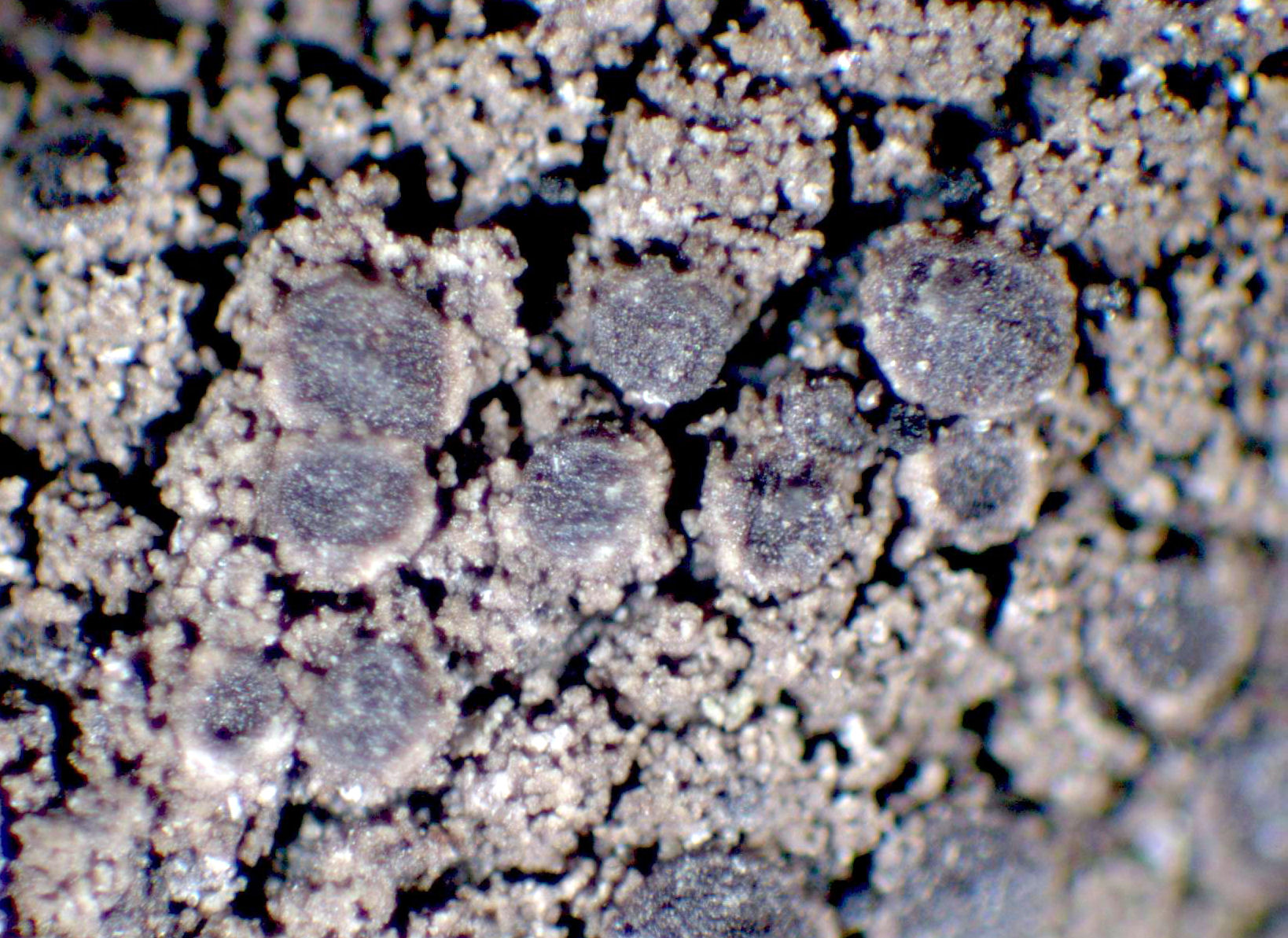
Description: Thallus crustose-subsquamulose, episubstratic, well developed, yellowish brown, olivaceous, grey-brown or grey-green, of contiguous, sublobate areoles/squamules more or less entirely covered in coralloid, (30-)50-60 µm thick blastidia. Apothecia lecanorine, immersed, scattered, (0.2-)0.5-0.8 mm across, with a mostly persistently flat, brown disc, and a thick, usually blastidiate thalline margin. Thalline exciple 80-100 µm wide laterally, cellular, with a thin, indistinct cortex; proper exciple 10-15 µm wide laterally, expanded to 30-35 µm in upper part; epithecium reddish brown, K-; hymenium colourless, 70-90 µm high; paraphyses 2-2.5 µm thick at mid-level, the apical cells up to 5 µm wide; hypothecium colourless, 50-100 µm high. Asci 8-spored, clavate, the K/I+ blue tholus penetrated by a faintly amyloid apical cushion with parallel or diverging flanks, the wall K/I-, surrounded by a K/I+ blue outer layer, Lecanora-type. Ascospores 1-septate, not constricted at septum, brown, ellipsoid, 13-18 x 6-9 µm, with a well-developed torus and smooth walls, Physcia-type, the ontogeny of type A (apical wall thickening after the early septum formation). Photobiont chlorococcoid. Spot tests: K-, C-, KC-, P-, UV-. Chemistry: without lichen substances.
Growth form: Crustose
Substrata: bark
Photobiont: green algae other than Trentepohlia
Reproductive strategy: mainly asexual, by soredia, or soredia-like structures (e.g. blastidia)
Commonnes-rarity: (info)
Alpine belt: absent
Subalpine belt: rather common
Montane belt: extremely rare
Dry submediterranean belt: absent
Humid submediterranean belt: absent
Padanian area: absent
pH of the substrata:
1 2 3 4 5

Solar irradiation:
1 2 3 4 5
Aridity:
1 2 3 4 5
Eutrophication:
1 2 3 4 5
Poleotolerance:
0 1 2 3
Altitudinal distribution:
1 2 3 4 5 6
Rarity
absent
extremely rare
very rare
rare
rather rare
rather common
common
very common
extremely common
Loading data...
Occurrence data
Predictive map
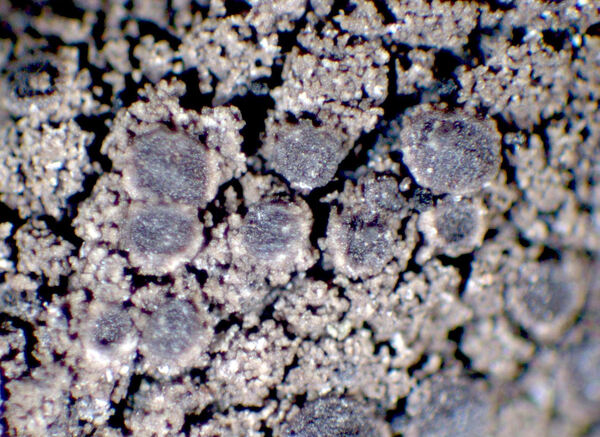
P.L. Nimis CC BY-SA 4.0
TSB 13681
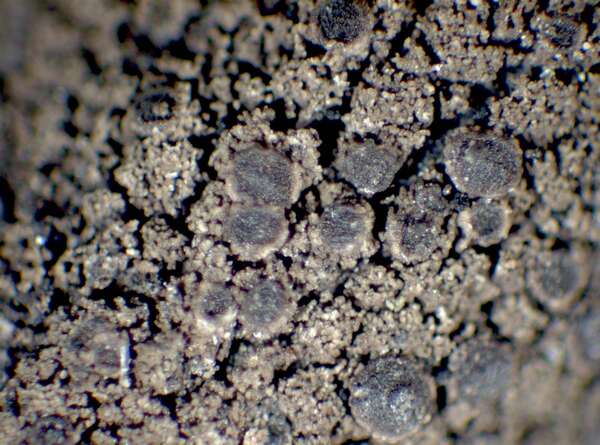
P.L. Nimis; Owner: Department of Life Sciences, University of Trieste
Herbarium: TSB (13681)
2001/11/29
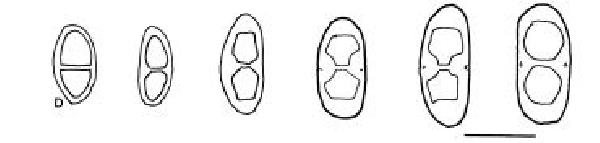
Source: Giralt M., Mayrhofer H. & Sheard J.W. (1995) Lichenologist 27: 3-24
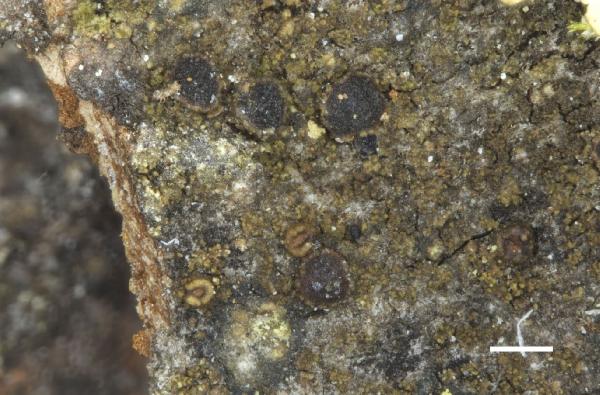
Source: Pykälä, J. 2023. Additions to the lichen flora of Finland. X. Graphis Scripta 35 (3): 14–29. Oslo. ISSN 2002- 4495 - CC BY-4.0
Pykälä 33755 (H). Scale bar = 0.5 mm
Growth form: Crustose
Substrata: bark
Photobiont: green algae other than Trentepohlia
Reproductive strategy: mainly asexual, by soredia, or soredia-like structures (e.g. blastidia)
Commonnes-rarity: (info)
Alpine belt: absent
Subalpine belt: rather common
Montane belt: extremely rare
Dry submediterranean belt: absent
Humid submediterranean belt: absent
Padanian area: absent
pH of the substrata:
| 1 | 2 | 3 | 4 | 5 |
Solar irradiation:
| 1 | 2 | 3 | 4 | 5 |
Aridity:
| 1 | 2 | 3 | 4 | 5 |
Eutrophication:
| 1 | 2 | 3 | 4 | 5 |
Poleotolerance:
| 0 | 1 | 2 | 3 |
Altitudinal distribution:
| 1 | 2 | 3 | 4 | 5 | 6 |
Rarity
absent
extremely rare
very rare
rare
rather rare
rather common
common
very common
extremely common
Loading data...
Occurrence data
Predictive map
P.L. Nimis CC BY-SA 4.0
TSB 13681
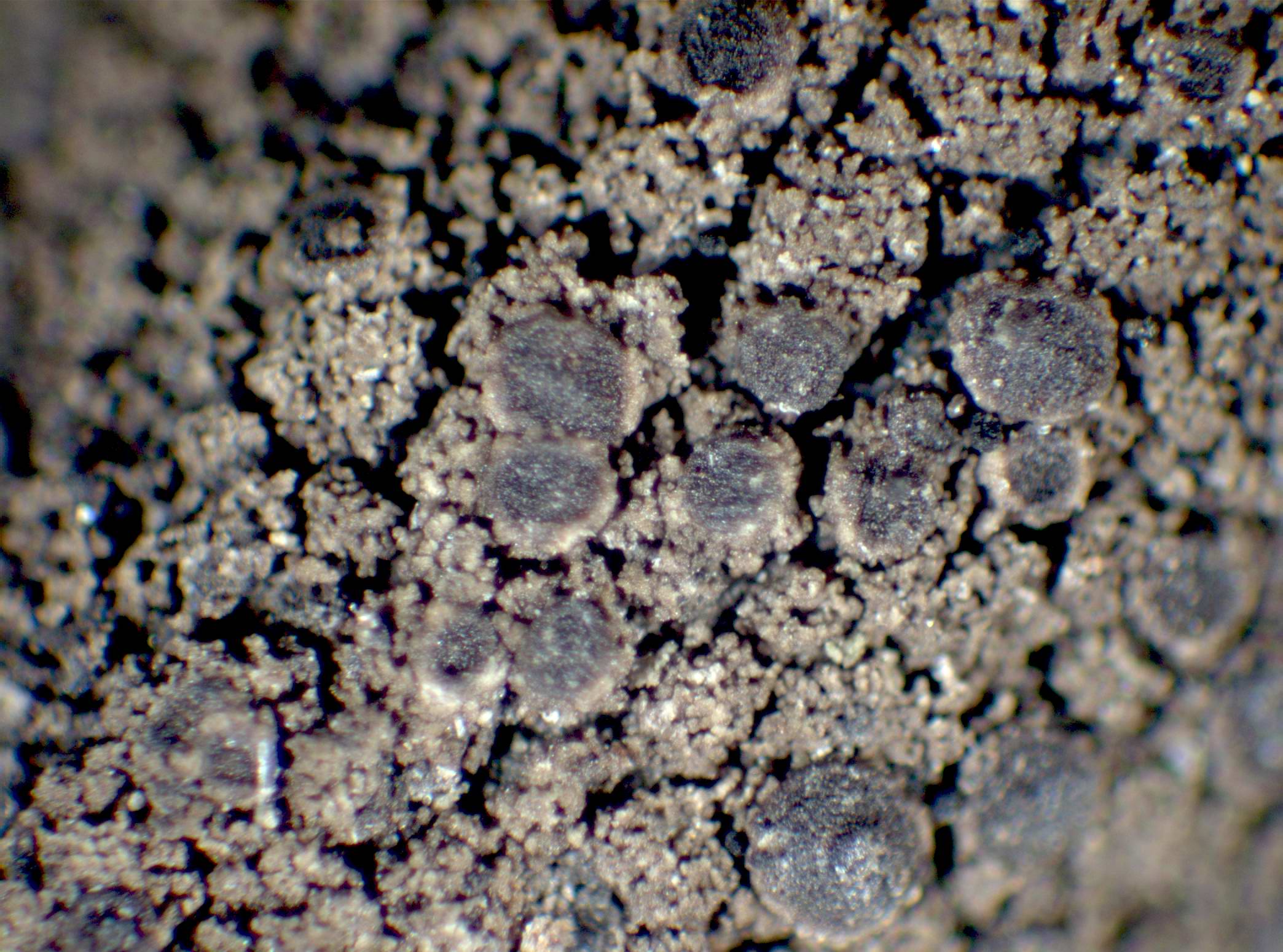
P.L. Nimis; Owner: Department of Life Sciences, University of Trieste
Herbarium: TSB (13681)
2001/11/29

Source: Giralt M., Mayrhofer H. & Sheard J.W. (1995) Lichenologist 27: 3-24








