Scoliciosporum sarothamni (Vain.) Vězda
Folia Geobot. Phytotaxon., 13: 411, 1978. Basionym: Bacidia sarothamni Vain. - Acta Soc. Fauna Fl. Fenn., 53: 214, 1922.
Synonyms:
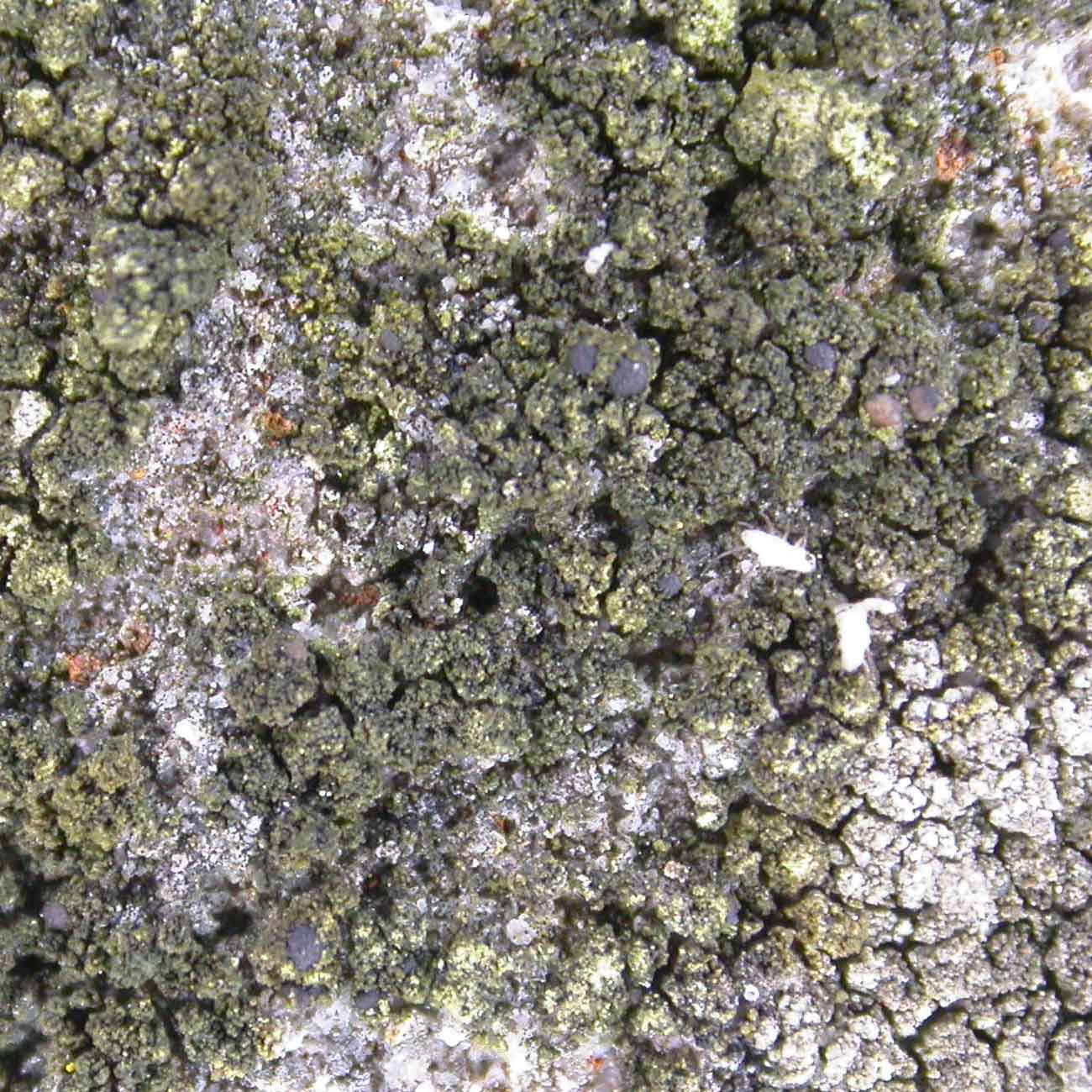
Description: Thallus crustose, thinly episubstratic, yellowish grey to grey-green, continuous or more or less granular-warted, forming up to 1(-2) cm wide, orbicular to ellipsoid patches, sorediate, without a distinct prothallus. Soralia yellowish green, partly discrete, punctiform and up to 0.2 mm in diam., partly confluent and convex; soredia farinose, up to 20(-25) μm in diam. Apothecia very rare, biatorine, 0.15-0.3 mm across, pale brown to black, greenish in shade forms, sessile, with a flat to convex disc, soon immarginate. Epithecium more or less blue-green (K-, N+ purple), olive-brown (K-, N-), or a mixture of both; hymenium colourless, 40-55 μm high; paraphyses 1.5-2 μm thick at mid-level, much branched and anastomosing, the apical cells more or less clavate, up to 3 μm wide; hypothecium colourless. Asci 8-spored, broadly clavate, surrounded by a gelatinous, amyloid sheet, with a well-developed, amyloid tholus containing a widely cylindrical axial body and a poorly developed, bluntly conical ocular chamber, more or less Lecanora-type, with spirally arranged spores. Ascospores 3-7-septate, strongly curved and mostly S-shaped, (20-)25-35(-40) x 2-3(-3.5) μm. Photobiont chlorococcoid. Spot tests: soralia K-, C+ fleeting and faintly pink, KC+ fleeting and faintly pink (reactions often visible only in squash preparations!), P-, UV-. Chemistry: gyrophoric acid (traces).
Growth form: Crustose
Substrata: bark and rocks
Photobiont: green algae other than Trentepohlia
Reproductive strategy: mainly asexual, by soredia, or soredia-like structures (e.g. blastidia)
Pioneer species
Commonnes-rarity: (info)
Alpine belt: absent
Subalpine belt: absent
Montane belt: very rare
Dry submediterranean belt: extremely rare
Humid submediterranean belt: very rare
Padanian area: absent
pH of the substrata:
1 2 3 4 5

Solar irradiation:
1 2 3 4 5
Aridity:
1 2 3 4 5
Eutrophication:
1 2 3 4 5
Poleotolerance:
0 1 2 3
Altitudinal distribution:
1 2 3 4 5 6
Rarity
absent
extremely rare
very rare
rare
rather rare
rather common
common
very common
extremely common
Loading data...
Occurrence data
Predictive map
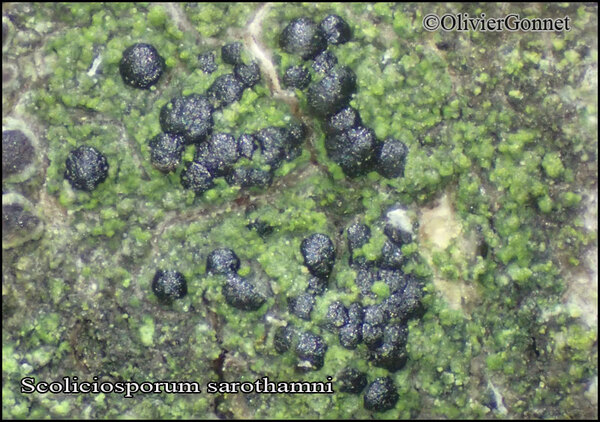
Courtesy Danièle et Olivier Gonnet - Source: https://www.afl-lichenologie.fr/Photos_AFL/Photos_AFL_S/Text_S/Scoliciosporum_sarothamni.htm
France, 16/5/2018 - Poleymieux-au-Mont-d’Or - Rhone - (69) - sur écorce de frêne
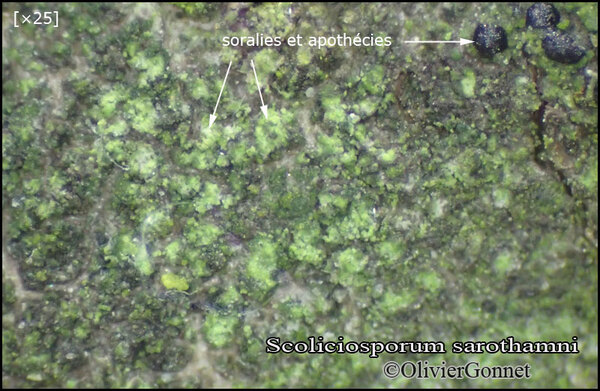
Courtesy Danièle et Olivier Gonnet - Source: https://www.afl-lichenologie.fr/Photos_AFL/Photos_AFL_S/Text_S/Scoliciosporum_sarothamni.htm
France, 16/5/2018 - Poleymieux-au-Mont-d’Or - Rhone - (69) - sur écorce de frêne
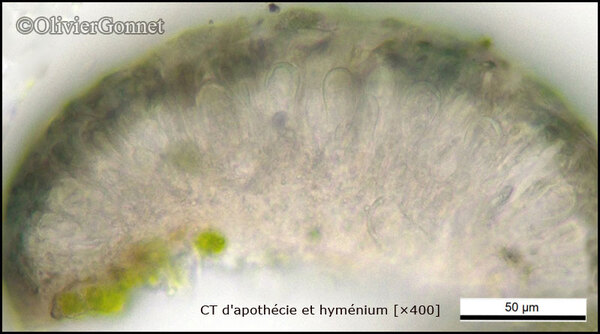
Courtesy Danièle et Olivier Gonnet - Source: https://www.afl-lichenologie.fr/Photos_AFL/Photos_AFL_S/Text_S/Scoliciosporum_sarothamni.htm
France, 16/5/2018 - Poleymieux-au-Mont-d’Or - Rhone - (69) - sur écorce de frêne
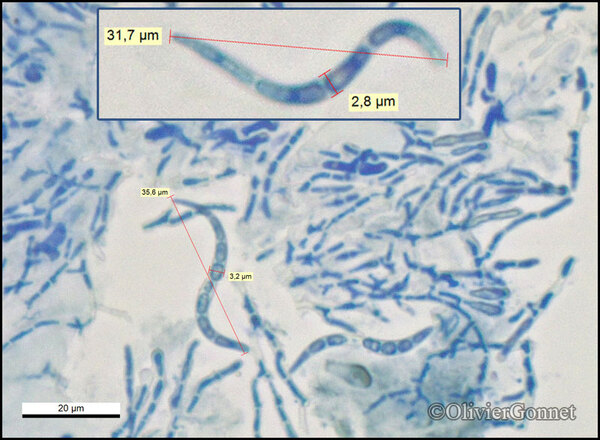
Courtesy Danièle et Olivier Gonnet - Source: https://www.afl-lichenologie.fr/Photos_AFL/Photos_AFL_S/Text_S/Scoliciosporum_sarothamni.htm
France, 16/5/2018 - Poleymieux-au-Mont-d’Or - Rhone - (69) - sur écorce de frêne
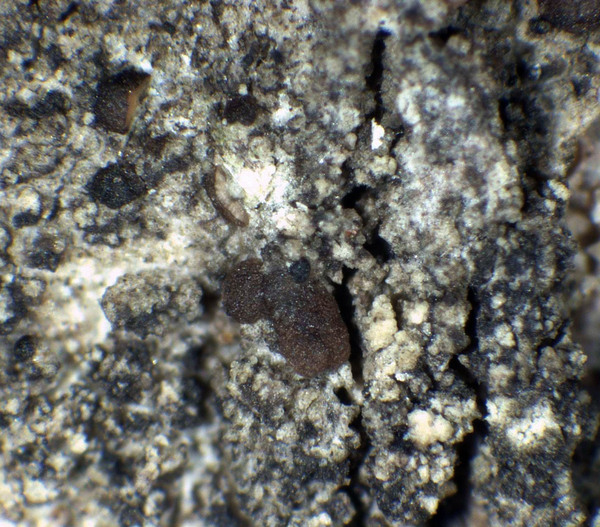
P.L. Nimis CC BY-SA 04
TSB 15388
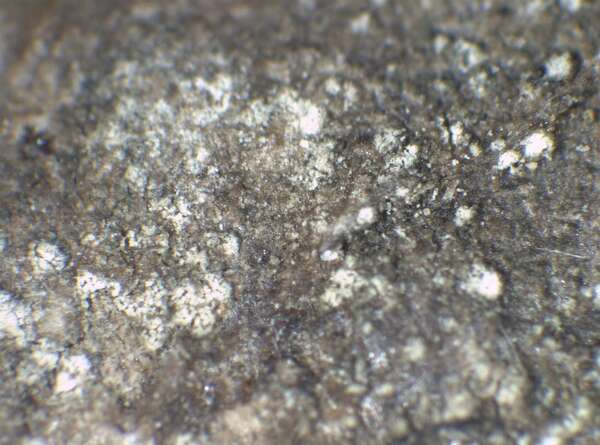
P.L. Nimis; Owner: Department of Life Sciences, University of Trieste
Herbarium: TSB (23880)
2003/03/17
sterile, sorediate thallus
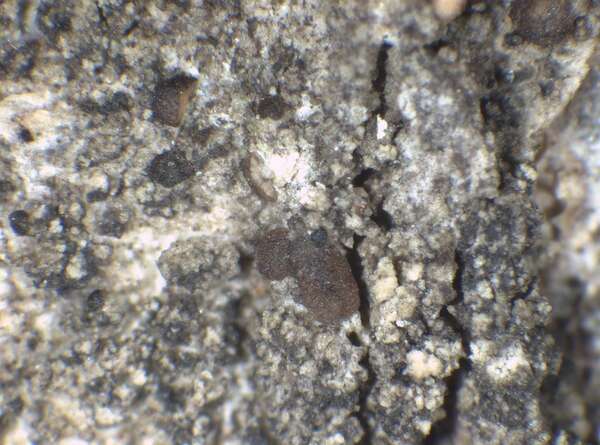
P.L. Nimis; Owner: Department of Life Sciences, University of Trieste
Herbarium: TSB (15388)
2003/03/17
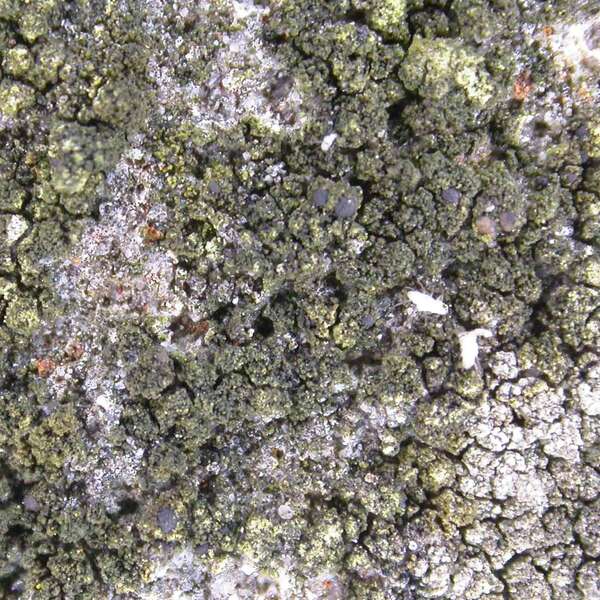
Uploaded by Mark Powell - CC BY-NC - Source: http://fungi.myspecies.info/all-fungi/
Growth form: Crustose
Substrata: bark and rocks
Photobiont: green algae other than Trentepohlia
Reproductive strategy: mainly asexual, by soredia, or soredia-like structures (e.g. blastidia)
Pioneer species
Commonnes-rarity: (info)
Alpine belt: absent
Subalpine belt: absent
Montane belt: very rare
Dry submediterranean belt: extremely rare
Humid submediterranean belt: very rare
Padanian area: absent
pH of the substrata:
| 1 | 2 | 3 | 4 | 5 |
Solar irradiation:
| 1 | 2 | 3 | 4 | 5 |
Aridity:
| 1 | 2 | 3 | 4 | 5 |
Eutrophication:
| 1 | 2 | 3 | 4 | 5 |
Poleotolerance:
| 0 | 1 | 2 | 3 |
Altitudinal distribution:
| 1 | 2 | 3 | 4 | 5 | 6 |
Rarity
absent
extremely rare
very rare
rare
rather rare
rather common
common
very common
extremely common
Loading data...
Occurrence data
Predictive map
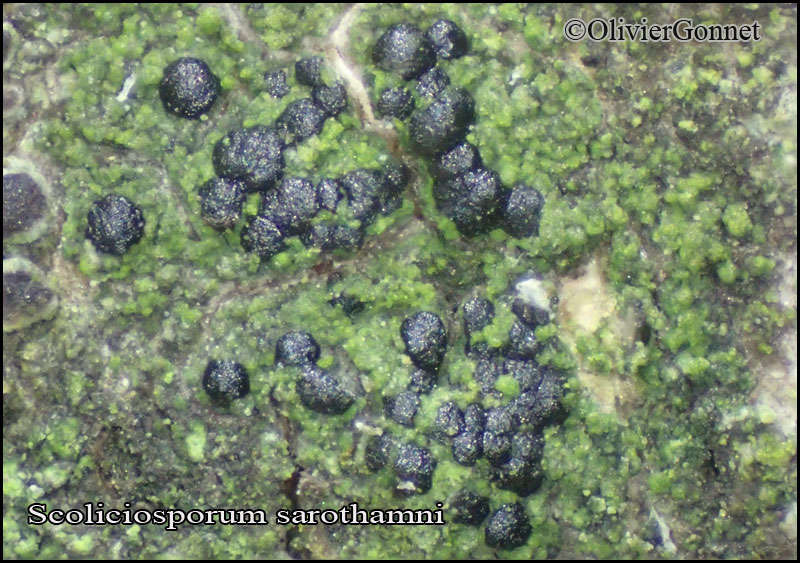
Courtesy Danièle et Olivier Gonnet - Source: https://www.afl-lichenologie.fr/Photos_AFL/Photos_AFL_S/Text_S/Scoliciosporum_sarothamni.htm
France, 16/5/2018 - Poleymieux-au-Mont-d’Or - Rhone - (69) - sur écorce de frêne
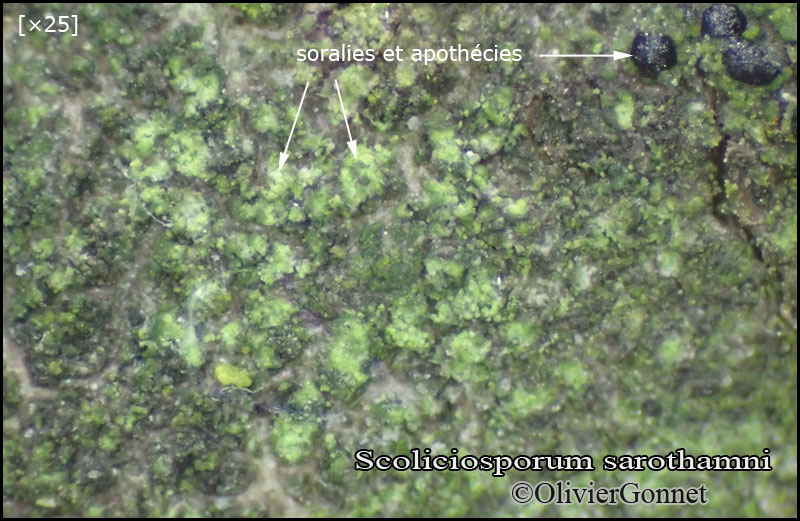
Courtesy Danièle et Olivier Gonnet - Source: https://www.afl-lichenologie.fr/Photos_AFL/Photos_AFL_S/Text_S/Scoliciosporum_sarothamni.htm
France, 16/5/2018 - Poleymieux-au-Mont-d’Or - Rhone - (69) - sur écorce de frêne
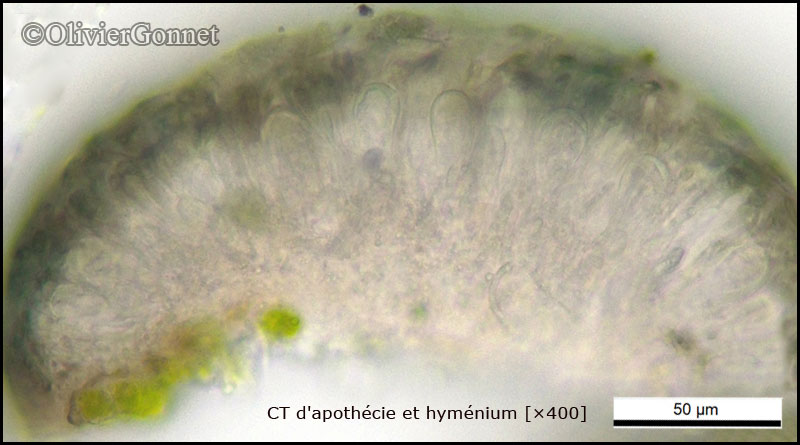
Courtesy Danièle et Olivier Gonnet - Source: https://www.afl-lichenologie.fr/Photos_AFL/Photos_AFL_S/Text_S/Scoliciosporum_sarothamni.htm
France, 16/5/2018 - Poleymieux-au-Mont-d’Or - Rhone - (69) - sur écorce de frêne
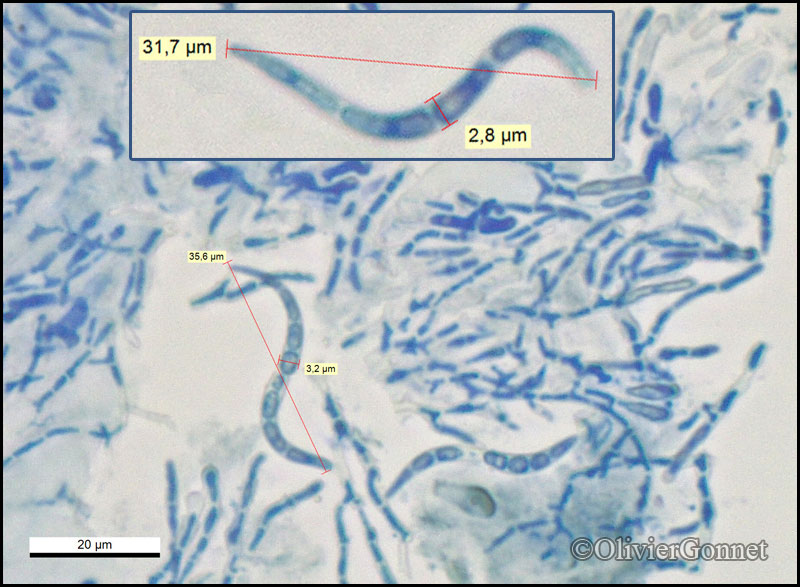
Courtesy Danièle et Olivier Gonnet - Source: https://www.afl-lichenologie.fr/Photos_AFL/Photos_AFL_S/Text_S/Scoliciosporum_sarothamni.htm
France, 16/5/2018 - Poleymieux-au-Mont-d’Or - Rhone - (69) - sur écorce de frêne
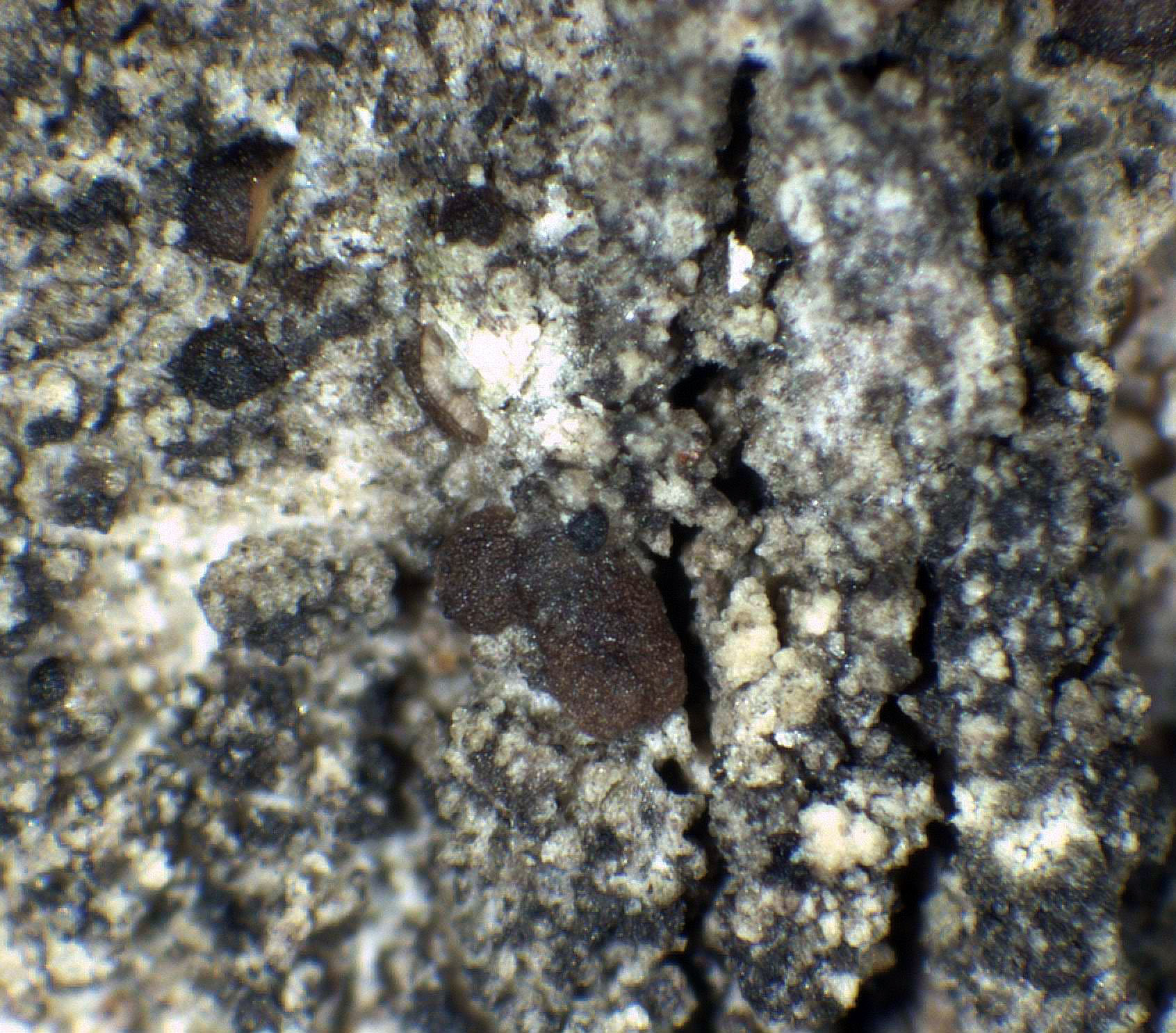
P.L. Nimis CC BY-SA 04
TSB 15388
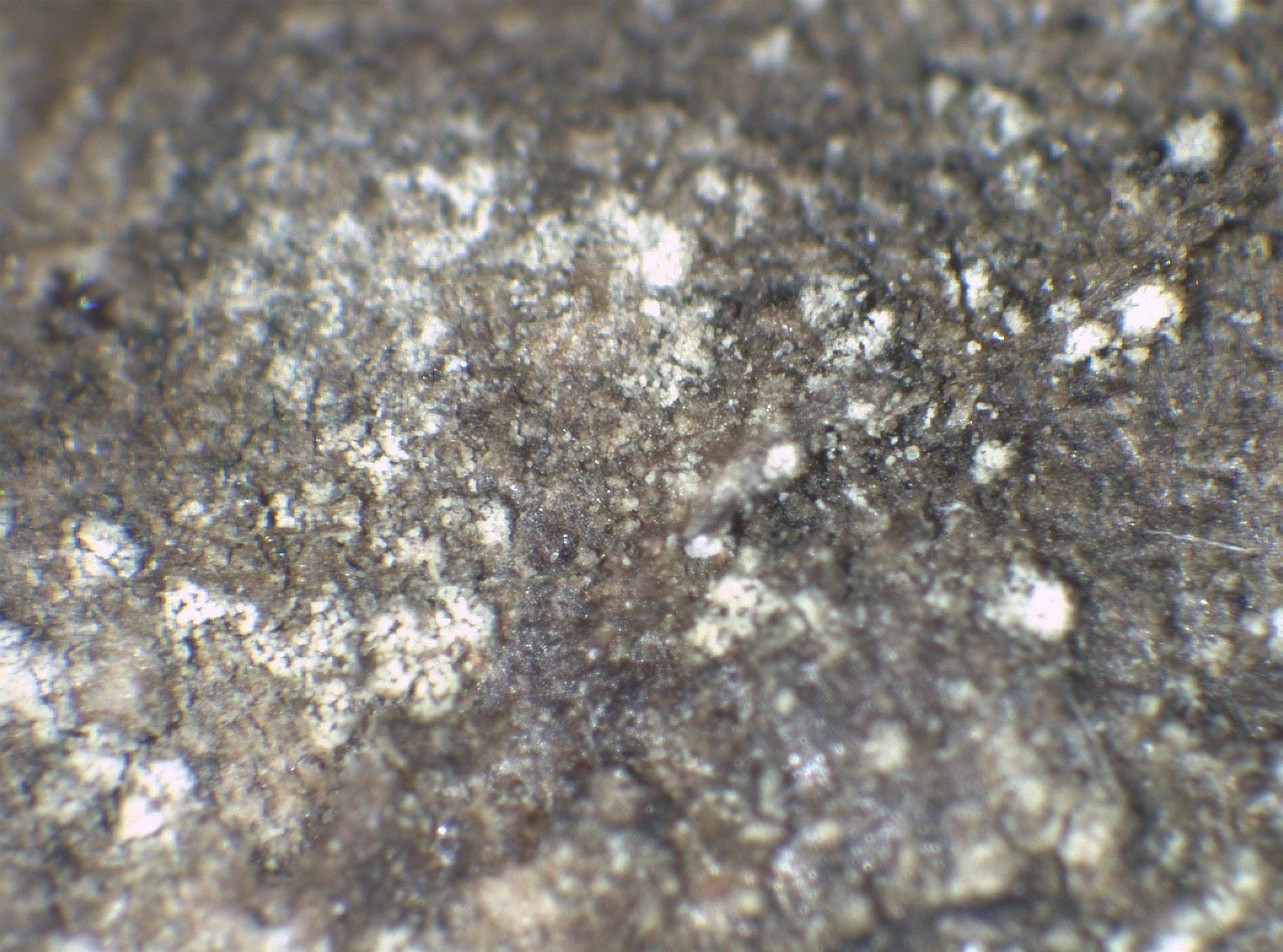
P.L. Nimis; Owner: Department of Life Sciences, University of Trieste
Herbarium: TSB (23880)
2003/03/17
sterile, sorediate thallus
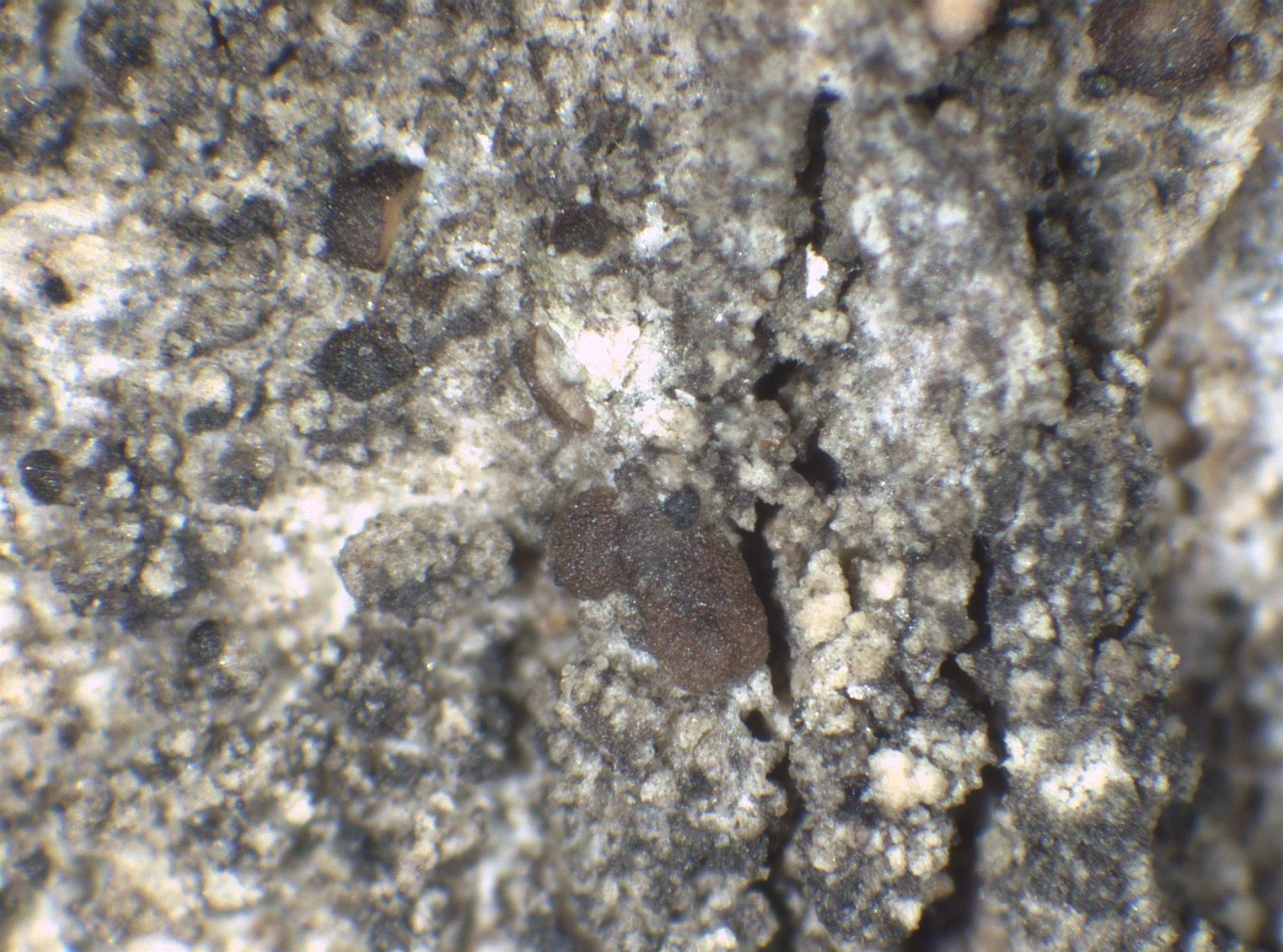
P.L. Nimis; Owner: Department of Life Sciences, University of Trieste
Herbarium: TSB (15388)
2003/03/17