Squamarina paradoxa Cl. Roux & Poumarat
Bull. Soc. linn. Provence, 75: 114, 2024,
Synonyms: Squamarina cartilaginea var. pseudocrassa auct. non (Mattick) D. Hawksw.; Squamarina crassa f. pseudocrassa auct. non (Mattick) Poelt
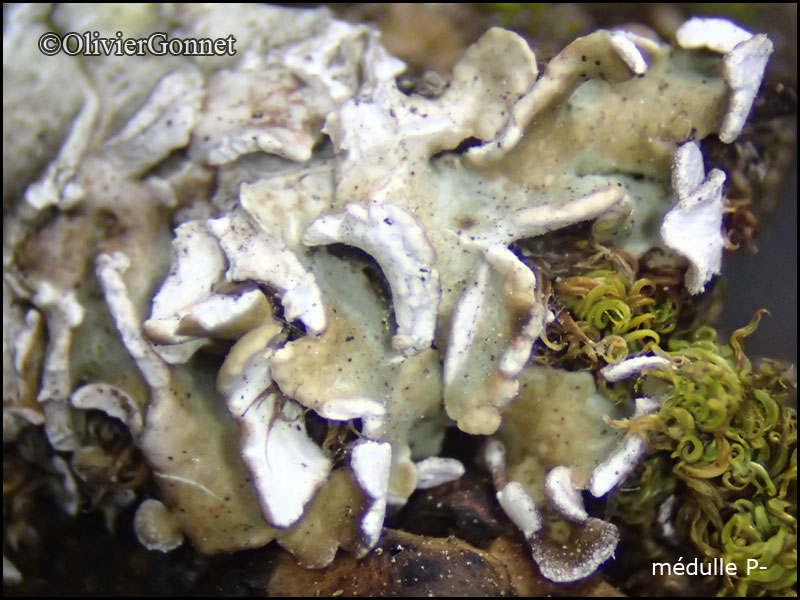
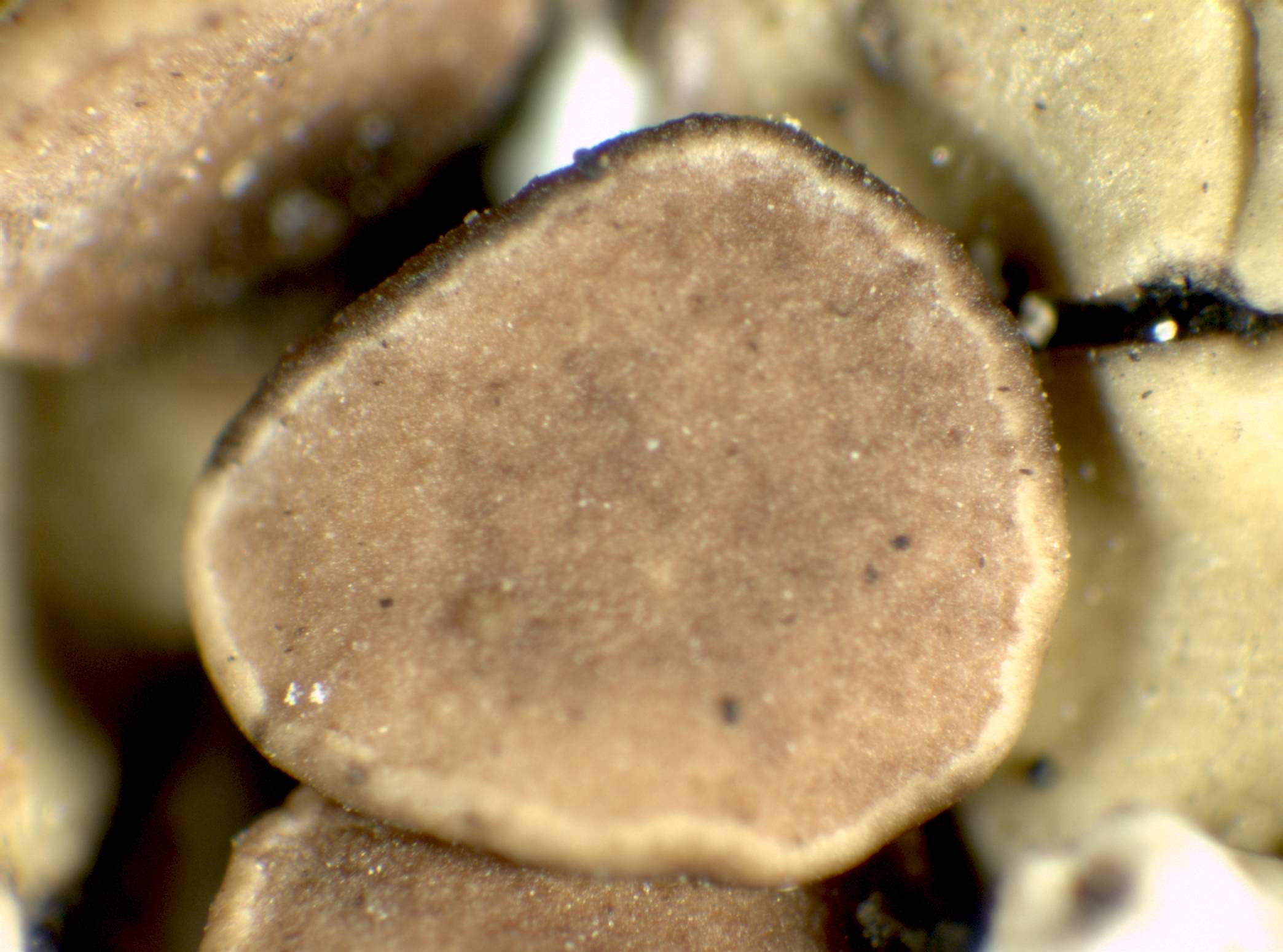
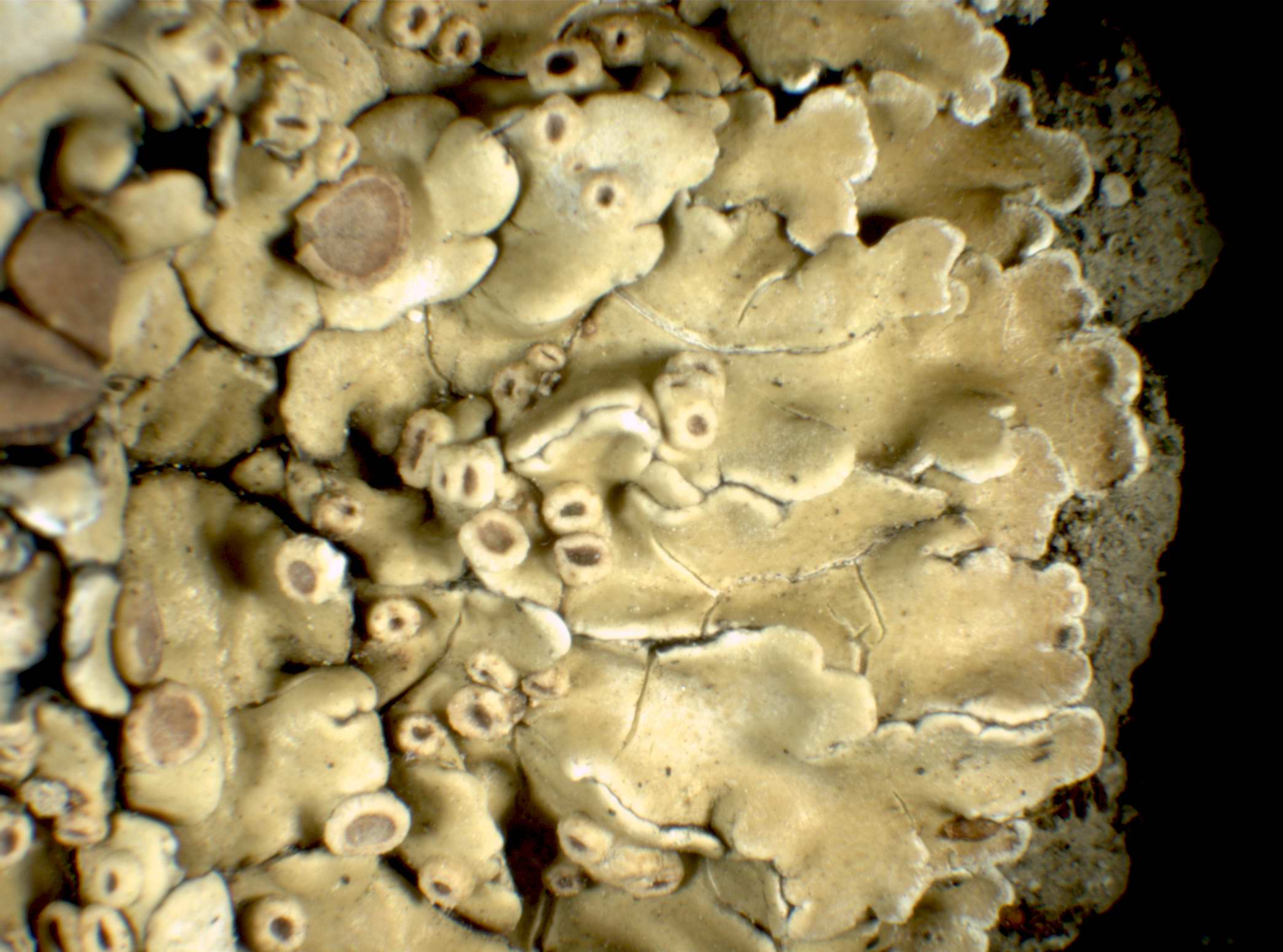
Description: Thallus squamulose, the squamules not or only slightly overlapping, green when fresh, turning brownish in the herbarium, more or less pruinose, the margins of peripheral squamules sometimes white, the lower surface pale in young squamules, then black, attached by numerous, concolour rhizinoid hyphal strands. Upper cortex 30-85 µm thick, consisting of a 20-30 µm thick epinecral layer inspersed with crystals, and a 25-55 µm thick, layer of mainly anticlinally arranged hyphae inspersed with crystals; medulla white (brownish in lower part), up to 0.5 mm thick. Apothecia frequent, at first lecanorine but soon turnng almost biatorine, 0.5-2.6 mm across, at first adnate, then constricted at base, with a pale to medium brown, epruinose or faintly pruinose, at first concave then flat to finally convex disc and a greenish to finally brown, smooth to slightly crenulate, soon excluded thalline margin, the proper margin thin and poorly evident, somehow glossy, level with disc. Thalline exciple 100-250 μm wide, corticate; proper exciple 95-160 μm wide laterally, filled with crystals, of mainly anticlinally arranged hyphae with elongated cells; epithecium yellowish brown, granular, 10-23 µm high; hymenium colourless, 60-90 µm high, hemiamyloid; paraphyses coherent, mostly simple, 1-1.5 μm thick at mid-level, the apical cells 1.5-4 μm wide; hypothecium colourless, 40-130 μm high, prosoplectenchymatous, with crystals soluble in K and insoluble in N, I- (the subhymenium is devoid of crystals). Asci 8-spored, elongate-clavate, with a thin, outer amyloid layer and a thickened, amyloid tholus devoid of an ocular chamber, penetrated by an axial tube the sides of which stain I+ deeper blue, approaching the Porpidia-type. Ascospores 1-celled, hyaline, ellipsoid, ovoid or rarely subfusiform, (9-)10.5-15(-16) x (3.5-)4.5-6.5(-8) µm. Photobiont chlorococcoid. Spot tests: cortex and medulla K-, C-, KC- (or cortex KC+ faintly yellow), P-. Chemistry: cortex with usnic and isousnic acids.
Growth form: Squamulose
Photobiont: green algae other than Trentepohlia
Reproductive strategy: mainly sexual
Commonnes-rarity: (info)
Alpine belt: absent
Subalpine belt: extremely rare
Montane belt: rather rare
Dry submediterranean belt: rather common
Humid submediterranean belt: extremely common
Padanian area: extremely rare
pH of the substrata:
1 2 3 4 5

Solar irradiation:
1 2 3 4 5
Aridity:
1 2 3 4 5
Eutrophication:
1 2 3 4 5
Poleotolerance:
0 1 2 3
Altitudinal distribution:
1 2 3 4 5 6
Rarity
absent
extremely rare
very rare
rare
rather rare
rather common
common
very common
extremely common
Loading data...
Occurrence data
Predictive map
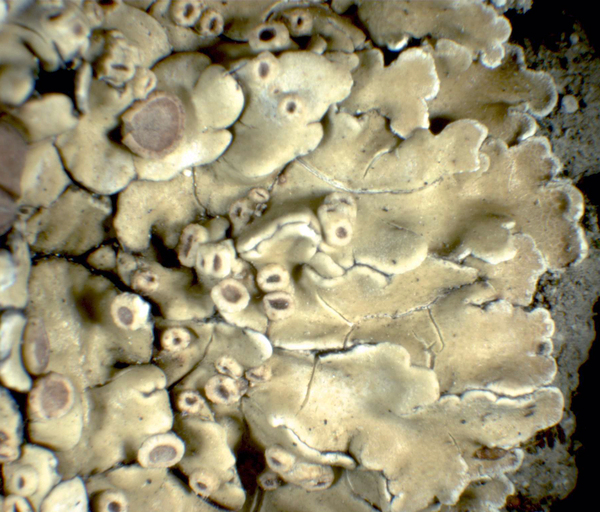
P.L. Nimis CC BY-SA 04
TSB 26252
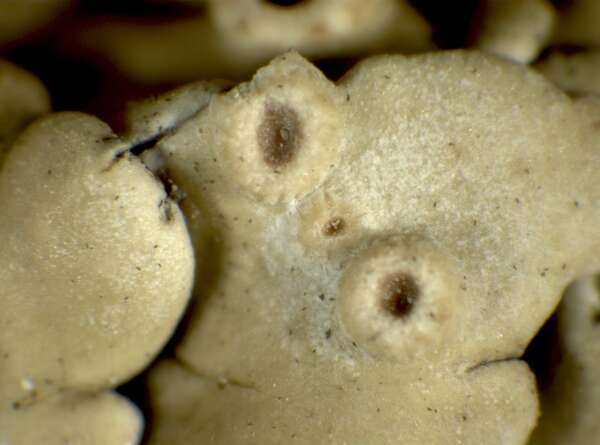
P.L. Nimis; Owner: Department of Life Sciences, University of Trieste
Herbarium: TSB (26252)
2001/12/11
young apothecia
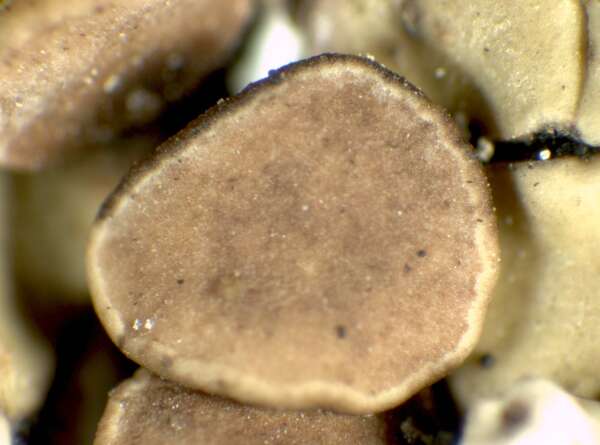
P.L. Nimis; Owner: Department of Life Sciences, University of Trieste
Herbarium: TSB (26252)
2001/12/11
old apothecium
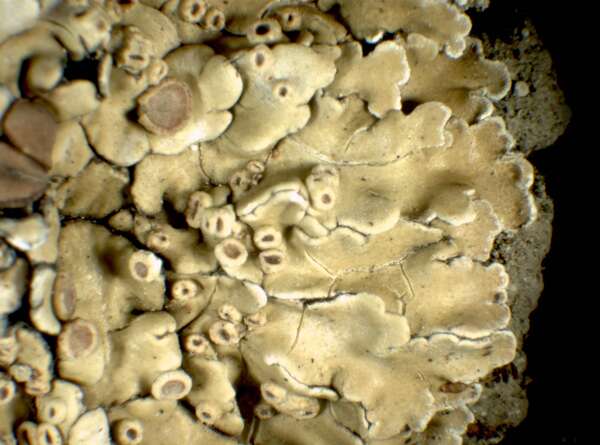
P.L. Nimis; Owner: Department of Life Sciences, University of Trieste
Herbarium: TSB (26252)
2001/12/11
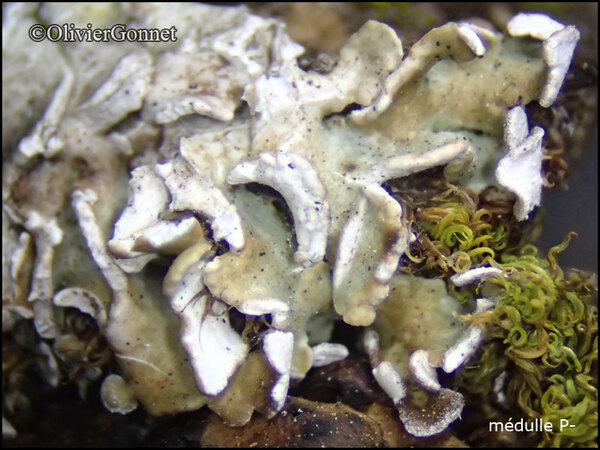
Courtesy Danièle et Olivier Gonnet - Source: https://www.afl-lichenologie.fr/Photos_AFL/Photos_AFL_S/Text_S3/Squamarina_cartilaginea_pseudocrassa.htm
France, 10/09/2015 - Saint-Bonnet-le-Bourgalt. 985 m - Puy-de-Dôme - (63) - étang de Marchaud, sur rocher émergé de l’étang - leg. C. Hurtado, herb. et det. D. et O. Gonnet
Growth form: Squamulose
Photobiont: green algae other than Trentepohlia
Reproductive strategy: mainly sexual
Commonnes-rarity: (info)
Alpine belt: absent
Subalpine belt: extremely rare
Montane belt: rather rare
Dry submediterranean belt: rather common
Humid submediterranean belt: extremely common
Padanian area: extremely rare
pH of the substrata:
| 1 | 2 | 3 | 4 | 5 |
Solar irradiation:
| 1 | 2 | 3 | 4 | 5 |
Aridity:
| 1 | 2 | 3 | 4 | 5 |
Eutrophication:
| 1 | 2 | 3 | 4 | 5 |
Poleotolerance:
| 0 | 1 | 2 | 3 |
Altitudinal distribution:
| 1 | 2 | 3 | 4 | 5 | 6 |
Rarity
absent
extremely rare
very rare
rare
rather rare
rather common
common
very common
extremely common
Loading data...
Occurrence data
Predictive map
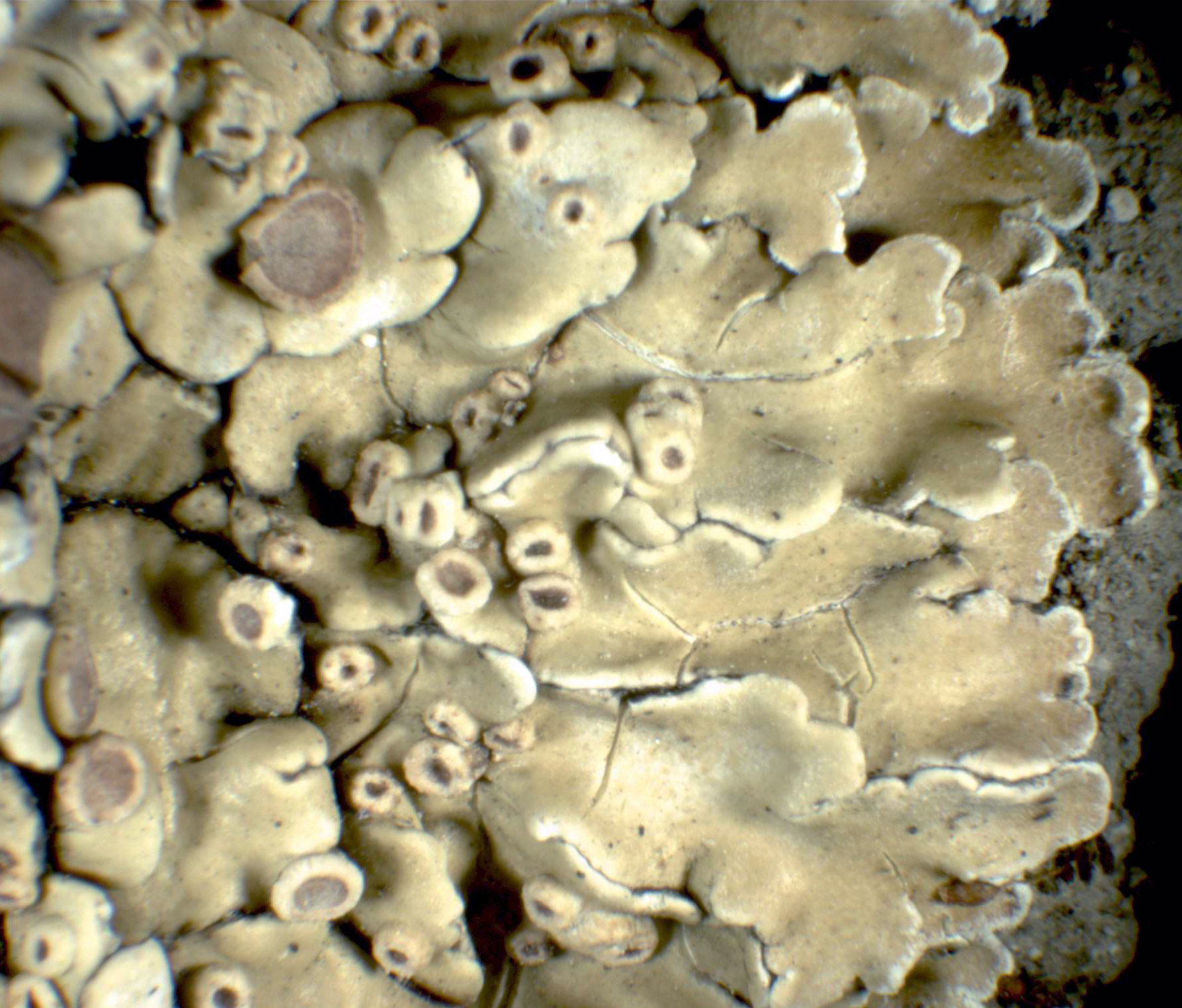
P.L. Nimis CC BY-SA 04
TSB 26252
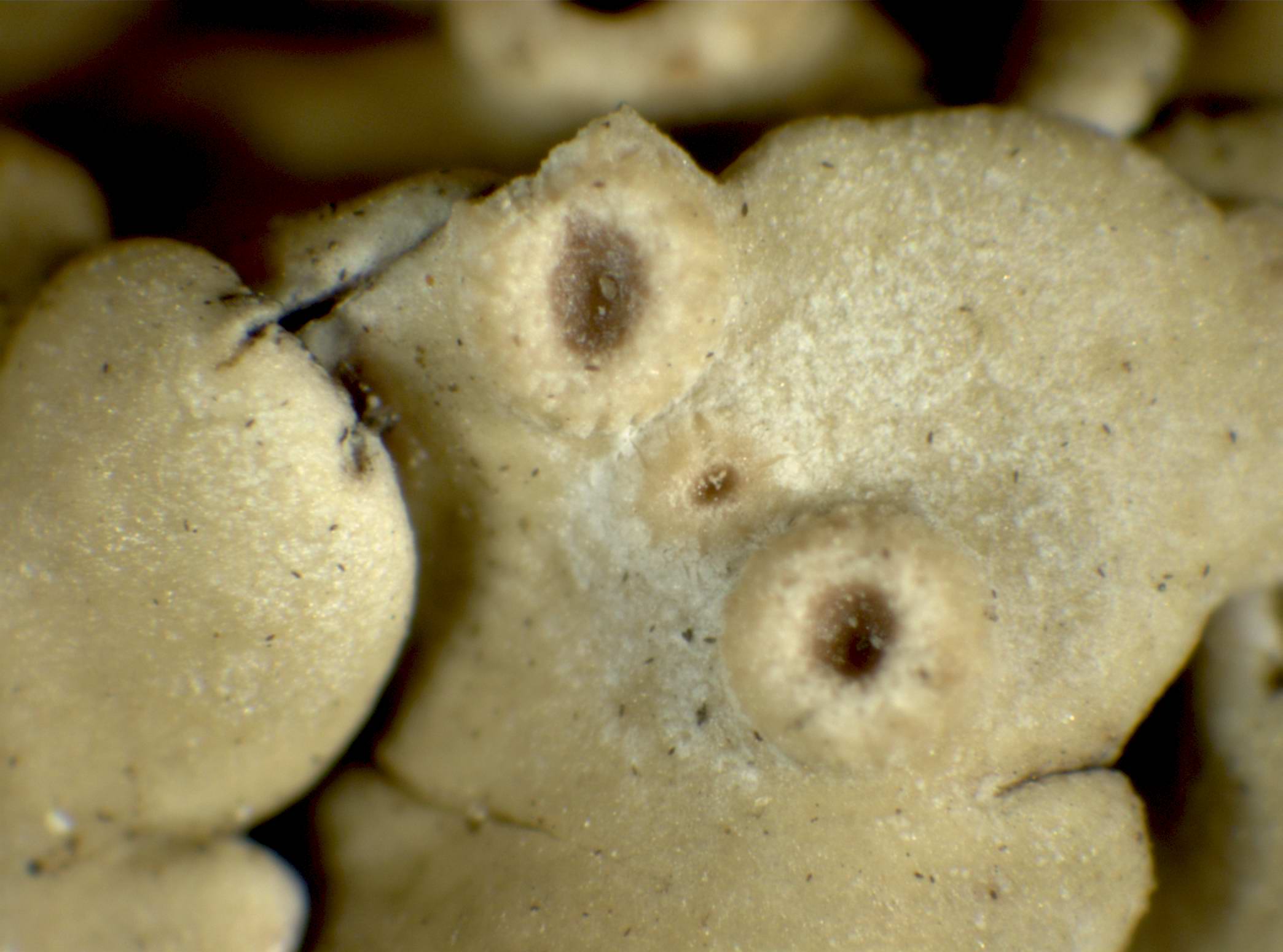
P.L. Nimis; Owner: Department of Life Sciences, University of Trieste
Herbarium: TSB (26252)
2001/12/11
young apothecia
P.L. Nimis; Owner: Department of Life Sciences, University of Trieste
Herbarium: TSB (26252)
2001/12/11
old apothecium
P.L. Nimis; Owner: Department of Life Sciences, University of Trieste
Herbarium: TSB (26252)
2001/12/11